Total de visualitzacions de pàgina:

2.4.24


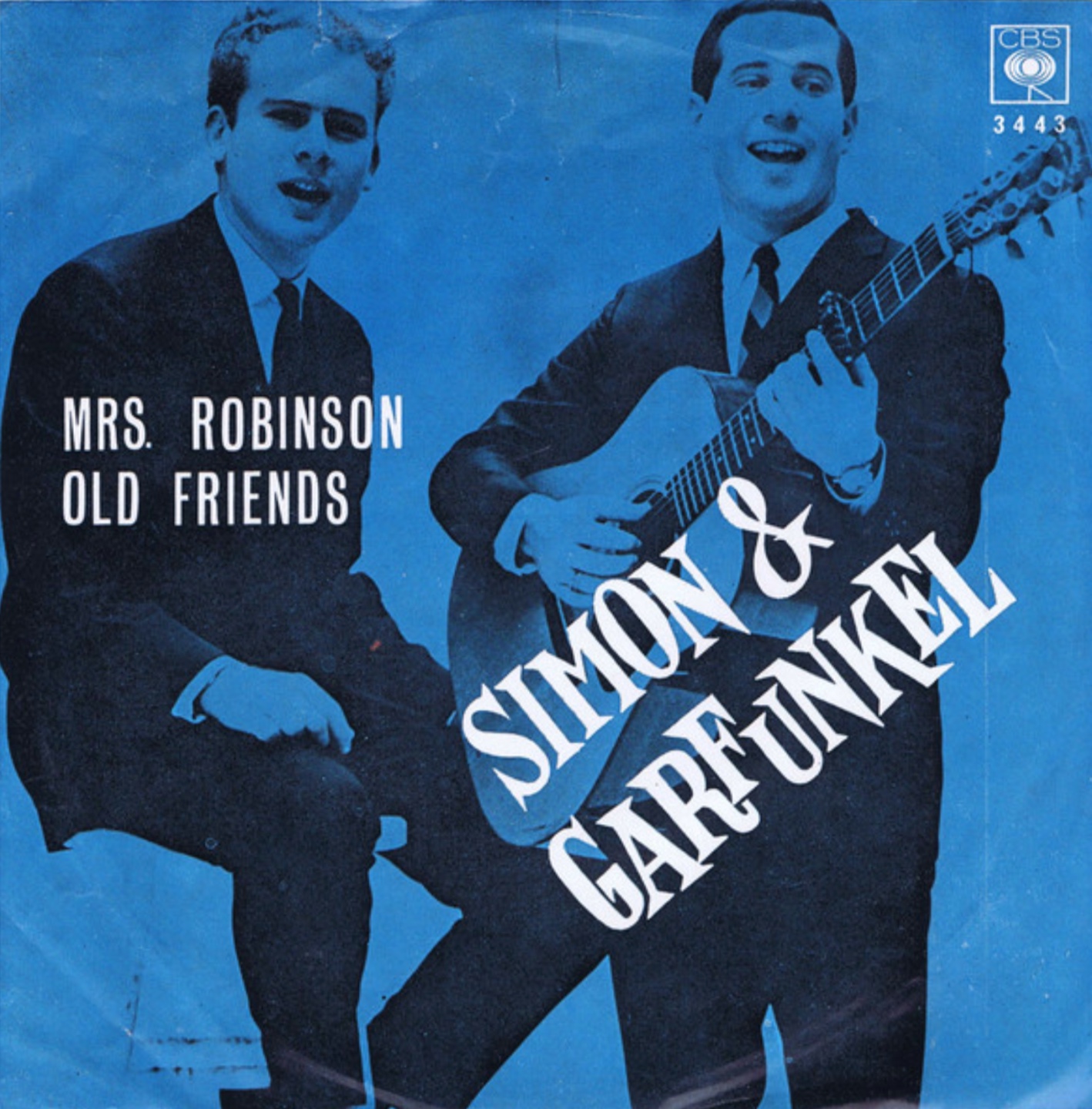
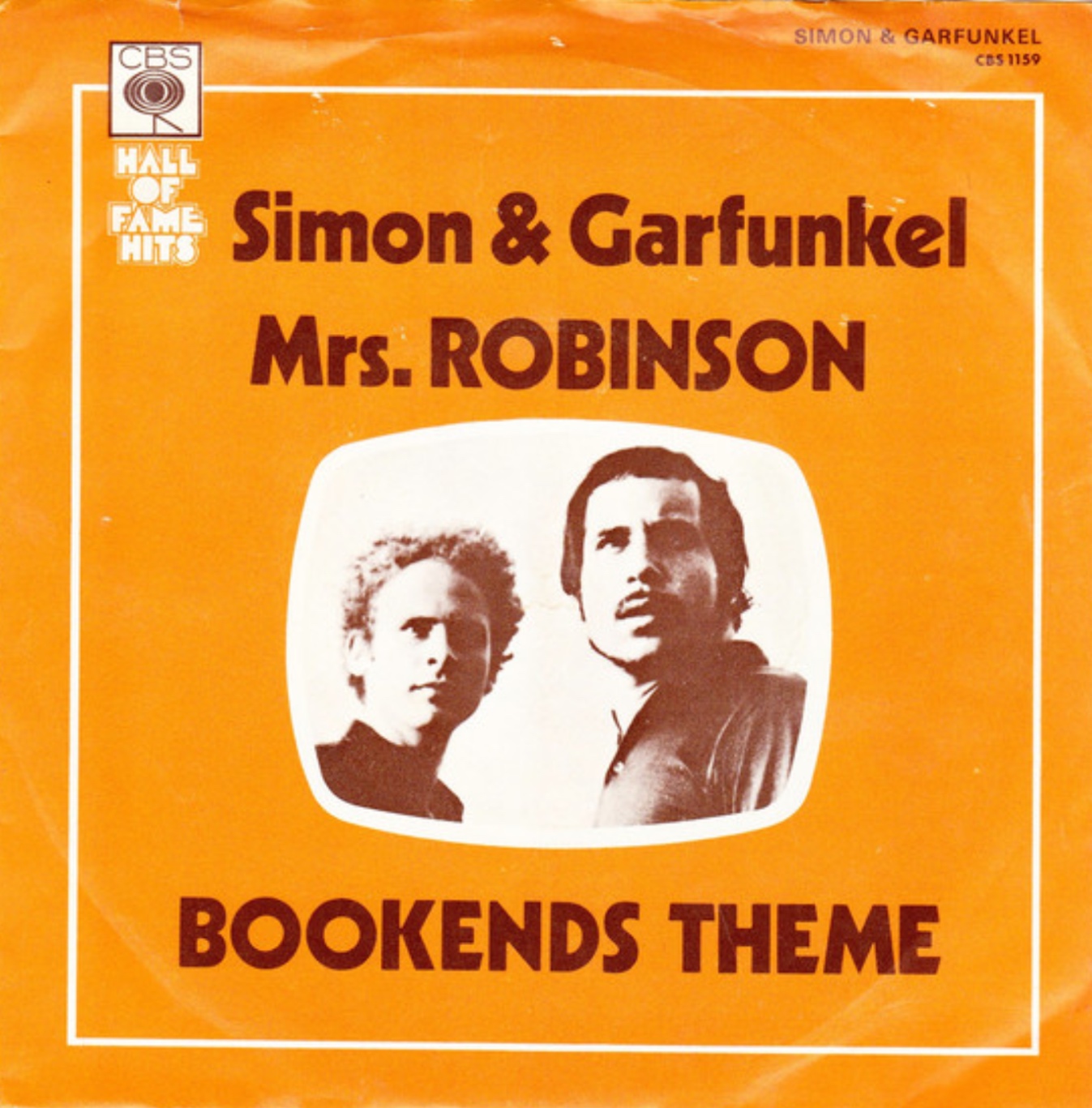
SIMON & GARFUNKEL - MRS. ROBINSON


Estrena: 5 d'abril de 1968

Llistes: EUA: #1 (3 setmanes)   Regne Unit: #4


"Mrs. Robinson" es presenta com una pista crucial de l'àlbum "Bookends" (1968) de Simon & Garfunkel. Sorprenentment, la seva concepció precedeix la seva inclusió a la pel·lícula "The Graduate" (1967), on inicialment només en van aparèixer fragments. Llançada com a single l’abril de 1968 per Columbia Records, la cançó va ser meticulosament produïda pel duo i Roy Halee. Escrita per Paul Simon, se'n van oferir fragments al director Mike Nichols després que rebutgés altres cançons proposades per a la pel·lícula. Tot i que la banda sonora de The Graduate va incloure versions abreviades de "Mrs. Robinson", la versió completa es va publicar a l'àlbum "Bookends". A més, va ser part de l'EP Mrs. Robinson publicat el 1968, juntament amb altres cançons de la pel·lícula, com ara "April Come She Will", "Scarborough Fair/Canticle" i "The Sound of Silence".


"Mrs. Robinson" va arribar al capdamunt de les llistes, suposant per a Simon & Garfunkel el seu segon número 1 al Billboard Hot 100. El seu èxit es va estendre globalment, arribant al top 10 en diversos països, incloent-hi el Regne Unit, Irlanda i Espanya. El 1969, va guanyar el Premi Grammy a la Millor Cançó de l'Any, cosa que va suposar ser la primera cançó de rock en aconseguir aquest reconeixement.


Simon va concebre inicialment la cançó com "Mrs. Roosevelt", amb el vers "Here's to you, Mrs. Roosevelt". Més tard la va canviar a "Mrs. Robinson" per a la seva inclusió a The Graduate. És probable que Eleanor Roosevelt hagués servit d'inspiració pels temes de la cançó. Roosevelt, coneguda per la seva defensa dels drets de les dones i els drets civils, sovint prioritzava ajudar als altres per damunt seu, especialment durant la Gran Depressió. Va jugar un paper significatiu en el panorama polític.


A "Mrs. Robinson", la frase "Where have you gone Joe DiMaggio?" ret homenatge a la llegenda del bèisbol, simbolitzant herois perduts. Tot i estar inicialment molest per la seva inclusió, DiMaggio més endavant en va estar d’acord pel seu nou significat cultural. Paul Simon, fan dels Yankees, va reflexionar sobre l'origen de la frase i el seu ressó amb la generació del baby boom. Malgrat la seva afinitat per Mickey Mantle, l’elecció de la lletra de Simon estava dictada per restriccions sil·làbiques. La mort de DiMaggio el 1999 va impulsar a Simon a escriure un emotiu homenatge al The New York Times, destacant l'impacte del sentiment nostàlgic de la cançó en els fans que van créixer idolatrant l'ícona del bèisbol.


Segons Art Garfunkel, "Mrs. Robinson" potser mai no s'hauria gravat si no fos pel director de The Graduate, Mike Nichols. Garfunkel va recordar que en aquell moment, la cançó era considerada "una frivolitat" i estava a punt de ser descartada. No obstant, quan Nichols en va escoltar una versió primerenca va reconèixer el seu potencial i va demanar a Paul Simon que l'adaptés per a la pel·lícula.


La incorporació de la frase "coo-coo-ca-choo" per part de Simon rendeix homenatge a una lletra de la cançó dels Beatles "I Am the Walrus".


SIMON & GARFUNKEL - MRS. ROBINSON


Released: April 5, 1968

Charted:  US: #1 (3 weeks)  UK: #4 


"Mrs. Robinson" stands as a pivotal track from Simon & Garfunkel's album "Bookends" (1968). Surprisingly, its inception predates its feature in the film "The Graduate" (1967), where only fragments initially appeared. Released as a single on April 1968, by Columbia Records, the song was meticulously produced by the duo and Roy Halee. Penned by Paul Simon, portions of it were offered to director Mike Nichols, along with Art Garfunkel, after he rejected other proposed songs for the film. While The Graduate's soundtrack included abbreviated versions of "Mrs. Robinson," the full-length song found its home on the "Bookends" album. Moreover, it was part of the Mrs. Robinson EP released in 1968, alongside other memorable tracks from the movie, such as "April Come She Will," "Scarborough Fair/Canticle," and "The Sound of Silence."


"Mrs. Robinson" soared to the top of the charts, securing Simon & Garfunkel their second No. 1 hit on the Billboard Hot 100. Its success extended globally, reaching the top 10 in various countries including the United Kingdom, Ireland, and Spain. Remarkably, in 1969, it clinched the Grammy Award for Record of the Year, marking a historic milestone as the first rock song to achieve this accolade.


Simon initially conceived the song as "Mrs. Roosevelt," featuring the line "Here's to you, Mrs. Roosevelt." However, he later changed it to "Mrs. Robinson" for its inclusion in The Graduate. Eleanor Roosevelt likely served as an inspiration for the song's themes. Roosevelt, known for her advocacy for female and civil rights, often prioritized helping others over herself, particularly during the Great Depression. She played a significant role in the political landscape.


In "Mrs. Robinson," the line "Where have you gone Joe DiMaggio?" pays homage to the baseball legend, symbolizing lost heroes. Although initially miffed by his inclusion, DiMaggio later embraced his newfound cultural significance. Paul Simon, a Yankees fan, reflected on the line's origin and its resonance with the baby boomer generation. Despite his affinity for Mickey Mantle, Simon's songwriting choice was dictated by syllabic constraints. DiMaggio's 1999 passing stirred emotions, prompting Simon to pen a poignant tribute in The New York Times, highlighting the impact of the song's nostalgic sentiment on fans who grew up idolizing the baseball icon.


According to Art Garfunkel, "Mrs. Robinson" might never have been recorded if it weren't for The Graduate director Mike Nichols. Garfunkel recalled that at the time, the song was considered "a trifle" and was on the verge of being discarded. However, when Nichols heard an early version of the song, he recognized its potential and asked Paul Simon to adapt it for the film.


Simon's incorporation of the phrase "coo-coo-ca-choo" pays homage to a lyric from the Beatles' "I Am the Walrus."




1.4.24


DURAN DURAN - THE REFLEX


Publicació: 16 d'abril de 1984

Llistes: EUA: #1 (2 setmanes)  Regne Unit: #1 (4 setmanes)


"The Reflex" va marcar un punt d'inflexió significatiu per a Duran Duran, ja que va ser el seu onzè senzill llançat el 1984. Publicat com el tercer i últim single del seu tercer àlbum d'estudi, "Seven and the Ragged Tiger", "The Reflex" va ascendir ràpidament a les llistes, convertint-se en el primer senzill de Duran Duran a liderar la llista Billboard Hot 100 als Estats Units. A més, va aconseguir la distinció de ser el seu segon single a arribar al cim del UK Singles Chart. Produït en col·laboració amb Nile Rodgers, el senzill va ser sotmès a una extensa remescla, essent la primera associació de Rodgers amb la banda.


"The Reflex" és una cançó que convida a diverses interpretacions, però en el seu nucli transmet un missatge d'empoderament i autoconeixement. Les lletres suggereixen la importància de prendre decisions acertades i prendre el control del propi destí, fins i tot en circumstàncies difícils. La referència a "The Reflex" com un nen solitari i una porta per trobar tresors a les fosques podria simbolitzar la força interior i la resiliència, insinuant que es pot descobrir un potencial amagat dins de cadascú. Simon Le Bon ballant sobre el valentí podria representar l'acte d'abraçar l'amor i la joia, fins i tot enmig de l'adversitat. Tot i que les lletres poden semblar críptiques i obertes a interpretació, ressonen amb la idea de navegar per les complexitats de la vida i lluitar per fer eleccions positives.


"The Reflex" inicialment es va trobar amb l’escepticisme per part dels executius del segell discogràfic a causa de la tornada  "why-y-y-y", de la qual dubtaven que fos comercialment exitosa. Després que la banda escoltés "Original Sin" dels INXS i admirés la producció de Nile Rodgers, el van contractar 

per remesclar "The Reflex". En un ús pioner de l'amostratge, Rodgers va incorporar l'icònic so de "re-re-re-re-flex" a la remescla, donant a la cançó un toc fresc i dinàmic.


La versió original, que no incloïa els samples, es considerava massa llarga per a un llançament com a single amb els seus 5:29 minuts. Rodgers, juntament amb l'expert en sintetitzadors de Duran Duran, Nick Rhodes, van crear la versió remescada que es va convertir en el llançament definitiu del senzill. Malgrat la resistència inicial del segell, Duran Duran van defensar la seva decisió de llançar la remescla de Rodgers. El senzill va desafiar les expectatives i es va convertir en un èxit universal, arribant al número 1 a les llistes tant dels Estats Units com del Regne Unit.


El vídeo musical és principalment una peça de concert que captura una energètica actuació en directe de Duran Duran. La banda ho va portar al següent nivell amb gràfics informàtics innovadors i el treball pioner de Nick Rhodes amb el teclat, transformant les imatges ordinàries del concert en una cosa extraordinària. Un efecte notable és la simulació digital de l'aigua que cau de la pantalla i mulla l'audiència, un element visualment impactant que era bastant avançat per la seva època el 1984, tot i que avui dia sembla una mica rudimentari.


La cara B del single és una versió en directe de la cançó de Cockney Rebel "Make Me Smile (Come Up and See Me)". Aquesta interpretació es va gravar durant una actuació en directe el 16 de novembre de 1982, al Hammersmith Odeon de Londres. Cal destacar que el cantant principal de Cockney Rebel, Steve Harley (recentment traspassat), es va unir a Duran Duran a l'escenari per a aquesta cançó.


DURAN DURAN - THE REFLEX


Released: April 16, 1984

Charted:  US: #1 (2 wks)  UK: #1 (4 Weeks)


"The Reflex" marked a significant milestone for Duran Duran, serving as their eleventh single released in 1984. Released as the third and final single from their third studio album, "Seven and the Ragged Tiger," "The Reflex" quickly ascended the charts, becoming Duran Duran's first single to top the Billboard Hot 100 in the United States. Additionally, it achieved the distinction of being their second single to reach the pinnacle of the UK Singles Chart. Produced in collaboration with Nile Rodgers, the single underwent extensive remixing, marking Rodgers's first partnership with the band. 


"The Reflex" is a song that invites various interpretations, but at its core, it conveys a message of empowerment and self-awareness. The lyrics suggest the importance of making sound decisions and taking control of one's destiny, even in challenging circumstances. The reference to "The Reflex" as a lonely child and a door to finding treasure in the dark could symbolize inner strength and resilience, implying that one can discover hidden potential within themselves. Simon Le Bon dancing on the valentine could represent the act of embracing love and joy, even amidst adversity. While the lyrics may appear cryptic and open to interpretation, they resonate with the idea of navigating life's complexities and striving to make positive choices.


"The Reflex" initially faced skepticism from their label executives due to the distinctive "why-y-y-y" chorus, which they doubted would be commercially successful. After the band heard INXS's "Original Sin" and admired Nile Rodgers' production, they enlisted Rodgers to remix "The Reflex." In a pioneering use of sampling, Rodgers incorporated the iconic "re-re-re-re-flex" sound into the remix, giving the song a fresh and dynamic edge.


The original version, which didn't include the samples, was deemed too long for a single release at 5:29. Rodgers, along with Duran Duran synth expert Nick Rhodes, crafted the remixed version that became the definitive single release. Despite initial resistance from the label, Duran Duran stood by their decision to release Rodgers' remix. The single defied expectations and became a universal success, reaching No. 1 on charts on both sides of the Atlantic.


The music video is primarily a concert short capturing Duran Duran's energetic live performance. The band took it to the next level with innovative computer graphics and Nick Rhodes's pioneering keyboard work, transforming the ordinary concert footage into something extraordinary. One notable effect is the digital simulation of water cascading out of the screen and drenching the audience, a visually striking element that was quite advanced for its time in 1984, despite appearing somewhat crude by today's standards.


The B-side of the single is a live cover of the Cockney Rebel song "Make Me Smile (Come Up and See Me)." This rendition was recorded during a live performance on November 16, 1982, at the Hammersmith Odeon in London. Notably, the lead singer of Cockney Rebel, Steve Harley, joined Duran Duran onstage for this performance.


GEORGE MICHAEL - FASTLOVE


Publicació: 22 d'abril de 1996

Llistes: EUA: #8  Regne Unit: #1 (3 setmanes)


"Fastlove" destaca com un dels punts forts de l'àlbum "Older" de George Michael, marcant el seu retorn a l'escena musical després d'una pausa. La interpolació de "Forget Me Nots" de Patrice Rushen aporta un toc nostàlgic però contemporani a la pista, combinant elements de funk i pop de manera impecable. Amb el seu ritme contagiós i la veu suau de Michael, "Fastlove" es va convertir en un èxit popular, mostrant el seu talent perdurable com a compositor i intèrpret.


"Fastlove" aprofundeix en el tema de la recerca de gratificació immediata i plaer en una relació sense el pes del compromís. La lletra dibuixa un desig de connexió i realització, encara que sigui efímera i temporal. El protagonista reconeix les possibles conseqüències de les seves accions, però està impulsat pel desig de satisfacció immediata. La tornada subratlla la idea d'un "fastlove" com una solució ràpida per al buit emocional. Malgrat que potser no sigui una solució sostenible, està disposat a perseguir-la per aconseguir una felicitat momentània.


"Fastlove" reflexa les lluites personals i les experiències de George Michael durant la dècada dels 90, incloent-hi la pèrdua del seu company i les batalles legals amb la seva discogràfica. La lletra transmet un sentiment de desil·lusió i un desig d'escapisme a través de relacions d'una nit i trobades casuals. El monòleg interior de Michael reflexa el seu enfocament sincer i introspectiu cap a les seves emocions i experiències, mentre navega per les complexitats de les relacions i la naturalesa efímera del plaer. El ritme inspirat en el G-funk aporta un toc contemporani a la cançó, significant una desviació del seu so de la dècada dels 80 i abraçant una direcció musical més moderna i experimental.


El vídeo musical de "Fastlove" jugava amb la ambigüitat sobre el gènere de la parella de George Michael, mostrant tant homes com dones en diverses escenes picants. La inclusió dels auriculars etiquetats com "FONY" era una puya divertida a la seva discogràfica, Sony, enmig de les disputes legals que tenia amb ells.


Els crítics van elogiar el ritme elegant i la qualitat ballable de la cançó, amb Larry Flick de Billboard destacant el seu llinatge directe de "Good Times" de Chic. Daina Darzin de Cash Box va descriure "Fastlove" com una pista altament ballable amb una vibració d'ànima opulenta, característica de la carrera de George Michael.


GEORGE MICHAEL - FASTLOVE


Released: April 22, 1996

Charted:  US: #8   UK: #1 (3 wks)


"Fastlove" stands out as a highlight from George Michael's album "Older," marking his return to the music scene after a hiatus. The song's interpolation of "Forget Me Nots" by Patrice Rushen adds a nostalgic yet contemporary touch to the track, blending elements of funk and pop seamlessly. With its infectious groove and Michael's smooth vocals, "Fastlove" became a popular hit, showcasing his enduring talent as a songwriter and performer.


"Fastlove" delves into the theme of seeking instant gratification and pleasure in a relationship without the burden of commitment. The lyrics depict a longing for connection and fulfillment, even if it's fleeting and temporary. The protagonist acknowledges the potential consequences of their actions but is driven by the desire for immediate satisfaction. The chorus underscores the idea of a "fastlove" as a quick fix for their emotional void. Despite the realization that it may not be a sustainable solution, they are willing to pursue it for the sake of momentary happiness. 


"Fastlove" reflects George Michael's personal struggles and experiences during the 1990s, including the loss of his partner and legal battles with his record label. The song's lyrics convey a sense of disillusionment and a desire for escapism through one-night stands and casual encounters. Michael's inner monologue reflects his candid and introspective approach to his emotions and experiences, as he navigates the complexities of relationships and the fleeting nature of pleasure. The G-funk-inspired groove adds a contemporary edge to the song, signaling a departure from his '80s-era sound and embracing a more modern and experimental musical direction. 


The music video for "Fastlove" played with ambiguity regarding the gender of George Michael's partner, featuring both men and women in various saucy scenes. The inclusion of the headphones labeled "FONY" was a playful jab at his record label, Sony, amidst the legal disputes he had with them.


Critics praised the song's sleek groove and danceable quality, with Larry Flick of Billboard noting its direct lineage from Chic's "Good Times." Daina Darzin of Cash Box described "Fastlove" as a terminally danceable track with an ultra-lush and opulent soul vibe, characteristic of George Michael's career.