Total de visualitzacions de pàgina:

14.7.24


T. REX - GET IT ON (BANG A GONG) 


Publicació: 2 de juliol de 1971 (Regne Unit) Gener de 1972 (EUA)

Llistes: Regne Unit: #1 (4 setmanes)   EUA: #10


Al Regne Unit, "Get it On" va arribar al número 1 el 24 de juliol de 1971, proporcionant a T. Rex el seu segon màxim èxit a les llistes, després de "Hot Love". La companyia discogràfica nord-americana del grup, Reprise, va retardar el seu llançament i no la va publicar fins a gener de 1972. Va arribar al número 10 al març, però va ser l'únic èxit significatiu del grup als Estats Units. Al Regne Unit, van aconseguir dos altres número 1, "Telegram Sam" i "Metal Guru", i un total d’onze cançons al Top 10.


"Get It On (Bang a Gong)" celebra i gaudeix de tots els plaers de la vida. La lletra descriu una relació romàntica basada en la passió i l'admiració, que és forta i en constant creixement. El seu missatge general és que no cal témer viure la vida i gaudir-la al màxim. La cançó insta les persones a arriscar-se, ballar i deixar de banda les inhibicions o les inseguretats, i a “donar un cop de gong” mentre ho fan.


Aquest és un gran exemple del "glam rock", caracteritzat per vestits extravagants, sovint afeminats, lletres sense sentit, ritmes enèrgics i posades en escena molt teatrals. El ritme constant, les lletres còsmiques i la entrega vocal cool de Marc Bolan són pur or del glam rock, convertint la peça en un dels autèntics himnes del gènere.


"Get It On (Bang a Gong)" va ser escrita i enregistrada mentre T. Rex feia gires pels Estats Units el 1971. El grup havia aconseguit èxits al seu país natal amb el seu àlbum homònim de 1970, però eren poc coneguts al país americà. Marc Bolan volia canviar això creant alguna cosa que arribés al cor d'Amèrica. Va escriure aquesta cançó que parla de sexe, però amb imatges tan còmicament vagues que fins i tot els oients més prudents tindrien dificultats per ofendre's. 


La interpretació de Bolan és ferotge, i continua cridant a la noia "dirty and sweet" (bruta i dolça), però realment es complicat trobar connotacions sexuals en frases com “hubcap diamond star halo" (halo de diamants de tapacubos) o una "cloak full of eagles" (capa plena d'águilas) -és el que dèiem a l’inici de les frases sense sentit-. La suggerència més gran es troba en el títol. Tot encaixa aquí, el títol provocador, el riff irresistible, l'òrgan que atrau, els cors aguts de veus de fons, la pausa per deixar que les guitarres, la bateria i el saxòfon tornin a posar-ho tot en marxa i, és clar, aquella senzilla tornada de donar cops al gong. Tot això i la lletra esbojarrada i sexy de Bolan, que anticipa "Cream" de Prince uns 35 anys després, amb un respectuós treure’s el barret a l'inspiració de Chuck Berry al final.


Aquesta cançó va ser versionada per The Power Station el 1985. La seva versió, anomenada "Get It On (Bang a Gong)" als Estats Units, va tenir un gran èxit a les llistes Billboard Hot 100, on el senzill va arribar al número 9 (un lloc més alt que l'original) l'estiu de 1985.


Durant una actuació a Top of the Pops el desembre de 1971, Elton John va acompanyar la banda al piano a la cançó.


Com a dada curiosa, cal destacar que Marc Bolan va adoptar el seu nom de Bob Dylan... BO de Bob i LAN de Dylan.


T. REX - GET IT ON (BANG A GONG) 


Released: July 2, 1971 (UK) January 1972 (US)

Charted: UK: #1 (4 weeks)  US: #10 


In the UK, “Get it On” hit #1 on July 24, 1971, giving T. Rex their second chart-topper there, following "Hot Love". The band's American record company, Reprise, dragged their feet on the song and didn't release it until January 1972. It went to #10 in March, but ended up being the group's only significant hit Stateside. In the UK, they had two more number 1’s, "Telegram Sam" and "Metal Guru", and a total of 11 Top 10s.


“Get It On (Bang a Gong)” is about celebrating and enjoying all the pleasures of life. The lyrics describe a romantic relationship built on both passion and admiration that is strong and ever-growing. The overall message of the song is to not be afraid to live life and enjoy it to fullest. The song urges people to take chances, dance, and let go of any inhibitions or insecurities—and to ‘bang a gong’ while they’re at it.


This is a great example of "glam rock," which was characterized by outrageous, often effeminate costumes, nonsensical lyrics, driving beats and very theatrical stage shows. The songs low slung groove, cosmic lyrics and Marc Bolan's cool vocal delivery is pure glam rock gold. This is one of the true glam anthems.


This song was written and recorded when T. Rex was touring America in 1971. The group had made inroads in their native UK with their 1970 self-titled album, but were little-known in the US. Marc Bolan wanted to change that by coming up with something that would strike to the heart in America. He wrote this song that is all about sex, but with imagery so comically vague it would be hard for even the most prudish listeners to take offense. 


Bolan's delivery is feral, and he does keep calling the girl "dirty and sweet," but you really have to stretch to find sexual connotations in a "hubcap diamond star halo" or a "cloak full of eagles." The biggest suggestion is in the title. Everything fits here, the provocative title, that sinuous, slinky-irresistible riff, the organ fills, the high-pitched backing vocals, the breakdown to let the guitars, drums and saxophone kick-start it again and of course that so-simple gong-banging chorus. All this and Bolan's crazy-sexy lyrics, which anticipate Prince's "Cream" by about 35 years, there's a doff of the cap to inspiration Chuck Berry over the fade. 


This track was covered by The Power Station in 1985. Their version, referred to as "Get It On (Bang a Gong)" in the US, was a strong hit on the US Billboard Hot 100 chart, where the single peaked at #9 (one place higher than the original) in the summer of 1985. 


During a December 1971 Top of the Pops performance, one of our artists of the week, Elton John mimed a piano on the song.


As a curious fact we want to say that Marc Bolan took his name from Bob Dylan... BO from Bob and LAN from Dylan.


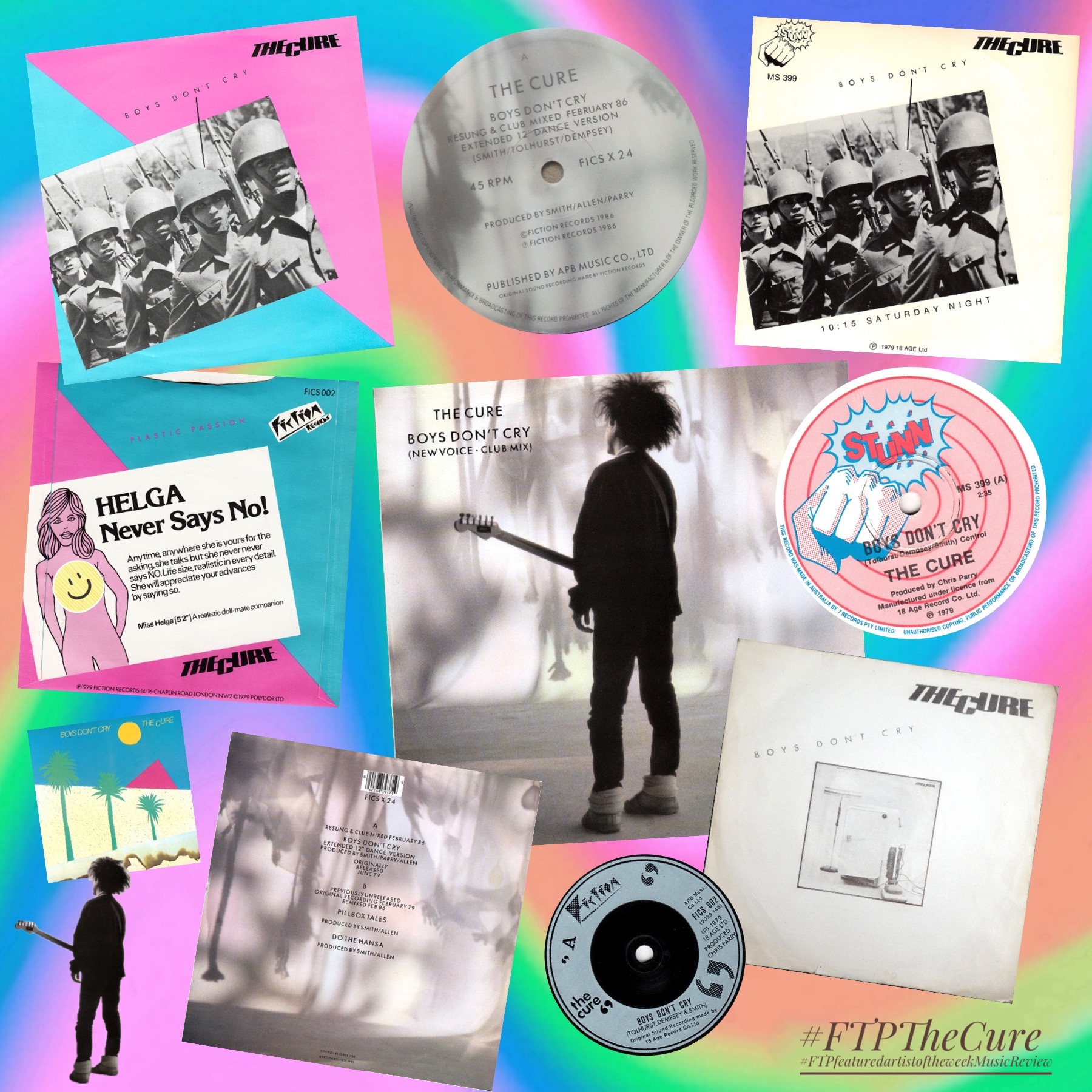


THE CURE - BOYS DON’T CRY


Publicació: 12 de juny de 1979

Llistes: Regne Unit: #22


"Boys Don't Cry" és una cançó llançada el 1979, que reflexa temes de masculinitat i vulnerabilitat. Escrita per Robert Smith, la cançó aborda les expectatives socials dels homes per suprimir les seves emocions i mantenir una aparença dura. Va ser inicialment publicada al Regne Unit com a senzill independent i després inclosa a l'àlbum nord-americà "Boys Don't Cry", que essencialment era una versió amb títol canviat del seu àlbum debut "Three Imaginary Boys".


Llançada inicialment el 1979 com el seu segon senzill, després de "Killing An Arab", "Boys Don't Cry" no va aconseguir un èxit comercial significatiu en el seu primer llançament. Malgrat la seva recepció inicial, la cançó va guanyar reconeixement amb el temps i es va reeditar el 1986 amb una nova versió. Aquesta reedició va incloure una pista remesclada i veus regravades, cosa que va contribuir a la seva nova popularitat. El rellançament de la cançó va aconseguir arribar al número 22 a les llistes del Regne Unit, significant un èxit tardà però notable per al grup.


La lletra explica una història on el protagonista intenta conformar-se amb els estereotips masculins tradicionals, amagant la seva turbulència emocional darrere d'una façana d'estoïcisme. La frase, "Boys don't cry" (Els nois no ploraran), reforça la pressió que se li imposa als homes per suprimir els seus sentiments, fins i tot quan es troben amb desconsol o tristor. El seu tempo animat i la melodia enganxosa es combinen amb la lletra introspectiva, creant un contrast que subratlla la lluita interna descrita en la narrativa.


El vídeo musical llançat el 1986 per promocionar la nova versió "New Voice New Mix" va emprar un concepte creatiu i visualment impactant. En el vídeo, tres adolescents fan playback sobre la lletra de la cançó. Mentre, darrere d'una cortina, els membres de The Cure Robert Smith, Lol Tolhurst i Michael Dempsey apareixien com ombres amb ulls vermells brillants. Per aconseguir l'efecte inquietant dels ulls brillants, les parpelles dels membres de la banda van ser pintades amb pintura fluorescent. Aquesta tècnica va crear un contrast visual diferencial entre els adolescents i les ombres misterioses i inquietants dels membres de la banda.


"Boys Don't Cry" segueix sent una cançó significativa dins de la discografia de The Cure, mostrant el talent primerenc de Robert Smith com a compositor i l'habilitat del grup per barrejar l'energia del punk rock amb temes lírics sentimentals.


THE CURE - BOYS DON’T CRY


Released: June 12, 1979

Charted:  UK: #22 


"Boys Don't Cry" is a song released in 1979, reflecting themes of masculinity and vulnerability. Written by Robert Smith, the song addresses societal expectations of men to suppress their emotions and maintain a tough exterior. It was initially released in the UK as a stand-alone single and later included on the American album "Boys Don't Cry," which was essentially a re-titled version of their debut album "Three Imaginary Boys." 


Initially released in 1979 as their second single, following "Killing An Arab," "Boys Don't Cry" did not achieve significant commercial success upon its first release. Despite its initial reception, the song gained recognition over time and was reissued in 1986 with a new version. This reissue featured a remixed track and re-recorded vocals, which contributed to its renewed popularity. The song's re-release managed to reach number 22 on the UK charts, marking a belated but notable success for the band.


The lyrics convey a narrative where the protagonist tries to conform to traditional masculine stereotypes, hiding his emotional turmoil behind a facade of stoicism. The refrain, "Boys don't cry," reinforces the pressure placed on men to suppress their feelings, even when faced with heartache or sorrow. The song's upbeat tempo and catchy melody combine with its introspective lyrics, creating a contrast that underscores the internal struggle described in the narrative.


The music video released in 1986 to promote the "New Voice New Mix" re-recording of the song, employed a creative and visually striking concept. In the video, three children mimed the song's lyrics. Meanwhile, behind a curtain, The Cure's members Robert Smith, Lol Tolhurst, and Michael Dempsey appeared as shadows with glowing red eyes. To achieve the eerie effect of glowing eyes, the band members' eyelids were painted with fluorescent paint. This technique created a distinctive visual contrast between the innocent miming children and the mysterious, haunting shadows of the band members. 


"Boys Don't Cry" remains a significant track in The Cure's discography, showcasing Robert Smith's early songwriting talent and the band's ability to blend punk rock energy with poignant lyrical themes.


MICHAEL JACKSON - REMEMBER THE TIME


Publicació: 14 de gener de 1992

Llistes: Regne Unit: #3   EUA: #3


"Remember The Time" va ser el segon single de l'àlbum de Michael Jackson "Dangerous", seguint el seu àlbum "Bad" del 1987. Coescrita per Teddy Riley, Michael Jackson i Bernard Belle, la cançó tenia com a objectiu barrejar l'estil New Jack Swing de Riley amb l'ànima R&B de Jackson. Gira entorn d'un tema nostàlgic, amb Jackson suplicant a la seva ex-amant que recordi els bons moments que van compartir, malgrat la seva ruptura. El tema va marcar un canvi vers les obres anteriors de Jackson, incorporant un so més contemporani mentre mantenia el seu estil vocal diferencial i la profunditat emocional.


Teddy Riley, juntament amb Michael Jackson, va coproduir la pista. Riley l'havia creat amb un so específic en la ment, que va descriure com New Jack Swing, una fusió de R&B, hip-hop i elements electrònics que havia experimentat amb grups com Guy i Bobby Brown. Riley va explicar a Music Radar que l'actuació vocal de Jackson a la cançó el va impressionar enormement. Riley va destacar que els elements distintius de la cançó, incloent els efectes semblants a samplers, no eren samplers tradicionals sinó sons que havia creat ell mateix a través de sessions de jam i experimentació d'estudi. Jackson va connectar immediatament amb el so que Riley havia imaginat per al seu àlbum "Dangerous".


El vídeo musical dirigit per John Singleton és conegut per la seva producció luxosa i el seu elenc ple d'estrelles, incloent Eddie Murphy, Magic Johnson i la model de moda Iman, que posteriorment es va casar amb David Bowie el 1992. Ambientat a l'antic Egipte, el vídeo mostra Jackson com una figura màgica que causa embolics i entreteniment a palau.


En el vídeo, Michael Jackson apareix com un mag amb caputxa que arriba a un palau egipci. A palau és atès pel Faraó (interpretat per Eddie Murphy) i la seva reina avorrida (Iman). Els entretenidors anteriors no ho han aconseguit i han estat condemnats a mort. El mag captiva l'atenció de la reina cantant-li, recordant el seu passat junts i preguntant-li si recorda aquells vells temps. Aquest moviment poc convencional enfada el Faraó, que ordena als seus guardes capturar el mag. El personatge de Jackson s’escapa dels guardes, es troba en secret amb la reina i comparteixen un apassionat petó. Jackson després s'impliqua en una elaborada dansa d'estil egipci amb els servents del Faraó. Quan els guardes l’envolten Jackson es transforma misteriosament en sorra daurada, utilitzant efectes especials avançats per escapar de la captura.


MICHAEL JACKSON - REMEMBER THE TIME


Released : January 14, 1992

Charted:  UK: #3  US: #3


"Remember The Time" was the second single from Michael Jackson's album "Dangerous", following his 1987 album "Bad". Co-written and composed by Teddy Riley, Michael Jackson, and Bernard Belle, the song aimed to blend Riley's New Jack Swing style with Jackson's soulful R&B. It revolves around a nostalgic theme, with Jackson pleading for his ex-lover to remember the good times they shared, despite their breakup. The track marked a departure from Jackson's earlier works, incorporating a more contemporary sound while retaining his distinctive vocal style and emotional depth.


Teddy Riley, along with Michael Jackson, co-produced the track. Riley had crafted it with a specific sound in mind, one that he described as New Jack Swing—a fusion of R&B, hip-hop, and electronic elements that he had pioneered with acts like Guy and Bobby Brown. Riley explained to Music Radar how Jackson's vocal performance on the song impressed him greatly. Riley emphasized that the distinctive elements of the song, including its sampled-like effects, were not traditional samples but rather sounds he created himself through jam sessions and studio experimentation. Jackson immediately connected with the sound Riley envisioned for his album "Dangerous".


The music video directed by John Singleton, is renowned for its lavish production and star-studded cast, including Eddie Murphy, Magic Johnson, and the fashion model Iman, who later married David Bowie in 1992. Set in ancient Egypt, the video portrays Jackson as a magical figure causing mischief and entertainment in the palace. 


In the music video Michael Jackson appears as a hooded wizard who arrives at an Egyptian palace. The palace is attended by the Pharaoh (played by Eddie Murphy) and his bored Queen (Iman). Previous entertainers have failed to amuse her, and they have been sentenced to death. The wizard catches the Queen's attention by singing to her, reminiscing about their past together and asking if she remembers that old times. This unconventional move enrages the Pharaoh, who orders his guards to capture the wizard. Jackson's character evades the guards, meets the Queen in secret, and they share a passionate kiss. Jackson then engages in an elaborate Egyptian-style dance with the Pharaoh's servants. As the guards close in on him, Jackson mysteriously transforms into golden sand, using advanced special effects to escape capture.