Total de visualitzacions de pàgina:

17.9.24


DUSTY SPRINGFIELD - SON OF A PREACHER MAN


Estrena: 8 de novembre de 1968

Llistes: EUA: #10 Regne Unit: #9


"Son of a Preacher Man" és una cançó escrita pels compositors nord-americans John Hurley i Ronnie Wilkins, i famosa per haver estat gravada per la cantant britànica Dusty Springfield al setembre de 1968 per al seu àlbum “Dusty in Memphis”. El tema va ser produït per Jerry Wexler, Tom Dowd i Arif Mardin, i va ser el debut de Springfield amb el segell Atlantic Records. Quan es va llançar a finals de 1968, el senzill es va convertir en un èxit internacional, arribant al número 9 a la llista de singles del Regne Unit i al número 10 a la Billboard Hot 100 el gener de 1969.


"Son of a Preacher Man" explica la història d'una noia jove que s'enamora del fill d'un predicador. Quan el seu pare visita la família, el fill del predicador aprofita els moments sols amb la noia, ensenyant-li coses sobre l'amor guanyant-se el seu cor. La cançó captura la innocència i l'emoció del primer amor, amb el fill del predicador sent l'únic noi que ella ha estimat de debò.


Inicialment, la cançó va ser oferta a Aretha Franklin, qui també era filla d'un predicador, però la va rebutjar en un primer moment, considerant que era irrespectuosa. Dusty Springfield va gravar llavors el tema, que es va convertir en un gran èxit. Després de veure el seu èxit i probablement reconsiderar el missatge de la cançó, Franklin va canviar d'opinió i va gravar la seva pròpia versió.


Els cors de "Son of a Preacher Man" van ser interpretats per The Sweet Inspirations, un reconegut grup vocal femení format per Cissy Houston, Sylvia Shemwell, Myrna Smith i Estelle Brown. Conegudes per les seves harmonies riques i plenes de soul, The Sweet Inspirations eren molt sol·licitades com a coristes en l'escena musical de Nova York, havent treballat en àlbums per a artistes com Aretha Franklin, Wilson Pickett i Van Morrison. El 1969, The Sweet Inspirations van començar a fer gires i a gravar amb Elvis Presley, significant un altre capítol important en la seva carrera. Al voltant d'aquesta època, Cissy Houston va deixar el grup per centrar-se en la seva família, inclosa la seva filla, Whitney Houston, que més tard es convertiria en una cantant llegendària.


"Son of a Preacher Man" va ser l'últim èxit de Dusty Springfield que va arribar al Top 30 fins que va retornar el 1987 amb "What Have I Done to Deserve This?", una col·laboració amb el duo britànic Pet Shop Boys, que es va convertir en un gran èxit. La cançó va guanyar nova popularitat el 1994 quan es va incloure a la banda sonora de la pel·lícula “Pulp Fiction” de Quentin Tarantino. Aquest fet va introduir la cançó a una nova generació, cosa que va portar a la seva reedició en alguns països, arribant al número u a Islàndia el 1995.


DUSTY SPRINGFIELD - SON OF A PREACHER MAN


Released: November 8, 1968

Charts:  US: #10  UK: #9 


"Son of a Preacher Man" is a song written by American songwriters John Hurley and Ronnie Wilkins, and famously recorded by British singer Dusty Springfield in September 1968 for her album *Dusty in Memphis*. The track was produced by Jerry Wexler, Tom Dowd, and Arif Mardin, marking Springfield's debut with the Atlantic Records label. Upon its release in late 1968, the single became an international hit, reaching No. 9 on the UK Singles Chart and No. 10 on the Billboard Hot 100 in January 1969. 


"Son of a Preacher Man" tells the story of a young girl who is enamored with the son of a preacher. Whenever his father visits, the preacher's son steals moments alone with her, teaching her about love and winning her heart. The song captures the innocence and excitement of first love, with the preacher's son being the only boy she has ever truly loved. 


The song was initially offered to Aretha Franklin, who was herself a preacher's daughter, but she turned it down at first, considering the song to be disrespectful. Dusty Springfield then recorded the track, which became a major hit. After seeing its success and likely reconsidering the song's message, Franklin later changed her mind and recorded her own cover version of it. 


The backup vocals on "Son of a Preacher Man" were provided by the Sweet Inspirations, a renowned female vocal group consisting of Cissy Houston, Sylvia Shemwell, Myrna Smith, and Estelle Brown. Known for their rich, soulful harmonies, the Sweet Inspirations were highly sought-after backup vocalists in the New York music scene, having worked on albums for artists like Aretha Franklin, Wilson Pickett, and Van Morrison. In 1969, the Sweet Inspirations began touring and recording with Elvis Presley, marking another significant chapter in their career. Around this time, Cissy Houston left the group to focus on her family, including her daughter, Whitney Houston, who would later become a legendary singer herself.


"Son of a Preacher Man" was Dusty Springfield's last Top 30 hit until she made a comeback in 1987 with "What Have I Done to Deserve This?", a collaboration with the UK synthpop duo, the Pet Shop Boys, which became a major hit. The song gained renewed popularity in 1994 when it was featured on the soundtrack of Quentin Tarantino's film “Pulp Fiction”. This exposure introduced the song to a new generation, leading to its re-release, which reached number one in Iceland in 1995.


16.9.24


 PAT BENATAR - TREAT ME RIGHT

Released: December 29, 1980

Charts:  US: #18   


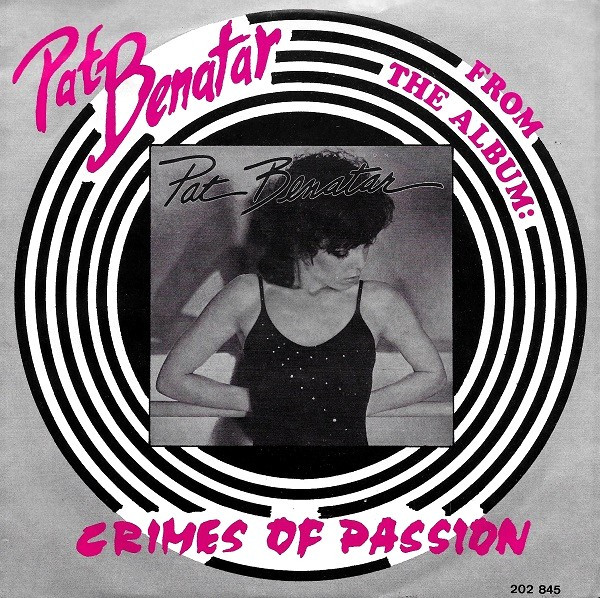
"Treat Me Right" is a song from the album “Crimes of Passion”, produced by Keith Olsen and written by Doug Lubahn and Pat Benatar. Released as the third single from the album, it became another hit for Benatar, peaking at #18 on the U.S. Billboard Hot 100 and reaching #10 on the Cash Box Top 100. The song also charted at #31 on the U.S. Mainstream Rock chart and achieved success in Canada, peaking at #12 and ending up as the 76th biggest hit of 1981.


"Treat Me Right" is a powerful anthem about self-respect and the realization that one deserves better in a relationship. The song delves into the frustration of being in a tumultuous, inconsistent relationship, and captures the narrator's frustration with a partner's inconsistent and indecisive behavior, leading to emotional exhaustion. The lyrics portray a narrator dealing with a partner who sends mixed signals, alternating between pushing the narrator away and asking them to return. The repeated line, "One of these days, you're gonna reach out and find the one that you count on has left you behind," signals a turning point where the narrator recognizes their own worth and begins to consider leaving the relationship.


The partner's desire for both a romantic and friendly relationship is contradicted by their lack of commitment and sincerity, leaving the narrator feeling confused and emotionally drained. As the song progresses, the narrator reaches a point of impatience and weariness, demanding respect and clarity in the relationship. The plea to "treat me right" becomes a demand for change, as the narrator no longer wishes to be taken for granted. They emphasize that the partner's inability to see the harm they're causing is leading to the deterioration of the relationship. In the end, the narrator declares their refusal to continue being mistreated and makes a firm stand for respect, aiming to break free from the emotional turmoil. This empowerment anthem highlights the importance of standing up for one's self-worth and seeking a healthier relationship dynamic.


PAT BENATAR - SHADOWS OF THE NIGHT


Released: September 18, 1982

Charts:  US: #13  UK: #50 


"Shadows of the Night" was originally composed by D.L. Byron for the 1980 film “Times Square”, but it was ultimately not included in the movie. Byron's record label also rejected the song for not being commercial enough. The song was first released by Helen Schneider in 1981, and Rachel Sweet also recorded a version that year with slightly different lyrics. The most famous version of the song came from Pat Benatar, who released it as the lead single from her 1982 album “Get Nervous”. 


Pat Benatar's version became a significant hit, reaching No. 3 on the US Mainstream Rock Tracks chart, the Top 15 on the US Hot 100 and in Canada, and the Top 20 in Australia. The song earned Benatar her third Grammy Award for Best Female Rock Vocal Performance in 1983. Notably, her rendition features slightly different lyrics compared to earlier versions by Helen Schneider and Rachel Sweet.


Pat Benatar encountered a credit controversy with the song due to undisclosed contributions from Rachel Sweet. Originally written by D.L. Byron, the song underwent lyric changes when Benatar and her drummer, Myron Grombacher, were given permission by the publisher to modify some verses. Unbeknownst to them, parts of the lyrics had already been rewritten by Rachel Sweet. As a result, when the song was released, Benatar and Grombacher were credited for the "additional lyrics," leaving Sweet uncredited, which caused her frustration. Despite this, in the ASCAP database, only Byron is listed as the writer, while Sweet's version acknowledges her contribution to the lyrics.


A conceptual music video was directed by Mark Robinson for the track. In the video, Benatar portrays a WWII flying ace fighting Nazis, interspersed with scenes of her singing from her aircraft. The video concludes with a twist, revealing that she is actually a riveter, and the entire sequence was a dream. The video stars Judge Reinhold as a pilot and Bill Paxton as a Nazi radio operator. Pat Benatar became one of MTV's early stars, with her "You Better Run" video being the second ever played on the network in 1981. 


U2 - ALL I WANT IS YOU 


Estrena: 12 de juny de 1989

Llistes: EUA: #83  Regne Unit: #4


"All I Want Is You", la cançó de tancament de l'àlbum de 1988 “Rattle and Hum”, es va publicar com el quart i últim single de l'àlbum el juny de 1989. Presentada de manera destacada a la pel·lícula “Rattle and Hum” durant els crèdits finals, la cançó va aconseguir èxit a les llistes, assolint el quart lloc al Regne Unit i el segon a Austràlia, però el seu resultat va ser més modest a Amèrica del Nord, arribant al número 67 a les llistes canadencs i al número 83 al Billboard Hot 100 dels EUA.


Bono la va escriure per a la seva esposa Ali en un moment en què estaven contemplant ser pares i ell dubtava de la seva preparació. Ali el va tranquil·litzar, afirmant el seu amor per tots els aspectes d'ell, incloent els defectes. La lletra està escrita des de la seva perspectiva, expressant que, malgrat la riquesa material, el que ella realment desitja és Bono mateix. Bono va escriure en el seu llibre Surrender que Ali és la cantant de la cançó, destacant el seu significat perdurable malgrat com la vulguin interpretar els oients. Després del llançament de "All I Want Is You" el 1989, Bono i Ali van tenir quatre fills.


Van Dyke Parks, conegut pel seu treball en el projecte “Smile” dels Beach Boys amb Brian Wilson, va arreglar les cordes. Conegut per fer ressaltar cançons per millorar el seu poder expressiu, Parks va afegir qualitat emotiva a la pista sense eclipsar els altres elements. Benmont Tench, acreditat per als teclats de la peça, va revelar en una entrevista que inicialment va tenir dificultats per trobar la part a tocar ja que la cançó semblava completa. Finalment, a suggeriment de The Edge, Tench va contribuir amb una figura de teclat subtil que roman lleugerament audible en la mescla.


El vídeo, escrit per Barry Devlin, adopta un enfocament cinematogràfic en què els membres de U2 apareixen en breus cameos. La narrativa es centra en una persona amb nanisme, interpretada per Paolo Risi, que s'enamora d'una artista de trapezi, interpretada per Paola Rinaldi. La història conclou amb ambigüitat, amb un d'ells aparentment morint al final. El director Meiert Avis va filmar el videoclip a Ostia, una ciutat a fora de Roma, el 18 d'abril de 1989.


U2 - ALL I WANT IS YOU 


Released: June 12, 1989

Charts:  US: #83   UK: #4 


"All I Want Is You", the closing track on the 1988 album "Rattle and Hum," was released as the album's fourth and final single on June 1989. Featured prominently in the Rattle and Hum film during the closing credits, the song achieved chart success with a peak of number 4 in the UK and number 2 in Australia, but its performance was more modest in North America, reaching number 67 on the Canadian charts and number 83 on the US Billboard Hot 100.


Bono wrote it for his wife Ali at a time when they were contemplating parenthood and he questioned his readiness. Ali reassured him, affirming her love for all aspects of him, flaws included. The song's lyrics are written from her perspective, expressing that despite material wealth, what she truly desires is Bono himself. Bono reflected in his book “Surrender” that Ali is the singer of the song, emphasizing its enduring significance despite common misinterpretations. Following the song's release in 1989, Bono and Ali went on to have four children.


Van Dyke Parks, renowned for his work on the Beach Boys' "Smile" project with Brian Wilson, arranged the strings. Known for framing songs to enhance their expressive power, Parks added an emotive quality to the track without overshadowing its other elements. Benmont Tench, credited for keyboards on the song, revealed in an interview that he initially struggled to find a part to play since the song felt complete. Eventually, at the suggestion of The Edge, Tench contributed a subtle keyboard figure that remains faintly audible in the mix.


Written by Barry Devlin, the video adopts a cinematic approach where U2 band members make brief cameo appearances. The narrative centers on a person with dwarfism, portrayed by Paolo Risi, who falls in love with a trapeze artist, played by Paola Rinaldi. The storyline concludes ambiguously with one of them apparently dying by the end. Director Meiert Avis filmed the music video Ostia, a town outside Rome, on April 18, 1989.