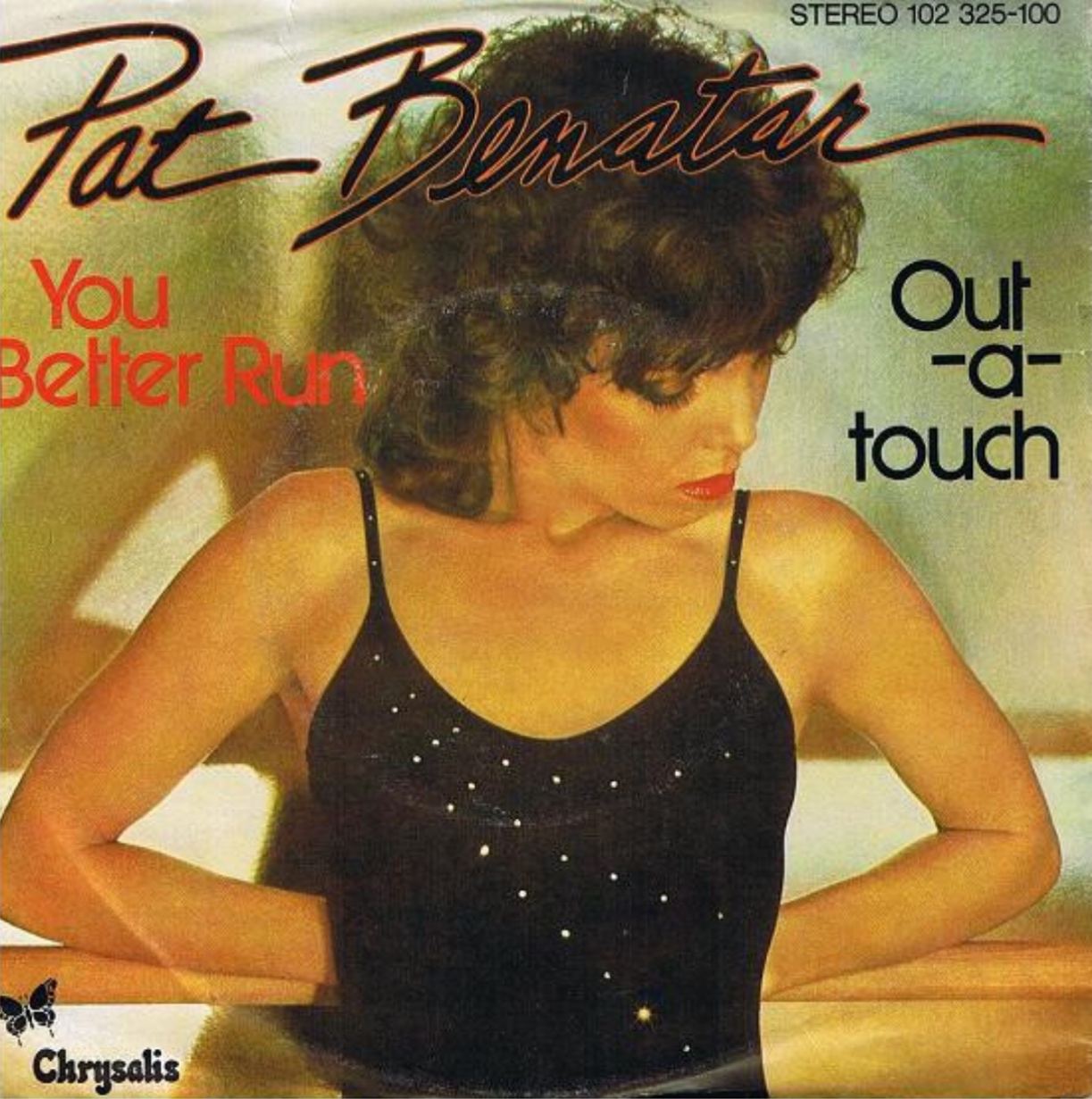
"You Better Run" was originally a 1966 hit for the Young Rascals, written by Eddie Brigati and Felix Cavaliere. The song reached the top 20 in the U.S. and featured a defiant tone about getting revenge on someone who wronged the narrator. Pat Benatar covered the song for her 1980 album “Crimes of Passion”. Released as the lead single, Benatar's version flips the perspective, turning the kiss-off message towards a male antagonist. The song peaked at number 42 on the U.S. Billboard Hot 100 and number 44 on the Cash Box Top 100.
In 1981, as MTV prepared to launch, there was a shortage of American-made music videos since artists hadn’t yet started producing them regularly. While European bands and acts like Devo had some content available, Pat Benatar stood out as one of the few American musicians with a real video, specifically for her song "You Better Run" from her 1980 album “Crimes of Passion”. As a result, Benatar's video became a landmark as she was the first woman, American, and rock artist featured on MTV. Her video became part of a small rotation of clips that were played repeatedly, leading to rapid fame. Neil Giraldo, Benatar's husband and guitarist, later reflected on the unexpected impact MTV had on their careers, describing how its constant airing quickly made them recognizable everywhere.
The music video for "You Better Run" was straightforward, featuring her and her band performing in a warehouse. Over time, Benatar's videos became more conceptual, which didn’t sit well with her husband and guitarist, Neil Giraldo, who felt that intricate storylines detracted from the song's meaning. Giraldo imposed a ban on historical costumes after the "Shadows Of The Night" video, where Benatar dressed as a WWII pilot. He preferred simpler videos, like "You Better Run," which became the second video ever aired on MTV.
MTV used the video strategically to send a message to record labels, showing the kind of rock-focused, performance-driven content they intended to promote. Benatar’s genuine frustration with taking direction from video directors added an edge to her performance, aligning with the song’s sassy and aggressive tone. Directed by Nick Saxton, who had experience with acts like Earth, Wind & Fire and Michael Jackson, the video was produced on a tight budget and helped popularize the "band performing in warehouse" rock video style.
18.9.24
PAT BENATAR - INVINCIBLE
Released: June 24, 1985
Charts: US: #10 UK: #53
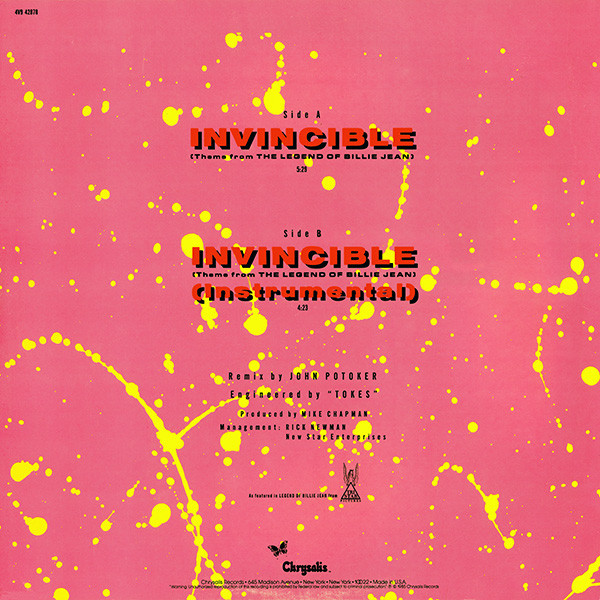
"Invincible" is the lead single from Pat Benatar's sixth studio album, “Seven the Hard Way”. Released on June 1985, the song was written by Holly Knight and Simon Climie and served as the theme song for the film “The Legend of Billie Jean”. It achieved significant success, reaching No. 10 on the Billboard Hot 100 chart on September 14, 1985. The song earned a Grammy nomination and is notable for its empowering lyrics and energetic performance.
Holly Knight, who co-wrote the song was inspired by the script of “The Legend of Billie Jean” when creating the song. She found the script provided a clear direction for the song's theme. Knight has expressed her admiration for the track, calling it one of her favorites and expressing a desire to hear it covered by an alternative band like Foo Fighters. Benatar, on the other hand, was not a fan of the film, often criticizing it in concert saying, "This is from one of the worst movies ever made", and supposedly delaying the DVD release by refusing to sign over the rights.
The film features Helen and Christian Slater as siblings on the run after an accidental shooting. Yeardley Smith, who later voiced Lisa Simpson on “The Simpsons”, plays a teenage friend of the Slater siblings in the film. Helen Slater recalls that hearing "Invincible" reminds her of a scene where Smith's character unexpectedly gets her period.
“Seven the Hard Way” aimed to reinvent her image from a pop-rock icon to a more serious artist. Despite this shift, she included "Invincible" acknowledging its quality despite it not fitting with the album's overall theme. Benatar was highly critical of this album calling it a nightmare to record and expressing disappointment with its commercial performance. She felt only a couple of songs were worth including and criticized the album as a costly failure that sold poorly compared to her earlier works.
PAT BENATAR - HELL IS FOR CHILDREN
Estrena: 5 d'agost de 1980
Àlbum: Crimes of Passion
Inspirada per diversos articles del New York Times sobre l'abús infantil, Pat Benatar va coescriure la potent cançó “Hell Is For Children” amb Neil Giraldo i el baixista Roger Capps per al seu àlbum “Crimes of Passion”. Tot i que no es va llançar com a single oficial, la cançó va agradar als oients i es va fer popular a les emissores de rock, arribant al número 7 a la llista de Tunecaster Rock Tracks. Una versió en directe es va llançar posteriorment com a cara B del seu senzill "Love Is a Battlefield" el 1983. Amb els anys, ha estat versionada per diverses bandes de hard rock.
En una entrevista, Pat Benatar va parlar sobre la inspiració darrere de “Hell Is For Children”, explicant que una sèrie d'articles del New York Times sobre l'abús infantil la van afectar profundament. Criada en un petit poble de Long Island, es va sorprendre en descobrir la gravetat del problema de l'abús a Amèrica. Emocionada per aquestes revelacions, Benatar va voler canalitzar el dolor i el patiment de les víctimes a través de la música de la cançó, demanant al seu marit, Neil Giraldo, que composés alguna cosa que transmetés el dolor intens que patien els nens. El resultat va ser un himne que va triomfar tant entre el públic com entre els afectats.
Neil Giraldo va explicar que Benatar va començar a escriure la lletra, a la qual també va contribuir el baixista Roger Capps. Giraldo es va encarregar de desenvolupar la melodia, treballar la tornada i compondre el final. L'objectiu de Giraldo era fer que la cançó fos intensament emocional, començant amb un to trist i augmentant gradualment la intensitat. Al final, Giraldo volia que els oients se sentissin emocionalment exhausts, capturant el missatge poderós i dolorós sobre l'abús infantil.
Benatar va compartir que fins i tot van iniciar una fundació per a nens maltractats després de rebre cartes d'adults que lloaven la cançó per tractar el tema de manera tan poderosa i poc habitual dins del món del rock. Per a Benatar, la cançó segueix evocant records d’aquella tarda emocional quan ella i Giraldo van discutir per primera vegada la seva creació.
Molts oients creien erròniament que la cançó es basava en la seva experiència personal amb l'abús infantil, però no era així. Neil Giraldo va aclarir que Benatar va tenir una infantesa feliç i idíl·lica, similar a la sèrie Happy Days. Tot i que hi havia algun abús verbal a la família de Giraldo, l'abús físic descrit a la cançó no era personal per an ells. Malgrat aquesta confusió, Giraldo va expressar satisfacció amb el resultat de la cançó, qualificant-la com una de les seves preferides a causa del seu impacte emocional.
PAT BENATAR - HELL IS FOR CHILDREN
Released: August 5, 1980
Album: Crimes of Passion
Inspired by several New York Times articles on child abuse, Pat Benatar co-wrote the powerful song “Hell Is For Children” with Neil Giraldo and bassist Roger Capps for her “Crimes of Passion” album. Although it wasn't released as an official single, the song resonated with listeners and became popular on album-rock radio, reaching #7 on the Tunecaster Rock Tracks Chart. A live version was later released as the B-side to her hit single "Love Is a Battlefield" in 1983. Over the years, it has been covered by various hard rock bands.
In an interview Pat Benatar discussed the inspiration behind “Hell Is For Children” explaining that a series of New York Times articles about child abuse deeply affected her. Raised in a small Long Island town, she was shocked to learn about the widespread issue of abuse in America. Moved by these revelations, Benatar wanted to channel the pain and suffering of the victims into the song's music, asking her husband, Neil Giraldo, to compose something that conveyed the intense pain the children were enduring. The result became an anthem, resonating with both audiences and survivors.
Neil Giraldo explained that Benatar started the lyrics, which were then contributed to by bassist Roger Capps. Giraldo took over by developing the melody, working on the chorus, and composing the outro. He aimed to make the song intensely emotional, starting with a sad tone and gradually building the intensity. By the end, Giraldo wanted listeners to feel emotionally exhausted, capturing the powerful and painful message about child abuse.
Benatar shared that they even started a foundation for abused children after receiving letters from adults who praised the song for addressing the issue in such a powerful and unheard-of way within the rock world. For Benatar, the song continues to evoke memories of that emotional afternoon when she and Giraldo first discussed its creation.
Many listeners mistakenly believed that the song was based on her personal experience with child abuse, but that was not the case. Neil Giraldo clarified that Benatar had a happy, idyllic upbringing, similar to the show “Happy Days”. While there was some verbal abuse in Giraldo's family, the physical abuse depicted in the song wasn't personal to them. Despite the misconception, Giraldo expressed satisfaction with how the song turned out, calling it one of his favorites due to its powerful emotional impact.
17.9.24
PAT BENATAR - ALL FIRED UP
Released: Released: June 14, 1988
Charts: US: #19 UK: #19
"All Fired Up" was originally written by Kerryn Tolhurst and performed by the Australian band Rattling Sabres in 1987. Pat Benatar covered the song for her 1988 album “Wide Awake in Dreamland”, adjusting some lyrics to fit her perspective and releasing it as the lead single. The cover earned Benatar a Grammy nomination for Best Rock Vocal Performance, Female, in 1989. The song reached number 19 on the US Billboard Hot 100 and on the UK Singles Chart, marking Benatar's last US top 40 single to date.
After experimenting with a new amp and guitar, Tolhurst created the song's riff and chord progression, originally titled "Working Against The Clock." The final title, "All Fired Up," came to him while stuck in traffic, completing the song. Kerryn Tolhurst was a member of Country Radio and The Dingoes, and a notable songwriter and session musician. He also produced albums for Bruce Henderson, Jimmy Norman and Russell Crowe.
"All Fired Up" can be seen as an anthem of empowerment and personal transformation. The lyrics convey a sense of awakening and newfound purpose. In the beginning, the protagonist is living passively, unaware of the potential for change, expressed in the lines, "Livin' with my eyes closed, goin' day to day." This suggests a life of complacency, without direction or meaning.
As the song progresses, there is a shift in attitude: "Lookin' for a reason, searchin' for a sign." The protagonist begins to actively seek purpose and energy, symbolized by the "kick inside" that fuels their desire for change. The repeated refrain, "All fired up," becomes a powerful declaration of their motivation and readiness to embrace life's opportunities.
The song also reflects on the imperfections of life, acknowledging that "Ain't nobody livin' in a perfect world." This universal recognition of struggles adds a relatable layer, as it reminds listeners that everyone faces challenges and yearns to be understood.
“Wide Awake in Dreamland” was Pat Benatar's final album of the 1980s and marked her last fully rock-oriented album before transitioning to a bluesier sound with “True Love” in 1991. The album was primarily recorded at Neil Giraldo's studio, with much of the songwriting done by Giraldo and drummer Myron Grombacher. Benatar, credited as Pat Giraldo, co-wrote four of the tracks.
CARPENTERS - (THEY LONG TO BE) CLOSE TO YOU
Estrena: 14 de maig de 1970
Llistes: Regne Unit: #6 EUA: #1 (4 setmanes)
"(They Long to Be) Close to You", escrita per Burt Bacharach i Hal David amb les primeres contribucions de Cathy Steeves, es va llançar per primera vegada com a cara B l'any 1963. La versió més famosa és la de Carpenters, llançada el 14 de maig de 1970 com a part del seu àlbum “Close to You”. Aquesta versió, produïda per Jack Daugherty, va assolir el primer lloc a la Billboard Hot 100 dels Estats Units i a les llistes de música contemporània per adults, i també va arribar al número u al Canadà i Austràlia, mentre que va arribar al número sis al Regne Unit i Irlanda.
L'any 1969, els Carpenters van signar amb A&M Records, co-propietat de Herb Alpert. Tot i que Burt Bacharach volia inicialment que Alpert gravés "(They Long to Be) Close to You", Alpert no es trobava còmode amb la lletra i va decidir produir un nou arranjament per als Carpenters. Richard Carpenter va recordar que Alpert només els va proporcionar una partitura bàsica i li va dir d’incloure elements musicals específics. Carpenter va destacar que, malgrat el so aparentment senzill, l'arranjament és força complex.
Durant les primeres sessions de gravació, Karen Carpenter tocava la bateria, però Herb Alpert va considerar que la seva interpretació era massa lleugera. Després d'un segon intent que encara no tenia el ritme desitjat, Alpert va suggerir incorporar el reconegut bateria Hal Blaine, qui va substituir Karen a la bateria, cosa que va portar a una nova presa amb Richard Carpenter al piano, Joe Osborn al baix, i Karen a la veu.
"(They Long to Be) Close to You" va valer a Carpenters un premi Grammy per la Millor Interpretació Contemporània per un Duo, Grup o Cor l'any 1971, sent el primer dels tres Grammys que guanyarien al llarg de la seva carrera. A més, la cançó va rebre la certificació d'or per part de la Recording Industry Association of America (RIAA) el 12 d'agost de 1970.
CARPENTERS - (THEY LONG TO BE) CLOSE TO YOU
Released: May 14, 1970
Charts: UK: #6 US: #1 (4 weeks)
"(They Long to Be) Close to You," written by Burt Bacharach and Hal David with early contributions from Cathy Steeves, was first released as a B-side in 1963. The most famous version is by The Carpenters, released on May 14, 1970, as part of their album “Close to You”. This version, produced by Jack Daugherty, topped the US Billboard Hot 100 and Adult Contemporary charts, and also reached number one in Canada and Australia, while peaking at number six in the UK and Ireland.
In 1969, The Carpenters signed with A&M Records, co-owned by Herb Alpert. Although Burt Bacharach initially wanted Alpert to record "(They Long to Be) Close to You," Alpert was uncomfortable with the lyrics and chose to produce a new arrangement for The Carpenters. Richard Carpenter recalled that Alpert provided only a lead sheet and instructed him to include specific musical elements without sharing his own recording. Carpenter emphasized that, despite its seemingly simple sound, the arrangement is quite complex.
During the initial recording sessions for the track Karen Carpenter played the drums, but producer Herb Alpert felt the performance was too light. After a second attempt still lacked the desired groove. Alpert suggested bringing in renowned drummer Hal Blaine who replaced Karen on drums, leading to a successful take with Richard Carpenter on piano, Joe Osborn on bass, and Karen on vocals.
"(They Long to Be) Close to You" earned The Carpenters a Grammy Award for Best Contemporary Performance by a Duo, Group or Chorus in 1971, marking the first of three Grammys they would win throughout their career. Additionally, the song was certified gold by the Recording Industry Association of America (RIAA) on August 12, 1970.