Total de visualitzacions de pàgina:

29.9.24


PAT BENATAR - HIT ME WITH YOUR BEST SHOT


Estrena: 15 de setembre de 1980

Llistes: EUA: #9


"Hit Me with Your Best Shot" és una cançó llançada el 1980 com el segon senzill de l'àlbum “Crimes of Passion”. Escrita per Eddie Schwartz, es va convertir en una de les cançons més emblemàtiques de Benatar i en el seu primer Top 10 als EUA, arribant al número 9 a la llista Billboard Hot 100 i al número 7 a la llista de Cash Box.


"Hit Me with Your Best Shot" reflecteix una actitud confiada i resilient, en la qual un se sent preparat per afrontar el que la vida li pugui llançar. L'escriptor Eddie Schwartz explica que el concepte de la cançó li va venir després d'assistir a una sessió de teràpia bioenergètica a Toronto, on els participants colpejaven coixins per alliberar hostilitat. Després de la sessió, la frase "Hit Me with Your Best Shot" li va venir al cap. Aquesta cançó es va convertir en un èxit clau per Pat Benatar i va impulsar la carrera de Schwartz, permetent-li produir per diversos artistes com Joe Cocker i Carly Simon.


En aquell moment, Schwartz treballava com a guitarrista per a la cantant canadenca Charity Brown. Una editorial, ATV, estava interessada a signar-lo, però volien una maqueta del seu treball. Schwartz va preparar ràpidament una maqueta, enregistrant "Hit Me With Your Best Shot" a primeres hores del matí després d'un concert. Va improvisar la lletra a l'estudi, escrivint-la sobre la marxa mentre la gravava.


A ATV inicialment no els va agradar gens la cançó, fins al punt que van esborrar les gravacions mestres. No obstant això, un enginyer va guardar en secret una còpia per a Schwartz. Més tard, un nou executiu d'ATV, Marv Goodman, va escoltar la maqueta i li va agradar. Encara treballant a Chrysalis Records, Goodman escoltava sovint la maqueta. Un dia, es diu que Pat Benatar va escoltar la cançó a través de la paret durant una reunió a Chrysalis i en va quedar entusiasmada. Això la va portar a gravar "Hit Me With Your Best Shot", que es va convertir en un gran èxit, consolidant tant les carreres de Benatar com de Schwartz.


En una entrevista de 1984, Pat Benatar va reflexionar sobre el seu enfocament de la lletra. Benatar va admetre que, tot i que normalment és meticulosa amb les lletres que canta, de vegades deixa passar algunes frases si la resta de la cançó funciona bé. Per a aquesta pista, va mencionar tenir sentiments contradictoris sobre algunes parts de la cançó, particularment trobant difícil cantar frases com "you're a real tough cookie" (ets una galeta molt dura) a mesura que la seva carrera avançava. Tot i això, va continuar interpretant-la, ja que s'havia convertit en un èxit.


Benatar també va recordar un moment incòmode quan va presentar l'escriptor de la cançó, Eddie Schwartz, en un concert en directe. Després de mencionar el seu nom, el públic es va quedar en silenci, demostrant que no el coneixien. A més, va modificar lleugerament una frase de la cançó, canviant "Before I put another notch in your lipstick case" (Abans de posar una altra osca al teu estoig de llapis de llavis) a "my lipstick case" per ajustar-se a una perspectiva femenina. Quan artistes masculins versionen la cançó, de vegades l'alteren per "guitar case".


La lletra te un to suggerent, però la cançó no es va veure com a ofensiva. Alguns comentaris de l'època la van etiquetar com a sexista o com una cançó que fomentava la violència contra les dones, cosa que va sorprendre el seu escriptor, Eddie Schwartz. Va explicar que sempre es va concebre de manera metafòrica, sense cap violència literal intencionada. Tot i que les lletres es podien interpretar com a referides a una aventura d'una nit, Schwartz va aclarir que la cançó tracta sobre l'auto-confiança. Parla de la resiliència, amb el missatge que, sigui quina sigui la dificultat que se't presenti, pots afrontar-la i "jugar a la lliga" dels qui t'envolten.


PAT BENATAR - HIT ME WITH YOUR BEST SHOT


Released: September 15, 1980

Charts:  US: #9   


"Hit Me with Your Best Shot" is a song released in 1980 as the second single from the “Crimes of Passion” album. Written by Eddie Schwartz, it became one of Benatar's signature songs and her first Top 10 hit in the U.S., reaching No. 9 on the Billboard Hot 100 and No. 7 on the Cash Box chart. 


"Hit Me with Your Best Shot" reflects a confident, resilient attitude, where one feels ready to take on whatever life throws their way. Writer Eddie Schwartz, explains the song's concept came to him after attending a bio-energetics therapy session in Toronto, where participants punched pillows to release hostility. After the session, the phrase "Hit Me with Your Best Shot" popped into his mind. This song became a breakout hit for Pat Benatar and catapulted Schwartz's career, leading him to produce for various artists like Joe Cocker and Carly Simon.


At the time, Schwartz was working as a guitarist for Canadian singer Charity Brown. A publishing company, ATV, was interested in signing him, but they wanted a demo of his work. Schwartz quickly put together a demo, recording "Hit Me With Your Best Shot" in the early morning hours after a gig. He improvised the song's lyrics in the studio, writing them on the fly as he recorded.


ATV initially disliked the song so much they erased the master recordings. However, an engineer secretly saved a copy for Schwartz. Later, a new executive at ATV, Marv Goodman, heard the demo and liked it. While still working at Chrysalis Records, Goodman played the demo frequently. One day, Pat Benatar reportedly overheard the song through the wall during a meeting at Chrysalis and became excited about it. This led her to record "Hit Me With Your Best Shot," which became a massive hit, solidifying both Benatar’s and Schwartz’s careers.


In a 1984 interview Pat Benatar reflected on her approach to lyrics, especially with songs like "Hit Me With Your Best Shot." Benatar admitted that while she is usually meticulous about the lyrics she sings, she sometimes lets certain lines slide if the rest of the song works well. For this track she mentioned having mixed feelings about parts of the song, particularly finding it hard to sing lines like "you're a real tough cookie" as her career progressed. Despite this, she stuck with the song, as it had become a hit.


Benatar also recalled an awkward moment when she introduced the song’s writer, Eddie Schwartz, at a live show. After mentioning his name, the audience fell silent, showing they weren't familiar with him. Additionally, she slightly modified a lyric in the song, changing "Before I put another notch in your lipstick case" to "my lipstick case" to fit a female perspective. When male artists cover the song, they sometimes alter it to "guitar case" instead.


The lyrics carry suggestive undertones, but the song was not widely seen as offensive. Some commentary at the time labeled it as sexist or as encouraging violence against women, which surprised its writer, Eddie Schwartz. He explained that the song was always meant metaphorically, with no literal violence intended. Though the lyrics could be interpreted as referring to a one-night stand, Schwartz clarified that the song is about self-confidence. It's about resilience, with the message that whatever challenges come your way, you can handle them and "play in the league" of those around you.


THE TEMPTATIONS - MY GIRL 


Estrena: 21 de desembre de 1964

Llistes: Regne Unit: #2   EUA: #1 (1 setmana)


"My Girl" és una cançó de The Temptations, escrita i produïda per Smokey Robinson i Ronald White de The Miracles. Va ser el primer número u als Estats Units per a The Temptations i és àmpliament reconeguda com la seva cançó més emblemàtica. Smokey Robinson es va inspirar per escriure "My Girl" gràcies a la seva dona, Claudette Rogers Robinson, que també era membre de The Miracles. La cançó es va incloure a l'àlbum de 1965 “The Temptations Sing Smokey”. El 2017, "My Girl" va ser seleccionada per a la preservació al National Recording Registry de la Biblioteca del Congrés dels Estats Units per la seva significació cultural, històrica i artística.


"My Girl" va ser escrita al Teatre Apollo mentre The Temptations estaven de gira amb The Miracles. Robinson estava treballant la cançó al piano del teatre quan White s'hi va unir, i junts la van completar. Originalment destinada a The Miracles, The Temptations en van quedar tan impressionats que van convèncer Robinson perquè els deixés gravar-la. Com a mà dreta de Berry Gordy a Motown, Robinson va accedir i va passar la setmana següent assajant la cançó amb The Temptations. Quan van tornar a Detroit, Robinson i White van produir la sessió de gravació on The Temptations van enregistrar el que es convertiria en el seu primer gran èxit número u.


Smokey Robinson va escriure "My Girl" específicament pensant en la veu de David Ruffin. Aquesta cançó va ser el primer senzill de The Temptations amb Ruffin com a vocalista principal, ja que els anteriors havien comptat amb Eddie Kendricks i Paul Williams en aquest paper. La potent actuació de Ruffin a "My Girl" el va portar a convertir-se en el cantant principal del grup. Robinson va continuar escrivint nombrosos èxits per a The Temptations, que eren considerats el grup vocal més talentós de Motown.


Els membres de Motown, The Funk Brothers, van participar a "My Girl", contribuint amb l'arranjament senzill però molt efectiu. L'arranjament, realitzat per Paul Riser, comença amb la icònica línia de baix de James Jamerson, seguida del riff ascendent de guitarra de Robert White. La introducció també inclou espetecs de dits, la bateria de Benny Benjamin i cordes proporcionades per l'Orquestra Simfònica de Detroit. Aquest arranjament va ser dissenyat per destacar les veus, fent que la lletra fos clara i impactant. Aquest enfocament va establir un model per a futures gravacions de The Temptations i va jugar un paper clau en el seu ascens a l'estrellat, mantenint el focus en els cantants durant les actuacions.


La cançó es va tornar a llançar el 1992, després de l'estrena, el novembre de 1991, de la pel·lícula del mateix nom, que incloïa la cançó. Tot i que no va arribar a les llistes de Billboard, va assolir el número 2 a la llista de senzills del Regne Unit.


THE TEMPTATIONS - MY GIRL 


Released : December 21, 1964

Charted:  UK: #2   US: #1 (1 week)


"My Girl" is a song by The Temptations, written and produced by Smokey Robinson and Ronald White of The Miracles. It became The Temptations' first U.S. number one single and is widely recognized as their signature song. Smokey Robinson was inspired to write "My Girl" by his wife, Claudette Rogers Robinson, who was also a member of The Miracles. The track was featured on The Temptations' 1965 album “The Temptations Sing Smokey”. In 2017, "My Girl" was selected for preservation in the National Recording Registry by the Library of Congress due to its cultural, historical, and artistic significance.


"My Girl" was written at the Apollo Theater while The Temptations were on tour with The Miracles. Robinson was working on the song at a piano in the theater when White joined him, and together they completed it. Originally intended for The Miracles, The Temptations were so impressed by the song that they persuaded Robinson to let them record it instead. As Motown's Berry Gordy's right-hand man, Robinson agreed and spent the next week rehearsing the song with The Temptations. Upon returning to Detroit, Robinson and White produced the recording session where The Temptations laid down what would become their first U.S. number one hit.


Smokey Robinson specifically wrote "My Girl" with David Ruffin's voice in mind. This song marked the first Temptations single to feature Ruffin as the lead vocalist, as previous singles had featured Eddie Kendricks and Paul Williams in that role. Ruffin's powerful performance on "My Girl" led to him becoming the group's primary lead singer. Robinson continued to write numerous hits for The Temptations, who were regarded as the most talented vocal group at Motown.


Members of the Motown house band, The Funk Brothers, played on "My Girl," contributing to its simple yet highly effective arrangement. The arrangement, charted by Paul Riser, begins with James Jamerson's iconic bassline, followed by Robert White's ascending guitar riff. The song's introduction also features finger snaps, drums by Benny Benjamin, and strings provided by the Detroit Symphony Orchestra. This arrangement was designed to highlight the vocals, making the lyrics clear and impactful. The approach set a template for future Temptations recordings and played a key role in their rise to stardom by keeping the focus on the singers during performances.


The song was re-released in 1992, following the November 1991 release of the film of the same name, which featured the song. It did not reach the Billboard charts, but did reach number 2 in the UK Singles Chart.


28.9.24


BEACH BOYS - THE WARMTH OF THE SUN


Released: October 26, 1964

Album: Shut Down Volume 2


"The Warmth of the Sun" is a song by the Beach Boys, written by Brian Wilson and Mike Love. It was released in 1964 on the album “Shut Down Volume 2” and also served as the B-side to the single "Dance, Dance, Dance," which became a hit, reaching number eight in the US. and number twenty-four in the UK. Brian Wilson produced both the song and the rest of the album. 


"The Warmth of the Sun" was written in November 1963, just before the assassination of President John F. Kennedy. Although the song's lyrics were written beforehand, the emotional weight of the tragic event influenced the atmosphere during its recording. Mike Love explained that the song is about the loss of love, describing the experience of being in love with someone who no longer feels the same. The melancholy and reflective mood of the song, combined with the charged emotions following Kennedy’s assassination.


In a 2008 interview Mike Love reflected on the inspiration behind the lyrics of the song. He explained that the melancholy melody Brian Wilson composed led him to write lyrics about unreciprocated love, drawing from a personal experience where a girl he liked did not feel the same. Despite the heartbreak, Love chose to focus on the positive, seeing the memory of love as "the warmth of the sun." His goal was to create music that offered listeners a "sonic oasis," much like in "In My Room," where they could escape or find solace in their troubles.


Fred Vail, former manager and promoter for The Beach Boys, shared his recollection of November 22, 1963, the day President John F. Kennedy was assassinated, in the Forgotten Hits newsletter. He described the day as starting like any other, with people preparing for the upcoming Thanksgiving holiday and going about their daily routines. At the time, Vail was a 19-year-old college student and concert promoter, preparing for a Beach Boys "dance and show" event that evening in Marysville, California. The Beach Boys were rising stars, with hits like "Surfin' USA," "Surfer Girl," and "Little Deuce Coupe" already under their belts, and their recent singles "Be True to Your School" and "In My Room" climbing the charts. Vail emphasized how the events of that day, much like Pearl Harbor for the previous generation and 9/11 for the next, marked a loss of innocence for the baby boomer generation.


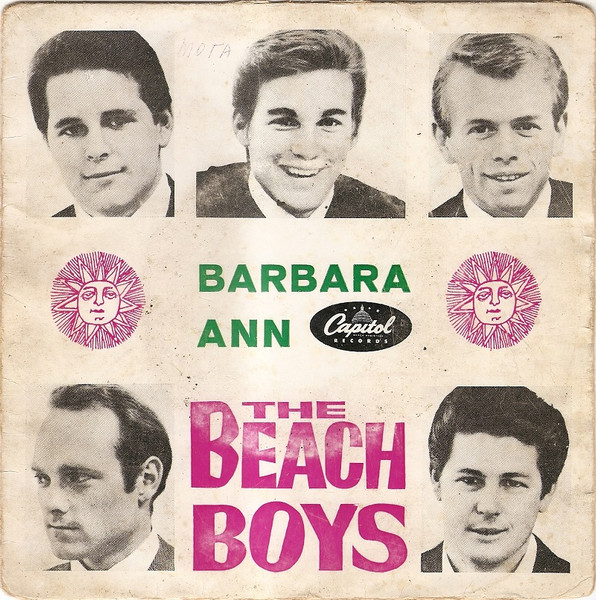
BEACH BOYS - BARBARA ANN


Estrena: 20 de desembre de 1965

Llistes: EUA: #2 Regne Unit: #3


"Barbara Ann" és una cançó escrita per Fred Fassert i gravada per primera vegada pels The Regents el 1961, arribant al número 13 del Billboard Hot 100. Fassert va escriure la cançó cap al 1958, posant-li el nom de la seva germana. El seu germà, Charles Fassert, formava part dels The Regents, fet que va portar el grup a gravar la cançó, amb Guy Villari com a veu principal en falset.


Els Beach Boys van gravar una versió més famosa per al seu àlbum en directe del 1965 “Beach Boys' Party!”. Llançada com a single amb "Girl Don't Tell Me" com a cara B, va arribar al número 2 als Estats Units i al número 3 al Regne Unit. Dean Torrence de Jan and Dean va proporcionar la veu principal juntament amb Brian Wilson, tot i que Torrence no va ser acreditat a l'àlbum. Al final de la cançó es pot escoltar a Carl Wilson agraint-li la interpretació.


Capitol Records va llançar "Barbara Ann" com a senzill inesperadament, sense informar als Beach Boys. La banda estava centrada en guanyar credibilitat com a grup musical seriós i preferia evitar cançons simplistes. Aquesta decisió es va prendre després que el single anterior del grup no tingués èxit, cosa que va portar a Al Coury de Capitol a llançar "Barbara Ann" ràpidament.


"Barbara Ann" va entrar a la llista del Billboard Hot 100 l'1 de gener de 1966 i ràpidament va pujar al número 2 el 29 de gener, col·locant-se en posició de potencialment arribar al número 1 però va ser bloquejada per "My Love" de Petula Clark. Finalment va arribar al número 2 del Billboard Hot 100 als Estats Units, va encapçalar les llistes a Alemanya, Suïssa i Noruega, i va arribar al número 3 al Regne Unit. També va ser el major èxit dels Beach Boys a Itàlia, arribant al número 4.


BEACH BOYS - BARBARA ANN


Released: December 20, 1965

Charts:  US: #2    UK: #3 


"Barbara Ann" is a song written by Fred Fassert and first recorded by The Regents in 1961, where it reached No. 13 on the Billboard Hot 100. Fassert wrote the song around 1958, naming it after his sister. His brother, Charles Fassert, was in The Regents, which led to the group's recording of the track, featuring falsetto lead vocals by Guy Villari.


The Beach Boys recorded a more famous version for their 1965 live album “Beach Boys' Party!”. Released as a single with "Girl Don't Tell Me" as the B-side, it peaked at No. 2 in the U.S. and No. 3 in the UK. Dean Torrence of Jan and Dean provided lead vocals alongside Brian Wilson, although Torrence was not credited on the album. Carl Wilson can be heard thanking him at the song's conclusion.


Capitol Records unexpectedly released "Barbara Ann" as a single without informing the Beach Boys. The band was focused on gaining credibility as a serious musical act and preferred to avoid simplistic songs. This decision came after the group's previous single performed poorly, prompting Capitol's Al Coury to rush-release "Barbara Ann."


"Barbara Ann" entered the Billboard Hot 100 chart on January 1, 1966, and quickly rose to No. 2 by January 29, positioning itself to potentially reach No. 1. However, it was blocked by Petula Clark's "My Love." The song ultimately peaked at No. 2 on the US Billboard Hot 100, topped the charts in Germany, Switzerland, and Norway, and reached No. 3 in the UK. It was also the Beach Boys' biggest hit in Italy, reaching No. 4.