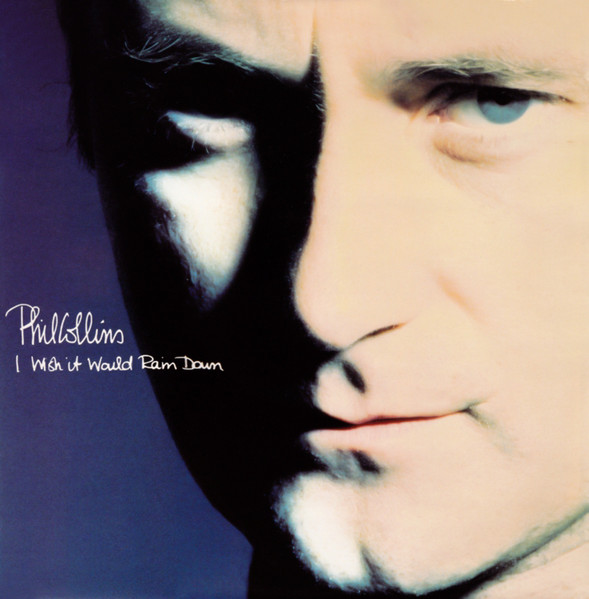
“I Wish It Would Rain Down” is a song from Phil Collins’ 1989 album “…But Seriously”, featuring lead guitar by Eric Clapton and a gospel choir. The song became a major hit in early 1990, reaching No. 7 in the UK, No. 3 in the US, and No. 1 in Canada, where it was the most successful song of the year. Collins, who had collaborated with Clapton on previous albums, saw this as his closest attempt at writing a blues song. Lyrically, it reflects on a lost relationship, with the singer longing for reconciliation despite knowing it’s unlikely.
The music video is an 8:30-minute black-and-white production directed by Jim Yukich, with a 2:30-minute comedic introduction. Set in a 1930s theater, it parodies “Gone with the Wind” and features actor Jeffrey Tambor as a demanding director. The scene opens with dancers rehearsing to “Sunshine of Your Love” by Cream, with Eric Clapton seated on a stool.
An in-joke references Collins’ transition from drummer to singer in Genesis when Clapton notes that “Billy” (played by Collins) used to be a drummer before taking on lead vocals. Collins’ backing band members appear in non-speaking roles, including drummer Chester Thompson and bassist Leland Sklar. Collins is reluctantly cast in a play after the lead actor falls ill. When Tambor’s character criticizes his acting, Collins responds, “I never said I could act, he said I could sing.” The director then tells him to play the song, leading into the performance. As Collins sings, his character imagines himself as a major stage and film star.
TUBEWAY ARMY - ARE FRIENDS ELECTRIC?
Llançament: 4 de maig de 1979
Regne Unit: #1 (4 setmanes)
“Are ‘Friends’ Electric?” és una cançó de la banda anglesa Tubeway Army, escrita i produïda per Gary Numan. Es va publicar a l’àlbum de 1979 “Replicas”, que va significar la transició de Numan cap a la seva carrera en solitari, tot i que la discogràfica va insistir que el crèdit continués a nom del grup. Aquest va ser l’últim senzill de Tubeway Army abans de la seva dissolució. A partir del seu tercer àlbum, “The Pleasure Principle”, Gary Numan ja seria reconegut oficialment com a artista en solitari.
La lletra de Numan es basava en un relat curt que ell mateix havia escrit sobre un home que contracta una prostituta i descobreix que és un androide. La cançó va sorgir de la combinació de dues peces inacabades, i un error crucial—una nota equivocada—va acabar definint el seu so. Gary Numan, que té la síndrome d’Asperger, sovint explora temes de desconnexió i tecnologia en la seva música. En una entrevista, va revelar que la cançó parla d’una prostituta robot, un concepte prou ambigu per esquivar la censura. Segons ell, si la BBC hagués entès el significat real, probablement no l’haurien programat ni l’haurien deixat actuar a Top of the Pops.
Inicialment, la cançó va rebre crítiques pel seu so electrònic, poc acceptat a l’època. Tanmateix, el públic la va acceptar abans que la premsa, i va arribar al número 1 al Regne Unit durant quatre setmanes. Numan recorda que les emissores de ràdio no van començar a programar-la fins a la seva tercera setmana al cim de les llistes, fet que demostra la resistència inicial dels mitjans convencionals. Tot i la seva inusual estructura —sense una tornada clara i sense ritme ballable—, la cançó es va convertir en un moment clau per a la música electrònica.
Si bé va ser un èxit al Regne Unit, “Are ‘Friends’ Electric?” no va tenir gaire impacte als Estats Units, on Numan és més conegut per “Cars”. Ell ha admès que no es preocupa gaire per la seva manca d’èxit als EUA, ja que el que més valora és el procés de crear música. Tot i algunes frustracions, està agraït per l’èxit assolit al Regne Unit i altres països, que li ha permès mantenir la seva carrera durant dècades.
Numan tenia aspiracions modestes al començament, només volia omplir la sala Marquee de Londres, però l’èxit d’aquesta cançó va ajudar a impulsar la música electrònica cap al corrent principal. Mirant enrere, se sent orgullós d’haver contribuït a l’evolució del gènere i de veure com la tecnologia ha influït en la música moderna.
TUBEWAY ARMY - ARE FRIENDS ELECTRIC?
Released: May 4, 1979
UK: #1 (4 wks)
“Are ‘Friends’ Electric?” is a song by the English band Tubeway Army, written and produced by Gary Numan. It was released on the 1979 album “Replicas”, which marked Numan’s transition to a solo career despite being credited to the band at the record label’s insistence. This was Tubeway Army’s final single before their breakup. By Numan’s third album, “The Pleasure Principle”, he was officially recognized as a solo artist.
Gary Numan’s lyrics were based on a short story he had written about a man who hires a prostitute, only to find she is an android. The track was created by combining two unfinished songs, with a crucial mistake—a wrong note—helping to define its unique sound. Gary Numan, who has Asperger’s Syndrome, often explores these ideas in his music. In an interview, he revealed that the song is about a robot prostitute, a concept that was obscure enough to avoid censorship. Had the BBC realized its true meaning, they likely wouldn’t have played it or allowed Numan to perform on Top of the Pops.
The song faced criticism due to its electronic sound, which wasn’t widely accepted at the time. However, the public embraced it before the media, and it topped the UK charts for four weeks. Gary Numan recalled that radio stations only began to playlist the track in its third week at #1, highlighting the initial resistance from mainstream outlets. Despite this skepticism, the track became a defining moment for electronic music, even though it lacked a traditional chorus and wasn’t danceable.
This was a hit in the UK but failed to gain much attention in the US, where Gary Numan remains best known for “Cars”. Numan has stated that he doesn’t dwell on the lack of American success, as he primarily enjoys the process of making music. While he acknowledges some frustration, he is grateful for his success in the UK and other countries, which has allowed him to sustain his career.
Numan initially had modest ambitions, aiming only to sell out the Marquee club, but the song’s success helped push electronic music into the mainstream. Looking back, he’s proud to have contributed to the genre’s evolution, seeing how technology has shaped modern music.
25.3.25
10cc - DREADLOCK HOLIDAY
Llançament: Juliol de 1978
Llistes: Regne Unit: #1 (1 setmana)
“Dreadlock Holiday” és una cançó de reggae de 10cc, escrita per Eric Stewart i Graham Gouldman. Llançada com el primer senzill del seu àlbum “Bloody Tourists”, va arribar al número 1 en diverses llistes internacionals i es va convertir en el tercer número 1 i últim èxit al Top 10 del grup al Regne Unit.
La cançó narra la història d’un home blanc que es perd a Jamaica i és estafat repetidament, incloent-hi per una prostituta i una banda que li roba una medalla. Es va inspirar en una experiència real que Eric Stewart i Justin Hayward dels Moody Blues van viure mentre feien parasailing a Barbados. Mentre Stewart estava en l’aire, Hayward es va quedar en una balsa amb tres homes, un dels quals va fer broma sobre tallar-li la mà per robar-li una cadena de plata. Sentint-se incòmode, Hayward va marxar immediatament. Quan Stewart li va explicar la història a Gouldman, van decidir transformar-la en una cançó.
La lletra prové de diverses influències. La frase “Don’t you walk through my words”(No passegis per les meves paraules) ve d’una anècdota sobre un DJ de Newcastle, que va ser advertit després d’interrompre una conversa de grup. La frase més famosa, “I don’t like cricket, I love it” (No m’agrada el cricket, m’encanta), es basa en una conversa que Gouldman va tenir amb un home jamaicà que expressava apassionadament el seu amor pel cricket. En una entrevista del 2025, Gouldman va reconèixer que, tot i la bona acollida de la cançó, reformularia algunes frases si l’escrivís avui per evitar perpetuar estereotips.
“Dreadlock Holiday” va ser un gran èxit al Regne Unit, però va fracassar als Estats Units, on segueix sent relativament desconeguda. Un dels motius principals va ser la reticència de les ràdios americanes de rock a emetre cançons amb influència reggae. Gouldman es va mostrar frustrat per aquesta actitud, recordant que una emissora es va negar a reproduir-la només perquè era reggae. Va criticar aquesta mentalitat, defensant que la bona música hauria de ser apreciada independentment del seu gènere.
10cc - DREADLOCK HOLIDAY
Released: July 1978
UK: #1 ( 1 week)
“Dreadlock Holiday” is a reggae song by 10cc, written by Eric Stewart and Graham Gouldman. Released as the lead single from their 1978 album Bloody Tourists, it became a number-one hit in several countries and was the band’s third number one and final UK top 10 hit.
The song tells the story of a white man who gets lost in Jamaica and is repeatedly scammed, including by a prostitute and a gang that steals his medal. It was inspired by a real-life experience that Eric Stewart and Justin Hayward had while parasailing in Barbados. While Stewart was airborne, Hayward was left on a raft with three men, one of whom jokingly threatened to cut off his hand for a silver chain. Feeling uneasy, Hayward quickly left the raft, and Stewart later recounted the story to Graham Gouldman, leading to the creation of the song.
The lyrics were influenced by various sources. The phrase “Don’t you walk through my words” came from a story about a Newcastle DJ who was warned after interrupting a group conversation. The famous line “I don’t like cricket, I love it” was inspired by a conversation Gouldman had with a Jamaican man who passionately expressed his love for the sport. In a 2025 interview, Gouldman addressed concerns that the lyrics perpetuate Caribbean stereotypes, stating that while people from the region had reacted positively to the song, he acknowledged that he would phrase some lines differently if writing them today.
“Dreadlock Holiday” was a major hit in the UK but failed to gain traction in the US, where it remains relatively unknown. A key reason for this was the reluctance of American rock radio stations to play reggae-influenced songs. Graham Gouldman expressed frustration over this, recalling that one station outright refused to play the track simply because it was reggae. He criticized this mindset, emphasizing that good music should be played regardless of genre.
24.3.25
AC/DC - BACK IN BLACK
Llançament: desembre de 1980
Àlbum: Back in Black
“Back in Black” és una cançó de la banda australiana de rock AC/DC, llançada el 1980 com el segon single als Estats Units del seu setè àlbum, “Back in Black”. Va arribar al #37 del Billboard Hot 100 el 1981 i més tard va entrar a les llistes d’Austràlia (#65) i el Regne Unit (#27) el 2012. L’àlbum “Back in Black” és el disc més venut d’AC/DC, amb més de 19 milions de còpies venudes als EUA i 40 milions arreu del món, convertint-se en un dels àlbums més venuts de tots els temps.
Es va publicar cinc mesos després de la mort del cantant Bon Scott, el febrer de 1980, com a tribut a ell. La lletra, amb versos com “Forget the hearse ’cause I never die” (“Oblideu el cotxe fúnebre perquè jo mai moro”), suggereix que el llegat de Scott perdura a través de la seva música. Brian Johnson, antic membre de Geordie, el va substituir i va debutar amb aquest tema, demostrant que AC/DC podia continuar sense el seu vocalista original.
El títol ja estava decidit abans d’escriure la cançó, i Malcolm Young feia anys que tenia el riff principal. La portada de l’àlbum va ser negra en homenatge a Scott, però la banda volia que la cançó fos una celebració, no una balada trista. Johnson va escriure la lletra amb llibertat, capturant l’esperit rebel de Scott. La cançó es va convertir en una de les més emblemàtiques d’AC/DC, ajudant a consolidar Johnson com la nova veu de la banda.
“Back in Black” és sovint considerada una de les millors cançons d’AC/DC, rivalitzant fins i tot amb “Highway to Hell”. La seva genialitat rau en la seva simplicitat i detalls, com la baixada en espiral després del primer riff i les petites pauses musicals després del segon. Com passa amb les millors cançons d’AC/DC, utilitza l’espai sonor amb mestria, deixant que cada matís brilli amb força.
AC/DC - BACK IN BLACK
Released: December 1980
Album: Back in Black
“Back in Black” is a song by Australian rock band AC/DC, released in 1980 as the second US single from their seventh album of the same name. It peaked at #37 on the Billboard Hot 100 in 1981 and later charted in Australia (#65) and the UK (#27) in 2012. The album “Back in Black” is AC/DC’s best-selling record, with over 19 million copies sold in the US and 40 million worldwide, making it one of the best-selling albums of all time.
It was released five months after the death of lead singer, Bon Scott, who died in February 1980, as a tribute to him. The lyrics, including “Forget the hearse ’cause I never die,” suggest that Scott’s legacy lives on through his music. Brian Johnson, formerly of Geordie, replaced Scott and made a strong debut with this song, proving AC/DC could continue without their original frontman.
The title was chosen before the song was written, with Malcolm Young already having the main guitar riff from years earlier. The album cover was black as a tribute to Scott, but the band wanted the song to be a celebration rather than a mournful ballad. Johnson wrote the lyrics freely, capturing Scott’s rebellious spirit. The track became one of AC/DC’s most iconic songs, helping establish Johnson as the band’s new voice.
“Back in Black” is often considered one of AC/DC’s greatest riffs, rivaling even “Highway to Hell”. Its brilliance lies in its simplicity and detail—the descending spiral after the first pass, the subtle musical hiccups after the second. Like the best AC/DC songs, it uses space effectively, letting every nuance shine.
23.3.25
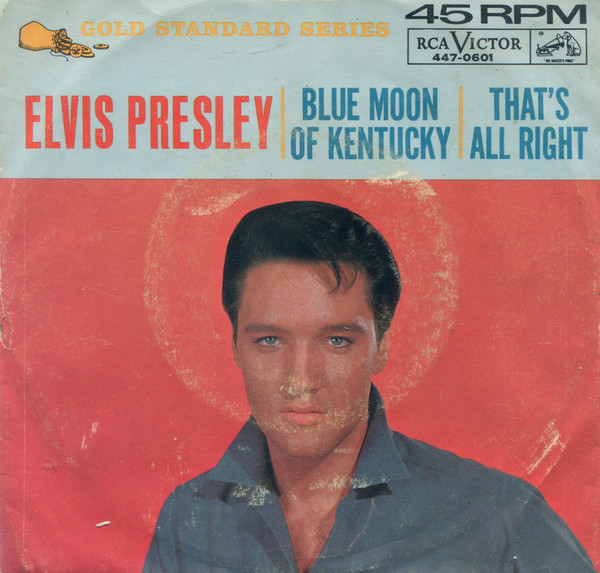
ELVIS PRESLEY - THAT’S ALL RIGHT
Llançament: 19 de juliol de 1954
Llistes d’èxits: Regne Unit: #3
“That’s All Right” és una cançó de blues escrita i interpretada per Arthur Crudup, enregistrada per primera vegada el 1946. El març de 1949, RCA Victor la va reestrenar com “That’s All Right, Mama” en el seu nou format de singles de 45 rpm, convertint-se en el primer enregistrament de rhythm and blues del segell en aquest format.
La versió d’Elvis Presley va ser el seu primer single, gravat durant la seva primera sessió als Sun Records el 1954. En aquell moment, Elvis tenia 19 anys i treballava com a conductor de camions. Originalment, havia anat a Sun per gravar una cançó per a la seva mare. Sam Phillips, propietari de Sun, buscava un home blanc que sonés com un home negre, i la seva assistent Marion Keiser va recomanar-li Elvis.
Durant la sessió, Elvis, el baixista Bill Black i el guitarrista Scotty Moore van experimentar amb diverses cançons fins que, de manera espontània, van tocar “That’s All Right” d’Arthur “Big Boy” Crudup del 1946 amb un estil més ràpid i energètic. Phillips es va enamorar d’aquesta versió innovadora i la van gravar. Aquesta fusió única de blues i energia uptempo fa que alguns considerin la cançó com una de les primeres peces de rock and roll.
Elvis va gravar “That’s All Right” als Sun Studios de Memphis el 5 de juliol de 1954, durant la seva segona sessió amb el guitarrista principal Scotty Moore. Aquesta peça va marcar un punt d’inflexió en la seva carrera i va ser la primera cançó que va interpretar en directe. El seu concert debut va tenir lloc el 30 de juliol de 1954, on va obrir per Slim Whitman a Memphis i va tocar “That’s All Right, Mama”, “Blue Moon of Kentucky” i “I’ll Never Let You Go (Little Darlin’)”.
Segons Moore, la sessió de gravació no va ser fàcil. Elvis va començar a fer bromes i a saltar mentre tocava, cosa que va frustrar el productor Sam Phillips. Phillips els va fer començar de nou, i va ser aquesta segona presa la que es va convertir en l’enregistrament definitiu.
Sam Phillips va portar una còpia del single al DJ Dewey Phillips, un pioner de WHBQ a Memphis. El 8 de juliol de 1954, Dewey es va convertir en el primer DJ a punxar una cançó d’Elvis en el seu programa Red, Hot & Blue. La resposta del públic va ser aclaparadora, i Dewey la va posar repetidament fins que finalment va convidar Elvis a una entrevista en directe. Dewey, conegut per barrejar música negra i blanca al seu programa, va ajudar “That’s All Right” a guanyar popularitat a Memphis i més enllà, obrint el camí per a l’ascens meteòric d’Elvis.
En la pel·lícula biogràfica de 2022, Elvis, dirigida per Baz Luhrmann, Gary Clark Jr. interpreta Arthur “Big Boy” Crudup tocant “That’s All Right” en una escena on un jove Elvis observa com toca en un juke joint. La pel·lícula també inclou versions de la cançó interpretades per Austin Butler (que encarna l’Elvis adult) i per Elvis Presley mateix. Un moment destacat és una escena a Las Vegas en què Butler, com a Elvis, lidera l’orquestra en un nou arranjament de la cançó. Aquesta actuació, inicialment prevista amb playback, es va gravar en directe després que Luhrmann decidís que necessitava més espontaneïtat. Butler va oferir una actuació improvisada en només unes poques preses, creant una de les escenes més celebrades de la pel·lícula.
El 5 de juliol de 2004, exactament 50 anys després de la gravació de “That’s All Right, Mama” per Elvis Presley, la cançó va ser reeditada. Tot i que als Estats Units no va tenir gaire atenció, al Regne Unit va assolir el número 3 i també va entrar a les llistes del Canadà i Austràlia. El 1998, l’enregistrament original d’Elvis de 1954 va ser inclòs al Grammy Hall of Fame, reconeixent el seu impacte en la història de la música.
ELVIS PRESLEY - THAT’S ALL RIGHT
Released: July 19, 1954
Charts: UK: #3
“That’s All Right” is a blues song written and performed by Arthur Crudup, first recorded in 1946. In March 1949, RCA Victor re-released the track as “That’s All Right, Mama” on its new 45 rpm single format, marking the label’s first rhythm and blues record in this format.
His cover of “That’s All Right” was Elvis Presley’s first single, recorded during his first session at Sun Records in 1954. At the time, Elvis was a 19-year-old truck driver who had originally come to Sun to record a song for his mother. Sam Phillips, Sun’s owner, was searching for a white man who sounds like a black man, and his assistant Marion Keiser brought Elvis to his attention.
In the session, Elvis, bassist Bill Black, and guitarist Scotty Moore experimented with various songs. They struck gold when they spontaneously played Arthur “Big Boy” Crudup’s 1946 blues tune “That’s All Right” in a faster, more energetic style. Phillips loved the innovative approach, and they recorded it. This unique blend of blues and uptempo energy led some to consider it one of the first rock ‘n’ roll songs.
Elvis recorded “That’s All Right” at Sun Studios in Memphis on July 5, 1954, during just his second session with lead guitarist Scotty Moore. This track marked a turning point in Elvis’ career and became the first song he performed live. His debut concert took place on July 30, 1954, where he opened for Slim Whitman in Memphis, playing “That’s All Right, Mama,” “Blue Moon Of Kentucky,” and “I’ll Never Let You Go (Little Darlin’).
According to Moore, the recording session wasn’t without challenges. Elvis began “acting the fool” and jumping around while playing, prompting frustration from producer Sam Phillips. Phillips made them start over, and it was this second take that became the iconic recording.
Sam Phillips took a copy of the single to Dewey Phillips, a pioneering DJ at WHBQ in Memphis. On July 8, 1954, Dewey became the first DJ to play an Elvis song, spinning it on his Red, Hot & Blue show. The track received an overwhelming response, leading Dewey to play it repeatedly and eventually bring Elvis in for an on-air interview. Dewey Phillips was known for his groundbreaking approach, mixing black and white music on his show, which attracted a diverse audience. His support for “That’s All Right” helped the song gain traction in Memphis before it went national, paving the way for Elvis’ meteoric rise.
In Baz Luhrmann’s 2022 biopic Elvis, Gary Clark Jr. portrayed Arthur “Big Boy” Crudup, performing “That’s All Right” in a scene where a young Elvis sneaks a glimpse of him playing at a juke joint. The film also features versions of the song by Austin Butler, who plays the adult Elvis, and by Elvis Presley himself. One standout moment is a Vegas scene where Butler, as Elvis, leads the orchestra in a new arrangement of the song. Initially rehearsed using playback, Luhrmann decided the scene needed a live performance. He instructed Butler to perform the song spontaneously with live instruments, much like Elvis would have done. Despite initial nerves, Butler delivered an improvisational performance in just a few takes, creating one of the movie’s most celebrated scenes.
On July 5, 2004, exactly 50 years after Elvis Presley recorded “That’s All Right Mama,” the song was re-released. While it didn’t gain much attention in the United States, it achieved significant success in the UK, reaching #3, and also charted in Canada and Australia. In 1998, Elvis’s original 1954 recording was inducted into the Grammy Hall of Fame, recognizing its lasting impact on music history.