Total de visualitzacions de pàgina:

27.5.25


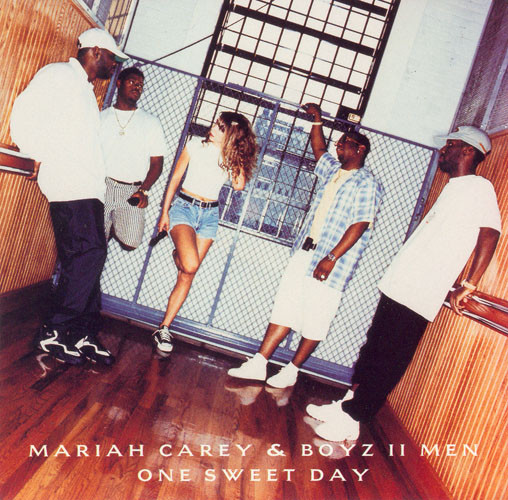
MARIAH CAREY & BOYZ II MEN - ONE SWEET DAY

Publicada: 14 de novembre de 1995

EUA: núm. 1 (16 setmanes)


“One Sweet Day” és una balada llançada el novembre de 1995 per Mariah Carey i Boyz II Men com a segon single del cinquè àlbum d’estudi de Carey, “Daydream”. Escrita per Carey, Boyz II Men i el productor Walter Afanasieff, la cançó és un homenatge emotiu a éssers estimats que han mort, especialment en el context de l’epidèmia de la sida, que tenia un fort impacte global en aquell moment. La lletra tracta temes com el dol, el penediment i l’esperança, amb el missatge central de retrobar-se amb els difunts al cel.


La col·laboració va sorgir de manera fortuïta. Carey estava escrivint una cançó sobre la pèrdua quan va descobrir que Nathan Morris de Boyz II Men havia composat una peça amb una temàtica i melodia molt similars. En lloc de triar entre les dues, van decidir fusionar-les, donant lloc a un tema que ambdues parts van considerar “destinat a ser”.


La cançó va aconseguir un èxit històric, mantenint-se durant 16 setmanes consecutives al número 1 del Billboard Hot 100, un rècord absolut en aquell moment. Aquesta fita no va ser superada fins al 2019, quan “Old Town Road” de Lil Nas X va assolir les 17 setmanes al capdavant. Boyz II Men ja tenien rècords previs, amb èxits com “End of the Road” (13 setmanes) i “I’ll Make Love to You” (14 setmanes) al núm. 1.


La inspiració per escriure la cançó va ser profundament personal. Mariah Carey va explicar que va sentir la necessitat de compondre-la després de la mort del seu amic i col·laborador David Cole (de C+C Music Factory), qui va morir per complicacions relacionades amb la sida. Carey va descriure “One Sweet Day” com la primera cançó amb la qual va afrontar realment una pèrdua personal, convertint-la en un missatge catàrtic i universal per a tothom que ha patit un dol.


A causa d’agendes incompatibles, Carey i Boyz II Men no van poder rodar un videoclip de gran producció. En el seu lloc, el vídeo oficial mostra imatges senzilles i sinceres de les sessions d’enregistrament a l’estudi. Tot i ser una solució improvisada, aquest enfocament cru i autèntic va ser elogiat per la crítica, ja que ressaltava la sinceritat emocional del tema i evitava distraccions visuals respecte al missatge.


MARIAH CAREY & BOYZ II MEN - ONE SWEET DAY


Released: November 14, 1995

US: #1 (16 weeks) 


“One Sweet Day” is a ballad released on November 1995, by Mariah Carey and Boyz II Men as the second single from Carey’s fifth studio album, “Daydream”. Written by Carey, Boyz II Men, and producer Walter Afanasieff, the song is a heartfelt tribute to loved ones lost, particularly in the context of the AIDS epidemic, which had a global impact at the time. Its lyrics reflect themes of grief, regret, and hope, with the central message being the anticipation of reuniting with the deceased in heaven.


The collaboration was serendipitous. Carey was writing a song on the topic of loss when she discovered that Nathan Morris of Boyz II Men had written a strikingly similar piece in theme and melody. Rather than choose between them, they combined their compositions, resulting in a track that both groups considered fated.


The song achieved historic chart success, spending 16 consecutive weeks at No. 1 on the US Billboard Hot 100 — the longest run at the top in history at the time. This record stood unchallenged for over two decades until “Old Town Road” by Lil Nas X broke it in 2019 with 17 weeks at No. 1. Boyz II Men were already record-holders, with previous hits like “End of the Road” (13 weeks) and “I’ll Make Love to You” (14 weeks) dominating the charts.


The inspiration behind the song was deeply personal. Mariah Carey revealed that she was moved to write the song after the death of her friend and collaborator David Cole of C+C Music Factory, who died of AIDS-related complications. Carey described “One Sweet Day” as the first song where she truly confronted personal loss, making it a cathartic and universal message for anyone experiencing grief.


Due to scheduling conflicts, Carey and Boyz II Men were unable to shoot a high-production music video. Instead, the music video consists of simple, behind-the-scenes footage of the artists recording in the studio. While unplanned, this raw and authentic approach was praised by critics for complementing the song’s emotional sincerity and avoiding any visual distraction from the message.


24.5.25


BRYAN ADAMS - (EVERYTHING I DO) I DO IT FOR YOU


Publicada: 17 de juny de 1991

Regne Unit: núm. 1 (16 setmanes) Estats Units: núm. 1 (7 setmanes)


Publicada el juny de 1991, “(Everything I Do) I Do It for You” és una balada poderosa i emotiva del cantant i compositor canadenc Bryan Adams, coescrita amb el compositor Michael Kamen i el productor Robert John “Mutt” Lange. La cançó va ser el single principal tant de la banda sonora de “Robin Hood: Prince of Thieves” com del sisè àlbum d’estudi d’Adams, “Waking Up the Neighbours”.


La cançó va ser un èxit comercial aclaparador. Va liderar les llistes en almenys 19 països i va batre rècords al Regne Unit, on es va mantenir al número 1 durant 16 setmanes consecutives, un rècord que encara no s’ha superat el 2025. Als Estats Units, va ocupar el primer lloc del Billboard Hot 100 durant 7 setmanes i 17 setmanes més al número 1 de la llista de vendes pures. Amb més de 15 milions de còpies venudes arreu del món, continua sent el major èxit d’Adams i un dels senzills més venuts de tots els temps.


L’origen de la cançó es troba en el tema instrumental composat per Michael Kamen per a la pel·lícula. Adams i Lange el van reconvertir en una declaració romàntica de lleialtat i sacrifici personal, inicialment pensada des del punt de vista de Lady Marian. Cantants com Kate Bush i Annie Lennox van rebutjar la proposta d’interpretar-la. Finalment, Adams i Lange van decidir accelerar lleugerament la cinta i tornar a gravar la veu, una decisió d’última hora que Adams considera clau per a l’èxit de la cançó.


El videoclip, dirigit per Julien Temple, mostra Adams cantant entre boscos emboirats i a la platja, prop de Somerset (Anglaterra), combinat amb escenes de la pel·lícula. També se’n va fer una altra versió d’actuació en directe, dirigida per Andy Morahan.


Tot i ser molt estimada pel públic, la cançó va suposar un canvi d’estil en la carrera d’Adams cap a balades més dramàtiques i d’adult contemporani, cosa que va alienar alguns fans del seu so rocker inicial. Malgrat això, el seu èxit va obrir el camí per a altres balades cinematogràfiques d’Adams, com “All For Love” amb Rod Stewart i Sting (Els tres mosqueters, 1993) i “Have You Ever Really Loved a Woman?” (Don Juan DeMarco, 1995).


BRYAN ADAMS - (EVERYTHING I DO) I DO IT FOR YOU


Released: June 17, 1991

UK: #1 (16 Weeks)  US: #1 (7 weeks)


Released in June 1991, “(Everything I Do) I Do It for You” is a sweeping power ballad by Canadian singer-songwriter Bryan Adams, co-written with composer Michael Kamen and producer Robert John “Mutt” Lange. The song served as the lead single for both the “Robin Hood: Prince of Thieves” soundtrack and Adams’s sixth studio album, “Waking Up the Neighbours”. 


The track was a massive commercial success. It topped the charts in at least 19 countries and broke records in the UK, where it held the No. 1 position for 16 consecutive weeks—a record that remains unbroken as of 2025. In the US, it spent seven weeks atop the Billboard Hot 100 and an astounding 17 weeks at No. 1 on the sales-only chart. With over 15 million copies sold worldwide, it remains Adams’s biggest hit and one of the best-selling singles of all time.


The song’s origin lies in Michael Kamen’s instrumental theme for the film. Adams and Lange reworked it into a romantic declaration of loyalty and self-sacrifice, originally envisioned from the perspective of Maid Marian. Early vocalists like Kate Bush and Annie Lennox declined to sing it. Ultimately, Adams and Lange adjusted the tempo by speeding up the tape and rerecording vocals—a last-minute decision Adams believes was key to the song’s success.


The music video, directed by Julien Temple, features Adams performing in misty woodlands and on a beach near Somerset, England, intercut with clips from the film. Another version was produced for a live performance and directed by Andy Morahan.


Though beloved by many, the song marked a stylistic shift in Adams’s career toward more dramatic adult contemporary ballads, alienating some fans of his earlier rock sound. Still, its success paved the way for other soundtrack ballads by Adams, such as “All For Love” with Rod Stewart and Sting for “The 3 Musketeers” (1993) and “Have You Ever Really Loved a Woman?” for “Don Juan DeMarco” (1995).


23.5.25


BILLY JOEL - MIAMI 2017 (SEEN THE LIGHTS GO OUT ON BROADWAY)


Publicada: 19 de maig de 1976

Àlbum: Turnstiles


“Miami 2017 (Seen the Lights Go Out on Broadway)” és una cançó dramàtica i imaginativa de Billy Joel, publicada com a pista final del seu àlbum de 1976, “Turnstiles”. Escrita durant una època de gran crisi financera i social a la ciutat de Nova York, la peça presenta una visió apocalíptica del col·lapse de la ciutat, narrada des de la perspectiva d’un avi jubilat a Miami l’any 2017, que explica als seus nets com va caure Nova York. La cançó també va obrir el seu àlbum en directe de 1981, “Songs in the Attic”, una recopilació que va ajudar a reintroduir algunes de les seves cançons menys conegudes a un públic més ampli.


Joel va concebre la cançó com una mena de ciència-ficció musical mentre vivia a Los Angeles el 1975, en un moment en què Nova York es trobava a la vora de la fallida i patia un augment de la criminalitat. Desencisat pel menyspreu que molts californians—especialment antics novaiorquesos—mostraven envers la ciutat, Joel va decidir tornar a casa seva i canalitzar la seva lleialtat i frustració en aquest relat fictici. El títol, “Miami 2017”, fa referència al fet que molts novaiorquesos es retiren a Florida, convertint-la en un escenari natural per a les reflexions del narrador.


La cançó imagina el caos que consumeix Nova York: la línia de gratacels s’ensorra, es desfermen incendis, i icones culturals com Broadway o els Yankees desapareixen. Malgrat ser ficció, reflecteix temors reals i dramatitza un tipus de col·lapse econòmic i civil que semblava plausible en aquella època, especialment després que el president Gerald Ford es negués a rescatar econòmicament la ciutat, com va recollir el famós titular del Daily News: “FORD TO CITY: DROP DEAD” (“Ford a la ciutat: Que es mori”).


Amb el temps, “Miami 2017” ha adquirit una repercussió emocional més profunda, especialment després dels atemptats de l’11 de setembre de 2001. Joel la va interpretar al Concert for New York City, un esdeveniment benèfic per als serveis d’emergència i les víctimes, on també va tocar “New York State of Mind”. Durant la seva actuació, va col·locar el casc d’un bomber caigut damunt del piano, com a símbol d’homenatge i dol. Allò que havia estat una fantasia es va tornar inquietantment proper a la realitat.


Joel ha tornat a interpretar aquesta cançó en moments clau de la història recent de Nova York, incloent-hi després de l’huracà Sandy el 2012 i al concert benèfic 12-12-12. En algunes d’aquestes ocasions, modifica o actualitza la lletra en directe per reflectir esdeveniments contemporanis.


BILLY JOEL - MIAMI 2017 (SEEN THE LIGHTS GO OUT ON BROADWAY)


Released: May 19, 1976

Album: Turnstiles


“Miami 2017 (Seen the Lights Go Out on Broadway)” is a dramatic and imaginative song by Billy Joel, first released as the final track on his 1976 album “Turnstiles”. Written during a time of deep financial and social turmoil in New York City, the song paints an apocalyptic vision of the city’s collapse, told from the perspective of an elderly narrator in the year 2017 recounting the fall of New York to his grandchildren from retirement in Miami. “Miami 2017” was also featured as the opening track on his 1981 live album “Songs in the Attic”, a compilation that reintroduced some of his lesser-known earlier songs to a broader audience. 


Joel conceived the song as a piece of science fiction while he was living in Los Angeles in 1975, a period when New York was facing bankruptcy and rising crime. Disheartened by the disdain many Californians—especially former New Yorkers—expressed toward the city, Joel decided to return home, channeling his loyalty and frustration into this fictional tale. The title, “Miami 2017,” was chosen because many New Yorkers retire in Florida, making it a natural setting for the narrator’s reflections.


The song imagines chaos engulfing New York: the skyline crumbling, fires raging, and the cultural icons of the city—Broadway, the Yankees, and more—falling into ruin. Although this scenario was fiction, it was inspired by real fears and dramatized the kind of economic and civil collapse that seemed plausible at the time, especially following President Gerald Ford’s refusal to federally bail out New York, as captured by the infamous Daily News headline: “FORD TO CITY: DROP DEAD.”


Over time, “Miami 2017” took on deeper emotional resonance, especially following the September 11, 2001 attacks. Joel performed the song at The Concert for New York City, a benefit for first responders and victims, where he also played “New York State of Mind.” During this performance, he placed a fallen firefighter’s helmet on his piano, symbolizing both tribute and grief. The song’s once-fictional scenario now felt hauntingly close to reality.


Joel has returned to this song repeatedly at key moments in New York’s history, including during the aftermath of Hurricane Sandy in 2012 and at the 12-12-12 benefit concert for Sandy relief. At times, he updates or tweaks the lyrics in live performances to reflect current events.


22.5.25


BILLY JOEL - TELL HER ABOUT IT

Publicada: 17 de juliol de 1983

Llistes: EUA: #1 (1 setmana) · Regne Unit: #4


“Tell Her About It” és una cançó animada i plena de ritme, inspirada en el so Motown, escrita i interpretada per Billy Joel. Va ser publicada el juliol de 1983 com el single principal del seu àlbum influenciat pel doo-wop i el soul, “An Innocent Man”. Va esdevenir un gran èxit comercial, arribant al número 1 del Billboard Hot 100 el 24 de setembre de 1983, desbancant “Maniac” de Michael Sembello.


La lletra és un consell emotiu: el narrador anima un jove a expressar el seu amor i sentiments a una dona abans que sigui massa tard. Joel va revelar més tard que la inspiració provenia de la seva pròpia vida, especialment de la seva primerenca relació amb Christie Brinkley, amb qui es casaria el 1985. En la seva biografia “The Life and Times of an Angry Young Man”, Joel recorda llargues converses amb ella i com va adonar-se que era possible establir una connexió emocional real amb algú. Aquesta epifania personal es va convertir en el cor emocional de la cançó.


Estilísticament, “Tell Her About It” ret homenatge al soul dels anys seixanta, especialment al so de The Supremes. Joel va explicar en una entrevista de 2016 que volia escriure una cançó al més pur estil dels grups femenins d’aquella època, i adoptar el paper de Diana Ross, oferint consells amb el mateix to que aquelles icòniques lletres.


El videoclip, dirigit per Jay Dubin, imita creativament una actuació al programa The Ed Sullivan Show, amb Joel apareixent com “BJ and the Affordables”. El vídeo està ple d’encant retro i inclou un cameo còmic de Rodney Dangerfield. Curiosament, tot i que el vídeo indica com a data fictícia de l’actuació el diumenge 31 de juliol de 1963 a les 20:34, en realitat aquell dia va ser un dimecres—un petit error de continuïtat que passava desapercebut abans de l’era d’Internet.


BILLY JOEL - TELL HER ABOUT IT


Released: July 17, 1983

Charts:  US: #1 (1 week)  UK: #4 


“Tell Her About It” is an upbeat, Motown-inspired track written and performed by Billy Joel, released in July 1983 as the lead single from his doo-wop and soul-influenced album “An Innocent Man”. It became a major commercial success, reaching No. 1 on the Billboard Hot 100 on September 24, 1983, unseating Michael Sembello’s “Maniac.”


The song’s lyrics are a piece of heartfelt advice: the narrator urges a young man to express his love and feelings to a woman before it’s too late. Joel later revealed that the inspiration came from his own life—specifically his early relationship with Christie Brinkley, whom he married in 1985. In his biography “The Life and Times of an Angry Young Man”, Joel recalls their hours-long conversations and how he came to realize that having a true emotional connection with someone was possible. This personal epiphany formed the emotional core of the song.


Stylistically, “Tell Her About It” channels the sound and spirit of early 1960s soul music, particularly that of The Supremes. Joel deliberately aimed to write a song in the style of the girl groups of that era, stating in a 2016 interview that he wanted to play the Diana Ross role and give advice, just like those iconic acts often did in their lyrics.


The music video, directed by Jay Dubin, creatively mimics a performance on The Ed Sullivan Show, with Joel appearing as “BJ and the Affordables.” The video is full of retro charm and includes a cameo from Rodney Dangerfield, adding a humorous touch. Curiously, while the video gives the fictional performance date as Sunday, July 31, 1963, at 8:34 p.m., that date was actually a Wednesday—a harmless continuity error that was harder to catch before the internet.