"Every Rose Has Its Thorn" is Poison's signature song, released in October 1988 as the third single from their album "Open Up and Say... Ahh!". It became the band's only number-one hit in the US, reaching the top spot on the Billboard Hot 100 on December 24, 1988, where it remained for three weeks. Additionally, it charted at number 11 on the Mainstream Rock chart and peaked at number 13 in the UK.
Bret Michaels, the lead singer of Poison, wrote "Every Rose Has Its Thorn" as a response to a heartbreak he experienced with his girlfriend, Tracy Lewis. While on tour in Dallas, Texas, Michaels called Lewis at her Los Angeles apartment and heard a man's voice in the background, signaling infidelity. Distraught, Michaels took his acoustic guitar to a Laundromat the next day and penned the song right there. Michaels recalled the experience in a Rolling Stone interview, reminiscing about the yellow legal pad he used to write the song, filled with numerous verses that he later condensed.
Bret Michaels often finds inspiration for his songs during his lowest moments, and "Every Rose Has Its Thorn" is a prime example. Reflecting on the song's genesis during an appearance on CMT Crossroads with Chris Janson, Michaels shared how his heartbreak over a failed relationship with an exotic dancer fueled the song's creation. In a VH1 Behind The Music special, Michaels delved into the metaphorical significance of the rose and thorn in the song, explaining that the rose symbolized his burgeoning career while the thorn represented the toll it took on his relationship with his girlfriend, Tracy.
The music video directed by Marty Callner, captures the poignant narrative of the song. It begins with a melancholic scene of Bret Michaels in bed with a woman, both appearing discontent. Michaels then retreats to play his acoustic guitar, interspersed with footage from the band's tour. Throughout the video, the same woman is depicted driving a Thunderbird in the rain, listening to the song on the car's radio. Filmed at the Brown County Veterans Memorial Arena in Green Bay, Wisconsin, and an adjacent empty warehouse, the video concludes with Michaels strumming the final chords of the song and walking away.
KISS - BETH
Released: August 1976
Charted: US: #7
"Beth" is a song by Kiss released on their 1976 album “Destroyer”. The song stands out in the band's repertoire as a departure from their typical hard rock sound, showcasing drummer Peter Criss's emotive vocals and a more melodic, ballad-like style. Produced by Bob Ezrin and co-written with Stan Penridge, the song's heartfelt lyrics struck a chord with listeners, propelling it to become Kiss's biggest commercial hit in the United States. Despite being initially released as the B-side, "Beth" gained significant popularity, reaching number seven on the Billboard Hot 100 and earning a Gold Record certification from the RIAA. Its success was further underscored by winning the 1977 People's Choice Award for "Favorite Song."
"Beck," the precursor to "Beth," originated during Peter Criss's tenure with the band Chelsea, where he collaborated with guitarist Stan Penridge. Inspired by the constant interruptions from guitarist Mike Brand's wife, whose name was Becky, during band practices, Criss and Penridge crafted a humorous song called "Beck." The lyrics humorously addressed Becky's inquiries about when her husband would return home. After the dissolution of Chelsea, Peter Criss and Stan Penridge revisited the song when Criss joined Kiss in 1973. With the guidance of producer Bob Ezrin, they revamped the song, infusing it with a more sentimental tone and altering some of the lyrics. This early composition laid the groundwork for what would later evolve into the heartfelt ballad "Beth" by Kiss.
"Beth" emerged as an unexpected hit for Kiss, garnering more attention than its predecessors, "Shout It Out Loud" and "Flaming Youth." Originally released as the B-side to "Detroit Rock City," the ballad gained traction on radio stations, prompting the record company to promote it further. After about six weeks, the sides of the single were flipped, with "Beth" becoming the A-side.
Unlike many Kiss tracks, Criss was the sole performer on this song, accompanied by Dick Wagner on acoustic guitar and an orchestra. Wagner, known for his work with Lou Reed and Alice Cooper, contributed to the recording but was not credited on the album. Live performances of "Beth" posed a challenge for Kiss, as they often required an orchestra. In the absence of live orchestration, Criss would perform the song with a recorded backing track.
The song "Beth" has been a point of contention between Peter Criss and Kiss frontman Paul Stanley. Despite being the co-writer and singer of Kiss's biggest hit, Criss's contribution to the song has been disputed by Stanley. According to Stanley, Stan Penridge wrote most of "Beth," with Criss contributing very little. This disagreement is just one aspect of the deeper rift between Criss and Stanley, which was evident when Kiss was inducted into the Rock and Roll Hall of Fame in 2014. Stanley and Gene Simmons opted not to reunite with the original lineup and declined to perform at the ceremony, further highlighting the strained relationship within the band.
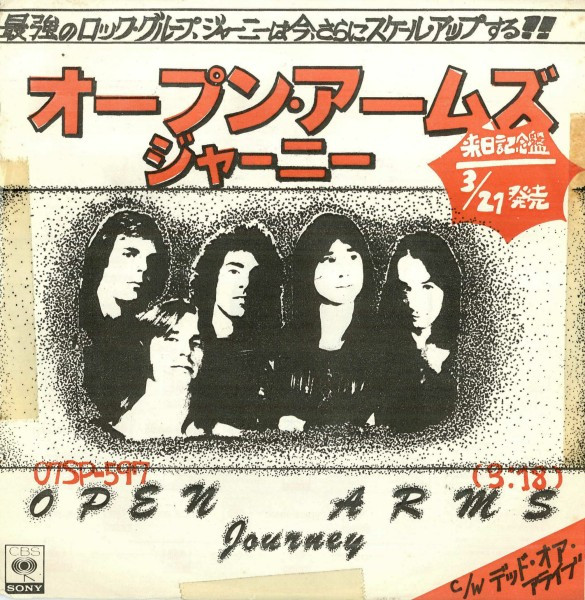
JOURNEY - OPEN ARMS
Released: January 8, 1982
Charted: US: #2
"Open Arms" is a power ballad by Journey, co-written by Steve Perry and Jonathan Cain. Released as a single from both the “Heavy Metal” soundtrack and their album "Escape" in 1981, the song resonates with its heartfelt lyrics aimed at rekindling a fading romance. It remains one of the band's most iconic hits, peaking at number two on the US Billboard Hot 100 chart in February 1982, where it stayed for an impressive six weeks.
Jonathan Cain's melody for "Open Arms" initially faced skepticism from some members of Journey, with Neal Schon and Cain himself unsure about its potential. Cain had originally presented the melody to John Waite of the Babys, but it was rejected as "too syrupy." When Cain played it for Steve Perry, the reaction was immediate – Perry loved it and wanted to pursue it. Despite initial reservations from the band, "Open Arms" became a single and catapulted Journey to new heights of success. It not only became their highest-charting single but also played a significant role in popularizing the power ballad genre.
Steve Perry expressed deep emotions while producing “Live in Houston 1981: The Escape Tour”, particularly when listening to the band perform "Open Arms." Reflecting on the performance from 24 years prior, Perry revealed that he struggled to contain his emotions during certain moments of the song. Specifically, he mentioned the line "wanting you near," which he envisioned as a soaring, heartfelt expression. Whenever this line played, Perry found himself overcome with pride for the song, needing to keep his head down and swallow the lump in his throat.
In the VH1's Behind the Music episode featuring Journey, Steve Perry reminisced about the challenging recording sessions for "Open Arms." Perry recalled tension in the studio, with Neal Schon taunting him and Jonathan Cain during the process. When the band performed the song live for the first time during their Escape Tour in 1981, the audience's overwhelming response stunned Schon. After two encores, Schon admitted, "Man, that song really kicked ass!" Perry, feeling incensed by Schon's change of heart, later admitted to wanting to confront him, reflecting the complex dynamics within the band during that time.
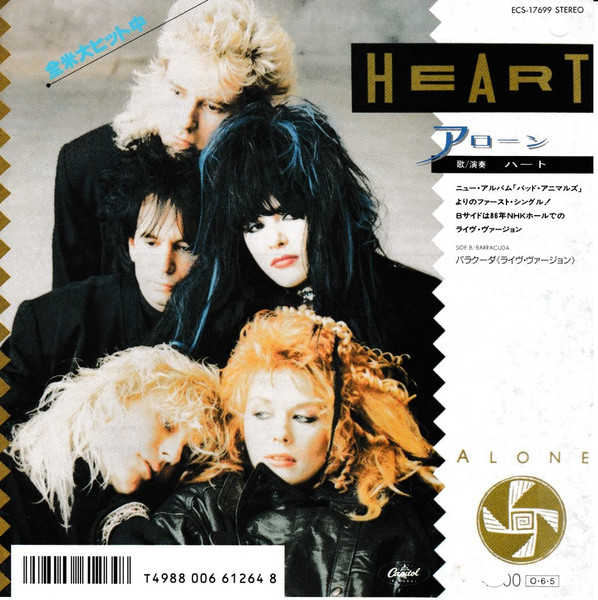
HEART - ALONE
Released: May 15, 1987
Charted: US: #1 (3 weeks) UK: #3
"Alone" is a song originally composed by Billy Steinberg and Tom Kelly, who recorded it under the name i-Ten. Heart covered the song on their 1987 album Bad Animals, and their version achieved widespread success, reaching number one in both the US and Canada. Heart's rendition of the song is characterized by its powerful ballad style, featuring a piano-driven introduction and a subdued vocal delivery by Ann Wilson, leading into a synth-driven hard rock chorus. Tom Kelly, one of the song's coauthors and an experienced session singer, provided the high harmony vocals on the recording.
In "Alone," Heart lead singer Ann Wilson expresses her intense emotions for a guy, contemplating how to reveal her feelings to him. Alone in her dark room, she grapples with the daunting prospect of sharing her secret. The lyrics convey her internal struggle as she ponders how to convey her desire to be alone with him.
Billy Steinberg shared the backstory of "Alone," revealing that it was written before some of his other hits but released later. Alongside Tom Kelly, he formed the duo i-Ten and recorded an album under that name. Despite the album's lackluster reception, "Alone" stood out as a notable track. Steinberg expressed dissatisfaction with the recording process, which colored his perception of the album.
Steinberg recounted how "Alone" resurfaced when Tom Kelly suggested it to Heart for a power ballad. Initially hesitant due to past experiences, Steinberg revised the chorus lyrics and melody, breathing new life into the song. Ron Nevison, Heart's producer at the time, embraced the revamped version, leading to its inclusion on their album. Steinberg and Kelly then met the Wilson sisters during the recording process, with Kelly providing high harmony vocals on the track.
Directed by Marty Callner, known for his work with Aerosmith and Bon Jovi, the music video for "Alone" predominantly features performance footage, interspersed with a subplot featuring Ann Wilson on a balcony wearing a black veil. The video played a significant role in Heart's resurgence, receiving airplay on both MTV and VH1, the latter of which launched in 1985.
"Alone" enjoyed significant chart success, spending three weeks at No. 1 on the U.S. Billboard Hot 100 in July 1987. It ranked No. 2 on the Billboard Year-End Top Pop Singles of 1987. Notably, it became Heart's most successful single in the United Kingdom, reaching No. 3 on the UK Singles Chart in June. Remarkably, it remains the band's only song to peak inside the UK Top 5. Internationally, the song was a global hit, reaching No. 1 in Canada and the top five in Ireland, Norway, and Switzerland. It also achieved top ten positions in Australia, Belgium, and the Netherlands, as well as landing in the top twenty in West Germany. An unplugged rendition of the song was later featured on Heart's 1995 album “The Road Home”.
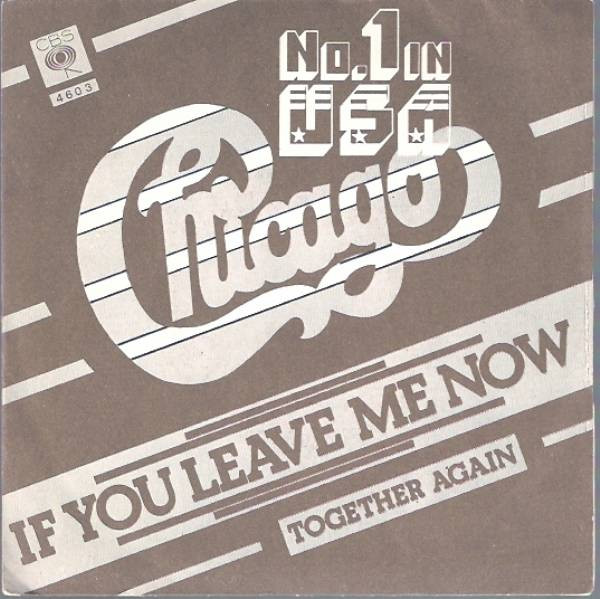
CHICAGO - IF YOU LEAVE ME NOW
Publicada: 30 de juliol de 1976 (EUA), 24 de setembre de 1976 (Regne Unit)
"If You Leave Me Now" és una balada atemporal del grup de rock nord-americà Chicago, inclosa al seu àlbum “Chicago X”. Escrita i cantada pel baixista Peter Cetera, la cançó es va llançar com a senzill el juliol de 1976. El gust de Cetera per escriure balades emotives va afegir un toc distintiu al repertori de la banda, complementant el seu catàleg de cançons més rockeres sovint escrites per Terry Kath o Robert Lamm.
Líricament, "If You Leave Me Now" pot semblar enganyosament simple, però la seva estructura ofereix un gir intrigant. Es podria argumentar que no hi ha una tornada que destaqui, o que tota la cançó serveix com a tornada. Comença amb la frase titular, que fa de ganxo: "If you leave me now, you'll take away the biggest part of me” (Si em deixes ara, prendràs la part més gran de mi). Aquesta frase es converteix en una pregària sentida, mostrant l'habilitat vocal de Peter Cetera: "Ooooh no, baby please don't go” (Oh, no, si us plau, no et vagis). La frase del títol torna a aparèixer, ara amb més pes: "If you leave me now, you'll take away the very heart of me” (Si em deixes ara, em prendràs el cor mateix). La resta de la cançó veu Cetera demanant apassionadament que no marxi. Cetera va escriure la lletra al voltant d’una melodia que va composar primer.
"If You Leave Me Now" va marcar una desviació significativa en el so de Chicago, ja que va ser el seu primer senzill que va incloure una guitarra acústica com a base. Aquesta guitarra no va ser interpretada per cap dels membres de la banda, sinó pel seu manager, James William Guercio, que també va produir la pista. Guercio, un músic experimentat, havia fet gires anteriorment amb The Beach Boys com a baixista. La implicació de Guercio en la part de guitarra acústica de la cançó va començar com una demostració, amb l'expectativa que el guitarrista habitual, Terry Kath, gravaria la pista final quan estigués disponible. Però la banda va quedar tan impressionada amb la interpretació de Guercio que van decidir mantenir-la per al disc.
Kate Winslet va cantar "If You Leave Me Now" a la minisèrie de HBO "The Regime" del 2024 afegint un toc emotiu a l'escena del sopar del primer episodi. Interpretant el paper de la cancellera d'un país europeu fictici, Winslet infon a la interpretació matisos diplomàtics, integrant de manera fluida frases com "we must carry on forever" (hem de continuar per sempre) entre els versos.
Tot i que Chicago va gaudir d'un èxit considerable als Estats Units, "If You Leave Me Now" destaca com el seu únic número u al Regne Unit. El seu posterior ascens de nou al Top 40 a Gran Bretanya amb la balada "Hard to Say I'm Sorry" el 1982 posa de manifest les preferències de l'audiència britànica en comparació amb la seva contrapart americana, més avesada a la part més rockera de la banda.
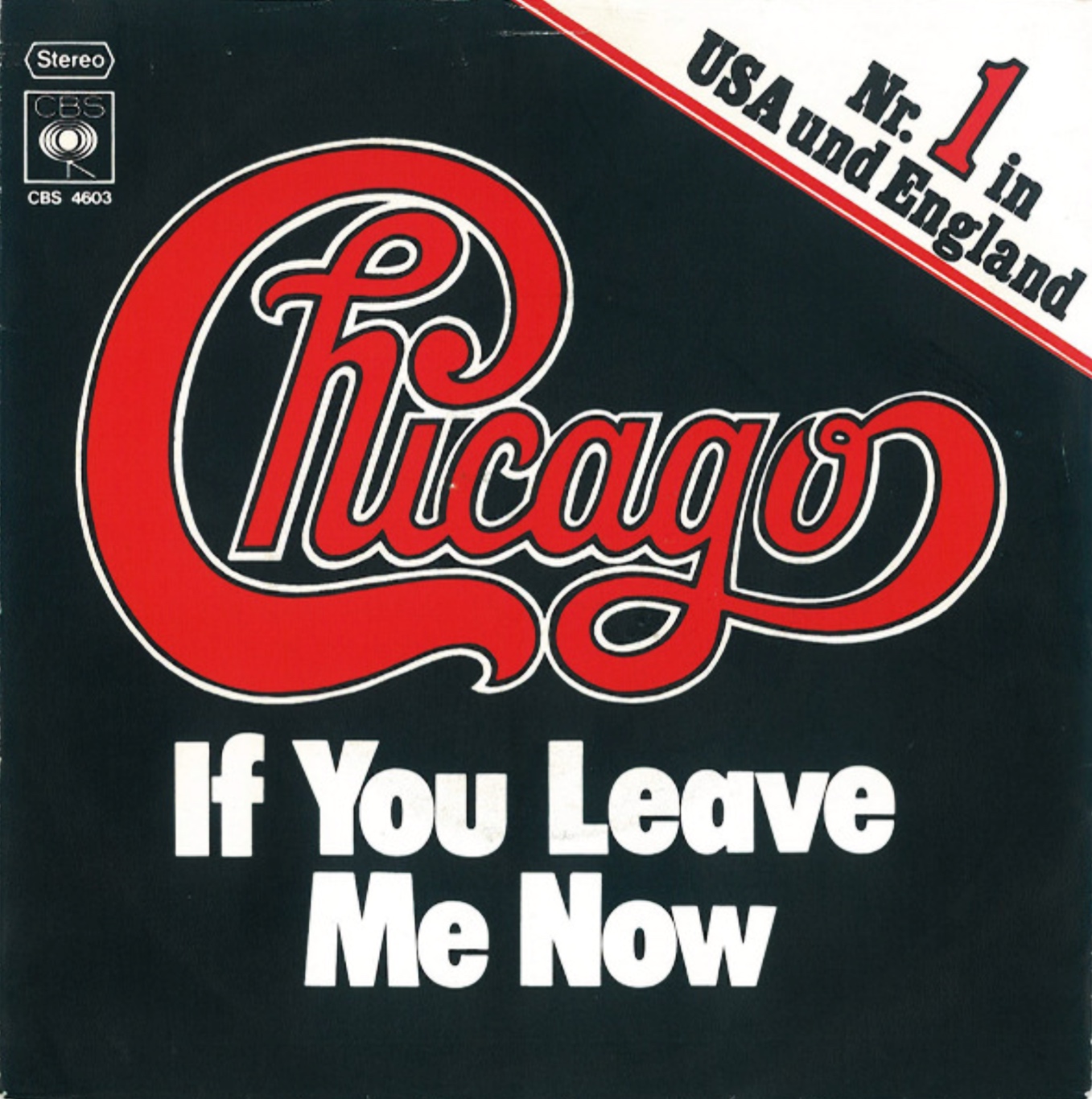
CHICAGO - IF YOU LEAVE ME NOW
Released: July 30, 1976 (US) September 24, 1976 (UK)
Charted: US: #1 (2 weeks) UK: #1 (3 weeks)
"If You Leave Me Now" is a timeless ballad by the American rock group Chicago, featured on their album Chicago X. Penned and sung by bassist Peter Cetera, the song was released as a single on July 1976. Cetera's penchant for crafting emotive ballads added a distinctive touch to the band's repertoire, complementing their catalog of rock-oriented tracks often penned by Terry Kath or Robert Lamm.
Lyrically, "If You Leave Me Now" may seem deceptively simple, yet its structure offers an intriguing twist. One could argue there's either no distinct chorus, or that the entire song serves as one. It starts with the titular line, which doubles as the hook: "If you leave me now, you'll take away the biggest part of me". This line segues into a heartfelt plea, showcasing Peter Cetera's vocal prowess: "Ooooh no, baby please don't go". The title line resurfaces, now with added weight: "If you leave me now, you'll take away the very heart of me". The remainder of the song sees Cetera passionately pleading his case against her departure. He crafted the lyrics around the melody he composed first.
"If You Leave Me Now" marked a significant departure for Chicago, being their first single to feature an acoustic guitar lead. This role was performed not by one of the band members, but by their manager, James William Guercio, who also produced the track. Guercio, a seasoned musician, had previously toured with The Beach Boys as a bass player. Guercio's involvement in the song's acoustic guitar part began as a demo, with the expectation that their regular guitarist, Terry Kath, would record the final track when available. However, the band was so impressed with Guercio's performance that they decided to retain it for the record.
Kate Winslet's rendition of "If You Leave Me Now" in the 2024 HBO miniseries "The Regime" adds a poignant touch to the first episode's dinner party scene. Playing the role of the chancellor of a fictional European country, Winslet infuses the performance with diplomatic nuances, seamlessly integrating lines like "we must carry on forever" between verses.
While Chicago enjoyed considerable success in the United States, "If You Leave Me Now" stands out as their only chart-topper in the UK. Their subsequent climb back to the Top 40 in Britain with "Hard to Say I'm Sorry" in 1982 highlights the distinct preferences of UK audiences compared to their American counterparts.