Total de visualitzacions de pàgina:

1.5.24


WHITESNAKE - HERE I GO AGAIN


Publicació: octubre de 1982, juny de 1987 (nova versió)

Llistes: EUA: #1 (1 setmana) Regne Unit: #9 


"Here I Go Again" és una balada de la banda de rock britànica Whitesnake. Inicialment present en el seu àlbum de 1982 "Saints & Sinners", la cançó va guanyar una enorme popularitat després de ser enregistrada de nou per al seu àlbum homònim de 1987. Una altra versió, coneguda com a "radio-mix", es va llançar com a senzill el mateix any, arribant al número u a la llista del Billboard Hot 100 el 10 d'octubre de 1987, significant l'únic número u de la banda en aquesta llista. A més, va arribar al número 9 a la UK Singles Chart el 28 de novembre de 1987.


David Coverdale va escriure la lletra mentre estava a Portugal. Malgrat el seu tema percebut de confrontar reptes, la cançó es submergeix en el territori de la desil·lusió i la solitud resultant. La narrativa personal de Coverdale es desplega dins la lletra, reflectint la dissolució del seu primer matrimoni amb Julia Borkowski, amb qui es va casar el 1974.


La versió original de 1982 dura 5:08, mostrant un creixement gradual mentre David Coverdale canta sobre un orgue gòspel, tocat hàbilment per Jon Lord, el seu company de banda a Deep Purple. La bateria fa la seva entrada al minut 1:20. En contrast, la versió de l'àlbum de 1987, que dura 4:35, mostra una introducció de teclat més directa feta per Don Airey. Malgrat mantenir una progressió lenta, la bateria fa la seva aparició al minut 1:15. Aquesta versió és la que es presenta en el vídeo acompanyant.


A instàncies de la discogràfica de Whitesnake, Geffen Records, es va encarregar una nova versió molt més radiable per al llançament del senzill. Coverdale va tornar a l'estudi amb Airey i un grup de músics d'estudi per crear un nou enregistrament. Aquest ràdio-mix, amb una durada de 3:52, comença més directa, amb bateria i guitarra que entren des del principi. La veu de Coverdale es retarda 22 segons, permetent temps suficient perquè els DJs de ràdio introdueixin la cançó. La versió de ràdio era la que més s’adaptava als cànons de les hair bands de l'època. Personalment, crec que és la pitjor versió de les tres, però és la que els va donar el seu únic número u.


El vídeo musical de 1982 mostra l’actuació en directe de la banda interpretant la cançó a l'escenari. Dirigit per Marty Callner, el vídeo de la versió enregistrada el 1987 presenta l'actuació a l'escenari de la banda juntament amb aparicions de la model Julie E. "Tawny" Kitaen. Kitaen, que va estar casada amb David Coverdale del 1989 al 1991, irradia un notable sex-appeal en el vídeo. Va filmar escenes memorables i sense coreografia vestida amb una bata blanca, girant i fent volteretes de manera captivadora a través dels capots de dos Jaguars XJ. 


La cançó va tornar a l’actualitat el 2002 a causa de circumstàncies poc usuals relacionades amb Tawny Kitaen, que es va casar amb el jugador de bèisbol Chuck Finley el 1997. El 2002, Kitaen va ser arrestada per maltractament familiar després de suposadament donar cops a Finley amb els seus talons mentre ell conduïa. Després de l'incident, Finley va presentar la sol·licitud de divorci. Poc després de l'arrest de Kitaen, el DJ dels Chicago White Sox va ser acomiadat per posar "Here I Go Again" a l'estadi mentre Finley s'escalfava amb el seu equip, els Cleveland Indians.


WHITESNAKE - HERE I GO AGAIN


Released: October 1982, June 1987 (new version)

Charted:  US: #1 (1 week)   UK: #9 


"Here I Go Again" is a power ballad by British rock band Whitesnake. Initially featured on their 1982 album "Saints & Sinners," the song gained immense popularity after being re-recorded for their 1987 self-titled album. Another re-recording, known as the "radio-mix" version, was released as a single the same year, reaching the number one spot on the Billboard Hot 100 chart on October 10, 1987, marking the band's sole chart-topper on that list. Additionally, it peaked at No. 9 on the UK Singles Chart on November 28, 1987.


David Coverdale wrote the lyrics while in Portugal. Despite its commonly perceived inspirational theme of confronting challenges, the song delves into the realm of heartbreak and the ensuing solitude. Coverdale's personal narrative unfolds within the lyrics, reflecting the dissolution of his initial marriage to Julia Borkowski, whom he married in 1974.


The original 1982 rendition spans 5:08, featuring a gradual build-up as David Coverdale croons over a gospel organ, skillfully played by Jon Lord, his bandmate in Deep Purple. Notably, the drums make their entrance at 1:20. In contrast, the 1987 album version, lasting 4:35, showcases a more assertive keyboard introduction by Don Airey. Despite maintaining a slow progression, the drums make their appearance at 1:15. This rendition is the one featured in the accompanying video.


At the behest of Whitesnake's label, Geffen Records, a new, ultra-radio-friendly iteration was commissioned for the single release. Coverdale returned to the studio with Airey and a cohort of studio musicians to craft another recording. This rendition, clocking in at 3:52, immediately dives into the action, with drums and guitar entering right from the start. Coverdale's vocals are delayed by 22 seconds, allowing ample time for radio DJs to introduce the track. The radio version was the one that most conformed to the canons of the hair bands of the time. Personally I think it is the worst version of the three, however it is the one that gave them their only number one.


The 1982 music video showcases the band's live performance of the song onstage. Directed by Marty Callner, the music video for the 1987 re-recorded version features the band's stage performance along with appearances by model Julie E. "Tawny" Kitaen. Kitaen, who was married to Whitesnake's David Coverdale from 1989 to 1991, exudes notable sex appeal in the video. She filmed memorable, unchoreographed scenes dressed in a white negligee, captivatingly writhing and cartwheeling across the hoods of two Jaguars XJ.


The song made headlines in 2002 due to unusual circumstances involving Tawny Kitaen, who married baseball player Chuck Finley in 1997. In April 2002, Kitaen was arrested for spousal abuse after allegedly kicking Finley with her high-heeled shoes while he was driving. Following the incident, Finley filed for divorce. Shortly after Kitaen's arrest, the DJ for the Chicago White Sox was fired for playing "Here I Go Again" at the stadium while Finley was warming up for his team, the Cleveland Indians.


THIN LIZZY - STILL IN LOVE WITH YOU / GARY MOORE - PARISIENNE WALKWAYS


THIN LIZZY - STILL IN LOVE WITH YOU 

Released: November 1974

Album: Nightlife


"Still in Love with You" by Thin Lizzy is a timeless classic, initially featured on their 1974 album "Nightlife." Known for its soulful vocals and electrifying guitar solos, the song became a staple of their live performances, highlighting the virtuosity of guitarists like Brian Robertson, Scott Gorham, Gary Moore, and John Sykes. Over the years, various live versions of the song have been released on albums such as "Live and Dangerous," "Life," "BBC Radio One Live in Concert," "The Peel Sessions," and "One Night Only". 


"Still in Love with You" is a song that seamlessly merged two pieces: Phil Lynott's "Still in Love With You" and Gary Moore's "I'll Help You See It Through," which Moore had been developing for some time. Despite Moore's departure from the band shortly after, the song was credited solely to Lynott on the "Nightlife" album.


"Still in Love with You" initially featured a duet between Phil Lynott and Gary Moore, as evidenced by an early BBC session recording. After Moore's departure, Scottish singer Frankie Miller was brought in to replace Moore's vocal parts. Despite this change, guitarist Brian Robertson refused to re-record Moore's guitar solo, believing it to be perfect as it was. Robertson considered the song his signature piece and insisted that it remain in the band's setlist. "Still in Love with You" became a staple set-closer in Thin Lizzy's live shows, serving as a showcase for the band's guitarists, including Moore upon his return to the band and later John Sykes, until the band disbanded in 1983.


"Still in Love with You" has been featured on various releases beyond its original studio recording. Live renditions of the song appeared as the B-side of the "Thunder and Lightning" single in April 1983 and as one of four tracks on the 12" release of "Dedication" in 1991. Additionally, a re-recording of the song was included as a B-side to the "Out in the Fields" double single and 12" released by Gary Moore and Phil Lynott in 1985.


GARY MOORE - PARISIENNE WALKWAYS

Released: March 30, 1979

Charted: UK: #8 


"Parisienne Walkways" is the signature song by guitarist Gary Moore featured on his album "Back on the Streets". The track features a vocal contribution from Thin Lizzy frontman Phil Lynott, who co-wrote the song with Moore. Lynott played bass guitar and Brian Downey played drums, reuniting the short-lived 1974 Thin Lizzy lineup that had recorded "Still in Love with You". The melody of "Parisienne Walkways" is based on the jazz standard "Blue Bossa" by Kenny Dorham. 


"Parisienne Walkways" is often perceived as a straightforward slow ballad intended to showcase Moore's guitar prowess. Beneath its surface lies an enigmatic song with a concealed and intensely personal message. According to Richard Buskin, the opening line, "I remember Paris in '49," was a modification of the original sheet music's line, "I remember Paris in the fall tonight," and serves as a reference to Phil Lynott's missing father, Cecil Paris, and his birth year, 1949. 


Donna Campbell, Gary Moore's girlfriend at the time, was credited on the cover of the musician's first solo album, but only he is credited on the inside stamp. The mystery is knowing why Campbell was credited because the song undeniably bears the unmistakable imprint of Phil Lynott; the lyrics were undoubtedly penned by him in their entirety, while the music was composed by Moore, or jointly by the two of them. Stuart Bailie's authorized biography of Lynott and Thin Lizzy, "The Ballad Of The Thin Man," suggests that the song, which Chris O'Donnell of the band's management initially regarded as a joke, was written in a private code.


Gary Moore's commitment to "Parisienne Walkways" endured, often featuring it as an encore during his concerts throughout his career. In 1993, a live rendition of the track, recorded at the Royal Albert Hall, was released as part of a limited edition 4-track CD single titled "Parisienne Walkways '93." Its popularity soared, propelling it to #32 in the UK Singles Chart. This live rendition also found its way onto Moore's 1993 live album, "Blues Alive."


QUEEN - SOMEBODY TO LOVE


Estrenada: 12 de novembre de 1976

Llistes: EUA: #13  Regne Unit: #2 


"Somebody to Love" és un clàssic de Queen escrit per Freddie Mercury, inclòs al seu àlbum de 1976 "A Day at the Races". Amb les seves harmonies i solos de guitarra, la cançó fa ressò de la grandesa del seu èxit anterior "Bohemian Rhapsody". En lloc d'imitar un cor anglès, la banda va optar per un cor gospel. El senzill va arribar al núm. 2 al Regne Unit i al núm. 13 al Billboard Hot 100 dels Estats Units.


Considerada una de les favorites de Mercury entre les seves composicions, Freddie va escriure "Somebody to Love", com una oda sobre el desig d'amor i reconfort davant les adversitats. Les lletres ressonen com una súplica a una força superior, qüestionant els desafiaments de la vida malgrat els esforços del cantant per seguir endavant. En qualsevol cas, enmig de la lluita, el protagonista troba un bri d'esperança i es resol a no rendir-se a la desesperació. 


Peter Hince, road manager de Queen, parlant sobre el repertori de la banda, destacava la divisió entre les cançons favorites i menys favorites entre l'equip. Va assenyalar "Somebody to Love" com una de les millors cançons de Queen, lloant la seva elevada intensitat durant les actuacions en directe en comparació amb la versió d'estudi. Hince també va compartir la perspectiva de Freddie Mercury, revelant que l mateix Mercury considerava "Somebody to Love" superior a "Bohemian Rhapsody" parlant exclusivament sobre termes de destresa pura en la composició de la cançó.


Peter Hince recordava la ubicació de la filmació del vídeo de "Somebody to Love", assenyalant que es va realitzar als estudis Wessex durant les sessions d'enregistrament de l'àlbum "A Day at the Races". Va explicar la necessitat estètica de tenir els quatre membres de la banda al voltant del micròfon, tot i que John Deacon no cantava en les gravacions d'estudi a causa de les seves limitacions vocals. Deacon cantava en directe, tot i que el volum del seu micròfon es posava molt baix per minimitzar la seva contribució vocal. Malgrat els esforços per mitigar la veu de Deacon, hi ha gravacions pirata i vídeos en directe que mostren casos en què el seu micròfon no estava atenuat adequadament, i es pot apreciar el perquè de l’esforç per amagar la seva veu.


QUEEN - SOMEBODY TO LOVE


Released: November 12, 1976

Charted:  US: #13   UK: #2 


"Somebody to Love" is a Queen classic written by Freddie Mercury, featured on their 1976 album "A Day at the Races." With its intricate harmonies and guitar solos, the song echoes the grandeur of their earlier hit "Bohemian Rhapsody." Instead of emulating an English choir, the band opted for a gospel choir. The single peaked at No. 2 in the UK and No. 13 on the US Billboard Hot 100.


Regarded as one of Mercury's favorites among his compositions, Freddie wrote "Somebody to Love," expressing the yearning for love and solace in the face of hardship. The lyrics resonate with a plea to a higher power, questioning the challenges of life despite earnest efforts. Yet, amidst the struggle, there's a glimmer of hope as the protagonist resolves not to surrender to despair. 


Peter Hince, Queen's road crew chief, reminisced about the band's repertoire, highlighting the divide between favored and less favored songs among the crew. He noted "Somebody to Love" as consistently ranking among Queen's finest, lauding its heightened intensity during live performances compared to the studio rendition. Hince also shared Freddie Mercury's perspective, revealing that Mercury regarded "Somebody to Love" as surpassing "Bohemian Rhapsody" in terms of pure songwriting prowess. 


Peter Hince recalled the filming location of the video for "Somebody to Love," noting that it took place at Wessex Studios during the recording sessions for the "A Day at the Races" album. He explained the aesthetic necessity of having all four band members around the microphone, even though John Deacon did not sing on the studio recordings due to his vocal limitations. Deacon did sing on-stage, albeit with his microphone fader set very low to minimize his vocal contribution. Despite efforts to mitigate Deacon's singing, bootleg recordings and live videos reveal instances where his mic was not properly attenuated, resulting in less-than-desirable vocal performances.
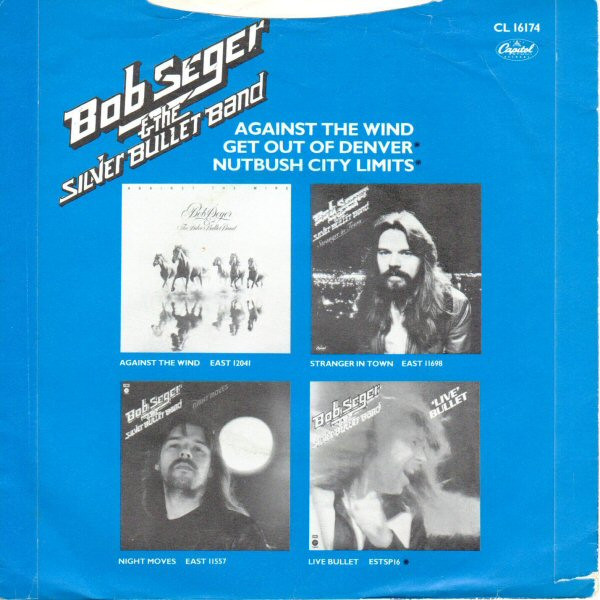


BOB SEGER & THE SILVER BULLET BAND - AGAINST THE WIND


Publicada: Abril de 1980

Llistes: EUA: #5 


"Against the Wind" és una balada de rock suau escrita i enregistrada per Bob Seger pel seu onzè àlbum d'estudi del mateix nom. Llançada com a segon senzill de l'àlbum l’abril de 1980 per Capitol Records, la cançó es va gravar durant el procés de l’àlbum que va durar dos anys. Produït per Bill Szymczyk als estudis Criteria de North Miami, Florida, el tema compta amb la Silver Bullet Band de Seger i incloïa la veu de fons del co-líder dels Eagles, Glenn Frey. "Against the Wind", caracteritzada pel seu ritme mig tempo i l’acompanyament de piano, es va convertir en un dels senzills més destacats de Seger, arribant al número cinc al Billboard Hot 100 i impactant en les llistes a Canadà, Austràlia i Bèlgica.


Seger va explicar la gènesi de la cançó, afirmant: "El meu vell amic Glenn Frey dels Eagles tenia la idea que el nostre guitarrista Drew Abbott toqués acompanyant el solo de piano. Després ell i jo vam fer les veus de fons junts. Va admetre que va tenir problemes gramaticals amb la frase "Wish I didn't know now what I didn't know then” (Desitjaria no saber ara el que no sabia llavors). Malgrat les seves reserves, els comentaris positius de Frey i d'altres el van portar a mantenir-la. Seger va reflexionar: "Has de comprendre que els compositors no poden puntuar res del que escriuen."


"Against the Wind" explora les dinàmiques subtils entre la cura i la indiferència entre amics i éssers estimats. Amb el seu focus en la maduresa i els records, reminiscent d'altres composicions de Seger, la cançó s’ecpressa en un àmbit gentil i reflexiu. Seger va treure inspiració de les seves experiències com a corredor de fons quan era universitari per crear el títol de la cançó, utilitzant-lo com una metàfora per al viatge cap a l'envelliment.


Seger, deixant la selecció dels singles del disc a Capitol Records, va confiar la decisió al director promocional de la discogràfica, Steve Meyer. La cançó va fer un debut impressionant al Hot 100, entrant al número 54 la setmana que va acabar el 3 de maig de 1980, el que la va marcar com el senzill amb el debut més alt d'aquella setmana. El seu ascens va continuar quan va entrar al top 30 la setmana següent i va arribar al top ten a final del mes. La cançó va arribar finalment al número cinc del Hot 100 el 14 de juny, on va romandre durant tres setmanes consecutives.


Els crítics musicals van elogiar l'habilitat de Seger com a compositor. El crític de Rolling Stone, Dave Marsh, inicialment va criticar les balades a l'àlbum "Against the Wind", incloent la pista titular, afirmant que cap d'elles contenia frases memorables. No obstant, després va canviar la seva opinió, reconeixent la qualitat captivadora de les frases "Well, those drifter's days are past me now/I've so much more to think about/Deadlines and commitments/What to leave in/What to leave out” (Bé, els dies de viatges ja han passat per mi/Ara tinc molt més en què pensar/Plaços i compromisos/Què deixar dins/Què deixar fora). Marsh va destacar com l'expressió dubitativa de Seger va fer aquestes frases no només memorables, sinó també commovedores. Hilburn, del Los Angeles Times, va elogiar l'habilitat de Seger per mostrar l'exploració de la tensió entre l'idealisme que cerca i els reptes que es troben en la persecució d'aquests somnis.


BOB SEGER & THE SILVER BULLET BAND - AGAINST THE WIND


Released: April 1980

Charted:  US: #5 


"Against the Wind" is a soft rock ballad written and recorded by Bob Seger for his eleventh studio album of the same name. Released as the album's second single in April 1980 by Capitol Records, the song was recorded during a two-year process for the album. Produced by Bill Szymczyk at Criteria Studios in North Miami, Florida, the track features Seger's Silver Bullet Band and includes backing vocals from Eagles co-frontman Glenn Frey. Sonically, "Against the Wind", characterised by its mid-tempo rhythm and piano accompaniment, emerged as one of Seger's standout singles, climbing to number five on the Billboard Hot 100 and making an impact on charts in Canada, Australia, and Belgium. 


Seger explained the genesis of the song, stating, "My old friend Glenn Frey of the Eagles had an idea that our guitarist Drew Abbott should play along with the piano solo. He and I then went out and did the background vocals together." He admitted to grappling with the line "Wish I didn't know now what I didn't know then," initially finding fault with its grammar. Despite his reservations, positive feedback from Frey and others led him to retain it. Seger reflected, "You have to understand that songwriters can't punctuate anything they write." 


"Against the Wind" delves into the nuanced dynamics between care and indifference among friends and loved ones. With its focus on maturity and memories, reminiscent of other Seger compositions, the song exudes a gentle, reflective ambiance. Seger drew inspiration from his experiences as a high school cross-country runner to craft the song's title, using it as a metaphor for the journey of aging.


Seger, leaving the selection of singles to Capitol Records, entrusted the decision to the label's promotional director, Steve Meyer. The track made an impressive debut on the Hot 100, entering at number 54 in the week ending May 3, 1980, marking it as the highest-debuting single of that week. Its ascent continued as it entered the top 30 the following week and reached the top ten by the end of the month. The song eventually peaked at number five on the Hot 100 on June 14, where it remained for three consecutive weeks.


Music critics lauded Seger's songwriting prowess. Rolling Stone critic Dave Marsh initially criticized the ballads on the "Against the Wind" album, including the title track, stating that none of them contained any memorable lines. However, he later amended his view, acknowledging the haunting quality of the lines "Well, those drifter's days are past me now/I've so much more to think about/Deadlines and commitments/What to leave in/What to leave out." Marsh highlighted how Seger's halting expression of indecisiveness made these lines not only memorable but also poignant. Hilburn from the Los Angeles Times commended Seger's ability to infuse "Against the Wind" with a "timeless, often graceful Everyman edge." He noted the song's exploration of the tension between the idealism Seger seeks and the challenges encountered in pursuing those dreams.