Total de visualitzacions de pàgina:

11.5.24


INXS - ORIGINAL SIN

Estrena: desembre de 1983

Llistes: EUA: #58


"Original Sin" és el primer senzill del quart àlbum de la banda, "The Swing". Escrita per Michael Hutchence i Andrew Farriss, i produïda per Nile Rodgers, la cançó va fer furor en el seu llançament el desembre de 1983. Va suposar un èxit significatiu per a la banda, ja que va ser el seu primer senzill a entrar al top 10 australià i, finalment, va arribar al desitjat lloc número 1 a principis de 1984. Aquest èxit va consolidar la seva posició com el seu únic número u a Austràlia. A més, "Original Sin" va tenir aparicions destacades a les llistes internacionals, arribant al número 20 al Canadà i al número 58 als Estats Units.


La col·laboració d'INXS amb Nile Rodgers va marcar un moment cabdal en la seva trajectòria professional. Inspirats per l’influent àlbum en solitari de Rodgers "Adventures In The Land Of The Good Groove", la banda el va persuadir per produir una pista anomenada "Brand New Day" per al seu pròxim àlbum. Les sessions d'enregistrament van tenir lloc als Power Station Studios de Nova York, una sortida dels seus entorns habituals d'estudi a Austràlia. Sota la direcció de Rodgers, "Brand New Day" es va transformar en "Original Sin", impregnada del seu distintiu so de funk. Per millorar encara més les veus, Rodgers va contractar els talents de Daryl Hall. Aquesta col·laboració amb Rodgers i Hall va catapultar INXS a noves alçades, preparant l'escenari per al seu èxit arrollador amb "Original Sin".


La decisió de Nile Rodgers de modificar la lletra original de "Original Sin" a "black boy white girl” (noi blanc noia negra) va afegir una dinàmica interracial provocadora a la cançó. Aquest moviment audaç va desafiar les normes socials de l'època, especialment en relació amb les relacions entre persones de diferenta raça. Al demanar a un noi blanc i a una noia negra que "play with fire" i "dream on, the name of love” (jugui amb el foc i somii, en nom de l'amor), la cançó va transmetre un poderós missatge d'inclusió i desafiament contra les barreres racials. Aquest ajustament audaç de la lletra també va provocar controvèrsia i va portar a la prohibició de la cançó en algunes emissores de ràdio dels Estats Units.


La lletra d'obertura de "Original Sin", referint-se al concepte de pecat original de la Bíblia, simbolitza la noció de la fragilitat humana inherent i la imperfecció moral. En el relat bíblic, la desobediència d'Adam i Eva va portar a la introducció del pecat en el món, afectant totes les generacions posteriors. En el context de la cançó, el "pecat original" representa metafòricament la transmissió de creences, valors i normes socials d'una generació a l'altra. La lletra insinua que els individus poden ser modelats per aquestes ideologies heretades, sovint sense qüestionar-les ni examinar-les críticament.


El videoclip presenta dues versions, totes dues filmades al Japó. En una versió, els membres de la banda passegen amb motocicletes al costat d'una caravana de camions fins a un terreny buit, on s'instal·la una fira i més tard es desmunta al seu voltant mentre ells interpreten la cançó. El vídeo acaba amb la banda marxant amb els camions. La versió alternativa, que és la original, incorpora plans d'una dona asiàtica en moments clau al llarg del vídeo i presenta un final diferent.


INXS - ORIGINAL SIN


Released: December 1983

Charted: US: #58 


"Original Sin" is the lead single from the band’s fourth album, "The Swing." Penned by Michael Hutchence and Andrew Farriss, and produced by Nile Rodgers, the song made waves upon its release in December 1983. It marked a significant achievement for the band, becoming their first single to break into the Australian top 10 and eventually reaching the coveted No. 1 spot in early 1984. This success solidified its place as their only chart-topping hit in Australia. Additionally, "Original Sin" made notable appearances on international charts, peaking at No. 20 in Canada and No. 58 in the US.


INXS's collaboration with Nile Rodgers marked a pivotal moment in their career trajectory. Inspired by Rodgers's influential solo album "Adventures In The Land Of The Good Groove," the band persuaded him to produce a track called "Brand New Day" for their upcoming album. The recording sessions took place at Power Station Studios in New York City, a departure from their usual studio settings in Australia. Under Rodgers's guidance, "Brand New Day" was transformed into "Original Sin," infused with his distinctive funk sound. To further enhance the vocals, Rodgers enlisted the talents of Daryl Hall. This collaboration with Rodgers and Hall catapulted INXS to new heights, setting the stage for their breakthrough success with "Original Sin."


Nile Rodgers's decision to alter the original lyrics of "Original Sin" to "black boy white girl" added a provocative interracial dynamic to the song. This bold move challenged societal norms of the time, particularly regarding relationships between people of different races. By urging a white boy and black girl to "play with fire" and "dream on, the name of love," the song conveyed a powerful message of inclusivity and defiance against racial barriers. This daring lyric adjustment also sparked controversy and led to the song being banned from some US radio stations.


The opening lyrics of "Original Sin," referencing the concept of original sin from the Bible, symbolize the notion of inherent human frailty and moral imperfection. In the biblical narrative, Adam and Eve's disobedience led to the introduction of sin into the world, affecting all subsequent generations. In the context of the song, "original sin" metaphorically represents the transmission of beliefs, values, and societal norms from one generation to the next. The lyrics imply that individuals may be shaped by these inherited ideologies, often without question or critical examination. 


The music video for "Original Sin" features two versions, both filmed in Japan. In one version, the band members ride motorcycles alongside a convoy of trucks to a vacant lot, where a fairground is assembled and later disassembled around them as they perform. The video concludes with the band riding away with the trucks. The alternate version, which is the original one, incorporates shots of an Asian woman at key moments throughout the video and features a different ending. 


10.5.24


ANNIE LENNOX - NO MORE I LOVE YOU’S


Released: February 6, 1995

Charted:  US: #23  UK: #2 


"No More 'I Love You's'" originally written and recorded by the Lover Speaks, gained significant commercial success when Scottish singer Annie Lennox covered it in 1995. Lennox's rendition was released as the lead single from her second studio album, "Medusa" and reached number two on the UK Singles Chart. 


"No More 'I Love You's'" was released in 1986 by the UK synth-pop duo The Lover Speaks, consisting of instrumentalist Joseph Hughes and singer David Freeman. The duo's debut self-titled album, produced by Jimmy Iovine, featured the song as its first single. Although it reached only number 58 on the UK charts, The Lover Speaks gained visibility by supporting the Eurythmics on tour. It was during this time that Annie Lennox discovered the song. Lennox's decision to record her own version was influenced by her belief in the song's quality and potential impact. In a 1995 article she wrote for The Independent, Lennox expressed her admiration for the song's lyrics, describing them as "extraordinary, poetic, and abstract," making it a perfect fit for her style. 

The ambiguity of the song leaves room for interpretation, but it appears to depict a situation where the singer has reached a breaking point in a relationship, leading to a loss of the ability to express love. In the original version by The Lover Speaks, sung by David Freeman with backing vocals by June Miles-Kingston, the gender of the protagonist is not explicitly defined, allowing Annie Lennox to cover the song without making significant changes to the lyrics.


The music video showcases her in yet another striking persona, this time portraying a fashion-forward aristocrat from the 1800s, set in a late 19th-century French bordello. Directed by Lennox and Joe Dyer, the video features men dressed as ballerinas entertaining her as she luxuriates in the opulent surroundings. Lennox explained in a blog post that the video explores themes of human behavior and the masks people wear to conceal hidden agendas and existences, particularly in the realms of sexuality and romantic love.


Annie Lennox's rendition of "No More 'I Love You's'" earned her the prestigious Grammy Award for Best Female Pop Vocal Performance in 1995.


 EURYTHMICS - SISTERS ARE DOIN’ IT FOR THEMSELVES

Released: October 1, 1985

Charted:  US: #18  UK: #9 


"Sisters Are Doin' It for Themselves" is a powerful feminist anthem by Eurythmics and Aretha Franklin. Written by Annie Lennox and David A. Stewart, it appears on both Eurythmics' "Be Yourself Tonight" and Franklin's "Who's Zoomin' Who?" albums. Originally intended as a collaboration with Tina Turner, the duo recorded with Franklin in Detroit due to Turner's unavailability. The track features contributions from members of Tom Petty's Heartbreakers, including Stan Lynch on drums, Benmont Tench on organ, and Mike Campbell on lead guitar, along with session bassist Nathan East.


"Sisters Are Doin' It for Themselves" proved to be a commercial success following its release as a single by RCA Records in October 1985. The song reached number 9 on the UK Singles Chart and number 18 on the US Billboard Hot 100. Additionally, the track received recognition with a nomination for a Grammy Award for Best R&B Performance by a Duo or Group with Vocals.


Annie Lennox shared insights into the creation of "Sisters Are Doin' It For Themselves" in a 1991 interview with Q magazine. She described it as a challenge to craft a pop song that could serve as both a radio hit and a feminist anthem. Lennox recalled waking up one morning with the lyrics fully formed in her mind, envisioning the song's concept. She felt it required a powerful female vocalist to bring it to life and initially approached Tina Turner, although Turner ultimately declined due to the feminist content. Aretha Franklin expressed interest and Lennox, along with Dave Stewart, traveled to Detroit to collaborate with her. Despite not immediately connecting with Franklin, Lennox found her to be somewhat shy, lonely, and surrounded by an eccentric entourage, a departure from her usual experiences.


The music video was filmed at Detroit's Music Hall and features interspersed clips from old black and white films, including scenes from the 1962 movie "A Kind of Loving." Interestingly, the video uses the single version of the song rather than the album version.


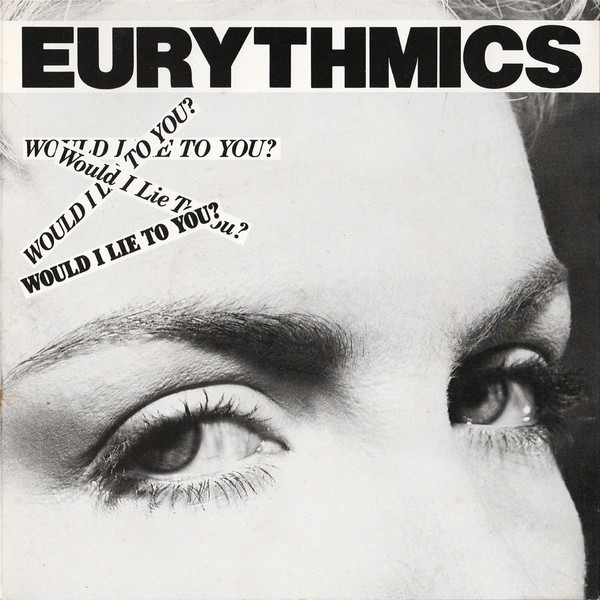
EURYTHMICS - WOULD I LIE TO YOU?


Released: April 9, 1985

Charted:  US: #5   UK: #17 


"Would I Lie to You?" marked a significant shift in musical direction for Eurythmics, transitioning from their signature synthpop sound to a more rock and rhythm and blues-influenced style. Released on April 1985, as the lead single from their fourth studio album, “Be Yourself Tonight”, the track showcased a departure from electronic programming in favor of a full backing band. 


Dave Stewart's quest for a "killer R&B riff" for Eurythmics' third album led to a serendipitous moment during breakfast, where he discovered the riff while strumming his acoustic guitar. Initially met with skepticism from Annie Lennox due to its departure from their usual sound, the infectious energy of the riff inspired Lennox to write the iconic lyrics, "Would I Lie To You," along with unconventional harmonies. Lennox's rapid ability to devise these unique harmonies showcased her musical genius, ultimately resulting in a fusion of Stax-style R&B and Eurythmics' distinctive sound.


Annie Lennox infuses "Would I Lie To You?" with the fiery emotions of an aggrieved lover walking away from infidelity. The song wasn't aimed at Dave Stewart, although they had a romantic involvement before forming Eurythmics. Instead, it draws from Lennox's personal experience, particularly her divorce from her first husband, Radha Raman, a Hare Krishna devotee. 


The music video directed by Mary Lambert received heavy rotation on MTV. Screenshots from the video were used for the front and back cover photos, as well as the inner cover art of the “Be Yourself Tonight” album. The visual narrative mirrors the song's lyrics, with Annie Lennox confronting a cheating lover, portrayed by actor Steven Bauer, as she decisively walks away from the relationship for good.


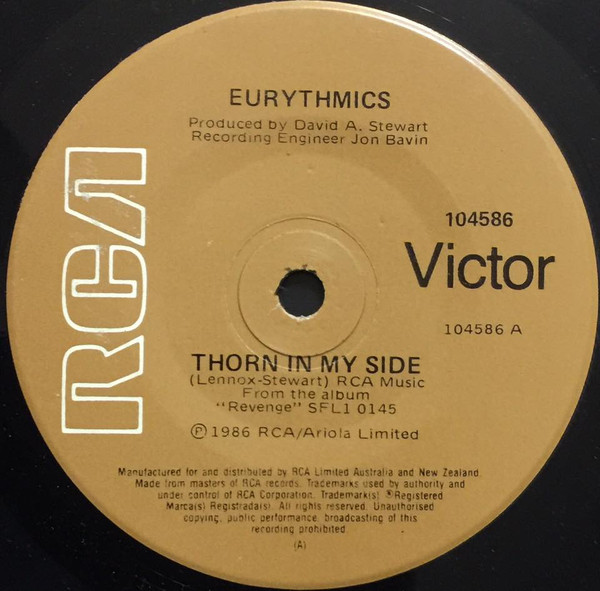
EURYTHMICS - THORN IN MY SIDE


Publicació: 9 d'abril de 1985

Llistes: EUA: #68   Regne Unit: #5


"Thorn in My Side" és un poderós himne de desafiament que aborda la traïció d'una parella infidel. Llançada com a segon senzill del seu àlbum "Revenge" el 1986, la cançó va ser escrita per Annie Lennox i David A. Stewart, amb Stewart encarregant-se de les tasques de producció. Mentre el senzill anterior "When Tomorrow Comes" només va tenir un èxit modest, "Thorn in My Side" va revitalitzar la presència a les llistes del duet, convertint-se en el seu novè Top 10 al Regne Unit, on va arribar al número cinc. Malgrat un rendiment menys impressionant a la llista Billboard Hot 100 als Estats Units, estancant-se al número 68, la cançó va trobar un major èxit a Irlanda, arribant al número dos, i entrant al top 10 a Nova Zelanda i Suècia.


"Thorn in My Side" reflecteix la convulsió emocional d'Annie Lennox després del seu divorci, canalitzada en una lletra poderosa que mostra tant la ràbia com la passió. Segons Dave Stewart, la interpretació de Lennox de la lletra punyent va ser res menys que notable, amb la seva veu gelada però apassionada capturada en una sola presa. Stewart conclou que l'habilitat de Lennox per transmetre emocions brutes a través de la seva veu va consolidar la seva reputació com una de les millors cantants de tots els temps.


Dirigit per Chris Ashbrook en col·laboració amb Dave Stewart, el videoclip reflecteix la implicació de Stewart en la conceptualització de l'estètica visual d'Eurythmics. La pel·lícula presenta la banda actuant en un bar ambientat en un estudi, guarnits amb els seus característics vestits de l'època de Revenge de color negre i cuir. Predominantment, mostra plans curts d'Annie Lennox interpretant la cançó en una habitació amb la banda i un petit públic, incloent-hi una aparició notable d'un home sense samarreta amb el tatuatge d’una rosa. El motiu de la rosa torna al final mentre Lennox escampa pètals. El públic inclou un grup d'Hells Angels, afegint aun to cru a l'atmosfera de l’escena. Clem Burke, bateria de Blondie, fa una aparició al vídeo, reflectint la seva col·laboració amb Eurythmics durant aquell període. A més, la vocalista de suport Joniece Jamison, que va debutar a "When Tomorrow Comes", també apareix en aquest vídeo.


Billboard va descriure "Thorn in My Side" com a reminiscent del "Swinging London, 1964", amb un to que equilibra l'ironia i l'afecte pel passat. Cash Box la va elogiar com un senzill pop / rock atractiu, notant com la veu victoriosa d'Annie Lennox i la melodia contagiosa amaguen les lletres rabioses de la cançó.


EURYTHMICS - THORN IN MY SIDE


Released: April 9, 1985

Charted:  US: #68   UK: #5 


"Thorn in My Side" is a powerful anthem of defiance, addressing the betrayal of an unfaithful partner. Released as the second single from their album "Revenge" in 1986, the song was penned by Annie Lennox and David A. Stewart, with Stewart handling production duties. While the preceding single "When Tomorrow Comes" had only modest success, "Thorn in My Side" revitalized the duo's chart presence, becoming their ninth Top 10 hit in the UK, where it peaked at number five. Despite a less impressive performance on the Billboard Hot 100 in the US, stalling at number 68, the song found greater success in Ireland, reaching number two, and charting in the top 10 in New Zealand and Sweden.


"Thorn in My Side" reflects the emotional turmoil of Annie Lennox following her divorce, channeled into powerful lyrics that capture both anger and passion. According to Dave Stewart, Lennox's delivery of the cutting lyrics was nothing short of remarkable, with her icy-cold yet passionate performance captured in a single take. Stewart conclude that Lennox's ability to convey raw emotion through her vocals solidified her reputation as one of the greatest singers of all time.


Directed by Chris Ashbrook in collaboration with Dave Stewart, the music video reflects Stewart's involvement in conceptualizing Eurythmics' visual aesthetics. The film features the band performing in a studio set bar, donned in their signature black and leather Revenge stage costumes. It predominantly features tight shots of Annie Lennox performing the song in a room with the band and a small audience, including a notable appearance by a shirtless man with a rose tattoo. The rose motif recurs towards the end as Lennox scatters petals. The audience includes a group of Hells Angels, adding to the gritty atmosphere of the scene. Clem Burke, drummer of Blondie, makes an appearance in the video, reflecting his collaboration with Eurythmics during that period. Additionally, backing vocalist Joniece Jamison, who debuted in "When Tomorrow Comes," is also featured in this video.


Billboard described "Thorn in My Side" as reminiscent of "Swinging London, 1964," with a tone that balances irony and affection for the past. Cash Box praised it as an appealing pop/rock single, noting how Annie Lennox's winning vocal and the infectious melody mask the song's seething lyrics.