Total de visualitzacions de pàgina:

11.5.24


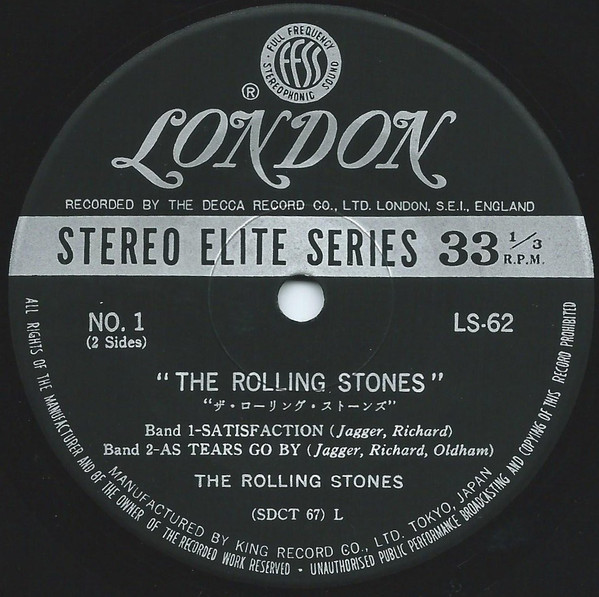
ROLLING STONES - (I CAN’T GET NO) SATISFACTION


Publicada: 4 de juny de 1965 (EUA)  20 d'agost de 1965 (Regne Unit)

Llistes: EUA: #1 (4 setmanes)  Regne Unit: #1 (2 setmanes)


"(I Can't Get No) Satisfaction" és una cançó escrita per Mick Jagger i Keith Richards que exhibeix un riff de guitarra fascinant de Richards que fa reconeixible inmediatament la cançó. Ampliament aclamada com un dels millors ganchos de la història de la música, la lletra toca temes de frustració sexual i comercialisme. Reverenciada com una de les cançons més icòniques del món, "Satisfaction" va ser induïda al Saló de la Fama dels Grammy el 1998 i afegida al Registre Nacional de Gravacions de la Biblioteca del Congrés dels Estats Units el 2006.


"(I Can't Get No) Satisfaction" va ser enregistrada només cinc dies després que Keith Richards concebés inicialment la idea de la cançó. Llançada com a single als Estats Units tres setmanes després, es va convertir ràpidament en un èxit massiu, impulsant els Rolling Stones a l'estrellatge a Amèrica. La cançó va arribar al número u a la llista Billboard Hot 100 el 10 de juliol, on va romandre durant quatre setmanes consecutives. També va ser inclosa a l'edició americana del seu quart àlbum d'estudi, "Out of Our Heads", llançat aquell juliol.


Al Regne Unit, la cançó va afrontar-se a una censura inicial, només sent retransmesa a emisores de ràdio pirates a causa de la seva lletra excessivament suggerent sexualment, però el single va ser finalment llançat el 20 d'agost de 1965, després que els Stones insistissin en estar presents al país per donar suport al seu llançament. També va arribar al número u a l’UK Singles Chart el 15 de setembre, on va romandre dues setmanes, esdevenint el seu quart número u al seu país natal.


L'experiència de Keith Richards a l'estadi Jack Russell a Clearwater, Florida, el 6 de maig de 1965, durant la primera gira dels Rolling Stones pels Estats Units, es va convertir en el catalitzador d'un dels riffs i lletres més icònics de la música rock. Enmig del caos mentre uns 200 joves es barallaven amb agents de policia, els Stones van aconseguir interpretar només quatre cançons abans que la interrupció els obligués a aturar l’actuació. Aquella mateixa nit, Richards es va despertar a l’habitació de l'hotel amb el riff de guitarra, ara famós, i la lletra "can't get no satisfaction" ressonant al seu cap. Va enregistrar ràpidament el riff en una grabadora portàtil, capturant no només la inspiració musical sinó també els sons dels seus propis roncs. La setmana següent, armat amb la idea enregistrada, Richards la va portar a l'estudi, immortalitzant-la finalment en l'èxit "(I Can't Get No) Satisfaction". Richards s’allotjava a l'Hotel Fort Harrison, llavors conegut com a Jack Tar Harrison Hotel, quan la inspiració va arribar.


Mick Jagger en va escriure la majoria de la lletra excepte la memorable tornada "can't get no satisfaction". La lletra reflecteix les observacions de Jagger sobre Amèrica, mostrant el contrast entre l'autenticitat i l'artificialitat. Retracta la recerca dels homes per experiències genuïnes enmig de la influència omnipresent del consumisme i el màrqueting. Les experiències personals de Jagger amb el consumisme d'Amèrica durant les gires dels Rolling Stones van formar la seva perspectiva, i la banda posteriorment va aprofitar aquest aspecte a través de patrocinis i venda de merchandising, aconseguint un gran èxit financer als Estats Units.


Keith Richards va experimentar amb una Gibson Fuzz Box mentre enregistrava "(I Can't Get No) Satisfaction", amb l’intenció d'utilitzar-la per esbossar una secció de vents amb notes sostingudes. Inicialment, no tenia plans d'incloure el so de guitarra distorsionat en la gravació final, però la resta de la banda va quedar impressionada amb el so únic i poc convencional que produïa la Fuzz Box. Malgrat les reticències de Richards pel caràcter artificiós de l'efecte, la banda el va convèncer de prescindir de la secció de vents i mantenir el so distorsionat de la guitarra, fent que finalment fos la característica reconeixible de la cançó.


La reflexió de Mick Jagger sobre "(I Can't Get No) Satisfaction" en una entrevista del 1995 destaca el seu important impacte en la carrera dels Rolling Stones. Reconeix el paper fonamental de la cançó en impulsar la banda a l'estrellatge global, descrivint-la com la melodia característica que els va distingir dels altres grups. Jagger destaca el títol, el memorable riff de guitarra i el so innovador com a factors claus del seu èxit. També assenyala que la cançó va capturar perfectament l'esperit de l'època, parlant de temes d'alienació i frustració sexual que reflectien el sentir del públic en aquell moment. En general, Jagger reconeix la importància de la cançó en el llegat de la banda i el seu impacte cultural.


ROLLING STONES - (I CAN’T GET NO) SATISFACTION


Released: June 4, 1965 (US)  August 20, 1965 (UK)

Charted:  US: #1 (4 weeks)  UK: #1 (2 weeks)


"(I Can't Get No) Satisfaction" is a song by the English rock band the Rolling Stones. Composed by Mick Jagger and Keith Richards, it showcases a mesmerizing guitar riff by Richards that drives the song. Widely acclaimed as one of the greatest hooks in music history, the track's lyrics touch upon themes of sexual frustration and commercialism. Revered as one of the world's most iconic songs, "Satisfaction" was inducted into the Grammy Hall of Fame in 1998 and added to the National Recording Registry of the Library of Congress in 2006.


"(I Can't Get No) Satisfaction" was recorded only five days after Keith Richards initially conceived the idea for the song. Released as a single in the US three weeks later, it quickly became a massive hit, propelling The Rolling Stones to stardom in America. The song reached number one on the Billboard Hot 100 chart on July 10, where it remained for four consecutive weeks. It was also included on the American edition of their fourth studio album, "Out of Our Heads," released that July. 


In the UK, the song faced initial censorship, only being played on pirate radio stations due to its sexually suggestive lyrics, but the single was finally released on August 20, 1965, after The Stones insisted on being present to support its release. It also reached number one on the UK Singles Chart on September 15, where it stayed for two weeks, becoming their fourth number one single in their home country. 


Keith Richards' experience at the Jack Russell Stadium in Clearwater, Florida on May 6, 1965, during The Rolling Stones' first US tour, became the catalyst for one of rock music's most iconic riffs and lyrics. Amidst chaos as about 200 young fans clashed with police officers, The Stones managed just four songs before the disruption forced them to halt the performance. That very night, Richards awoke in his hotel room with the now-famous guitar riff and the lyric "can't get no satisfaction" echoing in his mind. He swiftly recorded the riff on a portable tape deck, capturing not only the musical inspiration but also the sounds of his own snoring. The following week, armed with his recorded idea, Richards brought it to the studio, ultimately immortalizing it in the timeless hit "(I Can't Get No) Satisfaction." Richards was lodging at the Fort Harrison Hotel, then known as the Jack Tar Harrison Hotel, when inspiration struck.


Mick Jagger wrote the majority of the lyrics for the song except for the memorable refrain "can't get no satisfaction." The song's lyrics reflect Jagger's observations of America, depicting the contrast between authenticity and artifice. It portrays a man's quest for genuine experiences amidst the pervasive influence of commercialism and marketing. Jagger's firsthand encounters with the commercialism of America during The Rolling Stones' tours informed his perspective, and the band later capitalized on this aspect by leveraging sponsorships and merchandising to great financial success in the US.


Keith Richards experimented with a Gibson Fuzz Box while recording "(I Can't Get No) Satisfaction," intending to use it to outline a horn section with sustained notes. Initially, he had no plans to incorporate the distorted guitar sound into the final recording, but the rest of the band was impressed with the unique and unconventional sound produced by the Fuzz Box. Despite Richards' reservations about the gimmicky nature of the effect, the band persuaded him to forego the horn section and embrace the distorted guitar sound, ultimately making it a defining feature of the song.


Mick Jagger's reflection on "(I Can't Get No) Satisfaction" in a 1995 interview emphasizes its transformative impact on The Rolling Stones' career. He acknowledges the song's pivotal role in propelling the band to global stardom, describing it as the signature tune that distinguished them from other acts. Jagger highlights the song's catchy title, memorable guitar riff, and innovative sound as key factors in its success. He also notes how the song captured the zeitgeist of the era, reflecting themes of alienation and sexual frustration that resonated with audiences at the time. Overall, Jagger recognizes the song's enduring significance in the band's legacy and its cultural impact.




ROLLING STONES - START ME UP


Publicació: 14 d'agost de 1981

Llistes: EUA: #2   Regne Unit: #7


"Start Me Up" és una cançó de la banda de rock anglesa The Rolling Stones, inclosa al seu àlbum de 1981 "Tattoo You". Com a single principal de l'àlbum, va assolir èxit comercial arreu del món, arribant al número u a la llista australiana de Kent Music Report, al número dos al Canadà, al número dos al Billboard Hot 100 i al número set a l’UK Singles Chart. A més, va entrar al top deu en diversos països europeus.


"Start Me Up" va néixer com una cançó de reggae enregistrada durant les sessions dels àlbums dels Rolling Stones "Black and Blue" (1976) i "Some Girls" (1978). Inicialment titulada "Never Stop", se’n van fer nombroses preses però finalment es va abandonar. Keith Richards va descriure el procés, assenyalant el repte de trencar amb la naturalesa repetitiva de la música. Malgrat els esforços per incorporar-la a l'àlbum "Emotional Rescue", la cançó no es va materialitzar com s'esperava i es va deixar de banda per a una futura consideració. El 1981, mentre els Rolling Stones es preparaven per a una gira, l'enginyer Chris Kimsey va suggerir a Mick Jagger la idea d'incorporar cançons arxivades a la seva llista de cançons pels concerts. Mentre explorava els arxius de la banda, Kimsey va descobrir dues versions rockeres de "Start Me Up" entre aproximadament cinquanta versions de reggae.


Keith Richards va descriure el viatge de "Start Me Up" d'una cançó de reggae a una pista de rock: "La vam fer en 38 preses com a cançó de reggae, però no va funcionar. En algun moment del mig d'una pausa, Charlie i jo vam trobar la versió de rock and roll. Ens en vam oblidar fins que algú va passar per les demos de reggae anys després i la va trobar enterrada allà. Ens hi vam posar de nou, vam fer algunes gravacions i va ser com un regal. Els Stones tenen un enorme arxiu de material, i el que ningú escolta és només la punta de l'iceberg. Però cal explorar-lo pacientment."


Chris Kimsey, l'enginyer de la cançó, va recordar la reacció inicial de Keith Richards: "Després de gravar-la, vaig dir, 'És molt bo! Vine i escolta'. No obstant això, quan la vaig reproduir, Keith va dir, 'Nah, sona com alguna cosa que he escoltat a la ràdio. Esborra-la.' Òbviament, no ho vaig fer, però realment no li va agradar, i no estic segur que li agradi fins dia d’avui. No crec que sigui una de les seves cançons favorites, tot i que és evidentment el riff de guitarra preferit de tothom; el seu riff de guitarra. Potser perquè a Keith li agrada tant el reggae, volia que fos una cançó de reggae, però això no va ser possible."


La cançó comença amb el riff icònic de Keith Richards, acompanyat per la base sòlida de Charlie Watts i el baix de Bill Wyman, formant l'esquelet de la pista. Ronnie Wood afegeix profunditat amb una variació del riff de Richards, ampliant-lo ocasionalment durant les actuacions en directe. Mick Jagger intervé amb el pont recurrent "You make a grown man cry", intercalat amb insinuacions d,automotivació al llarg de la cançó.


"Start Me Up" va marcar l'entrada dels Rolling Stones a l'era de MTV com el primer single de "Tattoo You". Llançada l'agost de 1981, al voltant del mateix temps que MTV es va llançar, el vídeo mostrava la banda actuant contra un fons negre en una producció impecable. MTV la va posar en rotació constant, guanyant als Stones una nova onada de fans americans.


ROLLING STONES - START ME UP


Released: August 14, 1981

Charted:  US: #2   UK: #7 


"Start Me Up" is a song by the English rock band the Rolling Stones, featured on their 1981 album “Tattoo You”. Serving as the album's lead single, it achieved commercial success worldwide. The song reached number one on the Australian Kent Music Report, number two in Canada, number two on the Billboard Hot 100, and number seven on the UK Singles Chart. Additionally, it entered the top ten in several European countries.


"Start Me Up" originated as a reggae song recorded during the sessions for the Rolling Stones' albums “Black and Blue” (1976) and “Some Girls” (1978). Initially titled "Never Stop," the track underwent numerous takes but was ultimately abandoned. Keith Richards described the process, noting the challenge of breaking away from the repetitive nature of the music. Despite efforts to incorporate it into the “Emotional Rescue” album, the song didn't materialize as intended and was set aside for future consideration. In 1981, as the Rolling Stones prepared for a tour, engineer Chris Kimsey suggested to Mick Jagger the idea of incorporating archived songs into their setlist. While exploring the band's archives, Kimsey discovered two rock-oriented takes of "Start Me Up" among approximately fifty reggae versions. 


Keith Richards described the journey of "Start Me Up" from a reggae song to a rock track: "We did it in 38 takes as a reggae song, but it didn't make it. Somewhere in the middle of a break, Charlie and I hit the rock and roll version. We forgot about it until someone sifted through the reggae takes years later and found it buried in there. We leapt on it again, did some overdubs, and it was like a gift. The Stones have an enormous vault of material, and what anyone hears is just the tip of the iceberg. But you have to sift through it patiently."


Chris Kimsey, the engineer for the song, recounted the initial reaction from Keith Richards: "After they cut it, I said, 'That's bloody great! Come and listen.' However, when I played it back, Keith said, 'Nah, it sounds like something I've heard on the radio. Wipe it.' Of course, I didn't, but he really did not like it, and I'm not sure whether he likes it to this day. I don't think it's one of his favorite songs, although it's obviously everyone's favorite guitar riff; his guitar riff. Maybe because Keith loves reggae so much, he wanted it to be a reggae song, but that wasn't to be."


The song begins with Keith Richards' iconic riff, accompanied by Charlie Watts' solid backbeat and Bill Wyman's resonant bass, forming the backbone of the track. Ronnie Wood adds depth with a layered variation of Richards' riff, occasionally expanding on it during live performances. Mick Jagger interjects with the recurring bridge "You make a grown man cry," interspersed with suggestive automotive innuendos throughout the song.


"Start Me Up" marked the Rolling Stones' entry into the MTV era as the first single from “Tattoo You”. Released in August 1981, around the same time MTV launched, the well-shot video featured the band performing against a black background. MTV put it in hot rotation, earning the Stones a new wave of American fans.


 EURYTHMICS - DON’T ASK ME WHY

Estrenada: octubre de 1989

Llistes: Regne Unit: #25   EUA: #40


"Don't Ask Me Why" és una cançó de l'àlbum "We Too Are One" dels Eurythmics que va servir com a segon senzill de l'àlbum. Escrita per Annie Lennox i David A. Stewart, la cançó va ser produïda per Stewart juntament amb Jimmy Iovine. Als Estats Units, es va llançar com a primer single de l'àlbum. El disc va arribar al número 25 a la llista de singles del Regne Unit i es va convertir en l'últim èxit dels Eurythmics a la llista Billboard Hot 100 als Estats Units, assolint el número 40.


"Don't Ask Me Why" és una pista pop caracteritzada per la seva lletra agredolça, que detalla la dissolució d'una relació amorosa. La veu d'Annie Lennox transmet una sensació de melangia mentre expressa sense embuts els seus sentiments, afirmant, "don't ask me why / I don't love you any more / I don't think I ever did” (no em preguntis per què / ja no t'estimo / no crec que mai ho hagi fet). Tot i que la inspiració específica darrere de la cançó roman confusa, s’especula que reflecteix les experiències personals de Lennox, possiblement referint-se al seu divorci o a la tensa relació entre ella i Dave Stewart. Com a últim senzill del seu àlbum "We Too Are One", va marcar la fi d'una era pels Eurythmics, amb Lennox i Stewart separant-se després durant una dècada.


"Don't Ask Me Why" va rebre ressenyes positives per part dels crítics, que van elogiar la interpretació vocal emotiva d'Annie Lennox i la lletra commovedora de la cançó. Billboard la va descriure com un "número a mitja velocitat" on la veu de Lennox destaca, realçant el seu potencial com a èxit inesperat. Mick Williams del Lennox Herald la va elogiar molt, destacant la veu excepcional de Lennox. Un crític de Music & Media va apreciar el contrast entre les harmonies encantadores i la trista lletra de la cançó. David Giles de Music Week va elogiar la cançó per permetre més expressivitat a la veu de Lennox, amb Stewart mostrant moderació fins a la pausa de guitarra. Iestyn George de Record Mirror va notar que, tot i que la cançó era més emotiva que la seva predecessora, podria perdre's entre l'abundància de discos de pop-dance a les ones de ràdio. En general, "Don't Ask Me Why" va ser ben rebuda per la seva musicalitat i profunditat emocional.


El videoclip dirigit per Sophie Muller mostra una actuació dels Eurythmics al costat de membres d'una banda de suport. Filmada en colors vibrants i saturats, el vídeo evoca l'atmosfera de les escenes de discoteca de la pel·lícula de David Lynch, Blue Velvet.


EURYTHMICS - DON’T ASK ME WHY


Released: October 1989

Charted:  UK: #25  US: #40 


"Don't Ask Me Why" is a track from Eurythmics' album "We Too Are One" and served as the album's second single. Written by Annie Lennox and David A. Stewart, the song was produced by Stewart alongside Jimmy Iovine. In the US, it was issued as the album's lead single. The single reached number 25 on the UK Singles Chart and became Eurythmics' final Billboard Hot 100 hit in the US, peaking at number 40. 


"Don't Ask Me Why" is a pop track characterized by its bittersweet lyrics, detailing the dissolution of a romantic relationship. Annie Lennox's vocals deliver a sense of melancholy as she bluntly expresses her feelings, stating, "don't ask me why / I don't love you any more / I don't think I ever did." While the specific inspiration behind the song remains ambiguous, it's speculated to reflect Lennox's personal experiences, possibly referencing her divorce or the strained relationship between her and Dave Stewart. As the final single from their album "We Too Are One," it marked the end of an era for Eurythmics, with Lennox and Stewart parting ways for a decade afterward.


"Don't Ask Me Why" received positive reviews from critics, who praised Annie Lennox's emotive vocal performance and the song's poignant lyrics. Billboard described it as a "subdued midtempo number" where Lennox's vocal shines, highlighting its potential as a sleeper hit. Mick Williams of the Lennox Herald gave it high praise, emphasizing Lennox's exceptional voice. A reviewer from Music & Media appreciated the contrast between the enchanting harmonies and the song's sad lyrics. David Giles from Music Week commended the song for allowing Lennox's voice more expressiveness, with Stewart showing restraint until the guitar break. Iestyn George of Record Mirror noted that while the song was moodier than its predecessor, it might get lost among the abundance of pop-dance records on the airwaves. Overall, "Don't Ask Me Why" was well-received for its musicality and emotional depth.


The music video directed by Sophie Muller, showcases a performance by Eurythmics alongside members of a backing band. Shot in vibrant, saturated colors, the video evokes the atmosphere of nightclub scenes from David Lynch's film Blue Velvet.