Total de visualitzacions de pàgina:

27.6.24


CYNDI LAUPER - BRING YA TO THE BRINK


Publicació: 27 de maig de 2008

Llistes: EUA: #41


"Bring Ya to the Brink" va significar l'aventura de Cyndi Lauper en l'escena musical orientada al ball, mostrant col·laboracions amb artistes reconeguts com Basement Jaxx, Richard Morel, Max Martin i Kleerup. Llançat el 2008, l'àlbum va rebre elogi i reconeixement, amb el Songwriters Hall of Fame reconeixent la pista "High and Mighty" com una de les composicions significatives de Lauper.


Les cançons impregnades de música de ball de l'àlbum van cridar l'atenció, guanyant una nominació al Millor Àlbum Dance / Electrònica als 51st Annual Grammy Awards. "Set Your Heart" va ser el single promocional al Japó, mentre que "Same Ol' Story" va ser el primer senzill oficial de l'àlbum llançat al maig de 2008. "Into the Nightlife" va seguir com a segon single.


"Bring Ya to the Brink" s'obre dinàmicament amb "High And Mighty", que marca el to de l'energia i l'orientació dance de l'àlbum. La tornada repetitiva de la pista contrasta amb els versos vius, pintant un quadre de resistència i fortalesa enmig del turment emocional. Mentre alguns poden trobar-la repetitiva, altres aprecien la seva qualitat d'himne. "Into The Nightlife" segueix amb sons sintetitzats que senyalen un punt àlgid de l'àlbum. La veu de Lauper pren un to més baix, semblant al del seu treball a l'àlbum "Sisters Of Avalon". La lletra parla de l'atractiu de ballar fins a la matinada, complementada per ritmes contagiosos que conviden els oients a moure's i ballar.


"Rocking Chair" ofereix un viatge sonor únic a la ment creativa de Lauper, amb veus que guien els oients a través d'un paisatge surrealista. Malgrat la seva sensació poc convencional, la cançó és una altra joia enganxosa al repertori, mostrant la seva capacitat per crear melodies memorables. Els col·laboradors Peer Astrom i Johan Bobeck, que van treballar a "Into the Nightlife", també van contribuir a "Echo", creant una estructura similar amb versos amb sabors industrials i estrofes eufòriques plenes de ritmes pesats. 


A "Lyfe", les lletres creen un contrast interessant amb la música, que presenta una sintetització sense esforç. No obstant això, la ubicació de la pista en comparació amb la següent cançó, "Same Ol' Story", pot semblar una mica desconnectada. "Same Ol' Story" és un conte commovedor de desamor ambientat en una música animada, guanyant-se el primer lloc a la llista Billboard Dance 100 al seu llançament com a primer senzill oficial.


Les contribucions de Richard Morel a l'àlbum són indiscutiblement interessants, amb temes com "Same Ol' Story", "Set Your Heart" i "Raging Storm" destacant com a himnes potencials de la pista de ball de l'estiu del '08. Aquestes cançons evoquen una vibració nostàlgica semblant a la dels èxits de la música dance-pop que dominaven les llistes a principis i mitjans dels anys 90. "Raging Storm" i "Lay Me Down" comparteixen un atractiu similar i estan estratègicament situades a l'àlbum. Malgrat el seu estil de música dance-pop, totes dues cançons transmeten narracions més profundes que s’afegien al seu atractiu. "Raging Storm" explora la mentalitat d'una celebritat dividida entre seguir el cor o la ment, mentre que "Lay Me Down" expressa el desig de reconectar amb les arrels. Ambdues pistes estan impregnades d'una sensació de somni, sintetitzada, que contribueix a l'atractiu general de l'àlbum.


"Give It Up" captura l'essència de voler deixar-se anar i seguir el ritme, amb el seu lleuger to altament sintetitzat que augmenta gradualment en intensitat al llarg de la tornada. El rang vocal de Cyndi Lauper brilla en aquesta pista, mostrant la seva extensió de quatre octaves que els seguidors han après a apreciar. De manera similar, "Set Your Heart" impressiona tant en termes de lletra com de música, amb una línia de trompeta de "Where Are All My Friends" de Harold Melvin & the Blue Notes integrada de manera hàbil a la tornada. Aquestes dues cançons sens dubte destaquen a l'àlbum, tant pel seu contingut líric com per la seva composició musical.


"Grab A Hold" continua la pista energètica establerta pels seus predecessors, mantenint l'atmosfera vibrant de l'àlbum. La seva vibra inspiradora i el ritme animat semblen dissenyats per inspirar una atmosfera despreocupada on les mans s'alcen a l'uníson, deixant de banda les càrregues de la vida, ni que sigui només per un moment. D'altra banda, "Rain On Me" divergeix dels himnes de la pista de ball i es presenta com una balada dance, afegint varietat al paisatge sonor de l'àlbum. Juntes, serveixen com a una conclusió adequada pel que podria considerar-se un àlbum gairebé perfecte.


Tot i que "Bring Ya to the Brink" podria ser considerat perfectament com la continuació ideal de "Confessions on a dance floor" de Madonna, degut a la seva similitud en el temps i el tema, l'àlbum és un pas més en la reinvenció personal de Lauper en cada obra publicada al segle XXI, demostrant la seva capacitat per adaptar-se a l'estil que vol honorar en cada entrega. La seva incursió a la pista de ball va acabar amb una alta distinció. Si t’agrada la música dance i disco i no l’has escoltat, dóna-li una oportunitat i segur que no et decebrà.


CYNDI LAUPER - BRING YA TO THE BRINK 


Released: May 27, 2008

Charted:  US: #41    


"Bring Ya to the Brink" marked Cyndi Lauper's venture into the dance-oriented music scene, showcasing collaborations with renowned artists like Basement Jaxx, Richard Morel, Max Martin, and Kleerup. Released in 2008, the album received acclaim and recognition, with the Songwriters Hall of Fame acknowledging the track "High and Mighty" as one of Lauper's significant compositions.


The album's dance-infused tracks garnered attention, earning it a nomination for Best Dance/Electronica Album at the 51st Annual Grammy Awards. "Set Your Heart" served as a promotional single in Japan, while "Same Ol' Story" was the album's first official single release in May 2008. "Into the Nightlife" followed as the second single.


"Bring Ya to the Brink" opens dynamically with "High And Mighty," setting the tone for the album's energetic and dance-oriented vibe. The track's repetitive chorus contrasts with vivid verses, painting a picture of resilience and strength amid emotional turmoil. While some may find it repetitive, others appreciate its anthemic quality. "Into The Nightlife" follows with synthesized sounds that signal a highlight of the album. Lauper's vocals take on a lower range, reminiscent of her work on the "Sisters Of Avalon" album. The lyrics speak of the allure of dancing into the night, complemented by infectious beats that invite listeners to move and groove along.


"Rocking Chair" offers a unique sonic journey into Lauper's creative mind, with vocals that guide listeners through a trippy landscape. Despite its unconventional feel, the song is yet another catchy gem in Lauper's repertoire, showcasing her ability to craft memorable tunes. Collaborators Peer Astrom and Johan Bobeck, who worked on "Into the Nightlife," also contributed to "Echo," creating a similar structure with industrial-flavored verses and euphoric choruses filled with chunky beats. The refrain in "Echo" lingers in memory long after the album concludes, demonstrating Lauper's knack for hooks.


In "Lyfe”, the syncopated lyrics create an interesting contrast with the music, which features effortless synthesization. However, the track's placement in comparison to the following song, "Same Ol' Story," may feel somewhat disjointed. "Same Ol' Story" is a poignant tale of heartbreak set against upbeat music, earning it the top spot on the Billboard Dance 100 chart upon its release as the first official single. 


Richard Morel's contributions to the album are undeniably strong, with tracks like "Same Ol' Story," "Set Your Heart," and "Raging Storm" standing out as potential dance-floor anthems of the summer of '08. These songs evoke a nostalgic vibe reminiscent of the dance-pop hits that dominated the charts in the early-to-mid-'90s. "Raging Storm" and "Lay Me Down" share a similar appeal and are strategically placed on the album. Despite their dance-pop style, both songs convey deeper narratives that add to their appeal. "Raging Storm" explores the mindset of a celebrity torn between following their heart and mind, while "Lay Me Down" expresses a desire to reconnect with one's roots. Both tracks are infused with a dreamy, synthesized feel that contributes to the album's overall allure.


"Give It Up" captures the essence of wanting to let loose and follow the rhythm, with its light beat and heavily synthesized tones gradually building in intensity throughout the chorus. Cyndi Lauper's vocal range shines in this track, showcasing her four-octave stretch that fans have come to appreciate. Similarly, "Set Your Heart" impresses both lyrically and musically, featuring a horn line from Harold Melvin & the Blue Notes' "Where Are All My Friends" skillfully integrated into the chorus. These two songs undoubtedly stand out on the album, both in terms of their lyrical content and musical composition.


"Grab A Hold" continues the energetic trail set by its predecessors, maintaining the album's vibrant atmosphere. Its uplifting vibe and spirited rhythm seem tailored to inspire a carefree atmosphere where hands are raised in unison, casting aside the burdens of life even just for a moment. On the other hand, "Rain On Me" diverges from the dance-floor anthems and presents itself as a dance floor ballad, adding variety to the album's sonic landscape. Together, they serve as a fitting conclusion to what could be considered a near-perfect album.


Although "Bring Ya to the Brink" could perfectly be considered the ideal continuation of Madonna's “Confessions on a dance floor” due to its similarity in time and theme, the album is one more step in Lauder personal reinvention in each work published in the 21st century, demonstrating her ability to adapt to the style she wants to honor in each delivery. Her venture into the dance floor ended with a high distinction.


26.6.24


GLORIA GAYNOR - I WILL SURVIVE


Publicació: 23 d'octubre de 1978

Llistes: Regne Unit: #1 (3 setmanes)  EUA: #1 (4 setmanes)


"I Will Survive" és un himne disco de Gloria Gaynor, llançat l’octubre de 1978 com el segon single del seu àlbum "Love Tracks". Escrita per Freddie Perren i Dino Fekaris, la lletra explica el viatge del narrador per superar una difícil ruptura i trobar fortalesa interior. Des de llavors, s'ha convertit en un símbol de poder femení i continua sent un clàssic disco valorat.


"I Will Survive" no és només un èxit disco sinó també un símbol de resiliència per a molts. Escrita per Dino Fekaris, va ser la seva resposta en ser acomiadat de Motown Records. Malgrat aquest contratemps, veure la seva cançó "Generation" sonant a la televisió li va donar esperança i determinació per seguir la seva carrera com a compositor. Per Fekaris, la cançó es va convertir en un himne personal de superar l'adversitat i creure en un mateix. Després de deixar Motown, els antics productors Freddie Perren i Dino Fekaris es van unir i van trobar l’èxit amb "Reunited" de Peaches & Herb, que va encapçalar les llistes. Quan van escriure "I Will Survive", inicialment no tenien cap artista per interpretar-la. Gloria Gaynor, buscant treball de producció en una cançó anomenada "Substitute", va acabar gravant "I Will Survive" com a cara B.


"I Will Survive" va guanyar popularitat quan els DJs de les discoteques i les emissores de ràdio van començar a posar-la en lloc de la cara A prevista, "Substitute". Finalment, Polydor Records va canviar les cares del disc, cosa que va portar al seu ascens al capdamunt de les llistes, on va arribar al número 1 als Estats Units el març de 1979.


El vídeo promocional es va rodar el 1979 en una discoteca de Nova York anomenada Xenon. Hi apareix Gloria Gaynor cantant, intercalat amb seqüències de ball sobre patins realitzades per Sheila Reid-Pender de Harlem, membre del grup de patinadors The Village Wizards. Tot i que aquell dia es van rodar tres vídeos, el de "I Will Survive" va ser l'únic que es va aprofitar. Gaynor no va estar present durant la gravació del segment de patinatge. Gaynor i Pender es van conèixer per primer cop el 7 de juliol de 2014, a Nova York, al 92nd St. YMCA, després d'una conferència de Gaynor i una sessió de signatura promocional del seu llibre "We Will Survive". Al llibre, Gaynor va escriure: "Volia que tothom, inclòs jo mateixa, cregués que podríem sobreviure".


GLORIA GAYNOR - I WILL SURVIVE


Released : October 23, 1978

Charted:  UK: #1 (3 weeks)  US: #1 (4 weeks) 


"I Will Survive" is a disco anthem by Gloria Gaynor, released in October 1978 as the second single from her album "Love Tracks." Written by Freddie Perren and Dino Fekaris, the song's lyrics depict the narrator's journey of overcoming a difficult breakup and finding inner strength. It has since become a symbol of female empowerment and remains a beloved disco classic.


"I Will Survive" is not just a disco hit but also a symbol of resilience for many. Written by Dino Fekaris, it was his response to being let go by Motown Records. Despite this setback, seeing his song "Generation" playing on TV gave him hope and determination to pursue his songwriting career. For Fekaris, the song became a personal anthem of overcoming adversity and believing in oneself. After leaving Motown, former producers Freddie Perren and Dino Fekaris teamed up and found success with Peaches & Herb's "Reunited," which topped the charts. When they wrote "I Will Survive," they initially had no artist to perform it. Gloria Gaynor, seeking production work on a song called "Substitute," ultimately recorded "I Will Survive" as the B-side. 


"I Will Survive" gained traction when club DJs and radio stations started playing it instead of the intended A-side, "Substitute." Polydor Records eventually flipped the sides, leading to the song's rise to the top of the charts, where it peaked at #1 in the US in March 1979.


The promotional video for "I Will Survive" was filmed in 1979 at a New York discothèque called Xenon. It features Gloria Gaynor singing while interspersed with roller skating dance sequences performed by Sheila Reid-Pender of Harlem, a member of the skating group The Village Wizards. Although three videos were filmed that day, the "I Will Survive" video was the only one to survive. Gaynor was not present during the taping of the roller skating segment of the video. Gaynor and Pender met for the first time on July 7, 2014, in New York at the 92nd St. YMCA after Gaynor's lecture and promotional signing of her book We Will Survive. In the book, Gaynor wrote, "I wanted everybody—including myself—to believe that we could survive."


KC & THE SUNSHINE BAND - GET DOWN TONIGHT

Publicació: 11 de febrer de 1975

Llistes: Regne Unit: #21   EUA: #1 (1 setmana)


"Get Down Tonight" és una cançó disco llançada el 1975 a l'àlbum homònim de KC and the Sunshine Band. Aquesta cançó va marcar l'inici de la seva exitosa carrera, assolint diversos èxits destacats. Es va convertir en el seu primer d'una sèrie de cinc número u a la llista Billboard Hot 100 i també va encapçalar la llista Hot Soul Singles. A nivell internacional, "Get Down Tonight" va arribar al número u a Canadà i va entrar en llistes de diversos països.


Escrita i produïda per Harry Wayne (KC) Casey i Richard Finch, "Get Down Tonight" adoctrina l'era disco amb la seva lletra directa ambientada en l’entorn de la discoteca. Casey i Finch van trobar inspiració en les seves experiències viscudes per les discoteques de Miami, la qual cosa va influir fortament en el so i l'ambient de la cançó.


L'aproximació de Casey i Finch a la composició de cançons amb KC & The Sunshine Band, especialment en pistes com "Get Down Tonight", exemplifica el seu clar reconeixament de l'essència de la música disco com a música festiva. Van expresar que la música disco es basava en ritmes contagiosos i estrofes enganxoses més que no pas en lletres complexes. La simplicitat de la cançó és evident en la tornada: "Do a little dance, make a little love, get down tonight," que mostra tot el seu missatge. "Get Down Tonight" no perd el temps amb estrofes llargues, llançant-se ràpidament a una tornada explosiva que es repeteix al llarg de la cançó. La lletra de Casey el mostra urgint una noia al club a ballar i fer l'amor, centrant-se en aquestes activitats com a desitjos centrals de la nit.


El ritme marcat de la bateria, els cors exuberants i la guitarra a l’estil de James Brown contribueixen al seu ambient sense complexos i d'alta energia. La naturalesa descarada i alegre de la cançó, juntament amb el seu ritme avassallador, captura l'essència de la disco: crua però jubilosa.


La introducció de "Get Down Tonight" presenta una tècnica notable on un solo de guitarra gravat es reprodueix a doble velocitat sobre una línia de guitarra de velocitat normal en segon pla. Richard Finch va concebre aquesta idea després de veure algú frenant la cinta d’una màquina de gravar. Tenia la intenció de millorar la cançó amb un riff de guitarra que mantingués l'excitació i l'energia constant, sense semblar massa artificial.


KC & THE SUNSHINE BAND - GET DOWN TONIGHT


Released : February 11, 1975

Charted:  UK: #21    US: #1 (1 week)


"Get Down Tonight" is a disco track released in 1975 on the self-titled album by KC and the Sunshine Band. The song marked the beginning of their successful career, achieving multiple milestones. It became their first of five number-one hits on the Billboard Hot 100 and also topped the Hot Soul Singles chart. Internationally, "Get Down Tonight" reached number one in Canada and charted in various countries.


"Get Down Tonight," written and produced by Harry Wayne (KC) Casey and Richard Finch, epitomizes the disco era with its straightforward lyrics set in a nightclub environment. Casey and Finch drew inspiration from their experiences sneaking into Miami nightclubs, which heavily influenced the song's sound and vibe.


Casey and Finch's approach to songwriting with KC & The Sunshine Band, particularly in tracks like "Get Down Tonight," exemplifies their keen understanding of disco's essence as party music. They recognized that disco thrived on infectious grooves and catchy hooks rather than complex lyrics. The song's simplicity is evident in its ecstatic chorus: "Do a little dance, make a little love, get down tonight," which shows its entire message. "Get Down Tonight" wastes no time with lengthy verses, quickly launching into its explosive chorus that repeats throughout the song. Casey's lyrics depict him urging a girl at the club to engage in dancing and lovemaking, focusing on these activities as the core desires of the night. 


The driving drum-stomp, exuberant horns, and relentless James Brown-style guitar contribute to its unabashed, high-energy vibe. The song's brash and giddy nature, coupled with its overwhelming rhythm, captures the essence of disco—crude yet joyous.


The distinctive introduction of "Get Down Tonight" features a notable technique where a recorded guitar solo is played at double speed over a normal-speed guitar line in the background. Richard Finch conceived this idea after witnessing someone slowing down a tape machine. He aimed to enhance the song with a guitar riff that would sustain excitement and energy throughout, without sounding too artificial. 


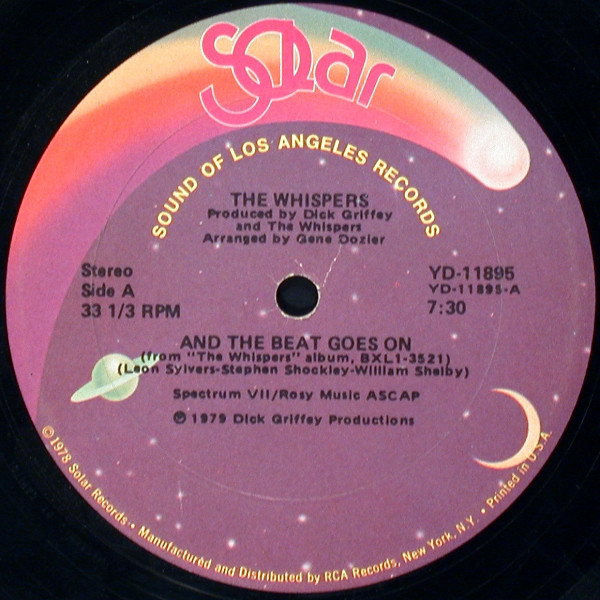
THE WHISPERS - AND THE BEAT GOES ON


Publicació: desembre de 1979

Llistes: Regne Unit: #2   EUA: #19


"And the Beat Goes On" és un single del 1979 del grup musical nord-americà The Whispers. Va ser el primer dels dos senzills que van arribar al número u a la llista de Soul i el seu primer èxit dins del Top 20 a la llista Billboard Hot 100, arribant al número 19. A més, va ser el seu únic número u a la llista de música dance. El tema també va assolir un èxit significatiu al Regne Unit, on va arribar al número 2 a la UK Singles Chart. Will Smith va samplejar "And the Beat Goes On" per al seu èxit de 1998 "Miami".


"And the Beat Goes On" presenta un contrast amb cançons de soul com "Since I Lost My Baby" i "The Tracks Of My Tears". En aquest tema, el cantant manté una actitud positiva mentre segueix endavant després d'una relació trencada, destacant l'abundància d'oportunitats per a noves connexions. A diferència del dolor intens que es mostra en balades de soul tradicionals, aquesta cançó irradia optimisme i resistència davant de la desil·lusió amorosa.


Leon F. Sylvers III, encarregat de col·laborar amb The Whispers per modernitzar el seu estil, els va presentar una cançó que va coescriure amb Stephen Shockley i William Shelby anomenada "And the Beat Goes On". Tot i que el grup va reconèixer immediatament el seu potencial, Sylvers mateix dubtava sobre el seu èxit a les llistes. Sylvers també va escriure i produir per a altres artistes del seu segell discogràfic, com Shalamar.


THE WHISPERS - AND THE BEAT GOES ON


Released : December 1979

Charted:  UK: #2   US: #19 


"And the Beat Goes On" is a 1979 single by the American music group The Whispers. It marked their first of two number-one singles on the Soul chart and their first Top 20 hit on the Billboard Hot 100, reaching number 19. Additionally, it became their sole number-one song on the dance chart. The track also achieved significant success in the United Kingdom, where it peaked at number 2 on the UK Singles Chart. Will Smith sampled "And the Beat Goes On" for his 1998 hit "Miami." 


"And the Beat Goes On" presents a contrast to soul songs like "Since I Lost My Baby" and "The Tracks Of My Tears." In this track, the singer maintains a positive attitude as he moves on from a broken relationship, emphasizing the abundance of opportunities for new connections. Unlike the intense pain depicted in traditional soul ballads, this song radiates optimism and resilience in the face of heartbreak.


Leon F. Sylvers III, tasked with collaborating with The Whispers, introduced them to a song he co-wrote with Stephen Shockley and William Shelby called "And the Beat Goes On." Although the group immediately recognized its hit potential, Sylvers himself had doubts about its chart success. Sylvers also wrote and produced for label mates Shalamar.