Total de visualitzacions de pàgina:

1.10.24


EARTH, WIND & FIRE - LET’S GROOVE


Estrena: setembre de 1981

Llistes: EUA: #3  Regne Unit: #3


"Let's Groove" d'Earth, Wind & Fire és una cançó de post-disco, pop i funk que es va llançar com el primer senzill del seu àlbum de 1981, “Raise!”. Escrita per Maurice White i Wayne Vaughn, la cançó es va convertir en un dels èxits més grans de la banda, arribant al top 20 en diversos països, incloent els Estats Units, el Regne Unit i el Canadà. Malgrat la forta reacció negativa contra la música disco en aquell moment, Earth, Wind & Fire va optar per reviure el so disco a "Let's Groove", combinant-lo amb sintetitzadors, teclats i guitarres elèctriques, creant un single memorable i comercialment reeixit.


"Let's Groove", produïda per Maurice White, va ser l'últim èxit de la banda en el top 10 de les llistes de Billboard i va significar el final del seu període "clàssic" abans d'una pausa de vuit anys. La cançó fa èmfasi en perdre's en la música, amb l'enfocament espiritual de White animant els oients a trobar positivitat i presència a la pista de ball. Allee Willis, coautora de "September", va assenyalar que White donava prioritat al ritme per sobre de la lletra, assegurant-se que el groove fos el focus central de la cançó.


Maurice White va adaptar saviament el so d'Earth, Wind & Fire a l'escenari musical canviant, garantint l'èxit de la banda en diferents èpoques, incloent el període disco. Amb "Let's Groove", White buscava un atractiu ampli, i ho va aconseguir. En una entrevista amb NME, White va descriure la cançó com una cosa natural i generosa, destacant la seva honestedat i la intenció de la banda de compartir alegria amb el seu públic.


El so vocal sintetitzat a "Let's Groove" es va crear utilitzant un vocoder, un dispositiu que altera la veu per produir efectes electrònics, que es va avançar dècades a l'Auto-Tune modern. El so del vocoder era similar al del talkbox utilitzat per Roger Troutman en l'èxit de Zapp "More Bounce to the Ounce" un any abans. Aquest efecte també ha estat utilitzat en altres cançons populars, com "Mr. Blue Sky" d'Electric Light Orchestra i "Radio Ga Ga" de Queen.


La portada de "Let's Groove" i de l'àlbum “Raise!” inclou temes egipcis, com una figura semblant a una deessa que podria estar inspirada en la deessa egípcia Isis. Això formava part d'un moment de moda egípcia als Estats Units durant finals dels anys 70 i principis dels 80. Aquesta tendència va ser en part desencadenada per la gira mundial de 1977 dels tresors del Rei Tutankamon. Earth, Wind & Fire es van afegir a aquesta tendència incorporant símbols egipcis a la seva imatge, incloent-hi el seu logotip.


El vídeo musical, dirigit per Ron Hays, és notable pel seu ús extens d'efectes electrònics vintage, creats utilitzant el sistema d'ordinador analògic Scanimate a Image West, Ltd. L'estil diferencial del vídeo va influir posteriorment en el vídeo de Bruno Mars per a la seva cançó "Treasure."


EARTH, WIND & FIRE - LET’S GROOVE


Released: September 1981

Charts:  US: #3    UK: #3 


"Let's Groove" by Earth, Wind & Fire is a post-disco, pop, and funk track that was released as the lead single from their 1981 album “Raise!”. Written by Maurice White and Wayne Vaughn, the song became one of the band's most successful hits, charting in the top 20 in multiple countries, including the United States, the UK, and Canada. Despite a significant backlash against disco music at the time, Earth, Wind & Fire chose to revive the disco sound in "Let's Groove," blending it with synthesizers, keyboards, and live electric guitars, creating a memorable and commercially successful single.


"Let's Groove," produced by Maurice White was the band's last Top 10 hit on the Billboard charts and came at the end of their "classic" period before an eight-year hiatus. The song emphasizes losing yourself in the music, with White's spiritual approach encouraging listeners to find positivity and presence on the dance floor. Allee Willis, co-writer of "September," noted that White prioritized the groove over lyrics, ensuring that the rhythm remained the focus of the song.


Maurice White expertly adapted Earth, Wind & Fire's sound to the changing musical landscape, ensuring the band's success across different eras, including the disco period. With "Let's Groove," White aimed for broad appeal, and he achieved it. He described the song as a "natural giving thing" in an interview with NME, emphasizing its honesty and the band's intention to share joy with their audience.


The synthesized voice sound in "Let's Groove" was created using a vocoder, a device that alters vocal input to produce electronic-sounding effects, which predates the more modern Auto-Tune by decades. The vocoder's sound was similar to the talkbox used by Roger Troutman in Zapp's hit "More Bounce to the Ounce" a year earlier. This effect has also been used in other popular tracks, such as "Mr. Blue Sky" by Electric Light Orchestra and "Radio Ga Ga" by Queen.


The cover art for "Let's Groove" and the “Raise!” album features Egyptian themes, including a goddess-like figure that might be inspired by the Egyptian goddess Isis. This was part of a broader Egyptian fad in the United States during the late '70s and early '80s. The craze was partly triggered by the 1977 world museum tour of King Tutankhamun's treasures. Earth, Wind & Fire embraced this trend by incorporating Egyptian symbolism into their imagery, including their logo. 


The music video directed by Ron Hays, is notable for its heavy use of vintage electronic effects, created using the Scanimate analog computer system at Image West, Ltd. The video's distinctive style later influenced Bruno Mars' video for his song "Treasure."


BEACH BOYS - CAROLINE, NO


Released: March 7, 1966

Charts:  US: #32 


"Caroline, No" is a song by Brian Wilson, released as his first solo single on March 1966, and later included as the closing track on the Beach Boys' album “Pet Sounds”. The song draws from Wilson's personal life, particularly the changes in his relationship with his first wife, Marilyn. Brian Wilson brought his concept of lost innocence to lyricist Tony Asher, who used his own personal experience to complete the lyrics. 


The song features lyrics about a man reflecting on a past love and her lost innocence. This melody is a poignant ballad about a girl who has changed and moved on, leaving the singer heartbroken and reflecting on what went wrong. Brian Wilson regards it as one of his most successful ballads, alongside "In My Room," "Surfer Girl," and "God Only Knows," describing them as "sweet, pretty, angelic songs." 


Asher had recently ended a relationship with his girlfriend, Carol, who had moved to New York City. When he visited her, he was struck by how much she had changed, particularly her new haircut, which inspired the song’s opening line. Asher initially wrote the lyric as "Carol, I Know," but Wilson misheard it as "Caroline, No." Both agreed that "Caroline, No" made for a much more intriguing and evocative title.


Musically, it stands out for its use of jazz chords and a unique blend of instruments such as bass flutes, 12-string electric guitar, and muted harpsichord. The music is beautifully melancholic, and the final note of Brian Wilson’s vocal, filled with anguish, is utterly heartbreaking, making it one of the most powerful moments on the album.


"Caroline, No" was the final track on the original “Pet Sounds” album. At the end of the song, listeners hear a train passing and dogs barking, which tie into the album's "Pet Sounds" theme. The train sound was taken from a sound effects reel, while the barking dogs were Brian Wilson's own pets, Banana and Louie, whose barks he recorded in the studio. 


"Caroline, No" offers a hushed, sorrowful shift in the album's tone. This track stands out as a masterstroke, contrasting the upbeat nature of many other songs with its melancholic beauty. Its delicate, half-notes create a heavenly, emotional atmosphere. The Beach Boys took their time on this record, carefully balancing technological innovation with artistry, which is evident in the refined production of "Caroline, No."


PAT BENATAR - PROMISES IN THE DARK


Released: September 25, 1981

Charts:  US: #38 


"Promises in the Dark" is a song released as the second single from the album “Precious Time”. Written by Benatar and her guitarist Neil Giraldo, the song addresses the emotional turmoil and vulnerability that comes with broken promises in a relationship. The track showcases Benatar's powerful voice, building from a soft, emotive verse to a fiery and explosive chorus, a hallmark of her style.The song peaked at #38 on the U.S. Billboard Hot 100 and #16 on the U.S. Mainstream Rock chart. 


Pat Benatar revealed in a 1984 interview that she sometimes dislikes singing in the first person, as it feels too personal, preferring to use more general pronouns like "we" or "they." This sentiment hints at the personal nature of this song. Her guitarist Neil Giraldo, told that he recognized the song's hit potential early on. Originally a ballad, Giraldo came up with a signature guitar riff during rehearsals and sped up the tempo, transforming the song. He felt confident that this change made it more powerful and commercially viable.


Neil Giraldo explained that Pat Benatar had a melody idea, which he built upon by writing the music on the piano in their home studio. While composing, his favorite guitar fell and broke, which he humorously saw as a curse. Despite this setback, the song came together, although they were missing the last verse when they entered the studio. Giraldo ended up writing the final verse during the recording session, completing the song.


Pat Benatar was one of the pioneering American artists making music videos before MTV's launch. Since finding an American director was difficult at the time, she worked with British director Keith MacMillan, also known as Keef, who had directed videos for artists like Motörhead, Paul McCartney, and Kate Bush. The video for "Promises in the Dark" was simple, showing Benatar and her band performing on stage for a small audience. It was shot back-to-back with the "Fire and Ice" video, with no costume change, making it a quick and straightforward production.


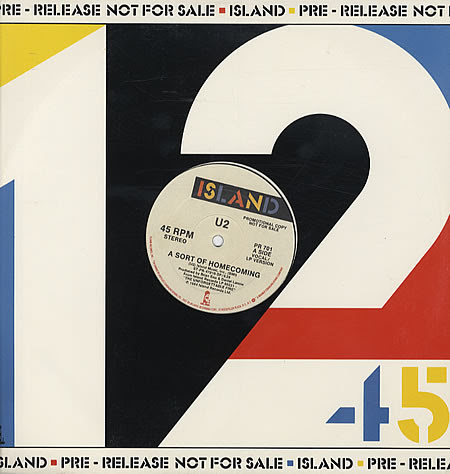
U2 - A SORT OF HOMECOMING


Estrena: 1 d'octubre de 1984

Àlbum: The Unforgettable Fire


"A Sort of Homecoming" és la primera pista de l'àlbum de 1984 "The Unforgettable Fire". El títol està inspirat en una cita del poeta jueu Paul Celan, qui va descriure la poesia com "una mena de retorn a casa". Una versió en directe apareix a l'EP del grup de 1985, "Wide Awake in America".


La primera pista de "The Unforgettable Fire" va ser creada a la torre defensiva Martello del segle XIX convertida en casa de Bono, a la costa irlandesa. Produïda en col·laboració amb Brian Eno i Daniel Lanois, la cançó evoca una marxa militar ascendint cap a regnes celestials. La lletra de Bono és penetrant i evocadora, entrelligant imatges, promeses i càntics que pinten un quadre de turment emocional similar a un camp de batalla. En reflexionar sobre el seu enfocament, Bono contrasta les convencions típiques del rock amb les seves pròpies, descrivint la seva música com impulsada per idees interessants executades amb diferents graus d'èxit.


Després del seu àlbum "War", el so de U2 va evolucionar cap a una estructura més artística i estructurada. Les frases d'obertura de la cançó, "And you hunger for the time / Time to heal, desire, time / And your earth moves beneath / Your own dream landscape," (I tu sents fam de temps / Temps per guarir, desig, temps / I la teva terra es mou sota / El teu propi paisatge oníric), es consideren decisives, marcant un dels primers reconeixements de la banda del seu paper com estrelles del rock.


Durant la gravació de "A Sort of Homecoming", el guitarrista The Edge va explicar en una entrevista de 1984 que el productor Daniel Lanois va crear una mescla de referència de la pista instrumental molt exigent. Aquesta complexitat va dificultar la coincidència de les veus durant la gravació, cosa que va portar a la decisió de superposar les veus de Bono a la mescla àspera existent. El baixista Adam Clayton va afegir que la veu de Bono es va gravar de nou a última hora durant una sessió nocturna per complir amb el termini final de gravació, de manera que Lanois pogués lliurar les cintes per a la masterització a les 8 del matí. Després d'escoltar la cançó, Bono va expressar el desig de gravar una altra presa de veu. Malgrat que Lanois tenia el seu taxi esperant per marxar cap a l'estudi de masterització a Londres, va permetre a Bono gravar una darrera presa abans de partir, assegurant-li que la mesclaria durant la masterització.


Es va crear una pel·lícula documentant la gira de U2 per Europa del Nord a l'octubre i novembre de 1984 per complementar una versió en directe d'aquesta cançó. Aquest material visual va servir com a vídeo promocional per a l'àlbum "The Unforgettable Fire", mostrant la banda de gira per Londres, França, els Països Baixos i actuant en diversos llocs, com ara el Westfalenhalle de Dortmund, Alemanya Occidental. La pel·lícula acaba amb la banda tornant pel mar del Nord en un ferri, sincronitzat amb el final de la cançó.


U2 - A SORT OF HOMECOMING


Released: October 1, 1984

Album: The Unforgettable Fire


"A Sort of Homecoming" is the opening track on 1984 album, "The Unforgettable Fire." The song's title is inspired by a quote from Jewish poet Paul Celan, who described poetry as "a sort of homecoming." A live version of the track appears on the band's 1985 EP, "Wide Awake in America."


The opening track from "The Unforgettable Fire," was crafted in Bono's converted 19th-century Martello defense tower home on the Irish coast. Produced in collaboration with Brian Eno and Daniel Lanois, the song evokes a military march ascending into heavenly realms. Bono's lyrics are poignant and evocative, weaving images, pledges, and chants that paint a picture of emotional turmoil akin to a battlefield of the heart. Reflecting on their approach, Bono contrasts typical rock conventions with their own, describing their music as driven by interesting ideas executed with varying degrees of success.


Following their album "War," U2's sound evolved to become more artistic and structured. The song's opening lyrics, "And you hunger for the time / Time to heal, desire, time / And your earth moves beneath / Your own dream landscape," are seen as pivotal, marking one of the band's early acknowledgments of their role as rockstars.


During the recording of "A Sort of Homecoming" guitarist The Edge explained in a 1984 interview that producer Daniel Lanois created a challenging reference mix of the instrumental track. This complexity made it hard to match the vocals during recording, leading to the decision to bounce Bono's vocals onto the existing rough mix. Bassist Adam Clayton added that Bono's vocals were re-recorded last-minute. The band worked through the night to complete the album by 8 a.m. on the final recording day so that Lanois could deliver the tapes for mastering. After hearing the song, Bono expressed a desire to record another vocal take. Despite Lanois having his taxi waiting to leave for the mastering studio in London, he allowed Bono to record one final take before departing, promising to mix it during mastering.


A film documenting U2's tour in Northern Europe in October–November 1984 was created to complement a live version of this song. This footage served as a promotional video for “The Unforgettable Fire” album, showcasing the band on the road traveling through London, France, the Low Countries, and performing at various venues, including the Westfalenhalle in Dortmund, West Germany. The film concludes with the band returning across the North Sea by ferry boat, synchronized with the song's ending.