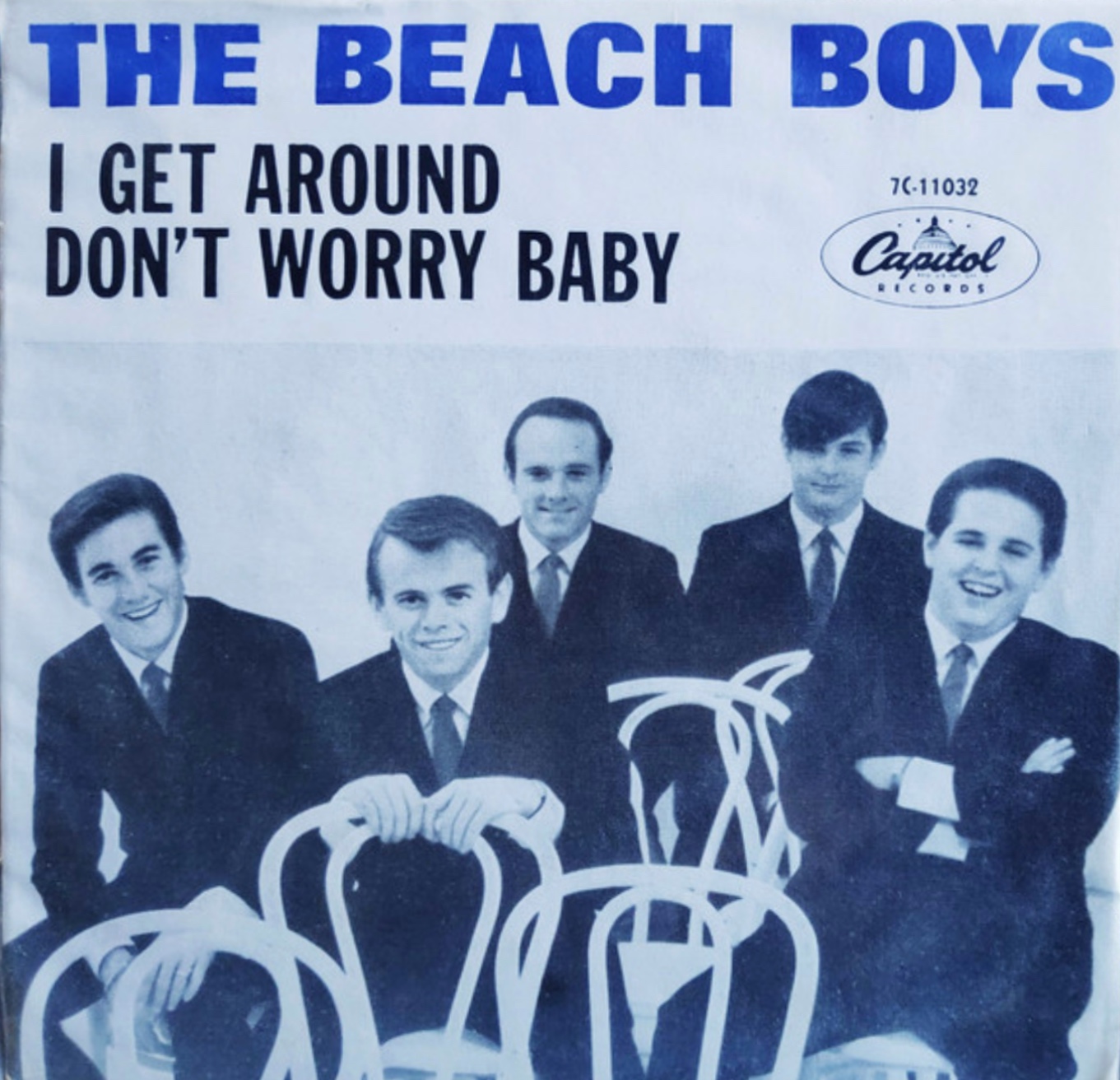
"Don't Worry Baby" is a song by the Beach Boys, released in March 1964 on their album “Shut Down Volume 2”. Written by Brian Wilson and Roger Christian, it features one of Wilson's most defining lead vocal performances. The song was later released as the B-side to "I Get Around" in May 1964 and charted separately, reaching number 24. Wilson has referred to it as possibly the Beach Boys' finest record. Known for its exquisite melody, lush harmonies, and emotional lyrics, the song touches on themes of teen romance and the anxieties surrounding an ill-advised drag race, which reflect Wilson's own insecurities.
Lyrically, "Don't Worry Baby" tells the story of a drag racer seeking emotional support from his girlfriend before racing, yet the specifics of the drag race are secondary to the song's deeper emotional resonance. The universal theme of a man in need of reassurance transcends the literal context, offering a heartfelt portrayal of vulnerability and the comforting power of love.
"Don't Worry Baby" was conceived as a follow-up to the Ronettes' hit "Be My Baby," which deeply influenced Brian Wilson. After hearing the Ronettes' song, Wilson's wife, Marilyn, reassured him with the phrase, "Don't worry, baby," inspiring the song's title and sentiment. Wilson has remarked that the song can be interpreted as being about both a car and a woman. Musicologist Philip Lambert noted strong similarities between "Don't Worry Baby" and "Be My Baby," with both sharing the same key structure, and rhythm, though the song's unexpected key change adds a distinct touch.
In a 2011 interview Brian Wilson reflected on writing "Don't Worry Baby" with Roger Christian, describing it as a "simple and beautiful song" that took two days to complete. Wilson emphasized the emotional depth of the track, calling it a "heart and soul" song that he truly felt. When asked whether it was about a car or a girl, Wilson affirmed that it was about both.
The Beach Boys recorded "Don't Worry Baby" during two eight-hour sessions at United Western Recorders in Hollywood on January 7, 1964. All members of the band played their own instruments, with vocals and guitars overdubbed on either January 8 or 9. The final version of the song, using Take 12 as the master, was completed during this time. There is some speculation that former member David Marks, who had left the group several months earlier, may have participated in the overdubbing session.
"Don't Worry Baby" was Keith Moon's favorite Beach Boys song. The drummer of The Who admired the track so much that he recorded two versions of it for his only solo album, “Two Sides of the Moon”.
THE BEATLES - HERE, THERE AND EVERYWHERE
Publicada: 5 d’agost de 1966
Àlbum: Revolver
"Here, There and Everywhere" és una balada d'amor escrita per Paul McCartney i atribuïda a Lennon–McCartney. Paul la considera com una de les favorites de les cançons que ha escrit i, el 2000, la revista Mojo la va classificar en quart lloc a la llista de les millors cançons de tots els temps.
Paul McCartney va escriure "Here, There and Everywhere" mentre prenia el sol a la piscina de John Lennon. La cançó, especialment la seva introducció, va ser influïda per "God Only Knows" dels Beach Boys. McCartney va reconèixer aquesta inspiració, especialment en les harmonies durant la introducció. Tant ell com Lennon es van sentir atrets per l'estructura de les cançons antigues que tenien un preàmbul o introducció, i la influència dels Beach Boys va tenir un paper important en la configuració d'aquest aspecte de la cançó.
Paul McCartney va trobar inspiració lírica per a "Here, There and Everywhere" a partir de l'increment de l'atenció dels mitjans que rebia mentre sortia amb l'actriu Jane Asher. En aquell moment, McCartney era considerat un dels solters més desitjats, i la seva relació amb Asher va cridar molt l'atenció pública. Finalment, van trencar el 1968.
McCartney va revelar que John Lennon el va elogiar només una vegada, fent un compliment específicament per "Here, There and Everywhere." McCartney va compartir aquest moment poc freqüent durant una entrevista en el perfil del 60 Minutes de CBS el 2018, recordant que Lennon li va dir: "Aquesta és una cançó realment bona, noi. M'encanta aquesta cançó."
El 2022, els Beatles van llançar un vídeo animat per a "Here, There and Everywhere." Dirigit per Rok Predin, el vídeo mostra el grup en les seves famoses aventures, amb una figura ballant que s'uneix a ells per representar la musa. Aquest llançament va ser part d'una edició especial de l'àlbum Revolver.
A la sèrie de televisió Friends, "Here, There and Everywhere" es toca amb instruments de percussió mentre Phoebe Buffay camina cap a l'altar durant el seu casament. Aquest és el segon cop que una cançó escrita per McCartney s'utilitza en una seqüència de casament a la sèrie, el primer va ser "My Love" durant el casament de Chandler i Monica.
THE BEATLES - HERE, THERE AND EVERYWHERE
Released: August 5, 1966
Album: Revolver
"Here, There and Everywhere" is a love ballad written by Paul McCartney and credited to Lennon–McCartney. Paul considers it among his personal favorites of the songs he has written, and in 2000, Mojo ranked it 4th in the magazine's list of the greatest songs of all time.
Paul McCartney wrote "Here, There and Everywhere" while lounging at John Lennon's pool. The song, particularly its introduction, was influenced by The Beach Boys' "God Only Knows." McCartney acknowledged this inspiration, especially in the harmonies during the introduction. He and Lennon were drawn to the old-fashioned song structure of having a preamble or intro, and The Beach Boys' influence played a role in shaping that aspect of the song.
Paul McCartney found lyrical inspiration for "Here, There and Everywhere" from the increased media attention he received while dating actress Jane Asher. At the time, McCartney was considered one of the most eligible bachelors, and his relationship with Asher garnered significant public interest. They eventually broke up in 1968.
McCartney revealed that John Lennon praised his songwriting only once, specifically complimenting "Here, There and Everywhere." McCartney shared the rare moment during a 2018 60 Minutes profile interview for CBS, recalling Lennon saying, "That's a really good song, lad. I love that song."
The Beatles released an animated video for "Here, There and Everywhere" in 2022. Directed by Rok Predin, the video depicts the group on their famous adventures, with a dancing figure joining them to represent the muse. This release was part of a special edition of the Revolver album.
In the TV series Friends, "Here, There and Everywhere" is played on steel drums as Phoebe Buffay walks down the aisle during her wedding. This marks the second time a song written by McCartney was used in a wedding sequence in the series, the first being "My Love" during Chandler and Monica's wedding.
13.10.24
AEROSMITH - CRAZY
Released: May 3, 1994
Charts: US: #17 UK: #23
"Crazy" is a song written by Steven Tyler, Joe Perry, and Desmond Child. Released in May 1994 as the fifth single from the “Get a Grip” album, the song became a commercial success, peaking at number 17 on the US Billboard Hot 100 and reaching number one in Iceland for two weeks. It also performed well internationally, hitting number three in Canada, number eight in Finland (as a double-A side with "Blind Man"), and number 23 in the UK. "Crazy" is known for its bluesy ballad style and became one of the band's most memorable hits from the era.
Aerosmith wrote "Crazy" in the late '80s alongside "Angel," but the two songs were considered too similar. As a result, "Angel" was included on their 1987 “Permanent Vacation” album, while "Crazy" was held back until 1993. Although big ballads like these brought Aerosmith commercial success, the band had to strategically space out such releases to maintain their reputation as a hard rock band. "Crazy" is about a guy dealing with the heartache of his girlfriend leaving him, and how much he misses her.
The music video directed by Marty Callner became one of the most requested videos on MTV in 1994. It starred Alicia Silverstone, making her third appearance in an Aerosmith video, alongside Liv Tyler, the 16-year-old daughter of Steven Tyler. Liv was cast after being spotted in a Pantene commercial, and while the video's content raised eyebrows due to its suggestiveness, Liv defended the decision, saying she and Steven had no issues with it. She added that if others had a problem with the video, it was their issue to deal with.
The video follows Alicia Silverstone and Liv Tyler as rebellious schoolgirls who skip class and embark on a wild adventure, echoing themes from the film “Thelma & Louise”. They take advantage of a service station clerk, enter and win an amateur pole-dancing contest, and spend the night at a motel. The video also parallels Steven Tyler’s stage moves with those of his daughter, Liv. The next day, they pick up a shirtless farmer, go skinny-dipping, and then leave him behind, taking his clothes. The video ends with "Crazy" spelled in the cropland by a tractor as the girls drive off.
A longer director's cut of the music video includes more provocative and risqué scenes, particularly during the pole-dancing competition, offering a slightly edgier take on the original. Notably, the extended cut omits the scene where the girls abandon the farmer after skinny-dipping, presenting a different narrative conclusion. Both the standard and director's cut versions feature an extra reprise of the chorus, which is not present in the album or radio edits of the song.
BEACH BOYS – GOD ONLY KNOWS
Estrena: 18 de juliol de 1966
Llistes: EUA #39 UK #2
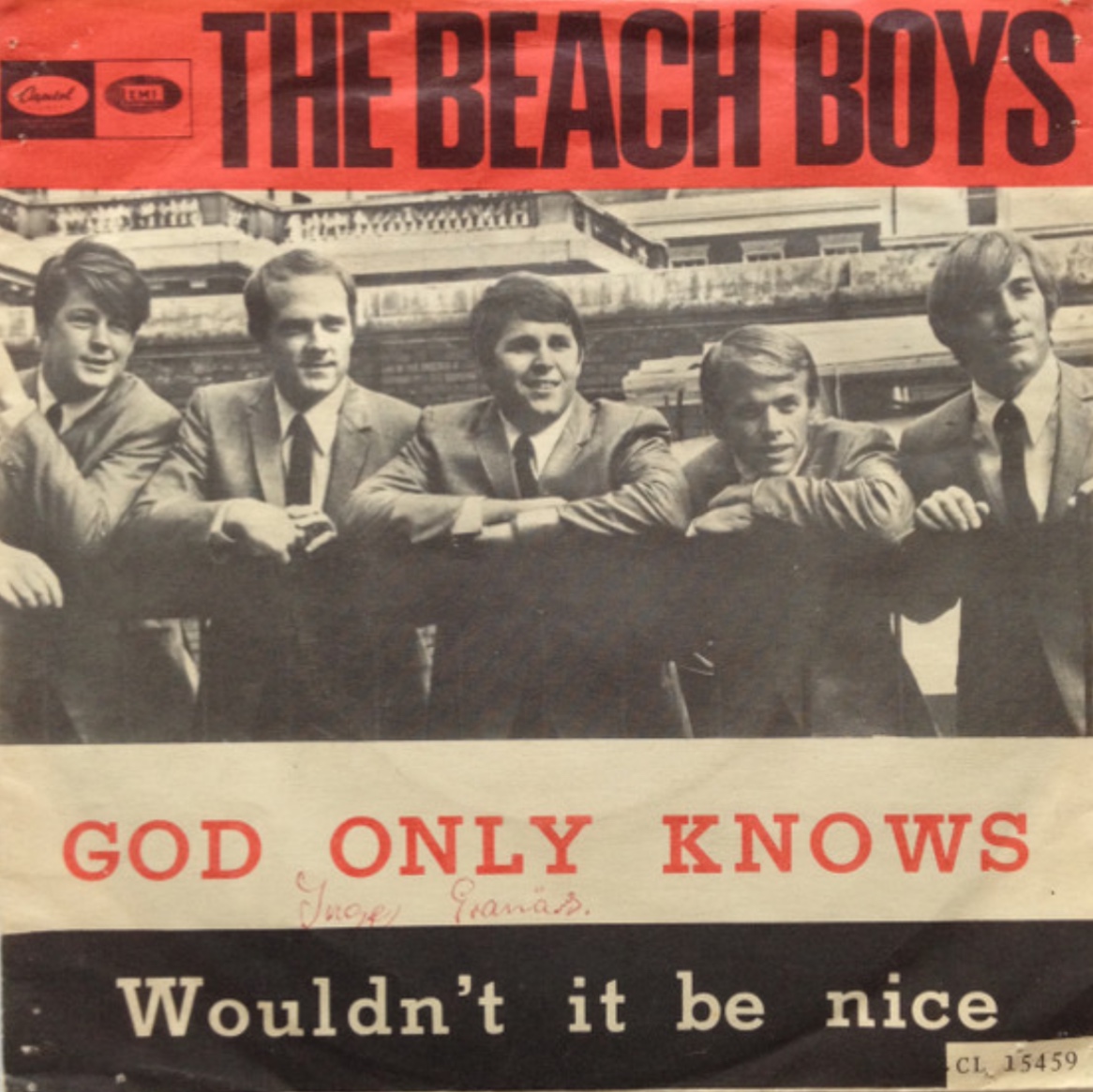
"God Only Knows" és una cançó del 1966 dels Beach Boys, extreta del seu onzè àlbum d'estudi, “Pet Sounds”. Escrita per Brian Wilson en col·laboració amb el lletrista Tony Asher, representa un canvi notable per al grup, allunyant-se del pop optimista i lleuger del so surf per endinsar-se en una orquestració més complexa, de to barroca i contemplativa.
Tot i que la cançó està acreditada als Beach Boys, només tres dels sis membres de la banda hi van participar: Carl Wilson a la veu principal, i Brian Wilson i Bruce Johnston a les veus de suport i harmonies. Acompanyant aquestes tres veus, hi havia un grup de vint músics tocant instruments com la trompa, el contrabaix, la flauta, les campanetes, el clavicèmbal i, fins i tot, percussió amb el fons de dos cartons de suc de taronja de plàstic. El resultat és una peça instrumental de múltiples capes que es mou elegantment al llarg de la cançó sense sobrepassar mai la veu sentida de Carl.
La lletra i el títol de la cançó van ser controvertits en aquell moment. L'ús de la paraula "Déu" en la música popular era mal vist a mitjans dels seixanta, i les emissores de ràdio ultraconservadores solien prohibir les cançons que contenien referències religioses o paraules considerades impertinents (com "maleït" o "infern"). Això, sumat a les referències suïcides percebudes en la lletra “The world would mean nothing to me, so what good would living do me?” (El món no significaria res per a mi, així que de què em serviria viure?), va fer que Capitol Records relegués la cançó a la cara B de “Wouldn’t It Be Nice” als Estats Units. Tot i que el senzill va arribar al número 8 de la llista Billboard, "God Only Knows" va aconseguir prou reproduccions a la ràdio per arribar al número 39, sent l'última cara B dels Beach Boys que va aconseguir entrar a les llistes per si sol.
Al Regne Unit, les cares es van invertir, i "God Only Knows" es va convertir en el punt central del llançament (al Regne Unit, la ràdio pop estava dominada per emissores pirates com Radio Luxembourg i Radio Caroline, que no estaven sotmeses a la censura de les emissores convencionals. La BBC Radio One, la principal emissora de pop nacional, no es va llançar fins al 1967). La cançó va assolir el número 2 al Regne Unit, quedant fora del primer lloc per culpa del senzill doble de The Beatles “Yellow Submarine/Eleanor Rigby”, i va acabar l’any com el 14è senzill més venut al Regne Unit el 1966.
El llegat de "God Only Knows" supera el de qualsevol altra cançó dels Beach Boys, i és àmpliament reconeguda com una de les millors cançons dels anys 60. La seva influència sobre altres músics ha estat encara més gran. Paul McCartney, l'autor de la cançó que va mantenir la peça fora del número 1 al Regne Unit, i el compositor Jimmy Webb (“Wichita Lineman”, “MacArthur Park”) la consideren la seva cançó preferida de tots els temps. Artistes com Bono, John Lennon, Pete Townshend i Barry Gibb (experts en harmonies) també la han lloat.
És, de lluny, la cançó de Brian Wilson que més versions ha tingut, amb artistes com Glen Campbell, Neil Diamond, David Bowie, Michael Stipe i fins i tot Taylor Swift que l'han interpretat. El 2014, la BBC va produir una versió multiartista de la cançó per celebrar el llançament de la seva plataforma “BBC Music”. Aquesta versió va ser un successor espiritual de la versió de “Perfect Day” de Lou Reed que la BBC va produir el 1997, i que va vendre milions. La versió de "God Only Knows" va comptar amb artistes tan diversos com Pharrell Williams, Dave Grohl, One Direction i, per descomptat, Brian Wilson.
BEACH BOYS – GOD ONLY KNOWS
Released: July 18, 1966
Charts: US #39 UK #2
“God Only Knows” is a 1966 song by the Beach Boys, taken from their eleventh studio album, “Pet Sounds”. It was written by Brian Wilson, in partnership with lyricist Tony Asher, and saw a distinct departure for the Beach Boys, moving away from the upbeat, bubblegum pop of the surf sound, into a more contemplative, complex, baroque-style orchestration.
While credited to the Beach Boys, only three off the six band members appeared on the song, Carl Wilson on lead vocal, with Brian Wilson and Bruce Johnston on backing vocals and harmonies. Accompanying the three voices was a twenty-strong group of musicians, playing everything from French horn, double bass and flute, to sleigh bells, harpsichord and for percussion, the bottom of two plastic orange juice cartons. The overall effect is a multi-layered joy of an instrumental track, that clip-clops gracefully throughout the song, but never overpowers Carl’s heartfelt vocal.
The lyrics and title of the song was rather divisive at the time. The use of the word “God” in popular music was frowned upon in the mid-sixties, with ultra-conservative radio stations opting to ban songs that contained religious references or minor cuss words (such as “damn” or “hell”). This, combined with perceived suicidal references in the lyrics (“The world would mean nothing to me, so what good would living do me?”), saw Capitol Records relegate the song to the B-side of “Wouldn’t it be Nice” in the United States. Although the single made #8 on the Billboard chart, “God Only Knows” gained enough airplay to claw to #39 itself, the last Beach Boys B-side to chart in its own right. In the UK, the sides were flipped, with “God Only Knows” becoming the focal point of the release (in the UK, pop radio was mainly offshore “pirate” stations such as Radio Luxemburg and Radio Caroline, so wasn’t subject to any eyebrow raising. BBC Radio One, the national pop station, didn’t launch until 1967). The song peaked at #2 in the UK, held off the top of the charts by the Beatles' “Yellow Submarine”/ “Eleanor Rigby”, and ended the year as the 14th best-selling UK single of 1966.
The legacy of “God Only Knows” surpasses that of any other Beach Boys song, and is widely recognised as one of the finest songs of the 1960s. It’s inspiration on other musicians has been even greater. Paul McCartney, whose nursery rhyme kept the song off the top of the British charts, and songwriter Jimmy Webb ( “Wichita Lineman”, “MacArthur Park”) both consider it their favourite all-time song. The likes of Bono, John Lennon, Pete Townshend and Barry Gibb (who knows a bit about harmonies himself) are among the artists who have lavished praise on the song in the past.
It’s Brian Wilson's most covered song by far, with Glen Campbell, Neil Diamond, David Bowie, Michael Stipe and even Taylor Swift having covered it. In 2014, a multi-artist version of the song was produced by the BBC, to celebrate the launch of their “BBC Music” media outlet. It was a spiritual successor to the BBC's 1997 million-selling version of Lou Reed’s “Perfect Day” and featured artists as diverse as Pharrell Williams, Dave Grohl, One Direction and, of course, Brian Wilson.