Total de visualitzacions de pàgina:

25.10.24


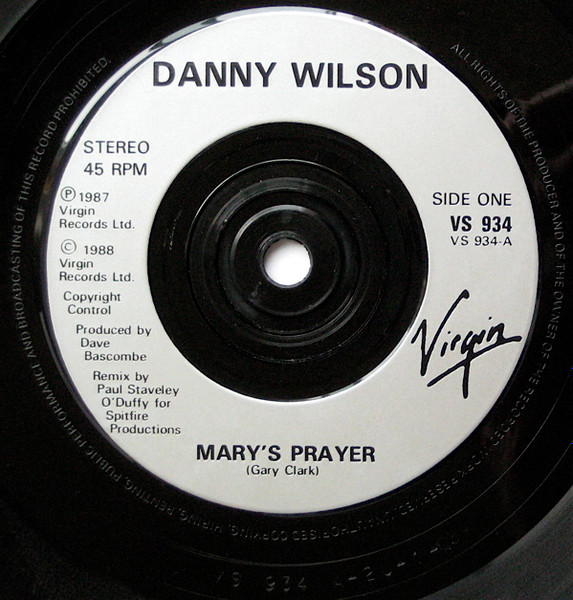
DANNY WILSON – MARY’S PRAYER


Estrena: febrer de 1987

Llistes: EUA: #23  Regne Unit: #3


"Mary's Prayer" va ser el single debut del grup escocès de pop/rock Danny Wilson. La cançó és un clar exemple de "a la tercera va la vençuda", ja que només va tenir èxit després de tres llançaments al Regne Unit. La cançó es va publicar originalment al febrer de 1987, arribant al número 86, però es va convertir en un èxit a Irlanda, on va entrar al top 5. La cançó es va llançar als Estats Units l'estiu de 1987, aconseguint el lloc 23, fet que va motivar una reedició al Regne Unit, millorant la seva posició fins al número 42. A finals de 1987, la principal emissora de ràdio pop del Regne Unit, BBC Radio One, va fer una enquesta entre els oients per seleccionar les millors cançons de l'any que no havien entrat al top 40. "Mary's Prayer" va guanyar, cosa que va propiciar una tercera reedició de la cançó, i finalment va entrar al top 40, arribant al número 3 durant dues setmanes.


"Mary's Prayer" és una balada pop melancòlica amb una veu suau de Gary Clark, líder de Danny Wilson i autor de la cançó. Parla d'un amor perdut i d'un jove que es pregunta què hauria passat si hagués valorat l'amor que tenia. La cançó està plena d'imatges catòliques, sense ser obertament religiosa. El mateix Clark descriu l'ús de metàfores catòliques com una eina per conduir la narrativa de la cançó, barrejant els errors del passat, els penediments del present i la incertesa del futur.


Danny Wilson era un grup de pop de Dundee, Escòcia, format el 1984. Estava compost pels germans Clark, Gary (veu/guitarres) i Kit (guitarres/teclats), i Ged Grimes (baix). Influenciats per artistes com Steely Dan, Stevie Wonder i les cançons de Burt Bacharach i Hal David, es van fer un nom als clubs de Londres abans de ser descoberts per Virgin Records. Inicialment anomenats Spencer Tracy, van canviar el nom després de les objeccions dels familiars del difunt actor, i finalment es van decidir per Danny Wilson, en honor a una de les pel·lícules preferides dels germans Clark, Meet Danny Wilson de Frank Sinatra.


El seu àlbum debut, també titulat “Meet Danny Wilson”, combinava un so sophisti-pop amb elements de jazz, soul i fins i tot bossa nova. A més de "Mary's Prayer", l'àlbum incloïa els senzills menys reeixits "A Girl I Used to Know" i "Davy". Un segon àlbum, “Bebop Moptop”, va sortir el 1989 i els va salvar de ser una banda d'un sol èxit, amb la alegre "The Second Summer of Love", que va arribar al número 23 al Regne Unit. Dos singles més, "Never Gonna Be the Same" i "I Can’t Wait", no van aconseguir entrar al top 40. L'àlbum recopilatori de 1991, “Sweet Danny Wilson”, va ser el comiat del grup, que es va dissoldre aquell mateix any.


Després de la dissolució, Gary Clark va llançar un àlbum en solitari el 1993 titulat “Ten Short Songs About Love”, ple de cançons que originalment estaven destinades al tercer àlbum de Danny Wilson. Del disc, "We Sail on the Stormy Waters" va arribar al lloc 34. Després, Clark es va concentrar en la composició de cançons, treballant amb artistes com Natalie Imbruglia, Lloyd Cole, Liz Phair, Emma Bunton i k.d. Lang. El grup Danny Wilson es va reformar breument el 2014 per tocar a la cerimònia d'obertura de la Ryder Cup d'aquell any, al costat d'altres artistes escocesos com Texas, Midge Ure, Eddi Reader i Amy McDonald, però no han mostrat cap interès en una reunió permanent. Ged Grimes va passar un temps amb els icònics escocesos Deacon Blue, i actualment és el baixista d'una altra llegendària banda escocesa, Simple Minds.


DANNY WILSON – MARY’S PRAYER


Released: February, 1987

Charts:  US: #23, UK: #3


 “Mary’s Prayer” was the debut single from Scottish pop/ rock group Danny Wilson. The song is a definite case of third time lucky, as it was only successful after three releases in the UK. The song originally came out in February 1987, stalling at #86, but becoming a success in Ireland, reaching their top five. The song got an American release in the Summer of 1987, making #23, which prompted a reissue in the UK, improving its peak position to #42. At the end of 1987, the UK's biggest pop radio station, BBC Radio One, launched a listeners poll of the best songs of the year not to make the top 40. “Mary’s Prayer” romped home, prompting a third issue of the song, when finally, it made the UK top forty, culminating in a fortnight at #3.


 “Mary’s Prayer” is a mournful pop ballad with a tender vocal by Danny Wilson frontman and the song’s writer, Gary Clark. It tells of a lost love, and a young man wondering what could have been if he had cherished the love he had. The song is full of Catholic imagery, without being overtly religious in content. Clark himself describes the use of Catholic metaphors as a tool to drive the narrative of the song, mixing errors of the past, the regrets of the present and the uncertainty of the future.


Danny Wilson were a pop band from Dundee, Scotland, who formed in 1984. They consisted of the Clark brothers, Gary (vocals/guitars) and Kit (guitars/keyboards) and Ged Grimes (bass). Influenced by acts like Steely Dan, Stevie Wonder, and the songs of Bert Bacharach & Hal David, they paid their dues in the clubs of London, before being spotted by Virgin Records. Originally called “Spencer Tracy”, they changed their name following objections from the estate of the late actor, eventually plumping for Danny Wilson, after one of the Clark brothers' favourite movies, Frank Sinatra's “Meet Danny Wilson”. 


Their debut album, also called “Meet Danny Wilson”, mixed a sophisti-pop sound with elements of jazz, soul and even bossa nova. As well as “Mary’s Prayer”, the album included the less than successful singles, “A Girl I Used to Know” and ”Davy”. A second album, “Bebop Moptop” came out in 1989 and saved them from being a one-hit wonder, with the jaunty “The Second Summer of Love” making #23 in the UK. Two further singles, “Never Gonna be the Same” and “I Can’t Wait” failed to make the top forty. 1991’s compilation album, “Sweet Danny Wilson” proved a swansong for the group, who broke up the same year.


Gary Clark released a solo album in 1993 called “Ten Short Songs About Love”, full of songs originally intended for Danny Wilson's third album. From the album, “We Sail on the Stormy Waters” made #34. Clark then concentrated on his songwriting, working with artists like Natalie Imbruglia, Lloyd Cole, Liz Phair, Emma Bunton and k.d. lang. Danny Wilson reformed briefly in 2014, to play at the opening ceremony at that year's Ryder Cup, alongside other Scottish acts, Texas, Midge Ure, Eddi Reader and Amy McDonald, but have expressed no interest in reforming. Ged Grimes spent some time with Scottish icons Deacon Blue, and is currently the bass player for another legendary Scottish band, Simple Minds.




24.10.24


CREEDENCE CLEARWATER REVIVAL - TRAVELIN’ BAND


Released: January 1970

Charts: US: #2   UK: #8 


"Travelin' Band" is a song written by John Fogerty and recorded by Creedence Clearwater Revival, featured on their 1970 album “Cosmo's Factory”. Released as a double-sided single with "Who'll Stop the Rain," it became one of three double-sided singles from the album to reach the top five on the U.S. Pop Singles Chart, peaking at number 2. It also charted in the UK, reaching number eight.


"Travelin' Band" captures the fast-paced, hectic lifestyle of Creedence Clearwater Revival during their 1969 tour-heavy year. Constantly on the road, the band played major festivals, including Woodstock, which inspired the song’s lyrics about the challenges and excitement of being on the move. The line "baggage gone, oh well" reflects their frustrations with lost luggage and the chaotic festival environments, often waiting in the heat for their performances. Eventually, the band's traveling became easier once they acquired their own private plane, alleviating some of the stress that inspired the song.


John Fogerty was heavily influenced by 1950s rock 'n' roll, particularly Little Richard's energetic style, which also inspired his vocal delivery. Musically, the song has been compared to The Monkees' 1967 track "No Time." In 1972, the publishing company for Little Richard's "Good Golly, Miss Molly" claimed that "Travelin' Band" was too similar to their song, leading to a plagiarism lawsuit that was settled out of court.

Creedence Clearwater Revival's bassist, Stu Cook, remarked that "Travelin' Band" sounded more like Little Richard's "Long Tall Sally" rather than "Good Golly, Miss Molly." He viewed the song as a blend of various '50s rock classics but not a direct ripoff of any single one. 


After the basic track was recorded, John Fogerty returned to the studio and overdubbed several instrumental parts, including horns and piano, which he played himself, further enriching the song's energetic, old-school rock 'n' roll vibe.


CREEDENCE CLEARWATER REVIVAL - BAD MOON RISING


Publicada: 16 d'abril de 1969  

Llistes: EUA: #2   Regne Unit: #1 (3 setmanes)  


"Bad Moon Rising" és una cançó escrita per John Fogerty. Publicada com a senzill principal del seu àlbum “Green River” el 16 d'abril de 1969, va arribar al número 2 de la llista Billboard Hot 100 el 28 de juny de 1969 i va ocupar el primer lloc de la llista de singles del Regne Unit durant tres setmanes. La seva cara B era "Lodi." La cançó va assolir el seu pic als Estats Units pocs dies després de l'aterratge de l'Apollo 11 a la Lluna, tot i que la lletra i el tema de la cançó no tenen cap connexió amb els viatges espacials, fent que la coincidència fos merament casual. Tot i l'èxit de CCR, "Bad Moon Rising" va ser un dels cinc singles de la banda que van arribar al número 2, ja que la banda mai va aconseguir el número 1 a les llistes dels Estats Units.


La pel·lícula de 1941 “The Devil and Daniel Webster”, en què un huracà destrueix una ciutat, va ser la inspiració de John Fogerty per a la cançó. Aquesta imatge va portar a la frase "I feel the hurricane blowin', I hope you're quite prepared to die." Fogerty va explicar que la cançó reflecteix una sensació de fatalitat imminent, amb el tema general d'un esdeveniment apocalíptic que s'acosta. El ritme alegre de la cançó contrasta amb la lletra fosca sobre desastres i caos.


"Bad Moon Rising" és coneguda per la seva clàssica lletra mal entesa. La frase "There's a bad moon on the rise" (Hi ha una mala lluna sortint) sovint s'escolta erròniament com "There's a bathroom on the right" (Hi ha un bany a la dreta). Això s'ha convertit en una broma coneguda entre els fans, i fins i tot John Fogerty ha fet broma amb la malinterpretació. Durant el seu concert “Premonition”* va cantar humorísticament "There's a bathroom on the right" en lloc de la lletra real, i de vegades assenyalava un bany proper durant les actuacions en directe.


Després que l'Argentina arribés a la final de la Copa del Món de 2014, mentre que el país amfitrió, el Brasil, va ser eliminat a les semifinals, els aficionats argentins van crear un càntic basat en la melodia de "Bad Moon Rising" de Creedence Clearwater Revival. La lletra, "Brasil, decime qué se siente tener en casa tu papa", es tradueix com "Brasil, digues-me com se sent tenir el teu pare a casa teva." El càntic es va fer molt popular, amb fins i tot jugadors argentins unint-se-hi. No obstant això, l'Argentina no va guanyar el trofeu, perdent davant Alemanya a la final, el mateix equip que havia derrotat el Brasil anteriorment.


CREEDENCE CLEARWATER REVIVAL - BAD MOON RISING


Released: April 16, 1969

Charts: US: #2    UK: #1 (3 weeks)


"Bad Moon Rising" is a song written by John Fogerty. Released as the lead single from their album “Green River” on April 16, 1969, it reached No. 2 on the Billboard Hot 100 on June 28, 1969, and held the No. 1 spot on the UK Singles Chart for three weeks. Its B-side was "Lodi." The song peaked in the US just days after the Apollo 11 moon landing, although the song’s lyrics and theme have no connection to space travel, making the timing coincidentally appropriate. Despite CCR's success, "Bad Moon Rising" was one of five of their singles to peak at No. 2, as the band never reached No. 1 in the US charts.


The 1941 film “The Devil and Daniel Webster”, in which a hurricane devastates a town, was John Fogerty’s inspiration for the song. This imagery led to the line, "I feel the hurricane blowin', I hope you're quite prepared to die." Fogerty explained that the song reflects a sense of impending doom, with an overarching theme of an apocalyptic event looming. The song's upbeat rhythm contrasts with its dark lyrics about disaster and chaos.


"Bad Moon Rising" is known for its classic misheard lyric. The line "There's a bad moon on the rise" is often mistakenly heard as "There's a bathroom on the right." This has become a well-known joke among fans, and even John Fogerty has played along with the misinterpretation. During his “Premonition” concert, he humorously sang "There's a bathroom on the right" in place of the actual lyric, and he would sometimes point to a nearby bathroom during live performances.


After Argentina advanced to the 2014 World Cup finals while host country Brazil was eliminated in the semifinals, Argentine soccer fans created a chant set to the tune of "Bad Moon Rising" by Creedence Clearwater Revival. The lyrics, "Brasil, decime qué se siente tener en casa tu papa," translate to "Brazil, tell me how it feels to be bossed around in your own home." The chant became widely popular, with even Argentine players joining in. However, Argentina did not win the trophy, losing to Germany in the final, the same team that had defeated Brazil earlier.


23.10.24


 DARYL HALL & JOHN OATES - METHOD OF MODERN LOVE

Estrena: desembre de 1984

Llistes: EUA: #5  Regne Unit: #21


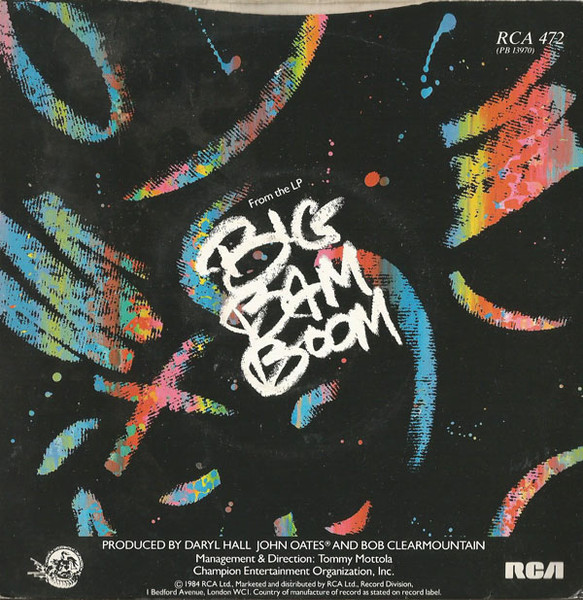
"Method of Modern Love" és una cançó llançada com el segon single del disc “Big Bam Boom” de 1984. Escrita per Daryl Hall i Janna Allen, va arribar al número cinc del Billboard Hot 100 al febrer de 1985. Janna Allen, la germana de la xicota i col·laboradora de Hall, Sara Allen, la va coescriure i es va convertir en un dels èxits populars del duet als anys vuitanta.


"Method of Modern Love" explora la complexitat de l’amor en el món modern, on la tecnologia i la distància afecten les relacions. La lletra expressa un desig per un amor que transcendeixi les barreres tradicionals com el temps i la proximitat física, reconeixent alhora els desafiaments d’una societat que viu ràpidament i que pot fer que la gent es torni més cauta. La cançó reflexiona sobre com les eines de comunicació modernes permeten que les connexions prosperin, fins i tot sense interacció cara a cara. Musicalment, va ser una de les seves peces més contemporànies, amb una ad-lib semblant a un rap al vers final.


El videoclip té una qualitat surrealista, gairebé de somni. Comença amb el duet sent observat a través d'una claraboia en el seu acollidor apartament. G.E. Smith llença una guitarra brillant per la finestra, cosa que fa que Hall i Oates surtin a investigar. Al terrat, es queden hipnotitzats per una banda de quatre homes i comencen a ballar de manera coreografiada. Hall cau del terrat i comença a ballar entre els núvols al costat de la lluna, i la resta el segueixen, llançant-se del terrat per unir-se a ell. El vídeo acaba amb ells ballant i nedant entre els núvols, acompanyats de rètols de neó que escriuen el títol de la cançó. La música del vídeo és una barreja entre la versió de l’àlbum i el remix del maxi-single. 


"Method of Modern Love" va debutar al Billboard Hot 100 al número 50 el 15 de desembre de 1984, mentre el seu senzill anterior, “Out of Touch”, encara era al capdamunt de la llista. Després de vuit setmanes, va assolir la cinquena posició, on va romandre durant una setmana. El 19 de gener de 1985, “Method of Modern Love” es va situar al número 21, mentre “Out of Touch” estava just per sota, al número 22, demostrant la forta presència del duet a les llistes en aquell moment.


DARYL HALL & JOHN OATES - METHOD OF MODERN LOVE


Released: December 1984

Charts: US: #5   UK: #21 


"Method of Modern Love" is a song released as the second single from the 1984 album “Big Bam Boom”. Written by Daryl Hall and Janna Allen, the song reached number five on the Billboard Hot 100 in February 1985. Janna Allen, the sister of Hall's longtime girlfriend and songwriting partner Sara Allen, co-wrote the track, which became one of the duo's popular hits from the mid-'80s.


"Method of Modern Love" explores the complexities of love in the modern world, where technology and distance affect relationships. The lyrics express a longing for a love that transcends traditional boundaries like time and physical proximity, while acknowledging the challenges of a fast-paced society that can make people more guarded. The song reflects on how modern communication tools allow connections to thrive even without face-to-face interaction. Musically, it was one of their most contemporary tracks, featuring a rap-like ad-lib in the closing verse.


The music video has a surreal, dream-like quality. It starts with the duo being observed through a skylight in their cozy apartment. G.E. Smith throws a glowing guitar through the window, prompting Hall and Oates to investigate. On the roof, they are mesmerized by a four-man band and perform a choreographed dance together. Hall falls off the roof and begins dancing on the clouds next to the moon, and the others follow him, diving off the roof to join in. The video ends with them swimming and dancing among the clouds, accompanied by neon signs spelling out the song title. The music in the video is a mix of the album version and the 12" remix.


"Method of Modern Love" debuted on the Billboard Hot 100 at #50 on December 15, 1984, while their previous single "Out of Touch" was still at the top of the chart. After eight weeks, it peaked at #5, where it stayed for one week. On January 19, 1985, "Method of Modern Love" ranked at #21, while "Out of Touch" was just below it at #22, showing the duo's strong chart presence at the time.