Total de visualitzacions de pàgina:

27.10.24


U2 - DISCOTHEQUE


Publicació: 3 de febrer de 1997

Llistes: EUA: #10  Regne Unit: #1 (1 setmana)


"Discothèque", llançada el 1997 com a single principal de l'àlbum “Pop”, reflecteix el gir de la banda cap a influències de la música electrònica i dance durant els anys 90. La cançó va liderar les llistes d'èxits en diversos països, com Finlàndia, Irlanda, Itàlia, Nova Zelanda, Noruega i el Regne Unit. També va arribar al número u a les llistes de música dance i alternativa als Estats Units i al Canadà. Un fragment de 30 segons de la cançó es va filtrar on line el 26 d'octubre de 1996, i tot el tema es va filtrar completament el 27 de desembre. Davant la filtració, U2 van decidir avançar la data de llançament.


Bono la va descriure com un reflex d'una etapa vibrant de les seves vides, influenciada per la música dance i les nits de festa amb amics. Malgrat el seu so inspirat en el techno i un vídeo musical on la banda apareix disfressada com els Village People, la cançó va generar reaccions polaritzades. Alguns van elogiar la inspiració de U2, mentre que altres van criticar el canvi com a arriscat, especialment quan “Pop” va sortir ràpidament del Top 10 després de debutar al número u. Bono va defensar l'èxit global de l'àlbum, subratllant que havia estat número u en 28 països i qüestionant les expectatives dels crítics.


U2 també van afrontar crítiques pel gran nombre de remescles de música dance de la cançó. Alguns crítics van suggerir que aquesta estratègia era un intent de la banda per aprofitar la popularitat de la música dance del moment. Tanmateix, Stephen Thomas va tenir una visió més positiva, veient les remescles com una reflexió de la influència creixent de la cultura remix en la música. Larry Flick de Billboard en va elogiar el caràcter divertit i experimental, destacant que s'allunyava significativament dels temes més orientats al rock de la banda, com "Sunday Bloody Sunday."


El vídeo musical, dirigit per Stéphane Sednaoui, va submergir U2 en un entorn de miralls amb una bola de discoteca, evocant l'era del disco amb moviments de ball que recordaven “Saturday Night Fever”. La banda es va disfressar de manera lúdica amb vestits semblants als Village People, amb Bono com a policia motorista, The Edge com a motorista de cuir, Adam Clayton com a mariner nord-americà i Larry Mullen Jr. com a cowboy. La revista Stylus va qualificar el vídeo com a estrany i sublim. Abans del seu debut a MTV, el canal va emetre una marató de 24 hores amb 13 vídeos de U2.


U2 - DISCOTHEQUE


Released: February 3, 1997

Charted:  US: #10   UK: #1 (1 week)


"Discothèque" released in 1997 as the lead single from the album "Pop," showcases the band's shift towards electronic dance music influences during the 1990s. The song topped charts in multiple countries including Finland, Ireland, Italy, New Zealand, Norway, and the United Kingdom. It also reached number one on dance and alternative charts in the United States and Canada. A 30-second sample of the song was leaked online on 26 October 1996. Subsequently, the entire track was leaked by 27 December of the same year. In response to the leak, U2 decided to move forward the release date of the song. 


Bono described the song as capturing a vibrant period of their lives, influenced by dance music and late nights with friends. Despite its techno-inspired sound and a music video featuring the band in Village People attire, the song faced polarizing reactions. While some praised U2's inspiration, others criticized the change as expensive and questioned their commercial judgment when "Pop" dropped out of the Top 10 shortly after debuting at Number One. Bono defended the album's global success, highlighting its Number One status in 28 countries and questioning critics' expectations.


U2 faced criticism from some reviewers due to the extensive number of dance music remixes of the song. Critics suggested that this approach was an attempt by the band to capitalize on the popularity of dance music at the time. However, Stephen Thomas viewed the remixes more positively, seeing them as reflective of the increasing influence of remix culture in music. Larry Flick of Billboard praised the song's playful and experimental nature, noting that it diverged significantly from the band's earlier, more rock-oriented tracks like "Sunday Bloody Sunday."


The music video directed by Stéphane Sednaoui, immersed U2 in a mirrored disco-ball environment, evoking the disco era with dancing reminiscent of "Saturday Night Fever." The band playfully donned costumes resembling the Village People, with Bono as a motorcycle cop, the Edge as a gay-fetish biker, Adam Clayton as an American sailor, and Larry Mullen Jr. as a cowboy. Stylus magazine hailed the video as "sublimely bizarre." Prior to its MTV debut, the channel aired a 24-hour marathon featuring 13 U2 music videos.


26.10.24


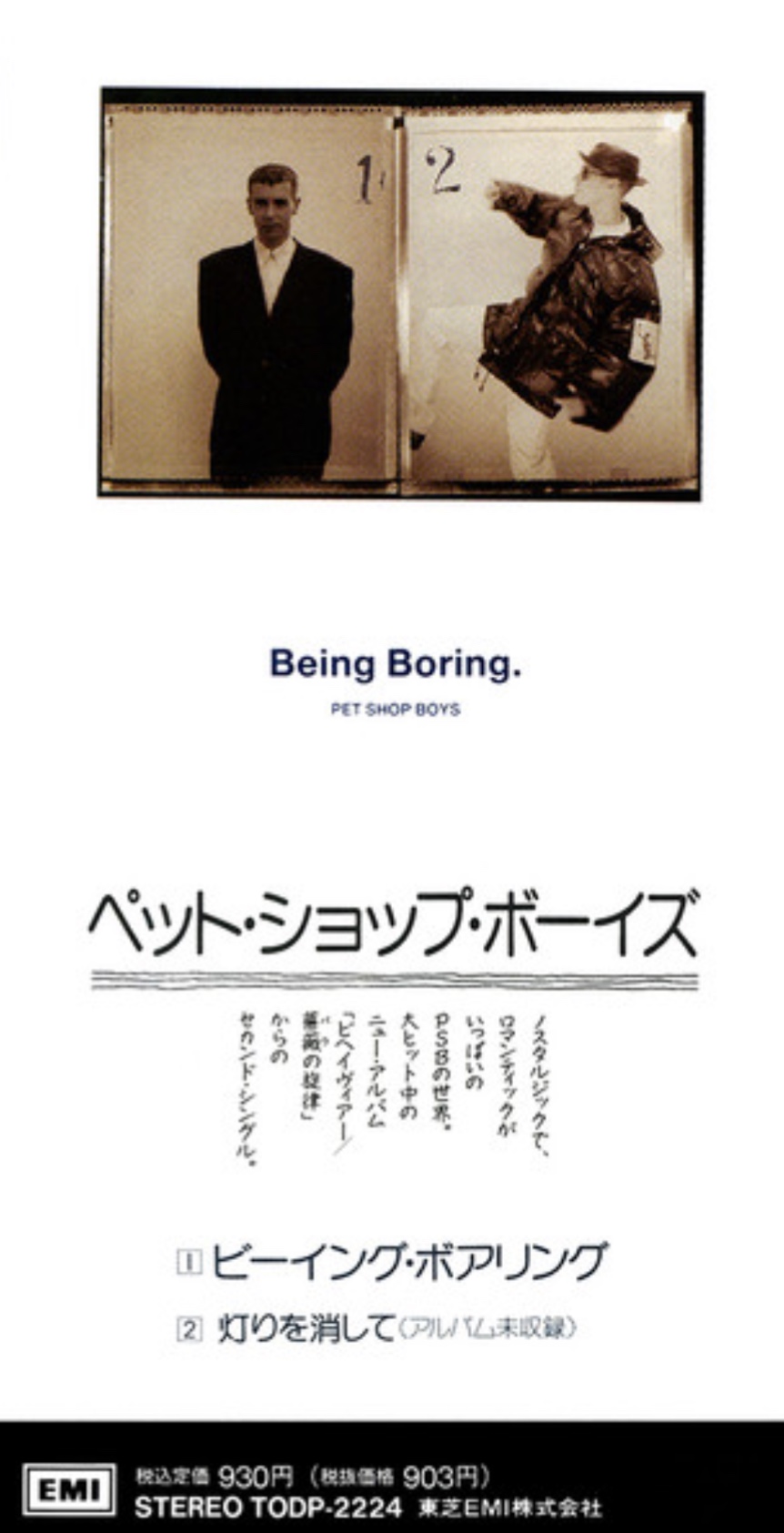
PET SHOP BOYS - BEING BORING


Publicació: 12 de novembre de 1990

Llistes: Regne Unit: #20


"Being Boring" és una cançó llançada com el segon senzill del quart àlbum d'estudi de Pet Shop Boys, "Behaviour". Malgrat l'elogi crític, només va arribar al número 20 de les llistes de senzills del Regne Unit, sent el primer senzill del duo que no assolia el top 10 des de "Opportunities (Let's Make Lots of Money)" el 1986.


"Being Boring", liderada per la guitarra wah-wah de J.J. Belle enmarca un to melancòlic basat en un ritme de hip-hop gairebé imperceptible. La lletra parla de la nostalgia en un temps passat, dels amics devastats per la SIDA i de festes immortalitzades. Neil Tennant, el lletrista darrere de "Being Boring", va compartir una reflexió commovedora sobre la cançó durant una entrevista al programa britànic de TV The South Bank Show l’octubre de 1991. Va revelar: "Moltes cançons provenen d'experiències personals. 'Being Boring', que penso que és una de les nostres millors cançons... Em va recordar una festa que vam fer d’adolescents quan vivia a Newcastle, i citava la frase de Zelda Fitzgerald: 'No s'avorria mai principalment perquè ella no era avorrida.' Un amic meu d'aquella època, el meu millor amic realment, havia mort de la SIDA. Així que va ser una mena d'elegia per a ell, per la part de mi mateix a Newcastle, tots els meus amics a Newcastle quan vaig anar a Londres, i després el que feia jo llavors i ell no hi era. I així es va convertir en una cançó realment elegórica.


Tennant va reflexionar sobre les influències musicals darrere de "Being Boring", afirmant: "Aquest era just el període en què Kylie Minogue va fer els seus millors discos, ja saps, com 'Better The Devil You Know'. Per a mi, de fet, 'Being Boring' també va ser un intent de fer alguna cosa a l’estil Stock-Aitken-Waterman, creguis o no. Sempre ens va fascinar la manera com Stock-Aitken-Waterman canviaven de to per a les tornades de les cançons. No era un intent de ser madurs, en realitat era un intent de ser com Stock-Aitken-Waterman."


El vídeo en blanc i negre està ple de joves atractius divertint-se. Eagle-Eye Cherry, conegut pel seu èxit de 1998 "Save Tonight", és un d'ells. El vídeo va ser dirigit per Bruce Weber, un fotògraf de moda reconegut pel seu treball al vídeo de Chris Isaak "Wicked Game".


PET SHOP BOYS - BEING BORING


Released: November 12, 1990

Charted:  UK: #20 


"Being Boring" is a song released as the second single from their fourth studio album, “Behaviour”. Despite its critical acclaim, the song reached number 20 on the UK Singles Chart, marking the duo's first single to miss the top 10 since "Opportunities (Let's Make Lots of Money)" in 1986. 


"Being boring”, led by the wah-wah guitar of J.J. Belle framed in a melancholic tone based on an almost imperceptible hip hop rhythm and whose lyrics speak of nostalgia in a past time, of those friends devastated by AIDS and those immortalized parties. Neil Tennant, the lyricist behind "Being Boring," shared a poignant insight about the song during an interview on British TV's The South Bank Show in October 1991. He revealed: "A lot of songs come from personal experiences. The song 'Being Boring,' which I think is one of our best songs... I was reminded of a party we had when I was living in Newcastle as a teenager, and it quoted the Zelda Fitzgerald quote: 'She was never bored mainly because she was never boring.' A very good friend of mine from that era, my best friend really, had died of AIDS. So it was kind of an elegy for him, for the part of myself in Newcastle, all my friends in Newcastle when I went to London, then what I was doing then and he wasn't there. And so it became a really elegiac song.


Tennant reflected on the musical influences behind "Being Boring," stating, "This was just the period where Kylie Minogue made her best records, you know, like 'Better The Devil You Know.' To me, actually 'Being Boring' was also an attempt to do a Stock-Aitken-Waterman thing, believe it or not. We were always fascinated about the way Stock-Aitken-Waterman would change key for choruses. It wasn't an attempt to be mature, it was actually an attempt to be like Stock-Aitken-Waterman."


The black-and-white video is filled with attractive young people who are far from being boring. Eagle-Eye Cherry, known for his 1998 hit "Save Tonight," is among them. The video was directed by Bruce Weber, a fashion photographer, renowned for his work on Chris Isaak's "Wicked Game" video. 


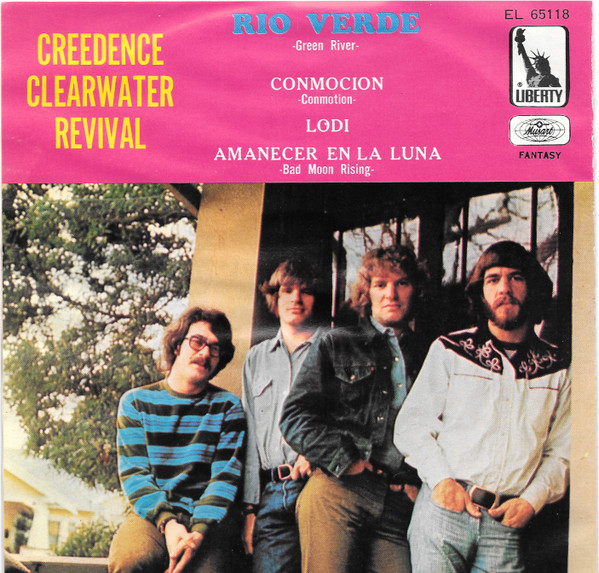
CREEDENCE CLEARWATER REVIVAL - GREEN RIVER


Llançament: Juliol de 1969  

Llistes: EUA: #2   Regne Unit: #19  


"Green River" és una cançó escrita per John Fogerty, llançada com a senzill al juliol de 1969, un mes abans de l'àlbum “Green River”. El single va arribar al número dos de la llista Billboard Hot 100, mantenint-se en aquesta posició durant una setmana, darrere de “Sugar, Sugar” de The Archies. John Fogerty ha mencionat que “Green River” és el seu àlbum preferit de Creedence Clearwater Revival, en gran part perquè captura el so i l'ambient dels àlbums dels anys 50 d'artistes com Elvis Presley i Johnny Cash.


"Green River" està basada en les experiències infantils de John Fogerty a Putah Creek, prop de Winters, Califòrnia, un lloc que ell va batejar nostàlgicament com a "Green River" a la cançó. En entrevistes, Fogerty va explicar que, tot i que l'ambient de la cançó podria evocar una zona pantanosa de Louisiana, en realitat reflecteix els seus records de vacances familiars en aquest lloc. Aquests records inclouen aprendre a nedar, veure libèl·lules i granotes, i una corda per fer salts al riu. La cançó també fa referència a "Cody's camp," inspirada en una cabana propietat d'un descendent de Buffalo Bill Cody on s'allotjava la família de Fogerty.


Fogerty va revelar que el títol “Green River” provenia de l’etiqueta d’un xarop per fer refrescos de la seva infància. El xarop, amb sabor a llima i anomenat Green River, s'utilitzava per fer refrescos a les antigues fonts de soda. Aquest nom el va descobrir quan tenia uns vuit anys.


En una entrevista amb la revista Mojo, Fogerty va explicar que el riff de la cançó li donava una certa sensació que va associar amb un "riu verd," connectant la música amb el títol que havia estat guardant. Fogerty també va dir que la música de “Green River” estava influenciada pel so de Sun Records, tot i que no estava inspirada directament en cap cançó específica. Va comparar el tractament rítmic amb “Dream Baby” de Roy Orbison, especialment per la manera com la guitarra acústica crea un ritme ondulant mentre el baix manté un ritme constant en els temps un i quatre. Malgrat aquesta comparació, Fogerty va remarcar que “Green River” tenia una energia més rockera que “Dream Baby”, tot i que els estils rítmics eren similars.


CREEDENCE CLEARWATER REVIVAL - GREEN RIVER


Released: July 1969

Charts: US: #2    UK: #19 


"Green River" is a song written by John Fogerty. It was released as a single in July 1969, a month ahead of the album “Green River”. The song reached number two on the Billboard Hot 100, staying there for one week, held back by "Sugar, Sugar" by The Archies. John Fogerty has mentioned that “Green River” is his favorite Creedence Clearwater Revival album, largely because it captures the sound and feel of the '50s albums from artists like Elvis Presley and Johnny Cash.


"Green River" is based on John Fogerty's childhood experiences at Putah Creek near Winters, California, which he nostalgically renamed "Green River" in the song. In interviews, Fogerty explained that although the song's setting might evoke a Louisiana bayou, it actually reflects his memories of family vacations at this spot. These memories include learning to swim, dragonflies, bullfrogs, and a rope swing over the water. The song also references "Cody's camp," inspired by a cabin owned by a descendant of Buffalo Bill Cody, where Fogerty's family stayed.


Fogerty revealed that the title "Green River" came from a soda pop syrup label from his childhood. The syrup, lime-flavored and called Green River, was used to make soda drinks at soda fountains. He carried the name with him since he was around eight years old. 


In an interview with Mojo magazine, Fogerty explained that the riff for the song gave him a certain vibe, which he associated with a "green river," connecting the music to the title he had been holding onto. John Fogerty explained that the music of "Green River" was influenced by the sound of Sun Records, though not directly tied to any specific song. He compared its rhythmic treatment to "Dream Baby" by Roy Orbison, particularly in the way the acoustic guitar created a loping beat, while the bass carried a steady rhythm on the one and four beats. Despite this comparison, Fogerty noted that "Green River" had a more rocking edge than "Dream Baby," though the rhythm style was similar.


DARYL HALL & JOHN OATES - YOU MAKE MY DREAMS 


Estrena: abril de 1981

Llistes: EUA: #5


"You Make My Dreams" és una cançó de l'àlbum “Voices” de 1980. Llançada com a senzill el 1981, es va convertir en un dels èxits més populars del duo, arribant al número cinc de la llista Billboard Hot 100. Coneguda pel seu so alegre i positiu, la cançó s'ha convertit en una peça definidora de la carrera de Hall & Oates, sovint present en pel·lícules i anuncis publicitaris.


Segons John Oates, "You Make My Dreams" va sorgir com un "accident feliç". Mentre tocava amb un amic, van combinar blues del delta i swing texà, i Oates va començar a cantar espontàniament el ganxo de la cançó. Daryl Hall va destacar el singular riff de piano d'obertura, produït amb un teclat rar Yamaha CP-30. Hall va explicar que, després de danyar-se el seu instrument original, li va ser molt difícil reproduir aquell so únic, però recentment va aconseguir trobar-ne un altre.


La lletra expressa com la presència d'una persona especial porta alegria, realització i sentit a la vida d'algú. Malgrat els reptes de la vida i els pensaments dispersos, aquesta persona té la capacitat d'unir-ho tot, creant coherència i felicitat. La tornara destaca l'impacte positiu repetint la frase "you make my dreams come true", ressaltant l'alegria i la satisfacció aclaparadora que sent aquesta persona. Les melodies divertides i repetitives reflecteixen l'eufòria i l'emoció que porta l'amor.


La cançó va ser escrita per Daryl Hall, John Oates i Sara Allen. Oates va descriure-la com una cançó simple però màgica, subratllant com les grans cançons poden sostenir-se per elles mateixes, fins i tot despullades de producció. Va explicar que la peça representa l'ambient i la col·laboració del grup a l'estudi durant els anys 80. John Oates en va llançar una nova versió al seu àlbum en solitari de 2011, “Mississippi Mile”.


DARYL HALL & JOHN OATES - YOU MAKE MY DREAMS


Released: April 1981

Charts: US: #5    


"You Make My Dreams" is a song from the 1980 album “Voices”. Released as a single in 1981, it became one of their most popular hits, reaching number five on the Billboard Hot 100. Known for its upbeat, feel-good sound, the song has since become a defining track of the duo’s career, often featured in movies and commercials


"You Make My Dreams" came about as a "happy accident," according to John Oates. While jamming with a friend, they combined delta blues and Texas swing, and Oates spontaneously started singing the song's hook. Daryl Hall highlighted the unique opening piano riff, produced by a rare Yamaha CP-30 keyboard. He noted how difficult it was to replicate that sound after his original instrument was damaged, but he recently managed to find another one. 


The lyrics express how the presence of a special person brings joy, fulfillment, and purpose to one person's life. Despite life's challenges and scattered thoughts, this individual has the ability to bring everything together, creating coherence and happiness. The chorus emphasizes the positive impact by repeating the phrase "you make my dreams come true," highlighting the overwhelming joy and satisfaction this person feels. The song's playful and repetitive melodies reflect the elation and excitement that love brings.


"You Make My Dreams" was written by Daryl Hall, John Oates, and Sara Allen. Oates described it as a simple, yet magical song, highlighting how great songs can stand on their own even when stripped of production. He explained that the track represents the vibe and collaboration of the band in the studio during the '80s. John Oates released a new version of "You Make My Dreams" on his 2011 solo album “Mississippi Mile”.