Total de visualitzacions de pàgina:

11.11.24


STEVE WINWOOD – WHILE YOU SEE A CHANCE


Estrena: 1 de febrer de 1981

Llistes: EUA: #7  Regne Unit: #45


“While You See a Chance” és el primer single del segon àlbum en solitari de Steve Winwood, “Arc of a Diver”, i també el seu primer gran èxit com a solista. Composta per Winwood en col·laboració amb el lletrista Will Jennings, la cançó es caracteritza per la seva introducció d'orgue interpretada pel mateix Winwood. Va tenir un gran èxit a Amèrica del Nord, arribant al número 7 als EUA i al número 3 al Canadà.


Amb un ritme mig i un so d'estil rock soulful, “While You See a Chance” atrapa l'oient amb una melodia enganxosa que el fa moure el peu al ritme. Tot i la seva alegre interpretació, amaga un significat més profund. La cançó tracta sobre la idea que el romanticisme pot fer la vida més interessant i plena, fins i tot si no s'hi està completament compromès, reflectint una actitud oportunista en la lletra.


La frase “While you see a chance, take it, to find romance” (Quan vegis l’oportunitat, aprofita-la, per trobar l’amor) sembla una frase típica de moltes cançons d'amor, però el joc de paraules amb “While you see a chance, fake it, to find romance” (Quan vegis l’oportunitat, fingeix-ho, per trobar l’amor) canvia el sentit, suggerint una visió on qualsevol amor és vàlid i portant l'expressió “fingeix-ho fins que funcioni” a un extrem.


Durant les sessions de gravació, Winwood va esborrar accidentalment la pista de bateria del tema. Després de mesos intentant replicar-la sense èxit, va optar per refer la cançó sense bateria. Will Jennings, el coautor, tenia una trajectòria excepcional com a compositor, amb cançons com “Street Life” (The Crusaders), “One Day I’ll Fly Away” (Randy Crawford), “Up Where We Belong” (Joe Cocker/Jennifer Warnes), “Tears in Heaven” (Eric Clapton), “Higher Love” (Winwood) i “My Heart Will Go On” (Celine Dion). Jennings va morir el 6 de setembre d’enguany després d’una llarga malaltia, als 80 anys.


Steve Winwood és una llegenda de la música britànica. Va ser un prodigi adolescent als anys 60, membre de tres grups importants: Spencer Davis Group (’64-’67), Traffic (’67-’74) i Blind Faith (1969). El seu primer àlbum en solitari es va publicar el 1977, però va ser durant els anys 80 quan va destacar amb àlbums com “Arc of a Diver” (1980), “Talking Back to the Night” (1982), “Back in the High Life” (1986) i “Roll With It” (1988), tots grans èxits. És membre del Saló de la Fama del Rock & Roll com a part de Traffic i guanyador de múltiples premis Grammy. Winwood ha publicat nou àlbums en solitari, l’últim dels quals, “Nine Lives”, el 2008. Encara fa gires i omple estadis, als seus 76 anys.


STEVE WINWOOD – WHILE YOU SEE A CHANCE


Released: February 1, 1981

Charts: US: #7  UK: #45 


 “While You See a Chance” is the first single from Steve Winwood's second solo album, “Arc of a Diver” and his first hit single as a solo act. It was written by Winwood in collaboration with lyricist Will Jennings, and features a distinctive organ intro by Winwood. It was a big success in North America, making #7 in the U.S. and #3 in Canada.


 “While You See a Chance” is a soulful, mid-tempo rock song, with a great hook, that gets in your head and has you unconsciously tapping your foot along with it. Its jaunty arrangement hides the deeper meaning of the song. The song revolves around the idea that romance makes life more interesting and fulfilling, even if you are not fully committed to it. It explains the opportunistic attitude of the lyrics. 


“While you see a chance, take it, to find romance” seems like normal words of love for many songs, but “While you see a chance, fake it, to find romance” is a different story, telling the listener that any love is good love, and taking the phrase “fake it ‘til you make it” to a new extreme.  


 During recording sessions for the song, Winwood accidentally deleted the drum pattern from the backing track. After months of trying to replicate it, Winwood gave up and reworked the song without drums. Will Jennings’ track record as a songwriter was second to none. Songs from his pen include “Street Life” (The Crusaders), “One Day I’ll Fly Away (Randy Crawford), “Up Where We Belong” (Joe Cocker/Jennifer Warnes), “Tears in Heaven” (Eric Clapton), “Higher Love” (Winwood) and “My Heart Will Go On” (Celine Dion). Jennings died on September 6th this year, after a long illness. He was 80.


Steve Winwood is a legend of the British music scene. He was a teenage prodigy in the 1960s as a member of three important acts, Spencer Davis Group (’64-’67), Traffic (’67-’74) and Blind Faith (1969). His self-titled debut album was released in 1977, but it was his 1980s output that made him a solo star, with the albums “Arc of a Diver” (1980), “Talking Back to the Night” (1982), “Back in the High Life” (1986) and “Roll With it” (1988) all major successes. He is a member of the Rock & Roll Hall Fame as a member of Traffic, and a multiple Grammy winner. Winwood has released nine solo albums to date, with his last album, “Nine Lives” released in 2008. He still tours and sells out stadium nowadays, aged 76.


HUMAN LEAGUE – TELL ME WHEN

Llançament: 26 de desembre de 1994  

Llistes: Regne Unit: #6, EUA: #31  


"Tell Me When" és un single de Human League llançat el dia de Boxing Day de 1994 i que va entrar a les llistes al gener de 1995. Escrita per Philip Oakey i Paul Beckett, la cançó va ser el primer senzill del setè àlbum de la banda, “Octopus”. Produïda per Ian Stanley, antic teclista i compositor de Tears for Fears, la cançó va marcar el retorn de la banda al top 10 del Regne Unit per primera vegada des del 1986, assolint el sisè lloc, i va ajudar a que l'àlbum “Octopus” arribés al número 6 en la llista d'àlbums.


Originalment, la cançó havia estat escrita per a un projecte paral·lel entre Oakey i Beckett, anomenat “Fast Arithmetic”. Es va gravar en forma de demo el 1991, però mai es va completar. Finalment, va convertir-se en el primer senzill de Human League sota East West Records després de deixar Virgin Records el 1992. La cançó va ser un retorn a les llistes per a la banda, que molts donaven per desapareguda després del fracàs de l'àlbum “Romantic?” del 1990. Va esdevenir el seu èxit més gran des de "(Keep Feeling) Fascination", que va assolir el número 2 a les llistes del Regne Unit el 1983.


El tema explora les experiències de diferents persones amb l'anhel i les relacions. Parla de tres persones: Kelly, que ha buscat l’amor sense èxit durant anys; Billy, que va sentir-se confús amb l’amor de ben jove; i el mateix narrador, que vivia content amb la seva solitud, sense preocupar-se gaire pel tema. Això canvia quan una trobada inesperada porta el narrador a experimentar amor i anhel, passant de l’apatia a preguntar-se: "Digues-me quan podré tornar-te a veure".


Aquesta cançó va ser l’últim senzill de Human League en arribar al top 10, fins a la data d’avui.


HUMAN LEAGUE – TELL ME WHEN


Released: December 26, 1994

Charts: UK: #6  US: #31


 “Tell Me When” is a 1994 single by The Human League, released on Boxing Day of 1994, charting in January of 1995. The song was written by Philip Oakey and Paul Beckett, and was the first song released from the band's seventh album, “Octopus”. The song was produced by former Tears for Fears keyboardist and songwriter Ian Stanley and returned the band to the UK top ten for the first time since 1986, making number six in the UK and helping “Octopus” to #6 in the album chart.


The song was originally written for an aborted side project between writers Phil Oakey and Paul Beckett called “Fast Arithmetic”. It was recorded by the duo in 1991, but never got further than demo form. It ended up as Human League's first single under East West Records, following their departure from Virgin Records in 1992. The song proved both a return to form and a return to the charts for the band, who many assumed had split up after the failure of 1990’s “Romantic?” It became the band’s biggest hit since 1983’s “(Keep Feeling) Fascination” made #2 in the UK charts.


The song’s theme explores different people’s experiences with longing and relationships. It concerns three people, “Kelly”, “Billy” and the unnamed singer. Kelly had searched fruitlessly for love for years, Billy seemed confused by love early on in his life, and Oakey's own singer was happy in his solitude, unbothered with all the fuss. That changes when a random encounter leads the singer to love and longing, going from apathy to asking “Tell me when I can see you again”.


The song proved to be Human League's final top ten hit to date.


10.11.24


HEART - MISTRAL WIND


Released: October 7, 1978

Album: Dog & Butterfly


“Dog & Butterfly” is Heart's fourth studio album, released in September 1978 by Portrait Records after a legal dispute with their previous label, Mushroom Records. This album followed the release of “Magazine” earlier that year. “Dog & Butterfly” reached No. 17 on the U.S. Billboard 200 chart.


"Mistral Wind," an album track from “Dog & Butterfly”, is a fan favorite and a frequent part of their live performances. The song, lasting 6:42, takes listeners on a vivid, mythic journey across the sea, with lyrics that evoke a transformative, life-altering adventure. Nancy Wilson described it as a Ulysses-type song about waiting for a powerful wind to guide you, only to be swept up on a thrilling, even perilous, journey that changes one's perspective forever. The "mistral wind" itself refers to a strong, cold wind characteristic of southern France and the Mediterranean region.


"Mistral Wind" is a classic Heart track that showcases the band’s unique musical depth and dynamic power. Beginning with Nancy Wilson’s acoustic guitar, the song opens with a delicate, intimate feel as Ann Wilson delivers the lyrics in a restrained yet emotive style. At the 2:10 mark, the full band joins in, amplifying the energy as Ann’s vocals build to a powerful release, mirroring the song's stormy imagery. Often compared to "Stairway to Heaven" for its dynamics and lyrical resonance, “Mistral Wind” embodies a similar epic quality, with Heart bringing their own intensity to a track only they could pull off.


"Mistral Wind" is notable for its collaborative songwriting, credited to Ann and Nancy Wilson, guitarist Roger Fisher, and Sue Ennis, a longtime friend and frequent co-writer with the Wilsons. This track holds a special place in Heart's catalog as one of the last songs to feature Fisher, who left the band after “Dog & Butterfly”. His departure marked a lineup change that saw Heart continue as a five-piece on their next album, “Bébé le Strange”. 


Nancy Wilson considers "Mistral Wind" to be Heart's best song, describing it as a showcase of the band's strengths in storytelling, musicality, and philosophical depth. She highlighted the track’s poetic, sweeping symbolism, emphasizing its powerful structure: a dissonant guitar intro builds into a storm that immerses listeners, leaving them transformed by the song’s end. Wilson acknowledges the grand imagery but believes it accurately reflects the impact and artistry "Mistral Wind" achieve.


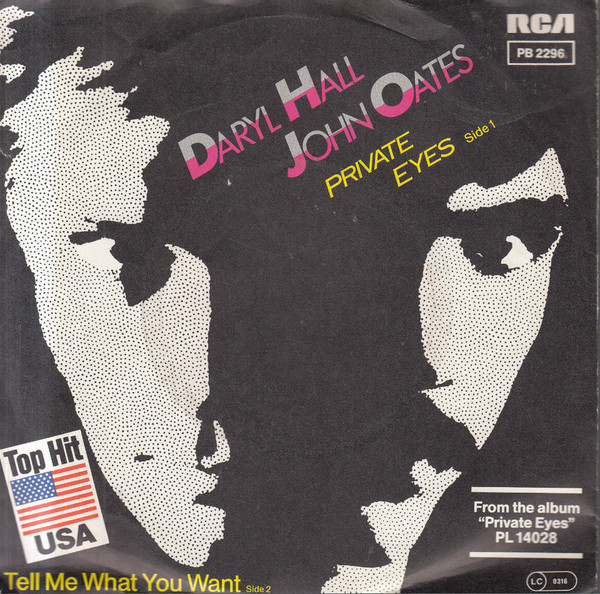
DARYL HALL & JOHN OATES - PRIVATE EYES


Estrena: agost de 1981

Llistes: EUA: #1 (2 setmanes)  Regne Unit: #32


"Private Eyes" és un senzill i la cançó que dona títol a l'àlbum de 1981 del mateix nom. La cançó es va convertir en el seu tercer número u, liderant la llista Billboard Hot 100 durant dues setmanes el novembre de 1981. Va ser el segon número u del duet als anys vuitanta, després de "Kiss on My List". Després que "Private Eyes" mantingués el primer lloc, va ser reemplaçada per "Physical" d'Olivia Newton-John, que posteriorment va ser superada per una altra cançó de Hall & Oates, "I Can't Go for That (No Can Do)". La cançó té un ritme similar a "Kiss on My List" i compta amb una tornada amb sons de mans picant, fet que la converteix en una de les preferides per a la participació del públic durant els concerts en directe. Va ser una de les primeres cançons del duet que va rebre rotació constant a MTV.


"Private Eyes" va ser coescrita per Warren Pash, Janna Allen i Daryl Hall. Hall va explicar que la cançó va ser desenvolupada en gran part per Janna Allen i Pash, amb la seva aportació en l'arranjament i en alguns canvis en els acords. La lletra va ser escrita per Hall i Sara Allen (germana de Janna). Hall es referia a la cançó com una "cançó familiar", donada la col·laboració entre ell i les germanes Allen.


"Private Eyes" va tenir el seu origen en la pel·lícula de 1980 amb el mateix nom, protagonitzada per Don Knotts i Tim Conway. Warren Pash va començar a treballar en una cançó titulada "I Need You To Need Me", però no li va agradar. Després de veure un cartell de la pel·lícula, va canviar el títol a "Private Eyes" i va col·laborar amb Janna Allen, que en aquell moment buscava material per a la seva carrera en solitari. Junts van desenvolupar la cançó en un petit espai d'assaig, però Janna va decidir que no era adequada per a ella i va pensar que seria perfecta per a Hall & Oates. Així doncs, la va passar a Daryl Hall, qui, amb la seva nòvia Sara Allen, la va transformar en un èxit per al duet.


La presència escènica de Daryl Hall sovint eclipsava John Oates, fet que va inspirar un esquetx memorable a "Saturday Night Live", on un actor que interpretava Oates reclamava còmicament el mèrit pels aplaudiments de la cançó. Tot i això, Oates, que va coescriure molts dels seus èxits, es mostrava satisfet amb el seu paper, reconeixent que la personalitat extravagant de Hall contribuïa significativament a la dinàmica del duet. En una entrevista de 2011, Oates va destacar que la seva capacitat de respectar les fortaleses de l'altre ha estat clau per a la seva duradora associació.


La cançó compara els desafiaments de l'amor amb la feina dels detectius, i el videoclip musical mostra Daryl Hall i John Oates vestits com a investigadors privats del cinema negre, amb gavardines i barrets “trilby”. En aquest vídeo es va mostrar per primera vegada la seva banda de suport, que incloïa el guitarrista G. E. Smith i el saxofonista/teclista Charles DeChant. Malgrat les seves reserves sobre el fet que els videoclips poguessin restar importància al seu so, Hall & Oates van reconèixer la seva importància per al màrqueting, especialment amb l'auge de MTV.


Per crear un vídeo ràpid i econòmic, van contractar el director Jay Dubin, que compartia la seva manca d'interès per les produccions elaborades. Dubin va recordar com van rodar el vídeo de manera espontània a l'estudi Electric Ladyland, sense cap pla formal, utilitzant els recursos disponibles. Tot el procés va durar només unes poques hores, resultant en una peça promocional senzilla però efectiva.


DARYL HALL & JOHN OATES - PRIVATE EYES


Released: August 1981

Charts: US: #1 (2 weeks)  UK: #32 


"Private Eyes" is a single and the title track of the 1981 album of the same name. The song became their third number-one hit, topping the Billboard Hot 100 for two weeks in November 1981. It was the duo's second number-one hit of the 1980s, following "Kiss on My List." After "Private Eyes" held the top spot, it was replaced by Olivia Newton-John's "Physical," which was then succeeded by Hall & Oates' own "I Can't Go for That (No Can Do)."The single features a similar rhythm to Hall & Oates' earlier hit "Kiss on My List," with a distinctive handclap chorus that has made it a favorite for audience participation at live shows. It was one of the duo's first tracks to receive heavy rotation on MTV. 


"Private Eyes" was co-written by Warren Pash, Janna Allen, and Daryl Hall. Hall explained that the song was largely developed by Janna Allen and Pash, with Hall contributing to the arrangement and altering the chords. The lyrics were written by Hall and Sara Allen (Janna's sister). Hall referred to the track as a "family song," given the collaboration between himself and the Allen sisters.


"Private Eyes" originated from the 1980 movie of the same name, starring Don Knots and Tim Conway. Warren Pash initially worked on a song titled "I Need You To Need Me" but disliked it. After seeing a billboard for the movie, he changed the title to "Private Eyes" and collaborated with Janna Allen, who was looking for material for her solo career. They developed the song in a modest rehearsal space, but Janna later decided it wasn't suitable for her and instead thought it would be perfect for Hall & Oates. She passed it to Daryl Hall, who, along with his girlfriend Sara Allen, transformed it into a hit for the duo.


Daryl Hall's more prominent stage presence often overshadowed John Oates, leading to a memorable "Saturday Night Live" sketch where an actor portraying Oates humorously claimed credit for the song's hand claps. Despite this, Oates, who co-wrote many of their hits, expressed contentment with his role, recognizing that Hall's flamboyant personality contributes significantly to their dynamic. In a 2011 interview, Oates noted that their ability to respect each other's strengths has been key to their enduring partnership.


The song likens the challenges of romance to the work of detectives, with its music video featuring Daryl Hall and John Oates dressed as classic film-noir private investigators in trench coats and trilby hats. This video marked the first appearance of their backup band, including guitarist G. E. Smith and saxophonist/keyboardist Charles DeChant. Despite their reservations about music videos detracting from their sound, Hall & Oates recognized their importance for marketing, especially with the rise of MTV. 


To create a quick and budget-friendly video, they enlisted director Jay Dubin, who shared their disinterest in elaborate video productions. Dubin recalled how they shot the video spontaneously at Electric Ladyland studio, with no formal plan, utilizing whatever resources were available. The entire process took just a couple of hours, resulting in a straightforward yet effective promotional piece.