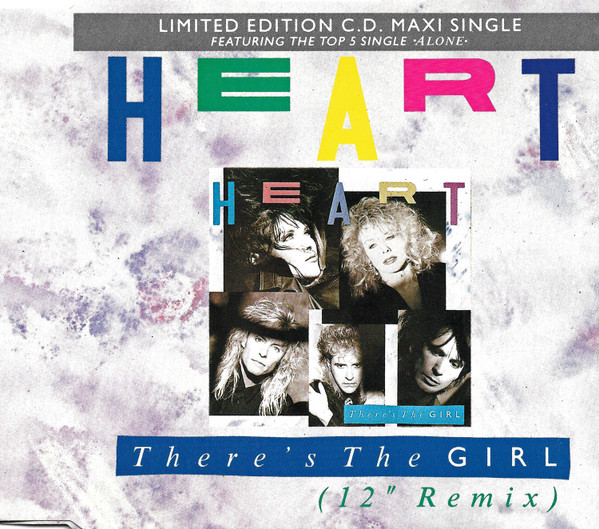
"There's the Girl" is a song co-written by Nancy Wilson and songwriter Holly Knight. Released as the third single from Heart's “Bad Animals” album, it followed the success of "Alone" and "Who Will You Run To." The single was issued in a remixed version, showcasing a polished production style typical of Ron Nevison, who had produced Heart's previous album as well. The single reached #12 on the Billboard Hot 100 and charted in the UK as well, peaking at #34 on the Singles Chart.
"There's the Girl" featured Nancy Wilson on lead vocals, marking one of the few times she took the spotlight over her sister Ann, who was typically Heart’s lead vocalist. Similar to their 1986 hit "These Dreams," this vocal switch surprised many fans, who often didn't realize Nancy was singing until seeing the video or a live performance.
Holly Knight shared how "There's the Girl" came together. She explained that while she had the melody and chorus initially, the lyrics took some time to develop due to distractions, like Nancy Wilson being on tour. Despite the song being written over a long period, Knight was pleasantly surprised by its success, noting that people still love the song today. Knight also revealed that while the title was hers, Nancy Wilson had a personal connection to the song's theme, as it mirrored a friend's experience of being in love with someone who was with another girl. Knight hadn't known about this connection until later, when she learned of Nancy's experience.
"There's the Girl" explores a classic love triangle, where the narrator, a girl, harbors deep feelings for a guy who's infatuated with another girl who doesn’t value him. The narrator questions his loyalty, asking, "Can you say that you don't want her anymore?"—a line that reflects her hope he’ll move on from the unappreciative girl and notice her instead. The music video directed by Jeff Stein, is a visually striking piece typical of early MTV-era videos. It features surreal imagery, including smoke, two Sphinxes, and a cyborg drum kit, creating a mysterious atmosphere. Nancy Wilson also appears in tails.
DARYL HALL & JOHN OATES - I CAN’T GO FOR THAT (NO CAN DO)
Estrena: novembre de 1981
Llistes: EUA: #1 (1 setmana) Regne Unit: #8
"I Can't Go for That (No Can Do)" va ser llançada com a segon single de l'àlbum “Private Eyes” de 1981. Coescrita amb Sara Allen, la cançó es va convertir en el quart número u del duo al Billboard Hot 100. Notablement, també va aconseguir una gesta rara per a un grup de músics blancs, en encapçalar tant les llistes de pop com de R&B.
"I Can't Go for That (No Can Do)" va debutar al número 59 del Billboard Hot 100 el 14 de novembre de 1981, com la debutant més alta de la setmana. Després d'11 setmanes, va assolir el cim de la llista el 30 de gener de 1982, on s'hi va mantenir durant una setmana. La cançó va posar fi a la rècord de 10 setmanes de l'Olivia Newton-John al número u amb "Physical", que prèviament havia destronat "Private Eyes" de Hall & Oates del primer lloc.
"I Can't Go for That (No Can Do)" es va inspirar en una frase que Daryl Hall feia servir quan es negava a sotmetre's a la pressió. La cançó va ser improvisada durant una sessió de gravació per a l'àlbum a Electric Lady Studios. Hall va començar tocant una línia de baix en un orgue Korg, acompanyat per un ritme preestablert d'una caixa de ritmes Roland CompuRhythm. L'enginyer de so va capturar el moment, i en menys de 10 minuts, els acords i el riff de guitarra, tocat per John Oates, es van materialitzar. L'endemà, Hall i la seva parella, Sara Allen, van col·laborar en la lletra.
Michael Jackson va admetre que "I Can't Go for That (No Can Do)" va tenir una influència important en el seu èxit "Billie Jean". Daryl Hall va explicar que durant la gravació de "We Are the World", Jackson li va dir que havia pres prestat el groove de la seva cançó. Hall, impressionat per com Jackson l'havia adaptat, li va respondre que ni tan sols havia notat la similitud.
John Oates va explicar que, mentre molts interpreten "I Can't Go for That (No Can Do)" com una cançó sobre relacions, en realitat tracta de resistir la pressió de la indústria musical. La lletra expressa la determinació del duo de no deixar-se influenciar per les discogràfiques, els mànagers i els agents, i de mantenir-se fidels a la seva visió creativa. Oates va esmentar que aquest missatge era intencionat, ja que volien que els oients poguessin relacionar la cançó amb les seves pròpies vides i experiències.
Oates també va comentar que "I Can't Go for That (No Can Do)" és una de les cançons més samplejades del seu catàleg. Artistes com Simply Red, Puff Daddy i De La Soul l'han utilitzat en els seus propis temes. Per exemple, "Sunrise" de Simply Red no va ser només un sample, sinó que va fer servir tota la melodia de la cançó amb noves estrofes afegides. Oates va expressar que aprecia quan la seva música és samplejada, ja que ho considera un compliment i gaudeix de les diferents interpretacions que altres artistes aporten al seu treball.
DARYL HALL & JOHN OATES - I CAN’T GO FOR THAT (NO CAN DO)
Released: November 1981
Charts: US: #1 (1 week) UK: #8
"I Can't Go for That (No Can Do)" was released as the second single from the 1981 album “Private Eyes”. Co-written with Sara Allen, the song became the duo's fourth number-one hit on the Billboard Hot 100. Notably, it also achieved a rare feat for a white act by topping both the pop and R&B charts.
"I Can't Go for That (No Can Do)" debuted at number 59 on the Billboard Hot 100 on November 14, 1981, as the highest debut of the week. After 11 weeks, it reached the top of the chart on January 30, 1982, where it stayed for one week. The song ended Olivia Newton-John's 10-week run at number one with "Physical," which had previously knocked Hall & Oates' "Private Eyes" from the top spot.
"I Can't Go for That (No Can Do)" was inspired by a phrase Daryl Hall used when he refused to conform to pressure. The song was improvised during a recording session for the album at Electric Lady Studios. Hall began by playing a bass line on a Korg organ, accompanied by a preset rhythm from a Roland CompuRhythm drum machine. The session engineer captured the moment, and within 10 minutes, the chords and guitar riff, played by John Oates, came together. The next day, Hall and his girlfriend, Sara Allen, collaborated on the lyrics.
Michael Jackson admitted that Hall & Oates' "I Can't Go for That (No Can Do)" had a significant influence on his hit song "Billie Jean." Daryl Hall recounted that during the recording of "We Are the World," Jackson told him he had borrowed the groove from their song. Hall, impressed with how well Jackson had adapted it, replied that he hadn't even noticed the similarity.
John Oates explained that while many interpret "I Can't Go for That (No Can Do)" as a relationship song, it is actually about resisting pressure from the music industry. The lyrics express the duo's determination not to be pushed around by record labels, managers, and agents, and to stay true to their creative vision. Oates mentioned that this broader message was intentional, as they wanted listeners to relate the song to their own lives and experiences.
John Oates mentioned that "I Can't Go for That (No Can Do)" is one of the most sampled songs from their catalog. He noted that artists like Simply Red, Puff Daddy, and De La Soul have used it in their own tracks. Simply Red's "Sunrise," for example, wasn't just a sample but used the entire track, with new verses added. Oates expressed that he appreciates when their music is sampled, considering it a compliment and enjoying the different interpretations that other artists bring to their work.
14.11.24
HUMAN LEAGUE - DARE
Estrena: 16 d'octubre de 1981
Llistes: Regne Unit: #1 (4 setmanes) EUA: #3
“Dare” (publicat com a “Dare!” als Estats Units) és el tercer àlbum d’estudi de The Human League. Aquesta obra va marcar un moment transformador per a la banda, ja que va ser el primer àlbum després de la marxa dels membres fundadors Martyn Ware i Ian Craig Marsh, que van formar Heaven 17. Amb una nova alineació que incloïa les noves incorporacions de Susan Ann Sulley i Joanne Catherall com a vocalistes i ballarines, el cantant principal Philip Oakey va conduir la banda cap a un nou camí de pop sintetitzat. El productor Martin Rushent va tenir un paper essencial en l’elaboració del so de “Dare”, transformant les textures de sintetitzadors en temes pop estructurats i refinats. L'àlbum va catapultar The Human League cap a l'èxit massiu i el mainstream.
“Dare” projecta una profunditat emocional a través de la veu barítona de Philip Oakey, en contrast amb línies de sintetitzador vives, creant una experiència sonora que se sent alhora propera i amb aspiracions. L’àlbum s’obre amb "The Things That Dreams Are Made Of", celebrant les petites alegries de la vida junt amb grans ambicions. "Open Your Heart" posa èmfasi en l’amor i la vulnerabilitat com a elements clau del creixement personal, amb una melodia que recorda el pop clàssic. "The Sound of the Crowd", una peça icònica de l’era New Romantic, ofereix un so intens però estimulant que tipifica la combinació única de calidesa i plenitud de "Dare" dins d'un estil minimalista de synth-pop.
En un to més fosc, The Human League explora temes inquietants amb peces com "Darkness", que transmet paranoia amb el seu pols intens, i "Do or Die", amb ritmes frenètics. La seva estranya interpretació del tema "Get Carter" intensifica la tensió, aportant una qualitat atmosfèrica esgarrifosa que se sent sorprenentment moderna. "I Am The Law" ofereix un ambient autoritari amb sintetitzadors que emfatitzen la narrativa penetrant d'Oakey, on la seva veu brilla de manera evocadora. Un dels temes destacats, "Seconds", explora l’assassinat de Kennedy des de la perspectiva d’Oswald, combinant ritmes tensos i de compte enrere amb sintetitzadors dramàtics per crear una experiència fascinant i immersiva.
Sorgint d'aquestes atmosferes ombrívoles, hi ha dues de les peces més pop de l’àlbum. "Love Action (I Believe in Love)" presenta un so ballable amb un riff central brillant i una secció parlada, convertint-se en el primer èxit al Top 10 del Regne Unit per a la banda. La peça clau de l’àlbum és, però, "Don’t You Want Me", una història clàssica de rebuig amb seqüències de sintetitzador rítmiques, una melodia de baix profunda i un famós duet de pregunta-resposta entre Oakey i Sulley. Aquesta cançó, amb la seva memorable tornada i tensió emocional, es va convertir en un èxit definitiu, encapçalant les llistes arreu del món i consolidant l'impacte massiu i la influència de “Dare”.
“Dare” va rebre un ampli reconeixement el 1981, ocupant la sisena posició en els millors àlbums de l’any segons NME i guanyant el premi d'Àlbum de l'Any a l'enquesta de lectors de Smash Hits. Als Brit Awards de 1982, el productor Martin Rushent va guanyar el premi al Millor Productor Britànic per la seva feina a l'àlbum, i The Human League van ser reconeguts com a Millor Nou Artista Britànic, confirmant l'impacte de l'àlbum i l'èxit del grup.
HUMAN LEAGUE - DARE
Released: October 16, 1981
Charts: UK: #1 (4 wks) US: #3
“Dare” (released as “Dare!” in the U.S.) is the band’s third studio album, launched in October 1981 in the UK and mid-1982 in the U.S. It marked a transformative moment for the band, as it was their first album after founding members Martyn Ware and Ian Craig Marsh left to form Heaven 17. With a reconfigured lineup that included new members Susan Ann Sulley and Joanne Catherall as backing vocalists and dancers, lead singer Philip Oakey took the band in a fresh, synth-driven pop direction. Producer Martin Rushent played a crucial role in shaping “Dare”’s sound, meticulously crafting the band’s raw synth output into polished, structured pop songs. This album ultimately propelled the Human League into mainstream success.
“Dare” channels emotional depth through Philip Oakey’s baritone vocals set against sharp synth lines, creating an album that feels both relatable and aspirational. Opening with "The Things That Dreams Are Made Of," the album celebrates life’s simple joys alongside greater ambitions. "Open Your Heart" emphasizes love and vulnerability as vital to personal growth, its melody as catchy as classic pop. "The Sound of the Crowd," a defining track for the New Romantic era, delivers a stark yet uplifting sound that typifies “Dare”’s unique blend of warmth and fullness within a minimalist synth-pop style.
At “Dare”’s darker core, The Human League delve into unsettling themes with songs like "Darkness," which pulses with moody paranoia, and "Do or Die," driven by frenetic rhythms. Their eerie take on the “Get Carter” theme intensifies the tension, bringing a chilling, atmospheric quality that feels strikingly modern. The oppressive “I Am The Law” creates an authoritarian aura, with cascading synths that underscore Oakey’s haunting narrative and showcase his voice at its evocative best. A standout, "Seconds," explores the Kennedy assassination from Oswald’s perspective, pairing tense, countdown beats with dramatic synths to create a hauntingly immersive experience.
Emerging from the album’s darker soundscapes are two of its most pop-centered tracks. "Love Action (I Believe in Love)" offers a danceable, shape-shifting sound with a bright main riff and a spoken-word middle section, becoming the band’s first UK Top 10 hit. The album's standout, however, is "Don’t You Want Me," a classic tale of rejection that combines ticking synth sequences, a deep bass melody, and an iconic call-and-response duet between Oakey and Sulley. This track, known for its catchy chorus and emotional tension, became a defining hit, topping charts worldwide and solidifying “Dare”’s massive impact and influence.
“Dare” received significant acclaim in 1981, ranking sixth in NME's best albums of the year and winning Album of the Year in the Smash Hits readers' poll. At the 1982 Brit Awards, producer Martin Rushent won Best British Producer for his work on the album, and The Human League were recognized as Best British Newcomer, affirming the album's impact and the band’s breakthrough success.
13.11.24
HEART - STRAIGHT ON
Released: September 1978
Charts: US: #15
"Straight On" is a song released in 1978 as the lead single from the album “Dog & Butterfly”. It became the band’s third U.S. Top 20 hit, reaching No. 15 on the Billboard Hot 100. Known for its catchy bass groove and empowering lyrics, the song has remained a staple in Heart's live performances since its release.
"Straight On" was written by Heart's Ann and Nancy Wilson, along with longtime collaborator Sue Ennis, who was also part of The Lovemongers, a side project formed by the Wilson sisters in the 1990s. Ennis and the Wilsons share a friendship that dates back to their childhood, leading to a close creative partnership that enriched many of Heart's songs over the years.
This is a mid-tempo rock track that incorporates a funky, dance-like bass line, which Ann Wilson described as Heart’s first “dance song.” Reflecting the disco-influenced era of the late 1970s, the song uses gambling metaphors, like “deal me in,” to convey the protagonist’s determination in pursuing love. The structure is unusual, with an emphasis on the chorus and instrumental sections rather than traditional verses, adding to its distinctive groove and straightforward love theme.
“Dog & Butterfly” became a major success for Heart, achieving double-platinum status. The band embarked on an intense 77-city tour that proved exhausting and led to significant changes within the lineup. During this period, guitarist Roger Fisher left after a breakdown to form his own band, while manager Mike Fisher (also Ann Wilson’s partner) exited both the band and his relationship with her. Bassist Steve Fossen and drummer Michael DeRosier also departed soon afterward. The album itself is thematically split: Side 1, the "dog side," contains Heart’s hard rock tracks, while Side 2, the "butterfly side," features softer ballads, creating a duality that reflects the band's musical versatility.