Total de visualitzacions de pàgina:

18.11.24


 THE DOORS - BREAK ON THROUGH (TO THE OTHER SIDE)

Publicada: 1 de gener de 1967  

Llistes d'èxits: EUA: #126  Regne Unit: #64  


"Break On Through (To the Other Side)" de The Doors és la primera cançó del seu àlbum debut de 1967, “The Doors”, i també es va llançar com el seu primer senzill a través d’Elektra Records. Tot i que inicialment va tenir poc èxit als EUA, només arribant al número 126, va esdevenir una peça clau en les actuacions en directe de la banda. Dècades més tard, la cançó va guanyar una nova atenció quan es va reeditar com a single per a la banda sonora de la pel·lícula “The Doors” d’Oliver Stone, aconseguint breument entrar a les llistes del Regne Unit i assolint el número 64.


"Break On Through (To the Other Side)" reflecteix la fascinació de Jim Morrison per la rebel·lia i el caos, capturant el seu desig de trencar amb les normes establertes. Morrison va descriure el seu interès per la revolta i el desordre, cosa que es manifesta en l’energia intensa i concisa de la peça. Amb una durada de menys de dos minuts i mig, la cançó recull un tema comú en la música dels Doors: la creença que les experiències físiques poden portar a una visió espiritual més profunda. Aquesta urgència i el focus en trencar fronteres van esdevenir elements definitoris tant de les lletres de Morrison com de la identitat de la banda.


A "Break On Through (To the Other Side)," la frase original de la tornada, “she gets high,” va ser modificada pel productor Paul Rothchild, que va pensar que la referència restringiria la seva emissió. Rothchild va convèncer la banda d'ometre la paraula "high," donant lloc a un so ofegat (“she get uuggh”), tot i que en els concerts en directe es mantenia la lletra original. La reedició de l’àlbum el 1999, supervisada per l'enginyer original Bruce Botnick, va restaurar la frase censurada. Botnick també va retornar el llenguatge censurat de Morrison a "The End", portant ambdues cançons més a prop de la seva intenció original.


Jim Morrison es va inspirar per a aquesta cançó en la novel·la “City of Night” (1963) de John Rechy. Morrison va incorporar la frase de Rechy “the other side” (“l’altre costat”), així com una frase sobre moure’s "place to place, week to week, night to night” (de lloc en lloc, setmana a setmana, nit rere nit), que va adaptar a la lletra per transmetre un sentit de moviment incessant i d’exploració de límits.


La melodia de guitarra de Robby Krieger es va veure influïda per la cançó "Shake Your Money Maker" de Paul Butterfield Blues Band, del seu àlbum debut de 1965. Gran admirador de Butterfield, Krieger es va trobar imitant el riff de forma natural mentre treballava en la peça.


Elektra Records va encarregar un film promocional per a "Break On Through (To the Other Side)", dirigit per Mark Abramson. El vídeo, amb Jim Morrison cantant la cançó, estava destinat a mitjans televisius però va rebre poc temps d'emissió, ja que la banda encara era relativament desconeguda en aquell moment. Posteriorment, el vídeo es va utilitzar en concerts durant 1967 i 1968, així com en diverses compilacions de vídeo i es va emetre a MTV. Igual que The Beatles, The Doors van ser pioners en el mitjà del vídeo musical, creant acompanyaments visuals per a les seves cançons.


THE DOORS - BREAK ON THROUGH (TO THE OTHER SIDE)


Released: January 1, 1967

Charts:  US: #126  UK: #64 


The Doors' "Break On Through (To the Other Side)" is the opening track on their 1967 debut album, “The Doors”, and was also released as their first single by Elektra Records. Although it initially charted poorly in the U.S., only reaching number 126, it became a mainstay in the band’s live performances. Decades later, the song gained renewed attention when it was reissued as a single for the soundtrack of Oliver Stone’s “The Doors” movie, briefly charting in the UK, where it peaked at number 64.


"Break On Through (To the Other Side)" reflects Jim Morrison's fascination with rebellion and chaos, capturing his desire to disrupt established norms. Morrison described his interest in revolt and disorder, which comes through in the song's intense, concise energy. The song, lasting under two and a half minutes, capture a theme common in the Doors' music: the belief that physical experiences can lead to deeper spiritual insight. This urgency and focus on breaking boundaries became a defining element of both Morrison’s lyrics and the band’s identity.


In "Break On Through (To the Other Side)," the original chorus line "she gets high" was altered by producer Paul Rothchild, who believed the reference would restrict airplay. Rothchild convinced the band to omit "high," resulting in a stifled sound (“she get uuggh”), although live performances retained the original lyrics. The 1999 album reissue, overseen by original engineer Bruce Botnick, restored the uncensored line. Botnick also reinstated Jim Morrison's censored language in "The End," returning both tracks closer to their original intent.


Jim Morrison drew inspiration for this song from John Rechy's novel “City of Night” (1963). Morrison incorporated Rechy's phrase "the other side," as well as a line about moving "place to place, week to week, night to night," which he adapted into the song's lyrics to convey a sense of relentless movement and boundary-pushing exploration.


Robby Krieger's guitar melody was influenced by the Paul Butterfield Blues Band's song "Shake Your Money Maker" from their 1965 debut album. A big fan of Butterfield, Krieger found himself naturally emulating the riff while working on the track.


Elektra Records commissioned a promotional film for "Break On Through (To the Other Side)," directed by Mark Abramson. The video, featuring Jim Morrison singing the song, was aimed at television broadcast outlets but received little airplay due to the band's relative obscurity at the time. It was later used in concerts during 1967 and 1968, as well as in various video compilations and aired on MTV. Like The Beatles, The Doors were pioneers in the music video medium, creating visual accompaniments for their songs.


17.11.24


HUMAN LEAGUE – THE LEBANON


Llançament: 24 d'abril de 1984  

Llistes: Regne Unit: #11, EUA: #64  


“The Lebanon” és una cançó antibel·licista de The Human League. Va ser escrita per Phil Oakey i Jo Callis i va ser el primer single extret del quart àlbum de la banda, “Hysteria”. Va tenir un èxit moderat al Regne Unit, arribant al lloc #11, i a Austràlia, on va assolir el lloc #23. No va tenir gaire èxit als Estats Units, quedant-se al lloc #64 i lluitant per obtenir reproduccions a la ràdio (possiblement per la seva temàtica). A diferència de moltes cançons de The Human League, “The Lebanon” és una peça amb un so fortament marcat per la guitarra, amb la línia de baix d'Ian Burden i la guitarra de Jo Callis destacant al llarg de tota la cançó.


La lletra fa referència a la guerra civil libanesa. Philip Adrian Wright va confirmar que la cançó es va inspirar específicament en les massacres de Sabra i Xatila, on entre 1500 i 3500 civils van ser assassinats per milícies libaneses amb l'ajuda de les Forces de Defensa d'Israel. La cançó té dos protagonistes: la primera és una dona, que té por per la seva vida i somia amb els temps d’abans de la guerra; el segon és un jove soldat que es troba atrapat en una guerra quan ell creia que s'havia allistat com a pacificador.


En general, la cançó retracta la turbulència emocional, la confusió i la pèrdua que experimenten les persones comunes atrapades en un conflicte. Planteja qüestions sobre el veritable cost de la guerra i la fragilitat de la pau.


HUMAN LEAGUE – THE LEBANON


Released: April 24, 1984

Charts: UK: #11 US: #64


 “The Lebanon” is an anti-war song by Synth-pop band The Human League. It was written by Phil Oakey and Jo Callis, and was the first single lifted from the band’s fourth album “Hysteria”. The song was a moderate success in the UK, making #11, and Austrailia, where it peaked at #23. It failed to set the Billboard charts on fire, stalling at #64, struggling for airplay (possibly due to its subject matter). Unlike many of The Human League's songs, “The Lebanon” is a guitar heavy track, with Ian Burden's bassline and Jo Callis' guitar both prominent throughout the song.


The lyrics are a reference to the Lebanese Civil War. Philip Adrian Wright confirmed that the song was specifically inspired by the Sabra and Shatila Massacres, where between 1500 and 3500 civilians were killed by Lebanese militia, aided by the Israel Defence Forces. The song has two protagonists, the first is a woman, scared for her life and dreaming of a time before the war began, and the second, a young soldier who finds he is caught in a war, when he believed he had signed up to be a peacekeeper.


Overall, the song portrays the emotional turmoil, confusion and loss experienced by ordinary individuals caught up in the middle of conflict. It raises questions about the true cost of war, and the frailty of peace. 


16.11.24


HUMAN LEAGUE - THE SOUND OF THE CROWD


Released: April 24, 1981

Charts: UK: #12 


"The Sound of the Crowd" marked the band's commercial breakthrough, reaching #12 on the UK charts in May 1981. Written by Philip Oakey and Ian Burden, it was recorded at Genetic Sound Studios and released as a single in April 1981. Later, a remixed version was included in the album “Dare”. The track was the first to incorporate vocals from new members Susan Ann Sulley and Joanne Catherall, who sang alongside Oakey’s lead vocals.


Following a split orchestrated by manager Bob Last, original members Martyn Ware and Ian Craig Marsh departed to form Heaven 17, leaving Philip Oakey and Adrian Wright uncertain about the band’s future. Facing an upcoming tour with Iggy Pop and a lack of musical experience, Oakey recruited two local club-goers, Joanne Catherall and Susan Ann Sulley, bringing a fresh dynamic to the lineup, even if it initially irked some fans. Soon after, musician Ian Burden joined, and with producer Martin Rushent, the reformed Human League created "The Sound of the Crowd." 


Ian Burden revealed that the lyrics for the song initially served as a placeholder. He had jotted down some spontaneous, stream-of-consciousness lines to convey his idea for the vocal parts to Philip Oakey, avoiding the typical "la-la-la" or humming approach. Burden expected Oakey to replace these with his own lyrics, but, to his surprise, Oakey kept Burden's original verse lyrics and instead wrote a new chorus.


No official promotional video was made for “The Sound of the Crowd”, but televised performances, including the band's Top of the Pops appearance on April 30, 1981, and a later performance on Later... with Jools Holland on November 25, 1995, were included as bonus content on the DVD accompanying “The Very Best of The Human League”.


DEPECHE MODE - PEOPLE ARE PEOPLE 

Data de llançament: 12 de març de 1984  

Llistes: Regne Unit: #4    EUA: #13  


"People Are People", llançada com a senzill principal de l’àlbum “Some Great Reward” de Depeche Mode el 1984, va ser el primer gran èxit del grup als Estats Units, després d’haver tingut ja altres èxits al Regne Unit. Escrita per Martin Gore, la cançó porta un missatge d'unitat, exhortant les persones a superar les seves diferències i treballar conjuntament. 


Martin Gore va explicar que, tot i que "People Are People" sovint s'interpreta com una cançó sobre el racisme, en realitat aborda qüestions més generals de conflicte i diferències entre les persones. És una peça inusual per a Depeche Mode per la seva lletra directa i clara, que va ajudar el grup a aconseguir més llibertat creativa. En una entrevista el 1986, Gore va mencionar que van passar molt temps experimentant amb sons per a les seves cançons, sovint incorporant samplers nous o reutilitzats, com el so de guitarra estil Hank Marvin, que es va utilitzar per primer cop en aquesta cançó. 


El 2007, el productor Gareth Jones va recordar que la maqueta de Martin Gore per a "People Are People" incloïa un so ambiental enregistrat en un avió, que capturava rialles i sorolls, i que van intentar recrear sense èxit per a la versió final. Finalment, van decidir utilitzar el so original de la maqueta. El 2017, Dave Gahan va reflexionar sobre la importància de la cançó, destacant que va ser el primer èxit real del grup a la ràdio comercial. Tot i el seu èxit, a Gore no li agrada gaire la cançó, ja que és força literal i utilitza acords majors, un estil que ha anat deixant enrere. Tanmateix, aquesta peça va ser fonamental per impulsar Depeche Mode cap a una major fama als anys vuitanta. 


El videoclip dirigit per Clive Richardson es va llançar en dues versions. La versió original acompanyava la versió single de la cançó, mentre que una versió alternativa es va crear per a la "Different Mix." Totes dues versions incloïen imatges de la Guerra Freda, amb escenes militars variades. A més, el vídeo mostrava la banda a bord de l’HMS Belfast, un vaixell de guerra històric, i escenes d’una premsa de discos en funcionament.


DEPECHE MODE - PEOPLE ARE PEOPLE 


Released : March 12, 1984

Charted:  UK: #4    US: #13 


"People Are People," released as the lead single from Depeche Mode's 1984 album “Some Great Reward”, was the band's breakthrough hit in the U.S. and followed several successful chart hits in the UK. Written by Martin Gore, the song promotes a message of unity, urging people to overcome their differences and work together. 


Martin Gore explained that "People Are People," while often seen as a song about racism, addresses broader issues of conflict and differences between people. It's unusual for Depeche Mode because of its direct, straightforward lyrics, which helped the band gain more creative freedom. Gore mentioned in a 1986 interview that they spent considerable time sampling sounds for their tracks, often incorporating unique or reused samples, like a Hank Marvin-style guitar sound first used on this track.


In 2007, producer Gareth Jones recalled that Martin Gore's demo for "People Are People" featured an ambient sound recorded on a plane, capturing laughter and noise, which they tried but failed to recreate for the final track. They ended up using the original demo sound due to its unique texture. In 2017, Dave Gahan reflected on the song's significance, noting that it was the band's first real breakthrough on popular radio. Despite its success, Gore isn't fond of the song, as it's quite literal and uses major chords, which he has since moved away from. The song, however, was pivotal in propelling Depeche Mode to greater fame in the 1980s.


The music video directed by Clive Richardson, was released in two versions. The original video accompanied the single version of the song, while an alternate video was created for the "Different Mix." Both versions featured footage from the Cold War, showcasing various military scenes. Additionally, the video included shots of the band aboard the HMS Belfast, a historic warship, and scenes of a record press in action. 


15.11.24


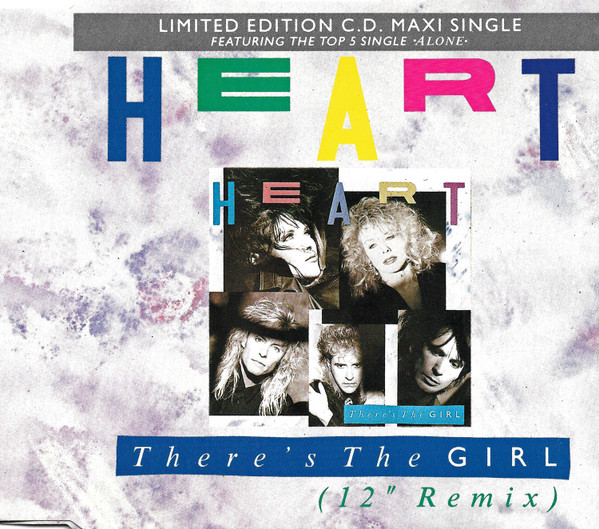
HEART - THERE’S THE GIRL


Released: October 1987

Charts:  US: #12   UK: #34 


"There's the Girl" is a song co-written by Nancy Wilson and songwriter Holly Knight. Released as the third single from Heart's “Bad Animals” album, it followed the success of "Alone" and "Who Will You Run To." The single was issued in a remixed version, showcasing a polished production style typical of Ron Nevison, who had produced Heart's previous album as well. The single reached #12 on the Billboard Hot 100 and charted in the UK as well, peaking at #34 on the Singles Chart.


"There's the Girl" featured Nancy Wilson on lead vocals, marking one of the few times she took the spotlight over her sister Ann, who was typically Heart’s lead vocalist. Similar to their 1986 hit "These Dreams," this vocal switch surprised many fans, who often didn't realize Nancy was singing until seeing the video or a live performance. 


Holly Knight shared how "There's the Girl" came together. She explained that while she had the melody and chorus initially, the lyrics took some time to develop due to distractions, like Nancy Wilson being on tour. Despite the song being written over a long period, Knight was pleasantly surprised by its success, noting that people still love the song today. Knight also revealed that while the title was hers, Nancy Wilson had a personal connection to the song's theme, as it mirrored a friend's experience of being in love with someone who was with another girl. Knight hadn't known about this connection until later, when she learned of Nancy's experience.


"There's the Girl" explores a classic love triangle, where the narrator, a girl, harbors deep feelings for a guy who's infatuated with another girl who doesn’t value him. The narrator questions his loyalty, asking, "Can you say that you don't want her anymore?"—a line that reflects her hope he’ll move on from the unappreciative girl and notice her instead. The music video directed by Jeff Stein, is a visually striking piece typical of early MTV-era videos. It features surreal imagery, including smoke, two Sphinxes, and a cyborg drum kit, creating a mysterious atmosphere. Nancy Wilson also appears in tails.