Total de visualitzacions de pàgina:

20.11.24


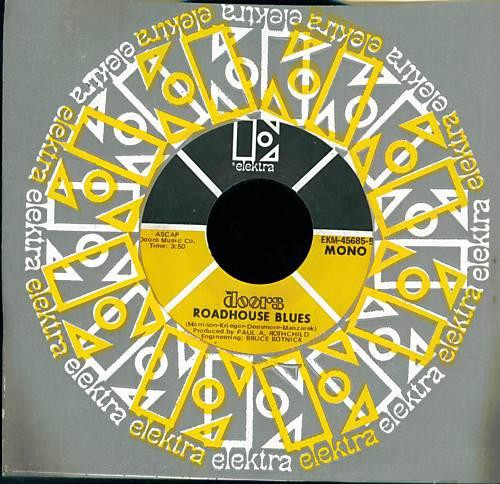
THE DOORS - ROADHOUSE BLUES

Publicació: Març de 1970  

Llistes d'èxits: EUA: #50


"Roadhouse Blues" és la cançó d'obertura de l'àlbum “Morrison Hotel”, una peça inspirada en el blues que destaca pel seu homenatge al blues clàssic amb una energia crua i un treball de guitarra dinàmic. Publicada el 1970, la cançó es va incloure com a cara B de "You Make Me Real", que va arribar al número 50 del Billboard Hot 100 i al número 41 al Canadà. "Roadhouse Blues" també va tenir èxit per si sola a la llista de Cash Box Top 100, arribant al número 76.


Després de l'experimentació elaborada de “The Soft Parade”, “Morrison Hotel” va suposar el retorn de The Doors a les seves arrels de blues més pures. Com a tema principal de l'àlbum, "Roadhouse Blues" és una cançó blues directa i contundent, que mostra el so més autèntic i dur de la banda fins al moment. A diferència de “The Soft Parade”, que incorporava abundants instruments de corda i vents, “Morrison Hotel” simplificava la producció, una decisió impulsada en part pel desig de Jim Morrison de tornar a la senzillesa i per la seva limitada participació en l'àlbum anterior a causa del seu consum d'alcohol. Abans d'assolir la fama, The Doors havien perfeccionat el seu so de blues durant llargues actuacions en clubs, un estil que "Roadhouse Blues" reflecteix poderosament.


El títol “Morrison Hotel” es va inspirar en un hotel real al centre de Los Angeles que el teclista Ray Manzarek va veure mentre conduïa. La banda volia fer les fotos de l'àlbum allà, però el propietari de l'hotel els va negar l'entrada, sospitant que eren hippies. Sense defallir, s'hi van colar per fer ràpidament una foto, que va acabar convertint-se en la icònica portada de l'àlbum. Inicialment, "Roadhouse Blues" es va considerar com a títol de l'àlbum, ja que la cançó en si era el resultat de l'amor de Jim Morrison pel blues, sovint cantant-ne peces durant sessions d'improvisació quan estava begut.


Es creu que la cançó s'inspira en el Topanga Corral, un club llegendari sense finestres situat a Topanga Canyon, a prop d'on vivia Jim Morrison. Per arribar-hi calia recórrer el sinuós Topanga Canyon Boulevard, que coincideix amb la frase de Morrison, “keep your eyes on the road, your hand upon the wheel” (mantingues els ulls a la carretera, la mà al volant). Conegut per acollir grups com Little Feat i Canned Heat, i freqüentat per artistes com Linda Ronstadt, el Corral encarnava l'ambient contracultural que Morrison apreciava. Darrere del Corral hi havia una cabana que Morrison suposadament va comprar per a la seva xicota, Pamela Courson, fet que podria haver inspirat la frase “In back of the Roadhouse they got some bungalows” (Darrere del Roadhouse tenen alguns bungalows). El Corral es va incendiar el 1986, però el seu esperit viu a través de la cançó.


John Sebastian de Lovin' Spoonful va col·laborar tocant l'harmònica en aquesta peça, però va ser acreditat com a "G. Puglese" per evitar associar-se amb The Doors durant la polèmica per l'arrest de Jim Morrison el 1969 a Miami. Morrison havia estat acusat d'exhibició indecent en un concert, cosa que li va suposar una condemna de sis mesos de presó, que encara estava en apel·lació en el moment de la seva mort. Més de 40 anys després, el 2010, el governador de Florida Charlie Crist va concedir a Morrison un perdó pòstum, exonerant-lo oficialment dels càrrecs.


Alice Cooper va afirmar que ell va inspirar la frase “Woke up this morning and I got myself a beer” (Em vaig despertar aquest matí i vaig agafar una cervesa). Al seu programa de ràdio Planet Rock, Cooper va explicar una vegada que ell i Jim Morrison estaven bevent junts. Cooper va comentar casualment que havia començat el dia amb una cervesa, i Morrison, en escoltar-lo, va escriure la frase immediatament. Quan Cooper va escoltar aquesta frase a la cançó, es va sorprendre, adonant-se que Morrison havia incorporat el seu comentari espontani a “Roadhouse Blues.”


THE DOORS - ROADHOUSE BLUES


Released: March 1970

Charts:  US: #50 


"Roadhouse Blues," the opening track on “Morrison Hotel”, is a blues-inspired rocker that showcases The Doors’ homage to classic blues with raw energy and dynamic guitar work. Released in 1970, the song was the B-side to "You Make Me Real," which reached No. 50 on the Billboard Hot 100 and No. 41 in Canada. "Roadhouse Blues" also achieved independent chart success on the Cash Box Top 100, peaking at No. 76.


Following the elaborate experimentation of “The Soft Parade”, “Morrison Hotel” marked The Doors' return to their raw, blues roots. Leading the album, "Roadhouse Blues" is a gritty, straightforward blues track, showcasing the band's hardest and most authentic blues sound to date. Unlike “The Soft Parade”, which incorporated extensive strings and horns, “Morrison Hotel” stripped back to basics, a move partly driven by Jim Morrison's desire for simplicity and his limited involvement in the previous album due to his drinking. Before achieving fame, The Doors had honed their blues sound during long club performances, which "Roadhouse Blues" powerfully reflects.


The title “Morrison Hotel” was inspired by an actual hotel in downtown Los Angeles that keyboardist Ray Manzarek noticed while driving. The band wanted to take album photos there, but the hotel's owner refused to let them inside, suspecting they were hippies. Undeterred, they sneaked in for a quick photo, which became the album's iconic cover. Originally, "Roadhouse Blues" was considered for the album title, as the song itself was a result of Jim Morrison's love for the blues, often singing blues numbers during impromptu jam sessions when he was drunk. 


The song was likely inspired by the Topanga Corral, a legendary, windowless club located in Topanga Canyon near where Jim Morrison lived. Reaching the Corral required navigating the winding Topanga Canyon Boulevard, which aligns with Morrison's line, “keep your eyes on the road, your hand upon the wheel.” Known for hosting acts like Little Feat and Canned Heat and frequented by artists like Linda Ronstadt, the Corral embodied the countercultural vibe Morrison cherished. Behind the Corral, a cabin that Morrison is said to have bought for his girlfriend, Pamela Courson, may have inspired the lyric, “In back of the Roadhouse they got some bungalows.” The Corral itself burned down in 1986, but its spirit lives on through the song.


John Sebastian of the Lovin' Spoonful contributed harmonica to the track but was credited as "G. Puglese" to avoid association with The Doors during the controversy surrounding Jim Morrison’s 1969 arrest in Miami. Morrison had been accused of indecent exposure at a concert, leading to a conviction and a six-month jail sentence, which was still under appeal at the time of his death. Over 40 years later, in 2010, Florida Governor Charlie Crist granted Morrison a posthumous pardon, officially clearing him of the charges.


Alice Cooper claimed he inspired the line "Woke up this morning and I got myself a beer". On his Planet Rock morning show, Cooper recounted a time when he and Jim Morrison were drinking together. Cooper mentioned casually that he had started his day with a beer, and Morrison, noting the line, wrote it down immediately. Later, when Cooper heard the line in the song, he was surprised, realizing that Morrison had taken his offhand comment and incorporated it into “Roadhouse Blues”.




19.11.24


HEART - DREAMBOAT ANNIE 


Llançada: Novembre de 1976  

Llistes: EUA: #42


"Dreamboat Annie", la cançó que dona títol a l'àlbum debut de Heart, es va llançar com a senzill el 1976, inicialment com a cara B de "Crazy on You". Amb un so més suau i acústic, va esdevenir la primera cançó de Heart a entrar a la llista nord-americana de música contemporània per a adults, arribant al número 17, i va assolir la posició 42 al Billboard Hot 100. Curiosament, va ser la cançó de Heart amb millor posició en aquesta llista fins que "These Dreams" va arribar-hi el 1986. "Dreamboat Annie" va ser una de les tres cançons que la banda va interpretar durant la seva inducció al Rock and Roll Hall of Fame el 2013.


L'àlbum “Dreamboat Annie” inclou tres versions diferents de la cançó, que desenvolupen un concepte al voltant d'un personatge anomenat Annie, que simbolitza la joventut i les seves possibilitats. Les versions apareixen com "Dreamboat Annie (Fantasy Child)", "Dreamboat Annie" i "Dreamboat Annie (Reprise)", i evolucionen des de la llibertat vora el mar fins a una vorera d'una ciutat bulliciosa i, finalment, una partida ambigua. La versió del senzill, lleugerament allargada a gairebé tres minuts amb una introducció de "Crazy on You", mai es va incloure a cap àlbum de Heart. Escrita per les germanes Ann i Nancy Wilson, destaca per la seva aura de somni i elements introspectius dins la narrativa de l'àlbum.


Cada una de les tres versions comença amb una escena tranquil·la en la qual Annie s'embarca "cap al sol" sobre "ones de diamant". La lletra estableix el viatge d'Annie, barrejant la llibertat amb una imatgeria somniadora. Les versions segona i de represa desenvolupen la seva història amb l'arribada d'Annie a la ciutat, on es perd entre la multitud i explora nous escenaris i possibilitats. Aquesta seqüència proporciona una subtil progressió en la narració lírica de Heart al llarg de l'àlbum.


“Dreamboat Annie” és l'àlbum d'estudi debut de Heart, gravat i llançat per primera vegada a Vancouver, Canadà, per Mushroom Records el setembre de 1975. Al Canadà, va arribar al número 20 a la llista Top Album de RPM i va aconseguir la certificació de doble platí. Llançat als Estats Units el 14 de febrer de 1976, l'àlbum va arribar al número set del Billboard 200.


“Dreamboat Annie” va suscitar polèmica quan el segell discogràfic de Heart, Mushroom Records, va publicar un anunci provocador de pàgina sencera a la revista Rolling Stone amb el titular "només era la seva primera vegada". L'anunci, fent referència a la portada de l'àlbum amb les germanes Ann i Nancy Wilson, insinuava de manera provocativa una relació sexualitzada entre elles, amb la intenció d'explotar la seva imatge. Aquesta campanya publicitària sexista va enfurismar la banda i va provocar la ruptura amb el segell discogràfic.


HEART - DREAMBOAT ANNIE


Released: November 1976

Charts:  US: #42 


"Dreamboat Annie," the title track from Heart's debut album, was released as a single in 1976, initially as the B-side to "Crazy on You." With a softer, more acoustic sound, it became Heart's first song to enter the U.S. Adult Contemporary chart, reaching #17, and peaked at #42 on the Billboard Hot 100. Notably, it remained Heart's highest-charting song on the AC chart until "These Dreams" in 1986. "Dreamboat Annie” was one of the three songs the band performed during their Rock and Roll Hall of Fame induction in 2013.


The album “Dreamboat Annie” includes three distinct versions of the title track, which form a loose concept around a character named Annie, symbolizing youthful possibility. The different versions appear as "Dreamboat Annie (Fantasy Child)," "Dreamboat Annie," and "Dreamboat Annie (Reprise)," progressing from seaside freedom to a bustling city sidewalk, and finally, an ambiguous departure. The single version, slightly extended to nearly three minutes with an intro from "Crazy On You," was never included on any Heart album. This song, written by sisters Ann and Nancy Wilson, highlights the dreamlike and reflective elements of the album's narrative.


Each of the three versions starts with a serene scene of Annie setting out “into the sun” on “diamond waves.” The lyrics establish Annie’s journey, blending freedom with dreamlike imagery. The second and reprise versions develop her story further, introducing lyrics about her arrival in the city, where she becomes lost in the crowd, and explores new settings and possibilities. This sequence offers a subtle progression in Heart’s lyrical storytelling throughout the album.


“Dreamboat Annie” is the debut studio album Heart, recorded and first released in Vancouver, British Columbia, by local label Mushroom Records in September 1975. In Canada, it reached number 20 on RPM's Top Album chart and achieved double platinum certification. Released in the U.S. on February 14, 1976, the album peaked at number seven on the Billboard 200.


“Dreamboat Annie” stirred up controversy when Heart’s label, Mushroom Records, ran a provocative full-page ad in Rolling Stone with the caption "it was only their first time." The ad, referencing the album cover with sisters Ann and Nancy Wilson, tastelessly insinuated a sexualized relationship between the two, attempting to exploit their image. This sexist publicity stunt angered the band, leading to a rift with the label.


THE DOORS - SOUL KITCHEN


Released: January 4, 1967

Album: The Doors


"Soul Kitchen" from the debut album “The Doors”, is a tribute to Olivia’s, a soul food restaurant on Venice Beach in Santa Monica, California, where Jim Morrison enjoyed the food and ambiance reminiscent of home. Morrison was known for staying late at Olivia's, leading to lines in the song like "let me sleep all night, in your soul kitchen," capturing his wish to linger in the comforting atmosphere of the restaurant even after closing time.


"Soul Kitchen" evolved from a grounded, real-life experience into something more spiritual and evocative in song form. This transformation was driven by Jim Morrison's vivid, almost mystical lyrics and the band's dynamic musical style. Ray Manzarek's flowing organ vamp created a warm, soulful base, while Robby Krieger’s bluesy riffs and extended solos added depth and texture, giving the song its distinct rhythmic energy and heartbeat. 


In “The Doors: A Lifetime of Listening to Five Mean Years”, Greil Marcus likens "Soul Kitchen" to the song "Gloria," with a build-up to a powerful chorus. Conversely, a 1967 “Crawdaddy!” article compares it to “Blowin' in the Wind,” suggesting that "Soul Kitchen" also carries a message, though one of “learning to forget.” Drummer John Densmore describes Olivia’s as a Southern-style diner filled with UCLA film students, including Morrison and, at times, Linda Ronstadt.


Though uncredited on the album, Larry Knechtel was brought in to play bass on this track. The Doors typically did not use a bass player, relying instead on Ray Manzarek's keyboard bass, but producer Paul Rothchild felt that this song needed a fuller bass sound, so he recruited Knechtel, a versatile session musician, to fill the role.


"Soul Kitchen" refers to "soul food," a traditional cuisine popular among African Americans in the mid-20th century. Soul food typically includes hearty, filling dishes like ham (including hog's feet and jowls), beans, okra, hushpuppies, cornbread, and collard greens. Known for being economical and satisfying, it provided comfort, especially in colder climates, where its rich, calorie-dense nature was practical during harsh winters. The term "soul food" aligns with broader cultural and spiritual expressions.


THE DOORS - STRANGE DAYS


Released: September 25, 1967

Album: Strange Days


"Strange Days" is the opening track on The Doors' 1967 album of the same name. Though it was written early in their career, the song marked a progression from their debut album, showcasing a darker, more experimental sound. The lyrics explore the eerie feeling of familiar places becoming unsettling, adding a sense of mystery and unease. Jim Morrison’s vocals were heavily processed to amplify this surreal, haunting atmosphere, aligning with the song's themes of disorientation and alienation. "Strange Days," along with other tracks from the album, was composed long before its recording. A live performance of the song from May 1966 was included in the 2016 album “London Fog 1966”, showcasing an earlier version of the song before it was officially released.


"Strange Days" is notable for its use of the Moog synthesizer, which was a new instrument at the time. The Moog’s shimmering sound layers a futuristic, disoriented feel over the music, enhancing the eerie and unsettled quality of Morrison's lyrics. This track captures a more cohesive and bold sound for the band, with spacey textures, intensified rhythms, and subtle vocal effects that all mark a sonic progression from their debut album. The song’s three minutes are dense with experimental elements, giving it a distinct and innovative edge.


According to John Densmore, Jim Morrison saw the song as a commentary on the band's changing creative process. Morrison believed that their original, raw approach to music was slipping away, urging the band to find a way to recapture the spirit and authenticity they had back in their early days. 


Two music videos were created for this track. The first showed the band backstage, onstage, and included a scene of Jim Morrison driving into sand and reacting in frustration. The second featured the circus performers from the album cover exploring New York City, along with distorted footage of various people to match the song's eerie theme. This new footage was later combined with the original to create a remixed video.


THE DOORS - L.A. WOMAN


Publicada el 19 d'abril de 1971  

Àlbum: L.A. Woman


"L.A. Woman" és la cançó principal de l'àlbum homònim dels Doors de 1971, l'últim amb Jim Morrison abans de la seva mort més tard aquell any. Celebrada com una oda perfecta a Los Angeles, L.A. Weekly la va anomenar el 2014 la millor cançó mai escrita sobre la ciutat. El 1985, Ray Manzarek va dirigir un videoclip de la cançó, produït per Rick Schmidlin, que va aparèixer a MTV i a la compilació de vídeos dels Doors “Dance on Fire”, mantenint viu el llegat de Morrison anys després de la seva desaparició.


Aquesta cançó captura l'essència de Los Angeles a través d'un ritme de jazz-folk vibrant i la potent veu de Morrison, que combina la intensitat contracultural amb l'autoreflexió. És considerada un retrat viu del paisatge salvatge i captivador de L.A., des de les bungalows de Hollywood fins a les colines en flames, i sovint es considera el màxim homenatge de la banda a la seva ciutat natal.


"L.A. Woman" es veu com l'adeu de Morrison a Los Angeles abans de traslladar-se a París, amb influències del llibre “City of Night” de John Rechy i personificant la ciutat com una dona complexa i indomable. El joc d'anagrames de Morrison amb "Mr. Mojo Risin’", derivat del seu propi nom, afegeix energia a la cançó i va inspirar al bateria John Densmore a crear un ritme lent i fosc que creix en intensitat. Densmore admirava la metàfora de Los Angeles com una dona vulnerable, observant com versos com "cops in cars, never saw a woman so alone" (policies als cotxes, mai vaig veure una dona tan sola) subratllen l'atractiu seductor però solitari de la ciutat.


Morrison va gravar la veu de "L.A. Woman" al bany de l'estudi per aconseguir un so més ple, una elecció adient, ja que feia visites freqüents al bany durant les sessions de gravació degut a la cervesa que consumia. Els Doors van comptar amb músics addicionals per al tema: el baixista Jerry Scheff, conegut pel seu treball amb Elvis, i el guitarrista Marc Benno. Tots dos estaven inicialment destinats a anar de gira amb la banda, però la mort de Morrison va posar fi a aquests plans. "L.A. Woman" només es va interpretar en directe una vegada, a Dallas, al State Fair Music Hall, l'11 de desembre de 1970, amb l'única gravació en viu capturada al disc pirata “If It Ain't One Thing, It's Another”.


El 4 d'agost de 2009, una còpia manuscrita de la lletra de "L.A. Woman" per Jim Morrison, escrita en paper groc A4, es va subhastar a Berkshire, al Regne Unit, i es va vendre per 13.000 lliures esterlines.


THE DOORS - L.A. WOMAN


Released: April 19, 1971

Album: L.A. Woman


"L.A. Woman" is the title track of the Doors' 1971 album, which was the last to feature Jim Morrison before his death later that year. Celebrated as a perfect ode to Los Angeles, the song was named by “LA Weekly” in 2014 as the best song ever written about the city. In 1985, a music video for the song was directed by Ray Manzarek and produced by Rick Schmidlin. The video, which was featured on MTV and in the Doors’ video compilation “Dance on Fire”, kept Morrison's legacy alive years after his passing.


The Doors' title track "L.A. Woman" captures the essence of Los Angeles through a lively jazz-folk rhythm and Jim Morrison’s powerful final vocal performance, which intertwines countercultural intensity with self-reflection. The song serves as a vibrant portrait of L.A.'s wild, alluring landscape—from Hollywood’s bungalows to fiery hills—and is often regarded as the band’s ultimate homage to their hometown.


Viewed as Morrison’s farewell to L.A. before his move to Paris, "L.A. Woman" draws on themes from John Rechy's novel “City of Night” and personifies the city as a complex, untamed woman. Morrison’s use of the anagram "Mr. Mojo Risin’" for his own name adds to the song’s energy, inspiring drummer John Densmore to create a slow, dark rhythm that builds in intensity. Densmore admired the metaphor of Los Angeles as a vulnerable woman, noting how lines like "cops in cars, never saw a woman so alone" underscore the city’s seductive yet lonely allure. Today, "L.A. Woman" remains a defining anthem that captures the glamor and chaos of Los Angeles.


Jim Morrison recorded his vocals for "L.A. Woman" in the studio bathroom to achieve a fuller sound, a choice fitting his frequent visits there due to the beer he consumed during recording sessions. The Doors enlisted additional musicians for the track: bassist Jerry Scheff, known for his work with Elvis, and guitarist Marc Benno. Both were initially set to tour with the band, but Morrison’s death ended those plans. "L.A. Woman" was performed live only once, in Dallas at the State Fair Music Hall on December 11, 1970, with the only live recording captured on the bootleg  “If It Ain't One Thing, It's Another”.


A handwritten sheet of “L.A. Woman” lyrics by Jim Morrison, written on yellow lined A4 paper, was auctioned in Berkshire, UK, on August 4, 2009. The lyrics sold for £13,000.