Total de visualitzacions de pàgina:

29.11.24


AMY WINEHOUSE - BACK TO BLACK


Llançament: 26 d’abril de 2007

Llistes: Regne Unit: #8


“Back to Black”, llançada el 26 d’abril de 2007, és una cançó de l’artista anglesa Amy Winehouse, inclosa en el seu aclamat segon àlbum del mateix nom. Escrita per Winehouse i el productor Mark Ronson, la cançó explora el turment emocional de la seva relació amb Blake Fielder-Civil, que l’havia deixat per tornar amb una exnòvia. Amb una producció melancòlica i plena d’ànima i una lletra profundament personal, la cançó es va convertir en un dels temes més emblemàtics de Winehouse, mostrant la seva vulnerabilitat crua i el seu estil vocal distintiu.


Llançada com a single al Regne Unit el 2007 i a nivell mundial el 2008, la peça va sorgir d’una admiració compartida pel so dels grups femenins dels anys 60, especialment “Remember (Walking in the Sand)” de les Shangri-Las. Ronson recorda la passió de Winehouse per la música retro i el seu procés creatiu informal. Després d’una conversa sobre les seves influències musicals, Ronson va escriure l’arranjament bàsic i el riff de piano durant una nit, i Winehouse el va acceptar immediatament. Durant les dues setmanes següents, van desenvolupar diverses cançons junts, amb Winehouse creant melodies amb la seva guitarra mentre Ronson construïa arranjaments complicats i carregats de reverberació que van definir el so ple d’ànima i inspirat en el passat de la cançó.


“Back to Black” reflecteix el turment emocional d’Amy Winehouse després d’una ruptura amb el seu aleshores xicot, Blake Fielder-Civil. En una entrevista, Winehouse va explicar que la cançó simbolitzava el retorn a una comoditat familiar però destructiva: ella va recórrer a l’alcohol i a moments foscos, mentre que ell buscava consol amb la seva antiga parella. En una altra entrevista amb Rolling Stone, Winehouse va revelar que tot l’àlbum era una reflexió del dolor i la naturalesa tumultuosa de la seva relació amb Blake. Va descriure la intensitat emocional de la relació, expressant que va sentir una profunda sensació de pèrdua i desesperació durant el temps que van estar separats, encara que més tard Blake li va assegurar que el seu amor perdurava.


Ann Wilson, del grup Heart, va versionar “Back to Black” en el seu àlbum de 2018, “Immortal”. Wilson va explicar que la cançó la commovia profundament per la seva cruesa emocional, descrivint-la com un retrat honest del dolor que sent un amant abandonat.


AMY WINEHOUSE - BACK TO BLACK


Released: April 26, 2007

Charts:  UK: #8 


"Back to Black," released on April 26, 2007, is a song by English artist Amy Winehouse from her critically acclaimed second album of the same name. Written by Winehouse and producer Mark Ronson, the song delves into the emotional turmoil of her relationship with Blake Fielder-Civil, who had left her to reunite with an ex-girlfriend. With its moody, soulful production and deeply personal lyrics, the song became one of Winehouse's signature tracks, showcasing her raw vulnerability and distinctive vocal style.


Released as a single in the UK in 2007 and worldwide in 2008, the track emerged from a shared appreciation for the girl group sound, particularly the Shangri-Las' "Remember (Walking in the Sand)." Ronson recalled Winehouse's love for retro music and her casual, creative process. After a conversation about her musical influences, Ronson composed the piano riff and basic arrangement overnight, which Winehouse embraced. Over the next two weeks, they developed several tracks together, with Winehouse crafting melodies on her nylon-string guitar while Ronson built the intricate, reverb-heavy arrangements that defined the song's soulful, vintage-inspired sound.


"Back to Black" reflects Amy Winehouse's emotional turmoil following a breakup with her then-boyfriend, Blake Fielder-Civil. In an interview, Winehouse explained that the song symbolized returning to a familiar, unhealthy comfort—she turned to alcohol and dark times, while he sought solace with his former partner. In a later interview with Rolling Stone, Winehouse revealed that the entire album was a reflection of the pain and tumultuous nature of her relationship with Blake. She described the emotional intensity of the relationship, expressing that she felt a deep sense of loss and despair during the time they were apart, even though Blake later reassured her of their enduring love.


Ann Wilson of Heart covered Amy Winehouse's "Back to Black" on her 2018 album “Immortal”. Wilson explained that the song deeply resonated with her due to its raw emotional depth, describing it as an honest portrayal of the pain an abandoned lover feels. 


28.11.24


PET SHOP BOYS - DID YOU SEE ME COMING?


Released: June 1, 2009

Charts:  UK: #21 


"Did You See Me Coming?" is a track released on June 2009 as the second single from the duo tenth studio album, “Yes”. Despite being chosen as the follow-up to "Love Etc" by the Pet Shop Boys' record label's radio promotion staff, who anticipated significant airplay, the song received limited play outside of BBC Radio 2. Consequently, it peaked at #21 on the UK singles chart, falling short of expectations.


As another writer aptly put it, this song is "unashamedly sunny pop," radiating a warmth that easily brings a smile to your face. Its infectious charm likely contributed to its selection as the album's second single. Opening with Johnny Marr's strummed guitar, the song quickly envelops the listener with layers of instrumentation while maintaining its rhythmic core. Neil's vocals convey a sense of wide-eyed innocence as he sings lines like:


"I'd love to be loved by you

Did you see me coming?

Was I that obvious?"


"Did You See Me Coming?" is a collaboration with the production team Xenomania, renowned for their work with the British pop group Girls Aloud. It was the first song that the Pet Shop Boys played to Xenomania founder Brian Higgins after meeting him. He noted that the demo was "80% there."


Neil Tennant, the singer, explained the song's inspiration to The Big Issue: "My mother used to say: 'They must have seen you coming,' and it meant you were being hoodwinked or something. It's about a guy realizing that the girl has spotted him across the crowded room and understood that he's going to fall in love with her immediately. It's a bit Cole Porter. It was actually the first song we wrote for this album and we realized then that the direction was going very poppy with very chirpy, happy harmonies."


While the song's primary themes may not revolve around their personal relationship, it's conceivable that some sentiments expressed in it could reflect Neil and Chris's dynamic as a songwriting duo, professional collaborators, and friends. The music video's focus solely on the two of them, echoing the chorus's sentiment of "just the two of us," hints at this possibility. 


SINEAD O’CONNOR - YOU MADE ME THE THIEF OF YOUR HEART


Llançament: 7 de febrer de 1994

Llistes: Regne Unit: #42  Irlanda: #4


“You Made Me the Thief of Your Heart” és una cançó de Sinéad O’Connor, escrita per Bono, Gavin Friday i Maurice Seezer per a la pel·lícula de 1993 “In the Name of the Father”. Produïda per Tim Simenon, la cançó es va incloure posteriorment al recopilatori de 1997 d’O’Connor, “So Far… The Best Of”. Va rebre grans elogis de la crítica i va assolir bones posicions a les llistes, arribant al top 5 a Irlanda i Polònia, i entrant a les llistes de Finlàndia, el Regne Unit i l’Eurochart Hot 100.


En una entrevista de 1994 amb NME, Bono va descriure “You Made Me the Thief of Your Heart” com una cançó inspirada en la tradició de les balades de crims passionals, comparant-la amb una història irlandesa del segle XIV on una dona mata el seu amant per conservar-lo. Va explicar que, per a les pel·lícules, escriure de manera indirecta en lloc de literal era més efectiu. Gavin Martin de NME va elogiar l’emocionant interpretació de Sinéad O’Connor, destacant com segellava el to de resistència i llibertat de la pel·lícula. Un altre editor, Stephen Dalton, va destacar les paraules fredes però intel·ligents de Bono a la cançó. La crítica va aplaudir “You Made Me the Thief of Your Heart” com una de les interpretacions més poderoses de Sinéad O’Connor des de “Nothing Compares 2 U”.


“In the Name of the Father” és un drama criminal biogràfic dirigit per Jim Sheridan. Basada en l’autobiografia de Gerry Conlon de 1990, “Proved Innocent”, la pel·lícula explica la història real dels Quatre de Guildford, injustament condemnats pels atemptats de 1974 al pub de Guildford, que van matar cinc persones. El guió, coescrit per Sheridan i Terry George, explora la injustícia que van patir Gerry Conlon i la seva família mentre lluitaven per demostrar la seva innocència.


La trama segueix Gerry Conlon, un jove irlandès confós amb un franctirador de l’IRA a Belfast, i enviat a Londres pel seu pare, Giuseppe, on es veu atrapat en una cadena d’esdeveniments després d’un robatori. Després que una bomba matés diverses persones, Gerry, el seu amic Paul Hill i altres són detinguts, torturats i forçats a confessar tot i ser innocents. Aquest grup, conegut com els Quatre de Guildford, i diversos membres de la família de Gerry, anomenats els Set de Maguire, són condemnats injustament.


A la presó, Gerry descobreix per Joe McAndrew, el veritable autor dels atemptats, del qual la policia va suprimir la seva confessió. Malgrat l’admissió de Joe, les autoritats es neguen a actuar. La tragèdia arriba quan Giuseppe mor a la presó, cosa que impulsa Gerry a continuar la lluita per la justícia que havia iniciat el seu pare. Amb l’ajuda de l’advocada Gareth Peirce, es troben proves clau que demostren la innocència de Gerry, aconseguint la seva exoneració. Tanmateix, les autoritats responsables de la injustícia mai no són castigades, i els autèntics autors dels atemptats queden en llibertat.


El videoclip de “You Made Me the Thief of Your Heart”, dirigit pel director de “In the Name of the Father”, Jim Sheridan, va rebre una nominació a Millor Vídeo d’una Pel·lícula als MTV Music Awards de 1994. Ambientat en una presó, mostra Sinéad O’Connor en una cel·la austera amb una bombeta penjada, intermitentment visitada per un home gran i un corb negre. Intercalat amb escenes de la pel·lícula, el vídeo també mostra O’Connor sent interrogada i obligada a signar un document, fins que li col·loquen un corb mort al davant. Finalment, les portes de la cel·la s’obren, i una figura invisible la condueix cap a la llibertat. Ella camina per un bosc, alliberant coloms blancs, simbolitzant la llibertat, mentre el vídeo acaba amb ella observant els coloms enlairant-se cap al cel.


SINEAD O’CONNOR - YOU MADE ME THE THIEF OF YOUR HEART


Released: February 7, 1994

Charts:  UK: #42  Ireland: #4 


“You Made Me the Thief of Your Heart” is a song by Sinéad O’Connor, written by Bono, Gavin Friday, and Maurice Seezer for the 1993 film “In the Name of the Father”. Produced by Tim Simenon, it was later included in O’Connor’s 1997 compilation “So Far… The Best Of”. The song received critical acclaim and charted well, reaching the top 5 in Ireland and Poland, and ranking on charts in Finland, the UK, and the Eurochart Hot 100.


In a 1994 interview with NME, Bono described “You Made Me the Thief of Your Heart” as inspired by the tradition of murder ballads, likening it to a 14th-century Irish tale where a woman kills her lover to keep him. He explained that writing tangentially for movies, rather than literally, was more effective. NME‘s Gavin Martin praised Sinéad O’Connor’s emotional performance, noting how it sealed the film’s tone of resilience and hard-earned freedom. Another editor, Stephen Dalton, commended Bono’s “cold-but-clever words” in the song. Critics hailed Sinéad O’Connor’s “You Made Me the Thief of Your Heart” as one of her most powerful performances since “Nothing Compares 2 U.”


“In the Name of the Father” is a biographical crime drama directed by Jim Sheridan. Based on Gerry Conlon’s 1990 autobiography Proved Innocent, the film recounts the true story of the Guildford Four, who were wrongfully convicted of the 1974 Guildford pub bombings that killed five people. The screenplay, co-written by Sheridan and Terry George, explores the injustice faced by Gerry Conlon and his family as they fight to prove their innocence.


The plot follows Gerry Conlon, a young Irishman initially mistaken for an IRA sniper in Belfast,  and sent to London by his father, Giuseppe, where he gets caught in a chain of events following a burglary. After a bomb kills several people, Gerry, his friend Paul Hill, and others are arrested, tortured, and coerced into confessing despite their innocence. This group, known as the Guildford Four, and several of Gerry’s family members, dubbed the Maguire Seven, are wrongfully convicted.


In prison, Gerry learns from Joe McAndrew, the real bomber, that the police suppressed his confession. Despite Joe’s admission, the authorities refuse to act. Tragedy strikes when Giuseppe dies in prison, motivating Gerry to continue his father’s fight for justice. With help from lawyer Gareth Peirce, critical evidence proving Gerry’s innocence is uncovered, leading to his exoneration. However, the authorities responsible for the miscarriage of justice are never held accountable, and the true bombers remain free.


The music video for “You Made Me the Thief of Your Heart” directed by “In the Name of the Father” filmmaker Jim Sheridan, earned a nomination for Best Video from a Film at the 1994 MTV Music Awards. Set in a prison, it depicts Sinéad O’Connor in a stark cell with a hanging light bulb, intermittently visited by an elderly man and a black raven. Interspersed with clips from the film, the video also shows O’Connor being interrogated and coerced into signing a document, culminating in the placement of a dead raven before her. Eventually, the cell doors open, and an invisible figure leads her to freedom. She walks through a forest, releasing white pigeons, symbolizing liberation, as the video concludes with her watching them ascend into the sky.


27.11.24


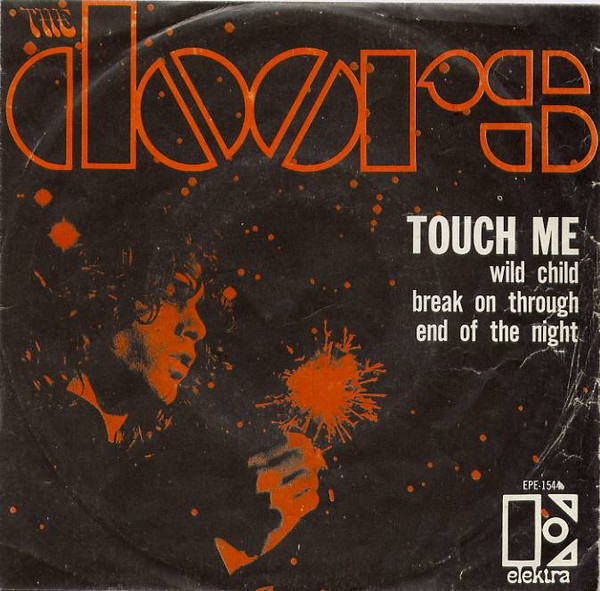
THE DOORS - TOUCH ME


Released: December 1968

Charts:  US: #3 


"Touch Me", written by guitarist Robby Krieger, is a 1968 single from The Doors' album “The Soft Parade”. Known for its prominent brass and string arrangements, the song was highly successful, reaching No. 3 on the Billboard Hot 100 and topping the Cashbox chart. It also hit No. 1 in Canada and entered the top 10 in Australia, though it did not chart in the UK. Released around the time of Jim Morrison's arrest in Miami for indecent exposure, some radio stations were hesitant to play the song despite its unrelated lyrics and title.


The Doors' song "Touch Me," originally titled "Hit Me," was written by guitarist Robby Krieger about arguments with his girlfriend, with the lyric “C'mon, hit me, I'm not afraid.” Jim Morrison suggested changing it to “Touch Me” for a softer tone. The song ends with Morrison chanting “Stronger than dirt!”—a reference to a popular Ajax detergent commercial featuring a knight fighting dirt. The song’s final four chords were inspired by the commercial’s jingle.


Critics viewed “Touch Me” as a commercial move by The Doors due to its use of brass and string sections, which were atypical for the band. Aiming to expand their audience, the band embraced this new style, achieving commercial success with the song. Jazz saxophonist Curtis Amy, known for his work on Carole King’s “Tapestry”, performed the sax solo, which Jim Morrison called the first jazz solo in a rock hit. Drummer John Densmore noted that incorporating jazz was always part of the band's vision, describing "Touch Me" as a vital experiment that helped shape the sound on “L.A. Woman”.


The Doors performed "Touch Me" on The Smothers Brothers Comedy Hour on December 6, 1968, accompanied by the Nelson Riddle Orchestra, with saxophonist Curtis Amy recreating his solo. Known for declining TV appearances, The Doors accepted this one due to the Smothers Brothers' anti-Vietnam War stance. During the performance, guitarist Robby Krieger’s visible black eye stirred rumors of a fight with Jim Morrison, which drummer John Densmore later attributed to a car accident. However, Krieger and keyboardist Ray Manzarek clarified that the injury occurred when Krieger tried to defend Morrison in a bar fight, only to end up punched himself.