Total de visualitzacions de pàgina:

10.12.24


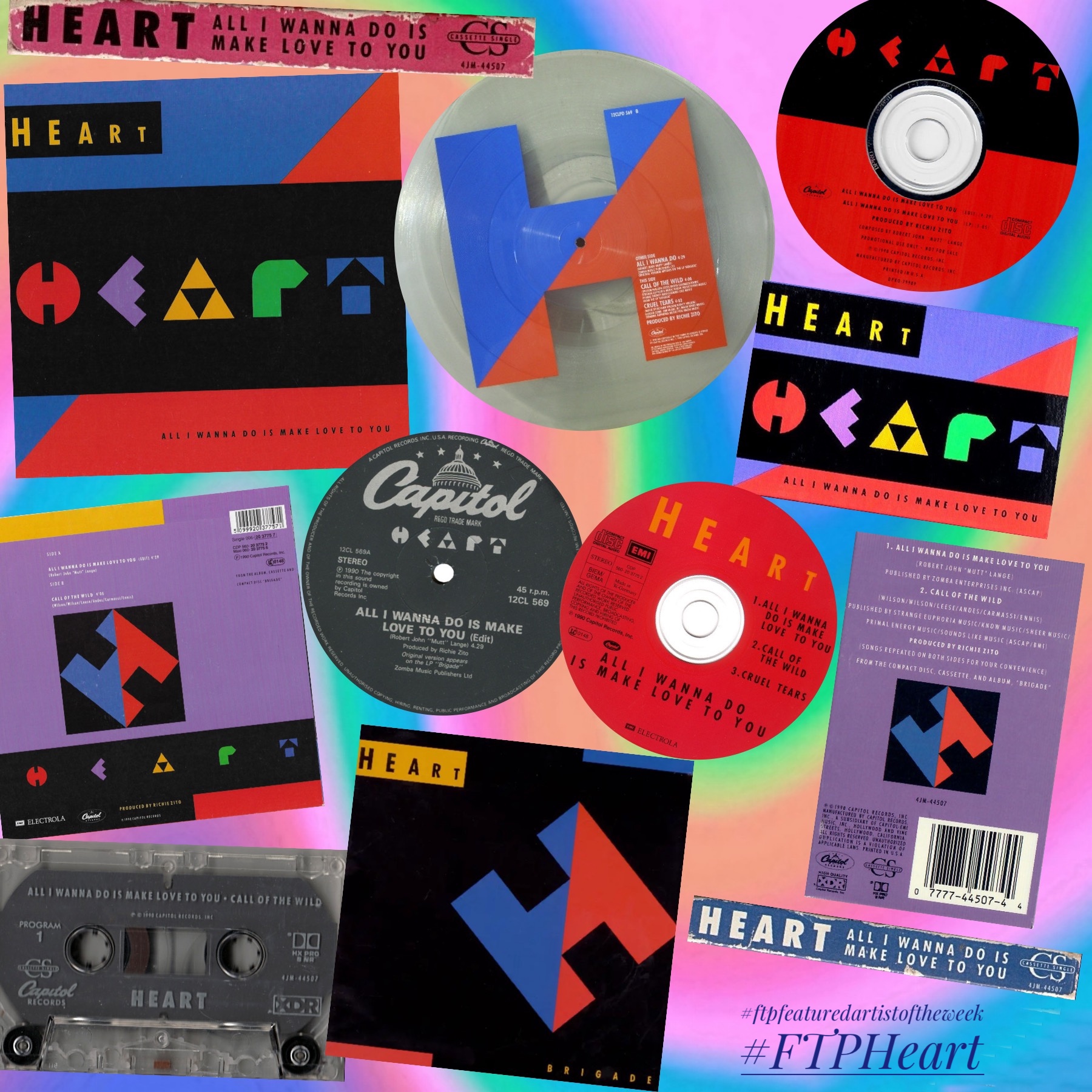
HEART - ALL I WANNA DO IS MAKE LOVE TO YOU

Llançament: 12 de març de 1990

Llistes d’èxits: EUA: #2  Regne Unit: #8


“All I Wanna Do Is Make Love to You” és una cançó de la banda de rock estatunidenca Heart, llançada com a single principal del seu àlbum “Brigade” (1990). La cançó, escrita per Robert John “Mutt” Lange durant els anys 70, va ser originalment pensada per a Don Henley i enregistrada per Dobie Gray el 1979. La versió de Gray tenia un to més lleuger, centrant-se en la infatuació, i no incloïa la narrativa complexa que Heart posteriorment va popularitzar.


La versió de Heart presenta una narrativa dramàtica i atrevida: explica la història d’una dona que sedueix deliberadament un autoestopista per concebre un fill, ja que la seva parella no pot tenir descendència. Aquest gir argumental va convertir la cançó en un relat controvertit, però també en un èxit comercial.


El videoclip segueix de prop la història de la cançó. Mostra escenes de la trobada entre la dona i l’autoestopista, la nit que passen junts en un motel, i el moment en què es retroben anys després, quan ella li presenta el seu fill. Aquestes escenes sobre la narració s’intercalen amb plans boirosos de la banda tocant en un estudi. Curiosament, no hi ha un director acreditat oficialment per al vídeo, probablement a causa de la naturalesa controvertida de la cançó i la voluntat d’alguns participants de no associar-s’hi.


En entrevistes, Ann i Nancy Wilson van parlar sobre els sentiments contradictoris que tenien respecte a “All I Wanna Do Is Make Love to You”. Nancy va reconèixer que la cançó tenia una melodia enganxosa i alguns elements previsibles que anticipaven el treball de Mutt Lange amb la música country, però Ann va expressar la seva incomoditat en cantar-la, ja que trobava la lletra poc autèntica i problemàtica. Tot i que la versió de Heart va canviar la perspectiva a una dona que recull un home autoestopista, la història encara es va considerar polèmica, fins al punt que la cançó va ser prohibida a Irlanda per la seva narrativa directa i atrevida.


Ann Wilson va descriure la història com a “horrible” i moralment qüestionable, cosa que li dificultava interpretar-la amb sinceritat. Malgrat això, Nancy va assenyalar que molts oients simplement van gaudir de la cançó pel seu so i la seva atmosfera sense aprofundir en el relat.


“All I Wanna Do Is Make Love to You” va ser un gran èxit comercial per a Heart. Va arribar al número dos del Billboard Hot 100 als Estats Units, on va romandre durant dues setmanes, i va assolir la vuitena posició al Regne Unit. També va ser número u al Canadà i a Austràlia, convertint-se en l’últim gran èxit de Heart al Top 10 de les llistes d’èxits a nivell internacional.


HEART - ALL I WANNA DO IS MAKE LOVE TO YOU


Released: March 12, 1990

Charts:  US: #2  UK: #8 


"All I Wanna Do Is Make Love to You" is a song by American rock band Heart, released in 1990 as the lead single from their “Brigade” album. Written by songwriter Robert John "Mutt" Lange in the 1970s, the song was initially intended for Don Henley and was first recorded by Dobie Gray in 1979. Gray’s original version had an upbeat feel and focused on infatuation, omitting the complex storyline. Heart's version follows a more dramatic narrative, detailing a woman's deliberate seduction of a hitchhiker to conceive a child, as her partner is unable to father children.


The music video follows the song's storyline closely, depicting scenes where the woman and hitchhiker meet, make love in a motel, and later reconnect when she introduces him to their child. These narrative scenes are interspersed with foggy shots of the band performing in a studio. Interestingly, no director is publicly credited for the video, possibly due to the mixed feelings surrounding the song's content, as those involved may have preferred to remain anonymous.


In an interview Ann and Nancy Wilson discussed their mixed feelings about performing "All I Wanna Do Is Make Love to You." Nancy explained that the song had a catchy hook and foreshadowed some of the formulaic elements of country music Lange would later work on. However, Ann had difficulty singing it because she found the lyrics inauthentic and troubling. Despite changing the song’s perspective to that of a woman picking up a male hitchhiker, which led to the song being banned in Ireland for its bold narrative, Ann found the lyrics uncomfortable, describing the story as "hideous" and morally questionable. Nancy noted that, while Ann struggled with delivering these lyrics sincerely, many listeners simply enjoyed the song for its feel and sound, often without delving deeply into its narrative.


Heart's "All I Wanna Do Is Make Love to You" was a major commercial success, spending two weeks at number two on the US Billboard Hot 100 and reaching number eight on the UK Singles Chart. It became Heart's final top-ten hit in both the US and UK, while also reaching number one in Canada and Australia.


ALANIS MORISSETTE - IRONIC


Llançament: 27 de febrer de 1996

Posicions a les llistes: EUA: #4, Regne Unit: #11


“Ironic,” d’Alanis Morissette, escrita conjuntament amb Glen Ballard i publicada com a senzill el 1996, es va convertir en un gran èxit del seu àlbum “Jagged Little Pill”. La cançó va rebre nominacions als Grammy per a Enregistrament de l’Any i Millor Vídeo Musical Curt. També va guanyar diversos premis MTV Video Music Awards, incloent-hi Millor Vídeo Femení, Millor Edició i Millor Artista Nova en un Vídeo. L’any 2004, Morissette va actualitzar la lletra per donar suport al matrimoni entre persones del mateix sexe.


La lletra enumera una sèrie d’escenaris desafortunats, com “rain on your wedding day” (pluja el dia del teu casament) o “traffic jam when you’re already late” (un embús de trànsit quan ja vas tard), fet que va generar debat sobre si aquests exemples són realment irònics. Tradicionalment, la ironia implica utilitzar paraules per expressar el contrari del seu significat literal, i la majoria dels esdeveniments descrits a la cançó són simplement mala sort, no ironia. Tot i això, la frase “As the plane crashed down, he thought ‘well, isn’t this nice…’” (Quan l’avió es va estavellar, va pensar: ‘Quina gràcia…’) sí que és irònica, gràcies al seu sarcasme. Morissette va reconèixer més tard l’ús poc rigorós de la ironia a la cançó i es va referir a si mateixa humorísticament com “la persona més intel·ligentment ximple que coneixeràs mai.” En última instància, la cançó suggereix que els desafiaments de la vida sovint tenen un propòsit, afegint així un gir irònic al nostre recorregut. Glen Ballard, coautor de “Ironic”, va admetre que l’ús d’ironia de la cançó no segueix les regles literàries estrictes, però va trobar divertit que els oients debatessin sobre el seu significat. Amb un grau en anglès i formació en l’estudi de T.S. Eliot, Ballard entenia la ironia tradicional, però va gaudir de l’enfocament no convencional de la cançó.


Morissette gairebé va deixar la cançó fora de “Jagged Little Pill”, però Ballard la va convèncer del seu valor. Recordant el procés de creació, Morissette va explicar que ella i Ballard estaven més preocupats per fer-se riure que per l’ús correcte de la ironia, afegint encara més ironia a la història de la cançó.


El videoclip, dirigit per Stéphane Sednaoui, mostra Morissette interpretant diferents personatges mentre condueix per un paisatge nevat. Comença amb ella prenent un cafè en una benzinera abans de marxar en un Lincoln Continental de 1978. A mesura que canta, diverses versions d’ella mateixa, cadascuna amb un estil i una indumentària diferent, apareixen ocupant diferents seients del cotxe, cantant i comportant-se de manera divertida. Una fins i tot surt per la finestra, evitant per poc un pont. Al final del vídeo, el cotxe es queda aturat, possiblement per falta de benzina, fet que aporta una subtil ironia, ja que el vídeo començava en una benzinera. Quan surt del cotxe, els seus “passatgers” han desaparegut, deixant-la sola en l’escena hivernal.


ALANIS MORISSETTE - IRONIC


Released: February 27, 1996

Charts:  US: #4    UK: #11 


Alanis Morissette's "Ironic," co-written with Glen Ballard and released as a single in 1996, became a major hit from her album “Jagged Little Pill”. The song earned Grammy nominations for Record of the Year and Best Short Form Music Video. It also won several MTV Video Music Awards, including Best Female Video, Best Editing, and Best New Artist in a Video. In 2004, Morissette updated the lyrics to show support for same-sex marriage.


The lyrics list a series of unfortunate scenarios—like “rain on your wedding day” or a “traffic jam when you’re already late”—which sparked debate over whether these examples are truly ironic. Traditional irony involves using words to express the opposite of their literal meaning, and most events in the song are simply instances of bad luck, not irony. The line “As the plane crashed down, he thought ‘well, isn’t this nice…’” is actually ironic due to its sarcasm. Morissette later acknowledged the song’s loose use of irony, humorously calling herself “the smartest stupid person you’ll ever meet.” In the end, the song suggests that life’s challenges often serve a purpose, adding a twist of irony to our journeys. Glen Ballard, co-writer of "Ironic," acknowledged that the song’s use of irony doesn’t follow strict literary rules but found it amusing that listeners debated its meaning. With an English degree and a background studying T.S. Eliot, Ballard understood traditional irony yet enjoyed the song's unconventional approach. 


Morissette almost left the track off “Jagged Little Pill”, but Ballard convinced her of its value. Reflecting on its creation, Morissette recalled that she and Ballard were focused on making each other laugh, not on proper irony—adding an extra irony to the song’s backstory.


The music video for directed by Stéphane Sednaoui, showcases Morissette in various personas as she drives through a snowy landscape. It begins with her getting coffee at a gas station before setting off in a 1978 Lincoln Continental. As she sings, multiple versions of herself—each with a distinct look and outfit—appear in different seats in the car, singing along and behaving playfully. One even climbs out the window, narrowly avoiding a bridge. By the video’s end, her car breaks down, possibly due to running out of gas, which adds a subtle irony since the video began at a gas station. When she exits the car, her "passengers" have vanished, leaving her alone in the winter scene.


9.12.24


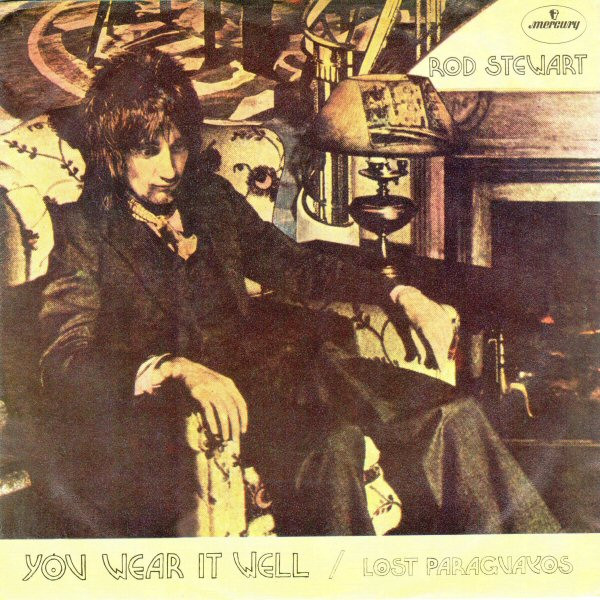
ROD STEWART - YOU WEAR IT WELL


Llançament: 12 d’agost de 1972

Llistes d’èxits: EUA: #13 | Regne Unit: #1 (1 setmana)


“You Wear It Well”, escrita per Rod Stewart i Martin Quittenton, es va enregistrar per a l’àlbum de Stewart del 1972 “Never a Dull Moment”. La cançó va esdevenir un èxit internacional, assolint el número u a la llista de singles del Regne Unit i el número 13 al Billboard Hot 100 dels Estats Units.


Després de l’èxit de “Every Picture Tells a Story”, Rod Stewart i la seva banda van tornar amb “You Wear It Well”, un tema que reflecteix de prop l’estil del seu anterior èxit “Maggie May”. Tot i les similituds, Stewart i el seu grup, inclosos els membres de Faces Ronnie Wood i Ian McLagan, es trobaven en el seu punt creatiu més alt. El so folk i blue-eyed soul de la cançó es va convertir en una característica definidora del primer treball en solitari de Stewart.


“You Wear It Well” presenta Stewart escrivint una carta a una antiga amant amb un to reflexiu però positiu. El títol probablement fa referència a la seva vida actual, als anys que han passat o a un vestit d’aniversari que ell li havia regalat. Stewart va interpretar la cançó en directe a Top of the Pops amb Faces, acompanyat per Quittenton a la guitarra clàssica i Dick Powell al violí. L’àlbum “Never a Dull Moment” també incloïa senzills d’èxit com una versió d’“Angel” de Jimi Hendrix i “What Made Milwaukee Famous”.


La frase “Madame Onassis got nothing on you” fa referència a Jacqueline Kennedy Onassis, l’antiga primera dama i vídua del president John F. Kennedy. En aquell moment, estava casada amb l’armador grec Aristòtil Onassis i era àmpliament admirada per la seva elegància, encant i estil icònic. La reputació de Jackie O com a figura de majestuositat i distinció la convertia en un referent natural per a la comparació a la lletra de Stewart.


Rod Stewart va expressar el seu afecte per la combinació de guitarra acústica, caixa de bateria i orgue Hammond, elements prominents a “You Wear It Well”. Va elogiar la interpretació d’Ian McLagan a l’orgue Hammond, referint-s’hi humorísticament com “el deliciós Ian McLagan, famós per les seves mitges sorolloses i intrusives” a les notes del seu recopilatori Anthology.


ROD STEWART - YOU WEAR IT WELL


Released: August 12, 1972

Charts:  US: #13    UK: #1 (1 week)


“You Wear It Well,” written by Rod Stewart and Martin Quittenton, was recorded for Stewart’s 1972 album “Never a Dull Moment”. The song became an international success, reaching number one on the UK Singles Chart and number 13 on the US Billboard Hot 100.


Following the success of “Every Picture Tells a Story”, Rod Stewart and his band returned with “You Wear It Well”, a track that closely mirrors the style of his earlier hit “Maggie May.” Despite the similarities, Stewart and his group, including Faces members Ronnie Wood and Ian McLagan, were at their creative peak. The song’s folksy, blue-eyed soul sound became a defining feature of Stewart’s early solo work.


“You Wear It Well” features Stewart writing a letter to an old flame with a reflective yet positive tone. The song’s title likely refers to her current life, the years gone by, or a birthday gown he once gifted her. Stewart performed the song live on Top of the Pops with Faces, joined by Quittenton on classical guitar and Dick Powell on fiddle. The “Never a Dull Moment” album also included charting singles like Jimi Hendrix’s “Angel” and “What Made Milwaukee Famous.”


The line “Madame Onassis got nothing on you” from You Wear It Well references Jacqueline Kennedy Onassis, the former First Lady and widow of President John F. Kennedy. At the time, she was married to Greek shipping magnate Aristotle Onassis and was widely admired for her grace, charm, and iconic style. Jackie O’s reputation as a figure of majesty and elegance made her a natural benchmark for comparison in Stewart’s lyrics.


Rod Stewart expressed his fondness for the blend of acoustic guitar, loud snare drum, and Hammond organ, which features prominently in “You Wear It Well.” He praised Ian McLagan’s Hammond organ performance, humorously referring to him as “the delectable Ian McLagan of loud, obtrusive sock fame” in his Anthology liner notes.