Total de visualitzacions de pàgina:

20.12.24


LISA STANSFIELD - CHANGE


Llançament: 7 d’octubre de 1991

Llistes d’èxits: EUA: #27 | Regne Unit: #10


“Change” és una cançó de la cantant i compositora britànica Lisa Stansfield, inclosa al seu segon àlbum, “Real Love”. Escrita per Stansfield, Ian Devaney i Andy Morris, la peça va ser produïda per Devaney i Morris. Llançada com a single principal de l’àlbum l’octubre de 1991 per Arista Records, “Change” va rebre remescles de Frankie Knuckles i Driza Bone.


“Change” es va convertir en una de les cançons més exitoses de Stansfield, assolint un gran èxit internacional. Va entrar al Top 10 en diversos països europeus, com ara Bèlgica, Itàlia, els Països Baixos, Espanya i el Regne Unit, on va arribar al número 10 l’octubre de 1991. També va situar-se al Top 20 a Alemanya, Irlanda, Suècia i Suïssa, i va assolir el número 11 a l’Eurochart Hot 100. La cançó va encapçalar la llista European Dance Radio Chart el novembre de 1993. Fora d’Europa, va arribar al número 10 al Canadà i va tenir un bon rendiment als Estats Units, on va liderar la llista Billboard Dance Club Songs durant dues setmanes i va aparèixer en diverses altres llistes de Billboard. A Austràlia i Nova Zelanda, va assolir els llocs 21 i 20, respectivament.


“Change” és una exploració emotiva de l’amor incondicional i el compromís. La lletra reflecteix la satisfacció amb la vida tal com és, subratllant que canviar qualsevol cosa podria posar en risc l’alegria i la connexió compartida amb la persona estimada. El cor tranquil·litza la parella sobre la lleialtat i sinceritat de la cantant, afirmant la seva profunda devoció i confiança. Amb versos com “This love has filled me up” i “I’ll never give you up” (Aquest amor m'ha omplert" i Mai renunciaré a tu), la cançó transmet la plenitud i l’estabilitat que proporciona aquest amor. Conclou ressaltant la naturalesa duradora del vincle, emfatitzant la confiança com a fonament per superar les pors i inseguretats.


Es van crear dos videoclips per a “Change”: una versió europea dirigida per Steve Lowe i una versió americana dirigida per Stefan Würnitzer. El videoclip europeu es va filmar a Lisboa, Portugal, i mostra llocs emblemàtics com el Monument als Descobriments i el Pont 25 d’Abril. El vídeo alterna primers plans de Stansfield sobre un fons blanc, escenes d’ella en un balcó il·luminat a la nit durant una tempesta i moments on apareix asseguda a la platja.


LISA STANSFIELD - CHANGE


Released: October 7, 1991

Charts:  US: #27   UK: #10 


“Change” is a song by British singer-songwriter Lisa Stansfield, featured on her second album, “Real Love”. Written by Stansfield, Ian Devaney, and Andy Morris, the track was produced by Devaney and Morris. Released as the album’s lead single on October 1991 by Arista Records, “Change” received remixes from Frankie Knuckles and Driza Bone.


“Change” became one of Stansfield most successful songs, achieving widespread international success. It was a top-10 hit in several European countries, including Belgium, Italy, the Netherlands, Spain, and the UK, where it peaked at number 10 in October 1991. It also reached the top 20 in Germany, Ireland, Sweden, and Switzerland and peaked at number 11 on the Eurochart Hot 100. The song topped the European Dance Radio Chart in November 1993. Outside Europe, it reached number 10 in Canada and performed strongly in the US, topping the Billboard Dance Club Songs chart for two weeks and charting on multiple other Billboard charts. In Australia and New Zealand, it peaked at 21 and 20, respectively.


Lisa Stansfield’s “Change” is a heartfelt exploration of unwavering love and commitment. The lyrics reflect contentment with life as it is, emphasizing that altering anything would risk losing the joy and connection shared with a loved one. The chorus reassures the partner of the singer’s loyalty and sincerity, affirming their deep devotion and trust. With lines like “This love has filled me up” and “I’ll never give you up,” the song conveys the fulfillment and grounding provided by their love. It concludes by highlighting the enduring nature of their bond, underscoring trust as the foundation for overcoming fears and insecurities.


Two music videos were created for Lisa Stansfield’s song “Change”: a European version directed by Steve Lowe, and a US version directed by Stefan Würnitzer. The European music video was filmed in Lisbon, Portugal, featuring landmarks like The Monument of the Discoveries and the 25 de Abril Bridge. The video alternates between close-ups of Stansfield against a white background, scenes of her on a night-lit balcony during a thunderstorm, and moments of her sitting on a beach.


19.12.24


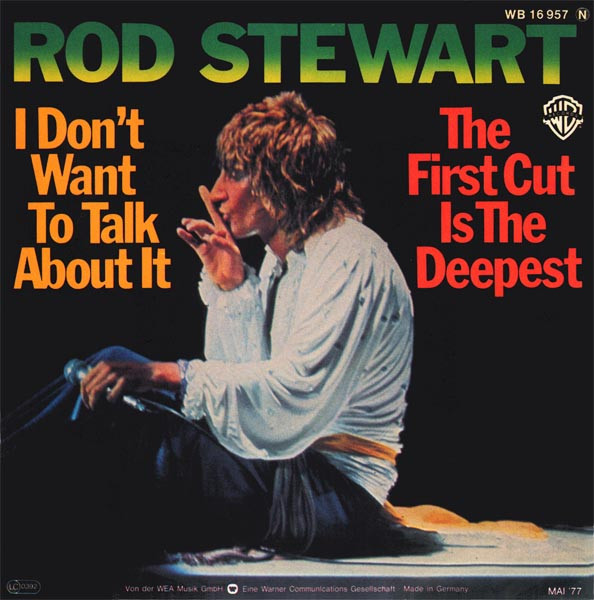
ROD STEWART - I DON’T WANT TO TALK ABOUT IT


Llançament: Febrer de 1977

Llistes d’èxits: EUA: #46 | Regne Unit: #1 (4 setmanes)


“I Don’t Want to Talk About It”, escrita per Danny Whitten, va ser gravada per primera vegada per Crazy Horse al seu àlbum homònim de 1971. Tot i ser la cançó més emblemàtica de Whitten, va assolir una fama més gran gràcies a diverses versions, en particular la de Rod Stewart. Stewart va enregistrar la seva versió als Muscle Shoals Sound Studio per a l’àlbum “Atlantic Crossing” de 1975. Inicialment, només era una pista d’àlbum, però Stewart va decidir llançar-la com a senzill el 1977 després de veure com els fans la corejaven als concerts. La cançó es va publicar com a doble cara A amb “The First Cut Is the Deepest” i va arribar al número 1 de les llistes britàniques.


Als Estats Units, Stewart va llançar “I Don’t Want to Talk About It” com a senzill el desembre de 1979 per promocionar el seu àlbum “Greatest Hits”, on va assolir el lloc 46 al Billboard Hot 100i el 44 a la llista Adult Contemporary. El 1989, Stewart va tornar a gravar la cançó per a “Storyteller – The Complete Anthology: 1964–1990”, una versió que va gaudir de molta popularitat a la ràdio contemporània, arribant al segon lloc de la llista Billboard Adult Contemporary. La cançó també va ser versionada amb èxit per Everything but the Girl.


“I Don’t Want to Talk About It” és una balada sobre el desamor i la vulnerabilitat emocional. La lletra expressa la reticència del protagonista a parlar del dolor causat per una relació fallida, transmetent sentiments de tristesa i solitud. Les estrelles, que abans simbolitzaven esperança, ara semblen sense sentit, reflectint la profunditat de la desesperació. El cor subratlla el desig d’evitar reviure records dolorosos, mentre que la segona estrofa introdueix metàfores de dissimulació, amb els colors blau i negre representant llàgrimes i pors. El solo de guitarra i l’outro afegeixen un moment de reflexió, intensificant l’impacte emocional de la cançó.


“I Don’t Want to Talk About It” va ser controvertida al Regne Unit, arran de la creença popular que la BBC havia manipulat les llistes d’èxits per evitar que “God Save the Queen” dels Sex Pistols arribés al número 1. Aquesta polèmica es va originar pel fet que la versió de Rod Stewart, llançada com a doble cara A amb “The First Cut Is the Deepest,” suposadament es va beneficiar d’aquesta manipulació, cosa que va encendre un debat sobre la transparència i les pràctiques de la indústria musical de l’època.


ROD STEWART - I DON’T WANT TO TALK ABOUT IT


Released: February 1977

Charts:  US: #46    UK: #1 (4 weeks)


“I Don’t Want to Talk About It,” written by Danny Whitten, was first recorded by Crazy Horse for their 1971 self-titled album. While it was Whitten’s signature song, it gained greater fame through various covers, particularly Rod Stewart’s version. Rod Stewart recorded it at Muscle Shoals Sound Studio for his 1975 “Atlantic Crossing” album. Although initially just an album track, Stewart decided to release it as a single in 1977 after noticing fans singing along at concerts. It was issued as a double A-side with “The First Cut Is the Deepest” and topped the UK singles chart.


In the United States, Rod Stewart released “I Don’t Want to Talk About It” as a single in December 1979 to promote his “Greatest Hits” album, where it peaked at number 46 on the Billboard Hot 100 and 44 on the Adult Contemporary chart. In 1989, Stewart re-recorded the song for “Storyteller – The Complete Anthology: 1964–1990”, which gained significant airplay on adult contemporary radio, reaching number two on the Billboard Adult Contemporary chart. The song was later covered successfully by Everything but the Girl.


“I Don’t Want to Talk About It” is a ballad about heartbreak and emotional vulnerability. The lyrics convey the singer’s reluctance to discuss the pain caused by a failed relationship, focusing on feelings of sadness and isolation. The stars, once symbols of hope, are now meaningless, reflecting the depth of despair. The song’s chorus emphasizes the desire to avoid reliving painful memories. The second verse introduces metaphors of concealment, with the colors blue and black representing tears and fears. The guitar solo and outro provide a reflective moment, intensifying the emotional impact of the song.


“I Don’t Want to Talk About It” became infamous in the UK due to widespread belief that the BBC had manipulated the charts to prevent the Sex Pistols’ “God Save the Queen” from reaching number one. This controversy arose as Stewart’s song, which was released as a double A-side with “The First Cut Is The Deepest,” reportedly benefitted from chart manipulation, sparking a debate about the fairness of the music industry’s practices at the time.


ARETHA FRANKLIN - RESPECT


Llançament: 11 d’abril de 1967

Llistes d’èxits: EUA: #1 (2 setmanes) | Regne Unit: #10


“Respect” és una cançó originalment escrita i enregistrada per Otis Redding l’any 1965, que es va convertir en un èxit popular gràcies a l’àlbum “Otis Blue/Otis Redding Sings Soul”. El 1967, Aretha Franklin en va fer una versió que va reestructurar i transformar en un gran èxit i en el seu himne més emblemàtic. La versió de Franklin va ser més exitosa que l’original de Redding, arribant al número 1 del Billboard Hot 100 i al número 10 al Regne Unit, sent la seva primera aparició a les llistes britàniques.


Després de signar amb Atlantic Records, Aretha Franklin va obtenir un èxit amb el single “I Never Loved A Man (The Way I Love You)”. Com a resposta, Atlantic va organitzar ràpidament sessions d’enregistrament per a “Respect”, contribuint a crear el seu primer àlbum complet amb el segell. Això va significar l’inici del període més exitós de Franklin, durant el qual va llançar els seus èxits més importants i va ser àmpliament reconeguda com la “Reina del Soul”.


Aretha Franklin va reestructurar la cançó original, afegint-hi el seu propi arranjament, inclosa la famosa frase “sock it to me”, i tocant el piano. Les germanes de Franklin, especialment Carolyn, van contribuir de manera creativa desenvolupant aquesta frase i la idea de cantar “R-E-S-P-E-C-T” lletra per lletra. Franklin la va enregistrar amb la Muscle Shoals Rhythm Sectiona Nova York, sota la producció de Jerry Wexler. La versió de Franklin va convertir la cançó en una exigència contundent de respecte dins de les relacions, tant emocionalment com físicament. Tot i que sovint s’ha interpretat com una frase de connotació sexual, Franklin va aclarir que “sock it to me” era una expressió no sexual, enganxosa i popular entre les dones de l’època.


La interpretació d’Aretha Franklin es va convertir en un himne poderós de la segona onada del feminisme i del moviment pels drets civils durant els anys 70. “Respect” és celebrada en treballs acadèmics com una declaració innovadora d’empoderament, tant feminista com racial, en un moment en què aquest tipus de missatges eren difícils de fer. Quan li van preguntar sobre la seva posició contundent en el context d’aquests moviments, Franklin va explicar al Detroit Free Press que no ho veia com una postura atrevida, sinó que considerava la demanda de respecte com un dret humà natural i essencial.


La cançó d’Aretha Franklin, sovint aclamada com una de les millors peces de R&B del seu temps, li va valer dos premis Grammy l’any 1968 a la Millor Gravació de Rhythm & Blues i a la Millor Interpretació Vocal Femenina de Rhythm & Blues. El 1987, va ser inclosa al Grammy Hall of Fame i, el 2002, la Biblioteca del Congrés dels Estats Units va afegir la versió de Franklin al National Recording Registry gràcies a la seva importància cultural i històrica.


ARETHA FRANKLIN - RESPECT


Released: April 11, 1967 

Charts:  US: #1 (2 weeks)  UK: #10 


"Respect" is a song originally written and recorded by Otis Redding in 1965, becoming a popular crossover hit from his album “Otis Blue/Otis Redding Sings Soul”. In 1967, Aretha Franklin covered and reworked the song, turning it into a massive hit and her signature anthem. Franklin's version became more successful than Redding's original, topped the Billboard Hot 100 and reached #10 in the UK, marking her first appearance on the UK charts.


After signing with Atlantic Records, Aretha Franklin scored a hit with her single "I Never Loved A Man (The Way I Love You)." In response, Atlantic quickly organized recording sessions for "Respect," helping to create her first full album with the label. This marked the beginning of Franklin's most successful period, during which she released her biggest hits and became widely known as the "Queen of Soul."


Aretha Franklin reworked the original song, adding her own arrangement, including the famous "sock it to me" line, and playing piano. Franklin’s sisters, particularly Carolyn, contributed creatively by developing the "sock it to me" line, and the idea to spell out "R-E-S-P-E-C-T." Franklin recorded it with the Muscle Shoals Rhythm Section in New York, under the production of Jerry Wexler. Franklin's rendition turned the song into a bold demand for respect in relationships, both emotionally and physically. While often interpreted as a sexual phrase, Franklin clarified that "sock it to me" was a nonsexual, catchy expression popular among women at the time.


Aretha Franklin's interpretation became a powerful anthem for second-wave feminism and civil rights in the 1970s. The song is celebrated in academic works as a groundbreaking declaration of empowerment, both feminist and racial, during a time when such statements were often challenging to make. When asked about her bold stance in the context of these movements, Franklin explained to the Detroit Free Press that she didn’t see it as audacious; rather, she viewed the demand for respect as a natural and essential human right.


Aretha Franklin's song, often hailed as one of the best R&B tracks of its time, won her two Grammy Awards in 1968 for Best Rhythm & Blues Recording and Best Rhythm & Blues Solo Vocal Performance, Female. In 1987, it was inducted into the Grammy Hall of Fame, and in 2002, the Library of Congress added Franklin's version to the National Recording Registry, thanks to its cultural and historical significance.