Total de visualitzacions de pàgina:

2.1.25


SOPHIE ELLIS-BEXTOR - MURDER ON THE DANCEFLOOR

Llançament: 3 de desembre de 2001

Llistes d’èxits: EUA: #51  Regne Unit: #2


“Murder on the Dancefloor”, una cançó de Sophie Ellis-Bextor inclosa al seu àlbum “Read My Lips”, va ser escrita per Ellis-Bextor i Gregg Alexander. Inicialment, va assolir la segona posició a la llista de singles del Regne Unit i es va convertir en un èxit global, arribant al top 10 en diversos països. Al gener del 2024, la cançó va viure un ressorgiment de popularitat gràcies a la seva inclusió a la pel·lícula “Saltburn” i a una tendència viral a TikTok. Això la va portar de nou al número dos de les llistes britàniques, sent el primer top 10 d’Ellis-Bextor al Regne Unit des del 2007. També va debutar al Billboard Hot 100 dels EUA aquell mateix mes.


Sophie Ellis-Bextor va coescriure “Murder on the Dancefloor” amb Gregg Alexander, un compositor americà conegut pel seu treball amb New Radicals i per coescriure “The Game of Love” de Santana que li va valer un Premi Grammy. La cançó tracta, amb to humorístic, sobre les tàctiques sense escrúpols en les competicions de ball, barrejant pop animat amb una lletra enginyosa. Alexander, que sovint utilitzava el pseudònim “Alex Ander”, va aportar el seu estil distintiu a la cançó.


Inicialment, Gregg Alexander va escriure “Murder on the Dancefloor” com a possible single de debut per a l’àlbum de New Radicals de 1998, “Maybe You’ve Been Brainwashed, Too”. Alexander la va composar durant els anys 90, però finalment va prioritzar “You Get What You Give” com a primer single del grup. Anys més tard, Alexander va compartir una primera maqueta de la cançó amb Sophie Ellis-Bextor, qui en va adaptar la lletra i li va afegir el seu propi toc. A la seva versió, Ellis-Bextor va substituir la frase original d’Alexander “I’m gonna make us hit the Hague. Once you hit the bong” per “I’ll take you all the way. Stay another song”, adaptant-la al seu estil i fent-la seva. Alexander va elogiar la seva interpretació, afirmant que quan la va gravar, la seva màgia la va fer seva.


Abans d’interpretar “Murder on the Dancefloor” al Le Bataclan de París durant la seva gira europea del 2024, Sophie Ellis-Bextor va retre homenatge a les víctimes de l’atac terrorista del 2015 a la sala, en què van perdre la vida 90 persones i moltes altres van resultar ferides. Conscient de la gravetat de la història i de la sensibilitat del títol de la seva cançó, va dirigir-se al públic per explicar que “Murder on the Dancefloor” no té cap intenció negativa. Al contrari, va compartir que el propòsit de la cançó, igual que el de la sala, és portar alegria i celebrar l’esperit de la música. Va dedicar la seva actuació a tots aquells que havien ballat allà, mantenint viva aquesta energia.


SOPHIE ELLIS-BEXTOR - MURDER ON THE DANCEFLOOR


Released: December 3, 2001

Charts:  US: #51    UK: #2 


"Murder on the Dancefloor," a song by Sophie Ellis-Bextor from her 2001 album “Read My Lips”, was written by Ellis-Bextor and Gregg Alexander. Initially, it peaked at number two on the UK Singles Chart and became a global hit, reaching the top 10 in multiple countries. In January 2024, the song saw a resurgence in popularity due to its feature in the film “Saltburn” and a viral trend on TikTok, climbing again to number two on the UK Singles Chart—Ellis-Bextor's first UK top 10 since 2007. It also made her debut on the US Billboard Hot 100 that same month.


Sophie Ellis-Bextor co-wrote "Murder on the Dancefloor" with American songwriter Gregg Alexander, known for his work with New Radicals and his Grammy-winning co-write of "The Game of Love" for Santana in 2003. The song humorously addresses cutthroat tactics in dance competitions, blending upbeat pop with sly lyrical content. Alexander, who often used the pseudonym "Alex Ander," contributed his distinct style to the track.


Gregg Alexander initially wrote "Murder on the Dancefloor" as a potential debut single for The New Radicals' 1998 album “Maybe You've Been Brainwashed, Too.” Alexander composed the song in the ‘90s after his car broke down, but ultimately decided to prioritize "You Get What You Give" as the band’s first single. Alexander later shared an early demo with Sophie Ellis-Bextor, who adapted the lyrics and added her own touch. In her version, Ellis-Bextor replaced Alexander's original line, "I'm gonna make us hit the Hague. Once you hit the bong," with "I'll take you all the way. Stay another song," shaping it to her style and making the song uniquely her own. Alexander praised her performance, saying that when she recorded it, her magic owned it.


Before performing "Murder on the Dancefloor" at Paris' Le Bataclan during her 2024 European tour, Sophie Ellis-Bextor honored the victims of the tragic 2015 terrorist attack at the venue, which claimed 90 lives and injured many more. Acknowledging the gravity of the venue's history and the sensitivity of her song's title, she addressed the audience, explaining that "Murder on the Dancefloor" holds no negative intent. Instead, she shared that the song’s purpose, much like the venue's, is to bring joy and celebrate the spirit of music. She dedicated her performance to all who had danced there, preserving that spirit.




1.1.25


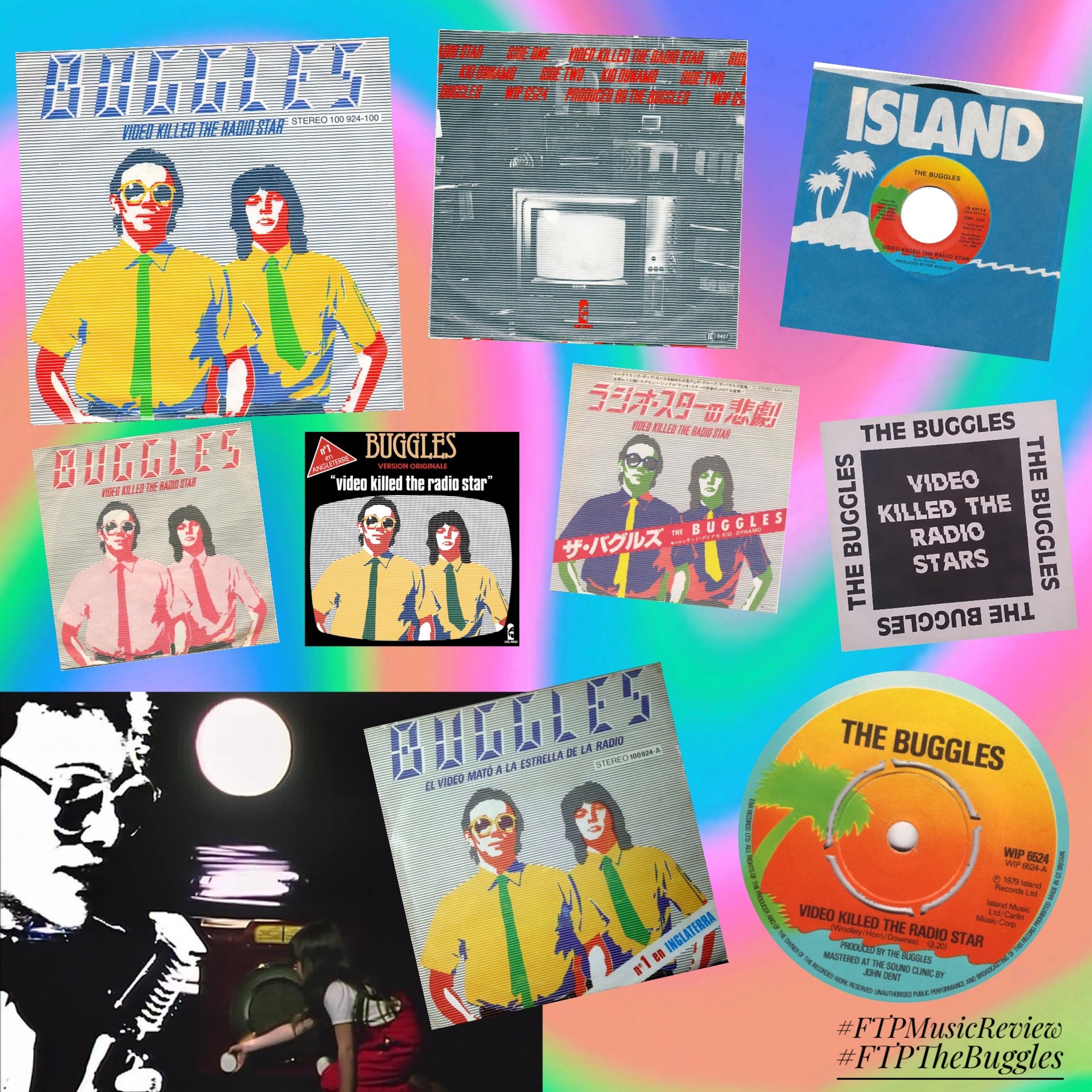
BUGGLES - VIDEO KILLED THE RADIO STAR


Estrena: 7 de setembre de 1979

Llistes: EUA: #40  Regne Unit: #1 (1 setmana)


“Video Killed the Radio Star” és una cançó composta per Trevor Horn, Geoff Downes, i Bruce Woolley, i llançada per The Buggles el 7 de setembre de 1979 com a single principal del seu àlbum debut “The Age of Plastic”. La cançó, que reflexiona sobre els efectes de les innovacions tecnològiques en els mitjans de comunicació, va assolir el número 1 al Regne Unit durant una setmana i va arribar al lloc 40 als Estats Units.


La lletra expressa nostàlgia pel passat i lamenta l’oblit de generacions més joves envers la ràdio, una al·legoria sobre l’impacte de la televisió i els vídeos musicals com a nous mitjans dominants. Inspirat per les experiències de Trevor Horn escoltant Radio Luxembourg de petit, el tema examina com la tecnologia, com la ràdio, la fotografia i el cinema, canvia la manera de consumir art i cultura.


La cançó va entrar a la història com el primer vídeo emès per MTV el dia del seu llançament, l’1 d’agost de 1981, amb el ja icònic moment de l’explosió de la ràdio al clip musical. L’emissió a MTV va propulsar les vendes de l’àlbum “The Age of Plastic”, especialment a zones on la xarxa de televisió estava disponible, demostrant l’impacte inicial de MTV en la indústria musical.


Tot i la seva poca emissió a la ràdio als EUA, la cançó va obtenir un èxit comercial sostingut gràcies al poder de la televisió musical. El videoclip va ser dirigit per l’australià Russell Mulcahy, que posteriorment es convertiria en un dels directors més prominents dels primers anys de MTV. El vídeo presenta una barreja d’imatges retrospectives i futuristes, amb un ús simbòlic de la transició tecnològica representada per elements com el micròfon vintage, la ràdio que explota, i l’escenari de ciència-ficció.


La cançó es va enregistrar després que Horn, frustrat per la seva experiència treballant en projectes de producció sense bones cançons, decidís escriure i interpretar la seva pròpia música. El nom “The Buggles” es va escollir com una sàtira als noms absurds de l’època punk, tot i que Horn més tard va lamentar-lo, considerant-lo massa banal.


Musicalment, la cançó incorpora sons robòtics, sintetitzadors processats i una estructura rítmica inspirada pel canvi cap a la música digital i la producció artificial. Aquesta estètica reflecteix la seva temàtica i marca una transició cap al domini de la música electrònica i els vídeos musicals com a eina de màrqueting.


Després de l’èxit del senzill, Trevor Horn i Geoff Downes es van unir al grup Yes el 1980, substituint Jon Anderson i Rick Wakeman. Més tard, Downes es va unir al supergrup Asia, mentre que Horn es va consolidar com un dels productors més respectats de la indústria, treballant amb artistes com Frankie Goes to Hollywood, Seal, ABC i Grace Jones. La seva decisió d’abandonar la interpretació va ser en part influïda per la seva percepció negativa de la seva aparença al vídeo de “Video Killed the Radio Star”.


BUGGLES - VIDEO KILLED THE RADIO STAR


Released: September 7, 1979

Charts:  US: #40  UK: #1 (1 week)


“Video Killed the Radio Star,” written by Trevor Horn, Geoff Downes, and Bruce Woolley, was recorded in 1979 by both Bruce Woolley and the Camera Club and the Buggles. The Buggles’ version, released as a single on September 1979, became the lead track on their debut album “The Age of Plastic”. The song made history as the first video aired on MTV when the network launched on August 1, 1981.


“Video Killed the Radio Star” was a major hit in the UK in 1979 but relatively unknown in the US, where it peaked at #40. When MTV launched in 1981 it boosted the Buggles’ album sales in regions where the network was available. Despite no radio airplay, the song’s popularity demonstrated MTV’s early power to influence music sales. Billboard highlighted this impact, noting a record store in Tulsa that sold out of copies of the album shortly after MTV began broadcasting.


The theme of “Video Killed the Radio Star” revolves around nostalgia and the impact of technological change in the media landscape during the 20th century. The lyrics express longing for the past and lament that younger generations may not value it. The song reflects on innovations like photography, cinema, radio, and television, and their transformative effects. Trevor Horn noted that the line “Lying awake intent at tuning in on you” was inspired by his childhood experiences of listening to Radio Luxembourg late at night.


Trevor Horn explained that “Video Killed the Radio Star” was inspired by the technological shift brought by video recorders and music videos, which signaled a move from radio to video as the dominant medium. The Buggles embraced the theme of artificiality in life and music, reflected in Horn’s robotic vocals and the heavily processed, computerized instruments. 


Trevor Horn described how frustration with unsuccessful record production led him to create “Video Killed the Radio Star” with Bruce Woolley. Dissatisfied with working on projects that lacked good songs, he decided to write and perform his own. The Buggles’ name was chosen as a satirical jab at punk-era band names, intentionally selecting something absurd. Although Horn later regretted the name, at the time he focused solely on the music, not marketing or image.


The music video was written, directed, and edited by Australian Russell Mulcahy. It opens with a young girl sitting by a radio, with a black-and-white shot of Trevor Horn singing into a vintage microphone superimposed over her. As the first chorus begins, the radio explodes. In the second verse, the girl is transported into a futuristic setting, where she encounters Horn and a woman in a silver jumpsuit inside a clear plastic tube. The video features additional shots of Horn and Geoff Downes, blending retro and futuristic imagery.


Trevor Horn and Geoff Downes of the Buggles joined the band Yes in 1980, replacing Rick Wakeman and Jon Anderson. The Buggles recorded a second album in 1981, but during the process, Downes joined the band Asia. Horn completed the album with musicians from Yes and The Camera Club. Following his time with Yes, Horn’s wife encouraged him to focus on production instead of performing, agreeing with his belief that he appeared “dumb-looking” in the Video Killed the Radio Star music video.


31.12.24


WHITNEY HOUSTON - I WANNA DANCE WITH SOMEBODY (WHO LOVES ME)


Llançament: 28 d’abril de 1987

Llistes: EUA: #1 (2 setmanes) | Regne Unit: #1 (2 setmanes)


“I Wanna Dance with Somebody (Who Loves Me)” és una cançó d’èxit de Whitney Houston de l’any 1987, publicada com a single principal del seu segon àlbum d’estudi, “Whitney”. Aquest himne alegre de dance-pop va valer a Houston el seu segon Premi Grammy a la Millor Interpretació Vocal Femenina de Pop durant la 30a edició dels Grammy.


Escrita per George Merrill i Shannon Rubicam, i produïda per Narada Michael Walden, la peça va sorgir arran de l’èxit de la seva col·laboració anterior a “How Will I Know”. Impulsats per aquest moment, el duo va escriure ràpidament la cançó al seu estudi del garatge, polint-la l’endemà abans d’enregistrar una maqueta amb un so inspirat en el rock. Van atribuir al baixista Leon Gaer el mèrit de millorar l’atractiu de la maqueta. Merrill la va lliurar personalment a Clive Davis a l’aeroport, subratllant el seu potencial. Davis va escoltar-la durant el vol i va decidir immediatament que era perfecta per a Houston, assegurant-la fermament per al seu àlbum.


“I Wanna Dance with Somebody (Who Loves Me)” es va convertir en un fenomen global, arribant al número 1 a les llistes de 18 països, inclosos Austràlia, Itàlia, Alemanya i el Regne Unit. Als EUA, va ser el quart senzill consecutiu de Houston que arribava al número 1, formant part de l’impressionant ratxa de set números 1 seguits que va aconseguir amb els seus dos primers àlbums. Aquesta cançó va superar totes les expectatives, venent 3 milions de còpies als Estats Units, impulsant les vendes de l’àlbum fins als 9 milions.


El videoclip va ser dirigit per Brian Grant i coreografiat per Arlene Phillips a Nova York, el març de 1987. Estrenat a MTV el 30 de maig de 1987, mostra Whitney Houston amb un vestit morat sobre un fons acolorit. El vídeo comença amb Houston deixant l’escenari després d’una actuació i transiciona a escenes dinàmiques on balla amb diversos vestits a diferents ubicacions. Els ballarins intenten impressionar-la, i el vídeo acaba amb Houston interactuant de manera divertida amb un ballarí sorprès, preguntant-li: “Don’t you wanna dance?”


WHITNEY HOUSTON - I WANNA DANCE WITH SOMEBODY (WHO LOVES ME)


Released: April 28, 1987

Charts:  US: #1 (2 weeks)   UK: #1 (2 weeks)


“I Wanna Dance with Somebody (Who Loves Me)” is a 1987 hit song by Whitney Houston, released as the lead single from her second studio album, “Whitney”. The upbeat dance-pop anthem earned Houston her second Grammy Award for Best Female Pop Vocal Performance at the 30th Annual Grammy Awards.


Written by George Merrill and Shannon Rubicam and produced by Narada Michael Walden, the track followed their successful collaboration on “How Will I Know. Inspired by their momentum, the duo quickly created the song in their garage studio, tweaking it the next day before recording a demo with a rock-inspired sound. They credited their bassist, Leon Gaer, for enhancing the demo’s appeal. Merrill personally delivered the demo to Clive Davis at the airport, emphasizing its potential. Davis listened to it on his flight and immediately decided it was perfect for Houston, firmly claiming it for her album. 


“I Wanna Dance with Somebody (Who Loves Me)” became a global phenomenon, topping the charts in 18 countries, including Australia, Italy, Germany, and the UK. In the US, it marked Whitney Houston’s fourth consecutive number-one single, and was part of Whitney Houston’s extraordinary streak of seven consecutive US #1 hits spanning her first two albums. This single surpassed high expectations, selling 3 million copies in the US and propelling the album to 9 million in sales. 


The music video was directed by Brian Grant and choreographed by Arlene Phillips in New York City in March 1987. Premiering on MTV on May 30, 1987, it featured Whitney Houston in a purple dress with a vibrant, colorful backdrop. The video begins with Houston leaving the stage after a performance, transitioning into dynamic scenes of her dancing in various outfits and locations. Dancers attempt to impress her, and the video ends with Houston playfully engaging a surprised male dancer, asking, “Don’t you wanna dance?”