Total de visualitzacions de pàgina:

16.1.25


MAMA CASS WITH THE MAMAS AND THE PAPAS - DREAM A LITTLE DREAM OF ME


Estrena: juny de 1968

Llistes: EUA: #12 Regne Unit: #11


“Dream a Little Dream of Me” és una cançó de 1931 composta per Fabian Andre i Wilbur Schwandt amb lletra de Gus Kahn. Originalment gravada aquell mateix any, s’ha convertit en un estàndard popular amb més de 400 versions enregistrades. El 1968, The Mamas & the Papas la van incloure al seu àlbum “The Papas & the Mamas”, amb Cass Elliot com a veu principal. El grup solia interpretar-la de manera informal, ja que Michelle Phillips la coneixia a través de la connexió de la seva família amb el coautor Fabian Andre.


Va ser Mama Cass Elliot qui va suggerir gravar “Dream a Little Dream of Me” al líder del grup, John Phillips. Tot i que Phillips recordava que Cass estava descontenta amb el que considerava un aire massa ‘camp’ durant la gravació, Elliot va explicar més tard a Melody Maker que la va interpretar com si fos 1943, intentant capturar una actuació fresca i autèntica.


Quan l’àlbum es va publicar el 1968, The Mamas & the Papas estaven a punt de dissoldre’s, una situació agreujada pel fracàs del seu senzill anterior, “Safe in My Garden”. Dunhill Records, veient una oportunitat de promocionar Cass Elliot com a solista, va llançar “Dream a Little Dream of Me” com a single el juny de 1968, una decisió que va frustrar John Phillips.


A la versió de l’àlbum, es pot sentir Cass Elliot parlant de fons i aclarint-se la gola abans de començar a cantar, amb una introducció de John Phillips que diu: “And now, to sing this lovely ballad, here is Mama Cass.” A la versió del single, només es manté el so de l’aclariment de la gola. Cass també va fer ella mateixa el xiulet que s’escolta abans que la cançó s’esvaeixi.


El single es va publicar als EUA com a “Mama Cass with the Mamas & the Papas” i al Regne Unit simplement com a “Mama Cass”. Es va promocionar amb una foto d’Elliot estirada sobre un camp de margarides. La cançó es va convertir en el seu últim gran èxit, assolint el número 12 al Billboard Hot 100 dels Estats Units i el número 11 al Regne Unit.


MAMA CASS WITH THE MAMAS AND THE PAPAS - DREAM A LITTLE DREAM OF ME


Released: June 1968

Charts:  US: #12   UK: #11 


“Dream a Little Dream of Me” is a 1931 song composed by Fabian Andre and Wilbur Schwandt with lyrics by Gus Kahn. First recorded in 1931, it became a popular standard with over 400 versions. The Mamas & the Papas included it on their 1968 album The Papas & the Mamas, featuring Cass Elliot on lead vocals. The group often sang the song informally, as member Michelle Phillips was familiar with it through her family’s connection to co-writer Fabian Andre.


Mama Cass Elliot suggested recording “Dream a Little Dream of Me” to group leader John Phillips. Although Phillips recalled her being unhappy with the song’s ‘campiness’ during recording, Elliot later explained to Melody Maker that she approached the song as if it were 1943 and she was singing it for the first time, trying to capture a fresh and authentic performance.


By the album’s 1968 release, the Mamas & the Papas were on the verge of disbanding, heightened by the failure of their previous single, “Safe in My Garden.” Dunhill Records saw an opportunity to promote Cass Elliot as a soloist and released “Dream a Little Dream of Me” as a single in June 1968, which frustrated John Phillips.


On the album version, Cass Elliot can be heard speaking in the background and clearing her throat before singing, with John Phillips introducing her: “And now, to sing this lovely ballad, here is Mama Cass.” On the single version, only her throat clearing remained. Cass did her own whistling before the song fades.


“Dream a Little Dream of Me” was released in the US as “Mama Cass with the Mamas & the Papas” and in the UK as simply “Mama Cass.” Promoted with a photo of Cass Elliot lying in daisies, the song became their last major hit, reaching #12 on the Billboard Hot 100 and #11 in the UK. 


15.1.25


 HOWARD JONES - NO ONE IS TO BLAME

Released: March 3, 1986

Charts:  US: #4  UK: #16 


“No One Is to Blame” is a contemplative ballad exploring themes of unfulfilled desire and the acceptance of life’s limitations. Originally appearing on his 1985 album “Dream into Action”, the track was re-recorded in 1986 with Phil Collins and Hugh Padgham. The single became Jones’ most successful U.S. hit, peaking at #4 on the Billboard Hot 100 and reaching #1 on the U.S. Adult Contemporary chart. It also charted in the UK (#16) and Australia (Top 10).


“No One Is to Blame” underwent a transformation that turned a modest album track into an international hit. The original version had a faster tempo and heavily-reverbed percussion, which some felt clashed with the song’s reflective tone. For the 1986 remix album “Action Replay”, Jones re-recorded the track with producers Phil Collins and Hugh Padgham. This version slowed the tempo, stripped back the percussion, and emphasized Jones’ emotive vocals and piano. Collins’ contributions, including subtle drumming, helped create a more elegant, radio-friendly rendition. Ironically, the original version—with its louder, more pronounced drums—sounds more like Collins’ typical style than the understated re-recording.


“No One Is to Blame” delves into the universal theme of longing for unattainable relationships. The song was inspired by a comment Jones heard in San Francisco when someone remarked, “You can look at the menu, but you don’t have to eat,” sparking the idea for its lyrical content.


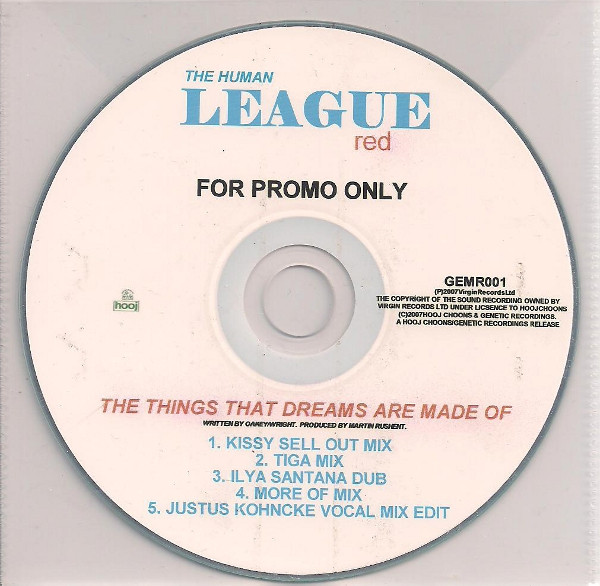
HUMAN LEAGUE - THE THINGS THAT DREAMS ARE MADE OF


Llançament: 16 d'octubre de 1981  

Àlbum: Dare


"The Things That Dreams Are Made Of" és una cançó de The Human League, gravada originalment per al seu àlbum de 1981 “Dare”. Produïda per Martin Rushent i enregistrada als Genetic Studios, va ser la cançó d'obertura de l'àlbum. Décades més tard, l'any 2008, la cançó es va remesclar, remasteritzar i llançar com un EP, arribant al número dos del UK Dance Chart el febrer d'aquell any.


Els cors van ser interpretats per Susan Ann Sulley i Joanne Catherall, que aleshores tenien 18 anys i acabaven de sortir de l'escola. Actualment, continuen com a membres principals de The Human League juntament amb el cantant Philip Oakey, mantenint la formació original de “Dare”. La cançó s'ha convertit en una peça clau en les actuacions en directe de la banda i va ser la cançó d'obertura de la gira “Dare '07”.


"The Things That Dreams Are Made Of" és una cançó animada que celebra els plaers i les ambicions que donen sentit a la vida. Philip Oakey llista coses preferides, des de plaers simples com el gelat fins a referències culturals com Norman Wisdom i els Ramones, simbolitzant tant interessos personals com aspiracions més àmplies. Descrita com una metàfora de les ambicions de la banda l'any 1981, la cançó posa èmfasi en la importància de perseguir somnis, amor, aventura i seguretat financera, suggerint que aquests elements creen una vida plena. Amb la repetició de "les coses de les quals estan fets els somnis," la cançó subratlla que aquestes experiències—tant les conegudes com les aventureres—són ingredients essencials per a la felicitat i la realització personal.


"The Things That Dreams Are Made Of" va guanyar popularitat de nou gràcies a diverses remescles i una reedició el 2008. La primera remescla de la cançó va aparèixer a l'àlbum de 1982 “Love and Dancing”. El 2003, Richard X va produir una versió mash-up anomenada “Finest Dreams”, que combinava la instrumental amb la lletra de SOS Band i comptava amb Kelis com a cantant; aquesta va arribar al número 8 de les llistes del Regne Unit. Noves remescles van aparèixer el 2007, incloent-hi un "More of Mix" i una remescla de Tommy Bisdee, amb una versió de Groove Armada per al seu àlbum recopilatori “Late Night Tales”. Reconeixent el potencial de la cançó en l’escena de clubs, Hooj Choons va fer un llançament comercial a principis de 2008, guanyant ràpidament popularitat entre DJs i a la BBC Radio One, arribant finalment al número 2 del UK Dance Chart i al número 17 del UK Indie Chart. Això va marcar el retorn de The Human League a les llistes després de sis anys, encara que la banda no va participar en la promoció d’aquests llançaments.


HUMAN LEAGUE - THE THINGS THAT DREAMS ARE MADE OF


Released: October 16, 1981

Album: Dare


"The Things That Dreams Are Made Of" is a song by The Human League, initially recorded for their 1981 album “Dare”. Produced by Martin Rushent and recorded at Genetic Studios, it served as the album's opening track. Decades later, in 2008, the song was remixed, remastered, and released as a dance EP single, where it climbed to number two on the UK Dance Chart in February. 


Backing vocals were provided by Susan Ann Sulley and Joanne Catherall, who were 18 years old and recently out of school at the time. Today, they remain core members of The Human League along with lead singer Philip Oakey, preserving the original “Dare” lineup. The song has become a staple in the band’s live performances and notably served as the opening track for their “Dare '07” tour.


“The Things That Dreams Are Made Of” by is an uplifting song that celebrates the pleasures and ambitions that make life meaningful. Philip Oakey lists favorite things, from simple joys like ice cream to cultural references such as Norman Wisdom and the Ramones, symbolizing both personal interests and broader aspirations. Described as a metaphor for the band's ambitions in 1981, the song emphasizes the importance of pursuing dreams, love, adventure, and financial security, suggesting that these elements create a fulfilling life. Through its repetition of "the things that dreams are made of," the song underscores that these experiences—whether familiar or adventurous—are essential ingredients for happiness and personal fulfillment.


"The Things That Dreams Are Made Of" gained renewed popularity through multiple remixes and a 2008 re-release. The song’s first remix appeared on the 1982 “Love and Dancing” album. In 2003, Richard X produced a mash-up version titled "Finest Dreams," blending the song’s instrumental with SOS Band's lyrics and featuring Kelis; it reached #8 on the UK charts. Further remixes appeared in 2007, including a "More of Mix" and a Tommy Bisdee remix, with British big beat group Groove Armada creating a version for their compilation album “Late Night Tales”. Recognizing the song's renewed club appeal, Hooj Choons issued a commercial release in early 2008, and it quickly gained traction with DJs and on BBC Radio One, eventually hitting #2 on the UK Dance Chart and #17 on the UK Indie Chart. This marked The Human League’s first chart return in six years, even though the band was not involved in promoting these releases.


14.1.25


 HOWARD JONES - LIKE TO GET TO KNOW YOU WELL

Released: August 11, 1984

Charts:  UK: #4 


“Like to Get to Know You Well” is a single that reached #4 on the UK Singles Chart. While not initially part of an album, it was included on his remix album “The 12″ Album” and later as a bonus track on the CD version of “Dream into Action”.


The single was released during the 1984 Summer Olympics and carried the dedication: “Dedicated to the original spirit of the Olympic Games.” The extended “international remix” version featured Jones singing in English, German, and French, reflecting a global theme. Some versions of the single sleeve featured translations of the title in various languages. In Japan, the title’s translation caused a stir, as it was loosely interpreted as “I would like to force myself upon you.”


Two music videos were created for the song. The first, made for the UK release, features Jones walking through the streets of London with his bandmates Trevor Morais, Martin Jones, and backing vocal group Afrodiziak. Notable locations include the Sphinx statue and Cleopatra’s Needle on Victoria Embankment, Trafalgar Square, and the Sun Luck Chinese restaurant in Soho. The video highlights Jones interacting with members of the public. For the US release, a new animated video was produced to cater to that market. This animated version offers a creative visual interpretation of the song and is included on the Last World Dream video compilation. 


Howard Jones’ “Like to Get to Know You Well” explores themes of connection, authenticity, and unity. The lyrics convey a desire to move beyond superficial interactions to form deeper, meaningful relationships. The chorus emphasizes this intention, with lines like “Like to get to know you well, so we can be one together,” underscoring the importance of trust and understanding in achieving unity. The song suggests overcoming fear and past insecurities to reveal one’s true self, fostering genuine emotional connections.


HERBIE HANCOCK - ROCKIT


Llançament: Juliol de 1983

Llistes d’èxits: EUA: #71  Regne Unit: #8


“Rockit”, una composició de Herbie Hancock del 1983, escrita en col·laboració amb Bill Laswell i Michael Beinhorn, va aparèixer a l’àlbum “Future Shock”. Influenciada per les tècniques de scratching que Hancock va descobrir a “Buffalo Gals” de Malcolm McLaren, la cançó va destacar pel talent del DJ DXT, que hi va aportar el seu estil característic. “Rockit” va guanyar el Grammy a la millor interpretació instrumental de R&B el 1983 i va obtenir cinc premis als MTV Video Music Awards el 1984, gràcies al seu videoclip innovador amb l’art robòtic de Jim Whiting.


Herbie Hancock, una figura destacada del jazz que es va unir a la banda de Miles Davis el 1963, va aprendre del seu mentor el valor de l’experimentació i de confiar en els seus col·laboradors. Aquest enfocament va ser clau per a la creació de “Rockit”, un clàssic d’electro-fusió que va marcar una clara ruptura amb les tradicions del jazz. Produïda pel baixista Bill Laswell la peça combinava elements d’electro, fusió jazzística i hip-hop.


Laswell va explicar que “Rockit” es va crear de manera ràpida i inesperada. Inspirat per una nit al club Roxy, on va veure actuar DJs com Afrika Bambaataa, va gravar les pistes de ritme en un soterrani de Brooklyn. Hancock va improvisar a sobre de les pistes en una sessió a Los Angeles que va durar només una hora, i la mescla final es va completar en el mateix temps. Encara dubtant del que havien creat, van posar una versió preliminar en una botiga d’altaveus, on una multitud curiosa, incloent-hi Grandmaster Caz i GrandMixer D.ST, es va reunir per escoltar-la. La seva reacció els va confirmar que havien creat una cosa innovadora.


“Rockit” va ser la primera cançó d’èxit que va incloure el scratching, introduint aquesta tècnica de manipulació del tocadiscos al gran públic. Aquest element del hip-hop, desenvolupat per DJs com Grandmaster Flash i Grand Wizard Theodore, consistia a moure un disc endavant i enrere al tocadiscos per crear sons rítmics de rascat. Segons Flash, el scratching va sorgir com una manera de preparar els discos en les actuacions, però van decidir compartir el so amb el públic ajustant el fader sense perdre el ritme.


El videoclip de “Rockit”, que mostrava maniquins animats i art mecànic, va ser un èxit rotund a MTV, guanyant cinc premis als MTV Video Music Awards de 1984, incloent-hi els de millor concepte i millors efectes especials. Dirigit per Kevin Godley i Lol Creme, el vídeo minimitzava l’aparició de Hancock per superar les reticències de MTV a mostrar artistes negres. En canvi, se centrava en les creacions de l’artista britànic Jim Whiting, amb instal·lacions mecàniques que es coordinaven perfectament amb els sons del scratching. L’edició innovadora, amb transicions entre música i moviment, va fer del vídeo una obra avantguardista, convertint-lo en un dels més experimentals del seu temps i un referent en els primers anys de MTV.


HERBIE HANCOCK - ROCKIT


Released: July 1983

Charts:  US: #71   UK: #8 


“Rockit,” a 1983 composition by Herbie Hancock, was co-written with Bill Laswell and Michael Beinhorn and featured on the album “Future Shock”. Influenced by scratching techniques Hancock first heard in Malcolm McLaren’s “Buffalo Gals,” the track showcased DJ DXT’s scratch style and included a groundbreaking music video featuring Jim Whiting’s robotic art. The song earned a Grammy Award for Best R&B Instrumental Performance in 1983 and won five MTV Video Music Awards in 1984.


Herbie Hancock, a celebrated jazz musician who joined Miles Davis’ band in 1963, learned from Davis the value of experimentation and trusting collaborators. This ethos shaped the creation of “Rockit,” an electro-fusion classic that departed from jazz traditions. Produced by bassist Bill Laswell, known for blending genres in his “collision music” style, the track incorporated elements of electro, fusion jazz, and hip-hop. 


Bill Laswell recounted how “Rockit” came together quickly and unexpectedly. After being inspired by a night at the Roxy, where he saw DJs like Afrika Bambaataa perform, Laswell recorded rhythm tracks in a Brooklyn basement. Herbie Hancock improvised over the tracks for about an hour in Los Angeles, and the final mix took just another hour. Initially uncertain of what they had created, they played a rough cassette mix at a speaker store, drawing a crowd of intrigued onlookers, including Grandmaster Caz and GrandMixer D.ST. Their reaction confirmed they had something groundbreaking.


“Rockit” was the first hit song to feature scratching, introducing the sound of turntable manipulation to a broader audience. This hip-hop technique, pioneered by DJs like Grandmaster Flash and Grand Wizard Theodore in New York, involved moving a record back and forth on the turntable to create rhythmic, scratching noises. Flash explained that scratching originated as a way for DJs to cue records, but they decided to share the sound with the audience by adjusting the fader while keeping the beat.


The music video featuring animated mannequins and mechanical art, was a major success on MTV, winning five Video Music Awards in 1984, including Best Concept and Best Special Effects. Directed by Kevin Godley and Lol Creme, the video minimized Hancock’s appearance to overcome MTV’s reluctance to feature black artists. Instead, the focus was on the creations of British artist Jim Whiting, whose mechanical art installations synchronized seamlessly with the song’s scratching sounds. The video’s innovative back-and-forth editing technique added to its avant-garde feel, making it one of the most experimental videos of its time and a landmark in the early days of MTV.