Total de visualitzacions de pàgina:

22.2.25


 PETER GABRIEL - GAMES WITHOUT FRONTIERS

Llançament: 25 de gener de 1980

Posició a les llistes: EUA: #48 | Regne Unit: #4


“Games Without Frontiers” és una cançó de Peter Gabriel del seu tercer àlbum homònim (Peter Gabriel III), amb cors de Kate Bush. La lletra compara la guerra i la diplomàcia internacional amb jocs infantils, una idea reforçada pel videoclip, que inclou imatges olímpiques i escenes del film de la Guerra Freda “Duck and Cover”. La cançó es va convertir en el primer gran èxit de Gabriel al Regne Unit, arribant al número 4, i també va assolir el número 7 al Canadà, encara que només va arribar al 48 als Estats Units. Es van crear tres videoclips, el tercer dels quals es va publicar el 2004.


Gabriel es va inspirar per “Games Without Frontiers” en un programa de televisió europeu dels anys setanta amb el mateix nom, on els concursants competien disfressats en proves absurdes. La versió britànica del programa, “It’s a Knockout”, va donar lloc a la famosa frase de la cançó.


El tema critica el comportament infantil dels adults, especialment en competicions internacionals com els Jocs Olímpics. Escrita abans del boicot dels EUA als Jocs Olímpics de Moscou 1980, denuncia com les nacions tracten els afers globals com si fossin jocs insignificants. Kate Bush va gravar els cors a última hora, cantant la frase en francès “jeux sans frontières”. També es va enregistrar una versió en alemany per a l’àlbum “Ein deutsches Album”, on algunes lletres prenen un to encara més ombrívol.


Els versos fan referències geopolítiques, amb Andre possiblement al·ludint a l’escriptor francès André Malraux, Chiang Ching referint-se a Chiang Kai-shek, el líder anticomunista xinès, i Lin Tai Yu simbolitzant el president del Vietnam del Sud, Nguyễn Văn Thiệu. La lletra suggereix que, mentre que els líders polítics més radicals es trobaven segurs en els seus extrems ideològics, els que estaven atrapats al mig—com Thiệu—eren simples titelles de la Guerra Freda.


La portada del senzill va ser dissenyada per Storm Thorgerson de Hipgnosis, utilitzant una tècnica desenvolupada per Les Krims que consistia a manipular fotografies Polaroid SX-70. Gabriel i els dissenyadors van experimentar amb la distorsió de les imatges mitjançant llumins cremats, monedes i llapis, creant un efecte de rostre fos. Thorgerson va elogiar l’actitud de Gabriel, que preferia imatges teatrals i expressives en lloc de retrats convencionals.


PETER GABRIEL - GAMES WITHOUT FRONTIERS


Released: January 25, 1980

Charts:  US: #48   UK: #4 


“Games Without Frontiers” is a 1980 song by Peter Gabriel from his third self-titled album, featuring backing vocals by Kate Bush. The lyrics compare war and international diplomacy to children’s games, reinforced by a music video featuring Olympic footage and scenes from the Cold War-era film Duck and Cover. The song became Gabriel’s first UK top-10 hit, peaking at No. 4, and also reached No. 7 in Canada, though it only hit No. 48 in the U.S. Three music videos were created, with the third released in 2004. Peter Gabriel drew inspiration for Games Without Frontiers from a 1970s European game show of the same name, where contestants competed in bizarre costumes. The English version, It’s a Knockout, provided the song’s famous lyric.


“Games Without Frontiers” critiques the childish behavior of adults, particularly in international competition like the Olympics. Written before the U.S. boycott of the 1980 Moscow Olympics, the song highlights how nations treat global affairs like petty games. Kate Bush provided last-minute backing vocals, singing the French phrase “jeux sans frontières.” A German-language version of the song was also recorded for “Ein deutsches Album”, making certain lyrics sound more ominous.


The lyrics reference geopolitical figures, with Andre possibly representing French leftist author André Malraux, Chiang Ching likely referring to Chiang Kai-shek, the anti-communist Chinese leader, and Lin Tai Yu potentially symbolizing South Vietnamese President Nguyễn Văn Thiệu. The verse suggests that while political leaders on the far left and right had secure positions, those caught in between—like Thiệu—became powerless pawns of the Cold War.


The single artwork was designed by Storm Thorgerson of Hipgnosis, using a technique developed by Les Krims that involved manipulating Polaroid SX-70 images. Gabriel and the designers experimented with distorting the photos using burnt matches, coins, and blunt instruments like pencils, creating a melted face effect. Thorgerson praised Gabriel’s willingness to embrace unflattering, theatrical imagery over conventional aesthetics.


21.2.25


PETER GABRIEL - HERE COMES THE FLOOD

Released: February 25, 1977

Album: Peter Gabriel (Car)


“Here Comes the Flood” is a song from Peter Gabriel’s 1977 debut solo album. It was written soon after leaving Genesis in 1975. Inspired by a dream, the song envisions a society where telepathy exposes people’s true thoughts—those who are open and honest will adapt, while others will struggle. Gabriel described it as a “mental flood… a release, a wash over the mind.”


The song was originally part of a larger concept involving a character named Mozo, loosely based on Moses and alchemical themes, though Gabriel never completed the project. He also drew inspiration from his fascination with shortwave radio, believing that psychic energy, like radio signals, intensified at night. The song was conceived during a summer evening at his cottage, where he experimented with meditation by running downhill with his eyes closed, believing he had discovered an “energy point” on the hillside.


Although the album version was heavily produced, Gabriel later felt it was overdone. He preferred stripped-down versions performed live or included in his “Shaking the Tree” compilation, which better captured his original vision of the song’s atmospheric and introspective nature.


20.2.25


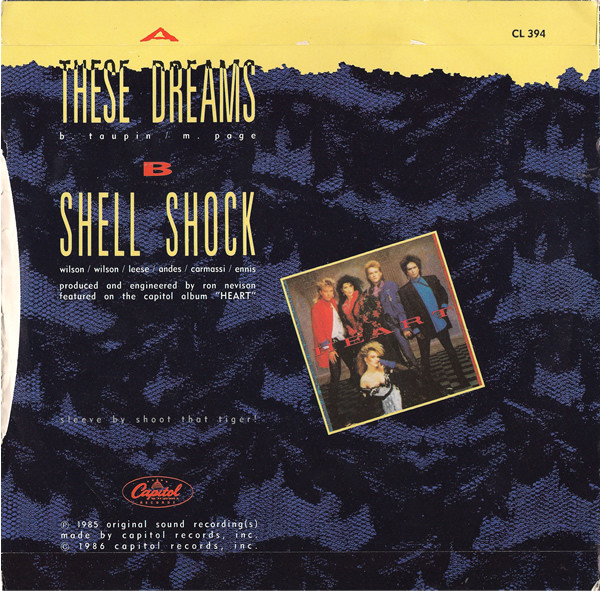
HEART - THESE DREAMS


Llançament: gener de 1986  

Llistes: EUA: #1 (1 setmana) | Regne Unit: #8  


"These Dreams" és una cançó de Heart del seu àlbum homònim de 1985 que es va publicar com a single el gener de 1986. Va esdevenir la primera cançó de Heart a assolir el número 1 al Billboard Hot 100. Fins a aquest àlbum, Heart principalment havia escrit el seu propi material, però després de signar amb Columbia Records, van començar a col·laborar amb compositors externs. "These Dreams" va ser escrita per Bernie Taupin, lletrista d'Elton John, i Martin Page, en una de les contribucions destacades de Taupin fora de la seva feina amb John.


Nancy Wilson va prendre el paper de vocalista principal, cosa poc habitual, ja que normalment era la seva germana Ann qui liderava. La banda va considerar que el to de la cançó s'ajustava millor a la veu de Nancy. Durant la gravació inicial, Nancy tenia un refredat, fet que li va donar una qualitat ronca que va agradar al productor Ron Nevison. Quan va regravar la cançó després de recuperar-se, va intentar imitar el so ronc de les primeres preses, barrejant el seu to natural amb la textura única d'aquella gravació inicial.


Inicialment, "These Dreams" es va oferir a Stevie Nicks, que la va rebutjar. Després es va presentar a Kim Carnes, qui havia enregistrat altres cançons de Martin Page com "Invisible Hands" i "I Pretend". Tot i agradar-li la cançó, Carnes es va sentir incòmoda amb el seu rang vocal i també va declinar l'oferta. Finalment, la cançó va arribar a Heart a través del músic i productor Peter Wolf que va treballar en l'àlbum de Heart. Wolf, que havia col·laborat en "We Built This City" de Starship, va compartir la demo de "These Dreams" amb les germanes Wilson, que van decidir gravar-la.


Martin Page, que va escriure la música de "These Dreams," va descriure la seva inspiració com una mena d'"himne elèctric", combinant elements de "Candle in the Wind" d'Elton John amb un estil experimental influenciat per Orchestral Manoeuvres in the Dark (OMD). Page volia que la demo evoqués un sentiment coral modern amb un toc de "Enola Gay". Tot i que la seva demo original era més complexa i experimental, Heart la va simplificar, un canvi que Page creu que va contribuir al seu èxit.


"These Dreams" va ser dedicada a Sharon Hess, una amiga íntima de Nancy Wilson que va morir de leucèmia. Sharon, una fan devota, havia fet construir una guitarra acústica blava personalitzada per a Nancy i va expressar el desig de conèixer-la abans de morir. El seu desig es va complir, i va passar temps a l'estudi amb Heart mentre treballaven en l'àlbum. Sharon i Nancy es van fer molt amigues, i Nancy la va descriure com la seva "ànima bessona del mar". Durant la seva visita, Nancy i el tècnic de guitarra Scotty Olson van portar Sharon a l'hospital quan es va trobar massa malalta per quedar-se a l'hotel. Nancy la va visitar a l'hospital i la va consolar, dormint al seu costat. Aquest suport va animar Sharon, que va poder tornar a casa seva, on va morir poc després, coincidint amb l'aniversari de Nancy. Nancy va decidir dedicar-li "These Dreams," ja que era l'única cançó de l'àlbum en què cantava com a vocalista principal.


El videoclip, dirigit per Jeff Stein i publicat per Capitol Records, mostra la versió més curta de la cançó, que elimina una estrofa. Es va emetre molt a MTV, cosa que va contribuir al seu èxit com un dels quatre senzills de Heart que van entrar al Top 10 als Estats Units. En el vídeo, Nancy Wilson apareix cantant davant d'un estany, tocant una guitarra Dean i una guitarra elèctrica amb forma de vela dissenyada pel luthier David Petschulat. Ann Wilson s'uneix cantant des de l'ombra, mentre altres membres de la banda fan breus aparicions tocant.


HEART - THESE DREAMS


Released: January 1986

Charts:  US: #1 (1 week)  UK: #8 


"These Dreams" is a song by Heart from their 1985 self-titled album and was released as a single in January 1986. It became Heart's first song to reach #1 on the Billboard Hot 100. Up until this album, Heart had primarily written their own material, but after signing with Columbia Records, they collaborated with external songwriters. "These Dreams" was written by Bernie Taupin, Elton John’s longtime lyricist, and Martin Page, marking one of Taupin's notable projects outside of his work with John.


Nancy Wilson took the lead vocals on this track, a departure from Heart's usual setup where her sister Ann typically sang lead. The band felt the song’s tone matched Nancy's voice well. Nancy had a cold during her initial recording, creating a raspy quality that producer Ron Nevison found appealing. When she re-recorded after recovering, Nancy tried to replicate the raspy sound Nevison had liked, blending her natural tone with the unique texture of the earlier takes.


"These Dreams" was initially offered to Stevie Nicks, who declined. It then went to Kim Carnes, known for recording other Martin Page songs like "Invisible Hands" and "I Pretend." Although she liked "These Dreams," she felt uncomfortable with its vocal range and also passed. The song ultimately reached Heart through musician/producer Peter Wolf (not to be confused with the J. Geils Band singer), who played on Heart's self-titled album. Having worked on Starship's "We Built This City," Wolf shared the "These Dreams" demo with the Wilson sisters, who decided to record it.


Martin Page, who composed the music for "These Dreams," described his inspiration as aiming for an electric hymn feel, blending elements of Elton John's "Candle in the Wind" with an experimental, Orchestral Manoeuvres in the Dark (OMD)-influenced style. He wanted the demo to evoke a sense of modern choral music with a touch of OMD’s "Enola Gay." Although his original demo was more complex and experimental, Heart simplified it, which Page believes contributed to its success. 


"These Dreams" was dedicated to Sharon Hess, a close friend of Nancy Wilson's who passed away from leukemia. Sharon, a devoted fan, had a custom blue acoustic guitar made for Nancy and wished to meet her before she died. Her wish was fulfilled, and she spent time in the recording studio with Heart as they worked on the album. Sharon and Nancy became very close, with Nancy describing Sharon as her "soulmate of the sea." During Sharon’s visit, Nancy and her guitar tech, Scotty Olson, took her to the hospital when she became too ill to stay in her hotel. Nancy later visited Sharon in the hospital, comforting her by lying next to her as she slept. This support lifted Sharon’s spirits and allowed her to make the journey back home, where she passed away shortly after on Nancy's birthday. Nancy chose to dedicate "These Dreams" to Sharon, as it was the only song on the album with her lead vocals.


The music video was directed by Jeff Stein and released by Capitol Records, featuring the shorter single version of the song that omits a verse. It gained significant exposure on MTV, contributing to the track’s success as one of four Top 10 singles from Heart in the U.S. In the video, Nancy Wilson performs while looking over a reflective pool of water, playing both a Dean guitar and a unique sail-shaped electric guitar crafted by luthier David Petschulat. Ann Wilson joins in singing from the shadows, while other band members make brief appearances performing.


19.2.25


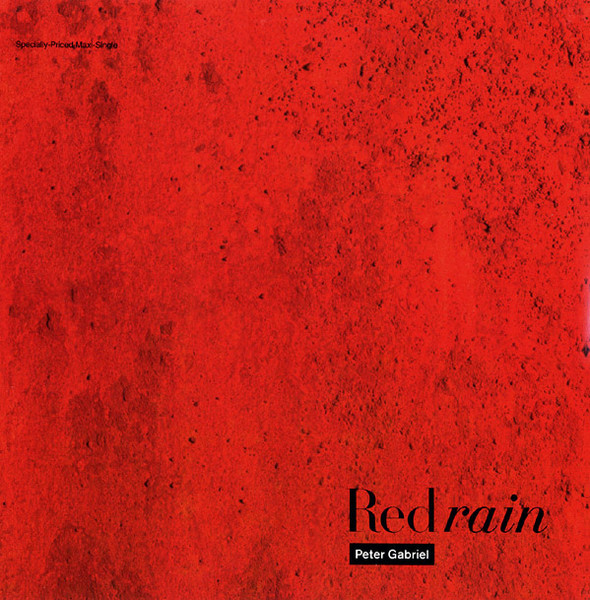
PETER GABRIEL - RED RAIN

Released: June 29, 1987

Charts:  UK: #46 


“Red Rain” is the opening track on Peter Gabriel’s 1986 album So. Initially released as a promotional single in the U.S., it reached No. 3 on Billboard’s Mainstream Rock chart. A year later, it was commercially released in Europe, Australia, and the U.S., peaking at No. 46 on the UK Singles Chart. A live version also charted in both the U.S. and UK in 1994.


“Red Rain” was inspired by a recurring dream Peter Gabriel had, where he swam in a vast sea of red and white liquid. He described vivid, surreal imagery of glass-like figures filling with blood and transferring it across a sand-like surface. The dream left a deep impression on him, shaping the song’s haunting tone. Gabriel saw the imagery as a metaphor for suppressed pain, believing that unexpressed emotions can grow stronger and manifest in the external world. The track features The Police’s Stewart Copeland on percussion.


“Red Rain” was originally conceived as part of Peter Gabriel’s abandoned Mozo project, a planned movie or play about a mysterious character who changes the lives of those he meets. The song was meant to accompany a dramatic opening sequence where a village suffers a catastrophic flood of red rain. While Gabriel never completed the Mozo project, Red Rain evolved into a powerful standalone track. Though not a major hit, it remains a staple of his live performances and one of his most evocative songs.


PETER GABRIEL - INTRUDER

Released: May 30, 1980

Album: Peter Gabriel (Melt)


“Intruder" is a song written and performed by Peter Gabriel released as the opening track on his third self-titled album known as “Melt”. The song introduced the gated reverb drum sound, created by engineer Hugh Padgham and drummer Phil Collins. This production technique, which gave drums a powerful, punchy, and isolated sound, became a defining feature of 1980s music, later popularised in Collins’ “In the Air Tonight”.


Gabriel pushed for an intense, minimalist drum pattern, instructing Collins to play without cymbals and even removing metal elements from the kit. This forced Collins to adapt, leading to the song’s distinctive, percussive power. Musically, “Intruder” is unsettling, with eerie guitar effects and Gabriel’s disturbing lyrics, sung from the perspective of a home invader, possibly with sinister intentions. 


“Intruder” is about a burglar who breaks into a woman’s house and is never caught. Peter Gabriel wanted to create a “sense of urgency” and made the track intentionally eerie, drawing inspiration from the suspenseful works of filmmaker Alfred Hitchcock and composer Bernard Herrmann.


In his own words, “Intruder” is one of Gabriel's favorite songs to perform live.


PETER GABRIEL - WE DO WHAT WE’RE TOLD (MILGRAM’S 37)


Released: May 19, 1986

Album: So


“We Do What We’re Told (Milgram’s 37)” is a song by Peter Gabriel that explores themes of obedience and authority. Although he began performing it live in 1980, the track was not officially released until it appeared on his 1986 album “So”. 


This song is based on Stanley Milgram’s infamous obedience experiments, conducted at Yale in 1961. In these studies, participants were instructed to administer what they believed were increasingly painful electric shocks to a person who answered questions incorrectly. Although the shocks were fake, the participants were unaware, and most followed orders despite the apparent suffering of the recipient. The song’s title references one variation of the experiment, where 37 out of 40 participants obeyed authority and delivered the highest voltage. Peter Gabriel saw the results as both disturbing and revealing, highlighting human tendencies toward blind obedience but also admiring the few who resisted. Gabriel summarized the results of Milgram's experiments with the phrase, "We do what we're told," which is repeated throughout the song. 


Peter Gabriel performed “We Do What We’re Told (Milgram’s 37)” live for years before its official release, with early versions appearing on bootlegs. During concerts, he encouraged audiences to chant the song’s refrain, unknowingly replicating the experiment’s theme of obedience. Despite Gabriel’s interest in incorporating footage of Milgram’s experiments into his stage shows or music videos, Milgram declined, unwilling to have his research used for entertainment purposes.


“We Do What We’re Told (Milgram’s 37)” was one of 15 songs Peter Gabriel worked on for his 1980 self-titled album but was ultimately left off. Originally titled “Milgram’s 37,” it was considered for release as a single or inclusion on a later album. Though also considered for his 1982 album, the song remained unreleased until So in 1986.


Gabriel began work on it again during the So sessions in 1985, using previously recorded backing tracks from 1980. He employed synthesizers to process his voice and instruments, creating an eerie, disjointed atmosphere that reflected the psychological themes of Milgram’s experiments. Drummer Jerry Marotta contributed, along with L. Shankar on violin, enhancing the song’s unsettling tone.