Total de visualitzacions de pàgina:

1.3.25


SIMPLE MINDS - SOMEONE SOMEWHERE (IN SUMMERTIME)


Llançament: 5 de novembre de 1982

Llistes: Regne Unit: #36


“Someone Somewhere (In Summertime)” va ser concebuda inicialment com “Summer Song” durant les sessions de composició a Fife. Es va publicar com el tercer senzill de “New Gold Dream (81–82–83–84)” el novembre de 1982 a través de Virgin Records. El títol de la cançó va variar segons el format: “Someone Somewhere In Summertime” a l’àlbum i “Someone Somewhere (In Summertime)” al single, cosa que va provocar inconsistències en llistats posteriors. Jim Kerr ha descrit aquesta peça com una obertura emblemàtica de “New Gold Dream (81–82–83–84)” i com una fita en la maduresa creativa de la banda.


Aquesta cançó captura tota l’essència de l’àlbum, amb tons sintètics que evoquen una atmosfera crepuscular i new wave, mentre que la seva tornada representa un gir cap al pop pur. En pocs minuts, sintetitza els diferents estats d’ànim i textures de tot el disc.


El tema va sorgir a partir d’una melodia de guitarra que Charlie Burchill va improvisar mentre la banda assajava, i la resta de la peça va fluir de manera natural. La lletra es va inspirar en part en la gira del grup per Austràlia i en la visita del Papa a Glasgow, tot i que aquesta connexió no es reflecteix explícitament en les paraules. Durant el procés de mescla, Charlie es va emocionar fins a les llàgrimes en escoltar l’impacte de la cançó a través dels altaveus d’alta qualitat de l’estudi. Més tard, va desenvolupar una nova introducció de guitarra per a les actuacions en directe, que es va gravar durant la sessió de la versió estesa. Virgin Records sembla que va arxivar erròniament el màster, fet que va provocar que la versió de l’àlbum aparegués en algunes reedicions.


El 1982, Simple Minds van assolir el seu punt àlgid amb “New Gold Dream (81/82/83/84)”, un àlbum que fusionava una bellesa etèria amb un optimisme renovat, contrastant amb la foscor dels primers anys 80. Mentre el post-punk donava pas a l’energia vibrant del new pop, bandes com The Human League i The Associates van construir un so més simfònic i acolorit, i Simple Minds van seguir la mateixa línia. L’àlbum, que va arribar al número 3 de les llistes, reflectia un sentiment d’optimisme, amb Jim Kerr oferint algunes de les seves interpretacions vocals més magistrals, combinant elements del New Romantic amb influències dels grans crooners clàssics. Kerr va descriure posteriorment el procés d’enregistrament com un període excepcionalment harmònic en què tot va fluir sense esforç.


“Someone Somewhere (In Summertime)” resumeix perfectament la fusió de sensibilitat pop i misteri experimental que defineix l’àlbum. Tot i que “New Gold Dream“ representa el cim de la primera etapa de Simple Minds, també anticipa la seva transició cap a un pop més accessible, combinant èxits embriagadors de synthpop com “Promised You A Miracle” i “Glittering Prize”, amb temes més atmosfèrics com “Big Sleep” i “Hunter and the Hunted”.


SIMPLE MINDS - SOMEONE SOMEWHERE (IN SUMMERTIME)


Released: November 5, 1982

Charts: UK: #36 


“Someone Somewhere (In Summertime)” was originally conceived as “Summer Song” during writing sessions in Fife. It was released as the third single from “New Gold Dream (81–82–83–84)” on November 5, 1982, through Virgin Records. The song’s title varied across different formats—“Someone Somewhere In Summertime” on the album and “Someone Somewhere (In Summertime)” on the single, leading to inconsistencies in later releases. Jim Kerr has described it as both a defining opener for “New Gold Dream (81–82–83–84)” and a milestone in the band’s songwriting, marking their creative maturity.


This song captures the album’s essence, with its synth tones evoking a twilit, new wave atmosphere, while its chorus represents a shift towards pure pop. In just a few minutes, it sums up the diverse moods and textures of the entire album.


The track developed from a guitar melody Charlie Burchill picked out while the band jammed, with the rest of the song flowing naturally. The lyrics were partly inspired by the band’s tour of Australia and the Pope’s visit to Glasgow, though the connection is not explicitly reflected in the words. During the mixing process, Charlie was moved to tears by the song’s impact over the studio’s high-quality speakers. Charlie later developed a new guitar intro for live performances, which was recorded during the extended mix session, though Virgin Records seemingly misfiled the master, resulting in the album version appearing on some reissues.


By 1982, Simple Minds had reached their creative peak with “New Gold Dream (81/82/83/84)”, an album that blended ethereal wonder with a newfound optimism, standing in contrast to the bleakness of the early ’80s. As post-punk gave way to the vibrant energy of new pop, bands like The Human League and The Associates embraced a more colorful, symphonic sound, and Simple Minds followed suit. The album, which reached No. 3 on the charts, reflected a sense of uplift and possibility, with Jim Kerr delivering some of his most masterful vocals, bridging New Romantic stylings with classic crooner influences. Kerr later described the recording process as a rare, harmonious period where everything clicked effortlessly.


“Someone Somewhere (in Summertime)” perfectly sums up the album’s fusion of pop sensibility and experimental mystery. While “New Gold Dream” marks the peak of Simple Minds’ early phase, it also introduces their transition into pop with a blend of giddy synthpop hits like “Promised You A Miracle” and “Glittering Prize,” alongside more atmospheric tracks like “Big Sleep” and “Hunter and the Hunted.”




28.2.25


CAROLE KING - IT’S TOO LATE


Llançament: 16 d’abril de 1971

Estats Units: #1 (5 setmanes)


“It’s Too Late” és una cançó de l’àlbum “Tapestry” de Carole King. Llançada com a senzill l’abril de 1971, va arribar al número 1 tant a la llista Billboard Hot 100 com a la d’Adult Contemporary. Inicialment era la cara B de “I Feel the Earth Move”, però els DJs van començar a preferir-la, fent que es convertís en el gran èxit, assolint el cim de les llistes el maig de 1971, mentre que “I Feel the Earth Move” mai no va entrar-hi. King la va coescriure amb Toni Stern, una pintora i lletrista de Los Angeles. La naturalesa lliure i espontània de Stern contrastava amb l’estil més tradicional de King, i la seva col·laboració reflectia aquest equilibri. A diferència del procés habitual de King, Stern va escriure la lletra d’“It’s Too Late” molt ràpidament.


La cançó és un exemple definitiu de l’estil cantautor que King va ajudar a popularitzar. Amb una melodia melancòlica, la lletra captura la complexitat emocional de la fi d’una relació. Tot i que la narradora intenta mantenir-se serena, el dolor es percep clarament. La profunditat emocional de la peça es veu reforçada pels solos de Danny Kortchmar a la guitarra i Curtis Amy al saxo, així com per l’acompanyament de King al piano. Tant Kortchmar com Amy aporten solos destacats que donen a la cançó un aire sofisticat i ple de malenconia.


Es va especular que “It’s Too Late” podria estar inspirada en James Taylor, ja que King i Taylor eren molt amics i van fer gira junts a principis de 1971. King mai no ho va confirmar, però es diu que Toni Stern va tenir una relació amb Taylor abans que aquest es vinculés sentimentalment amb Joni Mitchell. Tot i això, Stern mai no ha afirmat explícitament que la cançó parlés d’ell, mantenint la seva privacitat. Alguns oients també van interpretar la peça com una metàfora de la pèrdua d’idealisme dels anys 60. Els assassinats de Martin Luther King Jr. i Robert Kennedy el 1968 van deixar molta gent desil·lusionada, i hi ha qui creu que “It’s Too Late” podria tenir un missatge més ampli sobre l’esperança perduda.


“It’s Too Late” va guanyar el Grammy a Record of the Year el 1972, mentre que l’àlbum “Tapestry” també es va endur el premi a Album of the Year i a Best Pop Vocal Performance, Female. A més, “You’ve Got a Friend” va ser guardonada com a Song of the Year, consolidant “Tapestry” com un dels àlbums més celebrats de tots els temps.


CAROLE KING - IT’S TOO LATE


Released: April 16, 1971

US: #1 (5 weeks)


“It’s Too Late” is a song from Carole King’s 1971 album “Tapestry”. Released as a single in April 1971, it reached No. 1 on both the Billboard Hot 100 and Adult Contemporary charts. Initially the B-side to I Feel the Earth Move, the song gained traction after DJs began favoring it over the intended A-side. As a result, “It’s Too Late” became the dominant hit, topping the charts by May 1971, while “I Feel the Earth Move” never charted. King co-wrote It with Toni Stern, a painter and lyricist from Los Angeles. Stern’s free-spirited nature complemented King’s more traditional background, and their collaboration reflected this contrast. Unlike her usual process, Stern wrote the lyrics for this song very quickly. 


The song is a defining example of the singer-songwriter style that King helped popularize. Set to a moody melody, the lyrics capture the emotional complexity of realizing a relationship has run its course. While the narrator tries to remain composed, the heartbreak is evident beneath the surface. The emotional depth of the track is amplified by the instrumental contributions of Danny Kortchmar on guitar, Curtis Amy on saxophone, and Carole King on piano. Both Kortchmar and Amy deliver standout solos that enhance the song’s melancholic yet sophisticated feel.


“It’s Too Late” was rumored to be about James Taylor, as Carole King and Taylor were close friends and toured together in early 1971. While King never confirmed this, Toni Stern, did have a relationship with Taylor before he moved on to Joni Mitchell, but Stern has never explicitly stated that the song was about him, maintaining her privacy on the matter. Some listeners also interpreted the song as a reflection of the fading idealism of the 1960s. The assassinations of Martin Luther King Jr. and Robert Kennedy in 1968 had left many feeling disillusioned, leading to speculation that “It’s Too Late” carried a broader, political message about lost hope.


The song won the Grammy for Record of the Year in 1972, while King’s “Tapestry album also earned Album of the Year and Best Pop Vocal Performance, Female. Additionally, “You’ve Got a Friend” won Song of the Year, making it a landmark year for King confirming “Tapestry” as one of the most celebrated albums of all time.


27.2.25


SIMPLE MINDS - GLITTERING PRIZE


Released: August 16, 1982

Charts: UK: #16 


“Glittering Prize” is a 1982 single by Simple Minds, released as the second single from their album “New Gold Dream (81–82–83–84)”. It reached #16 in the UK but achieved greater success in Australia, New Zealand, and Norway, where it entered the top 10. The song’s title later inspired the 1992 compilation album “Glittering Prize 81/92”, which featured highlights from the band’s career up to that point.


Simple Minds initially viewed “Glittering Prize” as one of the weaker tracks on the album. Guitarist Charlie Burchill was surprised to hear a Muzak version in a supermarket, joking about the song’s quality. Jim Kerr later reassessed the song, realizing its strength as a well-crafted pop track and expressing excitement about performing it live. Musically, “Glittering Prize” features a bass-driven groove with keyboard flourishes, creating what has been described as an evocative love song.


The music video alternates between two settings: a golden room, where Jim Kerr, Charlie Burchill, and Mick MacNeil perform dressed in black, and a museum-like space with golden portraits of the band members, watched over by a sleeping guard. A gold-painted woman sneaks into the museum, touches a pharaoh-like Kerr in a sarcophagus, revives the band members, and escapes with them in a car. As the guard realizes the theft, she reappears in the golden room, relaxing on a chair and sipping a cocktail as the video ends.


Recognized as a classic and milestone for Simple Minds, “New Gold Dream (81–82–83–84)” was performed in full during their 30th anniversary tour in 2008. On October 6, 2022, the band played the album live at Paisley Abbey, Scotland, for the Sky Arts “Greatest Albums Live” series. This performance was later released as “New Gold Dream – Live from Paisley Abbey”.


SIMPLE MINDS - SPEED YOUR LOVE TO ME


Released: January 9, 1984

Charts: UK: #20 


“Speed Your Love to Me” was the second single from Simple Minds’ 1984 album “Sparkle in the Rain”, released on January 9, 1984. A stadium-sized rock anthem, it followed the success of “Waterfront” and peaked at #20 on the UK Singles Chart. Produced by Steve Lillywhite (who had worked with U2 and Phil Collins), “Speed Your Love to Me” benefited from his epic, atmospheric production style. Bono had introduced Jim Kerr to Lillywhite, and his influence helped shape Simple Minds’ evolving sound.


An urgent love song, Speed Your Love to Me is driven by Jim Kerr’s impassioned vocal delivery, with fire imagery intensifying the burning desire in the lyrics: (You go to my head, With the flames that grow higher and higher). Jim Kerr later acknowledged that the song’s title may have been inspired by The Righteous Brothers’ “Unchained Melody”, specifically the lyric: (Godspeed your love to me).


At the time of the song’s release, Jim Kerr was falling for Chrissie Hynde of The Pretenders. The two bands crossed paths in early 1984 while touring Australia, sharing a bill at the Narara Music Festival in January. By May 5, 1984, Kerr and Hynde were married. Their relationship was brief but influential, with Simple Minds opening for The Pretenders on their Learning to Crawl US tour.


One unexpected but crucial contributor was Kirsty MacColl. Known for her sharp wit and formidable talent, MacColl helped restructure the song when the band was struggling with its arrangement. MacColl also provided backing vocals. As Jim Kerr recalled: “We knew it had a great melody, but the arrangement was puzzling us. Kirsty came in and said, ‘Do this. And put that there. And put that little bit at the end.’ And we were like, Listen to you! She was bossing us around, and we let her in the gang.”


Filmed on December 6, 1983, the promotional video blended cinematic urban and natural imagery with studio performances. The fast-moving shots of Glasgow’s roads and tunnels, including the Clyde Tunnel, Kingston Bridge, and Erskine Bridge, visually echoed the song’s urgency and movement. As the lyrics “higher and higher” soared, the video transitioned to breathtaking aerial views of the Firth of Clyde and Loch Lomond.


PETER GABRIEL & KATE BUSH - DON’T GIVE UP


Llançament: 20 d’octubre de 1986

Posició a les llistes: EUA: #72 | Regne Unit: #9


“Don’t Give Up” és una cançó de Peter Gabriel amb la col·laboració de Kate Bush, inclosa en el seu àlbum “So” de 1986. Llançada com a single l’octubre de 1986 al Regne Unit i al març de 1987 als Estats Units, va arribar al número 9 de les llistes britàniques.


La cançó és una de les més emotives i potents de Gabriel, abordant temes de dificultats econòmiques i perseverança. Inspirada en l’atur massiu al Regne Unit durant els anys vuitanta, Gabriel va compondre la peça amb una influència de la música gospel americana, reinterpretada amb un estil modern i poc convencional. La seva esposa en aquell moment, Jill Gabriel, va revelar que la cançó també va ser influenciada per una tràgica notícia sobre una dona que es va suïcidar amb el seu fill, un fet que va commocionar Gabriel. A més, l’artista es va inspirar en un documental televisiu sobre l’atur i la vida familiar. La peça es va escriure durant un període difícil per a Gabriel, que incloïa una crisi nerviosa el 1985, i va servir com a homenatge al suport que havia rebut dels seus éssers estimats.


Gabriel havia concebut inicialment el duet per cantar-lo amb Dolly Parton, però després que aquesta el rebutgés, Kate Bush va assumir el paper, creant una de les col·laboracions més icòniques del pop dels anys vuitanta. El contrast entre la veu cansada i desesperançada de Gabriel i la dolçor reconfortant de Bush en la tornada reforça l’impacte emocional de la cançó. Malgrat que posteriorment Gabriel i Parton van considerar cantar-la junts, mai es va materialitzar per conflictes d’agenda.


La lletra va ser inicialment escrita com una peça en solitari, però Gabriel la va revisar per convertir-la en un duet, assegurant-se que la narrativa tingués sentit des de les dues perspectives. L’artista va elogiar Bush per la seva interpretació sensible i comprensiva, que va ajudar a equilibrar la temàtica de la desesperació i l’esperança. Va destacar que la cançó transcendeix la simple idea d’una dona donant suport a un home, ja que tracta el tema més ampli de l’autoestima i la seva importància en la superació de les dificultats.


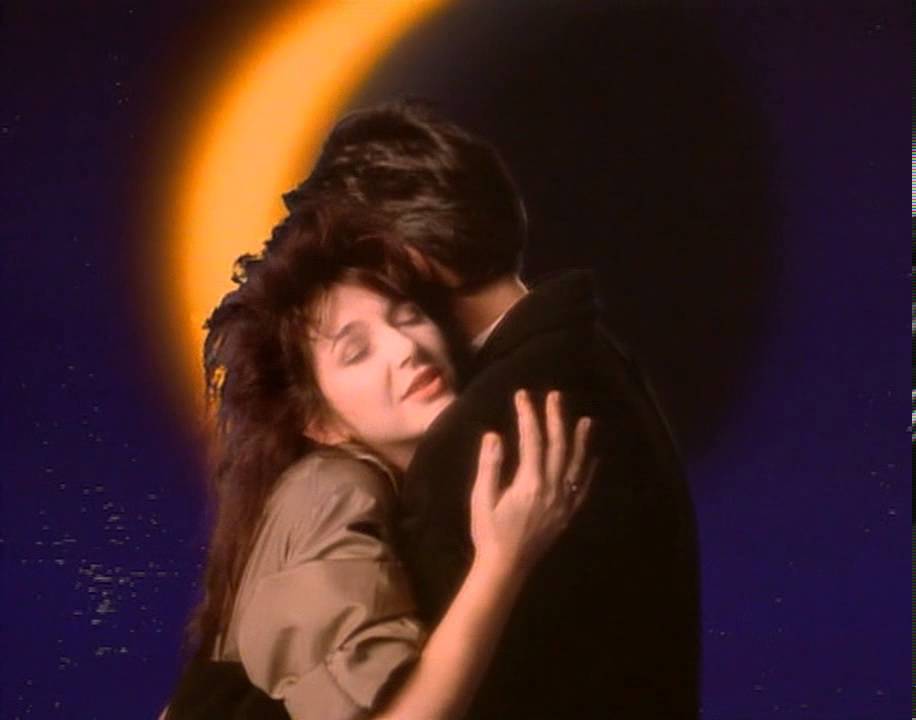
Es van crear dos videoclips per a la cançó. El primer, dirigit per Godley & Creme, mostra Gabriel i Bush abraçats en un sol pla seqüència, amb un eclipsi al fons. Conscient de la seva crisi matrimonial en aquell moment, Gabriel va demanar permís a la seva esposa abans de filmar l’escena íntima. El segon videoclip, dirigit per Jim Blashfield, utilitza animació i imatges superposades per representar una ciutat en decadència econòmica.


PETER GABRIEL & KATE BUSH - DON’T GIVE UP


Released: October 20, 1986

Charts:  US: #72  UK: #9 


Don’t Give Up is a song by Peter Gabriel, featuring Kate Bush, from his 1986 album “So”. Released as a single in the UK in October 1986 and in the US in March 1987, it reached number nine on the UK chart. 


“Don’t Give Up” was one of Peter Gabriel’s most powerful and emotional singles, tackling themes of economic hardship and perseverance. Inspired by the mass unemployment of the 1980s in the UK, Gabriel crafted the song in a dustbowl gospel style, reinterpreting traditional American roots music in a modern and offbeat way. Gabriel’s then wife, Jill, revealed that the song was also influenced by a tragic news story about a woman who jumped to her death with her child, which deeply affected Gabriel. Additionally, he cited a TV program on unemployment and family life as another source of inspiration. The song was written during a difficult period for Gabriel, including a nervous breakdown in 1985, and served as a tribute to the support he received from his loved ones.


Gabriel initially wrote the duet with Dolly Parton in mind, but after she declined, Kate Bush stepped in, creating one of the most memorable pop duets of the mid-1980s. The contrast between Gabriel’s weary, despairing verses and Bush’s gentle, reassuring chorus adds to the song’s emotional weight. Although Gabriel and Parton later discussed performing it together, scheduling conflicts prevented it from happening.


The track was originally written as a solo song, but Peter Gabriel revised the lyrics to create a duet, ensuring the narrative made sense for both a male and female perspective. Gabriel praised Kate Bush for her sensitive and supportive vocal delivery, which helped balance the song’s themes of despair and encouragement. He emphasized that beyond just a woman supporting a man, the song spoke to the broader issue of self-esteem and its crucial role in overcoming hardship.


Two music videos were created. The first, directed by Godley & Creme, is a single take of Gabriel and Bush embracing as an eclipse occurs behind them. Gabriel, aware of his troubled marriage at the time, sought his wife’s permission before filming the intimate scene. The second video, directed by Jim Blashfield, uses animation and superimposed imagery to depict a town in economic decline.