Total de visualitzacions de pàgina:

20.4.25


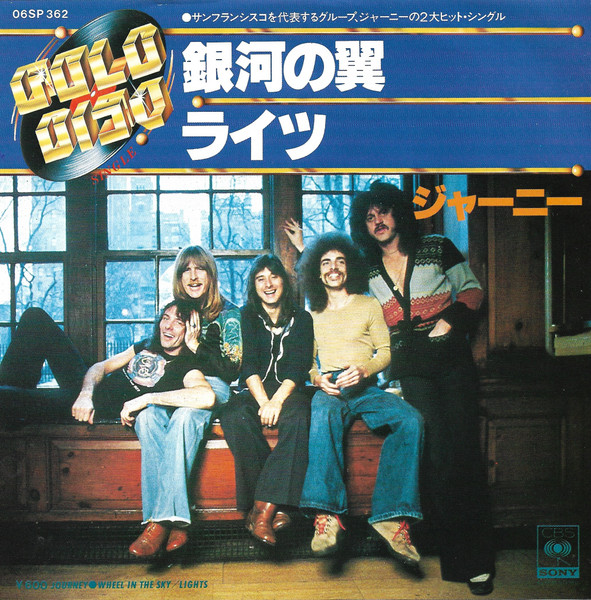
JOURNEY - WHEEL IN THE SKY


Released: March 1978

Charts: US: #57 


“Wheel in the Sky” marked a turning point for Journey—both musically and vocally. Originally a poem called “Wheels in My Mind” written by Diane Valory, the lyrics were adapted into a rock track by Robert Fleischman (briefly the band’s lead singer), Neal Schon, and Ross Valory. By the time recording for Infinity officially began in 1977, Steve Perry had taken over vocal duties. Perry’s powerful voice helped elevate the song into one of Journey’s earliest hits, and it became a signature track as they transitioned into a more radio-friendly rock sound. It was their first charting single, peaking at #57 on the Billboard Hot 100, and helped pave the way for the band’s massive success in the ’80s.


Lyrically, the song touches on themes of restlessness, time, and longing, centered around the metaphor of the wheel in the sky turning — “Wheel in the sky keeps on turnin’, I don’t know where I’ll be tomorrow” — capturing the loneliness and unpredictability of life on the road. What’s interesting is how this song captures a philosophical tone — it’s less of a typical love song and more about uncertainty, movement, and longing, wrapped in that “life-goes-on” feeling. the metaphor of the wheel constantly turning adapts with anyone dealing with instability or change, especially in the context of life on the road, which the band was very much living at the time.


Even though it wasn’t a massive hit on the charts, it was the foundation for the band’s eventual explosion in popularity. Perry’s arrival shifted the entire dynamic, helping Journey evolve from a prog-rock cult band into a radio-dominating arena rock act. It’s kind of poetic in itself — a song about forward momentum was the one that actually started pushing them forward.




19.4.25


JOURNEY - WHO’S CRYING NOW


Released: July 9, 1981

Charts: US: #4   UK: #46 


“Who’s Crying Now” was the lead single from Journey’s iconic 1981 album “Escape” and marked the beginning of a new era for the band. Written by Jonathan Cain and Steve Perry, it showcased a softer, more melodic side of Journey’s sound, blending rock with pop and emotional depth. The song climbed to #4 on both the Billboard Hot 100 and Mainstream Rock Tracks charts, becoming one of the standout hits of their career. It was also Journey’s highest-charting single in the UK for decades, peaking at #46, until the resurgence of “Don’t Stop Believin’” in 2009, which finally eclipsed it thanks to renewed popularity from shows like “The Sopranos” and “Glee”.


“Who’s Crying Now” is not only one of Journey’s signature ballads, but it also marked a pivotal moment in the band’s evolution — being one of the first tracks to feature Jonathan Cain after he replaced original keyboardist Gregg Rolie. Cain brought a fresh energy and a more pop-influenced songwriting sensibility that helped push “Escape” to the top of the charts.


The song itself was born during a moment of creative inspiration: Steve Perry, driving from Bakersfield to San Francisco, started humming the melody and chorus into a cassette recorder. The very next day, during a stormy afternoon, he visited Cain and together they fleshed out the song — with Cain contributing the now-iconic title line: “Who’s crying now?”


Musically, the track is a masterclass in emotional build-up. It starts subtle and smooth, with Cain’s warm piano tones and Perry’s soulful delivery, and slowly crescendos into Neal Schon’s unforgettable, fiery guitar solo that closes the song. It balances tenderness and intensity in a way that feels effortless — the kind of ballad that became a blueprint for Journey’s future hits.


“Escape”, the album, went on to be Journey’s only #1 LP, housing not just this classic, but also “Don’t Stop Believin’,” “Stone in Love,” and “Open Arms.” It’s the sound of a band at their creative peak — and “Who’s Crying Now” is one of its emotional centerpieces.


18.4.25


JOURNEY - ANY WAY YOU WANT IT


Released: February 22, 1980

Charts: US: #23 


Any Way You Want It” is pure, high-energy Journey — a hard-charging anthem that blends melodic rock with a fist-pumping spirit. Released in February 1980 as the lead single from their sixth studio album “Departure”, it became a fan favorite and a staple of their live shows, peaking at #23 on the Billboard Hot 100. The song was co-written by Steve Perry and Neal Schon during a moment of inspiration on their tour bus. With Schon strumming an acoustic guitar and Perry riffing off vocal ideas, the track came together quickly. 


Musically, it’s tight, vibrant, and full of swagger — driven by Schon’s staccato guitar riffs and Perry’s soaring vocals. Lyrically, it’s a celebration of freedom and desire, making it tailor-made for stadium sing-alongs.


According to Steve Perry, the give-and-take structure of the song — the rapid-fire back-and-forth between vocals and guitar — was inspired by his time spent with Phil Lynott and Thin Lizzy while the bands toured together in 1979. Perry, Schon, and Lynott worked on rhyme schemes together in Miami, which directly informed the conversational rhythm of “Any Way You Want It.” Perry described it as:

“Guitar-voice, guitar-voice, more guitar-guitar-guitar-voice… back and forth.”

This became a songwriting blueprint Journey would revisit on later songs like “Stone in Love.”


In the studio, keyboardist Gregg Rolie originally used a Mellotron, but the unit malfunctioned. Co-producer Geoff Workman salvaged the sound by doubling it with a regular organ, giving the final mix a “celestial ring” — an airy, dreamy vibe layered under the hard rock surface. This fusion, plus stacked background vocals, created a sonic signature that made the track stand out even more.


The music video directed by Kim Paul Friedman, is a classic example of early 1980s rock visuals — simple, performance-driven, and anchored in a touch of storytelling. Premiering in March 1980, the video opens with a bit of mystery: a man standing in front of a jukebox, his face hidden. He scrolls through the list of songs, pauses at “Any Way You Want It,” and drops in a coin. Once selected, the jukebox flips a record into place, and as it starts to spin, the scene transitions smoothly into a studio reel turning, which launches us into Journey performing the song live in the studio. The twist comes at the very end — the man at the jukebox is revealed to be Steve Perry himself, who turns and flashes a knowing smile at the camera, closing out the video with a wink of charm.


In addition to this conceptual studio version, there’s also a live performance video filmed during the Departure Tour, capturing Journey in their full concert glory. Both videos showcase different sides of the band: one polished and stylized, the other pure and electric.


17.4.25


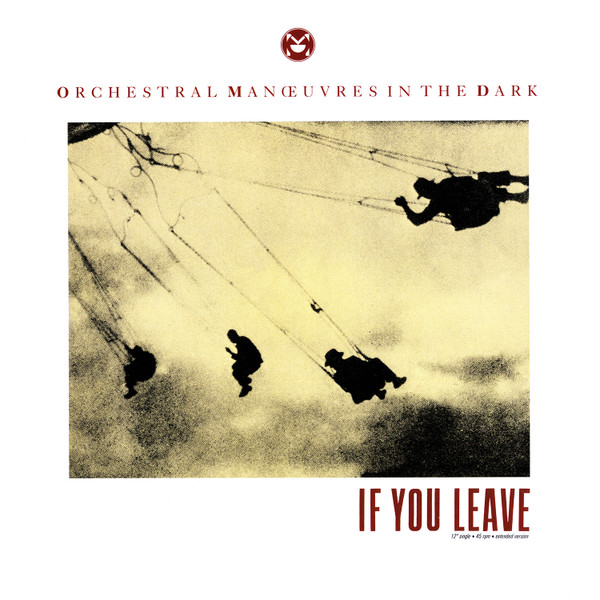
 OMD - IF YOU LEAVE

Released: April 21, 1986

Charts: UK: #48 US: #4 


“If You Leave” is one of Orchestral Manoeuvres in the Dark’s signature songs, written for the final scene of the film Pretty in Pink. Released in 1986, it became their biggest U.S. hit, reaching No. 4 on the Billboard Hot 100 and charting highly in Canada, New Zealand, and Australia. Andy McCluskey notes many European fans dislike the song and that the success of the track tends to overshadow the band’s other work in the U.S.


Originally, Pretty in Pink was set to end with OMD’s “Goddess of Love,” but after poor test screenings, director John Hughes changed the ending and needed a new song. He asked OMD to create one that matched the emotional tone and had a tempo of 120 BPM to fit the filmed prom scene. With just two days before a tour, the band wrote and recorded “If You Leave” in under 24 hours. The lyrics reflect the end of high school and the fear of what comes next. Despite matching the tempo, a film editing error caused the dancing to appear out of sync.


NEW KIDS ON THE BLOCK - YOU GOT IT (THE RIGHT STUFF)


Released: November 7, 1988

UK: #1 (3 weeks)


“You Got It (The Right Stuff)” was the breakout hit that helped catapult New Kids on the Block into full-blown teen idol status in the late ’80s. Released in 1988 as the second single from their sophomore album “Hangin’ Tough”, the track featured Jordan Knight and Donnie Wahlberg on lead vocals and showcased the group’s catchy, synth-driven pop-R&B style. Known for its unforgettable “oh, oh, oh, OH, oh” vocal hook and synchronized dance moves, the song became a pop culture landmark, adored by fans and parodied by critics. 


Originally titled just “The Right Stuff” on the album, the single was retitled to “You Got It (The Right Stuff)”, likely to avoid confusion with Vanessa Williams’ hit of the same name from earlier in the year. The song’s success was wide-reaching: it hit #3 on the Billboard Hot 100, went #1 in Australia in August 1989, and topped the UK charts that November, though only after a second release.


A Spanish-language version called “Auténtica” also found success, peaking at #11 in Spain, helping the band reach an international audience. The music video, with its iconic black-and-white aesthetic and signature dance moves, became a pop culture staple paving the way for acts like Backstreet Boys and NSYNC in the decades to come.


Behind the scenes, the song (like the rest of Hangin’ Tough) was the brainchild of Maurice Starr, who not only wrote and produced the track but also played all the instruments. Having previously launched New Edition, Starr followed a similar blueprint with the New Kids — but this time, turning them into a global phenomenon.


The song’s chart story is also interesting: in the UK, their single “Hangin’ Tough” initially flopped at #52, but after “You Got It” topped the chart, “Hangin’ Tough” was re-released and also climbed to #1.


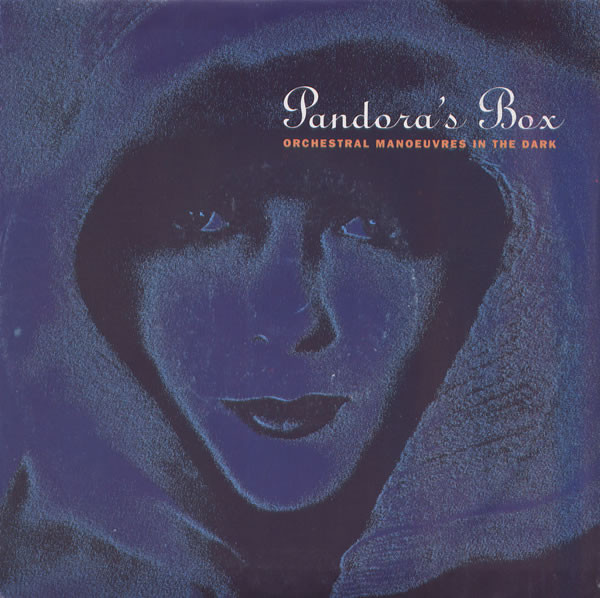
OMD - PANDORA’S BOX


Llançament: 24 de juny de 1991

Posicions a les llistes: UK: #7


“Pandora’s Box” és un single de Orchestral Manoeuvres in the Dark publicat el 1991 com a segon avançament del seu àlbum “Sugar Tax”. La cançó es va convertir en un èxit al Regne Unit i a diversos països europeus, arribant al Top 10. El llançament va incloure tres remescles diferents, sent la versió principal un remix més curt a càrrec de Steve Anderson.


La cançó està inspirada en Louise Brooks, actriu icònica del cinema mut, i en la seva pel·lícula de 1929, “Pandora’s Box”. Andy McCluskey la va escriure com un homenatge a Brooks, afirmant que la seva bellesa magnètica i la seva vida turmentada l’havien fascinat profundament. La descrivia com “algú de qui t’enamores immediatament però que hauries d’evitar”. Aquesta dualitat es reflecteix en la cançó, que explora la cara fosca de la fama i l’atracció fatal.


Pandora’s Box (Die Büchse der Pandora) és una pel·lícula alemanya de cinema mut dirigida per G.W. Pabst, que narra la tràgica història de Lulu (Louise Brooks), una dona lliure i seductora la qual provoca la caiguda d’ella mateixa i de tots els qui l’envolten. Basada en les obres de teatre de Frank Wedekind, el títol fa referència al mite grec de Pandora, símbol de la destrucció i el caos desfermats. La pel·lícula també és coneguda per una de les primeres representacions cinematogràfiques del desig lèsbic, a través del personatge de la comtessa Geschwitz. Tot i ser ignorada en el seu moment, amb el temps ha estat reconeguda com una obra mestra del cinema expressionista de la República de Weimar.


El videoclip de la cançó, rodat en blanc i negre, combina imatges d’Andy McCluskey amb metratge original de Louise Brooks, extret directament del film de 1929, creant un homenatge visual i emocional a la figura enigmàtica de l’actriu.


OMD - PANDORA’S BOX


Released: June 24, 1991

Charts: UK: #7 


“Pandora’s Box” is a 1991 single by Orchestral Manoeuvres in the Dark released as the second single from their “Sugar Tax” album. It became a top-10 hit across the UK and Europe, with three remixes accompanying its release—the main single version being a shorter remix by Steve Anderson. 


Inspired by silent film star Louise Brooks and her 1929 film “Pandora’s Box”, Andy McCluskey wrote it as a tribute to the actress, whose allure and troubled life deeply fascinated him. He described her as someone you’d instantly fall for but should avoid. The song reflects this tension and explores the darker side of fame. 


“Pandora’s Box” (Die Büchse der Pandora) is a 1929 German silent drama directed by G.W. Pabst. The film tells the tragic story of Lulu (Louise Brooks), a free-spirited and seductive woman whose allure leads to the downfall of herself and those around her. Based on Frank Wedekind’s plays, the title references the Greek myth of Pandora, symbolizing the unleashing of chaos and destruction. The film is also notable for its early depiction of lesbian desire through the character Countess Geschwitz. Initially overlooked, it was later recognized as a landmark of Weimar cinema and a silent film classic. The music video of the song, shot in black and white, features McCluskey alongside archival footage of Brooks, with all her scenes taken directly from the original 1929 film.