Total de visualitzacions de pàgina:

9.6.25


 IKE & TINA TURNER - A FOOL IN LOVE

Publicada: juliol de 1960

Llistes d’èxits: EUA: #27


“A Fool in Love” és el single debut d’Ike & Tina Turner, publicat el juliol de 1960 per Sue Records. Va ser la primera aparició de Tina Turner amb aquest nom artístic, tot i que ja actuava amb la banda d’Ike Turner, els Kings of Rhythm, des de 1956. La cançó es va convertir en el seu primer gran èxit, arribant al número 2 de la llista R&B de Billboard i al número 27 de la Billboard Hot 100. Finalment, es va convertir en el seu primer single milionari en vendes i va impulsar-los cap a la fama nacional.


Inicialment, havia estat escrita per Ike Turner per al cantant Art Lassiter, amb cors a càrrec del grup de Lassiter, The Artettes. Però quan Lassiter no es va presentar a la sessió de gravació, Tina Turner (aleshores Anna Mae Bullock) es va oferir a fer la veu principal. Ike, que ja havia pagat l’estudi, va enregistrar una maqueta amb Tina i les Artettes, amb la intenció de substituir després la seva veu. Tanmateix, quan un DJ local va escoltar la gravació i la va fer arribar a Juggy Murray de Sue Records, Murray va quedar tan impressionat per la interpretació de Tina que va oferir a Ike 20.000 dòlars per publicar la cançó tal com era.


Aquest fet va marcar la formació oficial d’Ike & Tina Turner com a duo, encara que en aquell moment encara no estaven casats. Ike va rebatejar-la com Tina Turner, inspirant-se en “Sheena, Queen of the Jungle”, i fins i tot va registrar legalment el nom per assegurar-se’n el control si ella algun dia el deixava.


Musicalment, el tema és una fusió de R&B, gospel i el primer rock & roll, amb la banda d’Ike oferint una base rítmica crua, mentre que la veu de Tina destaca per la seva barreja de vulnerabilitat i energia desbordant. La lletra narra la història d’una dona profundament enamorada d’un home que la maltracta—una ironia dolorosa tenint en compte el que més tard se sabria sobre l’abús que Tina va patir realment en la seva relació amb Ike.


L’èxit de la cançó va portar a la publicació del seu primer àlbum, “The Soul of Ike & Tina Turner” al 1961, i va recol·locar Ike Turner en el panorama musical, després del seu primer gran èxit amb “Rocket 88” l’any 1951.


La primera aparició de Tina a la televisió nacional es va produir amb la interpretació d’“A Fool in Love” al programa American Bandstand l’octubre de 1960, quan estava embarassada de més de vuit mesos. La cançó també apareix a la pel·lícula biogràfica “What’s Love Got to Do with It”, que explora la relació turbulenta entre Ike i Tina i l’èxit posterior de Tina com a artista en solitari.


IKE & TINA TURNER - A FOOL IN LOVE


Released: July 1960

Charts:  US: #27 


“A Fool in Love” is the debut single by Ike & Tina Turner, released in July 1960 on Sue Records. It marked the first appearance of Tina Turner under her stage name, though she had been performing with Ike Turner’s band, the Kings of Rhythm, since 1956. The song became their breakout hit, peaking at #2 on the Billboard R&B chart and #27 on the Billboard Hot 100, eventually becoming their first million-seller and launching them to national fame.


The song was originally written by Ike Turner for singer Art Lassiter, with backup vocals by Lassiter’s group, the Artettes. When Lassiter failed to show up at the recording session, Tina Turner (then known as Anna Mae Bullock) offered to sing lead. Ike had already paid for studio time, so he recorded a demo with Tina and the Artettes, intending to replace her vocals later, but once a local DJ heard the track and passed it to Juggy Murray of Sue Records, Murray was so impressed by Tina’s powerful performance that he offered Ike $20,000 to release it as-is.


This marked the official formation of Ike & Tina Turner as a performing duo, though they weren’t married yet. Ike renamed her “Tina Turner”—inspired by “Sheena, Queen of the Jungle”—and trademarked the name to ensure he could keep the brand even if she ever left him.


Musically, the track is a blend of R&B, gospel, and early rock & roll, with Ike’s band laying down a raw groove and Tina’s vocals commanding attention with a mix of vulnerability and explosive energy. Lyrically, the song tells the story of a woman deeply in love with a man who mistreats her, a painful irony considering Tina’s later real-life experiences in her abusive relationship with Ike. The song’s success led to the release of their debut album, “The Soul of Ike & Tina Turner” (1961), and reestablished Ike Turner’s relevance in the music scene—his first major hit since “Rocket 88” in 1951.


Tina’s first national TV appearance came when she performed “A Fool in Love” on American Bandstand in October 1960, while she was over eight months pregnant. “A Fool in Love” also appears in the 1993 biopic “What’s Love Got to Do with It”, which explores Tina’s tumultuous relationship with Ike and her eventual solo success.


BILLY JOEL - WE DIDN’T START THE FIRE


Released: September 18, 1989

Charts:  US: #1 (2 weeks) UK: #7 


“We Didn’t Start the Fire” is a historical pop-rock anthem written and performed by Billy Joel, released as a single on September 1989, and featured on his album “Storm Front” (October 17, 1989). The song quickly rose to popularity, hitting No. 1 on the Billboard Hot 100, making it Joel’s third chart-topping single in the US, and earning a Grammy nomination for Record of the Year. “Storm Front” also became his third No. 1 album in the US.


The song is a list-style, stream-of-consciousness composition, referencing 119 notable events, people, and cultural milestones between 1949—the year of Joel’s birth—and 1989, in roughly chronological order. Events include political upheavals, Cold War tensions, cultural shifts, and scientific breakthroughs. Many references touch on the Cold War, which Joel saw as a generational burden his peers inherited. The song carries a tone of weary reflection. Joel emphasized that it wasn’t an apology or justification for the baby boomer generation, but rather a commentary on the constant state of global unrest.


Joel was inspired to write the song during a conversation with Sean Lennon and a friend who had just turned 21. The friend claimed the 1950s were uneventful, prompting Joel—then nearing 40—to rattle off a list of dramatic events from his lifetime, which became the basis for the song. Joel said, “It’s just a song that says the world’s a mess. It’s always been a mess, it’s always going to be a mess.”


The music video, directed by Chris Blum, mirrors this message through the evolution of a single family in their kitchen from the 1940s to the 1980s. It depicts changing fashion, family dynamics, and generational conflict as a symbolic microcosm of societal transformation, with Joel remaining unchanged in the background, observing the decades pass. The scenes are intercut with powerful imagery from global events, such as assassinations and war footage.


The song had a cultural resurgence on March 11, 2020, amid the chaos of the emerging COVID-19 pandemic. TV writer Matt Warburton tweeted, “Today was like if ‘We Didn’t Start the Fire’ was a day,” prompting users on Twitter to parody the lyrics with updated events. One viral version, written by therapist Brittany Barkholtz, captured the confusion and intensity of that day with lines referencing Tom Hanks’ COVID diagnosis, travel bans, stock market crashes, and toilet paper shortages.


“We Didn’t Start the Fire” endures as a rapid-fire history lesson, generational commentary, and cultural time capsule, balancing its upbeat rhythm with a poignant reflection on humanity’s ongoing struggles and transitions.


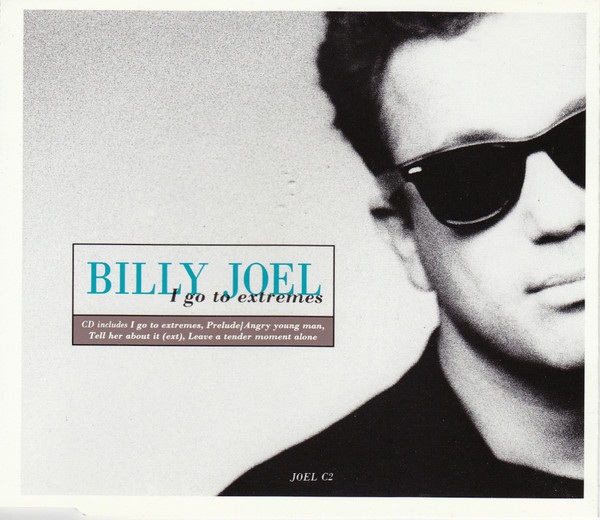
 BILLY JOEL - I GO TO EXTREMES

Released: January 1990

Charts:  US: #6   UK: #70 


“I Go to Extremes” is a rock-driven track from the album “Storm Front”, released as the album’s second US single in early 1990. The song became a Top 10 hit, reaching #6 on the Billboard Hot 100, #3 on the Canadian RPM chart, and placing well on the Adult Contemporary and Album Rock Tracks charts. In the UK, it peaked at #70.


Often misinterpreted as a song about manic depression, Joel has said it was originally written as an apology to his then-wife, Christie Brinkley, acknowledging how his intense personality and emotional highs and lows affected their relationship. The use of “darling” in the lyrics supports this personal connection. Joel later confirmed in interviews that he does identify with manic depression (now known as bipolar disorder) and that his extremes of emotion have influenced his songwriting: “There’s not a lot of material in moderation,” he quipped.


This personal theme is mirrored musically—Joel’s piano part spans the full keyboard, dramatically bouncing from extreme highs to deep lows, reflecting the song’s message in a literal, musical way. The song is marked by pounding piano chords, urgent vocals, and a high-energy rhythm, contrasting with some of Joel’s earlier, more melodic or nostalgic work. It aligns with the harder rock sound he explored on “Storm Front”.


Joel would often alter the lyrics during live performances, inserting humorous lines or personalized phrases, showing both his comfort with the material and the song’s playful flexibility despite its intense theme. A live version appears on “2000 Years: The Millennium Concert”.


Directed by Paula Greif—who also worked with The Smiths and Duran Duran—the music video features Joel and his band performing in a minimalistic room, emphasizing the raw energy of the track. Greif incorporated footage of Joel playing the piano furiously, even with his feet, inspired by a studio anecdote where he played so aggressively that he broke strings on the instrument. 


 DAVID BOWIE - HEROES

Publicació: 23 de setembre de 1977

Llistes: Regne Unit: #24


“‘Heroes’” és una de les cançons més commovedores, icòniques i significatives de David Bowie. Publicada com a tema principal del seu dotzè àlbum d’estudi, “Heroes”, el single va sorgir de la seva etapa a Berlín, on Bowie s’havia traslladat per escapar de l’autodestrucció que marcava la seva vida a mitjans dels anys 70. Allí, entre els carrers grisos d’una ciutat dividida pel mur, va trobar no només una nova inspiració artística, sinó també una manera de reconstruir-se personalment.


Gravada als Hansa Studios—situats literalment a tocar del Mur de Berlín—la cançó va ser coescrita amb Brian Eno i co-produïda amb Tony Visconti. El procés de creació va ser intens i experimental: la base instrumental es va enregistrar abans de tenir lletra, i Bowie va improvisar bona part de la veu en directe davant del micròfon. El so intens i apoteòsic de la seva veu es deu a una tècnica innovadora de Visconti anomenada “multi-latch”, que feia servir diversos micròfons activats per la potència de la veu de Bowie. Això va permetre captar l’ascens emocional que esdevé l’eix central de la peça.


La lletra narra la història de dos amants separats pel Mur, però decidits a trobar-se sota una torre de vigilància, sabent que només poden ser herois “durant un sol dia”. Aquesta poderosa imatge neix d’un moment real: Visconti i la cantant Antonia Maass, aleshores involucrats en una relació clandestina, es besaven d’amagat sota la mirada de soldats a pocs metres de l’estudi. Bowie, que ho veia des de la finestra, va transformar aquella escena íntima en una metàfora universal de resistència, amor i esperança.


Malgrat la seva grandesa, el single només va arribar al núm. 24 al Regne Unit i ni tan sols va entrar a les llistes dels EUA. Bowie, però, creia en el poder de la cançó, i en va enregistrar versions en alemany (“Helden”) i francès (“Héros”), buscant ampliar-ne l’impacte emocional i polític.


Amb el temps, “‘Heroes’” s’ha convertit en un himne global, reinterpretat en moments històrics clau:

Live Aid (1985): a l’estadi de Wembley, com a cant d’unitat internacional.

Concert al Mur de Berlín (1987): cantada a pocs metres del mur, davant d’una multitud d’alemanys de l’est que escoltaven i aclamaven des de l’altra banda. Bowie ho va descriure com “un dels moments més emocionants” de la seva vida.

Concert per Nova York (2001): després dels atemptats de l’11-S, “Heroes” va sonar com a homenatge als bombers i serveis d’emergència, reafirmant el seu missatge de coratge en temps foscos.


Curiosament, la primera actuació en directe del tema va ser a un programa de televisió britànic presentat per Marc Bolan (de T. Rex). Aquell va ser un dels últims moments públics de Bolan, que va morir tràgicament en un accident de cotxe pocs dies després.


Amb els anys, “‘Heroes’” s’ha convertit en una de les cançons més versionades del repertori de Bowie. Grups com Oasis, The Smashing Pumpkins, Blondie, Travis i The Wallflowers n’han reinterpretat la força emocional, confirmant-ne l’estatus de clàssic atemporal. Més que una cançó, “‘Heroes’” és un mantra d’esperança, una pregària laica que recorda que, fins i tot en les circumstàncies més difícils, podem ser herois, ni que sigui per un dia.


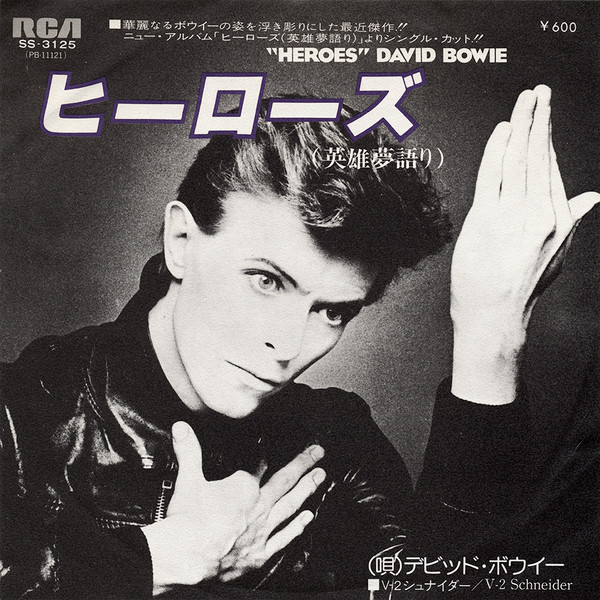
DAVID BOWIE - HEROES


Released: September 23, 1977

Charts: UK: #24 


Released in September 1977, “‘Heroes’” is one of David Bowie’s most powerful and enduring songs, and the title track of his 12th studio album. Co-written with Brian Eno and co-produced with longtime collaborator Tony Visconti, the track was recorded at Hansa Studio 2 in West Berlin, just steps away from the Berlin Wall. At the time, Bowie was living in Berlin, seeking refuge from the excesses of fame and substance abuse that had defined his mid-’70s period.


Unlike many traditional rock songs, the backing track was laid down before the lyrics were written. Bowie improvised much of the final vocal while standing at the mic, while Eno played synthesizer and Robert Fripp, guitarist for King Crimson, contributed soaring lead guitar. The unique “multi-latch” microphone technique created by Visconti captured Bowie’s vocal in increasingly intense layers, depending on how loudly he sang, giving the performance its iconic crescendo.


“‘Heroes’” tells the story of two lovers divided by the Berlin Wall, yet still determined to meet at the base of a gun turret. Bowie was inspired by a real-life romance between producer Tony Visconti and singer Antonia Maass, who would meet for stolen kisses near the Wall, visible from the studio window. Although unnamed at the time to protect Visconti’s marriage, Bowie later revealed the truth behind the lyrics. The song becomes a metaphor for defiance, love, and hope—with the lovers imagining themselves as “heroes just for one day” amid the bleak realities of Cold War division.


Released by RCA Records on September 23, 1977, the single received positive reviews, with critics recognizing its potential as a classic. Despite this, it only reached #24 in the UK and failed to chart in the US. Bowie also recorded German (“Helden”) and French (“Héros”) versions of the song.


Bowie would go on to perform “‘Heroes’” at several historic events: Live Aid (1985) at Wembley Stadium, where it served as a powerful moment of unity. Berlin Wall concert (1987), where he performed just feet from the Wall. Thousands of East Berliners gathered on the other side, able to hear the music drifting across the divide. Bowie recalled it as one of the most emotional performances of his life: “We would hear them cheering and singing along from the other side. God, even now I get choked up… When we did ‘Heroes’ it really felt anthemic, almost like a prayer.” The Concert for New York City (2001), a tribute to first responders of the 9/11 attacks, where “‘Heroes’” became an anthem of resilience and tribute.


“Heroes” was first performed live on a British TV show hosted by Marc Bolan, frontman of T. Rex. Tragically, Bolan died in a car accident just a week later, making the performance one of his last collaborations with Bowie.


Over the decades, the song has become one of Bowie’s most covered works. Artists like Oasis, The Smashing Pumpkins, Travis, Blondie, and The Wallflowers have paid tribute to its emotional weight and iconic status. From stadiums to memorials, “‘Heroes’” continues to inspire as a universal anthem of love, hope, and courage in the face of adversity.