Total de visualitzacions de pàgina:

23.6.25


DAVID BOWIE - STARMAN


Publicació: 28 d’abril de 1972

Llistes: Regne Unit: #10 · Estats Units: #65


“Starman” és una de les cançons més icòniques de la carrera de David Bowie, i marca un punt d’inflexió decisiu en la seva trajectòria. Llançada com a primer single del seu cinquè àlbum d’estudi, “The Rise and Fall of Ziggy Stardust and the Spiders from Mars”, “Starman” no només el va catapultar de nou a l’èxit, sinó que va encendre una autèntica revolució cultural.


Composada i gravada ràpidament el febrer de 1972 als Trident Studios de Londres, amb la seva banda Spiders from Mars (Mick Ronson a la guitarra, Trevor Bolder al baix i Mick Woodmansey a la bateria), la cançó va ser una inclusió d’última hora. RCA Records va pressionar per tenir un single més comercial, i Bowie va substituir la seva versió de “Round and Round” de Chuck Berry per aquesta nova composició. El resultat? Una peça ambiciosa, enganxosa i plena de màgia.


Musicalment, “Starman” és un himne glam rock amb una producció rica i una tornada inoblidable, amb ecos evidents de “Over the Rainbow” de Judy Garland. Hi conflueixen influències de T. Rex, The Supremes, i els propis interessos espacials de Bowie, que reprèn temes introduïts ja a “Space Oddity”. Aquesta barreja de nostàlgia cinematogràfica i estil futurista defineix perfectament el so de l’era Ziggy.


La lletra forma part del mite de Ziggy Stardust, una narració apocalíptica en què la Terra només té cinc anys abans de l’extinció. En aquest context, l’“Starman”—una mena de messies extraterrestre—envia un missatge d’esperança a la joventut desencantada a través de la ràdio. És una faula de revelació i redempció que connecta l’alta ciència-ficció amb el món real, fent servir l’art com a mitjà de salvació. Bowie hi introdueix els “infinites”, éssers còsmics indiferents però portadors de llum i canvi.


Aquest simbolisme radiofònic com a canal de redempció ha estat interpretat com una al·legoria cristiana, una metàfora sobre l’art com a força transformadora, i fins i tot un presagi del cinema de ciència-ficció posterior, com “Close Encounters of the Third Kind”. Bowie barreja llenguatge americà (“boogie,” “cat,” “far out”) amb la seva habitual teatralitat britànica, creant un paisatge sonor a la vegada estrany i familiar.


Però el moment que ho va canviar tot va ser l’actuació de Bowie al Top of the Pops el 6 de juliol de 1972. Amb una granota de colors, cabell roig flamejant i botes espacials, Bowie va oferir una performance que trencava amb el que s’havia vist fins al moment. El gest d’assenyalar directament la càmera mentre cantava “I had to phone someone, so I picked on you” (Vaig haver de trucar a algú, així que et vaig triar)

va ser un moment màgic que va fer sentir personalment triats milers de joves espectadors. Aquell instant va marcar una generació.


Aquesta actuació ha estat descrita com un punt d’inflexió en la història del pop britànic. Artistes com Siouxsie Sioux, Robert Smith, Morrissey, Johnny Marr, Boy George, Gary Numan, Noel Gallagher, i membres de Duran Duran, Depeche Mode i The Clash, han confessat que aquell moment els va fer veure que la música podia ser teatral, transformadora i radical. Fins i tot Elton John va afirmar: “Mai havíem vist res semblant.”


Tot i que Ziggy Stardust no és una òpera conceptual formal, Bowie admet que moltes cançons van ser escrites abans d’idear el fil narratiu. La coherència emocional i estètica de l’àlbum li dona una força narrativa clara. En aquest context, “Starman” és molt més que un single: és una crida còsmica a la diferència, una pregària pop per als inadaptats i els somiadors. Va canviar la carrera de Bowie, i per a molts fans, va canviar la seva vida.


DAVID BOWIE - STARMAN


Released: April 28, 1972

Charts: UK: #10  US: #65 


“Starman” is one of the most iconic songs of David Bowie’s career, released on 28 April 1972 as the lead single from his fifth studio album, “The Rise and Fall of Ziggy Stardust and the Spiders from Mars”. Co-produced by Bowie and Ken Scott, the song was recorded on 4 February 1972 at Trident Studios in London, with his Spiders from Mars bandmates: Mick Ronson (guitar), Trevor Bolder (bass), and Mick Woodmansey (drums). A late addition to the album, “Starman” replaced a planned Chuck Berry cover (“Round and Round”) at RCA’s request for a more commercially viable single. The result was a track that catapulted Bowie back into the spotlight and ignited a cultural phenomenon.


Musically, “Starman” is a glam rock anthem with a lush arrangement and an instantly memorable chorus, partially inspired by Judy Garland’s “Over the Rainbow”, lending the song a wistful, almost cinematic grandeur. Bowie threads together influences from T. Rex, The Supremes, and his own earlier space-age themes, notably revisiting the extraterrestrial mystique of “Space Oddity.” The single reached #10 in the UK Singles Chart—his first hit since “Space Oddity” three years prior—and #65 in the US, a modest entry that laid groundwork for his American breakthrough.


Lyrically, “Starman” functions as a key moment in the Ziggy Stardust mythos, set in a dystopian future where Earth has only five years left. Bowie casts Ziggy as a messianic alien rock star who brings a message of hope to Earth’s disillusioned youth through the radio. The “Starman” represents a higher intelligence, one of the “infinites”—alien beings Bowie described in interviews as black-hole jumpers who stumble through universes, indifferent to human concerns but bearing salvation nonetheless. The song is narrated by a youth who hears Ziggy’s broadcast firsthand, making the arrival of the Starman not only revelatory, but profoundly personal.


This radio-as-savior motif channels both spiritual yearning and pop culture fascination. Scholars and fans alike have interpreted “Starman” as an allegory for the Second Coming, a metaphor for artistic salvation, and even a prophetic foreshadowing of films like “Close Encounters of the Third Kind”. Bowie weaves a linguistic collage that blends American slang (“boogie,” “cat,” “far out”) with a distinctly British theatricality, creating a soundscape as alien as it is familiar.


The song’s most transformative moment came with Bowie’s performance on Top of the Pops on 6 July 1972. Wearing a rainbow jumpsuit, flaming red hair, and astronaut boots, Bowie exuded otherworldly confidence. The now-iconic gesture—pointing directly at the camera during the line “I had to phone someone, so I picked on you”—electrified a generation of viewers. That brief moment broke the fourth wall in a way few pop performances had, making audiences feel personally selected by Bowie’s cosmic transmission.


This televised performance is now widely regarded as a watershed moment in British pop history, cited by a staggering array of future stars as a pivotal moment in their artistic awakenings. From Siouxsie Sioux and Robert Smith, to Morrissey, Johnny Marr, Boy George, Gary Numan, Noel Gallagher, and members of Duran Duran, Depeche Mode, and The Clash, many have pointed to this performance as the moment they realized music could be transformative, theatrical, and strange. Even Elton John, then an established artist, remarked: “It was so different. No one had ever seen anything like that before.”


Though the Ziggy Stardust album presents a loose conceptual narrative, Bowie admitted that most songs were written before a full storyline was formed. Still, the emotional and thematic cohesion makes the album feel like a grand opera of apocalyptic hope. More than just a single, “Starman” is a galactic call to arms, a pop sermon of possibility. It invites its listeners—misfits, outsiders, dreamers—to believe in something bigger, stranger, and more beautiful. It changed David Bowie’s career, and for many fans, it changed their lives.


22.6.25


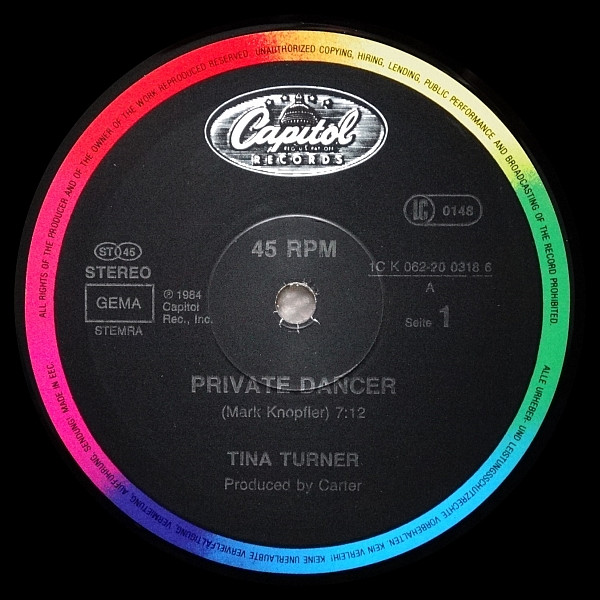
TINA TURNER - PRIVATE DANCER


Publicada: Octubre de 1984

Llistes: EUA: #7 · Regne Unit: #26


“Private Dancer” és una balada pop-rock interpretada per Tina Turner, publicada el 1984 com a part del seu àlbum en solitari que porta el mateix nom. La cançó va ser escrita originalment per Mark Knopfler de Dire Straits per al seu àlbum de 1982, “Love Over Gold”, però Knopfler es va sentir incòmode cantant-la ell mateix, ja que la lletra adopta el punt de vista d’una ballarina de striptease. Més tard, la va oferir a Turner, que en aquell moment es trobava immersa en el llançament del seu retorn en solitari. Tot i que la resta de Dire Straits va enregistrar la música per a la peça, Jeff Beck va substituir Knopfler a la guitarra.


Líricament, “Private Dancer” explica la història d’una dona que balla per diners, emocionalment desconnectada i buida a causa de la seva feina. Frases com “I’m your private dancer, a dancer for money, I’ll do what you want me to do” (“Sóc la teva ballarina privada, una ballarina per diners, faré el que vulguis que faci”) capturen un profund sentiment de resignació i pèrdua. La interpretació de Turner és poderosa, i dona vida al personatge com una dona que sobreviu, més que no pas simplement existeix.


Turner va admetre que inicialment havia entès malament el significat de la cançó, pensant que una “ballarina privada” era algú que feia actuacions innocents, com les que ella mateixa havia fet de jove a Texas. Però un cop va comprendre les implicacions més profundes, va connectar amb la singularitat del tema. Turner tenia el costum de triomfar amb cançons escrites per altres, preferint explicar la seva pròpia història a través de memòries i pel·lícules, més que amb cançons.


“Private Dancer” es va convertir en un dels grans èxits en solitari de Tina Turner, arribant al número 7 del Billboard Hot 100. Va jugar un paper clau en el seu retorn triomfal dels anys vuitanta, reintroduint-la davant del públic global als 44 anys—una edat en què poques dones del pop rebien una segona oportunitat.


El videoclip, dirigit per Brian Grant i coreografiat per Arlene Phillips, es va filmar al Rivoli Ballroom de Crofton Park, a Londres. Mostra Turner com una ballarina de taxi desil·lusionada—tot i que la cançó sovint s’interpreta des del punt de vista d’una prostituta.


TINA TURNER - PRIVATE DANCER


Released: October 1984

Charts:  US: #7   UK: #26 


“Private Dancer” is a haunting pop-rock ballad performed by Tina Turner, released in 1984 as part of her breakthrough solo album of the same name. The song was originally written by Mark Knopfler of Dire Straits for their 1982 album “Love Over Gold”, but Knopfler felt uncomfortable singing it himself, as the lyrics are from the perspective of a female stripper. He later offered it to Turner, who was in the midst of launching her solo comeback. While the rest of Dire Straits recorded the music for the track, Jeff Beck replaced Knopfler on guitar.


Lyrically, “Private Dancer” tells the story of a woman who performs for money, emotionally detached and hollow from her work. Lines like “I’m your private dancer, a dancer for money, I’ll do what you want me to do” capture the character’s sense of resignation and loss. Turner’s delivery is powerful, her performance makes the character feel real—someone surviving rather than simply existing.


Turner admitted that she initially misunderstood the song’s intent, thinking of a “private dancer” as someone doing innocent performances, as she once had in Texas. But once she realized the song’s deeper implications, she embraced its uniqueness. Turner had a history of choosing material written by others, preferring to tell her personal story through memoirs and film rather than lyrics.


“Private Dancer” became one of Tina Turner’s biggest solo hits, peaking at #7 on the Billboard Hot 100. It played a crucial role in her massive 1980s comeback, reintroducing her to a global audience at age 44—an age when few women in pop were being offered a second chance. 


The accompanying music video, directed by Brian Grant and choreographed by Arlene Phillips, was filmed at the Rivoli Ballroom in Crofton Park, London. It features Turner as a disillusioned taxi dancer—though the song is often interpreted as being from the point of view of a prostitute. 


20.6.25


BRYAN ADAMS & TINA TURNER - IT’S ONLY LOVE


Publicada: 25 d’octubre de 1985

Llistes d’èxits: EUA: #15 · Regne Unit: #29


“It’s Only Love” és un duet de rock entre el cantant canadenc Bryan Adams i l’icona nord-americana Tina Turner, publicat com a sisè i últim single de l’àlbum d’èxit d’Adams “Reckless”. La cançó va ser escrita per Bryan Adams i Jim Vallance, col·laboradors habituals.


El tema destaca per la seva intensa interacció vocal, barrejant l’energia crua d’Adams amb la força emocional i la veu poderosa de Turner. Va arribar al número 15 del Billboard Hot 100 a principis de 1986 i al número 29 al Regne Unit, i posteriorment es va incloure als àlbums recopilatoris “Tina Live in Europe”, “Anthology” d’Adams, i “All the Best” de Turner.


Aquesta col·laboració va jugar un paper important en la continuació del ressorgiment de Tina Turner després del gran èxit del seu àlbum “Private Dancer”. Adams havia estat teloner a la seva gira del 1985, i sovint interpretaven junts la cançó en directe. Aquesta química va quedar reflectida en el videoclip en directe, gravat durant la gira, que va guanyar el premi a Millor Actuació en Escenari als MTV Video Music Awards de 1986. El vídeo va ser també el primer en utilitzar la Skycam, un sistema de càmera que permetia plans aeris dinàmics.


Bryan Adams ha descrit la col·laboració amb Turner com una de les experiències més inoblidables de la seva carrera. Va recordar haver-la vist actuar en petits clubs abans del seu retorn a la fama i va expressar gran admiració per la seva energia i professionalitat. Adams només tenia 24 anys quan van gravar la cançó junts, i es va mostrar impressionat pel carisma i la presència escènica de Turner.


Jim Vallance, coautor i testimoni de la sessió, va explicar que la primera presa vocal de Turner no acabava de funcionar, però quan va provar de cantar la melodia una tercera més amunt, va encaixar perfectament—una mostra clara de la seva versatilitat i habilitat vocal.


A nivell líric, “It’s Only Love” ofereix una visió diferent sobre la desil·lusió amorosa. En lloc d’enfocar-se en el drama, la cançó convida a relativitzar el dolor i a tirar endavant amb valentia, tot recordant que, per molt intens que sigui l’amor, “només és amor”. Aquest to directe i resistent contrastava amb les balades romàntiques més melancòliques de l’època.


BRYAN ADAMS & TINA TURNER - IT’S ONLY LOVE


Released: October 25, 1985

Charts:  US: #15   UK: #29 


“It’s Only Love” is a rock duet between Canadian singer Bryan Adams and American icon Tina Turner, released on October 25, 1985 as the sixth and final single from Adams’ breakthrough album “Reckless”. The song was written by Adams and Jim Vallance, longtime songwriting collaborators.


The track showcases a fiery vocal interplay between Adams and Turner, blending raw energy with emotional grit. It reached #15 on the US Billboard Hot 100 in early 1986 and #29 in the UK, and was later included in Tina Turner’s live album “Tina Live in Europe” and both artists’ greatest hits collections—Adams’ “Anthology” and Turner’s “All the Best”.


The collaboration played a significant role in Turner’s continued resurgence after her massive “Private Dancer” comeback. Adams was a supporting act on her 1985 Private Dancer Tour, where they often performed the song live together. Their chemistry on stage was captured in the live music video—featuring footage from the tour—which went on to win Best Stage Performance in a Video at the 1986 MTV Video Music Awards. It was also the first music video to use Skycam, a camera system that allowed for dynamic aerial shots.


Bryan Adams later described working with Turner as one of the most unforgettable experiences of his career. He recalled watching her perform in clubs before she returned to stardom and expressed admiration for her energy and professionalism. He was only 24 years old when they recorded the track together, and he remained awed by her power and presence. 


Jim Vallance, co-writer and observer of the recording session, noted that Turner’s first attempt at the vocals didn’t quite fit, but when she tried the melody “up a third,” it instantly worked, showing her adaptability and vocal skill.


Lyrically, “It’s Only Love” offers a refreshing take on heartbreak. Rather than wallowing in sorrow, the song reminds the listener that love, while powerful, is not the end of the world, encouraging resilience and moving on. Its direct, no-nonsense tone stands apart from the more melodramatic love ballads of the era.


17.6.25


WHITE TOWN - YOUR WOMAN


Publicada: 13 de gener de 1997

Regne Unit: núm. 1 (1 setmana)


“Your Woman” és un èxit del 1997 del músic britànic Jyoti Mishra, conegut artísticament com a White Town. Llançada com a senzill principal del seu segon àlbum, “Women in Technology”, la cançó va assolir el primer lloc de la llista de singles del Regne Unit i va gaudir d’un gran èxit internacional, arribant al núm. 1 en països com Islàndia, Espanya i Israel, i al núm. 23 del Billboard Hot 100 dels Estats Units.


Musicalment, el tema es basa en una mostra de trompeta apagada extreta de l’enregistrament de 1932 de Lew Stone and his Monseigneur Band, titulat “My Woman”. Pel que fa a la lletra, és una cançó de desamor complexa cantada des de la perspectiva d’una dona—tot i estar interpretada per Mishra, un home. Aquest gir de gènere intencionat aporta un toc provocador i explora temes com la identitat sexual, l’ambigüitat i les dinàmiques de poder en les relacions. Mishra ha afirmat que no es defineix per una orientació sexual concreta i que defensa la llibertat sexual.


La lletra és punyent i emocionalment crua. Mishra reconeix que pot interpretar-se com a misògina, però assegura que va ser escrita amb la intenció de representar múltiples punts de vista. Mentre que la música es va composar ràpidament al seu estudi casolà de Derby amb un gravador de 8 pistes, la lletra li va portar molt més temps.


Malgrat no tenir suport de la indústria musical en un inici, la maqueta casolana de Mishra va guanyar popularitat quan Simon Mayo de BBC Radio 1 la va programar. La cançó es va convertir ràpidament en la més demanada de la setmana i finalment li va valer un contracte discogràfic amb EMI. Es van vendre 165.000 còpies només la primera setmana, aconseguint el núm. 1 al Regne Unit—tot això sense aparèixer a la televisió ni fer promoció personal.


El videoclip, dirigit per Mark Adcock, està estilitzat com una pel·lícula muda dels anys 20 i es va rodar a Derby. Representa una cursa metafòrica entre dues dones que competeixen per l’atenció d’un home que potser no s’ho mereix, tot navegant entre rètols com “seducció”, “expectativa” i “independència”. El vídeo reflecteix els temes de desil·lusió romàntica i autonomia femenina que impregnen la cançó.


WHITE TOWN - YOUR WOMAN


Released: January 13, 1997

UK: #1 (1 Week)  


“Your Woman” is a 1997 breakout hit by British musician Jyoti Mishra, who records under the name White Town. Released as the lead single from his second album “Women in Technology”, the song topped the UK Singles Chart and achieved widespread international success, hitting No. 1 in countries like Iceland, Spain, and Israel, and reaching No. 23 on the US Billboard Hot 100.


Musically, the track is anchored by a haunting muted trumpet sample from Lew Stone and his Monseigneur Band’s 1932 recording “My Woman.” Lyrically, it’s a complex breakup song sung from a woman’s perspective—despite being performed by Mishra, who is male. This intentional gender reversal adds a provocative twist, exploring themes of sexual identity, ambiguity, and relational power dynamics. Mishra has stated he doesn’t define himself by a specific sexual orientation, instead championing sexual freedom.


The lyrics are biting and emotionally raw. Mishra admits they may be interpreted as misogynistic, but says they were deliberately crafted to represent multiple points of view. The lyrics took him a long time to write, while the music came together quickly in his Derby home studio, recorded on an 8-track.


Despite having no music industry backing at first, Mishra’s homemade demo gained traction when BBC Radio 1’s Simon Mayo played it on air. The song exploded in popularity, quickly becoming the most requested track of the week, and eventually earned him a record deal with EMI. It sold 165,000 copies in its first week, reaching No. 1 on the UK chart—all without Mishra appearing on TV or in promotional efforts.


The accompanying music video, directed by Mark Adcock, is styled like a 1920s silent film and was shot in Derby. It features a metaphorical race between two women vying for the attention of a man who may not deserve it, navigating signs like “seduction,” “expectation,” and “independence.” The video mirrors the song’s themes of romantic disillusionment and female autonomy.