Total de visualitzacions de pàgina:

17.10.23


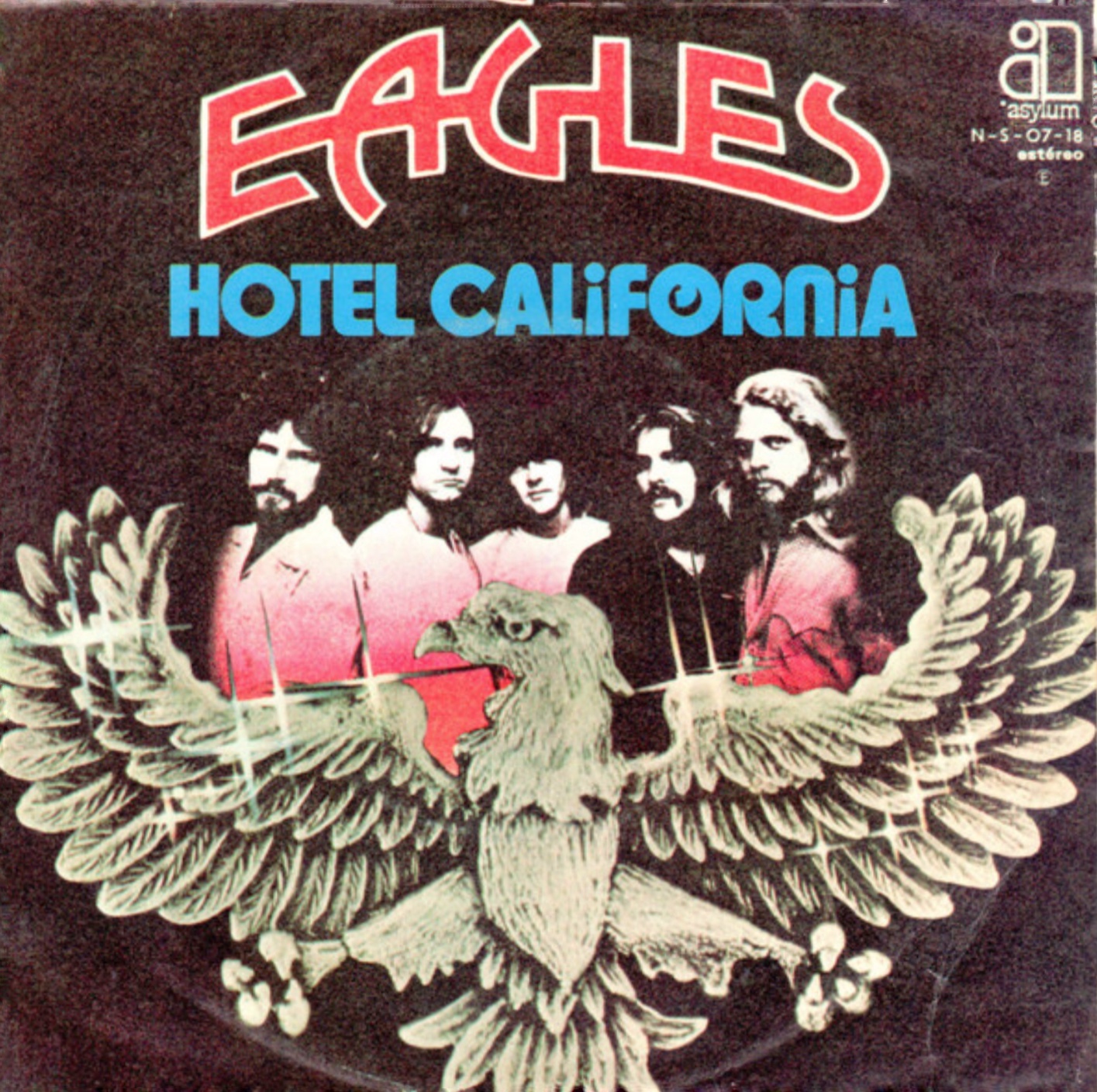
EAGLES - HOTEL CALIFORNIA

Publicació: 22 de febrer de 1977

Llistes: EUA: #1 (1 setmana)  Regne Unit: #8


"Hotel California" és la joia de la corona del catàleg d'Eagles, amb alguns dels millors treballs de guitarra i arranjaments de la banda. Aquesta és la cançó que dóna nom a l’àlbum. Va ser llançada com a senzill el febrer de 1977. Els crèdits de la composició són per a Don Felder (música), Don Henley i Glenn Frey (lletra). L'enregistrament original compta amb Henley fent la veu principal i conclou amb un icònic solo de guitarra de 2 minuts i 12 segons de durada interpretat per Felder amb una Gibson de doble màstil i Joe Walsh amb una Fender Telecaster, en el qual es van rellevant els solos abans de tocar harmonicament junts fins al final de la cançó.


"Hotel California" es podria interpretar com un conte al·legòric sobre la foscor de l'existència moderna. La cançó tracta sobre el materialisme i l'excés. Califòrnia s'utilitza com a escenari, però podria relacionar-se amb qualsevol part d'Estats Units. Els versos exploren el viatge del cantant per una carretera fosca del desert i la seva posterior arribada a un hotel misteriós. Tot i que l'hotel sembla acollidor al principi, oferint “plenty of room at the Hotel California any time of year” (molt espai a l'Hotel California en qualsevol època de l'any), aviat sembla ser un lloc on la paranoia t’atrapa. La tornada parla del lloc ominosamente luxós, amb referències a "Twisted Minds" (ments retorçades), "Mercedes Bends" i "pretty, pretty boys" (nois macos). El cantant és advertit per "l'home de la nit" que pot residir a l'hotel per plaer, però que mai podrà marxar. La lletra entremaliada evoca una sensació de por i la consciència que, per molt que un ho faci, la vida s'ha de viure amb moderació i reflexió. La frase inicial és fantàstica: "On a dark desert highway, cool wind in my hair / Warm smell of colitas rising up through the air” (En una carretera fosca del desert, vent fresc als meus cabells / Olor càlida de colitas que s'eleva per l'aire). És fílmic, sensual i et posa en un lloc determinat en un moment concret. El conductor sembla que està sol.


Glenn Frey tenia una frase agradable: "L'ambigüitat perfecta". Aquesta vaguetat proposada, segons el company de Frey, Don Henley, és el que la banda sempre tenia en ment quan escrivien lletres. Els Eagles tenien idees que volien transmetre, però no volien expressar-les amb massa precisió. En comptes d'això, llençaven idees vagues que la gent transformar-les en les seves pròpies interpretacions. Tenint això en compte, "Hotel California", sens dubte la cançó més famosa dels Eagles, també podria ser l'obra definitòria de la banda en aquest sentit. Don Henley al London Daily Mail del 9 de novembre de 2007 va dir:"Algunes de les interpretacions d'aquesta cançó han estat increïbles. Tractava realment dels excessos de la cultura nord-americana i de certes noies que coneixíem. Però també es tractava de l'equilibri incòmode entre art i comerç", demostrant que és la cosa més perfectament ambigua que han fet mai. 


El 25 de novembre de 2007 Henley va aparèixer a la televisió, on se li va dir: "tothom vol saber què significa aquesta cançó". Henley va respondre: "Ho sé, és molt avorrit. És una cançó sobre el ventre fosc del somni americà, i sobre els excesos a Amèrica que era una cosa que sabíem". Va oferir una altra interpretació al documental History of the Eagles del 2013: "És una cançó sobre un viatge des de la innocència a l'experiència.


Califòrnia es veu des de la perspectiva d'un foraster a la cançó. Bernie Leadon era l'únic membre de la banda en aquell moment que era de l'estat (Timothy B. Schmit, que es va incorporar el 1977, també era de Califòrnia). Joe Walsh venia de Nova Jersey; Randy Meisner de Nebraska; Don Henley era de Texas; Glenn Frey era de Detroit i Don Felder era de Florida. Don Henley ho va dir d'aquesta manera: "Tots érem nens de classe mitjana del mig oest. L'hotel California va ser la nostra interpretació de la vida de la classe alta a Los Angeles".


Don Felder va tenir la idea sobre la música de la cançó. Segons el seu llibre Heaven and Hell: My Life in The Eagles, la idea se li va ocórrer mentre jugava a la platja. Va treure les progressions d'acords i els temes bàsics de guitarra, que va tocar per a Don Henley i Glenn Frey, que el van ajudar a acabar la cançó, amb Henley afegint-hi la lletra. Felder diu que van gravar la cançó aproximadament un any després de fer la maqueta original i, a la sessió, va començar a improvisar la part de guitarra del final. Henley el va aturar i li va exigir que ho fes exactament com la demo, així que va haver de trucar a la seva dona i fer que li reproduis la cinta per telèfon perquè en Felder pogués recordar el que tocava.


La música podria haver estat inspirada en la cançó de Jethro Tull de 1969 "We Used to Know", del seu àlbum "Stand up". Les progressions d'acords són gairebé idèntiques i les bandes van fer una gira juntes abans que els Eagles enregistressin "Hotel California". En una entrevista de ràdio de la BBC, el líder de Jethro Tull, Ian Anderson, va dir rient que encara estava esperant els drets d'autor. Ian Anderson deixa clar que no considera que "Hotel California" estigui manllevant res de la seva cançó. "És difícil trobar una seqüència d'acords que no s'hagi utilitzat i que no hagi estat el focus de moltes peces musicals", va dir. "La seva progressió harmònica és gairebé una certesa matemàtica, tard o d'hora sortiràs amb el mateix si t'asseus a tocar uns quants acords amb una guitarra. Certament, no hi ha amargor ni cap sentit de plagi vinculat a la meva opinió sobre això, tot i que de vegades faig al·lusió, en broma, a acceptar-ho com una mena d'homenatge”.


L'hotel de la portada de l'àlbum és el Beverly Hills Hotel, conegut com el Pink Palace. Sovint és freqüentat per estrelles de Hollywood. La foto va ser presa pels fotògrafs David Alexander i John Kosh, que es van asseure en un recol·lector de cireres a uns 60 peus per sobre de Sunset Boulevard per fer una fotografia de l'hotel a la posta de sol des dels arbres. El trànsit a les hores punta va fer que fos una experiència esgarrifosa.


Quan els Eagles es van tornar a reunir el 1994, van gravar una versió en directe i acústica d'aquesta cançó per a un especial de MTV que es va incloure al seu àlbum "Hell freezes over". Don Felder va idear una nova introducció de guitarra per a aquesta versió el dia que la van gravar i, tot i que no es va publicar com a single, va tenir molta difusió i va ajudar l'àlbum a encapçalar les llistes la primera setmana que es va publicar.


EAGLES - HOTEL CALIFORNIA


Released: February 22, 1977

Charted:  US: #1 (1 wk)   UK: #8 


"Hotel California" is the crown jewel of the Eagles catalog witch features some of the band’s finest guitar work and arranging. This is the title track from the “Hotel California” album, released as a single in February 1977. Songwriting credits go to Don Felder (music), Don Henley, and Glenn Frey (lyrics). The Eagles' original recording of the song features Henley singing lead vocals and concludes with an iconic 2 minute and 12 seconds long electric guitar solo performed by Felder with a Gibson EDS-1275 double neck and Joe Walsh with a Fender Telecaster, in which they take turns of playing the lead before harmonizing and playing arpeggios together towards the fade-out.


“Hotel California” is an allegorical tale about the darkness of modern existence. The song is about materialism and excess. California is used as the setting, but it could relate to anywhere in America. The verses explore the narrator's journey down a dark desert highway and his subsequent arrival at a mysterious hotel. Though the hotel appears inviting at first, offering “plenty of room at the Hotel California any time of year”, it soon appears to be a place of entrapment and paranoia. The chorus speaks of the ominously luxurious place, with references to “Twisted Minds”, “Mercedes Bends” and “pretty, pretty boys”. The singer is warned by “the night man” that he may reside at the hotel for pleasure, but he can never leave. The mischievous lyrics evoke a sense of dark dread and the realization that no matter how well one is doing, life should be lived in moderation and thoughtfully. The opening line is a great one: “On a dark desert highway, cool wind in my hair / Warm smell of colitas rising up through the air”. It’s filmic and sensual, and it puts you in a particular place at a particular time. The driver seems to be on his own.


Glenn Frey had a nice phrase: “The perfect ambiguity.” That purposeful vagueness, according to Frey’s old Eagles bandmate Don Henley is what the band always had in mind when they were writing lyrics. The Eagles had ideas that they wanted to get across, but they didn’t want to express those ideas with too much precision. Instead, they made vague gestures at profundity, and people could then take those vague gestures and spin them off into their own interpretations. With that in mind, “Hotel California,” certainly the most famous Eagles song, might also be the band’s defining work. It’s the most perfectly ambiguous thing they ever did. Don Henley in the London Daily Mail November 9, 2007 said: "Some of the wilder interpretations of that song have been amazing. It was really about the excesses of American culture and certain girls we knew. But it was also about the uneasy balance between art and commerce".


On November 25, 2007 Henley appeared on the TV news show 60 Minutes, where he was told, "everyone wants to know what this song means." Henley replied: "I know, it's so boring. It's a song about the dark underbelly of the American Dream, and about excess in America which was something we knew about." He offered yet another interpretation in the 2013 History of the Eagles documentary: "It's a song about a journey from innocence to experience.


California is seen from the perspective of an outsider here. Bernie Leadon was the only band member at the time who was from the state (Timothy B. Schmit, who joined in 1977, was also from California). Joe Walsh came from New Jersey; Randy Meisner from Nebraska; Don Henley was from Texas; Glenn Frey was from Detroit, and Don Felder was from Florida. Don Henley put it this way: "We were all middle-class kids from the Midwest. Hotel California was our interpretation of the high life in Los Angeles."


Don Felder came up with the musical idea for this song. According to his book Heaven and Hell: My Life in The Eagles, he came up with the idea while playing on the beach. He had the chord progressions and basic guitar tracks, which he played for Don Henley and Glenn Frey, who helped finish the song, with Henley adding the lyrics. Felder says they recorded the song about a year after he did the original demo, and in the session, he started to improvise the guitar part at the end. Henley stopped him and demanded that he do it exactly like the demo, so he had to call his wife and have her play the cassette demo over the phone so Felder could remember what he played. 


The music may have been inspired by the 1969 Jethro Tull song "We Used to Know," from their album “Stand up”. The chord progressions are nearly identical, and the bands toured together before the Eagles recorded "Hotel California." In a BBC radio interview, Jethro Tull frontman Ian Anderson said laughingly that he was still waiting for the royalties. Ian Anderson makes it clear that he doesn't consider "Hotel California" to be borrowing anything from his song. "It's difficult to find a chord sequence that hasn't been used, and hasn't been the focus of lots of pieces of music," he said. "Its harmonic progression is almost a mathematical certainty, you're gonna crop up with the same thing sooner or later if you sit strumming a few chords on a guitar. There's certainly no bitterness or any sense of plagiarism attached to my view on it, although I do sometimes allude, in a joking way, to accepting it as a kind of tribute."


The hotel on the album cover is the Beverly Hills Hotel, known as the Pink Palace. It is often frequented by Hollywood stars. The photo was taken by photographers David Alexander and John Kosh, who sat in a cherry-picker about 60 feet above Sunset Boulevard to get the shot of the hotel at sunset from above the trees. The rush-hour traffic made it a harrowing experience.


When the Eagles got back together in 1994, they recorded a live, acoustic version of this song for an MTV special that was included on their album “Hell freezes over”. Don Felder came up with a new guitar intro for this version the day they recorded it, and while it was not released as a single, it got a lot of airplay, helped the album top the charts the first week it was released.




16.10.23


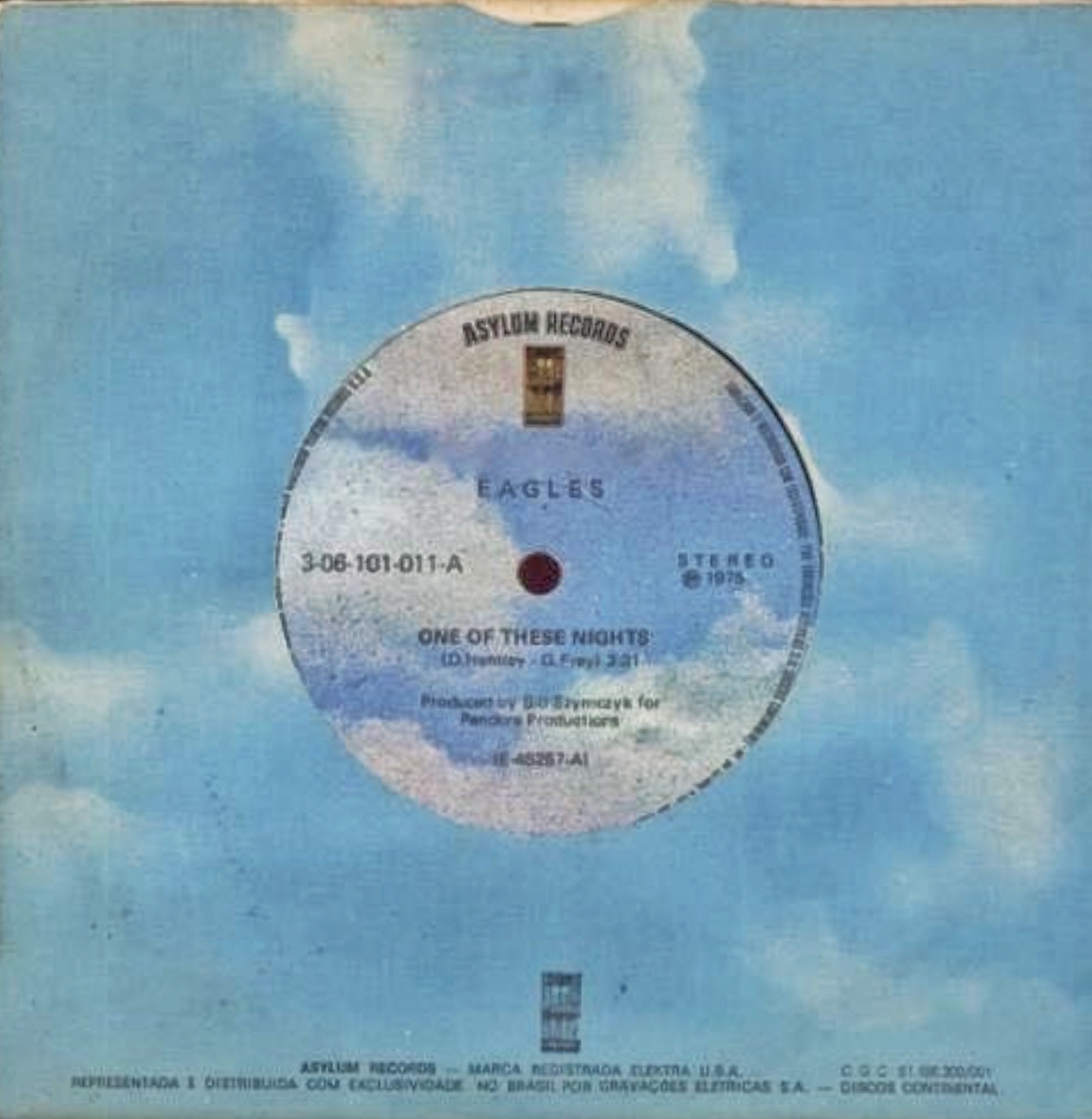
EAGLES - ONE OF THESE NIGHTS

Publicació: 19 de maig de 1975

Llistes: EUA: #1 (1 setmana) Regne Unit: #23


"One of These Nights" és una cançó escrita per Don Henley i Glenn Frey que és la cançó principal del seu àlbum de 1975 "One of These Nights". La cançó es va convertir en el seu segon senzill en encapçalar la llista Billboard Hot 100 després de "Best of My Love" i també va ajudar a impulsar l'àlbum al número u. Aquesta cançó es va inspirar en la música soul que escoltava Frey quan va començar a escriure-la al piano. Artistes com B.B. King i Al Green van tenir una gran influència en moltes cançons de l'àlbum. "Una pista desagradable amb una veu bonica". Així és com la va descriure Glen Frey.


La versió del single es va escurçar, eliminant la major part de la introducció i també la major part del seu final. Henley pren la veu principal als versos, mentre que Randy Meisner canta una alta harmonia a la tornada. La cançó inclou un solo de guitarra de Don Felder que es compon de riffs basats en el blues.


Don Felder, que era el guitarrista més nou dels Eagles, va idear la línia de baix inicial. En aquest moment de la seva carrera, la banda volia moure's en una direcció més rock, allunyant-se del so country suau que els havia portat a la fama. En una entrevista de 1975 a Rolling Stone, Don Henley va acreditar a Felder per haver ajudat els Eagles a allunyar-se de les balades: "Amb Don Felder, realment podem fer rock. Ens ha fet més desagradables i ha fet un gran solo de guitarra a 'One Of These Nights'". Mentre que el R&B és la principal influència musical que s'escolta a "One of These Nights", el solo incandescent de Felder llança la cançó directament al territori del rock.


"One of These Nights" expressa els sentiments d'enyorança i expectació quan s'espera amb impaciència trobar i passar temps amb algú especial. La cançó suggereix que, tot i que la recerca d'aquesta connexió perfecta pot resultar descoratjadora, el cantant finalment "jurarà que els trobarà" i que "una d'aquestes nits" serà la nit en què succeeixi. La tornada és una declaració de perseverança i determinació per trobar la connexió perfecta sense importar els obstacles.


L'àlbum "One Of These Nights" va ser disc de platí al Regne Unit i Canadà, i va vendre quatre vegades més als EUA. Va ser l'àlbum més venut dels Eagles fins aquell moment. El 1976, les vendes d'àlbums estaven creixent a un ritme tan ràpid que la RIAA va introduir la classificació de platí per primera vegada. Endevineu quin àlbum va ser el que va rebre el primer disc de platí? "Greatest Hits 1971-1975" de The Eagles.


Un altre desenvolupament significatiu en la història dels Eagles va passar al voltant de l'època d'aquest àlbum. Bill Szymczyk s'havia convertit en el nou productor de la banda, unint-se a ells de The James Gang (grup on formava part Joe Walsh) “One Of These Nights” va ser el seu primer àlbum complet junts. El seu antic productor, Glyn Johns, havia abandonat l'escena a causa de diferències artístiques durant “On The Border” - Johns volia mantenir un so country, però la banda volia canviar cap a un so més rocker. Van començar amb la incorporació de Felder, i amb la posterior entrada de Walsh al grup es van reafirmar.


EAGLES - ONE OF THESE NIGHTS


Released: May 19, 1975

Charted:  US: #1 (1 wk)  UK: #23 


"One of These Nights" is a song written by Don Henley and Glenn Frey and is the title track from their 1975 album "One of These Nights". The song became their second single to top the Billboard Hot 100 chart after "Best of My Love" and also helped propel the album to number one. This song was inspired by the soul music Frey was listening to when he started writing it on the piano. Artists like B.B. King and Al Green were a big influence on many songs on the album. “A nasty track with pretty vocals”. That’s how Glen Frey described “One of These Nights”.


The single version was shortened from the album version of the song, removing most of the song's intro and also most of its fade-out. Henley takes lead vocals on the verses, while Randy Meisner sings high harmony on the chorus. The song features a guitar solo by Don Felder that is composed of blues-based licks and sustained string bends using an unusually meaty distortion tone.


Don Felder, who was the Eagles newest guitarist, came up with the opening bass line. At this point in their career, the band wanted to move in more of a rock direction, away from the soft-edged country sound that had first brought them to fame. In a 1975 Rolling Stone interview, Don Henley credited Felder with helping the Eagles get away from ballads: "With Don Felder, we can really rock. He's made us nastier and he's done a great guitar solo on ‘One Of These Nights’". And while R&B is the primary musical influence heard in “One of These Nights,” Felder’s incandescent mid-song solo kicks the track squarely into rock territory. 


"One of These Nights" express the feelings of longing and anticipation when eagerly awaiting to finally find and spend time with someone special. The song suggests that although searching for this perfect connection can feel daunting, the singer will ultimately “swear he’s gonna find them” and that “one of these nights” will be the night it happens. The chorus serves as a statement of perseverance and determination to find the perfect connection no matter the obstacles.


The album “One Of These Nights” sold platinum in the UK and Canada, and sold 4x platinum in the US. It was the Eagles highest-selling album to date. A word about that platinum rating: In 1976, album sales were growing at such a fast clip that the RIAA introduced the platinum ranking for the first time. Guess which album was the one to receive the first platinum status? “Greatest Hits 1971-1975” by The Eagles.


Another significant development in Eagles history happened around the time of this album. Bill Szymczyk had become the Eagles' new producer, joining them from The James Gang - One Of These Nights was their first full album together. Their former producer, Glyn Johns, had left the scene due to artistic differences during On The Border - Johns wanted to maintain a country sound, but the band wanted to break out more into the mainstream rock sound.


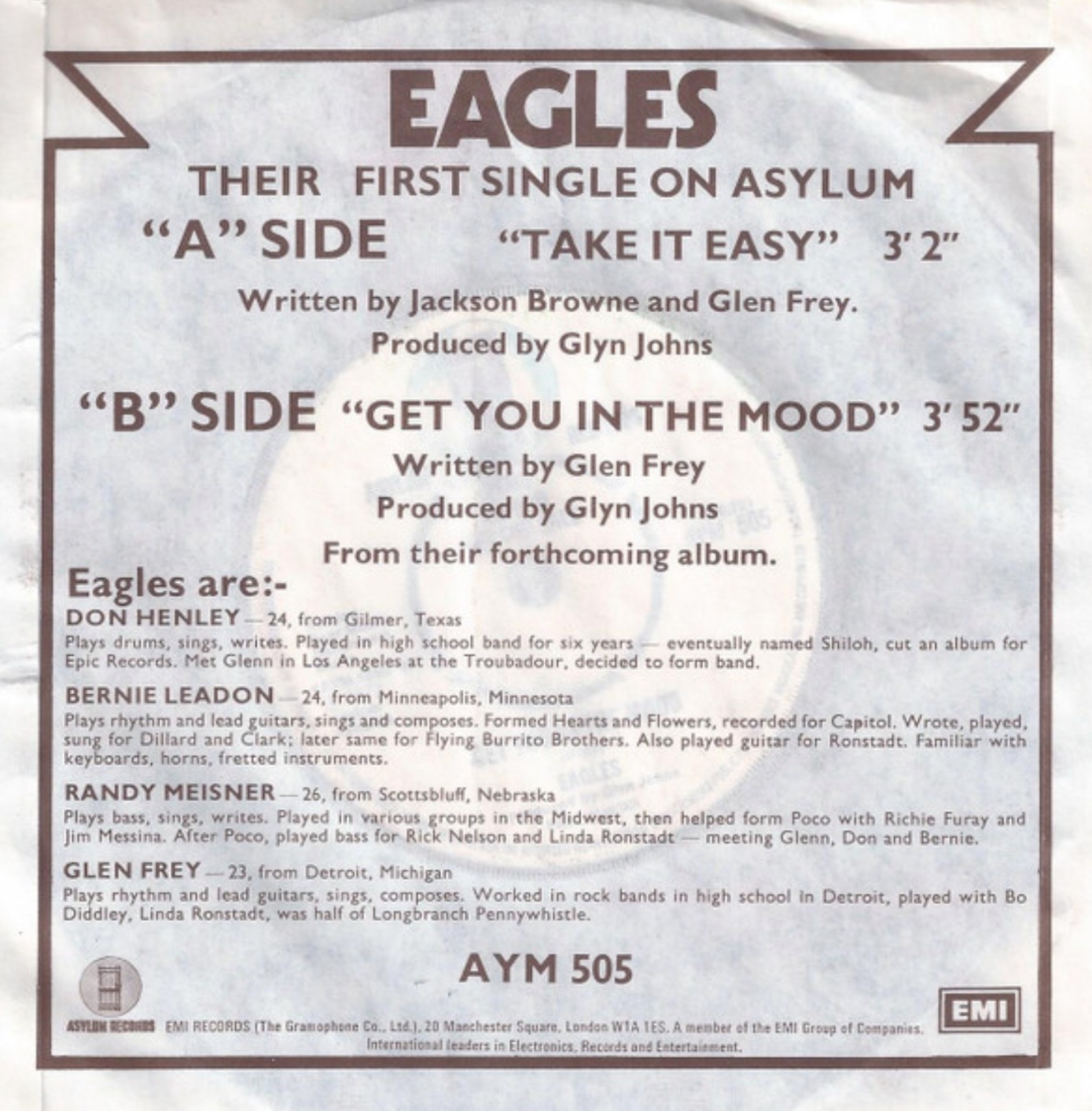
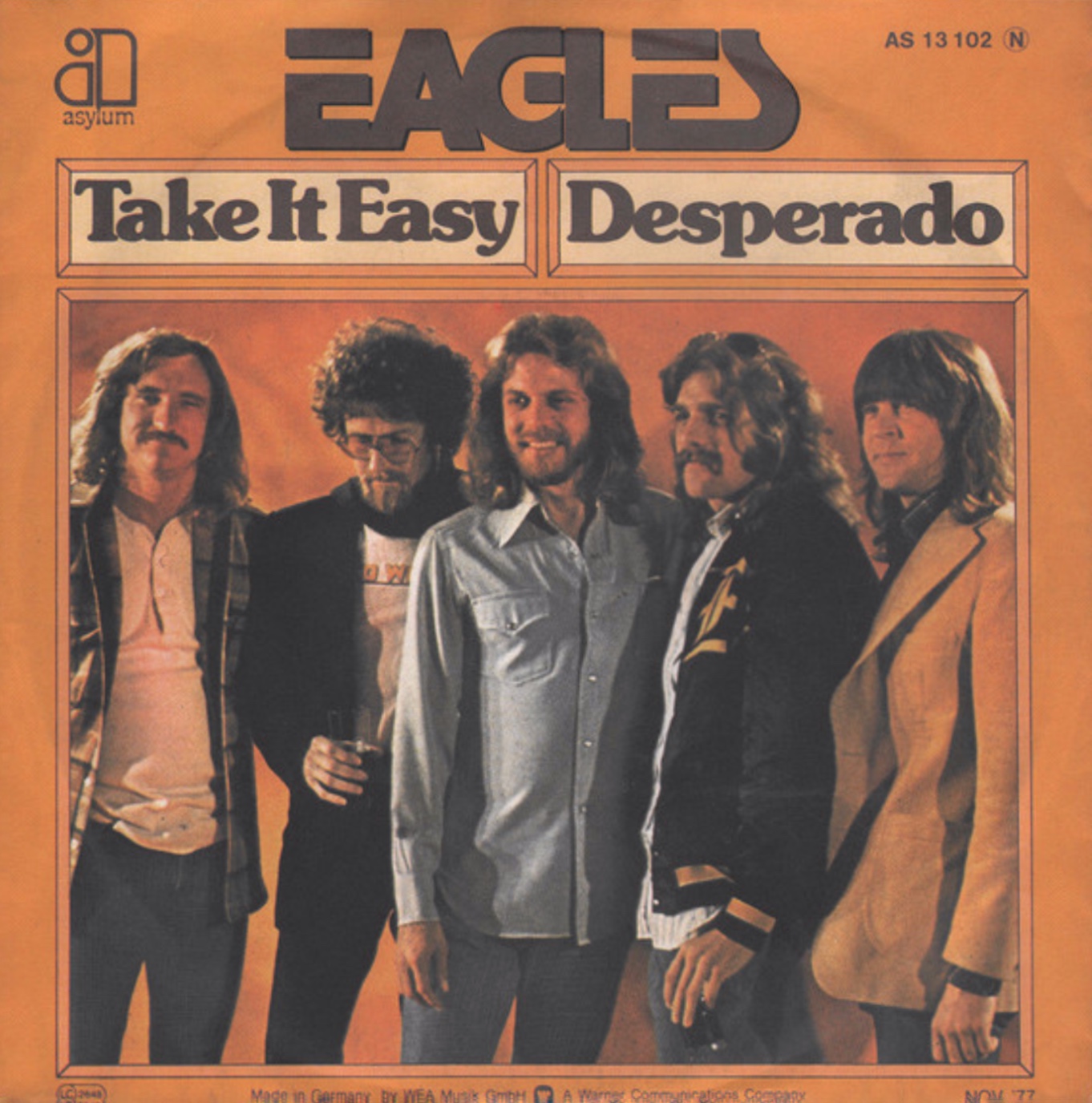
EAGLES - TAKE IT EASY

Publicació: 1 de maig de 1972

Llistes: EUA: #12


"Take It Easy" és el single debut de la banda de rock nord-americana Eagles, escrita per Jackson Browne i el membre dels Eagles Glenn Frey, que també fa la veu principal. El senzill va assolir el número 12 de la llista Billboard Hot 100 el 22 de juliol de 1972. També va ser la cançó d'obertura de l'àlbum debut homònim de la banda i s'ha convertit en una de les seves cançons de referència, inclosa en tots els seus àlbums en directe i recopilacions. Està catalogada com una de les 500 cançons que van donar forma al rock al Saló de la Fama del Rock and Roll.


"Take It Easy" és una melodia enganxosa i optimista que transmet un missatge de relaxació i resiliència. El protagonista de la cançó corre per la carretera intentant alleujar la seva càrrega emocional. Està envoltat per set dones, quatre de les quals el volen posseir, dues que volen apedregar-lo i una, a qui considera amiga. La tornada de la cançó l'anima a "prendre-s'ho amb calma", o a mantenir la calma i no deixar que les lluites de la vida l’amoinin massa. El protagonista també s'atura a Winslow, Arizona, i coneix una noia en un Ford a la qual vol perseguir, però no es vol enganxar massa per si no surt bé. La cançó serveix com a recordatori per prendre la vida amb calma i no deixar que l'estrès us empoderi.


Jackson Browne va començar a escriure "Take It Easy" per al seu primer disc, però no sabia com acabar-la. En aquell moment, vivia en un apartament al barri Echo Park de Los Angeles, i el seu veí de dalt era Glenn Frey, que necessitava cançons per a la seva nova banda, els Eagles. Frey va escoltar Browne treballant en la cançó, i va dir que va aprendre molt sobre la composició de cançons escoltant el treball del seu veí de la planta baixa, a qui li va dir a que li semblava genial. Browne va dir que tenia problemes per completar la cançó i li va mostrar el que tenia. Quan va arribar a la segona estrofa, a Frey se li va ocórrer una lletra clau: "It's a girl, my lord, in a flatbed Ford, slowing down to take a look at me." (És una noia, Déu meu, en un Ford que frena per mirar-me). Browne va lliurar la cançó a Frey, que la va acabar d'escriure i la va gravar amb els Eagles, que la van utilitzar com a primera cançó del seu primer àlbum, i també del seu primer senzill. Frey diu que Browne va fer la major part del treball de la cançó i va ser molt generós en compartir el crèdit de l'escriptura. Va descriure la versió inacabada de la cançó com un "regal sense el llaç".


Jackson Browne va llançar la seva pròpia versió de "Take It Easy" al seu segon àlbum, "For Everyman", el 1973. Ell i els Eagles van publicar els seus àlbums de debut el 1972; Browne va ser el primer a tenir un èxit, amb "Doctor My Eyes" uns mesos abans que els Eagles aterrissin amb "Take It Easy".


Gràcies a la frase "Standing on a corner in Winslow, Arizona", els amants de la música han fet d'aquesta ciutat del sud-oest una parada popular en els seus viatges per carretera. Winslow es troba a la ruta 40 al nord d'Arizona, per la qual cosa és un lloc ideal per aturar-se si viatgeu des de Califòrnia fins a Nou Mèxic. Tot i que potser no era la cantonada real on es trobava Jackson Browne, la ciutat va designar la cantonada de West 2nd Street i North Kinsley Avenue al centre de Winslow com "Standin' On The Corner Park". Inaugurat oficialment l'any 1999, el parc s'ha convertit en una destinació turística popular i acull un festival cada any. Un mural amb el nom de la ciutat i una estàtua d'un noi a la cantonada han omplert molts canals de Flickr. Quan el mural va ser danyat per un incendi el 2004, els Eagles van donar una guitarra signada que es va sortejar per ajudar a reparar-lo.


Amb Jackson Browne a la veu principal, Don Henley, Bernie Leadon, Timothy B. Schmit i Joe Walsh van interpretar aquesta cançó als premis Grammy el 2016 com a homenatge a Glenn Frey, que va morir un mes abans. Els Eagles mai havien actuat als Grammy i es van saltar completament la cerimònia quan "Hotel California" va guanyar el disc de l'any a la cerimònia de 1978.


Sens dubte, aquest és un clàssic country-rocker dels Eagles. Tot i que l'arranjament és força ambiciós, amb dues guitarres elèctriques, banjo, baix i bateria, la cançó es podria mantenir perfectament amb una sola guitarra acústica acompanyant a la veu.


EAGLES - TAKE IT EASY


Released: May 1, 1972

Charted:  US: #12 


"Take It Easy" is the debut single by the American rock band Eagles, written by Jackson Browne and Eagles band member Glenn Frey, who also provides lead vocals. The single peaked at number 12 on the Billboard Hot 100 chart on July 22, 1972. It was also the opening track on the band's self-titled debut album and has become one of their signature songs, included on all their live albums and compilations. It is listed as one of the Rock and Roll Hall of Fame's 500 Songs That Shaped Rock and Roll.


"Take It Easy" is a catchy, upbeat tune that conveys a message of relaxation and resilience. The protagonist of the song is running down the road trying to ease his burden, and he is surrounded by seven women, four of which want to own him, two that want to stone him, and one, whom he considers a friend. The chorus of the song encourages him to "take it easy," or stay calm and don't let life's struggles get you too worked up. The protagonist also stops in Winslow, Arizona and meets a girl in a Ford who he wants to pursue, but he doesn't let himself get too attached in case it doesn't work out. The song serves as a reminder to take life easy and not let the stress get to you.


Jackson Browne started writing "Take It Easy" for his first album, but he didn't know how to finish it. At the time, he was living in an apartment in the Echo Park section of Los Angeles, and his upstairs neighbor was Glenn Frey, who needed songs for his new band the Eagles. Frey heard Browne working on the song, he says that he learned a lot about songwriting by listening to his downstairs neighbor work, and told Jackson he thought it was great. Browne said he was having trouble completing the track, and played what he had of it. When he got to the second verse, Frey came up with a key lyric: "It's a girl, my lord, in a flatbed Ford, slowing down to take a look at me." Browne turned the song over to Frey, who finished writing it and recorded it with the Eagles, who used it as the first song on their first album, and also their first single. Frey says Browne did most of the work on the song and was very generous in sharing the writing credit. He described the unfinished version of the song as a "package without the ribbon".


Jackson Browne released his own version of "Take It Easy" on his second album, “For Everyman”, in 1973. He and the Eagles each issued their debut albums in 1972; Browne was the first to have a hit, charting with "Doctor My Eyes" a few months before the Eagles landed with "Take It Easy".


Thanks to the line, "Standing on a corner in Winslow, Arizona", music lovers have made this Southwest town a popular stop on their road trips. Winslow is on Route 40 in northern Arizona, making it a great place to stop if you're traveling from California to New Mexico. While it might not be the actual corner where Jackson Browne was standing, the city designated the corner of West 2nd Street and North Kinsley Avenue in downtown Winslow as "Standin' On The Corner Park." Officially opened in 1999, the park has become a popular tourist destination and hosts a festival every year. A mural with the name of the town, and with a statue of a guy standing on the corner have filled many Flickr feeds. When the mural was damaged by fire in 2004, the Eagles donated a signed guitar that was raffled off to help repair it.


With Jackson Browne on lead vocals, Don Henley, Bernie Leadon, Timothy B. Schmit and Joe Walsh performed this song at the Grammy Awards in 2016 as a tribute to Glenn Frey, who died a month earlier. The Eagles never performed at the Grammys, and skipped the ceremony completely when “Hotel California" won for Record of the Year at the 1978 ceremony.


Without a doubt this is a classic country-rocker from the Eagles. Although the arrangement is quite ambitious, with two electric guitars, banjo, bass and drums joining in, the song could stand on its own with a single acoustic guitar accompanying the vocals.