Total de visualitzacions de pàgina:

18.11.23


LIONEL RICHIE - ALL NIGHT LONG (ALL NIGHT)

Publicació: 31 d'agost de 1983

Llistes: Regne Unit: #2    EUA: #1 (4 setmanes)


"All Night Long (All Night)" és un single d'èxit del cantant i compositor nord-americà Lionel Richie. Tret del seu segon àlbum en solitari de 1983, "Can't Slow Down", combinava l'estil commodores de Richie amb influències del Carib.


La cançó és un himne de festa alegre i contagiós que celebra l'alegria i la unitat que es troben en la música i el ball. La lletra anima els oients a deixar anar les seves preocupacions i submergir-se en un ambient festiu. Les primeres frases, ""Well, my friends, the time has come / To raise the roof and have some fun / Throw away the work to be done / Let the music play on" (Bé, amics meus, ha arribat l'hora / d'aixecar el cap i divertir-se / deixar la feina per fer / deixar que la música soni), marquen el to de la cançó. Suggereix que és hora de deixar-se anar, oblidar-se de les responsabilitats i gaudir dels plaers de la vida. La repetició de "play on" emfatitza la idea de deixar que la música prengui el control i gaudir sense inhibició. A mesura que la cançó avança, emfatitza en el poder de la música per unir la gent. La frase "Everybody sing, everybody dance / Lose yourself in wild romance" (tothom a cantar, tothom a ballar / deixat portar pel romanç) subratlla la naturalesa inclusiva de l'ambient de festa, on tothom pot participar, independentment de la seva trajectòria o estatus. La declaració reiterada "We're going to Party, Karamu, Fiesta, forever" (Anem a la Festa, Karamu, Festa, per sempre) posa de manifest el caràcter multicultural i universal de la celebració i l'experiència compartida de gaudir.


La tornada, "All night long, All night” (Tota la nit), és una tornada senzilla però enganxosa que fomenta que la celebració i el ball no s’aturin. Representa la idea de perdre la noció del temps i estar completament immers en el moment. La repetició de "All night" reforça el tema de gaudir sense límit i el poder de la música per crear una experiència atemporal i memorable. Al llarg de la cançó, Lionel Richie posa èmfasi en l'energia contagiosa i les vibracions positives de l'ambient de festa. Les referències a la gent que balla als carrers i sent el ritme als seus peus posen de manifest la naturalesa universal de la capacitat de la música per animar i inspirar l gent. La frase ""Feel it in your heart and feel it in your soul / Let the music take control" (Sent-ho al teu cor i sent-ho a la teva ànima / Deixa que la música prengui el control) parla del poder emocional i transformador de la música, que pot transportar les persones a un lloc de pura alegria i alliberament. 


En els versos finals, la lletra incorpora algunes frases suahili com "Jambo Jumbo" i "Tam bo li de say de moi ya", que milloren encara més l'esperit multicultural i inclusiu de la cançó. Les referències a diferents tipus de festes i celebracions ("Karamu", "Fiesta", "Liming") parlen de la universalitat del ball i la gresca entre les cultures. Hi ha un ambient molt multicultural en aquesta cançó, ja que Richie esmenta paraules alegres en diferents idiomes. "Karamu" és una paraula suahili per a dir festa; "Liming" és un terme caribeny ue convida a reunir-se, i "Fiesta" ja sabem el que és. Richie va parlar a la revista Q sobre una part de la lletra: "Vaig trucar a l'ONU i vaig dir: 'Necessito alguna cosa africana per a la lletra d'aquesta cançó que estic escrivint". Em van informar que hi ha milers de dialectes africans diferents. No m'ho podia creure. Una regió no té ni idea de què està parlant l'altra. Així que, "Tambo liteh sette mo-jah!'? Ho vaig inventar. Ara crec que "Jambo" podria tenir un significat en suahili (com "hola"), però has d'anar amb compte perquè pot significar "benvingut" en un dialecte i et tallen el cap per dient-ho en un altre".


Richie es va trobar amb la incredulitat dels qui el rodejaven quan va revelar que estava llançant aquesta cançó amb ritme de Calypso. Va dir a Entertainment Weekly el 2014: "Fins i tot la meva pròpia companyia discogràfica em va dir:" Estàs malament del cap? I vaig respondre: "Nois, he viatjat pel món, i aquest és el ritme que tothom balla a les vacances".


Richie va interpretar "All Night Long (All Night)" a la cerimònia de clausura dels Jocs Olímpics d'estiu de 1984 a Los Angeles modificant una mica la lletra per a l’esdeveniment.


LIONEL RICHIE - ALL NIGHT LONG (ALL NIGHT)


Released : August 31, 1983

Charted:  UK: #2    US: #1 (4 weeks)


"All Night Long (All Night)" is a hit single by American singer and songwriter Lionel Richie. Taken from his 1983 second solo album, “Can't Slow Down”, it combined Richie's soulful Commodores style with Caribbean influences.


The song is an upbeat and infectious party anthem that celebrates the joy and unity found in music and dancing. The lyrics encourage listeners to let go of their worries and immerse themselves in the festive atmosphere. The opening lines, "Well, my friends, the time has come / To raise the roof and have some fun / Throw away the work to be done / Let the music play on", set the tone for the song. It suggests that it's time to let loose, forget about responsibilities, and indulge in the pleasures of life. The repetition of "play on" emphasizes the idea of letting the music take control and enjoying oneself without inhibition. As the song progresses, it emphasizes the power of music to bring people together. The line "Everybody sing, everybody dance / Lose yourself in wild romance" underscores the inclusive nature of the party atmosphere, where everyone can join in regardless of background or status. The repeated statement "We're going to Party, Karamu, Fiesta, forever" highlights the multicultural and universal nature of celebration and the shared experience of enjoyment.


The chorus, "All night long, All night," is a simple yet catchy refrain that encourages continuous celebration and dancing. It represents the idea of losing track of time and being fully immersed in the moment. The repetition of "All night long" reinforces the theme of lasting enjoyment and the power of music to create a timeless and memorable experience. Throughout the song, Lionel Richie emphasizes the infectious energy and positive vibes of the party atmosphere. References to people dancing in the streets and feeling the rhythm in their feet highlight the universal nature of music's ability to uplift and inspire. The line "Feel it in your heart and feel it in your soul / Let the music take control" speaks to the emotional and transformative power of music, which can transport individuals to a place of pure joy and liberation. In the final verses, the lyrics incorporate some Swahili phrases like "Jambo Jumbo" and "Tam bo li de say de moi ya," which further enhance the multicultural and inclusive spirit of the song. The references to different types of parties and celebrations ("Karamu," "Fiesta," "Liming") speak to the universality of dancing and revelry across cultures.


There is a very multicultural vibe to this song, as Richie mentions joyful words in different languages. "Karamu" is a Swahili word for a party accompanied by a feast; "Liming" is a Caribbean term for getting together, and "Fiesta" is Spanish for party. Richie explained to Q the lyric, "Tambo liteh sette mo-jah! Yo! Jambo jambo:" "I called the UN and said 'I need something African for the breakdown in this song I'm writing.' They informed me that there are thousands of different African dialects. I couldn't believe it. One region doesn't have any idea what the other is taking about. So, 'Tambo liteh sette mo-jah!'? I made it up on the spot. Now I think that 'Jambo' might have a meaning in Swahili (it does- "hello"), but you gotta be careful because it might mean 'welcome' in one dialect and you might get your head cut off for saying it in another." 


Richie was met with incredulity when he revealed that he was releasing this Calypso-flavored song. He told Entertainment Weekly in 2014: "Even my own record company said to me, 'Are you out of your mind?' And I said, 'Guys, I've traveled the world. This is the rhythm that the whole world dances to on vacation.'"


Richie performed this song at the closing ceremony of the 1984 Summer Olympics in Los Angeles. Among the dancers was a young Cuba Gooding Jr., making his first appearance as an entertainer. For this performance, Richie wrote a different set of lyrics, which begin:


‘Hello to you all, these many who are here

Come and join me in this special cheer’.


17.11.23


MARY WELLS - MY GUY / THE TEMPTATIONS - MY GIRL


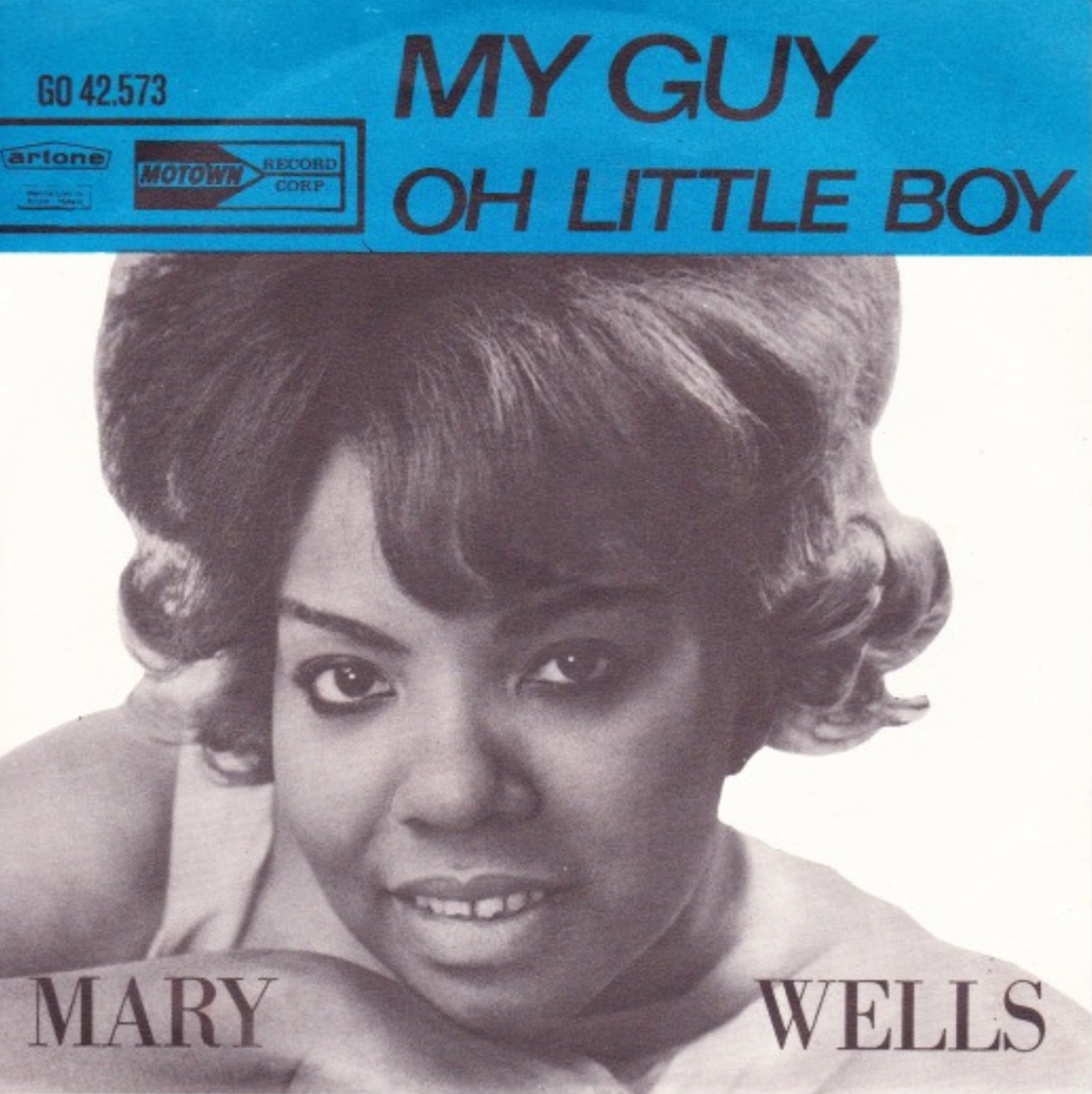
MARY WELLS -MY GUY 


Released : March 13, 1964

Charted:  UK: #5     US: #1 (2 weeks)


"My Guy" is a 1964 hit single by American singer Mary Wells, written and produced by Smokey Robinson. The song is a woman's rejection of a sexual advance and affirmation of her fidelity to her boyfriend, who is her ideal and with whom she is happy, despite her ordinary physique and looks. This is a celebration of a strong and loyal love. It stresses the singer's unwavering commitment to her guy and the belief that no one else can replace him in her heart. It serves as a testimony to the power of a deep emotional connection and the ability to find happiness in a genuine relationship. Robinson wrote a song similar to "My Guy" from a male perspective that was a huge hit for The Temptations: “My Girl”. 


Mary Wells' smash hit "My Guy" was her last solo recording for Motown. She became recognized as "The Queen of Motown" until her departure from the company in 1965, at the height of her success. The first female star for the record label, she also became the first to dare to leave when 20th Century Fox wooed her with a $200,000 advance and potential movie roles. She officially left in 1965. Motown mogul Berry Gordy allegedly coerced radio stations into keeping Wells' new records off the airwaves, but she still scored a hit with "Ain't That the Truth" and "Use Your Head." Nevertheless, her relationship contract with 20th Century Fox dissolved the following year. She bounced from label to label and eventually retired from music in 1974 to raise her family.


This was the song that broke up The Beatles famous monopoly on the Top 5 US chart positions in May of 1964. Mary Wells receive a recognition after her death when "My Guy" was inducted into the Grammy Hall of Fame in 1999.


THE TEMPTATIONS - MY GIRL


Released : December 21, 1964

Charted:  UK: #2     US: #1 (1 week)


"My Girl" is a song recorded by the Temptations written and produced by the Miracles members Smokey Robinson and Ronald White. It became the Temptations' first U.S. number 1 single, and is currently their signature song. Robinson's inspiration for writing "My Girl" was his wife, Miracles member Claudette Rogers Robinson. The song was included on the Temptations 1965 album The Temptations Sing Smokey. In 2017, the song was selected for preservation in the National Recording Registry by the Library of Congress as being culturally, historically, or artistically significant.


This song was written in the Apollo Theater when The Temptations were playing as part of a package tour with The Miracles. According to Robinson, he was working out the song on a piano at the theater when his bandmate Ronald White joined him and they hashed out the song. When The Temptations heard it, they convinced Robinson to let them record it instead of The Miracles. Robinson, who was Berry Gordy's right-hand man at Motown agreed, and rehearsed the song with The Tempts over the next week. When they returned to Detroit, Robinson and White produced the session when they recorded this song.


Robinson explained that he wrote this with David Ruffin's voice in mind. It was the first Temptations single to feature Ruffin on lead vocals (Eddie Kendricks and Paul Williams sang lead on previous Temptations singles), and it led to a greater role for Ruffin, as he became their primary lead singer. Robinson went on to write many more hits for The Temptations, who were considered the most talented vocal group at Motown.


Members of the Motown house band The Funk Brothers played on the track. The song has a very simple but effective arrangement, which was charted by Paul Riser. It opens with James Jamerson's bassline, then goes into the ascending guitar figure played by Robert White (not to be confused with the song's co-writer/producer, Ronald White). Finger snaps come in, then drums played by Benny Benjamin and strings provided by the Detroit Symphony Orchestra. The arrangement accentuates the vocals, making the words very easy to understand. This served as a template for future Temptations recordings and helped make them stars, as attention was always focused on stage on the singers.


The song was re-released in 1992, following the November 1991 release of the film of the same name, which featured the song. It did not reach the Billboard charts, but did reach number 2 in the UK Singles Chart.


THE SUPREMES - YOU CAN’T HURRY LOVE / COME SEE ABOUT ME 


YOU CAN’T HURRY LOVE

Released : July 25, 1966

Charted:  UK: #3    US: #1 (2 weeks)


"You Can't Hurry Love" is a 1966 song originally recorded by the Supremes on the Motown label. It was released as the second single from their studio album “The Supremes A' Go-Go”.


Written and produced by Motown's main production team, Holland–Dozier–Holland, "You Can't Hurry Love" is one of the signature Supremes songs, and also one of Motown's signature releases. Billboard described the single as "the group's most exciting side to date" with "top vocal" and "exceptional instrumental backing.”


Eddie Holland came up with the title to Brian Holland's melody for this song. Lamont Dozier recalled in 1000 UK #1 Hits by Jon Kutner and Spencer Leigh: "We were trying to reconstruct 'Come See About Me' and somehow it turned into 'You Can't Hurry Love.' It was basically a gospel feel we were after."


A cover by Phil Collins reached US #10 and UK #1 in late 1982. His version was used as the main theme for the 1988 film of the same name, and inspired Andy Rourke's bass in The Smiths' "This Charming Man." Such was his love for the label that Phil inscribed "Motown, we salute you" on the sleeve of the album Hello, I Must Be Going, which included "You Can't Hurry Love." In addition, his black-and-white video showing three Phil Collinses standing in a line was a homage to The Supremes.


This was the first of a second string of consecutive #1 American hits for the Supremes. At the end of 1964 and into 1965, they charted five consecutive #1s. In 1966, starting with "You Can't Hurry Love," they charted four more.


COME SEE ABOUT ME


Released : October 27, 1964

Charted:  UK: #27    US: #1 (2 weeks)


"Come See About Me" became third of five consecutively released Supremes songs to top the Billboard pop singles chart in the United States (the others being "Where Did Our Love Go", "Baby Love", "Stop! In the Name of Love" and "Back in My Arms Again").


The song was written and produced by the Motown team of Eddie Holland, Lamont Dozier and Brian Holland. The songs they wrote for The Supremes dealt with matters of the heart. "Come See About Me" finds Diana Ross in a bad spot: she gave up her friends to be with a guy, and now he's gone too. She asks him to come back, sure that once he comes back around she can make him hers.


On December 26, 1964, this was bumped off the top spot in the US by the Beatles song "I Feel Fine", which stayed there for three weeks before getting toppled by "Come See About Me", which returned to the top on January 16, 1965.


One month after this song's release (and two days after Christmas), The Supremes performed this song while making their debut guest appearance on The Ed Sullivan Show. The Supremes would go on to appear 19 more times on show, which is more than any other pop act.


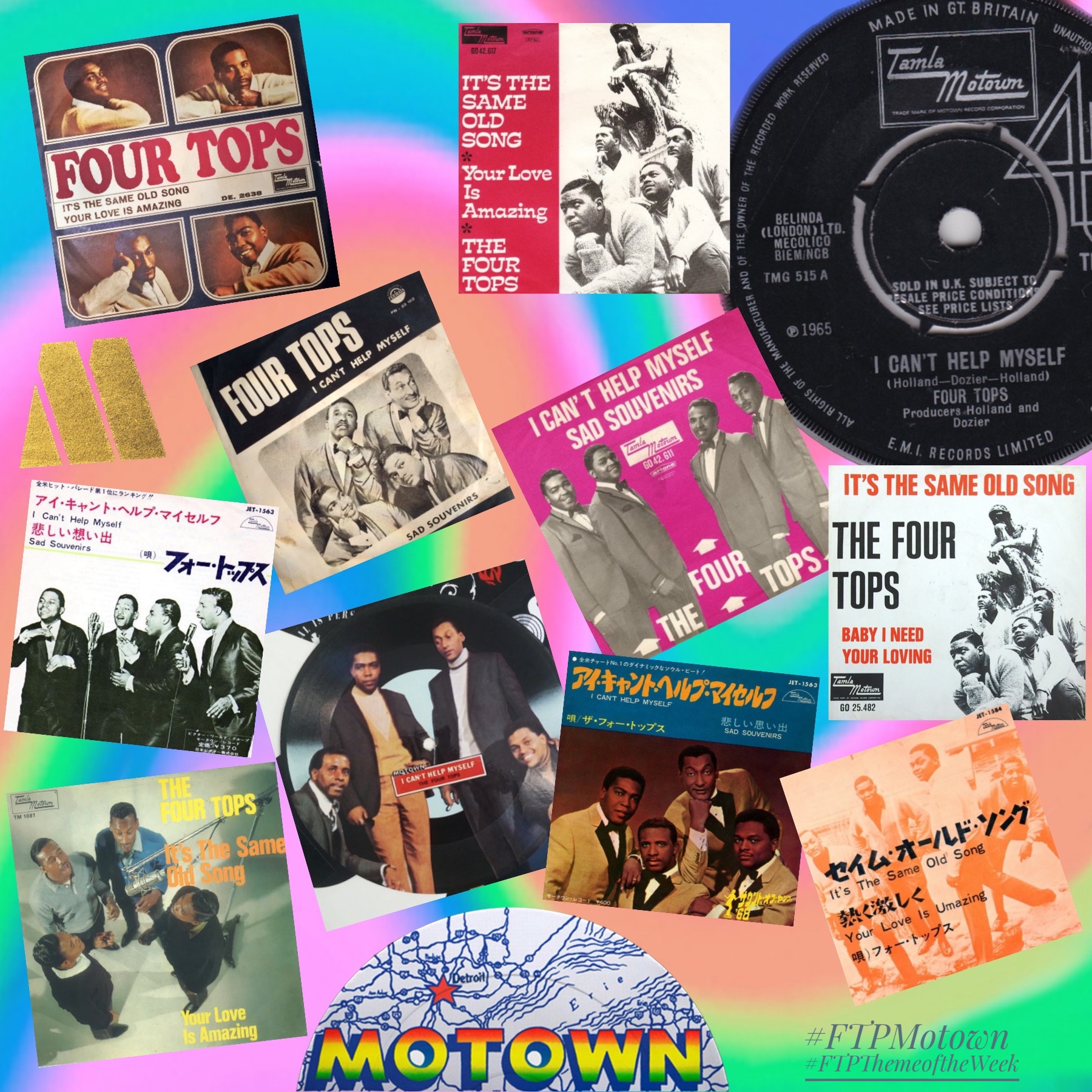
FOUR TOPS - I CAN’T HELP MYSELF / IT’S THE SAME OLD SONG


I CAN’T HELP MYSELF


Released : April 23, 1965

Charted:  UK: #10     US: #1 (2 weeks)


The song was written by the wildly successful Motown team of Lamont Dozier, Brian Holland and Eddie Holland. The melody of this song is very similar to "Where Did Our Love Go," which Holland-Dozier-Holland wrote for The Supremes. According to Lamont Dozier, the title came about because he couldn't help himself from working with the same tune.


Lamont Dozier told the story behind this song: "I stayed with my grandmother when I was a kid. She owned her own home beauty shop, and when the women would come up the walkway to get their hair done, my grandfather would be pedaling around in the garden. He was a bit of a flirt, and would say, 'How you doin', sugar pie? Good morning, honey bunch.' He was one of those types of guys. My grandmother had a big bay window to the front of the house. She'd say, 'Look at that old codger - he thinks I don't see. I know what he's doing.' He was just flirting with his big smile. I'm sitting there on the porch watching this - I'm probably 11 or 12. I was like a sponge, soaking it up. Years later, at Motown, I'm sitting at the piano. I'd take these mind trips back to my childhood, and I'm trying to see what this piano part is telling me. Sure enough, there my grandfather is, pedaling in the garden. That memory comes to my mind's eye, and I know where the song is supposed to go. I hear him saying, 'Good morning, sugar pie. How you doin', honey bunch?' That's what started it."


Like many listeners who felt the lyrics were a little too sugary, lead singer Levi Stubbs hated this song - the quartet cut it at the insistence of producer Brian Holland. After recording the song, Stubbs was still upset. Holland reassured him that they could re-record it the following day, but there was no second try and take 2 was released as the single.


This was the first US #1 hit for The Four Tops, and it was a big one, topping the Hot 100 for two weeks and the R&B chart for an amazing nine. In the UK, this was the group's first single, issued with their American Motown debut, "Baby I Need Your Loving," as the B-side. It was released to coincide with their first European tour in the summer of 1965, and reached #23. In 1970, it was re-released in the UK and hit #10.


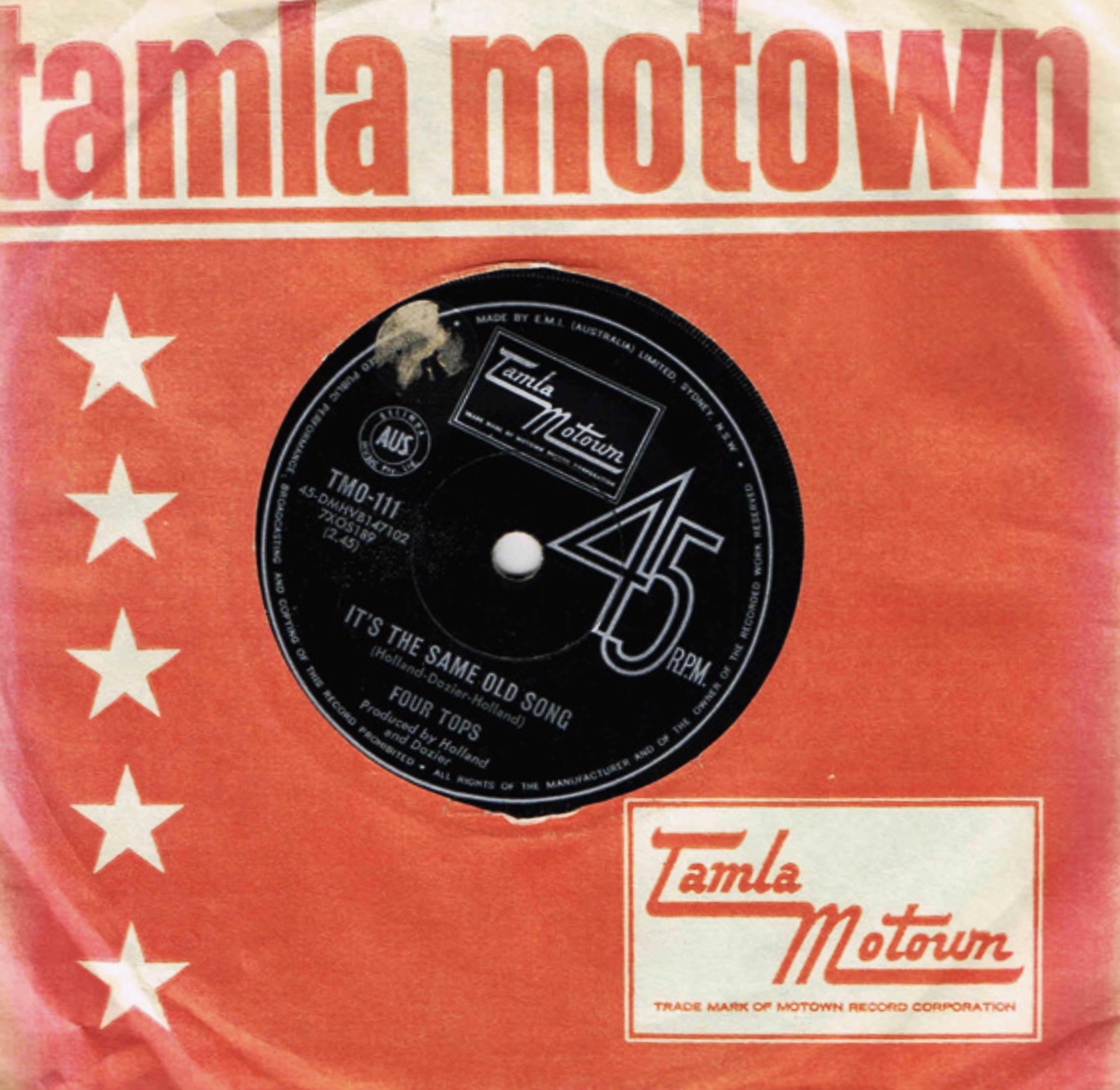
I’TS THE SAME OLD SONG


Released : July 9, 1965

Charted:  UK: #34    US: #5 


"It's the Same Old Song" was recorded by the Four Tops for the Motown label. It was released in 1965 as the second single from their second album. Written and produced by Motown's main production team Holland–Dozier–Holland, the song is today one of The Tops' signatures, and was reportedly created from initial concept to commercial release in 24 hours.


The Four Tops were signed to Columbia Records in 1960, releasing just one single - "Ain't That Love" (written by their lead singer, Levi Stubbs) - before moving on to Riverside Records and eventually joining Motown in 1963. As "I Can't Help Myself" was coming off the charts, word got out that Columbia was going to re-release "Ain't That Love" to capitalize on the group's sudden success. Motown head Berry Gordy made a big push to thwart this, and put the rush on a new song. Fortunately, Holland-Dozier-Holland were very good at reworking their hits - they did it the previous year when they followed up their Martha & The Vandellas smash "Heat wave” with the copycat "Quicksand." The Four Tops were also up for the task, as they were one of the most seasoned Motown acts. HDH quickly wrote the song, and on Thursday, July 8, it was furiously recorded and pressed. It was delivered to radio stations the next day, and by that Monday, it was in stores. Columbia did issue "Ain't That Love," but it stalled at #93 on the Hot 100.


This was the follow-up to The Four Tops' big hit "I Can't Help Myself (Sugar Pie Honey Bunch)". It's common practice for groups to record a sound-alike to capitalize on the success of a hit, but this one is so similar that even the title is a nod to its similarity - it's "the same old song." But there's a reason why Holland-Dozier-Holland are one of the most successful songwriting teams ever assembled: even their knock-off hits had deeper meanings, and in this case it's a song about heartache, as The Tops sing about hearing a song a different way after a breakup. Many listeners who felt the "sugar pie, honey bunch" of "I Can't Help Myself" was a little too sweet preferred the more poignant lyrics of "It's the Same Old Song."


"It's the Same Old Song" is very similar in melody and chord progressions to "I Can't Help Myself", which in turn is even more similar in melody and chord progressions to "Where Did Our Love Go" by the Supremes, who covered "It's the Same Old Song" in 1967.