THE BEATLES - PAPERBACK WRITER / RAIN
Publicació: 30 de maig de 1966
Llistes: Regne Unit: #1 (2 setmanes) EUA: #1 (2 setmanes)
PAPERBACK WRITER
"Paperback Writer" va ser escrita principalment per Paul McCartney. Va assolir un èxit àmpli, arribant al número u en diverses llistes de sencills de diferents països. Als Estats Units, va mantenir breument la primera posició a la llista Billboard Hot 100 abans de ser desplaçada per "Strangers in the Night" de Frank Sinatra. Aquest va ser el primer número u dels Beatles que no parlava d'amor.
La cançó pren una perspectiva interessant en explorar l'experiència d'un autor que cerca un editor. A la lletra, la tria d'un llibre de butxaca en lloc d'un enquadernat en cartoné és un aspecte notable, suggerint consum massiu i assequible. La incorporació per part de McCartney de diverses influències, incloent-hi el company de banda John Lennon i l'autor Martin Amis, afegeix profunditat al context de la cançó i revela el seu compromís amb el món literari.
"Paperback Writer" va marcar un canvi notable en la composició de cançons dels Beatles, superant el tema convencional de les cançons d'amor per abraçar un ventall més ampli d’opcions. La resposta de Paul McCartney a la petició de la seva tieta Lil mostra la voluntat de la banda d'experimentar i evolucionar creativament. Aquesta transició reflecteix el desig dels Beatles de trencar amb les estructures tradicionals de les cançons i explorar noves vies narratives, contribuint al seu impacte durador en l'evolució de la música popular.
Les innovadores tècniques d'enregistrament utilitzades a "Paperback Writer" mostren el compromís dels Beatles a superar els límits de la producció en estudi. Augmentar el baix de McCartney utilitzant un altaveu com a micròfon i destacar el bombo de baix de Ringo reflecteix l'enfocament experimental de la banda per aconseguir sons diferents. Aquestes mètodes poc convencionals van contribuir al caràcter sonor únic de la cançó i van demostrar la recerca contínua dels Beatles en l'exploració creativa a l'estudi.
La creació d'un vídeo promocional per a "Paperback Writer" va ser un fet significatiu, contribuint involuntàriament als primers passos de l'evolució dels vídeos musicals. El rodatge es va realitzar a la Chiswick House de Londres, utilitzant els luxosos jardins del lloc com a teló de fons. El vídeo mostrava en primer pla a la banda, exhibint diverses posicions. Dirigit per Michael Lindsay-Hogg, el film es va estrenar primer als Estats Units al The Ed Sullivan Show i més tard al Regne Unit. Cal destacar que Lindsay-Hogg inicialment havia proposat un vídeo conceptual que imaginava Paul McCartney com un aspirant a novel·lista, però aquesta idea va ser anul·lada pel representant de la banda, Brian Epstein. Epstein va optar per un vídeo més directe basat en la interpretació, destacant la presència de la banda i la pròpia cançó.
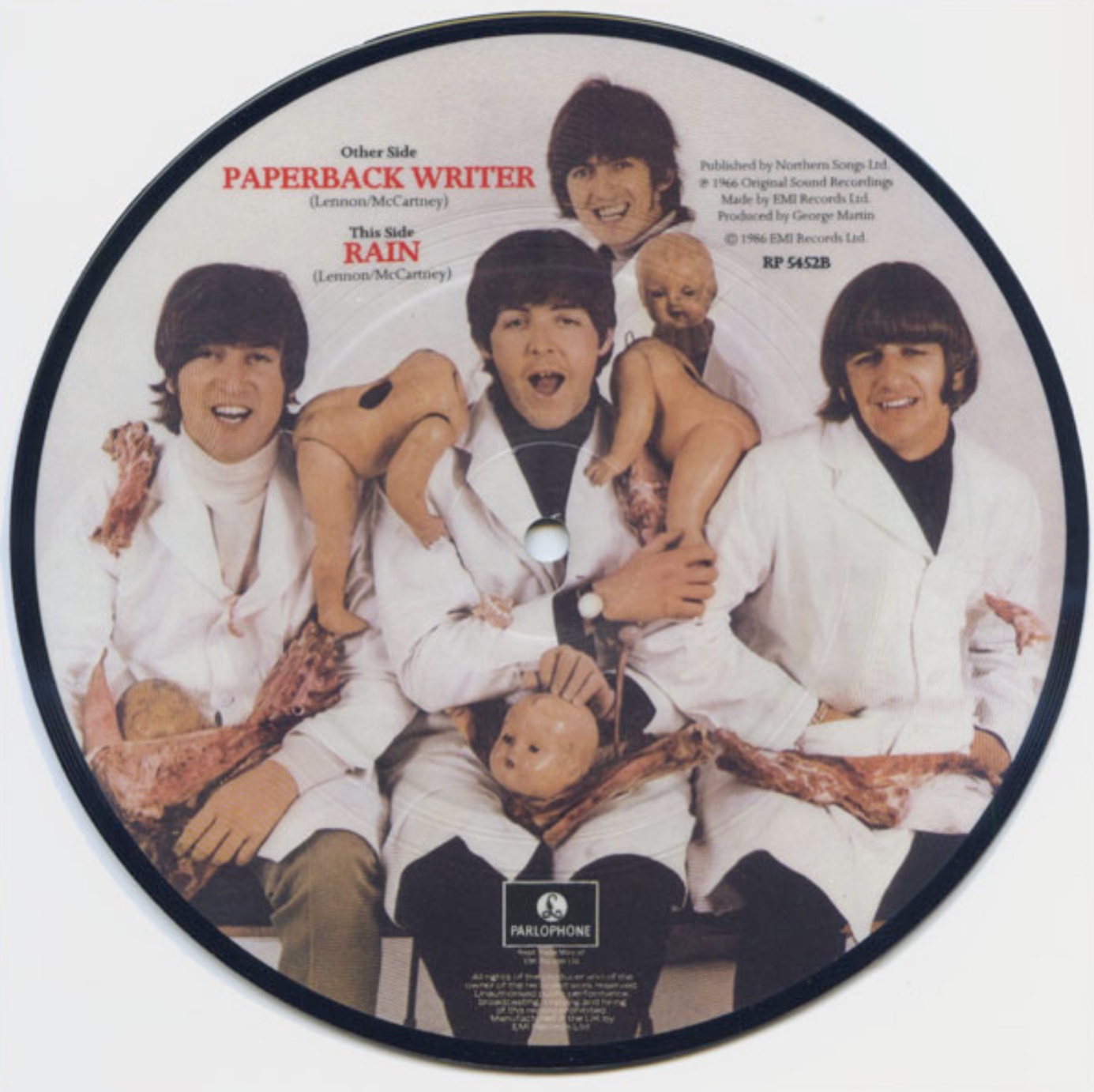
L'anunci del single a Anglaterra utilitzava la "butcher cover," que mostrava els Beatles amb peces de nines sagnants. Va causar revolta als Estats Units quan es va utilitzar per a l'àlbum Yesterday and Today, que Columbia Records va retirar ràpidament de les botigues i ara és una peça de col·leccionista. Si tens una còpia antiga de Yesterday... And Today amb la controvertida portada, potser tens alguna cosa valuosa.
RAIN
"Rain," llançada com a cara B del senzill "Paperback Writer", va ser escrita per John Lennon i acreditada a la col·laboració Lennon-McCartney. Lennon va descriure el significat de la cançó com "va sobre la gent que es queixava del temps tot el temps".
"Rain" s'ha interpretat de diverses maneres, incloent la referència a la gent que es queixa del temps o representant les experiències d'un viatge d'LSD, emfatitzant la importància de la ment sobre la matèria. Es reconeix com una de les primeres cançons dels Beatles que explora la idea del món material com una il·lusió, un tema destacat durant el seu període psicodèlic.
"Rain" és notable per les seves tècniques d'enregistrament innovadores, incloent una pista de ritme desaccelerada, una línia de baix dronant i veus invertides, marcant una notable instància d'aquesta tècnica innovadora en la gravació, amb Lennon i George Martin atribuint-se ambdós la idea. L’introducció de sons invertits en una cançó pop, va ser una tècnica també utilitzada a la pista "Tomorrow Never Knows" de "Revolver", enregistrada al voltant de la mateixa època. Ringo Starr considera que la seva interpretació a la bateria a "Rain" és la seva millor actuació enregistrada.
L'autoria de "Rain" ha estat objecte de diferentes versions. Lennon va afirmar que la va escriure ell sol a principis de la dècada de 1960, però McCartney, a la seva biografia autoritzada, va afirmar que van col·laborar, atribuint l'autoria com "70-30 a favor de John". McCartney va destacar la perspectiva positiva de la pluja a la cançó, desafiant la noció tradicional que la pluja és negativa.
THE BEATLES - PAPERBACK WRITER
Released : May 30, 1966
Charted: UK: #1 (2 weeks) US: #1 (2 weeks)
PAPERBACK WRITER
"Paperback Writer" was written primarily by Paul McCartney. It achieved widespread success, reaching the number one spot on various singles charts in different countries. In the United States, it briefly held the top position on the Billboard Hot 100 before being displaced by Frank Sinatra's "Strangers in the Night." This was the first #1 hit for The Beatles that was not about love.
This song takes an interesting perspective as it delves into the experience of an author seeking a publisher. The choice of a paperback over a hardcover is a notable aspect, suggesting mass consumption and affordability. McCartney's incorporation of various influences, including fellow bandmate John Lennon and author Martin Amis, adds depth to the song's context and reveals his engagement with the literary world.
"Paperback Writer" marked a notable shift in the Beatles' songwriting approach, moving beyond the conventional love-song theme to embrace a broader range of subjects. Paul McCartney's response to his Auntie Lil's request showcases the band's willingness to experiment and evolve creatively. This transition reflects the Beatles' desire to break away from traditional song structures and explore new narrative avenues, contributing to their lasting impact on the evolution of popular music.
The innovative recording techniques employed in "Paperback Writer" showcase the Beatles' commitment to pushing the boundaries of studio production. Boosting McCartney's bass using a loudspeaker as a microphone and emphasizing Ringo's bass drum reflect the band's experimental approach to achieve distinctive sounds. These unconventional methods contributed to the song's unique sonic character and demonstrated the Beatles' ongoing quest for creative exploration in the studio.
The creation of a promotional film for "Paperback Writer" was a significant milestone, inadvertently contributing to the early evolution of music videos. The filming took place at Chiswick House in London, utilizing the venue's lavish gardens as a backdrop. The video featured close-ups of the band, showcasing various poses. Directed by Michael Lindsay-Hogg, the film first aired in the US on The Ed Sullivan Show and later in the UK. Notably, Lindsay-Hogg had initially pitched a conceptual video that envisioned Paul McCartney as an aspiring novelist, but this idea was overruled by the band's manager, Brian Epstein. Epstein opted for a more straightforward performance-based video, emphasizing the band's presence and the song itself.
The ad for the single in England used the "butcher cover," showing The Beatles holding parts of bloody dolls. It caused a stir in America when it was used for the Yesterday and Today album, which Columbia Records pulled from stores soon after release and is now a collector's item. If you own an early copy of Yesterday... And Today with the non-controversial cover, you might have something valuable.
RAIN
"Rain" released as the B-side of the "Paperback Writer" single, was written by John Lennon and credited to the Lennon–McCartney partnership. Lennon described the song's meaning as being "about people moaning about the weather all the time."
"Rain" has been interpreted in various ways, including addressing people complaining about the weather or embodying the experiences of an LSD trip, emphasizing the significance of mind over matter. It is recognized as one of the Beatles' early songs exploring the idea of the material world as an illusion, a theme prominent during their psychedelic period.
"Rain" is notable for its innovative recording techniques, including a slowed-down rhythm track, a droning bass line, and backwards vocals which mark a notable instance of this innovative technique in recording, with Lennon and George Martin both claiming credit for the idea. This track also introduced reversed sounds in a pop song, a technique also used on the “Revolver” track "Tomorrow Never Knows", recorded around the same time. Ringo Starr regards his drumming on "Rain" as his best recorded performance.
The authorship of "Rain" has been subject to differing recollections. Lennon claimed he wrote it alone in the early 1960s, but McCartney, in his authorized biography, stated they collaborated, attributing the authorship as "70–30 to John." McCartney emphasized the positive perspective of rain in the song, challenging the traditional notion of rain being negative.