Total de visualitzacions de pàgina:

7.2.24


TOTO - HOLD THE LINE


Publicació: 2 d'octubre de 1978

Llistes: EUA: #5   Regne Unit: #14


"Hold the Line" és una cançó de la banda de rock nord-americana Toto, llançada com a debut i primer single del seu àlbum d'estudi homònim de 1978. Escrita pel teclista de la banda, David Paich, la veu principal de la cançó va ser interpretada per Bobby Kimball. Es va convertir en un èxit internacional per al grup.


Aquesta és una cançó sobre mantenir l'esperança enmig de les dificultats en les relacions. La cançó destaca la idea que l'amor no sempre és fàcil ni quan ens ho esperem, i que és important ser pacient i mantenir la fe fins i tot en temps difícils. La cançó també ens anima a no rendir-nos en el nostre amor i les nostres relacions o donar-los per descomptat, ja que l'amor sovint triga a trobar el seu camí de tornada.


La cançó utilitza una percussió de piano de nota única que era una tècnica popular en aquell moment. El bateria de Toto, Jeff Porcaro, va explicar: "'Hold the Line' era un exemple perfecte del que la gent descriurà com els acords de guitarra de heavy metal i els grans acords triple A al piano. Era agafar el ritme de Sly Stone i barrejar-lo amb un enfocament més dur de rock".


La major part de la lletra comença amb les paraules "It's not” (No és). Segons David Paich, un cop va pensar el títol, va començar a escriure frases sobre el que no és l'amor: "No és en la manera que dius que ets meu", "No és en la manera que dius que et preocupa". A través de l'eliminació, intenta descobrir què és l'amor.


Toto va ser una de les poques bandes nord-americanes que van fer vídeos musicals en els anys anteriors a l'aparició de MTV. Per "Hold The Line", van produir un vídeo de la interpretació de la cançó amb Steve Lukather portant uns tirants molt xulos. Després van passar als vídeos conceptuals en els anys 80 i es van convertir en un dels grups més populars en els primers dies de MTV. Aquest vídeo de baix pressupost per a "Hold The Line" va acabar obtenint milions de visualitzacions a YouTube.


Toto és un grup format per sis músics de sessió molt talentosos que han donat suport a artistes com Boz Scaggs, Aretha Franklin, Barbra Streisand i Jackson Browne. "Hold the Line" va demostrar que una cançó pop engalanada creada per intèrprets de primera podia tenir èxit sense gairebè cap bombo o un cantant principal carismàtic.


El guitarrista Steve Lukather va ser l'únic membre original que encara estava al grup el 2008 quan va decidir marxar. Va fer aquesta declaració al lloc web oficial del grup: "Sincerament, ja n'he tingut prou. Això no és una pausa. S'ha acabat. Ja no puc sortir a tocar 'Hold the Line' amb una cara seriosa més. Tenia 19 anys quan vam gravar el disc. Ara en tinc 50". Lukather, Paich, Steve Porcaro i Joseph Williams reviuran el grup el 2014 i llançaran l'àlbum Toto XIV l'any següent.


TOTO - HOLD THE LINE 


Released: October 2, 1978

Charted:  US: #5  UK: #14 


"Hold the Line" is a song by American rock band Toto, released as the band's debut and lead single from their 1978 self-titled debut studio album. Written by the band's keyboardist, David Paich, the song's lead vocals were performed by Bobby Kimball. It became an international hit for the band.


This is a song about maintaining hope in the midst of relationship struggles. The song emphasizes the idea that love doesn't always come easy or when we expect it, and that it is important to be patient and keep faith even in difficult times. The song also encourages us not to give up on our love and relationships or take them for granted, as love can often take a while to find its way back.


The song used a single-note piano percussion that was a popular technique at the time. Toto drummer Jeff Porcaro explained: "'Hold the Line' was a perfect example of what people will describe as your heavy metal chord guitar licks and your great triple A-notes on the piano. It was taking the Sly Stone groove and meshing it with a harder rock caveman approach".


Most of this song's lyrics start with the words, "It's not". According to David Paich, once he came up with the title, he started writing lines about what love isn't: "It's not in the way you say you're mine," "It's not in the way you say you care". Through process of elimination, he's trying to figure out what love is.


Toto was one of the few American bands to make music videos in the years before MTV went on the air. For "Hold The Line" they produced a simple performance video featuring Steve Lukather wearing some sweet suspenders. They moved on to concept videos in the '80s and became one of the most popular artists on early MTV. That low budget video for "Hold The Line" ended up getting millions of views on YouTube.


Toto is a group made up of six very talented session musicians who had backed up artists like Boz Scaggs, Aretha Franklin, Barbra Streisand and Jackson Browne. "Hold the Line" proved that a slick pop song created by top players could succeed without a great deal of hype or a charismatic lead singer.


In 2008, guitarist Steve Lukather was the only original member still in the band when he decided to leave. He made this statement on the band's official website: "Honestly, I've had enough. This is not a break. It's over. I can't really go out and play 'Hold the Line' with a straight face anymore. I was 19 when we cut the record. Now I have 50". Lukather, Paich, Steve Porcaro and Joseph Williams would revive the band in 2014 and release the album Toto XIV the following year.


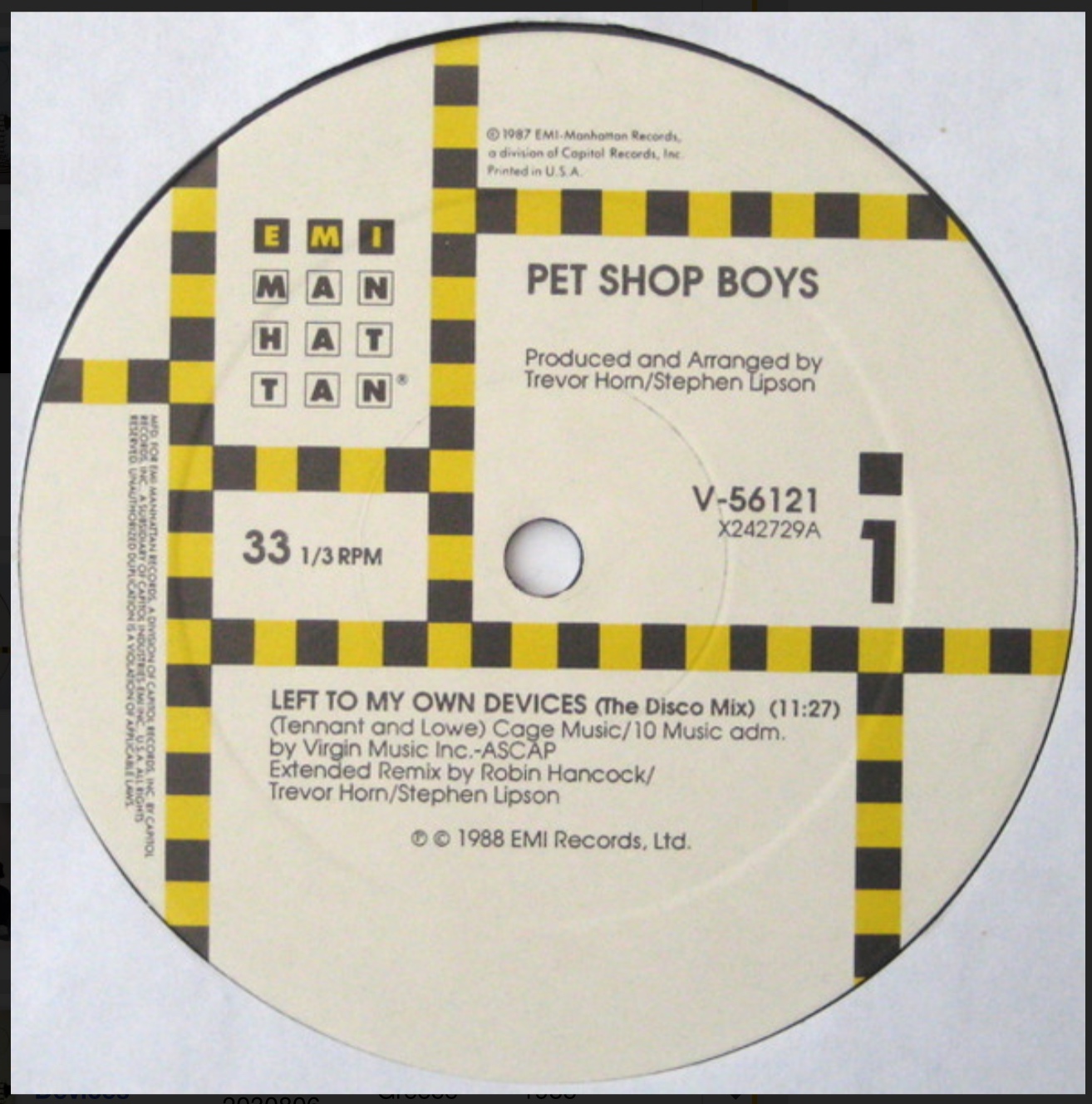
 

PET SHOP BOYS - LEFT TO MY OWN DEVICES


Publicació: 14 de novembre de 1988

Llistes: Regne Unit: #4   EUA: #84


"Left to My Own Devices" és una cançó llançada al novembre de 1988 com el segon single del tercer àlbum d'estudi dels Pet Shop Boys, "Introspective". Servint com a pista principal de l'àlbum, va superar l'èxit del primer senzill de l'LP, "Domino Dancing", assolint tres posicions més al UK Singles Chart, arribant al número quatre. És destacable el fet que aquesta va ser la primera gravació dels Pet Shop Boys amb una orquestra, arranjada per Richard Niles. Des del seu llançament, la cançó s'ha convertit en un element habitual de les actuacions en viu dels Pet Shop Boys.


La versió de "Left to My Own Devices" presentada a l'àlbum "Introspective" es va editar a una longitud més curta per a la ràdio en el seu llançament com a senzill. Tant Neil Tennant com Chris Lowe van expressar aquesta intenció en el llibret que acompanya la reedició d’"Introspective" el 2001, amb l'objectiu d'un àlbum on cada pista pogués funcionar com a senzill, desviant-se del format típic de cançó pop de quatre minuts.


"Left to My Own Devices" compta amb el suport vocal destacat de la mezzosoprano britànica Sally Bradshaw. Neil Tennant va assenyalar que Trevor Horn va suggerir que Bradshaw cantés "house" al principi per reflectir la prevalent tendència d’aquesta música en les llistes de l'època. La pista, com moltes d’"Introspective", exhibeix una influència forta de l'estil de música house.


Les frases "Pick up a brochure about the sun / Learn to ignore what the photographer saw" (Recolliu un fulletó sobre el sol / Apreneu a ignorar el que va veure el fotògraf) a "Left to My Own Devices" potencialment al·ludeixen al tabloide britànic The Sun, conegut pel xafardeig i les acusacions dubtoses sobre celebritats, incloent-hi celebritats homosexuals. La menció d'un fotògraf suggereix paparazzis, de qui celebritats com Neil i Chris podrien haver de aprendre a ignorar les invasions de la privacitat. Aquesta referència és particularment rellevant considerant casos com la demanda d'Elton John contra The Sun a finals dels anys 80, en el moment de la gravació de la cançó, que va resultar en un acord de difamació i disculpa del tabloide.


La frase "In a secret life I was a Roundhead general" (En una vida secreta vaig ser un general de la Roundhead), fa referència a les forces proparlamentàries durant la Guerra Civil anglesa, conegudes com a Roundheads. Es distingien pels seus tallats de cabell curts, a diferència dels Cavallers de cabells llargs que donaven suport al rei Carles I. Neil Tennant, reflexionant sobre la seva infància, assenyala que hauria estat més simpatitzant dels Cavallers, tot i els seus posteriors sentiments anti-royalistes com a adult.


La frase "Turn on the news and drink some tea / Maybe if you're with me, we'll do some shopping" (posa les notícies i beu una mica de te / Potser si estàs amb mi, farem una mica de compres) originalment contemplava "…we'll drink some coffee" (...beurem cafè), Tennant va sentir que era massa banal i va dir: "Sabia que tothom diria que era patètic, una altra cançó dels Pet Shop Boys que esmenta anar de compres, però vaig decidir que 'cafè' era encara més patètic." Malgrat anticipar crítiques per la referència estereotipada, Tennant va trobar l'opció posterior més adequada, demostrant la seva atenció als detalls en l'elaboració de les lletres dels Pet Shop Boys.


El videoclip de "Left to My Own Devices", dirigit pel seu director habitual, Eric Watson, mostra Neil Tennant i Chris Lowe ballant sobre un terra de vidre invisible, filmat des d'una perspectiva de baix cap amunt. Els acompanyen acròbates, també vistos des del mateix angle ascendent, i a vegades uns globus s’afegien a l’espectacle visual.


PET SHOP BOYS - LEFT TO MY OWN DEVICES 


Released: November 14, 1988

Charted:  UK: #4  US: #84 


"Left to My Own Devices" is a song released in November 1988 as the second single from their third studio album, “Introspective”. Serving as the album's lead track, it surpassed the performance of the album's lead single, "Domino Dancing", charting three positions higher on the UK Singles Chart, reaching number four. Notably, it marked Pet Shop Boys' first recording with an orchestra, arranged by Richard Niles. Since its release, the song has become a mainstay of Pet Shop Boys' live performances.


The longer version of "Left to My Own Devices" featured on the Introspective album was edited down to a more radio-friendly length for its release as a single, in line with Pet Shop Boys' desire to stand out from other artists at the time. Both Neil Tennant and Chris Lowe expressed this intention in the booklet accompanying the 2001 re-release of Introspective, aiming for an album where each track could function as a single, deviating from the typical four-minute pop song format.


"Left to My Own Devices" features prominent support vocals by British operatic mezzo-soprano Sally Bradshaw. Neil Tennant noted that Trevor Horn suggested Bradshaw sing "house" at the beginning to reflect the prevalent "house music" trend in the charts at the time. The track, like much of Introspective, exhibits a strong influence from the house style of dance music.


The lines "Pick up a brochure about the sun / Learn to ignore what the photographer saw" in "Left to My Own Devices" potentially allude to the British tabloid The Sun, known for gossip and dubious allegations about celebrities, including gay celebrities. The mention of a photographer suggests paparazzi, whose invasions of privacy celebrities like Neil and Chris might need to learn to ignore. This reference is particularly relevant considering instances like Elton John's lawsuit against The Sun in the late 1980s, around the time of the song's recording, which resulted in a libel settlement and apology from the tabloid.


The line "In a secret life I was a Roundhead general" from "Left to My Own Devices" references the pro-Parliamentary forces during the English Civil War, known as the Roundheads. They were distinguished by their short haircuts, unlike the long-haired Cavaliers who supported King Charles I. Neil Tennant, reflecting on his childhood, notes that he would have been more sympathetic to the Cavaliers, despite his later anti-royalist sentiments as an adult.


The line "Turn on the news and drink some tea / Maybe if you're with me, we'll do some shopping". Originally contemplating "…we'll drink some coffee", Tennant felt it was too banal and said: "I knew everyone would say it was pathetic—another Pet Shop Boys song mentioning shopping—but I decided 'coffee' was even more pathetic." Despite anticipating criticism for the stereotypical reference, Tennant found the latter option more fitting, demonstrating his attention to detail in crafting Pet Shop Boys' lyrics.


The music video for "Left to My Own Devices," helmed by Pet Shop Boys' frequent director Eric Watson, features Neil Tennant and Chris Lowe dancing on an unseen glass floor, shot from a bottom-up perspective. Accompanying them are acrobats, also viewed from the same upward angle, and at times, balloons add to the visual spectacle.


6.2.24


PET SHOP BOYS - SUBURBIA


Publicació: 22 de setembre de 1986

Llistes: EUA: #70 Regne Unit: #8 


"Suburbia" és una exploració dels aspectes més foscos de la vida suburbana, retratant-la com un lloc on les tensions subjacents i els elements desagradables coexisteixen sota una façana de normalitat. La cançó s’inspira en la pel·lícula del mateix nom dirigida per Penelope Spheeris i en esdeveniments reals com els disturbis de Brixton.


Les observacions de Neil Tennant sobre l'avorriment i la tensió subjacent entre la joventut desafectada als suburbis es reflecteixen en la lletra de la cançó i en el seu ús d'efectes sonors. La incorporació d'aquests sons de violència suburbana, disturbis i vidres trencats afegeix capes d'intensitat i realisme a la cançó, capturant l'atmosfera d'inquietud i desil·lusió que pot bullir sota la superfície de barris suburbans aparentment tranquils. La inclusió de gossos que borden en la versió enregistrada del single amplifica encara més el sentiment d'inquietud i amenaça que hi ha amagat dins dels paisatges suburbans.


"Suburbia" va experimentar una transformació significativa amb la versió del single, diferent de la gravació de l'àlbum, principalment en termes de producció i qualitat de so. Produïda per Julian Mendelsohn, la versió del single va buscar millorar el seu atractiu comercial amplificant la seva intensitat sonora i fent-la més accesible. La decisió de reformular la pista amb un productor diferent era estratègica, amb l'objectiu de maximitzar el seu potencial d'èxit i connectar amb un públic més ampli. El resultat va ser una interpretació de "Suburbia" més polida i dinàmica, caracteritzada per un so més contundent i uns valors de producció més elevats. En termes d'elements musicals, l'observació de Chris Lowe sobre la similitud de la línia de baix amb "Into the Groove" de Madonna subratlla la interconnexió de la música pop i les influències subtils que conformen la seva composició.


L'etimologia de la paraula "suburbia" remunta a l'antic llatí, on "suburbium" es referia a les àrees perifèriques que envoltaven una ciutat. Amb el temps, "suburbia" va evolucionar cap a una de diverses formes del plural de "suburbium", indicant les vores o la perifèria dels centres urbans. En anglès, "suburbia" s'ha utilitzat des del segle XIX, denotant les àrees residencials adjacents a les ciutats. Tot i que la lletra de Neil Tennant a la cançó "Suburbia" suggereix una barreja de "suburb" i "utopia", l'origen de la paraula es troba en el llatí i la seva associació amb el context geogràfic dels entorns urbans.


El vídeo musical de "Suburbia" dirigit per Eric Watson juxtaposa imatges del duo en un suburbi de Los Angeles, coincidint amb la seva presència als MTV Video Music Awards d'aquell any, amb escenes que representen els suburbis britànics, filmades a Kingston-upon-Thames, una àrea suburbana al sud-oest de Londres. Aquest contrast visual emfatitza l'exploració temàtica de la vida suburbana presentada a la cançó.


PET SHOP BOYS - SUBURBIA 


Released: September 22, 1986

Charted:  US: #70   UK: #8 


"Suburbia" is an exploration of the darker aspects of suburban life, portraying it as a place where underlying tensions and unsavory elements coexist beneath a facade of normalcy. The song draw inspiration from the film of the same name directed by Penelope Spheeris and real-life events such as the Brixton riots. 


Neil Tennant's observations about the boredom and underlying tension among disaffected youth in suburbia are reflected in the song's lyrics and its evocative use of sound effects. The incorporation this sounds of suburban violence, riots, and smashing glass adds layers of intensity and realism to the song, capturing the atmosphere of unrest and disillusionment that can simmer beneath the surface of seemingly tranquil suburban neighborhoods. The inclusion of snarling dogs in the re-recorded single version further amplifies the sense of unease and threat lurking within suburban landscapes.


"Suburbia" underwent a significant transformation with the single version, distinct from the album recording, primarily in terms of production and sound quality. Produced by Julian Mendelsohn, the single version aimed to enhance its commercial appeal by amplifying its sonic intensity and making it more expansive in scope. The decision to rework the track with a different producer was strategic, aimed at maximizing its hit potential and resonating with a broader audience. The result was a more polished and dynamic rendition of "Suburbia," characterized by a larger-than-life sound and heightened production values. In terms of musical elements, Chris Lowe's observation regarding the bassline's similarity to Madonna's "Into the Groove" underscores the interconnectedness of pop music and the subtle influences that shape its composition. 


The etymology of the word "suburbia" traces back to ancient Latin, where "suburbium" referred to the outlying areas surrounding a city. Over time, "suburbia" evolved into one of several plural forms of "suburbium," indicating the outskirts or periphery of urban centers. In English, "suburbia" has been in use since at least the nineteenth century, denoting the residential areas adjacent to cities. While Neil Tennant's lyrics in the song "Suburbia" playfully suggest a blending of "suburb" and "utopia," the word's origin lies in Latin and its association with the geographical context of urban environments.


The music video for "Suburbia" directed by Eric Watson juxtaposes footage of the duo in a Los Angeles suburb, coinciding with their presence at the MTV Video Music Awards that year, with scenes depicting British suburbia, filmed in Kingston-upon-Thames, a suburban area in southwest London. This visual contrast emphasizes the thematic exploration of suburban life presented in the song.