Total de visualitzacions de pàgina:

14.2.24


DONNA SUMMER - BAD GIRLS


Publicació: 23 de juny de 1979

Llistes: Regne Unit: #14   EUA: #1 (5 setmanes)


"Bad Girls", llançada el 1979 com a segon senzill del seu àlbum homònim, va assolir un èxit massiu. Produïda per Giorgio Moroder i Pete Bellotte, la cançó va ser coescrita per Summer juntament amb membres de Brooklyn Dreams: Bruce Sudano, Joe "Bean" Esposito i Edward "Eddie" Hokenson.


L'impacte de la cançó va ser notable, assolint el top 10 en set països. Als Estats Units, va dominar les llistes, passant cinc setmanes al número u de la llista Billboard Hot 100, des del 14 de juliol fins a l'11 d'agost de 1979. Amb més de dos milions de còpies venudes, "Bad Girls" es va convertir en un dels senzills més exitosos de Summer, juntament amb "Hot Stuff". El seu èxit també va propulsar l'àlbum "Bad Girls" a l'estatus de multiplatí a Amèrica, consolidant el prestigi de Donna Summer com a icona de la música disco.


"Bad Girls" porta una narrativa més profunda sota el seu ritme disco: la representació de prostitutes. La inspiració per a la cançó va sorgir en Donna Summer mentre treballava a les oficines de Casablanca Records a Los Angeles. La seva secretària, que era negra, va compartir les seves experiències d'haver estat assetjada per la policia mentre feia encarregs pel Sunset Boulevard, conegut per les seves activitats il·lícites. Summer es va indignar per aquesta injustícia, però va trobar inspiració en la història de la secretària.


"Bad Girls" es va afrontar a la resistència inicial per part del cap del segell de Donna Summer, Neil Bogart, que creia que la cançó era més adient per a artistes com Labelle o Cher, més que per a ella mateixa. Desanimada per la reacció de Bogart, Summer va deixar de banda la cançó. Després d'un temps de discussions, la maqueta de la cançó va quedar adormida en un calaix durant dos anys. No obstant això, el destí va intervenir quan l'enginyer Steve Smith va trobar la maqueta oblidada mentre buscava cintes buides. Smith va recordar Summer l’existència de la cançó, fent reviure el seu interès. També va compartir el descobriment amb el productor Giorgio Moroder, qui, juntament amb Pete Bellotte, va dirigir la producció d'una nova versió de "Bad Girls".


Les populars interjeccions vocals de "toot-toot" i "beep-beep" de Donna Summer van sorgir espontàniament a l'estudi després de completar la pista. Sentint que certes parts de la cançó semblaven una mica disperses, Summer va introduir aquests sons de cotxe, imitant les bocines que normalment cridarien l'atenció de les prostitutes al Sunset Boulevard.


"Bad Girls" va rebre nominacions a la Cançó Pop / Rock Preferida als Premis American Music del 1980, i Donna Summer va guanyar el premi a l'Artista Femenina de Pop / Rock Preferida. A més, la cançó va rebre una nominació al Grammy a la Millor Gravació de Disco als 22s Premis Grammy Anuals.


DONNA SUMMER - BAD GIRLS


Released: June 23, 1979

Charted:  UK: #14   US: #1 (5 weeks) 


"Bad Girls" released in 1979 as the second single from her album of the same name, soared to massive success. Produced by Giorgio Moroder and Pete Bellotte, the song was co-written by Summer along with members of Brooklyn Dreams: Bruce Sudano, Joe "Bean" Esposito, and Edward "Eddie" Hokenson.


The track's impact was remarkable, achieving Top 10 status in seven countries. In the United States, it dominated the charts, spending an impressive five weeks at the number one spot on the Billboard Hot 100 from July 14 to August 11, 1979. With over two million copies sold, "Bad Girls" joined "Hot Stuff" as one of Summer's most successful singles. Its success also propelled the Bad Girls album to multi-platinum status in the United States, cementing Donna Summer's status as a disco icon.


"Bad Girls" carries a deeper narrative beneath its disco beats: the portrayal of prostitutes. The inspiration for the song struck Donna Summer while she was working at the Casablanca Records offices in Los Angeles. Her secretary, who was black, shared her experiences of being harassed by the police while running errands down Sunset Boulevard, notorious for its illicit activities. Summer was angered by this injustice but found inspiration in the secretary's story. 


"Bad Girls" faced initial resistance from Donna Summer's label head, Neil Bogart, who believed the song was more suited for artists like Labelle or Cher, rather than Summer herself. Disheartened by Bogart's reaction, Summer set aside the song. After a time of discussions, the demo of the song slept in a drawer for two years. However, fate intervened when engineer Steve Smith stumbled upon the forgotten demo while searching for blank tapes. Smith reminded Summer of the track, reigniting her interest. He also shared the discovery with producer Giorgio Moroder, who, along with Pete Bellotte, helmed the production of a new version of "Bad Girls." 


Donna Summer's inventive vocal interjections of "toot-toot" and "beep-beep" emerged spontaneously in the studio after the completion of the track. Sensing that certain parts of the song felt somewhat sparse, Summer introduced these car sounds, mimicking the horns that would typically signal the attention of the prostitutes on Sunset Boulevard. 


"Bad Girls" received nominations for Favorite Pop/Rock Single at the American Music Awards of 1980, and Donna Summer won the award for Favorite Pop/Rock Female Artist. Additionally, the song earned a nomination for the Grammy Award for Best Disco Recording at the 22nd Annual Grammy Awards.




DONNA SUMMER (THE QUEEN OF DISCO)


After the massive success of “Love to love you baby”,  Donna Summer's production increased and several albums were released consecutively in the period between 1976 and 1978 That they catapulted her definitely as the queen of the disco sound just before the explosion of the genre in 1977 with “Saturday Night Fever”. Donna Summer was also the first artist to release four consecutive double LPs, three of which reached No. 1 in the United States. Let's make a brief review of some of the most significant songs of this time. 


SPRING AFFAIR


"Spring Affair" is a vibrant track featured on Donna Summer's 1976 album “Four Seasons of Love”. As the opening song of the album, it embodies the essence of the spring phase within the album's conceptual framework, symbolizing the blossoming of a new romantic relationship, seamlessly blending dreamy, sexy, and slightly spaced-out elements into a captivating dancefloor-focused composition. Co-written by Donna Summer, Giorgio Moroder, and Pete Bellotte, the song captures the excitement and vitality of newfound love.


Clocking in at over eight minutes, "Spring Affair" exudes an uptempo energy that sets the tone for the rest of the album. While the full version extends the musical journey, a shorter edit was prepared for its release as a single, making it more accessible to radio audiences.


The collaboration with Giorgio Moroder's house band, the Munich Machine, proves to be instrumental in crafting the track's mesmerizing groove, with its electric piano-led instrumentation. Summer's vocals add an extra layer of allure and sensuality to the song, complementing the dynamic instrumentation with her unmistakable voice. 


LOVE’S UNKIND


"Love's Unkind" is a 1977 song penned and produced by Giorgio Moroder and Pete Bellotte, featuring lyrics and vocals by Donna Summer. The track was part of the Donna Summer album, “I Remember Yesterday”, which creatively melded modern disco beats with nostalgic sounds from previous decades. Initially released as a single in Europe in November 1977, "Love's Unkind" soared to number three in the UK and peaked at number 32 in the Netherlands.


While "Love's Unkind" was not issued as a single in the USA, it achieved success on the dance charts as part of the “I Remember Yesterday” album. During that era, entire albums could chart as one entry on specific charts, contributing to its prominence on the dance charts. The song's lyrics explore themes of high school crushes and love triangles.


I LOVE YOU


"I Love You" is a track featured on her 1977 sixth studio album, “Once Upon a Time”. The song attained a peak position of number 10 on the UK Singles Chart and reached number 37 on the US Billboard Hot 100. Additionally, "I Love You" achieved chart success in Canada, Norway, and Spain, reaching positions 29, 10, and 24 respectively.


Originally part of the “Once Upon a Time” album, "I Love You" was edited for release as a single, adjusting its length for radio play. The album itself is a double LP concept album that narrates a modern-day Cinderella story, depicting a journey from rags to riches. Positioned toward the end of the album, "I Love You" encapsulates the moment when the main character encounters the object of her affection, and they reciprocate their love for each other. Described by Record World as a "swirling, melodic disco" track, "I Love You" embodies the romantic essence of the album's narrative, adding depth to the storyline and contributing to its thematic cohesion.


DOWN DEEP INSIDE


"Down Deep Inside" serves as the theme song for the 1977 film “The Deep”. Composed by British musician John Barry, the film's score received an additional layer of depth with the inclusion of lyrics by disco sensation Donna Summer. Released as a single, the track achieved success in various European countries, particularly the U.K., where it became a hit.


The soundtrack LP of the film offered listeners a variety of versions, including a slower tempo rendition of the song. An extended version of the original track was later featured on a CD edition of Donna Summer's 1978 album “Live and More”. "Down Deep Inside" earned a nomination for the Golden Globe Award for Best Original Song.


TRY ME, I KNOW WE CAN MAKE IT


"Try Me, I Know We Can Make It" is a dynamic disco track by Donna Summer, featured on her third studio album, “A Love Trilogy” (1976). Following the success of her breakthrough hit "Love to Love You Baby," which showcased an extended disco format, Summer continued the trend with this song, which exceeded eighteen minutes in length. The track's extended format allowed for immersive and evolving musical arrangements, a hallmark of disco music during the era.


While "Try Me, I Know We Can Make It" achieved modest chart success, peaking at number 80 on the US Billboard Hot 100 and reaching number 35 on the R&B singles chart, its true impact was felt within the nightclub scene. The song soared to the top of the Dance Club Songs chart, becoming Summer's second number-one single in that category and maintaining its position for three weeks.


RUMOUR HAS IT


"Rumour Has It" released in 1978, is a captivating blend of disco, funk, rock, and electronica, making it an early example of cross-genre experimentation in pop music. The song was featured on Summer's album “Once Upon a Time”, a concept album that narrates a fairytale-like journey of a girl's transformation from poverty to prosperity. Positioned towards the album's conclusion, "Rumour Has It" depicts the main character's anticipation upon hearing that someone is seeking a girl like her, fostering hopes that the person in question is someone she has admired.


Despite achieving only moderate chart success, peaking at number 53 in the US, number 19 in the UK, and number 20 in the Netherlands, "Rumour Has It" remains a noteworthy piece in Summer's discography. “Once Upon a Time” stands out for its electronic suite on side 2, which left a significant impact on various musical movements, including punk rock and the emerging new wave scene of the 1980s.


13.2.24


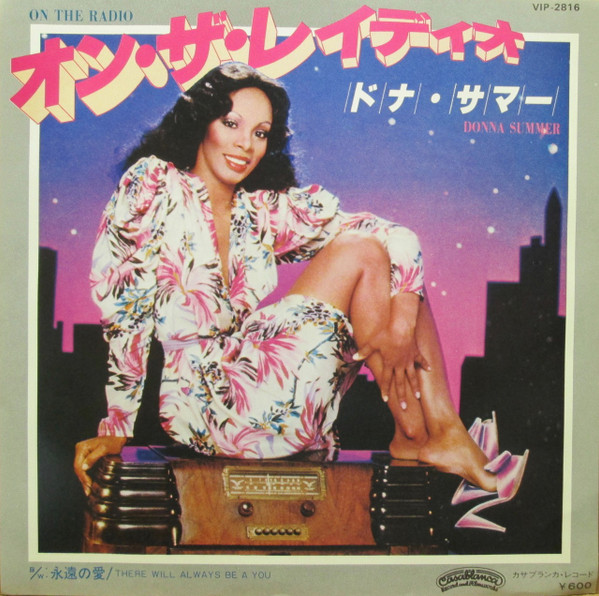
DONNA SUMMER - ON THE RADIO

Estrena: 23 de novembre de 1979

Llistes: Regne Unit: #32  EUA: #5


"On the Radio" és un clàssic de Donna Summer, produït pel llegendari Giorgio Moroder i llançat a finals de 1979 sota el segell discogràfic Casablanca. La cançó es va convertir en el punt central del primer àlbum de recopilació internacional de Summer, "On the Radio: Greatest Hits Volumes I & II".


El tema estava disponible en tres formats: el senzill de 45 rpm per a ràdio, la versió estesa de més de 5 minuts inclosa l'àlbum doble dels Grans èxits de Summer, i una versió promocional de DJ de més de 7 minuts llançada en maxi-single, també inclosa en el CD doble Bad Girls. "On the Radio" va rebre una nominació als Premis Grammy a la Millor Actuació Vocal Pop Femenina, tot i que finalment va perdre davant de "The Rose" de Bette Midler.


Donna Summer va trobar inspiració per a la lletra en un disc de Stephen Bishop que estava sobre el seu piano. Admirava la perspicàcia de Bishop en la composició de cançons i es va imaginar com frasejaria certes línies. Mentre reflexionava, la frase "must have fallen out of a hole in your old brown overcoat" (Deu haver caigut d'un forat del teu vell abric marró) li va impactar com un llampec. Amb aquesta frase, va sentir que coneixia el personatge de la cançó, el que estava passant i el que s'havia de dir. Amb aquesta claredat recentment descoberta, va entrar a l'estudi i va enregistrar la cançó gairebé textualment, transmetent les emocions i les experiències que va imaginar per al personatge.


La relació de Donna Summer amb Bruce Sudano dels Brooklyn Dreams va influir en la creació de "On the Radio". Quan Giorgio Moroder va enviar a Summer la pista, Sudano va sentir que estava destinada per an ella i la va encoratjar a escriure la lletra  ella mateixa. Inicialment reticent, Summer va acabar escrivint la cançó, expressant l'esperança que la música a la ràdio transmetria el seu amor a algú especial. La associació personal i professional de Summer i Sudano va perdurar fins a la seva mort el 2012.


DONNA SUMMER - ON THE RADIO 


Released: November 23, 1979

Charted:  UK: #32   US: #5 


"On the Radio" is a timeless classic by Donna Summer, produced by the legendary Giorgio Moroder and released in late 1979 under the Casablanca record label. The song became a centerpiece of Summer's first international compilation album, "On the Radio: Greatest Hits Volumes I & II." 


The track was available in three formats: the radio 45rpm single, the extended 5+ minute version featured on Summer's Greatest Hits double album package, and a DJ Promo 7+ minute version released on 12" single, also included on Bad Girls CD digipack double CD release. "On the Radio" received a Grammy Award nomination for Best Female Pop Vocal Performance, although it ultimately lost to Bette Midler's "The Rose." 


Donna Summer found inspiration for the lyrics from a Stephen Bishop record that was lying on her piano. She admired Bishop's cleverness in songwriting and imagined how he would phrase certain lines. As she pondered, the line "must have fallen out of a hole in your old brown overcoat" struck her like a lightning bolt. With that line, she felt she knew the character in the song, what she was going through, and what needed to be said. With this newfound clarity, she went into the studio and recorded the song almost verbatim, conveying the emotions and experiences she envisioned for the character.


Donna Summer's relationship with Bruce Sudano from Brooklyn Dreams influenced the creation of "On the Radio." When Giorgio Moroder sent Summer the track, Sudano felt it was meant for her and encouraged her to write the lyrics herself. Initially hesitant, Summer eventually penned the song, expressing the hope that the music on the radio would convey her love to someone special. Summer and Sudano's personal and professional partnership endured until her passing in 2012.