"At the Zoo" is one of Simon & Garfunkel's singles released in 1967. It's a tribute to Paul Simon's hometown of New York City and was originally written for the soundtrack of "The Graduate," specifically for the scene set at the San Francisco Zoo, but finally the song was not used in the film.
"At the Zoo" was released on Simon & Garfunkel's fourth studio album, "Bookends” The album has a sort of concept album feel to it. The first side of "does contain songs that explore themes of age progression, while the second side features songs that didn't make the cut for the film "The Graduate." "At the Zoo" serves as the closing track for the second side of the album.
This track showcases Simon & Garfunkel's unique ability to infuse whimsy and playfulness into their music, creating a poetic and vivid portrayal of the animal kingdom. The imaginative descriptions of the animals, coupled with Paul Simon's clever wordplay, evoke a delightful and charming atmosphere.
"At the Zoo" found its way into various commercial and creative ventures. Licensing the song for TV commercials for the Bronx Zoo and the San Francisco Zoo in the late 1970s likely helped introduce the track to a new generation. Additionally, the release of the children's book "Simon and Garfunkel at the Zoo" in 1991 further immortalized the song's imagery. The alterations made to the lyrics and concepts, such as adding headlights to the hamsters, demonstrate how adaptations can maintain the essence of a song while catering to a different audience or medium.
There’s an alternate version of "At the Zoo" with significantly different lyrics. This version seems to explore themes of change and adaptation, particularly in the context of a musician's relationship while he's away on tour. Retaining the phrase "Something tells me" in both versions hints at a common thread running through the song's different iterations, despite the divergent lyrical content.
SIMON & GARFUNKEL - AMERICA
Released: April 3, 1968
Charted: US: #97 UK: #25
"America" is a song by Simon & Garfunkel from their album Bookends, released in 1968. Produced by the duo and Roy Halee, it was later released as the B-side of the single "For Emily, Whenever I May Find Her (live version)" in 1972, promoting their compilation album Simon and Garfunkel's Greatest Hits. Originally on the flip side, it was later switched to the A-side in November 1972 after peaking in the charts in July of the same year.
The songi narrates Paul Simon and his girlfriend Kathy Chitty's journey to America from England. The song delves into Simon's inner turmoil and dissatisfaction, capturing his confusion without pinpointing its source. The lyric "‘Kathy I’m lost,’ I said / Though I knew she was sleeping" encapsulates a profound sense of loneliness and vulnerability within restraint. It also reflects on the allure of the "American Dream," embodying the belief that success is inevitable upon reaching American shores.
"America" is characterized by its cinematic scope, narrating the singer's quest for a vanished America, alongside its beauty and ideals. Art Garfunkel likened the song to "young lovers with their adventure and optimism." The track features a folk essence embellished with a lilting soprano saxophone refrain and small pipe organ, evoking classic American Songbook pop structures.
"America" showcases the iconic harmonies of Paul Simon and Art Garfunkel, highlighting their ability to sing in perfect unison, a defining characteristic of their musical partnership. Garfunkel particularly appreciates the section where they sing, "And walked off to look for America," as it reflects a shared sense of earnestness and purpose. In a 1993 interview with Paul Zollo, Garfunkel described the moment as embodying a unified soul and attitude, portraying two college kids embarking on a journey with the same determination and curiosity.
The song experienced a revival in popularity, reaching a new audience, after its inclusion in Cameron Crowe's celebrated film Almost Famous in 2000. In an early scene set in 1968, the character Anita, portrayed by Zooey Deschanel, plays the song for her mother, played by Frances McDormand, as she explains her decision to leave home and pursue a career as a stewardess. Additionally, the financial services company American Express utilized the song in a series of widely viewed television commercials in the late 2010s.
In 2010, lyrics from "America" started appearing spray-painted on deserted structures and empty factories in Saginaw, Michigan, a town mentioned in the song. Paint Saginaw, a group of artists, initiated this project as a poignant reminder of the town's dwindling population, evoking a sense of homesickness among its residents. The entire lyrics of the song adorn 28 buildings across the city, including railroad tracks and bridge supports.
20.4.24
DEEP PURPLE - HIGHWAY STAR
Llançada: juliol de 1972 (Japó) setembre de 1972 (EUA)
Àlbum: Machine Head
"Highway Star" de Deep Purple és un himne clàssic del rock conegut pel seu ritme energètic i els impressionants solos de guitarra i orgue. Segons Roger Glover, baixista de Deep Purple, la banda va crear la cançó mentre viatjava en el seu autobús de gira cap a un concert al Portsmouth Guildhall el 13 de setembre de 1971. Sentint-se cansats del seu número d'obertura anterior, "Speed King", la banda va decidir crear alguna cosa nova, i "Highway Star" aviat es va convertir en el seu poderós inici de concert. La cançó va continuar evolucionant a través de les actuacions en directe abans de ser enregistrada oficialment per a l'àlbum “Machine Head” al desembre de 1971.
L'àlbum "Machine Head" de Deep Purple és llegendari, no només per la seva música sinó també per la història que hi ha darrere de la seva creació. L'inesperat incendi del Casino de Montreux, on gravaven, va obligar la banda a adaptar-se i trobar alternatives per enregistrar, portant-los al Grand Hotel. Malgrat el caos i la improvisació, van aconseguir captar la seva energia en directe i produir aquest àlbum icònic. I "Smoke on the Water", inspirada en l'incident de l'incendi del casino, es va convertir en un dels himnes de rock més reconeguts i celebrats de tots els temps.
"Highway Star" és un himne carregat d'adrenalina que celebra l'emoció de conduir ràpid. Amb els seus potents riffs de guitarra, el ritme i les veus energiques, la cançó captura l'essència de la velocitat i l'emoció. El seu impacte en l'escena musical és indiscutible, inspirant el desenvolupament del speed metal i influenciant innombrables bandes en els gèneres del rock i el metal.
Les versions en directe de "Highway Star" enregistrades per a diversos àlbums i actuacions mostren l'energia electritzant de la cançó i la virtuositat dels músics de Deep Purple. L'àlbum en directe de 1972 “Made in Japan” presenta potser la versió més famosa de la cançó, elogiada pel potent treball de guitarra de Ritchie Blackmore, incloent els seus acords tallants a la introducció i el seu notable solo, que barreja de manera perfecta elements de música clàssica amb rock. The Guardian va descriure encertadament la interpretació de Blackmore com una força de la natura en aquesta versió, capturant l'essència tant de Bach com de Jimi Hendrix en la seva interpretació.
DEEP PURPLE - HIGHWAY STAR
Released: July 1972 (Japan) September 1972 (US)
Album: Machine Head
"Highway Star" by Deep Purple is a classic rock anthem known for its energetic tempo and impressive guitar and organ solos. According to Deep Purple bass player Roger Glover, the band crafted the song while on their tour bus en route to a gig at the Portsmouth Guildhall on September 13, 1971. Feeling tired of their previous opening number, "Speed King," the band decided to create something new, and "Highway Star" soon became their dynamic opener. The song continued to evolve through live performances before being officially recorded for the “Machine Head” album in December 1971.
Deep Purple's "Machine Head" album is legendary, not just for its music but also for the story behind its creation. The unexpected turn of events, with the Montreux Casino burning down, forced the band to adapt and find alternative recording arrangements, leading them to the Grand Hotel. Despite the chaos and improvisation, they managed to harness their live energy and produce this iconic record. And "Smoke on the Water," inspired by the casino fire incident, became one of the most recognizable and celebrated rock anthems of all time.
"Highway Star" is an adrenaline-fueled anthem that celebrates the thrill of driving fast. With its powerful guitar riffs, driving rhythm, and energetic vocals, the song captures the essence of speed and excitement. Its impact on the music scene is undeniable, inspiring the development of speed metal and influencing countless bands in the rock and metal genres.
The live versions of "Highway Star" recorded for various albums and performances showcase the song's electrifying energy and the virtuosity of Deep Purple's musicians. The 1972 live album “Made in Japan” features perhaps the most famous rendition of the song, praised for Ritchie Blackmore's powerful guitar work, including his slashing chords in the intro and his remarkable solo, which seamlessly blends elements of classical music with rock. The Guardian aptly described Blackmore's playing as a force of nature on this version, capturing the essence of both Bach and Jimi Hendrix in his performance.
19.4.24
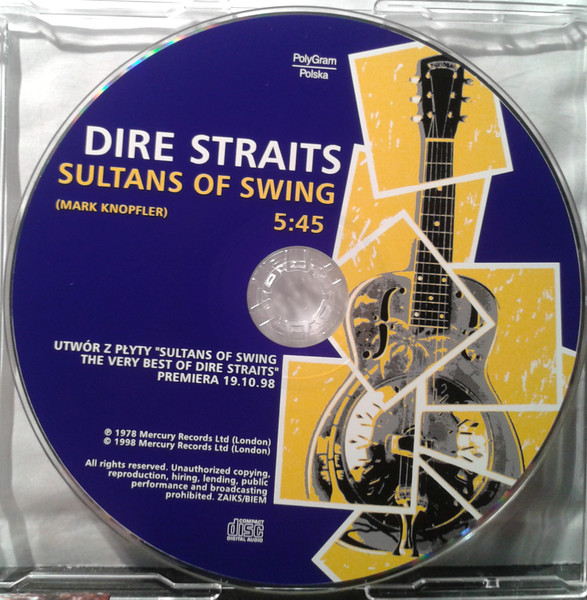
DIRE STRAITS - SULTANS OF SWING
Publicació: 19 de maig de 1978 (Regne Unit), gener de 1979 (EUA)
Llistes: Regne Unit: #8 EUA: #4
"Sultans of Swing" és un clàssic de la banda de rock britànica Dire Straits, escrit per Mark Knopfler, el seu vocalista i guitarrista principal. Inicialment enregistrada com a demo al juliol de 1977 als estudis Pathway de North London, la cançó va començar a guanyar popularitat després de rebre radiodifusió a la BBC Radio London. La seva creixent popularitat va cridar l'atenció dels executius discogràfics, portant a Dire Straits a signar un contracte amb Phonogram Records. La pista va ser regravada al febrer de 1978 als estudis Basing Street Studios per al seu àlbum debut, consolidant el seu lloc com a una peça emblemàtica del repertori de la banda.
La inspiració de Mark Knopfler per a "Sultans of Swing" va venir en una trobada divertida en un club d'Ipswich. En una nit plujosa, va topar amb una banda sense entusiasme que actuava davant d'una sala gairebé buida, amb només uns quants clients avorrits, Mentre la banda acabava la seva actuació sense gaire entusiasme, el cantant principal proclamava sincerament: "Bona nit i gràcies. Som els sultans of swing." Knopfler va trobar divertida la desconeció entre la grandesa autoproclamada de la banda i el seu rendiment poc impressionant. Reflexionant sobre el moment, va comentar que la banda, lluny de personificar la grandesa dels sultans, semblaven uns "rather tired little blokes in pullovers” (uns pobres trossos cansats amb jerseis).
Originalment llançada al maig de 1978, la cançó no va aconseguir entrar a les llistes de èxits. Tot i això, després d'una reedició al gener de 1979, va començar a guanyar popularitat i va entrar a les llistes de èxits pop americanes. Malgrat la reticència inicial de la BBC Radio a posar la cançó a causa del seu contingut líric, el seu èxit als Estats Units va provocar un canvi d'actitud. La cançó va arribar eventualment al top 10 tant al Regne Unit com als Estats Units, arribant al núm. 8 al UK Singles Chart i al núm. 4 al Billboard Hot 100. La seva popularitat va ajudar a augmentar les vendes d'àlbums, contribuint a l’èxit de l'àlbum debut de Dire Straits.
A l'àlbum "Alchemy" de 1984, l'enregistrament en viu de la cançó presenta un solo que allargava la pista fins a gairebé 11 minuts. Durant el concert històric del Live Aid el 1985, Dire Straits van interpretar una versió de gairebé 10 minuts amb seccions de saxòfon. Una altra memorable actuació en viu va tenir lloc al concert de tribut al 70è aniversari de Nelson Mandela el 1988 a Londres, on Eric Clapton es va unir a Dire Straits a l'escenari, proporcionant acompanyament amb la guitarra rítmica. Malgrat la seva popularitat, Knopfler va expressat estar esgotat de "Sultans of Swing", atribuint la seva fatiga al fet d'haver-la tocat un nombre infinit de vegades al llarg dels anys.
DIRE STRAITS - SULTANS OF SWING
Released: May 19, 1978 (UK), January 1979 (US)
Charted: UK: #8 US: #4
"Sultans of Swing" is a timeless classic by British rock band Dire Straits, penned by their lead vocalist and guitarist, Mark Knopfler. Initially recorded as a demo in July 1977 at Pathway Studios in North London, the song gained traction after receiving airplay on BBC Radio London. Its growing popularity caught the attention of record executives, leading to Dire Straits signing a contract with Phonogram Records. The track was later re-recorded in February 1978 at Basing Street Studios for their debut album, solidifying its place as a signature piece in the band's repertoire.
Mark Knopfler's inspiration for "Sultans of Swing" came from a rather mundane yet amusing encounter at a club in Ipswich. On a rainy evening, he stumbled upon a lackluster band performing to a nearly empty room, with only a handful of oblivious patrons. As the band wrapped up their lackluster set, the lead singer earnestly proclaimed, "Goodnight and thank you. We are the sultans of swing." Knopfler found humor in the disconnect between the band's self-proclaimed grandeur and their underwhelming performance. Reflecting on the moment, he remarked that the band, far from embodying the grandeur of sultans, appeared as "rather tired little blokes in pullovers."
Originally released in May 1978, the song failed to chart. However, following a re-issue in January 1979, it gained traction and entered the American pop chart. Despite initial reluctance from BBC Radio to play the song due to its lyrical content, its success in the US prompted a change in attitude. The song eventually reached the top 10 in both the UK and the US, peaking at No. 8 on the UK Singles Chart and No. 4 on the Billboard Hot 100. Its popularity helped boost album sales, contributing to the success of Dire Straits' debut album.
On the 1984 album "Alchemy," the live recording of the song features an extended solo, stretching the track to nearly 11 minutes. During the historic Live Aid concert in 1985, Dire Straits delivered a nearly 10-minute rendition of the song, featuring prominent saxophone sections. Another memorable live performance occurred at the 1988 Nelson Mandela 70th Birthday Tribute concert in London, where Eric Clapton joined Dire Straits on stage, providing rhythm guitar accompaniment to the song. Despite its popularity, Knopfler has expressed weariness with "Sultans of Swing," attributing his fatigue to having played it countless times over the years.