Total de visualitzacions de pàgina:

28.5.24


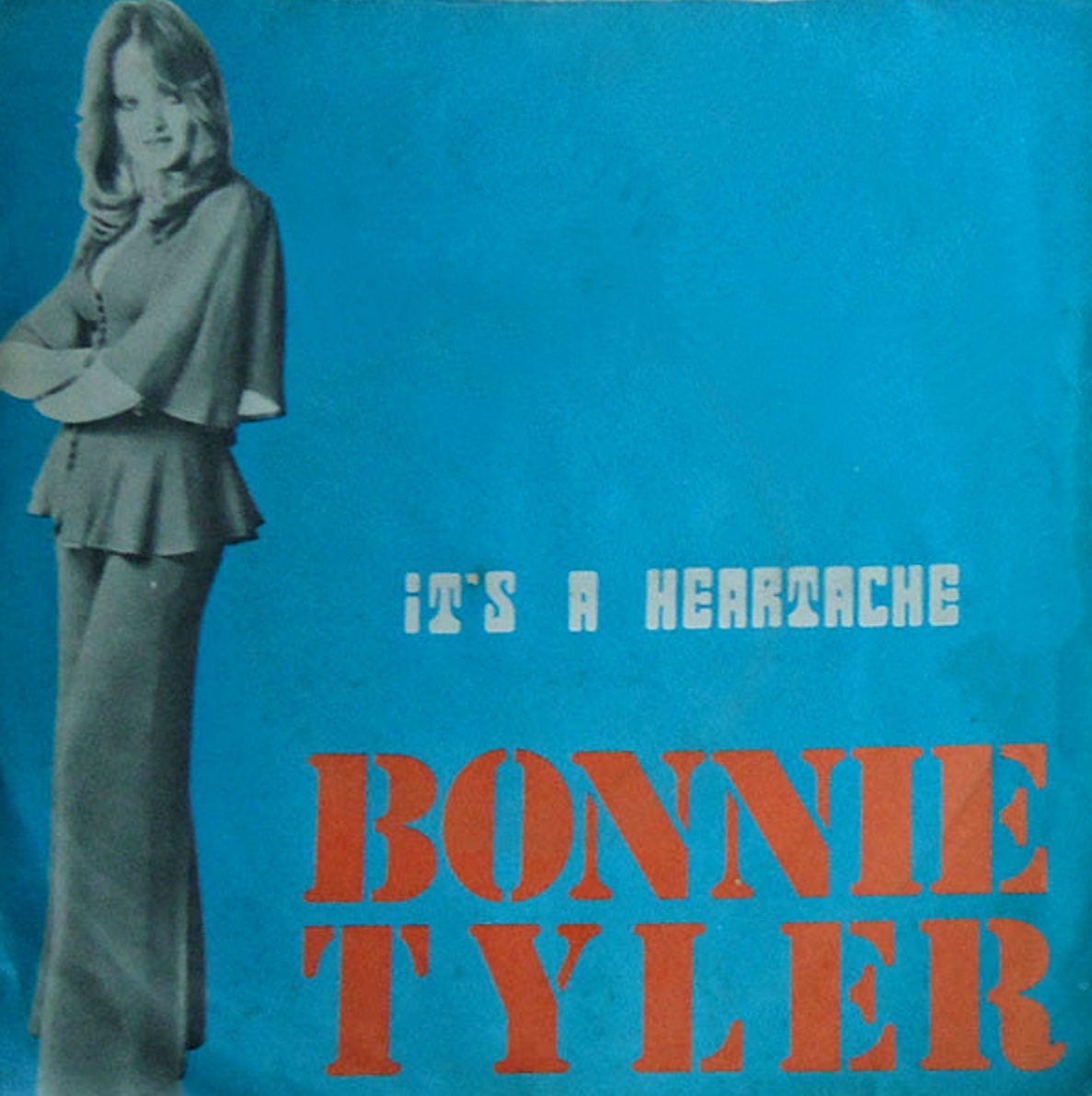
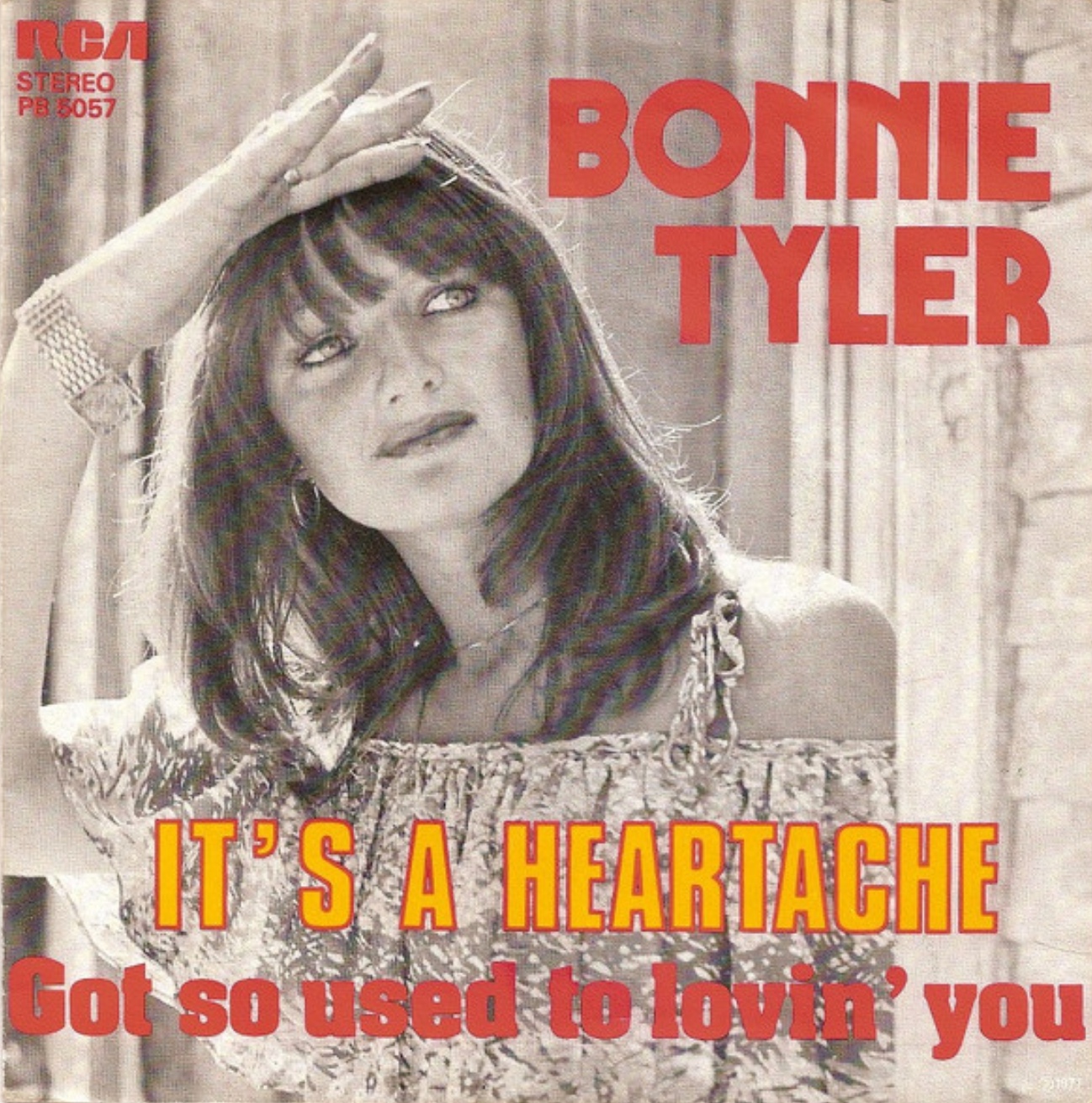
BONNIE TYLER - IT’S A HEARTACHE


Estrenada: 4 de novembre de 1977

Llistes: EUA: #3   Regne Unit: #4


"It's a Heartache" és una cançó de la cantant galesa Bonnie Tyler, escrita per Ronnie Scott i Steve Wolfe, i co-produïda amb David Mackay. Llançada al novembre de 1977 a través de RCA Records, el single va aconseguir l'èxit al capdavant de les llistes a Austràlia, Canadà i diversos països europeus. Va arribar al número 3 als EUA i al número 4 al Regne Unit.


El productor David Mackay va haver de lluitar per al llançament de "It's a Heartache" amenaçant de rescindir el seu contracte amb RCA si la discogràfica no llançava immediatament la cançó. RCA estava ocupada amb la reedició del catàleg d'Elvis Presley després de la seva recent mort, però Mackay, juntament amb els compositors Ronnie Scott i Steve Wolfe, van insistir en el llançament. Finalment, el single es va llançar el 4 de novembre de 1977 a parts d'Europa, incloent-hi el Regne Unit, i al març de 1978 als Estats Units i Canadà. Amb vendes globals d'aproximadament sis milions de còpies, "It's a Heartache" es va convertir en una sensació comercial.


La veu raspada de Bonnie Tyler, resultat dels nòduls que va desenvolupar per cantar als clubs nocturns galesos, es va convertir en el seu so distintiu després d'una cirurgia el 1976. Enlloc d'amenaçar la seva carrera, la cirurgia va transformar la seva veu, reminiscent de la de Rod Stewart, i va contribuir a l'èxit de la cançó. Carol Wetzel del Spokane Daily Chronicle va elogiar la veu de Bonnie Tyler a "It's a Heartache", contrastant-la amb el seu èxit anterior, "Lost in France", que va descriure com "res de l'altre món" possiblement perquè es va enregistrar abans que la veu de Tyler canviés.


BONNIE TYLER - IT’S A HEARTACHE


Released: November 4, 1977

Charted:  US: #3   UK: #4 


"It's a Heartache" is a song by Welsh singer Bonnie Tyler, written by Ronnie Scott and Steve Wolfe, and co-produced with David Mackay. Released in November 1977 through RCA Records, the single achieved chart-topping success in Australia, Canada, and various European countries. It reached No. 3 in the US and No. 4 in the UK.


Producer David Mackay had to fight for the release of "It's a Heartache" by threatening to terminate their contract with RCA if the label didn't release the track immediately. RCA was preoccupied with reissuing Elvis Presley's back catalogue after his recent death, but Mackay, along with songwriters Ronnie Scott and Steve Wolfe, insisted on the release. Eventually, the single was released on 4 November 1977 in parts of Europe, including the United Kingdom, and in March 1978 in the United States and Canada. With global sales of around six million copies, "It's a Heartache" became a commercial sensation.


Bonnie Tyler's distinctive rasp, a result of nodules she developed from singing in Welsh nightclubs, became her signature sound after a surgery in 1976. Instead of threatening her career, the surgery transformed her voice, reminiscent of Rod Stewart's, and contributed to the success of the song. Carol Wetzel from Spokane Daily Chronicle praised Bonnie Tyler's voice on "It's a Heartache," contrasting it with her previous hit, "Lost in France," which she described as "no big deal" possibly because it was recorded before Tyler's voice changed.


27.5.24


TOM PETTY & THE HEARTBREAKERS - HERE COMES MY GIRL


Released: April 7, 1980

Charted:  US: #59 


"Here Comes My Girl" is a song penned by Tom Petty and Mike Campbell, featured on Tom Petty and the Heartbreakers' acclaimed 1979 album, Damn the Torpedoes. It served as the album's third single, reaching number 59 on the U.S. Billboard Hot 100 chart on May 24, 1980. The track, along with "Refugee," originated from demos created by Heartbreakers guitarist Mike Campbell on a 4-track recorder in his home during the same week.


Mike Campbell reveal that Tom Petty experimented with various approaches to the verse before settling on a half-talking delivery. It was this stylistic choice that breathed life into the song and solidified its character.


In this song Petty chronicles his recurring experiences of being let down by a girl, yet finding himself drawn back to her irresistible allure whenever she's around. While the verses convey a sense of resignation as he acknowledges the cycle of disappointment, the chorus bursts forth with unabashed enthusiasm, reflecting the exhilaration he feels when she reappears, temporarily eclipsing his previous reservations.


Cash Box lauded "Here Comes My Girl" as a "truly excellent single," praising its "convincingly honest narrative intro" and likening its hook to that of The Byrds. Record World described it as a "raging ballad," noting Petty's "tough talk/sing vocal" that crescendos into a "pretty hook."


Notwithstanding being released before the MTV era, Tom Petty recognized the importance of visual storytelling and created a video for "Here Comes My Girl," along with "Refugee." Directed by John Goodhue, the video features the band performing the song in a studio setting, a simple yet effective approach that allowed viewers to focus on the music. This early foray into music videos laid the groundwork for Petty's later innovative visual work, earning him the prestigious MTV Video Vanguard Award in 1994.


TOM PETTY & THE HEARTBREAKERS - LEARNING TO FLY


Released: June 17, 1991

Charted:  UK: #46  US: #28 


"Learning to Fly" is a standout track from Tom Petty and the Heartbreakers' album "Into the Great Wide Open" released in 1991. Co-written by Tom Petty and Jeff Lynne, the song soared to success, reaching the top of the US Billboard Album Rock Tracks chart and peaking at number 28 on the Billboard Hot 100. In the UK, it debuted at number 65 on the Singles Chart, climbing to number 46 before exiting the top 75 after two weeks.


Many mistakenly interpret this song as being about drugs, but its origins lie in a TV interview with a pilot who spoke of the challenges of landing. Tom Petty drew inspiration from political events, like the Gulf War, and the dynamics within the band. "Learning to Fly" reflects a redemptive theme, subtly addressing personal and societal challenges.


Julien Temple, known for directing Petty's "Free Fallin'," helmed the video for "Learning to Fly." The visual narrative portrays a young boy navigating pivotal moments of adolescence, symbolically earning his wings along the journey.


The live rendition of the song features on Bose's playlist for tuning car audio systems. Bose's acoustical engineer, Mark Armitage, clarified to Car And Driver that the audience's collective singing, coupled with Petty's voice fading out, creates a profound sense of the venue's magnitude, enhancing the auditory experience when the system is finely calibrated.

On October 21, 2017, Bob Dylan paid tribute to Tom Petty by performing "Learning to Fly" at the First Bank Center. Dylan, expressing his grief to Rolling Stone, described Petty as a remarkable performer and a cherished friend, highlighting their collaboration in the Traveling Wilburys.


26.5.24


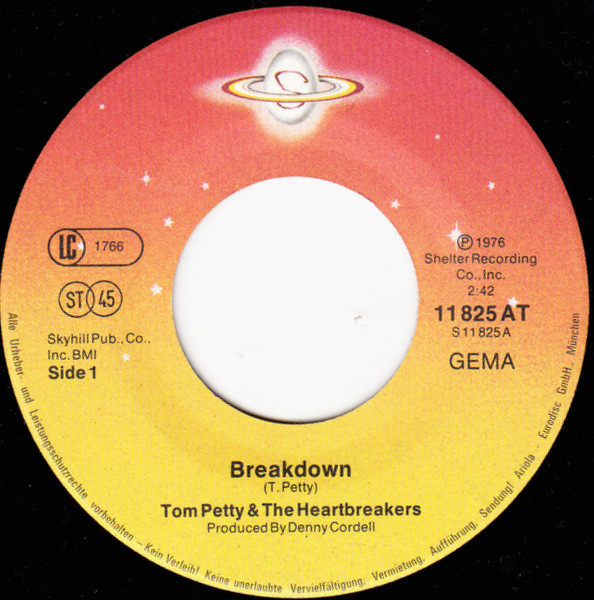
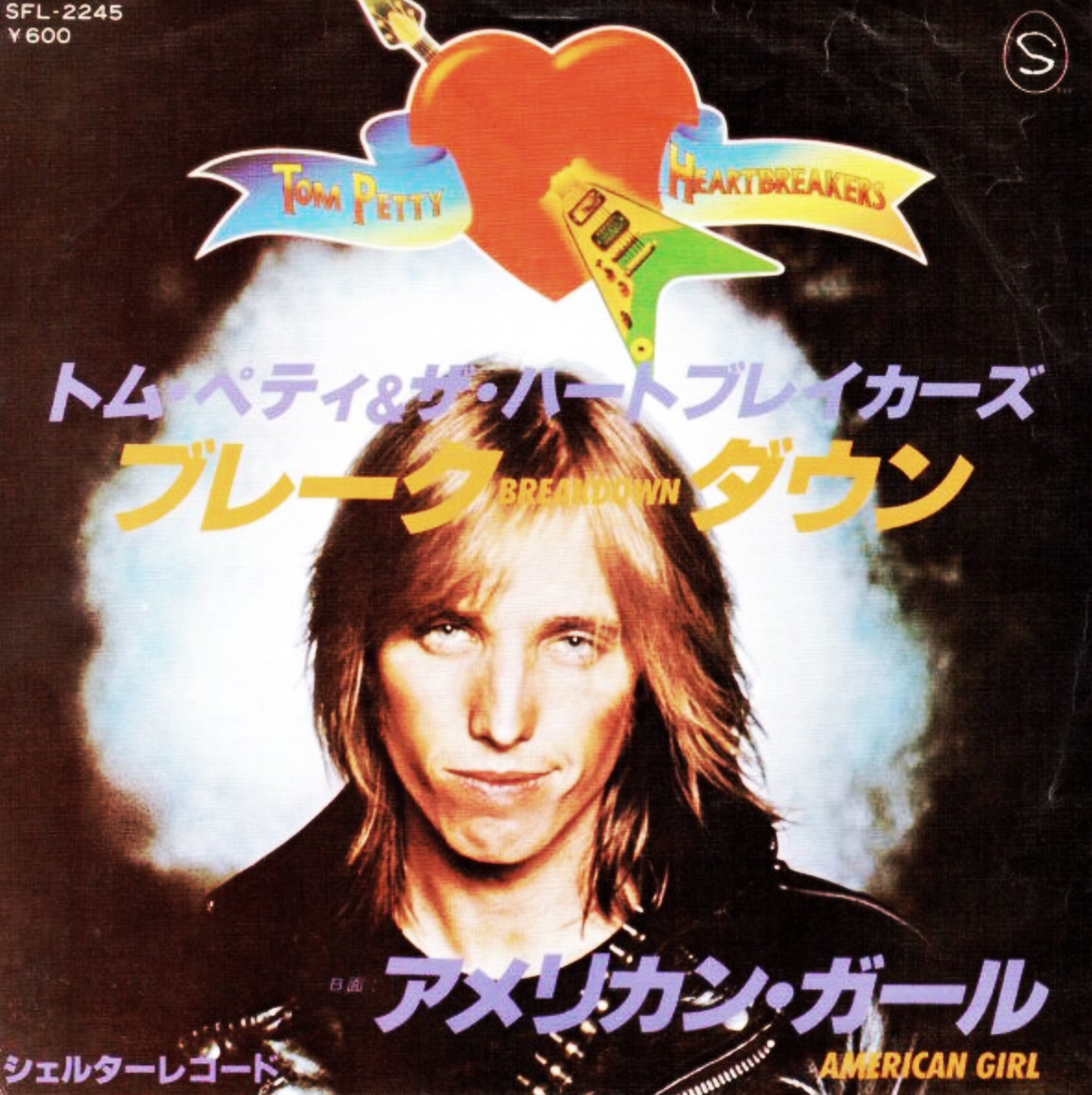
TOM PETTY & THE HEARTBREAKERS - BREAKDOWN


Released: November 1976

Charted:  US: #40 


"Breakdown" served as the inaugural single from Tom Petty and the Heartbreakers' self-titled debut album, achieving Top 40 success in both the United States and Canada. Originally exceeding seven minutes in duration, the track underwent significant trimming, ultimately being released in a condensed form, lasting less than half its original length, for its debut as Petty and the Heartbreakers' first single.


Initially, the iconic guitar riff in "Breakdown," crafted by Heartbreaker Mike Campbell, was reserved for the song's conclusion, but singer Dwight Twilley, known for his 1975 hit "I'm On Fire," suggested integrating it throughout the track. Petty embraced the idea and summoned the band to the studio in the dead of night for a re-recording session. Lyrically, "Breakdown" diverges from the verbosity of typical Tom Petty & the Heartbreakers tunes, with Petty expressing readiness to terminate a troubled relationship.


Tom Petty fondly reminisced about the passionate energy of his band during the recording of "Breakdown." He crafted the slinky, hauntingly minimalistic R&B-influenced track during a late-night break at Hollywood's Shelter Studios while working on his debut album. Petty, inspired by the moment, called the Heartbreakers back to the studio in the wee hours of the morning, and together they cut the song. Reflecting on the outcome, Petty remarked with pride, "It's really a perfect little record, isn't 


TOM PETTY & THE HEARTBREAKERS - DON’T COME AROUND HERE NO MORE


Released: February 28, 1985

Charted:  US: #13   UK: #50 


"Don't Come Around Here No More" is a collaboration between Tom Petty and Dave Stewart of Eurythmics. Released in February 1985 as the lead single from Tom Petty and the Heartbreakers' album "Southern Accents," the song originated from a romantic encounter that producer Dave Stewart had with Stevie Nicks of Fleetwood Mac.


After a show, Stewart went home with Nicks, but she kicked him out the next morning. Inspired by the experience, Stewart created a demo with a drum machine, synthesizer, and sitar, which led to the song's iconic chorus. Producer Jimmy Iovine, who was working with Nicks on her Bella Donna album, heard the demo and began writing the song for her. However, tensions arose between Nicks and Iovine during the recording session, leading Iovine to give the song to Tom Petty instead. Petty and Nicks had previously collaborated on "Stop Draggin' My Heart Around," so it was a fitting choice.


In addition to the core Heartbreakers lineup, "Don't Come Around Here No More" featured female backing vocals by Marilyn Martin and Sharon Celani, both known for their work with Stevie Nicks. Stephanie Spruill, who contributed vocals to Billy Idol's "Mony Mony," also lent her voice to the track. Other musicians included Daniel Rothmuller on cello and Dean Garcia on bass. Petty himself added piano to the recording, while Dave Stewart's original demo contributed sitar and keyboard elements.


The music video embraced an Alice In Wonderland theme, reflecting Dave Stewart's experience transitioning from England to Los Angeles. Directed by Jeff Stein, the video featured an elaborate set with black-and-white tiled backgrounds and oversized costumes, with Tom Petty portraying the Mad Hatter. Stewart made an appearance at the beginning, playing the sitar on a giant mushroom. The video's ending, where the girl is turned into a cake and eaten by the band, sparked controversy, leading to an alternative version where she isn't consumed. Despite the controversy, the video was a hit on MTV, helping to introduce Petty to a younger audience.