Total de visualitzacions de pàgina:

13.6.24


LED ZEPPELIN - OVER THE HILLS AND FAR AWAY


Llançament: 24 de maig de 1973

Posició als rànquings: EUA: #51


"Over the Hills and Far Away" és el tercer tema de l'àlbum del 1973 de Led Zeppelin, Houses of the Holy. Als Estats Units, també es va llançar com a single. Jimmy Page i Robert Plant van escriure la cançó el 1970 a Bron-Yr-Aur, una petita cabana a Gal·les on es van retirar després d'una esgotadora gira de concerts per Amèrica del Nord. Inicialment titulada "Many, Many Times," la música va estar inspirada en l'herència cèltica de Jimmy Page. Hi ha una vella cançó anglesa que data del segle XVIII amb el mateix títol, la qual podria haver influït en la elecció del títol de Led Zeppelin.


"Over the Hills and Far Away" va començar com una pista instrumental, amb Robert Plant afegint més tard lletres inspirades en "El Hobbit" de J.R.R. Tolkien i el poema del mateix nom de 1915. La cançó descriu el viatge aventurer dels Hobbits. La música es basava en la cançó "White Summer" dels Yardbirds, on Jimmy Page va tocar abans d'unir-se a Led Zeppelin.


La cançó comença amb una llarga introducció de guitarres acústiques de 6 i 12 cordes juntament amb la veu de Robert Plant. Després evoluciona en un crescendo, fins que la banda ataca amb tot el seu arsenal al minut 1:26. L'estructura de la cançó és força original. Aquesta és una cançó que només té estrofes, sense tornada, o una cançó que només té tornada, sense estrofes. En tot cas, és una de les millors cançons de Led Zeppelin. Una cançó en què es pot apreciar tot el que aquest grup va significar i la marca que van deixar amb la seva música. Al llarg de la cançó es pot apreciar la potent veu de Robert Plant, la bateria estrident de John Bonham i la guitarra acústica i elèctrica de Jimmy Page, incloent l’icònic riff d'obertura, les transicions perfectes d'acústic a elèctric, els canvis dinàmics i els espectaculars solos .


"Over the Hills and Far Away" era una peça habitual en les actuacions en directe de Led Zeppelin, fins i tot abans del seu llançament oficial a l'àlbum. Imatges arxivades de la cançó interpretada en directe a Seattle el 1977 i a Knebworth el 1979 es van utilitzar per a un vídeo distribuït oficialment per promocionar el llançament dels Remasters de Led Zeppelin el 1990. Aquest vídeo es va llançar simultàniament amb un single en CD.


LED ZEPPELIN - OVER THE HILLS AND FAR AWAY


Released: May 24, 1973

Charted: US: #51 


"Over the Hills and Far Away" is the third track from Led Zeppelin's 1973 album Houses of the Holy. In the US, it was also released as a single. Jimmy Page and Robert Plant penned the song in 1970 at Bron-Yr-Aur, a small cottage in Wales where they retreated after a taxing North American concert tour. Originally titled "Many, Many Times," the music was inspired by Jimmy Page's Celtic heritage. There's an old English song dating back to the 18th century with the same title, which may have influenced Led Zeppelin's choice of title.


"Over the Hills and Far Away" originated as an instrumental track, with Robert Plant later adding lyrics inspired by J.R.R. Tolkien's "The Hobbit" and the poem of the same name from 1915. The song describes the adventurous journey of the Hobbits. The music was based on the song "White Summer" by the Yardbirds, where Jimmy Page played before joining Led Zeppelin.


The song begins with a long introduction of 6- and 12-string acoustic guitars along with Robert Plant's vocals. From there it evolves in a crescendo, until the band attacks with all its arsenal at minute 1:26. The structure of the song is something original. This is a song that only has verses - no chorus - or a song that only has chorus - no verses. In any case, it is one of the best Led Zeppelin songs. A song in which you can appreciate everything that this group meant and the mark they left with their music. Throughout the song you can appreciate the powerful voice of Robert Plant, the thunderous drums of John Bonham, and the acoustic and electric guitar of Jimmy Page, including the iconic opening riff, seamless acoustic-to-electric transitions, dynamic shifts and intricate solos. 


"Over the Hills and Far Away" was a staple of Led Zeppelin's live performances, even before its official album release. Archived footage of the song being performed live in Seattle in 1977 and at Knebworth in 1979 was used for an officially distributed video to promote the 1990 Led Zeppelin Remasters release. This video was accompanied by a CD single release. 


12.6.24


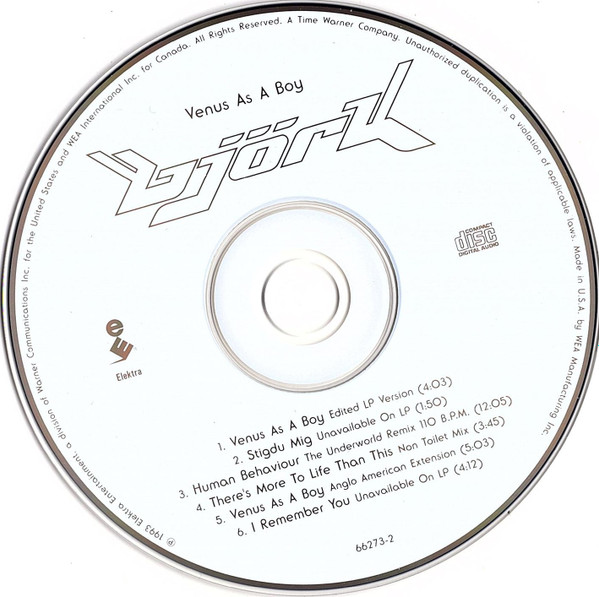
BJORK - VENUS AS A BOY

Released: August 23, 1993

Charted:  UK: #29 


"Venus as a Boy" is an ambient and chill-out song by Björk, released as the second single from her 1993 album, “Debut”. Written by Björk and produced by Nellee Hooper, the song incorporates Indian instruments like tablas into its musical ensemble. This track showcases Björk's fascination with Bollywood, influenced by her interactions with individuals of Indian descent in London, notably tabla player Talvin Singh, who later contributed to the song. 


Producer Nellee Hooper introduced her to Marius de Vries, a keyboard player and programmer who contributed to the modern style of the album. De Vries recalled how "Venus as a Boy" found its tone during a session at Hooper's house, where he inadvertently played Bollywood-flavored sound files. Reflecting Björk's desire for her album to have an Indian soundtrack vibe, several tracks, including "One Day," "Come to Me," and "Venus as a Boy," incorporate Indian instruments. The strings were recorded by a film studio orchestra in Bombay, facilitated by Singh. The song features a broken bottle sound, discovered by accident during the recording process. 


"Venus as a Boy" explores the perspective of a boy who appreciates beauty in everyday moments, beyond superficial appearances. The lyrics delve into the beauty found in simple activities like brushing teeth, waking up in sync with the right rhythm, and engaging in meaningful conversations with others. Björk revealed that she wrote it in her living room in Iceland and recorded it on her dictaphone. Although it is believed to be written about her then-boyfriend, Bristol DJ Dom Thrupp, Björk remains protective of the song's inspiration, preferring to keep such details private.


The music video was directed by Sophie Muller and draws inspiration from one of Björk's favorite books, "Story of the Eye" by Georges Bataille. Known for her work with artists like the Eurythmics and Annie Lennox, Muller showcases Björk in her kitchen, engaging in mundane activities like cooking eggs.


BOMFUNK MC’S - FREESTYLER


Released: October 30, 1999

Charted:  UK: #2 


"Freestyler" by Finnish hip hop group Bomfunk MC's was released in Finland on October 1999, as the third single from their debut studio album, "In Stereo". It gained international release in February 2000. The song reached number four on the Finnish Singles Chart and topped charts in over 10 countries, including Australia, Germany, Italy, New Zealand, and Sweden. Additionally, it reached the top 10 in Denmark, Iceland, Ireland, and the United Kingdom.


"Freestyler" is characterized as a breakbeat song with strong influences from UK dance culture, electronic dance music, drum and bass, and hip hop. It features sampled slide-guitar, rubbery synth bass, and Caribbean-inflected dance instructions, creating a lively and dynamic old-school track perfect for the dancefloor.


The music video was mainly filmed at the Hakaniemi metro station in Finland, featuring Finnish model and musician Marlo Snellman as the principal character. The video begins with Marlo dancing extravagantly while catching a train and listening to the song on his MiniDisc player. He discovers the ability to manipulate individuals and objects with the remote controller, given to him by Raymond Ebanks, the lead singer of Bomfunk MC's, who appears in the background throughout the video. Marlo uses this power until he accidentally rewinds himself, leading to the video going into backward rewind. 


To celebrate the twentieth anniversary in 2019, a new music video was created featuring the original band members and updates reflecting advancements in technology and culture. The central figure in the video is now a girl with a mobile phone, with cameo appearances by various Belgian YouTubers. Filmed at Vukov Spomenik railway station in Belgrade, Serbia, the video maintains the energetic and dynamic spirit of the original while incorporating contemporary elements.


UNDERWORLD - BORN SLIPPY (NUXX)


Publicació: 1 de juliol de 1996

Llistes: Regne Unit: #2


"Born Slippy .NUXX" d'Underworld és una cançó amb lletres fragmentades que descriuen la perspectiva d'un alcohòlic. Inicialment llançada com a cara B d'una altra pista, "Born Slippy", al maig de 1995, va guanyar una atenció significativa després de ser inclosa a la pel·lícula de 1996 "Trainspotting". Després de la seva inclusió a la pel·lícula, "Born Slippy .NUXX" es va llançar com a senzill l’1 de juliol de 1996 i va aconseguir un èxit comercial, arribant al número dos a la UK Singles Chart. Al llarg dels anys, ha estat aclamada com una de les millors pistes de la dècada dels 90 per nombroses publicacions.


"Born Slippy .NUXX" va ser inspirada per les experiències de Karl Hyde a Soho, especialment una nit a un pub al carrer Wardour on es va trobar en un estat desorientat i embriagat. La lletra reflecteix aquesta desorientació i va ser influïda per l'àlbum "New York" de Lou Reed i les "Cròniques del Motel" de Sam Shepard. Hyde va fer servir la fotografia amb flaix per observar el seu entorn i capturar moments que la inspiració li va transmetre. Rick Smith va proporcionar el ritme, i Hyde va improvisar les veus en una sola presa, repetint frases com "lager, lager" per transmetre la perspectiva desorientada d'un borratxo. El títol ve d'un gos gris anomenat "Born Slippy" que la banda va veure a la pista de curses de Romford, on havien guanyat diners en una competició. Inicialment pensada com una expressió personal més que com un himne al beure, la cançó va adquirir un significat diferent quan el públic aixecava les seves llaunes de lager durant les actuacions en directe.


La inclusió de "Born Slippy .NUXX" a la pel·lícula "Trainspotting" va jugar un paper important en la seva popularitat. Inicialment reacia a la seva associació amb la cultura de les drogues, Underworld va acabar per permetre que la cançó s'utilitzés a la pel·lícula després de veure que proporcionava una representació matitzada en lloc de glorificar l'abús de substàncies. La darrera escena de la pel·lícula amb la cançó va ajudar a elevar el seu èxit, portant a un augment de les vendes i al seu pic al número 2 de la UK Singles Chart. El context de la pel·lícula va ajudar a redefinir el significat de la cançó, restaurant la seva intenció original com un crit d'ajuda més que com una celebració de l'alcoholisme.


"Born Slippy .NUXX" va rebre una aclamació generalitzada per part de la crítica en el moment del seu llançament, amb molts aclamant-la com un himne per a una generació. Music Week va atorgar a la pista una puntuació perfecta de cinc de cinc, destacant la seva importància cultural i el seu poderós impacte emocional. AllMusic va lloar la cançó com un dels millors exemples d'electrònica, elogiant les seves textures musicals austères però emocionalment captivadores.


UNDERWORLD - BORN SLIPPY (NUXX)


Released: July 1, 1996

Charted:  UK: #2 


"Born Slippy .NUXX" by Underworld is a song with fragmented lyrics that depict the perspective of an alcoholic. Initially released as the B-side to another track, "Born Slippy," in May 1995, it gained significant attention after being featured in the 1996 film "Trainspotting." Following its inclusion in the film, "Born Slippy .NUXX" was released as a single on July 1, 1996, and achieved commercial success, reaching number two on the UK Singles Chart. Over the years, it has been acclaimed as one of the best tracks of the 1990s by numerous publications.


"Born Slippy .NUXX" was inspired by Karl Hyde's experiences in Soho, particularly a night at a pub on Wardour Street where he found himself in a fragmented and intoxicated state. The lyrics reflect this disorientation and were influenced by Lou Reed's "New York" album and Sam Shepard's "Motel Chronicles." Hyde used flash photography to observe his surroundings and capture moments of inspiration. Rick Smith provided the rhythm, and Hyde improvised the vocals in one take, repeating lines like "lager, lager" to convey the fragmented perspective of a drunk. The song's title comes from a greyhound named "Born Slippy" that the band saw at Romford race track, where they had won money on a race. Initially intended as a personal expression rather than a drinking anthem, the song took on a different meaning when audiences raised their lager cans during live performances.


The inclusion of "Born Slippy .NUXX" in the film "Trainspotting" played a significant role in its popularity. Initially hesitant about its association with drug culture, Underworld eventually agreed to allow the song to be used in the film after realizing that it provided a nuanced portrayal rather than glorifying substance abuse. The final scene of the movie featuring the track helped elevate its profile, leading to a surge in sales and its peak at #2 on the UK Singles Chart. The film's context helped to reframe the song's meaning, restoring its original intent as a cry for help rather than a celebration of alcoholism.


"Born Slippy .NUXX" received widespread acclaim from critics upon its release, with many hailing it as an anthem for a generation. Music Week awarded the track a perfect score of five out of five, emphasizing its cultural significance and powerful emotional impact. AllMusic lauded the song as one of the finest examples of electronica, praising its austere yet emotionally resonant musical textures. 


ACE OF BASE - ALL THAT SHE WANTS


Estrenada: 31 d'agost de 1992

Llistes: EUA: #2   Regne Unit: #1 (3 setmanes)


"All That She Wants" d'Ace of Base va ser llançada a Escandinàvia l’agost de 1992 com el segon single del seu àlbum debut, "Happy Nation". Produïda per Denniz Pop, amb lletra escrita per Jonas Berggren i Ulf Ekberg, el ritme de bateria de la cançó va estar inspirat en la cançó de Kayo "Another Mother". La cançó va passar per diverses revisions abans del seu llançament oficial el 1992. A Amèrica del Nord, es va llançar com a senzill principal de l'àlbum "The Sign" el 1993.


La cançó va gaudir d'un immens èxit a tot el món, encapçalant les llistes de tretze països, incloent-hi Austràlia, Àustria, Dinamarca, Alemanya, Regne Unit, Grècia, Itàlia i Espanya. Al Regne Unit, va passar tres setmanes en el primer lloc després de debutar en el número cinc a la llista UK Singles Chart. La cançó també va arribar a les tres primeres posicions en molts altres països on es va llançar. Als Estats Units, va assolir el número u a la llista Billboard Top 40 Mainstream i va arribar al número dos a les llistes Billboard Hot 100 i Cash Box Top 100, darrere de Janet Jackson i Meat Loaf respectivament.


"All That She Wants" és una cançó reggae-pop d'Ace of Base que retracta una dona sexualment promíscua, utilitzant "baby" com a sinònim de "parella". Tot i que la lletra pot suggerir una narrativa particular, l'origen suec de la banda va provocar alguns malentesos amb l’idioma anglès. Malgrat això, l'ús poc convencional de l'anglès podria haver funcionat a favor seu, permetent-los centrar-se més en la melodia.


Tot i que inicialment no li va agradar la demo d'Ace of Base, el productor suec Denniz Pop no podia escapar-se de la melodia enganxossa que no deixava de sonar al cassette del seu cotxe. A contracor, va acordar treballar en la cançó, que en aquell moment es deia "Mr. Ace". L'experiència de Pop residia en simplificar pistes, i va eliminar aproximadament la meitat de la instrumentació per netejar el so. També va fer un canvi clau en traslladar la melodia del xiulet del final de la cançó a la introducció, fent-la instantàniament més reconeixible.


El videoclip va ser dirigit pel director suec Matt Broadley al novembre de 1992. Té com a protagonista l'actriu i cantautora danesa Christiane Bjørg Nielsen en el paper principal. Filmada en tons sepia, el vídeo mostra els membres de la banda actuant en un apartament petit, intercalat amb escenes d'una dona que es prepara per sortir. Es troba amb un home en un bar, i finalment se’n van a casa junts. Tot i que a la cançó no té veu, Nielsen fa playback de les vocals durant la tornada.


ACE OF BASE - ALL THAT SHE WANTS


Released: August 31, 1992

Charted:  US: #2    UK: #1 ( 3 wks)


"All That She Wants" by Ace of Base was released in Scandinavia in August 1992 as the second single from their debut album, "Happy Nation." Produced by Denniz Pop, with lyrics written by Jonas Berggren and Ulf Ekberg, the song's drum beat was inspired by the Kayo song "Another Mother." The song underwent several revisions before its official release in 1992. In North America, it was released as the lead single from the album "The Sign" in 1993.


The song enjoyed immense success worldwide, topping the charts in thirteen countries including Australia, Austria, Denmark, Germany, Greece, Italy, Spain and the United Kingdom. In the UK, it spent three weeks at the number one spot after debuting at number five on the UK Singles Chart. The song also reached the top three positions in many other countries where it was released. In the United States, it peaked at number one on the Billboard Top 40 Mainstream chart and reached number two on both the Billboard Hot 100 and Cash Box Top 100, behind Janet Jackson and Meat Loaf respectively.


"All That She Wants" is a reggae-pop song by Ace of Base that depicts a sexually promiscuous woman, using "baby" as a synonym for "boyfriend." While the lyrics may suggest a particular narrative, the band's Swedish background led to some misunderstandings of English idioms. Despite this, the unconventional use of English may have worked in their favor, allowing them to focus more on melody. 


In defiance of initially disliking Ace of Base's demo tape, Swedish producer Denniz Pop couldn't escape the catchy tune, as it was stuck in his car's tape deck. Reluctantly, he agreed to work on the song, titled "Mr. Ace" at the time. Pop's expertise lay in simplifying tracks, and he removed about half of the instrumentation to clean up the sound. He also made a pivotal change by moving the whistling melody from the end of the song to the introduction, instantly making it more memorable and recognizable.


The music video was directed by Swedish director Matt Broadley in November 1992. It features Danish actress and singer-songwriter Christiane Bjørg Nielsen as the title character. Shot in sepia tone, the video depicts the band members performing in a cramped apartment, interspersed with scenes of a woman getting ready to go out. She meets a man at a bar, and they eventually go home together. Despite not having vocals in the song, Nielsen lip syncs the vocals during the chorus.