Total de visualitzacions de pàgina:

3.7.24


TEARS FOR FEARS - BREAK IT DOWN AGAIN (and some ELEMENTAL songs)


Released: May 17, 1993

Charted:  UK: #20   US: #25 


"Break It Down Again" was released in May 1993 as the lead single from the fourth studio album, “Elemental”. It was the second single released after Curt Smith's departure from the band. The song achieved moderate success, reaching number 20 in the United Kingdom and number 25 in the United States.


The music video directed by Dani Jacobs, features Roland Orzabal, Alan Griffiths, and Gail Ann Dorsey performing the song on the desert El Mirage Lake, California. This location is where the single's cover art and the “Elemental” album cover were also photographed.


"Bloodletting Go" is a b-side from the single "Break It Down Again," released during the “Elemental” era. It is highly regarded among fans as one of the best b-sides of the band, showcasing Roland Orzabal's creativity and a sense of freedom after Curt Smith's departure. The song is praised for its overall quality and musicality, capturing a moment where Orzabal's solo efforts during this period yielded some of the band's finest work. 


Many songs on “Elemental” album were influenced by Curt Smith's departure. Roland Orzabal explained to The Washington Post in 1993 that these songs, like "Break It Down Again" and "Fish Out of Water," reflect his emotional journey during that period. The song "Break It Down Again," much like the rest of “Elemental”, involved collaboration with peripheral band members Alan Griffiths and Tim Palmer, and featured backing vocals by John Baker, Orzabal's ex-Graduate bandmate.


"Fish Out of Water" is a song penned by Roland Orzabal and directed at Curt Smith, highlighting their strained relationship after Smith's departure from the band. In comparing "Fish Out of Water" to John Lennon's "How Do You Sleep?", Roland Orzabal draws a parallel to the intense critique Lennon directed at his former Beatles bandmate Paul McCartney. Lennon's song, released in 1971 on his "Imagine" album, was notable for its harsh lyrics and aimed directly at McCartney, reflecting their strained relationship post-Beatles breakup. Similarly, Orzabal's "Fish Out of Water" expresses pointed criticism towards his former Tears for Fears bandmate Curt Smith, highlighting personal and artistic tensions between them during that period. 


Orzabal likened the dynamic to parent-child conflict, with him urging Smith to mature and move on. The lyrics criticize Smith's lifestyle and choices, contrasting his self-image with reality. References to "Neptune's Kitchen," where Elemental was recorded, and Arthur Janov's book "The Primal Scream" add depth to the song's context, rooted in their shared history and influences. Smith later responded with "Sun King" on his own album, acknowledging the tension with amusement in hindsight.


"Brian Wilson Said" it's considered a tongue-in-cheek response to accusations that their previous single "Sowing the Seeds of Love" resembled The Beatles' "I Am the Walrus." The song starts with a nostalgic 1960s California sound reminiscent of The Beach Boys but evolves into a dreamy and beautiful piece as it progresses. Its placement after "Power" on the album enhances its thematic and sonic context.


"Goodnight Song" is a track from the 1993 album “Elemental”. While it was released as a single in North America and certain European countries, it did not see a release in the UK. Despite this, it achieved minor success in Canada. The song is noted for its beauty and a closing riff that evokes the feeling of being drawn back in like waves, creating a sense of longing for the fading song not to end.


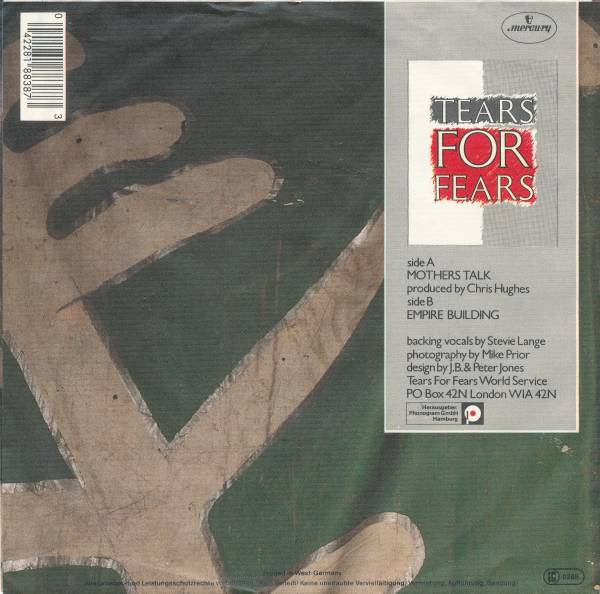


TEARS FOR FEARS - MOTHERS TALK


Released: August 10, 1984

Charted:  UK: #14   US: #27 


"Mothers Talk" is a song released in 1984 as Tears for Fears seventh single. Written by Roland Orzabal and Ian Stanley, and sung by Orzabal, it served as the lead single from their second album "Songs from the Big Chair" (1985). Despite being released six months before the album, it achieved moderate success internationally and became their fifth UK Top 40 chart hit.


Roland Orzabal explained the inspiration behind "Mothers Talk" in a 1985 documentary on the band. He mentioned two primary influences for the song: First, the concept derived from the common warning mothers give to their children about pulling faces, suggesting their expression might become fixed if the wind changes. Second, Orzabal drew inspiration from the anti-nuclear message portrayed in Raymond Briggs' cartoon book titled "When The Wind Blows."


Roland Orzabal reflected on "Mothers Talk" as a precursor to their second album, "Songs From The Big Chair," in which the band intentionally pursued a more commercially accessible sound. Orzabal admitted some initial resistance to this direction but was persuaded by collaborators who aimed for a bold, impactful release. Despite his reservations, Orzabal acknowledged that this period marked the beginning of significant success for Tears for Fears.

"Mothers Talk" was initially written in 1983 and debuted during their late 1983 tour. Roland Orzabal described it as an attempt to emulate the sound of Talking Heads, though the initial studio version produced by Jeremy Green in early 1984 was deemed unsatisfactory by the record company. Chris Hughes, the band's previous producer, was then brought back to re-record the song, which was finally released as a single in August 1984. 


This version of "Mothers Talk" showcased innovative sampling techniques, including strings taken from a Barry Manilow record and drum samples from Simple Minds' "Today I Died Again". The single was promoted with picture disc and colored vinyl editions, marking the first use of such promotional tactics by Phonogram for Tears for Fears. Additionally, various 12" releases offered different remixes of the track, and some 7" singles included a free Tears for Fears window sticker featuring the band's new logo.


Three separate promotional clips were created for "Mothers Talk". The original version, directed by photographer Laurie Lewis, featured a performance in a blue-toned room alongside scenes of scientists studying a young girl. Despite airing on British television, the band quickly disowned this clip due to dissatisfaction. Nigel Dick then directed a replacement video on a limited budget, showcasing the duo in a rural setting, including Curt Smith's own backyard, interspersed with TV footage of news and sports. Both versions were released in the UK and Europe in mid-1984. A third video, directed by Nigel Dick, was later produced for the "US Remix" of the song in early 1986.


2.7.24


BOOKER T. & THE MG’s - GREEN ONIONS

Estrena: juliol de 1962

Llistes: EUA: #3   Regne Unit: #7


"Green Onions" és una peça instrumental enregistrada el 1962 per Booker T. & the M.G.'s. És considerada una de les cançons instrumentals de rock i soul més populars de tots els temps, destacant-se per la seva estructura de dotze compassos de blues i una línia distintiva de l'òrgan Hammond interpretada per Booker T. Jones, qui la va escriure als 17 anys. La gravació va ser en gran part improvisada a l'estudi. Inicialment llançada com la cara B de "Behave Yourself", va guanyar una enorme popularitat i va ser reeditada com a cara A. Sovint s'associa amb el "so de Memphis soul".


Tot i que "Green Onions" pot semblar simple, segons Booker T. Jones, cada interpretació requereix una atenció cuidadosa i recordar les notes. El desenvolupament de la cançó va ser accidental, originant-se durant una sessió mentre esperaven el cantant de rockabilly Billy Lee Riley. Inicialment enregistrada com una pista de blues titulada "Behave Yourself", la decisió de posar-li el nom de "Green Onions" va ser provocada per l'entusiasme de Jim Stewart per una presa particular, a la qual Booker T. va respondre amb el nom, considerant-ho la cosa més desagradable que podia pensar per a una cosa que s'havia de descartar.


La pista va guanyar ràpidament popularitat després que el guitarrista Steve Cropper la va posar a un amic, el DJ Rueben Washington, a l'emissora de ràdio WLOK de Memphis. Washington immediatament va posar la cançó al programa, interrompent una altra gravació per fer-ho. La resposta entusiasta dels oients va portar a la decisió de fer de "Green Onions" la cara A del senzill en lloc de "Behave Yourself", el que va conduir al seu èxit massiu.


El single va debutar a la llista Billboard Hot 100 la setmana que va acabar l’11 d'agost de 1962, assolint la seva posició màxima al número 3 la setmana que va acabar el 29 de setembre de 1962. També va encapçalar la llista de singles R&B, mantenint-se al número 1 durant quatre setmanes no consecutives, un èxit peculiar ja que va fluctuar al capdamunt de la llista tres vegades. "Green Onions" va trobar una nova popularitat al Regne Unit el 1979 quan va aparèixer a la pel·lícula "Quadrophenia". La inclusió de la cançó en una escena on un personatge interpretat per Sting ballava al ritme d'aquesta peça va ajudar a impulsar-la cap a l'èxit a les llistes del Regne Unit.


BOOKER T. & THE MG’s - GREEN ONIONS


Released: July 1962

Charted:  US: #3   UK: #7 


"Green Onions" is a renowned instrumental track recorded in 1962 by Booker T. & the M.G.'s. It's hailed as one of the most popular instrumental rock and soul songs of all times, characterized by a twelve-bar blues structure and a distinctive Hammond M3 organ line by Booker T. Jones, who wrote it at the age of 17. The recording was largely improvised in the studio. Initially released as the B-side of "Behave Yourself," it gained immense popularity and was reissued as the A-side. It's often associated with the "Memphis soul sound."


"Green Onions" may sound simple, but according to Booker T. Jones, every performance requires careful attention and recall of the notes. The song's development was accidental, originating during a session while waiting for the rockabilly singer Billy Lee Riley. Initially recorded as a blues track titled "Behave Yourself,", the decision to name it "Green Onions" was prompted by Jim Stewart's enthusiasm for a particular take, to which Booker T. responded with the name, considering it the nastiest thing he could think of and something discarded.


The track quickly gained popularity after guitarist Steve Cropper played it for a friend, DJ Rueben Washington, at Memphis radio station WLOK. Washington immediately put the song on air, interrupting another record to do so. The enthusiastic response from listeners prompted the decision to make "Green Onions" the A-side of the single instead of "Behave Yourself," leading to its widespread success.


The single debuted on the Billboard Hot 100 chart on the week ending August 11, 1962, reaching its peak position at No. 3 on the week ending September 29, 1962. It also topped the R&B singles chart, holding the No. 1 spot for four non-consecutive weeks, a rare achievement as it fluctuated in and out of the top spot three times. "Green Onions" found renewed popularity in the UK in 1979 when it was featured in the movie "Quadrophenia." The song's inclusion in a scene where a character portrayed by Sting danced to it helped propel it to chart success in the UK.


1.7.24


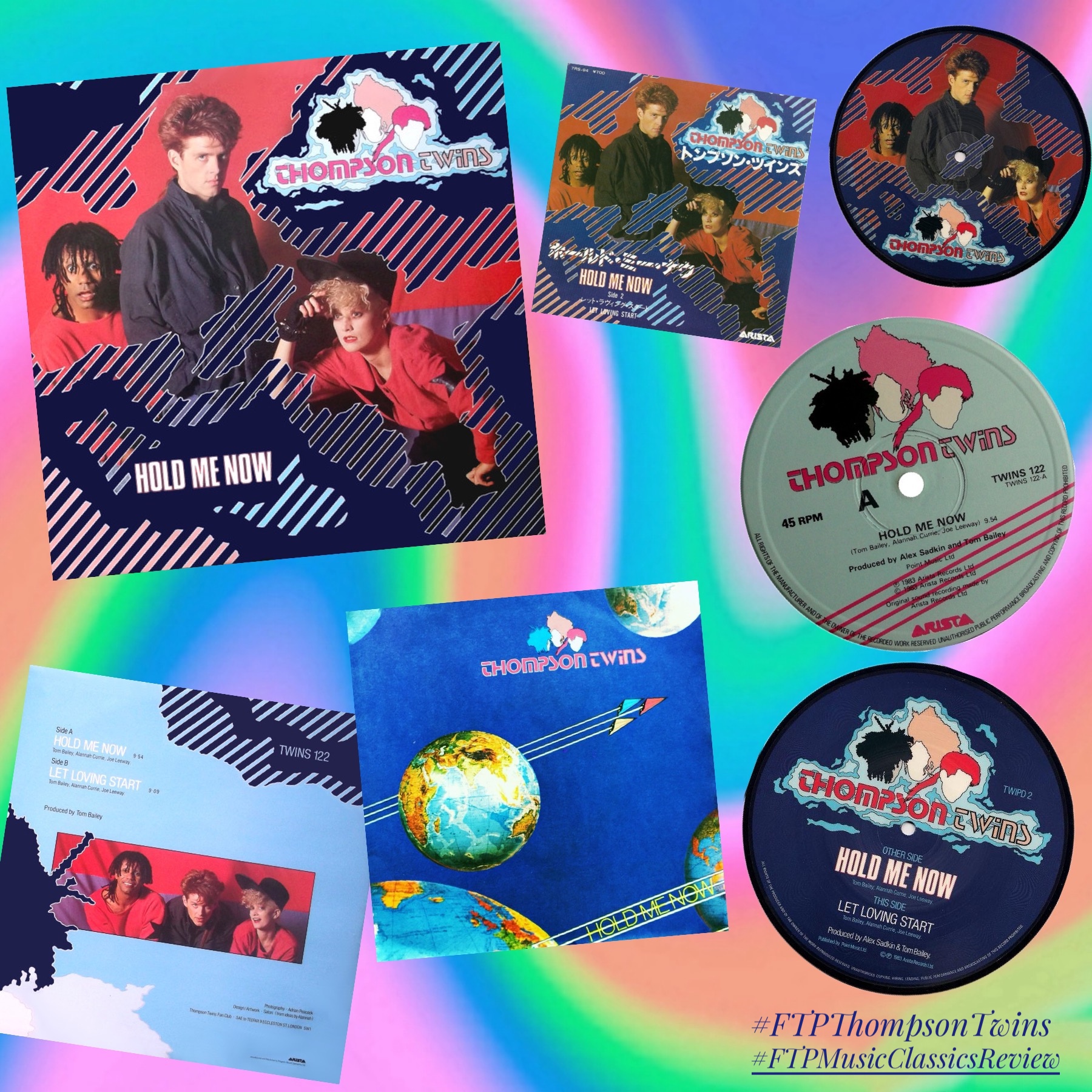
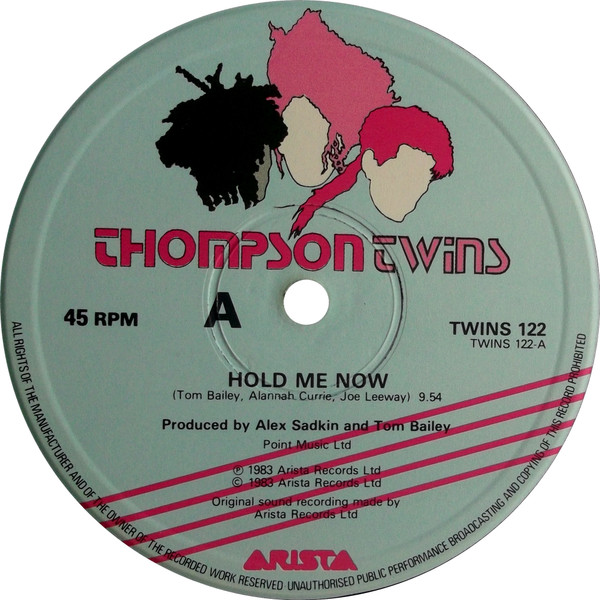
THOMPSON TWINS - HOLD ME NOW


Publicació: 11 de novembre de 1983

Llistes: EUA: #3   Regne Unit: #4


"Hold Me Now" és una cançó escrita pels membres del grup i produïda per Alex Sadkin juntament amb el vocalista principal del grup, Tom Bailey. Va ser llançada com a primer single del seu quart àlbum d'estudi, "Into the Gap".


"Hold Me Now" és una exploració sincera d'una relació que afronta reptes i una pèrdua de passió. Tom Bailey recorda temps més feliços amb Alannah Currie, comparats amb l'estat actual de la seva relació descrit com a "desfeta i desgarrada". Malgrat les seves disputes, estan determinats a revifar el seu amor i compromís. La tornada "Hold me now, warm my heart, stay with me, let lovin' start" expressa el seu desig de calor emocional i companyonia, reconeixent les seves imperfeccions i les complexitats de l'amor. Inspirada en experiències personals, la cançó reflexiona sobre la reconciliació i les emocions. A través de precs sincers, Bailey navega per les conseqüències del seu desacord, buscant perdó i una connexió renovada amb Currie.


"Hold Me Now" va significar una desviació del so electrònic típic de Thompson Twins, optant per un enfocament més plural. La cançó va incloure guitarres, xilòfons, marimbes i piano, donant-li una qualitat més càlida i emocional. Alannah Currie va descriure la cançó com a profundament emocional, i el grup va buscar capturar una calidesa que els sintetitzadors sovint no podien transmetre. Tot i que inicialment van composar la cançó utilitzant una caixa de ritmes, finalment la van interpretar amb instruments de percussió reals.


Els coneixements de Tom Bailey en música clàssica van influir en la composició de "Hold Me Now". Va destacar l'estructura musical, assenyalant que la línia de baix i la seqüència d'acords van romandre constants tant en les seccions de vers com en la tornada. Aquesta repetició va crear una sensació de continuïtat i va permetre transicions perfectes entre les dues parts de la peça. A més, Bailey va subratllar el tempo mitjà i la profunditat emocional de la cançó, que van contribuir a la seva atmosfera melòdica. Malgrat la seva lentitud, la naturalesa repetitiva de la progressió d'acords i el ritme van donar a la cançó una qualitat ballable, connectant el món de les balades emocionals amb la música de ball.


THOMPSON TWINS - HOLD ME NOW


Released: November 11, 1983

Charted:  US: #3   UK: #4 


"Hold Me Now" is a song written by the band members themselves and produced by Alex Sadkin along with the group's lead vocalist, Tom Bailey. It was released as the lead single from their fourth studio album, "Into the Gap”. 


"Hold Me Now" is a heartfelt exploration of a relationship facing challenges and a loss of passion. Tom Bailey reminisces about happier times with Alannah Currie, juxtaposed with the current state of their relationship described as "tattered and torn." Despite their struggles, they are determined to revive their love and commitment. The poignant chorus "Hold me now, warm my heart, stay with me, let lovin' start," expresses their longing for emotional warmth and companionship, acknowledging their imperfections and the complexities of love. Inspired by personal experiences, the song reflects on reconciliation and the merging of emotions and physicality. Through heartfelt pleas, Bailey navigates the aftermath of their disagreement, seeking forgiveness and a renewed connection with Currie.


"Hold Me Now" marked a departure from Thompson Twins' typical electronic sound, opting instead for a more organic approach. The song featured prominent guitar, xylophone, marimbas, and piano, lending it a warmer, more emotional quality. Alannah Currie described the song as deeply emotional, and the band aimed to capture a warmth that synthesizers often couldn't convey. While they initially composed the song using a drum machine, they ultimately performed it using real percussion instruments, contributing to its rich and textured musical landscape.


Tom Bailey's background in classical music influenced the composition of "Hold Me Now." He highlighted the song's musical structure, noting that the bass line and chord sequence remained consistent throughout both the verse and chorus sections. This repetition created a sense of continuity and allowed for seamless transitions between the two parts of the song. Additionally, Bailey emphasized the song's medium tempo and emotional depth, which contributed to its overall mood. Despite its slower pace, the repetitive nature of the chord progression and groove gave the song a danceable quality, bridging the gap between emotional balladry and dance music.