Total de visualitzacions de pàgina:

17.8.24


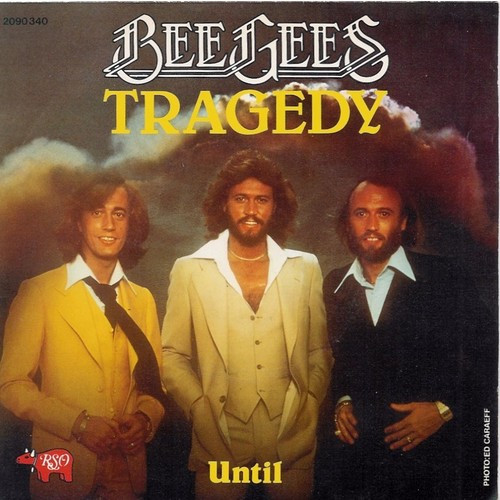
BEE GEES - TRAGEDY

Estrena: febrer de 1979

Llistes: EUA: #1 (2 setmanes) Regne Unit: #1 (2 setmanes)


"Tragedy" és una cançó inclosa a l'àlbum dels Bee Gees de 1979 "Spirits Having Flown." Llançada com a single, va assolir un gran èxit, arribant al número u a la llista de singles del Regne Unit durant dues setmanes el febrer de 1979. També va encapçalar la llista dels Estats Units Billboard Hot 100 el mes següent, mantenint-se en el primer lloc durant dues setmanes més. Produïda en col·laboració amb Albhy Galuten i Karl Richardson, la cançó incorpora guitarres, trompetes i cordes, tot això millorat per sonar gloriosament artificial, marcant una evolució distintiva en l'estil musical dels Bee Gees.


"Tragedy", el cinquè senzill consecutiu número u dels Bee Gees, es caracteritza per la seva intensitat dramàtica. Malgrat no estar necessàriament basada en desamors personals, els Bee Gees eren hàbils compositors de cançons que transmetien autènticament emocions profundes. Està fermament inspirada en la música disco, amb veus gemegants i un destacat ritme de bombo de quatre temps. A diferència de les cançons de disco tradicionals, "Tragedy" explora un so més sintètic metal·litzat, allunyant-se dels seus orígens R&B. La influència de les produccions de Giorgio Moroder per a Donna Summer és evident en l’us del sintetitzador.


La contribució de Blue Weaver a "Tragedy" va ser significativa, ja que va tocar la major part de la cançó, incloent-hi la programació dels nous seqüenciadors inventats per a les parts de baix i bateria. El ritme disco, inspirat en "Get Back" dels Beatles, subratlla la fusió única d'elements de rock i disco de la peça. La veu en falset de Barry Gibb, arriba al seu registre més alt, i intensifica el tema de la desolació romàntica retractat en la cançó en termes apocalíptics. El 1979, la veu falset de Gibb ja era familiar arreu, però a "Tragedy" la va elevar a noves cotes, creant un so intens i emotiu que penetra en l'atmosfera dramàtica de la cançó.


L'atenció als detalls de Barry Gibb s'extendia fins i tot als efectes de so. Va dedicar dies a perfeccionar l'efecte que marca la pausa abans de la darrera tornada. Cap al final de la cançó, hi ha un moment en què Gibb emet un crit seguit del que sembla ser una explosió. El so de l'explosió està realment creat pel mateix Gibb. Incapaç de trobar el so d’un tro, Gibb va improvisar tancant les mans sobre un micròfon i fent un soroll explosiu amb la boca. Diverses gravacions d'aquestes explosions fetes amb la boca es van mesclar després per produir el boom impactant que s'escolta a "Tragedy".


Durant una pausa en el rodatge de la seva pel·lícula inspirada en els Beatles "Sgt. Pepper’s Lonely Hearts Club Band", es diu que els Bee Gees van tenir un dia molt productiu. Van aconseguir escriure "Tragedy", "Too Much Heaven" i "Shadow Dancing" d'Andy Gibb, tots el mateix dia.


BEE GEES - TRAGEDY


Released: February 1979

Charted:  US: #1 (2 weeks)  UK: #1 (2 weeks)


"Tragedy" is a song featured on the Bee Gees' 1979 album "Spirits Having Flown." Released as a single, it achieved significant success, reaching number one on the UK Singles Chart in February 1979 for two weeks. It also topped the US Billboard Hot 100 the following month, staying at number one for an additional two weeks. Produced in collaboration with Albhy Galuten and Karl Richardson, the song incorporates guitars, horns, and strings, all enhanced to sound gloriously artificial, marking a distinctive evolution in the Bee Gees' musical style.


"Tragedy," the Bee Gees' fifth consecutive number one single, is characterized by its dramatic intensity. Despite not necessarily drawing from personal heartbreak, the Bee Gees were adept at composing songs that authentically conveyed deep emotions. It's firmly rooted in disco, featuring wailing vocals and a prominent four-four bass-drum kick. Unlike traditional disco songs, "Tragedy" deviates by exploring a more synth-metal sound, departing from its R&B origins. The influence of Giorgio Moroder's productions for Donna Summer is evident in its pulsating synthesizer elements. 


Blue Weaver's contribution to "Tragedy" was significant, as he played most of the song, including programming the newly invented sequencers for the bass and drum parts. The disco rhythm, reminiscent of the Beatles' "Get Back," underscores the song's unique blend of rock and disco elements. Barry Gibb's falsetto vocal, cranked up to its highest register, intensifies the song's theme of romantic desolation portrayed in apocalyptic terms. In 1979, Gibb's falsetto voice was already familiar to American listeners, but on "Tragedy," he pushed it to new heights, creating a hauntingly intense sound—a raw, emotive yelp that pierces through the song's dramatic atmosphere. 


Barry Gibb's attention to detail extended even to the sound effects in "Tragedy." He dedicated days to perfecting the sound effect that punctuates the pause before the last chorus. Toward the end of the song, there's a moment where Gibb lets out a post-chorus scream followed by what sounds like an explosion. The explosion sound is actually created by Gibb himself. Unable to find a suitable thunderclap sound, Gibb improvised by cupping his hands over a microphone and making an exploding noise with his mouth. Multiple recordings of these mouth-made explosions were then mixed together to produce the impactful boom heard in "Tragedy." 


During a break from filming their Beatles-inspired movie "Sgt. Pepper’s Lonely Hearts Club Band," the Bee Gees reportedly had a highly productive day. They managed to write "Tragedy," "Too Much Heaven," and Andy Gibb’s "Shadow Dancing" all on the same day. 


16.8.24


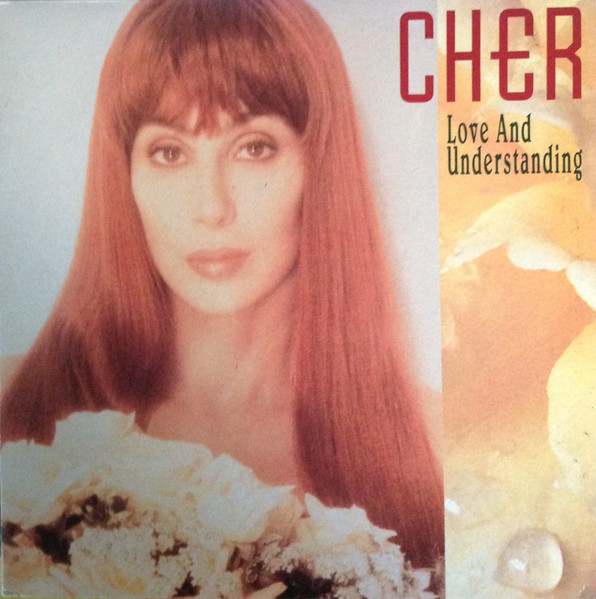
CHER - LOVE AND UNDERSTANDING


Released: May 21, 1991

Charted:  UK: #10    US: #17 


"Love and Understanding" from the album “Love Hurts”, was crafted by songwriter Diane Warren and producer Guy Roche. Released as the lead single in May 1991 on Geffen Records for North America and Oceania, it featured "Trail of Broken Hearts" as its B-side. Interestingly, "Trail of Broken Hearts" made its appearance on the soundtrack of the Tom Cruise film Days of Thunder but was not included on any of Cher's albums.


"Love and Understanding" delves into the theme of a world deprived of love and empathy, highlighting its detrimental impact on society. The lyrics lament the elusive nature of love in a world filled with material abundance, pointing out that despite having plentiful resources like stars, cars, and planes, there's still a profound emptiness without genuine emotional connections. The chorus repeatedly stresses the deficiency of "love and understanding," underscoring their crucial importance during troubled times. The song calls attention to the prioritization of material achievements over emotional fulfillment, emphasizing the need for compassion and empathy to bring brightness and positivity into the world.


AllMusic's Joseph McCombs praised "Love and Understanding" for its pleasant melody. Billboard's Larry Flick described it as a spirited pop tune with orchestral synth/strings and a hand-clapping rock beat, delivering a simplistic yet warm and sincere lyrical message. Entertainment Weekly editor Jim Farber noted its socially conscious theme, suggesting it was suited for charity functions organized by Hollywood, implying it was crafted for publicity-seeking events.


The music video depicted Cher rehearsing the song with her backing band. It alternated scenes of her performing in an orange-colored wig with shots of dancers moving energetically around her.


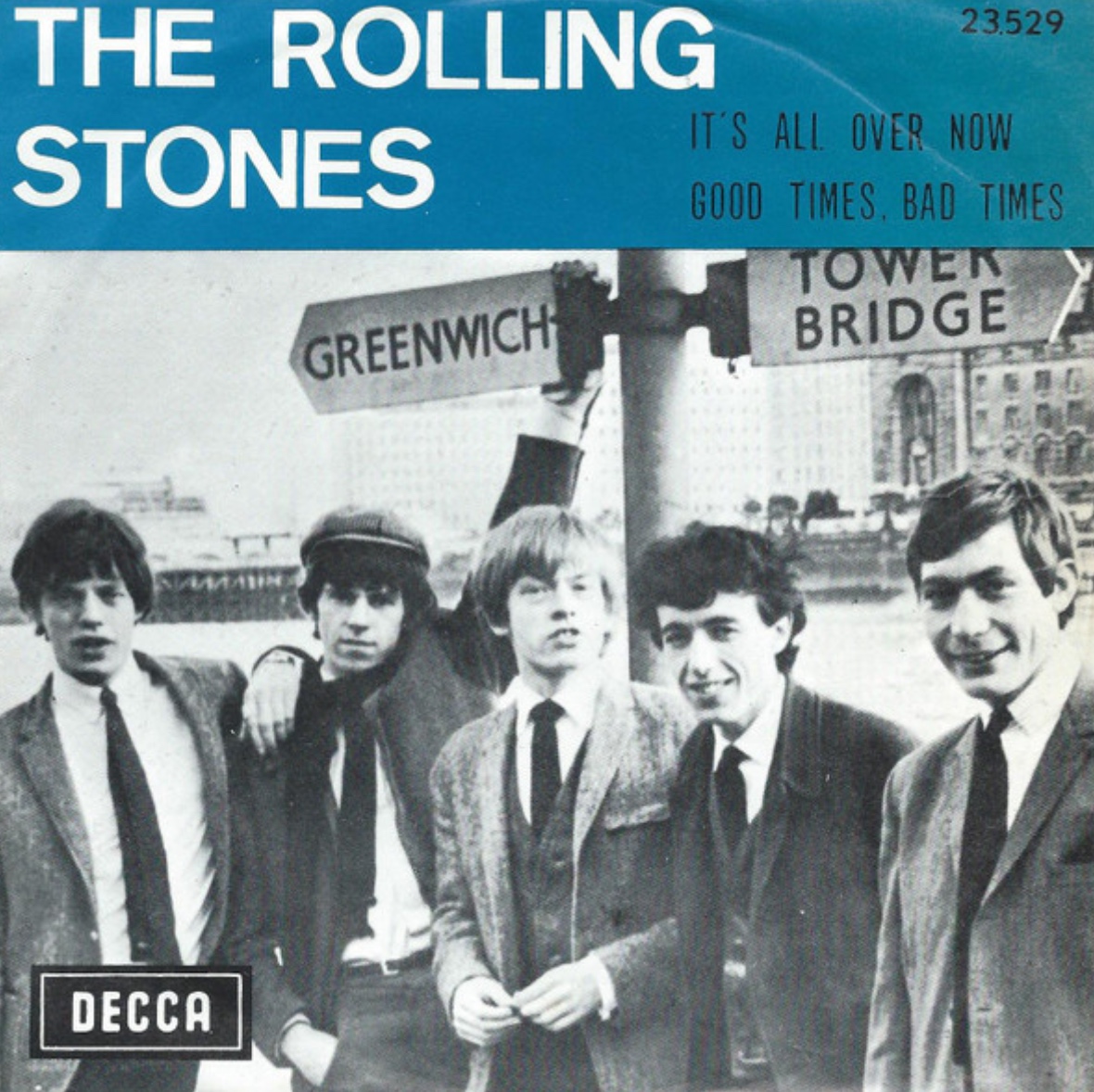
ROLLING STONES - IT’S ALL OVER NOW


Estrena: 26 de juny de 1964

Llistes: EUA: #26   Regne Unit: #1 (1 setmana)


"It's All Over Now" és una cançó inicialment escrita per Bobby Womack i la seva cunyada Shirley Womack. Els Valentinos, amb Bobby Womack, la van llançar per primer cop el 1964. Els Rolling Stones en van fer una ràpida versió poc després del seu llançament, i la seva interpretació va ser el seu primer número u al Regne Unit al juliol de 1964.


Els Rolling Stones van gravar "It's All Over Now" durant la seva primera gira pels Estats Units als Chess Studios de Chicago, un lloc històric compartit per artistes llegendaris com Chuck Berry, Howlin' Wolf i Muddy Waters. En aquesta sessió també van gravar "Time Is On My Side".


Keith Richards va reflexionar sobre l'experiència de gravar "It's All Over Now" als Chess Studios de Chicago. Va descriure l'estudi com una terra sagrada on la banda sentia el pes dels discos influents que s'havien creat allà. Per a Richards, gravar als Chess Studios era com entrar al paradís musical, especialment venint de la escena de bars d'Anglaterra. Va destacar lea gran capacitats d'enregistrament i el coneixement dels estudis americans en comparació amb els d'Anglaterra i Europa en aquell moment. Treballar als Chess va ser la introducció de la banda als alts estàndards d'enregistrament americans, que els va deixar una gran impressió.


La cançó va significar un moment definidor per a la banda, particularment evident en el duel de guitarres rítmiques apocalíptiques entre Richards i Jones en el minut final. Mentre la versió original tenia un ambient relaxat i funky, els Stones van injectar agressivitat a la seva interpretació, amb Jagger cantant la frase "high-class game" (joc de classe alta) de manera confosa fent que sonés com "half-assed game" (joc mediocre). Malgrat aquesta alteració, la cançó va esdevenir un èxit.


ROLLING STONES - IT’S ALL OVER NOW


Released: June 26, 1964

Charted:  US: #26  UK: #1 (1 week)


"It's All Over Now" is a song initially penned by Bobby Womack and his sister-in-law Shirley Womack. The Valentinos, with Bobby Womack, first released it in 1964. The Rolling Stones swiftly covered the track upon its release, and their rendition marked their inaugural number-one hit in the United Kingdom in July 1964.


The Rolling Stones recorded "It's All Over Now" during their inaugural US tour at Chess Studios in Chicago, a historic location shared by legendary artists like Chuck Berry, Howlin' Wolf, and Muddy Waters. This session also produced "Time Is On My Side." 


Keith Richards reflected on the experience of recording "It's All Over Now" at Chess Studios in Chicago. He described the studio as a hallowed ground, where the band felt the weight of the influential records that had been created there. For Richards, recording at Chess Studios felt like stepping into a musical heaven, especially coming from the bar scene in England. He noted the superior recording capabilities and knowledge of American studios compared to those in England and Europe at the time. Working at Chess was the band's introduction to the high standards of American recording, which left a lasting impression on them.


The song marked a defining moment for the band, particularly evident in the final minute's apocalyptic rhythm-guitar duel between Richards and Jones. While the original version had a laid-back and funky vibe, the Stones injected aggression into their rendition, with Jagger delivering the line about a "high-class game" in a slurred manner that made it sound like "half-assed game." Despite this alteration, the song became a hit.


CHER - BELIEVE


Publicació: 19 d'octubre de 1998

Llistes: EUA: #1 (4 setmanes)  Regne Unit: #1 (7 setmanes)


"Believe" és una cançó de dance-pop i electropop del vint-i-dosè àlbum d'estudi de Cher, amb el mateix nom. Llançada com a primer senzill de l'àlbum, "Believe" va marcar un canvi significatiu respecte al seu estil musical anterior. Es va convertir en un fenomen comercial, arribant al número u de les llistes a més de 23 països i venent més de 11 milions de còpies a tot el món. Aquest èxit fa de "Believe" el senzill més exitós de Cher fins a la data i un dels més venuts de la història de la música.


"Believe" va revolucionar la música pop amb el seu ús distintiu de l'Auto-Tune, un software de correcció de la veu. Tot i que no va ser la primera cançó en fer-lo servir, "Believe" va ser el primer gran èxit en destacar el seu efecte robòtic com una elecció artística deliberada. L'Auto-Tune va ser dissenyat originalment per corregir subtilment les imperfeccions de la veu sense que es noti, però els productors de Cher van ajustar els paràmetres per crear un so processat intens que es va convertir en icònic. Aquest ús audaç de l'Auto-Tune a "Believe" va exposar el públic a una nova estètica sonora, desencadenant una tendència que dominaria la música pop a finals dels anys noranta i més enllà.


La cançó és un himne de fortalesa i resiliència davant de la desolació amorosa. Aborda el difícil procés d'acceptar la fi d'una relació i de navegar per la incertesa de què vindrà després. La tornada, que inclou destacadament la icònica frase "Do you believe in life after love?" (Creus en la vida després de l'amor?), mostra la reflexió de Cher sobre si és possible recuperar-se del dolor emocional i tenir fe en trobar l'amor de nou.


El vídeo musical oficial, dirigit per Nigel Dick, mostra Cher en un ambient de discoteca on interpreta dos papers. En un rol, la veiem com a cantant actuant a l'escenari amb un barret brillant. En l'altre, apareix com un ésser sobrenatural tancat a una gàbia mentre és envoltada per una multitud que busca el seu guiatge. La narrativa del vídeo gira al voltant d'una dona interpretada per Katrine De Candole, que va a la discoteca amb les seves amigues. Al llarg del vídeo, la dona es troba amb el seu ex-novio, experimentant una visible decepció quan ell la ignora i balla íntimament amb una altra dona davant seu.


El temps transcorregut entre l'últim número u de Cher, "Dark Lady", i "Believe", que va ser de 25 anys, va establir un rècord per al període més llarg entre èxits número u a les llistes Hot 100 per a qualsevol artista. “Believe” va trencar el rècord anterior que tenien The Beach Boys, que va ser de 22 anys entre "Good Vibrations" i "Kokomo". El rècord de Cher va ser superat per Brenda Lee quan va arribar al número u amb "Rockin' around the Christmas Tree" el Nadal de 2023. L'èxit anterior de Lee va ser "I Want to Be Wanted" al 1960, fa 63 anys.


L'èxit de Cher amb "Believe" als 52 anys la va fer la dona més gran en aconseguir un número u tant al Regne Unit com als Estats Units en aquell moment. Abans de Cher, Louis Armstrong tenia el rècord de ser l'artista més gran en arribar al número u a ambdues llistes, assolint-ho als 62 anys als EUA amb "Hello, Dolly!" (1964) i als 66 anys al Regne Unit amb "What a Wonderful World" (1968). El juny de 2022, Kate Bush va superar el rècord de Cher quan "Running Up That Hill" va arribar al número u al Regne Unit amb 63 anys i 11 mesos. Brenda Lee va superar el rècord de Cher als EUA al desembre de 2023. Quan "Rockin' Around The Christmas Tree" va arribar al número u tenia 78 anys i 11 mesos. Curiosament, les dues cançons que li han tret el rècord són reedicions, així que Cher segueix mantenint el rècord amb un enregistrament de primera edició. 


CHER - BELIEVE


Released: October 19, 1998

Charted:  US: #1 (4 wks)  UK: #1 (7 wks)


"Believe" is a dance-pop and electropop song from Cher’s 22nd studio album of the same name. Released as the album's lead single, "Believe" marked a significant departure from her previous musical style. It became a commercial phenomenon, reaching the top of the charts in more than 23 countries and selling over 11 million copies worldwide. This achievement makes "Believe" Cher's most successful single to date and one of the best-selling singles in music history. 


"Believe" revolutionized pop music with its distinctive use of Auto-Tune, a pitch-correction software. While not the first song to use it, "Believe" was the first major hit to prominently feature its robotic effect as a deliberate artistic choice. Auto-Tune was originally designed to subtly correct pitch imperfections without being noticeable, but Cher's producers pushed its settings to create a heavily processed, vocoder-like sound that became iconic. This bold use of Auto-Tune in "Believe" exposed the public to a new sonic aesthetic, sparking a trend that would dominate pop music in the late 1990s and beyond. 


The song is an anthem of strength and resilience in the face of heartbreak. It addresses the challenging process of accepting the end of a relationship and navigating the uncertainty of what comes next. The chorus, prominently featuring the iconic line "Do you believe in life after love?", reflects Cher's contemplation on whether it's possible to recover from the emotional pain and have faith in finding love again.


The official music video directed by Nigel Dick, showcases Cher in a nightclub setting where she plays dual roles. One role depicts her as a singer performing on stage adorned with a glowing headdress. In the other role, she appears as a supernatural being enclosed in a cage while surrounded by a crowd seeking her guidance. The narrative of the video revolves around a woman portrayed by Katrine De Candole, who attends the nightclub with her friends. Throughout the video, the woman encounters her ex-boyfriend, experiencing visible disappointment as he ignores her and proceeds to dance intimately with another woman in her presence. 


The gap between Cher's last number one hit “Dark Lady” and "Believe" spanning 25 years, set a record for the longest period between Hot 100 chart-toppers for any act. This broke the previous record held by The Beach Boys, who had a 22-year gap between "Good Vibrations" and "Kokomo." Cher's record was broken by Brenda Lee when she topped the charts with Rockin’ around the Christmas tree" in 2023. Lee's previous #1 hit was "I Want to Be Wanted" in 1960, 63 years earlier.


Cher's achievement with "Believe" at age 52 marked her as the oldest female artist to achieve a number one hit in both the UK and the US at the time. Prior to Cher, Louis Armstrong held the record for the oldest artist to top both charts, achieving it at 62 in the US with "Hello, Dolly!" (1964) and at 66 in the UK with "What a Wonderful World" (1968). In June 2022, Kate Bush surpassed Cher's record when "Running Up That Hill" reached number one in the UK at the age of 63 years and 11 months. Brenda Lee took Cher's US record in December 2023. When "Rockin' Around The Christmas Tree" ascended to #1 she was 78 years and 11 months old. Curiously, the two songs that have taken away her record are reissues, so Cher continues to hold the record with an original recording at the time.