"Dead End Street" is a 1966 song written by Ray Davies, showcasing his British Music Hall influences. Originally released as a non-album single, it later appeared as a bonus track on the “Face to Face” CD. The song addresses poverty and despair in English society, focusing on a couple's failed plans to emigrate to Australia and subsequent struggles with unemployment. Its bass playing was influenced by Duane Eddy's guitar style.
"Dead End Street" reflects the despair and hopelessness experienced by the British lower class, particularly when faced with unemployment. The title metaphorically symbolizes the difficulty of escaping dire circumstances. Ray Davies explained that the song was a critique of the superficial happiness depicted in the 1960s, such as on Carnaby Street, contrasting it with the hidden struggles underneath. He wrote the song during a period when he was fearful of owning property, influenced by his father's lifelong renting and a personal guilt associated with ownership.
Ray Davies described "Dead End Street" as a song written quickly and intended to capture the mood of winter in England. He emphasized the shift from a great summer to the encroaching darkness of winter, reflecting a change in mood. The music incorporated a jazz backbeat with dark edges, reminiscent of traditional jazz vamps but also evoking the hard times of the 1920s and 1930s.
Ray Davies originally intended "Dead End Street" to feature a French horn arrangement played by musician Albert Hall, but he decided to replace the French horn with a trombone to achieve the somber and earthy sound he envisioned for the song. According to Davies, the trombone added a working-class quality to the music, fitting perfectly with the mood and theme of the song.
The Kinks, led by Ray Davies, tricked their producer Shel Talmy during the recording of the song. Initially, Talmy wanted a more pop-oriented beat for this track. After he left the studio satisfied with it, the band secretly returned to re-record it to their own liking. The next day, they played the revised version for Talmy, who unsuspectingly praised it, believing it was the same version he had approved earlier.
THE KINKS - CELLULOID HEROES
Released: November 24, 1972
Album: Everybody's in Show-Biz
"Celluloid Heroes" is a song written by Ray Davies and featured on their 1972 album “Everybody's in Show-Biz”. It pays tribute to classic Hollywood icons, exploring the contrasts between success and failure within American show business. The lyrics mention several legendary actors from 20th century cinema, including Greta Garbo, Rudolph Valentino, Bela Lugosi, Bette Davis, Marilyn Monroe, George Sanders, and Mickey Rooney. The song also references Hollywood Boulevard and the Hollywood Walk of Fame, capturing the allure and trials of the entertainment industry through poignant storytelling.
Ray Davies penned "Celluloid Heroes" inspired by his experiences in Los Angeles, where he often stayed near the Hollywood Walk of Fame. The song reflects Davies' fascination with the dichotomy of success and failure in show business. He sings about his admiration for movie stars, not as individuals, but as the immortal characters they portray on screen—figures who embody invulnerability and eternal fame. This perspective contrasts with Davies' own journey as a rock star, where the glamour of fame is compared with the challenges and pressures of the music industry, which he found both exhausting and frustrating.
"Celluloid Heroes," released as the second single from the album had different versions in the UK and the US. The UK single featured the full album version, which was over six minutes long. In contrast, the US single used a shorter, radio-friendly edit that was nearly two minutes shorter than the UK version. Despite their previous single being a top 20 hit on the UK Singles Chart, "Celluloid Heroes" did not chart.
Ray Davies revisited "Celluloid Heroes" for his 2010 album "See My Friends," a collection of new studio collaborations featuring various artists. For this rendition, he collaborated with Jon Bon Jovi and Richie Sambora of Bon Jovi, who had previously recorded a live performance of "Celluloid Heroes" featuring Ray Davies as the B-side to their 2002 single "Misunderstood."
19.8.24
KIM WILDE - KIDS IN AMERICA
Publicació: 26 de gener de 1981
Llistes: EUA: #25 Regne Unit: #2
"Kids in America" va ser el debut com a single de Kim Wilde, llançat al gener de 1981 al Regne Unit i més tard als Estats Units a la primavera de 1982. El germà de Kim, Ricky, va composar la música i el seu pare, Marty, va escriure la lletra. La cançó va assolir un èxit significatiu, arribant al número dos a la llista de senzills del Regne Unit durant dues setmanes. També va liderar les llistes a Finlàndia i Sud-àfrica, i va assolir posicions dins del Top 10 en diversos països europeus, així com a Austràlia i Nova Zelanda.
Kim Wilde va reflexionar sobre la inspiració darrera de "Kids In America", assenyalant que la lletra del seu pare, Marty Wilde, estava inspirada en la seva fascinació per la música rock americana. La generació de Marty idealitzava Amèrica com un lloc on tot semblava millor: on els adolescents anaven al cinema en cotxe, bebian batuts i menjaven hamburgueses, activitats que no eren tan comunes al Regne Unit en aquell moment. Kim va reconèixer que quan el rock and roll, especialment la música d'Elvis Presley, va arribar des d'Amèrica, va proporcionar un mitjà perquè els joves somiessin i s'expressessin de formes que abans no havien estat possibles. El rock els va permetre forjar identitats i aspiracions més enllà de les seves circumstàncies.
Pel que fa a la seva interpretació de la lletra, Kim va sentir que encarnaven un esperit rebel que es va alinear amb la seva pròpia persona en aquell moment, algú que sentia un sentiment de rebel·lia sense una causa clara, però que s’agafava a una actitud desafiadora de tota manera. Tot i que potser no entenia completament totes les motivacions darrere de la lletra del seu pare, cantar-la li va portar alegria i li va permetre connectar amb el missatge de la cançó sobre la independència juvenil i el desig d'emoció.
Kim Wilde va compartir que mentre enregistrava "Kids In America", encara vivia amb els seus pares i el seu germà Ricky, que tenia l'estudi al costat de la seva habitació. Ricky tenia un teclat Wasp, un petit sintetitzador groc i negre, que emetia diversos sorolls que molestaven Kim. Un batec particular del teclat Wasp va acabar convertint-se en la icònica introducció de "Kids In America". Kim va recordar humorísticament com la frustrava escoltar aquests sons des de l'habitació de Ricky mentre ella intentava escoltar Joni Mitchell a la seva pròpia habitació.
Després que Mickie Most, cap de RAK Records, escoltés inicialment el primer senzill de Kim Wilde, "Kids In America", va reconèixer el seu potencial com a èxit però va insistir en fer una remescla abans de llançar-lo. Juntament amb Marty Wilde, Mickie Most va treballar en la remescla als estudis RAK. Malgrat la confiança de Most en l'èxit de la cançó, va quedar arxivada durant aproximadament un any abans de ser finalment llançada com el primer senzill de Kim Wilde al gener de 1981 assolint les expectatives esperades.
KIM WILDE - KIDS IN AMERICA
Released: January 26, 1981
Charted: US: #25 UK: #2
"Kids in America" marked Kim Wilde's debut single, released in January 1981 in the UK and later in the US in spring 1982. Kim’s brother Ricky composed the music and her father Marty wrote the lyrics. The song achieved significant success, reaching number two on the UK Singles Chart for two weeks. It also topped charts in Finland and South Africa, and attained top 10 positions in several European countries, as well as Australia and New Zealand.
Kim Wilde reflected on the inspiration behind "Kids In America," noting that her father Marty Wilde's lyrics were inspired by his fascination with American rock music. Marty's generation idealized America as a place where everything seemed better – where teenagers went to drive-in movies, drank milkshakes, and enjoyed hamburgers, activities not as prevalent in the UK at the time. Kim acknowledged that when rock and roll, especially Elvis Presley's music, arrived from America, it provided an outlet for young people to dream and express themselves in ways that hadn't been possible before. It allowed them to forge identities and aspirations beyond their circumstances.
Regarding her interpretation of the lyrics, Kim felt they embodied a rebellious spirit that aligned with her own persona at the time – someone who felt a sense of rebellion without a clear cause but embraced the defiant attitude nonetheless. While she may not fully grasp all the motivations behind her father's lyrics, singing them brought her joy and allowed her to connect with the song's message of youthful independence and longing for excitement.
Kim Wilde shared that while recording "Kids In America," she was still living with her parents and brother Ricky, whose bedroom was next to hers. Ricky had a Wasp keyboard, a small yellow and black synthesizer, which emitted various noises that annoyed Kim. One particular pulsing beat from the Wasp keyboard ended up becoming the iconic intro to "Kids In America." Kim humorously recalled how frustrating it was to hear these sounds from Ricky's room while she was trying to listen to Joni Mitchell in her own room.
After Kim Wilde's debut single "Kids In America" was initially heard by Mickie Most, the head of RAK Records, he recognized its potential as a hit but insisted on a remix before releasing it. Together with Marty Wilde, Kim's father and the song's co-writer, Mickie Most worked on the remix at RAK Studios. Despite Most's confidence in the song's success, it was shelved for about a year before finally being released as Kim Wilde's first single in January 1981.
18.8.24
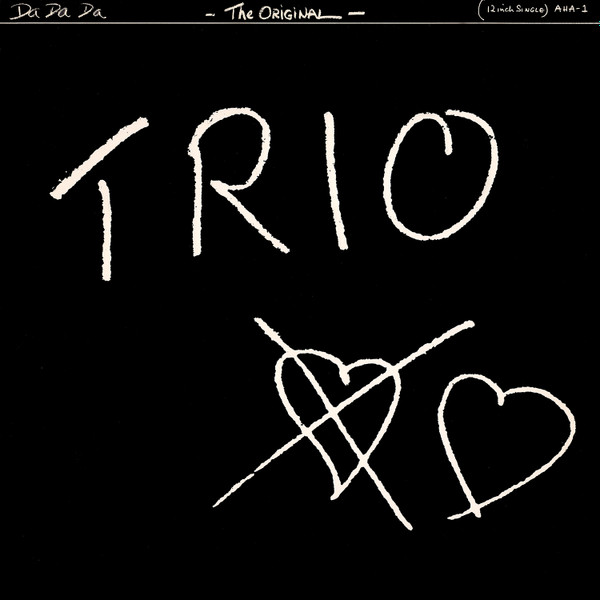
TRIO - DA DA DA
Estrenada: 1982
Llistes: Regne Unit: #2
"Da Da Da" és una cançó de la banda alemanya Trio, llançada com a senzill el 1982 i inclosa al seu àlbum debut homònim. La lletra va ser escrita per Stephan Remmler, amb la música composada per Gert "Kralle" Krawinkel. Inicialment, la cançó va assolir èxit principalment a Alemanya, convertint-se en el major èxit de Trio allà i arribant a posicions altes en diversos altres països, venent finalment 13 milions de còpies arreu del món.
La versió en alemany va arribar al número 2 a les llistes alemanyes l’abril de 1982. Al Regne Unit, també va assolir el número 2 el juliol del mateix any. Malgrat la seva extrema repetitivitat, la cançó es va fer molt popular internacionalment. Va emergir com una peça notable del moviment de la Neue Deutsche Welle (NDW), un gènere de música alemanya caracteritzat pel seu enfocament minimalista i sovint experimental. No obstant això, Trio preferia descriure la seva música com a "Neue Deutsche Fröhlichkeit", que es tradueix com a "Nova Felicitat Alemanya". Aquest terme reflecteix la seva intenció d'introduir sentit d'humor i lleugeresa a la seva música.
Malgrat el seu llançament inicial a principis dels anys 80, "Da Da Da" va guanyar una renovada popularitat als Estats Units 15 anys després quan va ser utilitzada en un anunci de Volkswagen. Aquest ressorgiment va portar al rellançament del senzill el 1997 per capitalitzar el seu nou èxit.
El títol complet de la cançó "Da Da Da ich lieb dich nicht du liebst mich nicht aha aha aha" es tradueix aproximadament com "Da Da Da jo no t'estimo, tu no m'estimes, aha aha aha". La frase "Ich lieb dich nicht du liebst mich nicht" es tradueix directament com "Jo no t'estimo, tu no m'estimes". En francès, el títol de la cançó es podria traduir com "Da Da Da je t'aime pas tu m'aimes pas", que transmet el mateix significat.
TRIO - DA DA DA
Released: 1982
Charted: UK: #2
"Da Da Da" is a song by the German band Trio, released as a single in 1982 and featured on their self-titled debut album. The lyrics were written by Stephan Remmler, with the music composed by Gert "Kralle" Krawinkel. Initially, the song achieved success primarily in Germany, becoming Trio's biggest hit there and reaching high positions in several other countries, ultimately selling 13 million copies worldwide.
The German version reached number 2 on the German charts in April 1982. In the UK, the song also peaked at number 2 in July 1982. Despite its extreme repetitiveness, the song became quite popular internationally. It emerged as a notable piece of the Neue Deutsche Welle (NDW) movement, a genre of German music characterized by its minimalist and often experimental approach. Trio, however, preferred to describe their music as "Neue Deutsche Fröhlichkeit," which translates to "New German Cheerfulness." This term reflects their intention to inject a sense of humor and lightheartedness into their music.
Despite its initial release in the early 1980s, "Da Da Da" gained renewed popularity in the United States 15 years later when it was prominently featured in a Volkswagen commercial. This resurgence prompted the single to be re-released in 1997 to capitalize on its newfound popularity.
The full title of the song "Da Da Da ich lieb dich nicht du liebst mich nicht aha aha aha" translates roughly to English as "Da Da Da I don't love you, you don't love me, aha aha aha." The phrase "Ich lieb dich nicht du liebst mich nicht" directly translates to "I don't love you, you don't love me." In French, the song title would be rendered as "Da Da Da je t'aime pas tu m'aimes pas," which carries the same meaning.