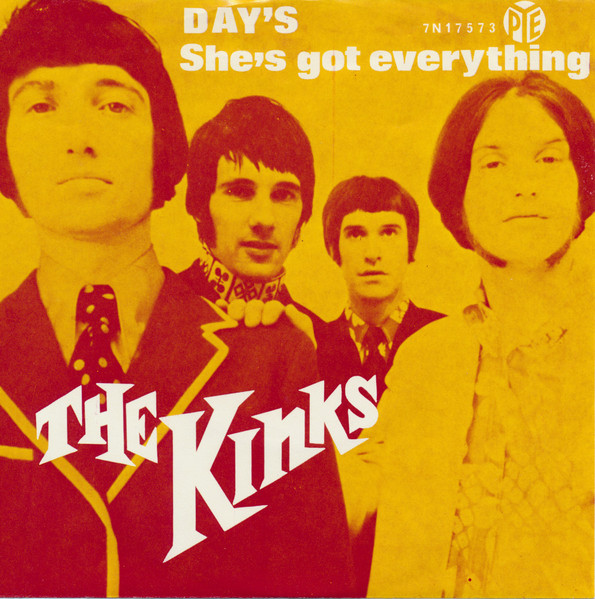
"Days" is a song penned by Ray Davies and initially slated for their concept album "The Kinks Are The Village Green Preservation Society", but following the commercial disappointment of their preceding single "Wonderboy," "Days" was hurriedly released as a standalone single in June 1968. Despite reaching number 12 on the UK charts, it did not chart in the US.
Ray Davies wrote "Days" as a nostalgic farewell to his music career, expressing a sense of resignation and reflection. In an interview with Q magazine, Davies explained that he was at a point where he didn't care anymore about the music industry, prompting him to write a song to bid farewell gracefully, hence "Days."
Additionally, Davies drew inspiration from his sister Rosie, who had immigrated to Australia. He recalled Rosie saying goodbye to him with affection. In his words to Rolling Stone, Davies acknowledged that "Days" was a tribute to Rosie and her generation.
Ray Davies shared insights into the creation of "Days," revealing that he began writing the song while on tour, initially focusing on capturing the rhythm and sustained chords. He later developed the melody and lyrics, with some of the song even being composed in a phone booth during a call that wasn't particularly about the person on the other end. Davies reflected on how "Days" has gained significance and intensity over the years, noting that he initially didn't think much about the song when he wrote it. He described how some songs simply come to be without much forethought, yet "Days" has accumulated a mystique and meaning that people still identify with.
22.8.24
DIRE STRAITS - TELEGRAPH ROAD
Publicació: 24 de setembre de 1982
Àlbum: Love over Gold
"Telegraph Road" és una cançó que figura com a pista inicial a l'àlbum de 1982 "Love Over Gold". Escrita per Mark Knopfler, és coneguda per la seva llarga durada i complexitat, arribant a més de 14 minuts. La música combina elements de rock progressiu, amb un treball de guitarra complexe, canvis dinàmics i llargues seccions instrumentals. És elogiada per la seva composició ambiciosa i narrativa.
"Telegraph Road" narra una història inspirada en un viatge de Knopfler a Michigan, reflexionant sobre temes d'industrialització, dificultats econòmiques i canvi social. La cançó està inspirada en una carretera de 70 milles a Michigan. Mark Knopfler la va escriure després de viatjar per Telegraph Road en el bus de la gira de la banda. En aquell moment, estava llegint "The Growth of the Soil" de l'autor guardonat amb el Premi Nobel, Knut Hamsun. Aquesta combinació va inspirar Knopfler a escriure una cançó sobre el desenvolupament al llarg de Telegraph Road i els canvis socials durant les dècades, servint com a metàfora del creixement i la decadència d'Amèrica, centrada particularment en temes d'atur i somnis trencats. "Telegraph Road" és considerada una obra mestra, tant líricament com musicalment. La cançó, que es desplega en dues parts, narra una història amb precisió poètica.
La primera part és històrica, traçant amb optimisme el desenvolupament d'una comunitat al llarg de Telegraph Road. Comença amb el so baix i lleuger de la guitarra National Steel, simbolitzant l'albada d'una nova era. La lletra descriu la fundació d'un assentament per part d'un home solitari al bosc, que amb el temps creix fins a esdevenir una ciutat. Aquest creixement es representa a través d'una sèrie d'esdeveniments significatius al llarg de Telegraph Road, amb la música pujant i accelerant-se al compàs del desenvolupament de la comunitat.
Un interludi musical, que marca el pas del temps, separa les dues parts. Aquest interludi és una obra mestra en si mateix, transicionant l’oient de manera impecable cap a la segona meitat de la història.
La segona part està narrada en primera persona i es centra en la lluita desesperada d'un individu en una gran ciutat. Aquesta ciutat, abans vibrant, ara està dominada per fàbriques, atur i forces econòmiques fora del control de l'individu. La lletra expressa vívidament l'impacte emocional - el ressentiment i l'odi - mentre la música punctua cada emoció, millorant la narrativa.
El passatge musical de tancament és incomparable, portant l’oient a un viatge "fins al final de Telegraph Road", resumint perfectament les proporcions èpiques de la cançó.
"Telegraph Road" es va interpretar per primera vegada en directe durant la gira australiana de "Making Movies" al Perth Entertainment Centre el 22 de març de 1981. Es va convertir en un element bàsic tant en les gires de Dire Straits com en les de Mark Knopfler en solitari. Una versió en directe lleugerament més curta es presenta a l'àlbum de 1984 "Alchemy: Dire Straits Live", i una edició remixada d'aquella interpretació apareix a l'àlbum de grans èxits de 1988 "Money for Nothing". La cançó també va ser retallada a 5:05 per a ser llançada com a senzill el 1983, amb "Twisting By The Pool" com a cara B.
DIRE STRAITS - TELEGRAPH ROAD
Released: September 24, 1982
Album: Love over Gold
"Telegraph Road" is a song featured as the opening track on the 1982 album “Love Over Gold”. The song, written by Mark Knopfler, is known for its length and complexity, running over 14 minutes. The music blends rock and progressive elements, featuring intricate guitar work, dynamic shifts, and extended instrumental sections. It is praised for its ambitious composition and storytelling.
"Telegraph Road" tells a story inspired by Knopfler's journey along Telegraph Road in Michigan, reflecting on themes of industrialization, economic hardship, and social change. The song was inspired by a 70-mile thoroughfare in Michigan. Mark Knopfler wrote the song after traveling down Telegraph Road on the band's tour bus. At the time, he was reading “The Growth of the Soil” by Nobel Prize-winning author Knut Hamsun. This combination inspired Knopfler to write a song about the development along Telegraph Road and the changes over the decades, serving as a metaphor for the growth and decline of America, particularly focusing on themes of unemployment and shattered dreams. "Telegraph Road" is considered a masterpiece, both lyrically and musically. The song, which unfolds in two parts, tells a story with poetic precision.
The first part is historical, optimistically tracing the development of a community along Telegraph Road. It begins with the low, light sound of the National Steel guitar, symbolizing the dawn of a new era. The lyrics describe the founding of a settlement by a lone man in the wilderness, which eventually grows into a city. This growth is depicted through a series of significant events along Telegraph Road, with the music rising and accelerating in tandem with the community's development.
A musical interlude, marking the passage of time, separates the two parts. This interlude is a masterpiece in itself, seamlessly transitioning the listener to the second half of the story.
The second part is narrated in the first person and focuses on an individual's desperate struggle in a large city. This city, once vibrant, is now plagued by factories, unemployment, and economic forces beyond the individual's control. The lyrics vividly express the emotional impact—resentment and hatred—while the music punctuates each emotion, enhancing the narrative.
The closing musical passage is unparalleled, taking the listener on a journey "all the way down the Telegraph Road," perfectly summarize the song's epic proportions.
"Telegraph Road" was first performed live during the band's "Making Movies" Australian tour at the Perth Entertainment Centre on March 22, 1981. It became a staple in both Dire Straits' and Mark Knopfler's solo tours. A slightly shorter live version is featured on the 1984 album “Alchemy: Dire Straits Live”, and a remixed edit of that performance appears on the 1988 greatest hits album “Money for Nothing”. The song was also cut down to 5:05 for a single release in 1983, with "Twisting By The Pool" as the B-side.
ELTON JOHN - I GUESS THAT’S WHY THEY CALL IT THE BLUES
Estrena: abril de 1983
Llistes: EUA: #4 Regne Unit: #5
"I Guess That's Why They Call It the Blues" és una cançó significativa per a Elton John del seu àlbum "Too Low for Zero", llançat el 1983. Marca un retorn a la forma amb la seva clàssica formació de banda i el reuneix creativament amb el lletrista Bernie Taupin després d'una breu pausa. La cançó va assolir un notable èxit, arribant al número 4 del Billboard Hot 100 als Estats Units i al número 5 al Regne Unit. Elton John personalment l'ha citat com la seva preferida de l'àlbum, apreciant-ne la qualitat perdurable i la descriu com una cançó atemporal que li encanta interpretar.
Líricament, Bernie Taupin la va escriure com un emotiu homenatge a la seva dona en aquell moment, Toni Russo, qui és germana de l'actriu Rene Russo. En els crèdits de l'àlbum, Bernie va incloure una nota personal: "Ei Toni, aquesta és per a tu."
Bernie Taupin ha expressat penediment per la lletra de "I Guess That's Why They Call It the Blues" que diu: "Loving you more than I love life itself" (T'estimo més que la meva pròpia vida). Considera que és un sentiment que mai expressaria ara, descrivint-lo com a vulgar i fals. Taupin creu que és irreal i disminueix la sinceritat de l'amor genuí. Ha destacat que, tot i que estima profundament els seus fills, la noció hipotètica de sacrificar la seva vida per algú és complexa i no és quelcom que trivialitzaria en una cançó.
"I Guess That's Why They Call It the Blues" es caracteritza pel seu ambient nostàlgic dels anys 50, impulsat pel piano de Elton John amb un toc blues i amb un notable solo d'harmonica de Stevie Wonder.
El vídeo musical presenta una trama emotiva ambientada en els anys 50. Segueix una parella jove que es separa quan el protagonista masculí és cridat al servei militar. El vídeo captura la profunda nostàlgia i tristesa de la noia en la seva absència, destacant la seva esperança perquè ell torni per alleujar el seu turment emocional.
ELTON JOHN - I GUESS THAT’S WHY THEY CALL IT THE BLUES
Released: April 1983
Charted: US: #4 UK: #5
"I Guess That's Why They Call It the Blues" is a significant song for Elton John from his album "Too Low for Zero," released in 1983. It marked a return to form with his classic band lineup and reunited him creatively with lyricist Bernie Taupin after a brief hiatus. The song achieved considerable success, reaching #4 on the Billboard Hot 100 in the United States and peaking at #5 in the UK. Elton John has personally cited it as his favorite from the album, appreciating its enduring quality and describing it as a timeless song that he enjoys singing.
Lyrically, Bernie Taupin penned the song as a heartfelt tribute to his wife at the time, Toni Russo, who happens to be the sister of actress Rene Russo. In the album credits, Bernie included a personal note: "Hey Toni, this one's for you."
Bernie Taupin expressed regret over the lyric in "I Guess That's Why They Call It the Blues" that states, "Loving you more than I love life itself." He considers it a sentiment that he would never express now, describing it as crass and false. Taupin believes that it's unrealistic and diminishes the sincerity of genuine love. He emphasized that while he deeply loves his children, the hypothetical notion of sacrificing his life for someone is complex and not something he would trivialize in a song.
"I Guess That's Why They Call It the Blues" is characterized by its nostalgic 1950s vibe, driven by Elton John's bluesy piano and featuring a notable harmonica solo by Stevie Wonder.
The music video depicts a poignant storyline set in the 1950s. It follows a young couple who are separated when the male protagonist is drafted into National Service. The video captures the girl's deep longing and sadness in his absence, emphasizing her anticipation and hope for his return to alleviate her emotional turmoil.
21.8.24
THE KINKS - AUTUMN ALMANAC
Released: October 13, 1967
Charted: UK: #3
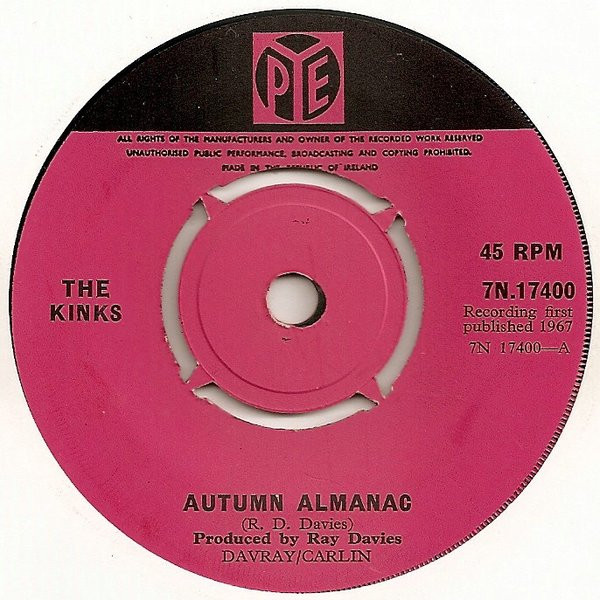
"Autumn Almanac" is a song penned by Ray Davies, celebrated for its classic status and keen observation of English customs. It's been praised for its mellow, melodic sound, which heralded the band's subsequent musical direction. The song was released as a non-album single in 1967, filling the gap between the albums "Something Else by the Kinks" and "The Kinks Are the Village Green Preservation Society". Despite its success in the UK, where it reached #3 on the singles chart, the song was not released in the US until it appeared on The Kink Kronikles compilation in 1972.
Ray Davies shared with Q magazine that the lyrics were inspired by Charlie, a friend of his father who helped clean up his garden by sweeping leaves. Davies wrote the song in early autumn, reflecting the changing colors of the leaves.
Musically, the song features a baroque style with experimental elements such as tape-manipulated feedback and backwards guitar. Davies mentioned his experimentation with reversing tapes, highlighting that the "This is my street" segment in the song is actually the first part played in reverse. He expressed satisfaction with how these elements came together in the tune.
"Autumn Almanac" from the mid-to-late 1960s was issued in both mono and stereo versions. The mono release served as the single and is included as a bonus track on the 1998 CD reissue of "Something Else by The Kinks," along with most compilation albums. In contrast, the stereo edition, extending by ten seconds and incorporating psychedelic audio effects like the tape loop during the fadeout, is featured on the 1972 compilation "The Kink Kronikles" and the deluxe 2-CD reissue of "Something Else."