Total de visualitzacions de pàgina:

8.9.24


THE CARS - DRIVE


Estrena: 23 de juliol de 1984

Llistes: EUA: #3  Regne Unit: #4


"Drive" del disc “Heartbeat City” es va llançar com el tercer senzill de l'àlbum el 23 de juliol de 1984. Escrita per Ric Ocasek, la cançó està interpretada pel baixista Benjamin Orr i produïda per Robert John "Mutt" Lange juntament amb la banda. Va esdevenir el senzill amb més èxit dels Cars en molts països, arribant al número tres del Billboard Hot 100 i encapçalant la llista Adult Contemporary als Estats Units. A nivell internacional, va assolir el cinquè lloc al Regne Unit, el quart a l'Alemanya Occidental, el sisè al Canadà i el tercer a Irlanda.


"Drive" és una balada cantada des de la perspectiva d'algú que presencia una dona, possiblement una exparella, que lluita per tirar endavant a la vida. La lletra transmet un sentiment de melangia mentre el narrador intenta encoratjar-la a afrontar els seus reptes. La música complementa la profunditat emocional de les frases amb una melodia suau però inquietant que reforça el to ombrívol de la cançó.


El videoclip, dirigit per l'actor Timothy Hutton, es centra en la model i actriu Paulina Porizkova, que més tard es convertiria en la tercera esposa de Ric Ocasek. El vídeo alterna entre escenes de Benjamin Orr assegut en un club nocturn desert, envoltat de maniquins que fan de clients i cambrers, i una narrativa que descriu la ruptura d'una relació entre els personatges de Ric Ocasek i Paulina Porizkova. La dona es queda sola, experimentant una gran angoixa emocional abans de visitar el club nocturn i mirar tristament a través d'una finestra bruta els maniquins dels membres de la banda actuant a l'escenari. La participació de Timothy Hutton com a director del vídeo es va produir gràcies a la seva proximitat amb Elliot Roberts, el mànager dels Cars, i la seva admiració per la cançó “Drive”.


"Drive" es recorda especialment per la seva associació amb l'esdeveniment Live Aid de juliol de 1985. Durant el segment del concert a Filadèlfia, els Cars la van interpretar en directe. A més, "Drive" es va utilitzar com a música de fons per a un muntatge que mostrava la fam a Etiòpia durant el segment londinenc del Live Aid. Aquest muntatge va ser presentat per David Bowie. Després del concert Live Aid, "Drive" va reentrar a la llista de singles del Regne Unit i va arribar al número quatre l'agost de 1985, millorant en una posició el seu pic anterior.


Benjamin Orr va morir de càncer de pàncrees l'any 2000. Al seu servei commemoratiu, celebrat al Rock and Roll Hall of Fame, es va tocar "Drive" com a homenatge a ell.


THE CARS - DRIVE


Released: July 23, 1984

Charted:  US: #3   UK: #4 


"Drive" from the album “Heartbeat City” was released as the album's third single on July 23, 1984. Written by Ric Ocasek, the song is notable for being sung by bassist Benjamin Orr and produced by Robert John "Mutt" Lange along with the band. It became the Cars' highest-charting single in many countries, reaching number three on the Billboard Hot 100 and topping the Adult Contemporary chart in the United States. Internationally, it peaked at number five in the UK, number four in West Germany, number six in Canada, and number three in Ireland. 


"Drive" is a poignant ballad sung from the perspective of someone witnessing a woman, possibly an ex-partner, struggling in life. The lyrics convey a sense of melancholy as the narrator tries to encourage her to confront her challenges. The music complements the emotional depth of the lyrics with a gentle yet haunting melody that underscores the somber mood of the song.


The music video directed by actor Timothy Hutton, prominently features model and actress Paulina Porizkova, who later became Ric Ocasek's third wife. The video alternates between scenes of Benjamin Orr sitting in a deserted nightclub surrounded by mannequins posed as customers and bartender, and a narrative depicting the breakdown of a relationship between Ric Ocasek and Paulina Porizkova's characters. The woman is left alone, experiencing emotional turmoil before visiting the nightclub and looking sadly through a smeared window at mannequins of the band members performing on stage. Timothy Hutton's involvement in directing the video came about through his proximity to Elliot Roberts, the manager of the Cars, and his admiration for the song "Drive" from the then-unreleased album “Heartbeat City”.


"Drive" is particularly remembered for its association with the July 1985 Live Aid event. During the Philadelphia segment of the concert, The Cars performed the song live. Additionally, "Drive" was used as background music for a montage depicting the Ethiopian famine during the London segment of Live Aid. This montage was introduced by David Bowie. Following the Live Aid concert, "Drive" re-entered the UK Singles Chart and reached its peak position of number four in August 1985. 


Benjamin Orr passed away from pancreatic cancer in 2000. At his memorial service held at the Rock and Roll Hall of Fame, "Drive" was played in tribute to him.


7.9.24


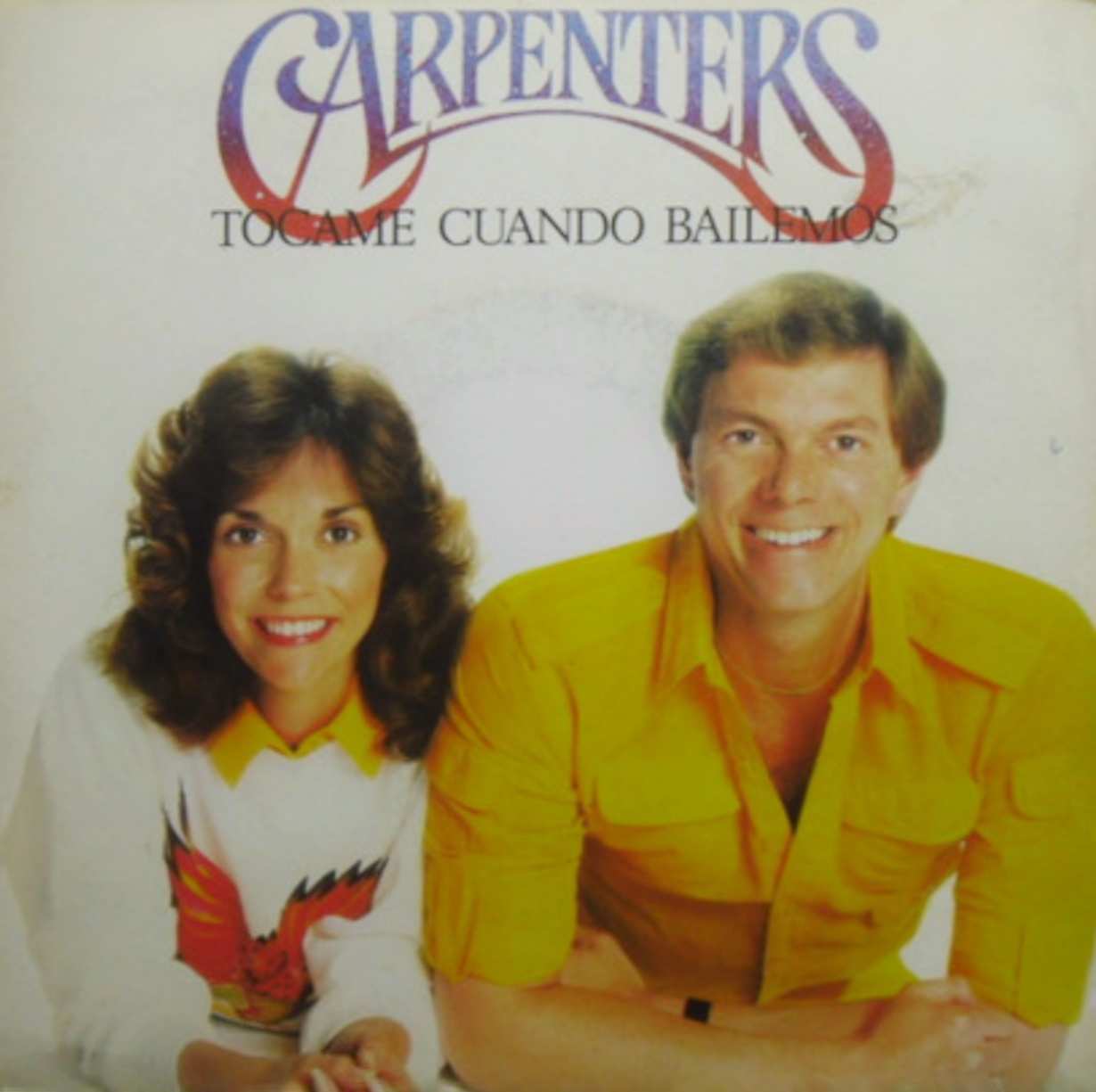
CARPENTERS - TOUCH ME WHEN WE’RE DANCING

Released: June 19, 1981

Charts:  US: #16 


"Touch Me When We're Dancing" is a song written by Terry Skinner, J. L. Wallace, and Ken Bell. Originally recorded by the Muscle Shoals session group Bama in 1979, it was later covered by The Carpenters in 1981 for their album “Made in America”. The Carpenters' version reached No. 16 on the Billboard Hot 100 and was their last Top 40 hit. 


“Made in America” marked a cautious comeback for The Carpenters after a hiatus due to Richard Carpenter's drug addiction and Karen's anorexia, which would later lead to her death. The single "Touch Me When We're Dancing" was a highlight, subtly incorporating a hint of disco into their signature luxurious sound.


The music video for "Touch Me When We're Dancing" features Karen Carpenter singing and gently dancing beside her brother Richard Carpenter's piano. It includes footage of a couple dancing superimposed over Richard's black piano, and shows a view from behind Richard as he plays. The video also features the guitarist and drummer in the background.


CARPENTERS - GOODBYE TO LOVE


Released: June 19, 1972

Charts:  UK: #9   US: #7 


"Goodbye to Love" was the first hit song written by Richard Carpenter and John Bettis for the Carpenters, released in 1972. Often regarded as the prototype for the power ballad, it reached No. 7 on the Billboard Hot 100. In the UK, it initially appeared as the B-side to "I Won't Last a Day Without You," but the sides were switched shortly after release, and "Goodbye to Love" climbed to No. 9 on the UK Singles Chart, marking the Carpenters' second top ten hit in that region.


While visiting London, Richard Carpenter saw a 1940 Bing Crosby film, *Rhythm on the River*, on *The Late Movie*. In the film, characters frequently refer to a song titled "Goodbye to Love," although it's never actually heard. Carpenter found the title intriguing and thought it would make a great song. Despite having the melody in his head, he struggled with the lyrics, so he completed the arrangement after returning to the U.S. His writing partner, John Bettis, then finalized the lyrics, resulting in the Carpenters' hit song.


While working on the tune, the Carpenters decided to incorporate a fuzz guitar solo into the song. Karen Carpenter personally called guitarist Tony Peluso to ask him to play on the record. Peluso recalled being initially skeptical that it was actually Karen on the phone, but after she repeated her name, he realized he was truly speaking to one of his idols. 


In the “Close to You: Remembering The Carpenters” documentary, Tony Peluso mentioned that "Goodbye to Love" was one of the first, if not the first, power ballads to feature a fuzz guitar solo. When Peluso arrived to the studio told Richard Carpenter he couldn't read music. Richard played and sang the melody for him, instructing Peluso to "take it away" at a specific point in the song. Remarkably, 99% of the iconic guitar solo was completed on the first take.


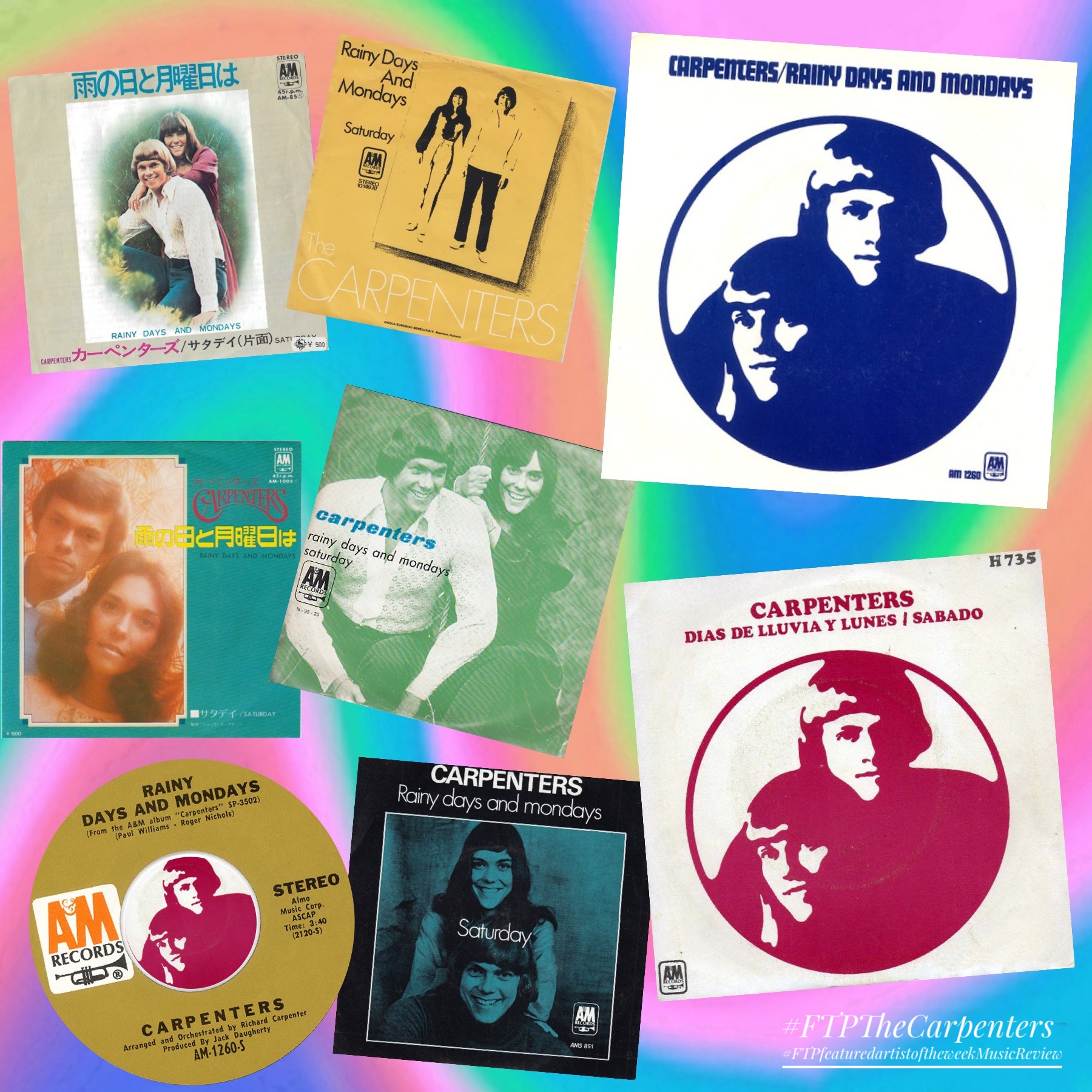
CARPENTERS - RAINY DAYS AND MONDAYS


Released: April 23, 1971

Charts:  UK: #63    US: #2 


"Rainy Days and Mondays," performed by The Carpenters and featured on their third self-titled album, was written by Paul Williams and Roger Nichols as one of their early collaborations. The song, with instrumental backing by the Wrecking Crew, reached number 2 on the Billboard Hot 100 chart, spending seven weeks in the Top 10. It was kept from the top spot by Carole King's double A-side hit "It's Too Late"/"I Feel the Earth Move."


"Rainy Days and Mondays" delivers a poignant and empathetic portrayal of the emotional emptiness many 1970s housewives experienced, which feminist Betty Friedan famously termed "the problem that has no name." Karen Carpenter's vocal performance shifts from a sense of resigned misery to a detached indifference, especially in the line "nice to know somebody loves me," highlighting a contrast between the hollow emotional state and the warm, comforting arrangement of the song. This subtle yet powerful delivery mirrors the fatigued isolation often hidden behind societal norms of contentment.


Paul Williams, who began his career as an actor before turning to songwriting, recounted how he struggled with acting roles that did not lead to a breakthrough. Williams shared a personal story about his mother, who had moved in with him during a period of career uncertainty. As he struggled with his acting career and began to focus on songwriting, he drew inspiration from his mother’s reflections on feeling old, which influenced the lyrics of "Rainy Days and Mondays." 


Paul Williams shared that a line in this song was created on the spot. Chuck Kay, head of publishing at A&M, suggested the song for The 5th Dimension but noted that some lyrics were unfinished. Williams came up with the line "What I've got they used to call the blues" during the car ride, as a quick fill to replace a more clichéd expression. Williams later considered this line his favorite in the song. He recounted a memorable moment when Johnny Mercer, a lyricist he admired, recognized him and complimented that very line, which Williams found to be one of the highlights of his career.


OTIS REDDING -  (SITTIN’ ON) THE DOCK OF THE BAY


Estrena: 8 de gener de 1968

Llistes: EUA: #1 (4 setmanes)   Regne Unit: #3


"(Sittin' On) The Dock of the Bay" és una cançó co-escrita pel cantant de soul Otis Redding i el guitarrista Steve Cropper. Tragícament, Redding va morir en un accident d'avió el 10 de desembre de 1967, només tres dies després de gravar la cançó i un mes abans de la seva publicació el 8 de gener de 1968. En el moment de la seva mort, Redding era una estrella emergent a punt d'aconseguir l'èxit mainstream. La cançó es va convertir en el seu major èxit i té la distinció de ser el primer single número 1 pòstum als EUA. També va arribar al número 3 a la llista de singles del Regne Unit.


Otis Redding va gravar "(Sittin' On) The Dock of the Bay" amb Booker T. & the MG's, la famosa banda de suport de Stax Records, que també va tocar amb altres artistes de Stax com Wilson Pickett, Sam & Dave i Albert King. La banda va saber de la mort de Redding mentre estaven atrapats en un aeroport d'Indiana a causa de la neu. En tornar a Memphis, Steve Cropper es va enfrontar a la difícil tasca de mesclar la cançó per a la seva publicació. La situació va ser particularment difícil emocionalment per a Cropper, ja que el cos de Redding encara no havia estat recuperat quan va completar la mescla. Malgrat la pressió emocional i les pressions de la discogràfica per acabar ràpidament la cançó, Cropper va aconseguir acabar-la, reflexionant sobre l'experiència com una de les més dures que havia viscut. Steve Cropper també va produir l'àlbum que inclou la cançó publicat després de la mort de Redding.


En una entrevista de 1990, Cropper va explicar que Redding, conegut per la seva abundància d'idees, es va inspirar en la seva estada en una casa flotant a Sausalito, Califòrnia, reproduint la imatge de veure els vaixells arribar i marxar. Cropper va aclarir que Redding sovint no escrivia sobre ell mateix, però la lletra de Cropper per cançons com "Mr. Pitiful" i "Sad Song Fa-Fa" reflectien aspectes de la vida del cantant. "Dock of the Bay" era una cançó personal sobre el viatge de Redding des de Geòrgia fins a San Francisco, capturant les seves experiències i reflexions.


L'estada d'Otis Redding en una casa flotant a Sausalito va ser un regal de Bill Graham, que gestionava el Fillmore West Auditorium. Redding va fer tres espectacles al lloc del 20 al 22 de desembre de 1966. Graham va oferir a Redding l'elecció entre allotjar-se en un hotel o en una casa flotant propera, i Redding, que gaudia de l'exterior, va optar per la casa flotant.


Els efectes de so de platja, com les ones i les gavines, es van afegir després de la gravació. Steve Cropper va explicar que la idea va sorgir de les bromes de Redding a l'estudi, on imitava gavines mentre feia el pallasso. Inspirat per això, Cropper va obtenir sons de gavines i ones d'una biblioteca de bandes sonores a Pepper Records i va crear un loop de cinta per barrejar amb la pista. Els efectes es van integrar durant el procés de mescla en un sistema de 6 pistes, amb els sons de gavines i ones gravats en pistes separades. Cropper també va sobregravar riffs de guitarra alts per complementar la imatge de les gavines, amb l'objectiu de crear una sensació atmosfèrica i melancòlica en lloc d'imitant directament els sons.


El famós xiulet al final de la cançó va ser una addició improvisada que no estava inicialment planificada. Steve Cropper i l'enginyer de Stax Ronnie Capone van decidir mantenir-la després d'escoltar-la durant la gravació. Cropper va assenyalar que Otis Redding, conegut per la seva excepcional improvisació, va quedar inicialment desconcertat pel tempo i l'ambient de la cançó, el que el va portar a xiular com una opció espontània. Cropper i Capone van quedar meravellats pel xiulet i van acordar immediatament incloure'l, trobant-lo una manera adequada i memorable de concloure la cançó.


OTIS REDDING -  (SITTIN’ ON) THE DOCK OF THE BAY


Released: January 8, 1968

Charts:  US: #1 (4 weeks)  UK: #3 


"(Sittin' On) The Dock of the Bay" is a song co-written by soul singer Otis Redding and guitarist Steve Cropper. Tragically, Redding died in a plane crash on December 10, 1967, just three days after recording the song and a month before its release on January 8, 1968. At the time of his death, Redding was a rising star on the verge of mainstream success. The song became Redding's biggest hit and holds the distinction of being the first posthumous #1 single in the U.S. It also reached #3 on the UK Singles Chart. 


Otis Redding recorded "(Sittin' On) The Dock of the Bay" with Booker T. & the MG's, the renowned house band for Stax Records, who also played with other Stax artists like Wilson Pickett, Sam & Dave, and Albert King. The band learned of Redding's death while stuck in an Indiana airport due to snow. Upon returning to Memphis, Steve Cropper faced the challenging task of mixing the song for release. The situation was particularly difficult for Cropper, as Redding's body had not yet been recovered when he completed the mix. Despite the emotional strain and pressure from the record company to rush the song's completion, Cropper managed to finish it, reflecting on the experience as one of the toughest he had ever faced. Steve Cropper also produced the album that includes this track after Redding's death. 


In a 1990 interview, Cropper explained that Redding, known for his abundance of ideas, was inspired by his stay at a boathouse in Sausalito, California, which led to the imagery of watching ships come in and roll away. Cropper elaborated that Redding often did not write about himself, but Cropper's lyrics for songs like "Mr. Pitiful" and "Sad Song Fa-Fa" reflected aspects of Redding's life. "Dock of the Bay" was a personal song about Redding's journey from Georgia to San Francisco, capturing his experiences and reflections.


Otis Redding's stay at a boathouse in Sausalito was facilitated by Bill Graham, who managed the Fillmore West Auditorium. Redding performed three shows at the venue from December 20-22, 1966. Graham offered Redding a choice between staying at a hotel or a boathouse nearby, and Redding, who enjoyed the outdoors, opted for the boathouse. 


The beach sound effects such as waves and seagulls, were added after the recording. Steve Cropper explained that the idea stemmed from Otis Redding's playful studio antics, where he mimicked seagulls while clowning around. Inspired by this, Cropper sourced seagull and wave sounds from a soundtrack library at Pepper Records and created a tape loop to mix in with the track. The effects were integrated during the mixing process on a 6-track setup, with the seagull and wave sounds recorded on separate tracks. Cropper also overdubbed high guitar licks to complement the seagull imagery, aiming to evoke a moody, atmospheric feel rather than directly imitating the sounds.


The iconic whistling at the end of the song was an impromptu addition that was not initially planned. Steve Cropper and Stax engineer Ronnie Capone decided to keep it after hearing it during the recording. Cropper noted that Otis Redding, known for his exceptional ad-libbing, was initially stumped by the song's tempo and mood, leading him to whistle as a spontaneous addition. Cropper and Capone were inspired by the whistling and immediately agreed to include it, finding it to be a fitting and memorable way to conclude the song.