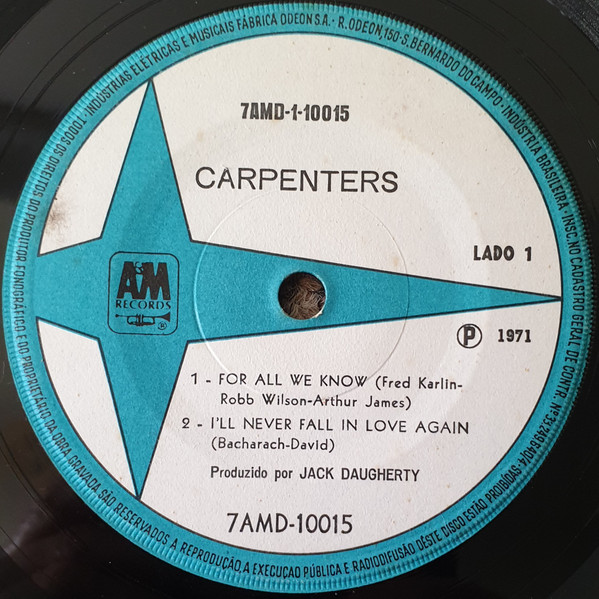
"For All We Know" is a soft rock song composed by Fred Karlin with lyrics by Robb Royer and Jimmy Griffin, both founding members of the band Bread. Originally performed by Larry Meredith for the 1970 film “Lovers and Other Strangers”, Richard Carpenter heard the song while watching the movie during a tour and thought it was perfect for the Carpenters. The duo recorded it, and it became a hit in 1971, reaching No. 3 on the Billboard Hot 100.
In the 1970 film “Lovers and Other Strangers”, a couple who live together get married, and they are the only two people who are happy about their marriage, as others around them face marital or pre-marital issues. The song "For All We Know" plays during their wedding scene. After watching the film, Richard Carpenter decided to record the song with Karen, releasing it in December 1970. The Carpenters' version became a huge success, achieving gold status within two months. Their rendition helped the song win the Oscar for Best Original Song in 1971.
When "For All We Know" was nominated for the Academy Award, the Carpenters were not permitted to perform it at the ceremony because they had not appeared in any films, which was a requirement at the time. At the Carpenters' request, British singer Petula Clark performed the song during the ceremony. Years later, on February 6, 1983, Clark paid tribute to Karen Carpenter by performing the song in concert, just two days after Karen's tragic passing.
Richard Carpenter originally had the intro to the track played on guitar by José Feliciano, who had expressed interest in collaborating with the Carpenters. Feliciano created the intro using his nylon string acoustic guitar, but the next day, his manager requested that Feliciano's contribution be removed. Richard complied and replaced the guitar intro with an oboe played by Earle Dumler. The rest of the song featured session musicians from the Wrecking Crew.
CARPENTERS - YESTERDAY ONCE MORE
Released: May 16, 1973
Charts: UK: #2 US: #2
"Yesterday Once More," written by Richard Carpenter and John Bettis, is a 1973 hit by the Carpenters from their album “Now & Then”. The song, which reflects on nostalgia for past music, reached No. 2 on the Billboard Hot 100, blocked from the top by Jim Croce's "Bad, Bad Leroy Brown." It also topped the easy listening chart and is the Carpenters' best-selling record worldwide and in the UK.
"Yesterday Once More" features a medley of eight 1960s songs, designed to mimic an oldies radio program, which occupies the entire B-side of the “Now & Then” album. Richard Carpenter explained that the resurgence of '60s music inspired him to create a song celebrating this trend, and the medley was intended to showcase this nostalgic return.
The house featured on the cover of the “Now and Then” album was purchased by Karen and Richard Carpenter for their parents in 1970, using earnings from their hit "(They Long to Be) Close to You." Located in suburban Downey, California, this 5-bedroom house, often referred to as their "Graceland" by fans, included a specially built annex where the Carpenters recorded their music. It was also the site of tragedy in 1983 when Karen, suffering from anorexia, collapsed and passed away.
On this particular single, Karen Carpenter played drums, with Richard on keyboards, Joe Osborn on bass, and Tony Peluso on guitar, instead of their usual session drummer Hal Blaine.
CARPENTERS - TOP OF THE WORLD
Released: September 17, 1973
Charts: UK: #5 US: #1 (2 weeks)
"Top of the World" is a 1972 song written by Richard Carpenter and John Bettis, and first featured on their album “A Song for You”. Initially, the duo planned for the song to remain an album track, but after country singer Lynn Anderson covered it and scored a number two hit on the country charts, the Carpenters reconsidered and decided to release their own version as a single.
In "Top of the World," Karen Carpenter expresses feelings of pure joy and elation, singing about being "on the top of the world, lookin' down on creation." The reason for her happiness is simple—she's deeply in love, and that love makes her feel as though she's soaring high above everything. The song captures the bliss and excitement of being "crazy in love."
"Top of the World" stands out as a solid midtempo track with an upbeat and lush arrangement, including Hal Blaine's drums, strings, organs, and smooth backup vocals. Despite its seemingly confident and cheerful tone, Karen Carpenter’s performance introduces a subtle layer of melancholy. Her voice is warm, controlled, and intelligent, lending emotional depth to the song. When she sings of overwhelming happiness, her voice seems to hint that that joy might be fleeting. Karen’s nuanced delivery, especially on the chorus, gives the song an immediate emotional hook.
In September 1973 the Carpenters released "Top of the World" as a single in the US and UK. Karen Carpenter, not entirely satisfied with the original vocal, re-recorded her lead for the single release. The song became a major hit, reaching No. 1 on the Billboard Hot 100 and staying there for two consecutive weeks in 1973.
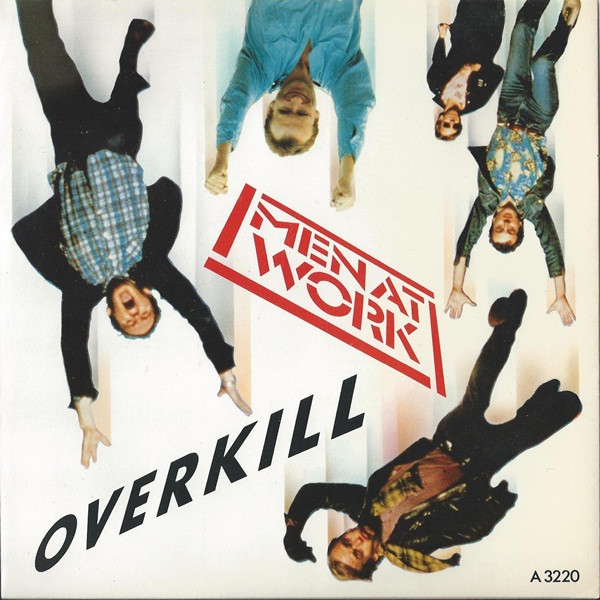
MEN AT WORK – OVERKILL
Estrena: març de 1983
Llistes: EUA #3 Regne Unit #21
"Overkill" és una cançó gravada per la banda australiana de pop/rock Men at Work per al seu segon àlbum, “Cargo”, i es va llançar com a single a la primavera de 1983. Escrita pel cantant principal Colin Hay, va entrar al top ten a Austràlia, Canadà, Irlanda i els Estats Units, i va significar un canvi per a Men at Work, allunyant-se de la seva música habitual més desenfadada cap a un so més refinat i unes lletres més madures.
La cançó parla de la incertesa de sortir de la zona de confort i de l'ansietat que comporta el canvi. Colin Hay es va inspirar en la cançó quan es va adonar que havia aconseguit tot el que s'havia proposat i que la seva vida havia arribat a un punt on ja no controlava el seu futur. També reflectia l'ansietat que patia, sabent que hauria de deixar la seva llar a Melbourne per explorar nous horitzons.
La cançó detalla com de greu s'havia tornat l'ansietat del narrador, que incapaç de dormir, surt als carrers per trobar consol amb altres ànimes inquietes. Intenta justificar les seves accions dient: “At least there's pretty lights" (Almenys hi ha llums boniques a fora), en contrast amb la foscor perpètua dels seus pensaments. La lluita contra la seva ansietat arriba al seu punt àlgid a la tornada, amb la frase “Ghosts appear and fade away, come back another day” (Els fantasmes apareixen i s'esvaeixen, tornen un altre dia), però es té la sensació que qualsevol treva amb aquests fantasmes mentals és només temporal.
El videoclip es va filmar als voltants del barri de St. Kilda, a Melbourne, que irònicament era la llar de Colin Hay, la zona que deixaria enrere, cosa que va provocar l'ansietat que va inspirar la lletra de la cançó.
Colin Hay es va sentir molt orgullós de "Overkill", afirmant que era "...la primera cançó que vaig escriure en què vaig pensar que podria guanyar-me la vida com a compositor. Vaig pensar que era una bona cançó i que resistiria el pas del temps. En aquell moment, vaig sentir que tenia alguna cosa especial. Estava molt content amb aquesta cançó". "Overkill" es va llançar com a segon senzill de “Cargo” a Austràlia, després de "Dr Heckyll & Mr Jive". Va ser el single principal de l'àlbum a nivell internacional, on va assolir el número 3 als Estats Units, el número 6 a Canadà i el número 9 a Irlanda. Al Regne Unit, on la banda va tenir menys èxit que a Amèrica del Nord, va arribar al número 21, sent el segon senzill més ben posicionat allà, després de "Down Under", que va arribar al número u.
MEN AT WORK – OVERKILL
Released: March 1983
Charts: US #3 UK #21
“Overkill” was a song recorded by Australian pop/rock band Men at Work for their second album, “Cargo”, and was released as a single from that album in the Spring of 1983. Written by lead singer Colin Hay, the song made the top ten in Australia, Canada, Ireland and the United States, and saw Men at Work move away from their usual light-hearted music, to a more refined sound and mature lyrics.
The song is about the uncertainty of moving out of your comfort zone and the anxiety that comes with change. The song was inspired by Colin Hay realising that he had managed to achieve all he had set out to do, and his life had reached a point where he was no longer in control of his future. It also reflected the anxiety Hay was suffering, knowing he would have to leave his home in Melbourne for pastures new.
The song details how bad the narrator's anxiety had become, as unable to sleep, he heads into the streets, where he can find solace with other restless souls. He tries to justify his actions by saying “At least there's pretty lights” outside, compared to the perpetual darkness of his thoughts. The battle against his anxiety comes to a head in the chorus, “Ghosts appear and fade away, come back another day” he retorts, but you get the idea that any respite from those mental ghosts is only temporary.
The music video is filmed around the Melbourne suburb of St. Kilda, which was ironically the home of Colin Hay, and the area he would be moving away from, causing the anxiety that inspired the song’s lyrics.
Colin Hay remained very proud of “Overkill”, stating that it was “...the first song that I wrote where I thought I could make a living as a songwriter. I thought it was a good song, and one that would stand the test of time. I felt at the time it had something to it. I was very happy with that song”. The song was released as the second single from “Cargo” in Australia, following “Dr Heckyll & Mr Jive”. It was the lead single from the album internationally, where it made #3 in the United States, #6 in Canada and #9 in Ireland. In the UK, where the band had less success than in North America, it made #21, their second highest charting single there, behind the chart topping “Down Under”.
8.9.24
ROLLING STONES - UNDER MY THUMB
Publicació: 15 d'abril de 1966
Àlbum: Aftermath
"Under My Thumb" és una cançó escrita per Mick Jagger i Keith Richards, amb una marimba interpretada per Brian Jones. Tot i que mai es va llançar com a senzill en països de parla anglesa, continua sent una de les pistes més populars de la banda de mitjans dels anys 60 i s'inclou en nombroses recopilacions dels seus èxits.
La frase "under one's thumb" significa estar sota el control d'algú. A la cançó, Mick Jagger descriu una inversió de rols en què una noia que abans el dominava ara està sota el seu control, mencionada com "la mascota més dolça del món". Alguns grups feministes troben la cançó ofensiva, especialment la frase "The way she talks when she's spoken to down to me" (La manera com parla quan em parla a mi). En una entrevista de 1984, Jagger va clarificar la intenció de la cançó, afirmant: "La idea era que jo estava sota ella, ella em dominava. Així que tota la idea és absurda, només vaig girar les taules. Així que les dones van interpretar que era en contra de la femininitat quan en realitat anava sobre intentar deixar de ser un home reprimit."
"Under My Thumb" recorda a un tema de Motown que va acabar a l'extrem fosc del carrer, i un núvol semblava seguir-la durant tots els anys seixanta. La cançó va ser versionada per The Who en solidaritat quan els Stones van afrontar càrrecs per drogues el 1967. També va servir com a banda sonora de la tràgica mort de Meredith Hunter al concert gratuït d'Altamont el 1969. Malgrat les seves associacions fosques, la cançó segueix destacant per la seva composició, representant un dels moments més indiscutibles dels Rolling Stones.
ROLLING STONES - UNDER MY THUMB
Released: April 15, 1966
Àlbum: Aftermath
"Under My Thumb" is a song written by Mick Jagger and Keith Richards, featuring a distinctive marimba played by Brian Jones. While it was never released as a single in English-speaking countries, it remains one of the band's popular tracks from the middle 1960s and is included in numerous best-of compilations.
The phrase "under one's thumb" means to be under someone's control. In the song, Mick Jagger describes a reversal of roles where a girl who previously dominated him is now under his control, referred to as the "sweetest pet in the world." Some feminist groups find the song offensive, particularly the line, "The way she talks when she's spoken to down to me." In a 1984 interview, Jagger clarified the song's intent, stating: "The whole idea was that I was under HER, she was kicking ME around. So the whole idea is absurd, all I did was turn the tables around. So women took that to be against femininity where in reality it was trying to 'get back' against being a repressed male."
"Under My Thumb" is reminiscent of a Motown number that ended up at the dark end of the street, and a cloud seemed to follow it throughout the Sixties. The song was covered by The Who in solidarity when the Stones faced drug charges in 1967. It also served as the soundtrack to the tragic death of Meredith Hunter at the Altamont Free Concert in 1969. Despite its dark associations, the song remains a standout in terms of songcraft, representing one of The Rolling Stones' most undeniable moments.