Total de visualitzacions de pàgina:

13.9.24


CARPENTERS - SUPERSTAR


Publicació: 12 d'agost de 1971

Llistes: Regne Unit: #18   EUA: #2


Leon Russell i Bonnie Bramlett van escriure aquesta cançó sobre una dona que té una breu aventura amb una estrella del rock, però que s'aferra a la creença que ell l'estima de debò i que tornarà. Escrita el 1969, el terme "groupie" estava començant a guanyar popularitat, especialment després de l'article de portada de la revista Rolling Stone de febrer de 1969, "The Groupies and Other Girls." Tot i que les "groupies" sovint eren admirades pel seu estil i presència a l'escena musical, també eren criticades com a il·lusòries i utilitzades per les estrelles del rock, un punt de vista reflectit a la cançó.


Delaney & Bonnie van ser els primers a gravar la cançó, inicialment titulada "Groupie (Superstar)," llançant-la com a cara B del seu senzill de 1969 "Comin' Home." Rita Coolidge la va interpretar durant la gira de Joe Cocker, “Mad Dogs and Englishmen”, l'any 1970. Aquell mateix any, una jove Bette Midler la va començar a interpretar, i va ser durant una d'aquestes actuacions al The Tonight Show que Richard Carpenter la va escoltar per primera vegada. Reconeixent el seu potencial, Carpenter la va reestructurar segons l'estil dels Carpenters i la va gravar, resultant en la versió més popular comercialment.


Karen Carpenter podria semblar una elecció poc probable per interpretar el paper d'una "groupie" enamorada a "Superstar". Inicialment, no se sentia atreta per la cançó quan la va gravar per primera vegada, llegint una lletra que Richard havia escrit ràpidament en un tovalló. En una entrevista de 1981, va mencionar que la melodia no li agradava al principi, cosa que va sorprendre Richard, però després d'escoltar l'arranjament que ell havia fet, Karen va arribar a estimar-la, i finalment la va considerar una de les seves preferides. Va capturar totalment la seva profunditat emocional, transmetent les reflexions complexes i problemàtiques sobre els límits entre artista i fan.


La versió dels Carpenters va aparèixer al seu àlbum de maig de 1971 “Carpenters” i es va llançar com a senzill a l'agost de 1971. Va arribar al número 2 a la llista Billboard Hot 100, just darrere de "Maggie May" de Rod Stewart. La cançó va encapçalar la llista de música Easy Listening durant dues setmanes i va aconseguir el certificat de disc d'or. Internacionalment, va arribar al número 18 a la llista de singles del Regne Unit i també va entrar a les llistes d'Austràlia i Nova Zelanda.


CARPENTERS - SUPERSTAR


Released: August 12, 1971

Charts:  UK: #18    US: #2 


Leon Russell and Bonnie Bramlett wrote this song about a woman who has a brief fling with a rock star but clings to the belief that he genuinely loves her and will return. Written in 1969, the term "Groupie" was just gaining popularity, especially after Rolling Stone's February 1969 cover story, "The Groupies and Other Girls." While groupies were often admired for their style and presence in the music scene, they were also criticized as delusional and used by rock stars, a portrayal reflected in the song.


Delaney & Bonnie were the first to record the song, initially titled "Groupie (Superstar)," releasing it as the B-side of their 1969 single "Comin' Home." Rita Coolidge later performed it during Joe Cocker's Mad Dogs and Englishmen tour in 1970. That same year, a young Bette Midler began performing the song, and it was during one of her performances on The Tonight Show that Richard Carpenter first heard it. Recognizing its potential, Carpenter reworked the song in the Carpenters' style and recorded it, resulting in the most commercially successful version.


Karen Carpenter may have seemed an unlikely choice to portray the role of a lovelorn groupie in "Superstar". She initially wasn't drawn to the song when she first recorded it, reading lyrics Richard had quickly jotted on a napkin. In a 1981 interview, she mentioned how the tune didn't resonate with her at first, which surprised Richard, but after hearing his arrangement, Karen grew to love the song, eventually calling it one of her favourites. She fully embodied the song's emotional depth, conveying the complex and troubled reflections on the blurred boundaries between artist and fan.


The Carpenters rendition was featured on their May 1971 album “Carpenters” and released as a single in August 1971. It peaked at number 2 on the Billboard Hot 100, just behind Rod Stewart's "Maggie May." The song topped the Easy Listening chart for two weeks and achieved gold record status. Internationally, it reached number 18 on the UK pop singles chart and also charted in Australia and New Zealand.


12.9.24


KAREN CARPENTER - KAREN CARPENTER


Released: October 8, 1996

Recorded: May 1979 – January 1980


Karen Carpenter’s only solo album, “Karen Carpenter”, was released posthumously in 1996 by A&M Records. It was originally recorded between 1979 and 1980 with producer Phil Ramone, while her brother Richard Carpenter was undergoing treatment for Quaalude addiction. The album featured various prominent studio musicians from New York and Los Angeles, including John "JR" Robinson, Steve Gadd, Greg Phillinganes, Louis Johnson, and members of Billy Joel's band. Despite Karen's hopes for a fresh sound and independence from the Carpenters' usual style, A&M Records initially shelved the album, and it wasn't released during her lifetime. 


Karen Carpenter's solo album faced mixed reactions from A&M Records. While executives in New York approved the material, those in Los Angeles, including label founders Herb Alpert and Jerry Moss, responded negatively. “E! True Hollywood Story” reported that A&M Records' Herb Alpert deemed Karen Carpenter's solo album "unreleaseable." Producer Phil Ramone recalled that Karen was heartbroken by their reaction, even breaking down in tears. Though officially, Karen agreed to the decision not to release the album, Richard Carpenter later said she respected the opinions of A&M executives and himself. However, several musicians involved in the project stated that Karen deeply wanted the album to be released, and shelving it was not her decision.


Despite Quincy Jones' efforts to support its release, A&M executives, including Alpert and Moss, insisted on canceling it. The album's production cost $400,000 of Carpenter's own money and $100,000 from A&M, which was deducted from future Carpenters' royalties. Just before her death, Carpenter expressed her love for the album in a call to producer Phil Ramone. The album remained shelved until 1996, thirteen years after her death. Of the twenty-one recorded songs, eleven were selected for the album. Some tracks from the solo sessions appeared on the Carpenters' 1989 compilation “Lovelines”. Unfinished tracks were leaked on the internet in 2000, after being distributed by an A&M individual via a fan club.


Richard Carpenter reflects on the inner lines of the solo album “Karen Carpenter” that although the album was completed in early 1980, it received a lukewarm reaction from A&M executives and was shelved. Richard acknowledges that his perspective on the album has changed over time and believes it should be heard as a representation of Karen's artistry and career period. He supports its release, including a bonus track (“Last one singin’ the blues”), to honor her legacy.


To fully appreciate Karen Carpenter's solo project, it's important to understand that the album was a deliberate departure from the Carpenters' usual style. The aim was to showcase Karen's extraordinary voice in a new musical context, appealing to both her fans and a broader audience. Despite rumors, there was no intention to end the Carpenters; Karen and Richard’s bond was strong. The collaboration with Billy Joel’s band and other musicians added a unique sparkle to the album. Although the release was delayed, both Richard and producer Phil Ramone remained eager for its release. The album’s mixes are presented as Karen approved them, with the bonus track remaining unmixed as an unfinished piece. 


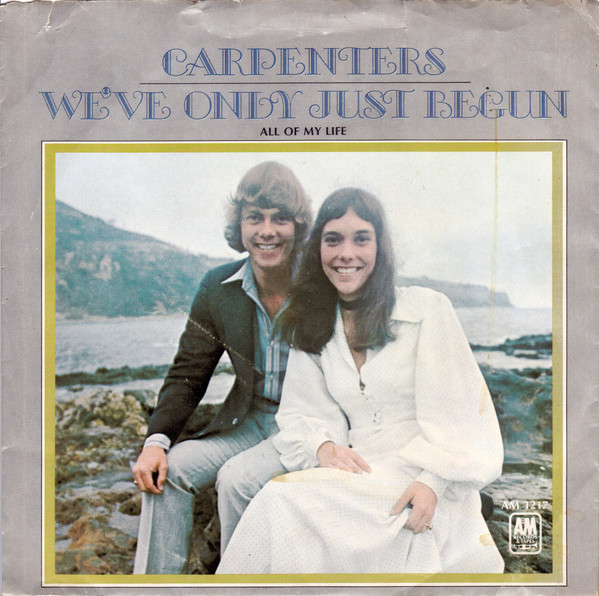
CARPENTERS - WE’VE ONLY JUST BEGUN


Publicada: 21 d'agost de 1970  

Llistes: Regne Unit: #28   EUA: #2  


"We've Only Just Begun" és una cançó dels Carpenters, escrita per Roger Nichols i Paul Williams. Inicialment es va crear per a un anunci de televisió temàtic de casaments d'un banc a principis de 1970, dirigit a parelles joves i acabades de casar. Paul Williams va ser qui va posar la veu a l'anunci.


L'anunci mostrava una parella casant-se i marxant amb el cotxe cap al capvespre, amb el missatge: "Tens un llarg camí per recórrer, ens agradaria ajudar-te a arribar-hi." Williams i Roger Nichols van rebre l'encàrrec d'escriure la cançó, però els van demanar explícitament que no fes la sensació d'un simple jingle publicitari. Així doncs, van crear el que es convertiria en una cançó clàssica per a casaments.


Inicialment, van composar només dues estrofes i un pont per a l'anunci, sense esperar que la cançó es tornés a utilitzar. Quan Richard Carpenter va escoltar la versió de Williams a l'anunci, va preguntar si existia una cançó completa. Ja havien escrit una tercera estrofa, cosa que la va convertir en una cançó completa, i els Carpenters la van transformar en un dels seus èxits més grans. Williams va comentar humorísticament que, si no haguessin acabat la cançó quan Carpenter va trucar, l'haurien completat ràpidament.


Els Carpenters van triar "We've Only Just Begun" com el seu tercer senzill, incloent-la a l'àlbum “Close to You”. Publicada a l'estiu de 1970, el single destacava la veu principal de Karen Carpenter amb els cors harmonitzats del duo. Després de l'èxit del seu anterior hit "(They Long to Be) Close to You", la cançó va assolir el número 1 a les llistes de Cash Box i el número 2 a la Billboard Hot 100, darrere de "I'll Be There" dels Jackson 5 i "I Think I Love You" de The Partridge Family. La cançó es va convertir en el seu segon senzill d'or venent més d'un milió de còpies i va contribuir a que el duo guanyés dos premis Grammy l'any 1971.


El videoclip de "We've Only Just Begun" presentava un distintiu fons vermell amb les lletres que formaven la paraula "you". Karen Carpenter es veia asseguda dins la lletra "U", mentre que Richard estava dret al seu costat, una escena que s'allunyava del seu rol habitual tocant el piano. Aquest vídeo va ser creat com a part de la sèrie de televisió de 1971 “Make Your Own Kind of Music”.


CARPENTERS - WE’VE ONLY JUST BEGUN

Released: August 21, 1970

Charts:  UK: #28    US: #2 


"We've Only Just Begun" is a song by the Carpenters, written by Roger Nichols and Paul Williams. It was initially created for a wedding-themed television commercial for a Bank in early 1970, aimed at attracting young couples and newlyweds. Paul Williams provided the vocals for the commercial. 


The ad was meant to show a couple getting married and driving off into the sunset, with the message, "You've got a long way to go, we'd like to help you get there." Williams and Roger Nichols were tasked with writing the song, but they were specifically asked not to create a jingle. Instead, they wrote what would later become a classic wedding song.


Initially, they composed just two verses and a bridge for the commercial, with no expectation that the song would be used again. When Richard Carpenter heard Williams' version on the commercial he inquired if there was a complete song. They had already written a third verse, which made it a full song, and the Carpenters turned it into one of their biggest hits. Williams humorously noted that if they hadn’t finished the song by the time Carpenter called, they would have quickly completed it.


The Carpenters chose "We've Only Just Begun" as their third single, including it on their “Close to You” album. Released in the summer of 1970, the single showcased Karen Carpenter's lead vocals with the duo's harmonized backing. It followed the success of their previous hit "(They Long to Be) Close to You," reaching No. 1 on the Cash Box singles chart and No. 2 on the Billboard Hot 100, just behind the Jackson 5's "I'll Be There" and the Partridge Family's "I Think I Love You." The song became their second million-selling gold single and contributed to the duo winning two Grammy Awards in 1971.


The music video for "We've Only Just Begun" featured a distinctive red background with the letters spelling out "you." Karen Carpenter is seen sitting inside the letter "U," while Richard stands beside her, departing from his usual role of playing the piano. This video was created as part of the 1971 television series Make Your Own Kind of Music. 


CARPENTERS - PLEASE MR. POSTMAN

Released: November 8, 1974

Charts:  UK: #2   US: #1 (1 week)


"Please Mr. Postman" is a song written by Georgia Dobbins, William Garrett, Freddie Gorman, Brian Holland, and Robert Bateman, and was originally performed by The Marvelettes as their debut single for the Tamla (Motown) label. It became Motown's first song to reach number one on the Billboard Hot 100 in 1961. The song achieved renewed success in 1975 when Carpenters covered it, taking their version to the top of the Billboard Hot 100, making it a number-one hit once again.


Carpenters were no strangers to recording covers before "Please Mr. Postman." In fact, they had dedicated an entire side of their 1973 album “Now & Then” to covers of classic oldies, presented as part of a medley with a faux old-time radio DJ tying the songs together. Carpenters' version of "Please Mr. Postman" has a 1950s rock & roll vibe. Released in late 1974, it reached number one on both the Billboard Hot 100 and the Easy Listening charts in January 1975. It was the duo's 10th and final million-selling single. Their “Horizon” album, released in June 1975, achieved Platinum status. 


Carpenters filmed the music video for their cover of "Please Mr. Postman" at Disneyland, where they joyfully interacted with costumed characters and smiled for the cameras. The choice of Disneyland as the location holds sentimental value, as both Richard Carpenter and his songwriting partner, John Bettis, had worked there before finding success. Ironically, they were let go from their jobs for playing too many contemporary hits, despite now being celebrated musicians. 


"Please Mr. Postman" was Carpenters' last #1 hit. Although they continued to chart, their sales steadily declined. During this time, they faced significant personal struggles—Richard battled addiction, and Karen suffered from anorexia. After a hiatus, they reunited, but tragically, Karen passed away from heart failure in 1983 at the age of 32, just eight years after their final chart-topping single.


11.9.24


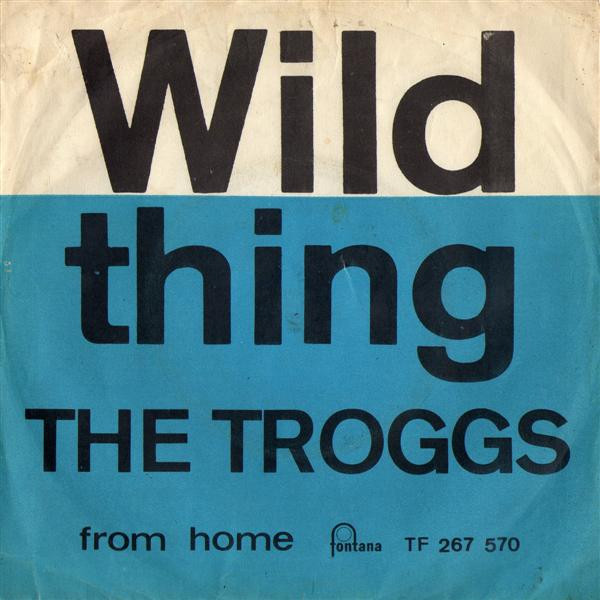
THE TROGGS - WILD THING


Publicació: 22 d'abril de 1966

Llistes: EUA: #1 (2 setmanes)  Regne Unit: #2


"Wild Thing" és una cançó escrita pel compositor americà Chip Taylor i enregistrada inicialment per la banda de rock americana The Wild Ones el 1965, tot i que no va aconseguir entrar a les llistes. La cançó va guanyar una popularitat generalitzada quan va ser versionada per la banda de rock anglesa The Troggs el 1966. La versió dels Troggs va ser un gran èxit, arribant al número u a la Billboard Hot 100 als Estats Units i assolint el número dos a la UK Singles Chart. L'estructura distintiva de "Wild Thing", amb el seu estil de parades i arrencades, es va inspirar en "Heartbreak Hotel" d'Elvis Presley.


Els Troggs van llançar la seva cançó d'èxit tant a Atco com a Fontana Records simultàniament. La banda, originària d'Anglaterra, va afrontar inicialment reticències del seu segell britànic, Fontana, sobre el llançament del single a Amèrica del Nord. En resposta, el seu manager va viatjar als EUA i va aconseguir un acord de distribució amb Atco Records. Poc després, Fontana va canviar de postura i també va llançar el single a Amèrica. Com que ambdues versions del single utilitzaven la mateixa gravació mestra però tenien diferents cares B, la Billboard Hot 100 va combinar les vendes dels dos segells en una sola posició a les llistes. Això va resultar en que la cançó es convertís en el primer single a assolir el número u a la Billboard Hot 100 mentre es trobava disponible en dos segells diferents al mateix temps.


L'estil de música que exemplificaven els Troggs en els seus primers treballs, particularment en cançons com "Wild Thing", es va conèixer com "Caveman Rock". Aquest so cru i primitiu va contribuir al nom de la banda, "The Troggs", que és una abreviació de "troglodyte", un terme que significa "habitant de la cova". Aquest nom reforçava la seva imatge rugosa i primitiva. A mesura que la seva carrera avançava, els Troggs es van allunyar d'aquest so neandertal i van aconseguir un gran èxit amb la més refinada i melòdica "Love Is All Around" el 1968.


Chip Taylor és un prolífic compositor conegut per escriure "Wild Thing", que ha estat enregistrada per nombrosos artistes i sovint utilitzada en pel·lícules i programes de televisió, cosa que li ha generat royalties significatius. Taylor, el nom real del qual és James Wesley Voight, tenia un reconegut hàbit pel joc, apostant aproximadament 10.000 dòlars al dia i sent exclòs de tots els casinos de Las Vegas per comptar cartes. També és germà de l'actor Jon Voight i oncle de l'actriu Angelina Jolie.


THE TROGGS - WILD THING


Released: April 22, 1966

Charts:  US: #1 (2 weeks)  UK: #2 


"Wild Thing" is a song written by American songwriter Chip Taylor and initially recorded by the American rock band the Wild Ones in 1965, though it failed to chart. The song gained widespread popularity when it was covered by the English rock band the Troggs in 1966. Their version of "Wild Thing" became a massive hit, reaching number one on the Billboard Hot 100 in the United States and peaking at number two on the UK Singles Chart. The distinctive stop-and-start structure of "Wild Thing" was inspired by Elvis Presley's "Heartbreak Hotel”.


The Troggs released their hit song on both Atco and Fontana Records simultaneously. The band, hailing from England, initially faced hesitation from their British label, Fontana, about releasing the single in North America. In response, their manager went to the US and secured a distribution deal with Atco Records. Shortly after, Fontana changed its stance and also released the single in North America. Because both versions of the single used the same master recording but had different B-sides, the Billboard Hot 100 combined sales from both labels into a single chart position. This resulted in the song becoming the only single to reach #1 on the Billboard Hot 100 while being available on two different labels at the same time.


The style of music exemplified by The Troggs in their early work, particularly in songs like "Wild Thing," became known as "Caveman Rock." This raw, primal sound contributed to their name, "The Troggs," which is short for "troglodyte," a term meaning "cave dweller." This name reinforced their rough, primitive image. As their career progressed, The Troggs moved away from this Neanderthal sound and achieved significant success with the more refined and melodic "Love Is All Around" in 1968.


Chip Taylor is a prolific songwriter known for writing "Wild Thing," which has been recorded by numerous artists and frequently used in movies and TV shows, earning him significant royalties. Taylor, whose real name is James Wesley Voight, had a long-standing gambling habit, reportedly betting around $10,000 a day and being banned from every casino in Las Vegas for card counting. He is also the brother of actor Jon Voight and the uncle of actress Angelina Jolie.