Total de visualitzacions de pàgina:

25.9.24


PAT BENATAR - WE BELONG


Estrena: 16 d'octubre de 1984

Llistes: EUA: #5 Regne Unit: #22


"We Belong" és una cançó llançada a l'octubre de 1984 com el single principal del cinquè àlbum d'estudi de Pat Benatar, “Tropico”. La cançó es va convertir en un dels èxits més grans de Benatar, arribant al número 5 de la llista Billboard Hot 100 als Estats Units, igualant l'èxit comercial del seu anterior èxit "Love Is a Battlefield", i al número 22 al Regne Unit. "We Belong" va valdre a Pat Benatar una nominació als premis Grammy per a la Millor Interpretació Vocal Femenina de Pop.


"We Belong" explora les complexitats emocionals d'una relació que està en crisi però que es manté unida per un profund vincle emocional. La lletra expressa el conflicte d'una dona que sent que la relació pot estar fracassant, però que alhora els dos membres de la parella segueixen emocionalment connectats i són incapaços de separar-se. Hi ha un sentit d'inevitabilitat i de pertinença que lliga els amants, suggerint que potser no poden deixar-ho, fins i tot quan tot sembla desmoronar-se.


"We Belong" va ser escrita per Eric Lowen i Dan Navarro, que més tard formarien el duo Lowen & Navarro. La cançó va sorgir a partir de les reflexions de Navarro sobre una relació passada. Volia expressar que, malgrat les diferències o la distància, algunes connexions transcendeixen les circumstàncies, i les dues persones implicades encara "pertanyen" l'una a l'altra. Començant amb aquesta idea final, Navarro va construir la cançó cap enrere, imaginant un vincle lligat a elements com "la llum, el tro."


Navarro va escriure inicialment una estrofa una mica confosa, però Lowen la va perfeccionar, creant la primera estrofa que establia el fonament emocional de la cançó. Aquesta col·laboració va ajudar a completar-la ràpidament, ja que Navarro va escriure la resta de la lletra en uns deu minuts. Navarro va subratllar la importància de les primeres dues frases d'una cançó, creient que són crucials per captar l'atenció de l'oient sense revelar massa d'entrada.


El videoclip, dirigit per Marty Callner, complementa els temes emocionals de la cançó sobre la connexió i el desig. En ell, Benatar apareix amb un vestit blanc, cantant davant un fons de llums brillants i boira. A mesura que avança el vídeo, es mostren diverses imatges de persones de diferents àmbits de la vida, incloent nens i adults. La imatgeria del vídeo subratlla la idea que, independentment de qui siguem, tots "pertanyem" a algun lloc. L'estètica té un to més suau i reflexiu en comparació amb els vídeos més contundents de Benatar, com "Love Is a Battlefield". El videoclip inclou la versió del single, amb veus addicionals a la introducció que no es troben a la versió de l'àlbum.


"We Belong" es va incloure posteriorment a la banda sonora de “Deadpool 2” i, el 2019, es va utilitzar en anuncis publicitaris de Pepsi anomenats "We Belong Together", que mostraven Pepsi combinada amb menjars com hamburgueses i pizza.


PAT BENATAR - WE BELONG


Released: October 16, 1984

Charts:  US: #5   UK: #22 


"We Belong" is a song released on October 1984, as the lead single from the singer’s fifth studio album, “Tropico”. The track became one of Benatar's most successful hits, reaching No. 5 on the Billboard Hot 100 in the U.S., matching the commercial success of her previous hit "Love Is a Battlefield", and No. 22 in the UK. "We Belong" earned Pat Benatar a Grammy nomination for Best Female Pop Vocal Performance. 


"We Belong" explores the emotional complexities of a relationship that is struggling but still held together by deep attachment. The song's lyrics express the turmoil of a woman who feels that the relationship may be failing, yet both partners remain emotionally connected and unable to part ways. There's a sense of inevitability and belonging that ties the lovers together, suggesting that they may not be able to let go, even as things seem to fall apart. 


"We Belong" was written by Eric Lowen and Dan Navarro, who later performed as the duo Lowen & Navarro. The song originated from Navarro reflecting on a past relationship. He wanted to express that, despite differences or distance, some connections transcend circumstances, and the two people involved still "belong" together. Starting with that final line, Navarro built the song backwards, imagining a bond tied to elements like "the light, the thunder."


Navarro initially wrote a rambling verse, but Lowen refined it, crafting the first verse that established the emotional foundation of the song. This collaboration helped complete the song quickly, as Navarro wrote the rest of the lyrics in about ten minutes. Navarro emphasized the importance of the first two lines in a song, believing they are crucial in drawing listeners in without giving away too much too soon.


Directed by Marty Callner, the video complements the song's emotional themes of connection and longing. In it, Benatar is dressed in a white flowing gown, singing in front of a backdrop of bright lights and mist. As the video progresses, it shows various images of people from different walks of life, including children and older adults. The imagery in the video emphasizes the idea that no matter who we are, we all "belong" somewhere. The aesthetic has a softer, more reflective tone compared to Benatar's earlier, edgier videos like "Love Is a Battlefield”. The music video features the 7-inch version of the song, including additional vocals in the introduction not found in the album version. 


The song was later included in the soundtrack of “Deadpool 2”, and in 2019 was used in Pepsi commercials titled "We Belong Together," which showcased Pepsi pairing with foods like hamburgers and pizza.





24.9.24


BEACH BOYS - DO IT AGAIN


Released: July 8, 1968

Charts:  US: #20   UK: #1 (1 week) 


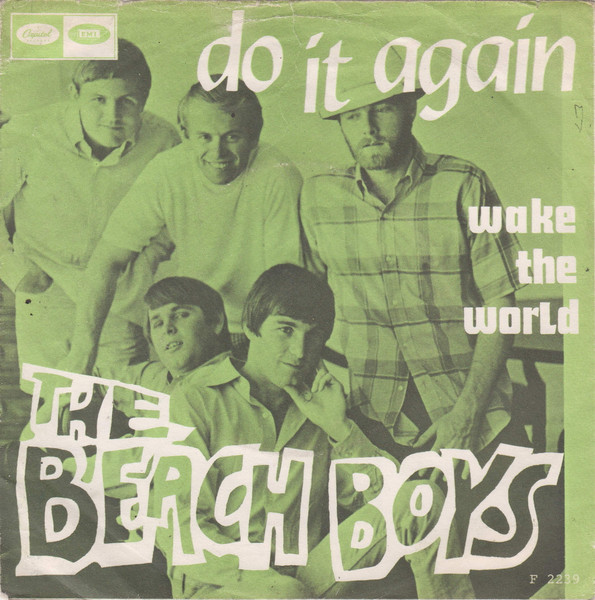
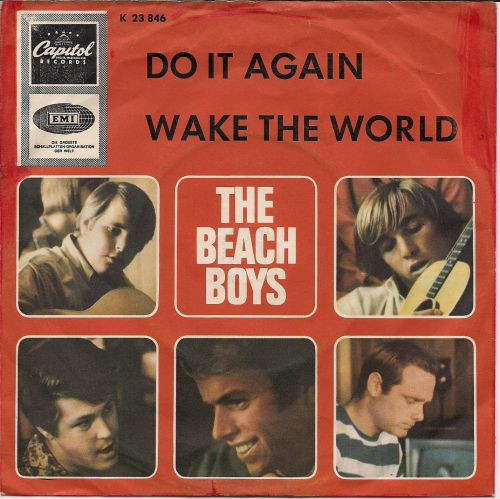
"Do It Again" is a song by the Beach Boys, released as a standalone single on July 8, 1968. Written by Brian Wilson and Mike Love, the track is a nostalgic homage to the group's earlier surf music style, which they had largely moved away from by 1964. Both Wilson and Love share lead vocals on the song. 


Originally titled "Rendezvous", Mike Love wrote the lyrics as a nostalgic reflection on his youthful days of sun, surfing, and enjoying the California beach lifestyle. Inspired by a trip to San Onofre Beach with his old high school friends, Love explained that the track is autobiographical, capturing the joy of a perfect day spent surfing and appreciating the beauty of the beach, including the attraction of "good-looking girls" who frequented the area. 


Mike Love shared that the distinctive drum effect at the beginning was created by the Beach Boys' engineer, Stephen Desper. Desper achieved this by blending the original drum sound with a delayed repetition of one strike, which he accomplished using tape delay units he had commissioned from Phillips in Holland. By moving the tape heads closer together, Desper made a single drum hit repeat four times, each about 10 milliseconds apart, resulting in the unique effect heard in the track. The innovative sound was well-received, and Desper credited it with contributing to the single's commercial success. 


A promotional film directed by Peter Clifton, was filmed in Los Angeles. The color video depicts the Beach Boys arriving at a surf shop in a van before heading to the beach for a surfing session. This film aired on BBC One's Top of the Pops in August 1968 and later in Germany on Hits A Go Go on ZDF TV in September. It was also featured in Clifton's 1969 surfing film “Fluid Journey”. There were initial plans for an alternate version featuring Paul McCartney as a shop clerk, but this idea was dropped due to McCartney's busy schedule.


BEACH BOYS - SURF’S UP


Released: November 29, 1971

Album: Surf's Up


"Surf's Up" is a song written by Brian Wilson and Van Dyke Parks at Wilson's home. Initially intended for the unfinished “Smile” album in 1967, it was later completed by Brian and Carl Wilson for the band's 1971 album, also titled Surf's Up. Wilson described it as a "masterpiece”, both he and Parks believed they had created something special, calling it a "song of freedom." The first public exposure of "Surf’s Up" came four years before its official release on the album. Its haunting and poetic nature reflects a sense of nostalgia, capturing the essence of the era and anticipating the decline of the 1960s even at its peak. Despite its significance and completion under Carl's supervision, the song was released as a single but did not chart.


"Surf's Up," while seemingly about surfing, actually symbolizes the Beach Boys' departure from their earlier image. The lyrics depict a man's spiritual awakening in a concert hall, highlighting the contrast between youthful innocence and the flaws of adult society. Van Dyke Parks may have been inspired by the social protests of the Vietnam War era. The line "Are you sleeping, Brother John?" alludes to the children's song "Frére Jacques," while the refrain "The child is father of the man" references a quote from William Wordsworth, emphasizing the connection between innocence and adulthood.


Mike Love expressed skepticism about some of Van Dyke Parks' lyrics for "Surf's Up," referring to them as "acid alliteration" and highlighting their abstract nature. In a 2008 interview he shared that when he asked Parks about the meaning of certain lyrics, Parks admitted he didn't know. 


Frank Holmes designed the cover artwork for the “Smile” album, creating illustrations inspired by the lyrics of "Surf's Up." One illustration, related to the line "Diamond necklace play the pawn," features an open jewelry box with a diamond necklace and chess pieces, symbolizing strategic choices in a whimsical context. His other illustration for "Two-step to lamp's light" interprets the phrase as a journey towards enlightenment, merging concepts of dance and discovery. Holmes incorporated personal memories and Americana themes into his artwork, reflecting his childhood experiences and the overarching themes of the “Smile” project.


BEACH BOYS - SLOOP JOHN B

Released: March 21, 1966

Charts:  US: #3   UK: #2 


"Sloop John B" is a traditional West Indies folk song that was first transcribed in 1916 by Richard Le Gallienne and later included in Carl Sandburg's “The American Songbag” in 1927. In 1966, the Beach Boys recorded their own adaptation of the song for their iconic “Pet Sounds” album, with Brian Wilson producing and arranging the track. The song is notable for its innovative a cappella vocal section, which was unique in pop music at the time.


"Sloop John B," backed with "You're So Good to Me," was released as a single on March 21, 1966, in the US and on April 15, 1966, in the UK. It quickly became one of the Beach Boys' most successful songs. In the US, it entered the Billboard Hot 100 on April 2 and peaked at #3 on May 7. The song topped the charts in Germany, Austria, Norway, Sweden, Switzerland, the Netherlands, South Africa, and New Zealand. In the UK, Ireland, Canada, and Record World, it reached #2. It was the fastest-selling Beach Boys single to date, selling over half a million copies within two weeks of its release. 


"Sloop John B" is about a troubled sea voyage, first adapted in 1951 by Lee Hays of the Weavers as "The John B Sails" and later revived by Lonnie Donegan in 1960. The Beach Boys' version, released in 1966, was introduced to Brian Wilson by bandmate Al Jardine, who was a fan of the Kingston Trio's rendition. For their recording, Wilson added intricate harmonies and a 12-string guitar part, while also altering lyrics, such as changing "This is the worst trip since I've been born" to "...I've ever been on," subtly referencing the 1960s' acid culture. The Kingston Trio's 1958 version, rooted in the song's Calypso origins, influenced not only the Beach Boys' sound but also their image, as they adopted the Trio's wholesome style and striped shirts.


A music video for "Sloop John B" was filmed for the UK show Top of the Pops, directed by the Beach Boys' newly hired publicist, Derek Taylor. The video was shot at Brian Wilson's home on Laurel Way, with Dennis Wilson serving as the cameraman.


BEACH BOYS - I GET AROUND


Estrenada: 11 de maig de 1964

Llistes: EUA: #1 (2 setmanes)  Regne Unit: #7


"I Get Around" és una cançó clàssica dels Beach Boys, que apareix com la pista inicial del seu àlbum de 1964 “All Summer Long”. Llançada com a single al maig de 1964, amb "Don't Worry Baby" com a cara B, es va convertir en un gran èxit, sent el primer número u dels Beach Boys als Estats Units. La cançó també va tenir un bon rendiment internacional, arribant al top ten al Regne Unit, Canadà, Nova Zelanda i Suècia.


"I Get Around" va ser un punt d'inflexió important en la carrera de la banda i va assenyalar l'inici d'una rivalitat no oficial entre Brian Wilson i els Beatles. Escrita per Brian Wilson i Mike Love, la seva lletra autobiogràfica  reflecteix la resposta de la banda a la seva fama recent, la inquietud amb l'statu quo i l'emoció d'explorar nous llocs on els joves són moderns. En reconeixement del seu impacte cultural, la cançó va ser inclosa al Grammy Hall of Fame el 2017.


L'enregistrament de "I Get Around" a l'abril de 1964 va marcar l'inici de les sessions de “All Summer Long”, però no va estar exempta de drama. Brian Wilson, el principal compositor i productor del grup, va afrontar-se a crítiques severes del seu pare, Murry Wilson, que també feia de mànager i editor del grup. Durant l'enregistrament de la pista, Murry no va parar de criticar Brian, dient que la música era mediocre i insistint que ell tenia més talent que el seu fill. En un moment donat, la interferència incessant de Murry va provocar que Dennis Wilson colpegés una paret amb frustració i abandonés la sessió. La tensió va culminar en un rar moment de desafiament per part de Brian, que va empènyer físicament el seu pare i li va dir que sortís de l'estudi. Aquest enfrontament és sovint citat com el moment en què Murry va ser acomiadat com a mànager del grup, tot i que Mike Love va aclarir més tard a les seves memòries que Murry ja havia estat destituït uns mesos abans.


"I Get Around" és una cançó típica dels primers anys 60, que celebra la vida adolescent amb temes d'amics, noies i cotxes. Tot i que les seves frases no són profundes ni complexes, l'estructura musical de la cançó era altament innovadora per a l'època. Presenta una guitarra fuzz a l'inici, ritmes interromputs i una línia de teclat que es teixeix, mostrant tècniques avançades per al seu temps. L'ús de la guitarra distorsionada i reverberada va ser innovador, tot i que prou subtil per passar desapercebut pel públic general. No va ser fins uns anys més tard que aquests efectes es van fer prominents en la música rock, especialment amb artistes com Jimi Hendrix, Eric Clapton i Keith Richards, que van popularitzar el fuzz i el reverb a finals dels anys 60.


Mike Love va descriure la seva col·laboració en la composició de cançons amb Brian Wilson durant els primers èxits dels Beach Boys com una associació natural, amb Wilson destacant en progressions d'acords complexes i harmonies, mentre que Love contribuïa ràpidament amb lletres i melodies enganxoses. Love va explicar com treballaven junts de prop, sovint costat a costat al piano. Desenvolupaven simultàniament tant els components musicals com els lírics, assegurant-se que les lletres complementessin l'estat d'ànim de la música. Aquesta dinàmica va resultar en algunes de les seves cançons més icòniques, com "Fun, Fun, Fun", "I Get Around" i "Help Me, Rhonda".


BEACH BOYS - I GET AROUND


Released: May 11, 1964

Charts:  US: #1 (2 weeks)  UK: #7 


"I Get Around" is a classic song by the Beach Boys, featured as the opening track on their 1964 album “All Summer Long”. Released as a single on May 1964, with "Don't Worry Baby" as the B-side, it became a major success, marking the Beach Boys' first US chart-topping hit. The song also performed well internationally, reaching the top ten in the UK, Canada, New Zealand, and Sweden. 


"I Get Around" was an important milestone in the band's career and signaled the start of an unofficial rivalry between Brian Wilson and the Beatles. Written by Brian Wilson and Mike Love, the song's autobiographical lyrics reflect the band's response to their newfound fame, restlessness with the status quo, and excitement about exploring new places where the kids are hip. In recognition of its cultural impact, the song was inducted into the Grammy Hall of Fame in 2017.


The recording of "I Get Around" in April 1964 marked the start of the Beach Boys' “All Summer Long” sessions, but it wasn't without drama. Brian Wilson, the group's main songwriter and producer, faced heavy criticism from his father, Murry Wilson, who also served as the band's manager and publisher. During the recording of the backing track, Murry constantly berated Brian, calling the music poor and insisting he had more talent than his son. At one point, Murry's relentless interference caused Dennis Wilson to punch a wall in frustration and leave the session. The tension culminated in a rare moment of defiance from Brian, who physically shoved his father and told him to leave the studio. This confrontation is often cited as the moment Murry was fired as the group's manager, although Mike Love later clarified in his memoir that Murry had already been dismissed a few months prior.


"I Get Around" is a typical early '60s song, celebrating teenage life with themes of friends, girls, and cars. While its lyrics aren't deep or complex, the song's musical structure was highly innovative for its time. It features a fuzz guitar in the opening, stop-start rhythms, and a weaving keyboard line, showcasing techniques that were ahead of their time. The use of fuzzed and reverbed guitar was groundbreaking, though subtle enough to go unnoticed by the general public. It wasn't until a few years later that these effects became prominent in rock music, particularly with artists like Jimi Hendrix, Eric Clapton, and Keith Richards, who popularized fuzz and reverb in the late '60s.


Mike Love described his songwriting collaboration with Brian Wilson on early Beach Boys hits as a natural partnership, with Wilson excelling in complex chord progressions and harmonies, while Love contributed quickly with lyrics and catchy hooks. Love explained how they would work together closely, often side by side at the piano. They would simultaneously develop both the musical and lyrical components, ensuring the lyrics complemented the mood of the music. This dynamic resulted in some of their most iconic songs, including "Fun, Fun, Fun," "I Get Around," and "Help Me, Rhonda."