Total de visualitzacions de pàgina:

31.3.24


CYNDI LAUPER - MONEY CHANGES EVERYTHING


Estrena: desembre de 1984

Llistes: EUA: #27


"Money Changes Everything" va ser llançada com el cinquè senzill de l’àlbum "She's So Unusual". El single es va distribuir en diversos formats arreu del món, amb més de 27 variants conegudes. El format més comú era un single de vinil amb dues pistes, amb diferents dissenys de portada. La versió del senzill era un remix de la pista original de l'àlbum, una versió que es troba a la majoria de les compilacions de Cyndi Lauper. A més, la interpretació en directe del vídeo es va incloure en la reedició de l’àlbum "She's So Unusual" del 2000. També hi havia una versió menys comuna en maxi-single de vinil.


Tot i que "Money Changes Everything" no va aconseguir arribar al top 10 al Billboard Hot 100, va assolir el número 27, convertint-se en el primer llançament de "She's So Unusual" a no entrar entre les deu millors. Mentre que alguns puristes del new wave podrien expressar rebuig per la seva versió, preferint l'original dels The Brains, la interpretació de Lauper va aportar una sensació més brillant i comercial a la cançó.


La cançó narra una història on una noia decideix deixar el seu company per algú amb una estabilitat financera millor. Al contrari que moltes cançons que destaquen l'amor per sobre del diner, aquesta pista pren un enfocament diferent, il·lustrant com les consideracions financeres a vegades poden pesar més que els afectes romàntics. En la seva interpretació, Cyndi Lauper adopta hàbilment la perspectiva de la víctima, oferint un contrast amb les frases d'obertura originals escrites per Tom Gray, on es retrata a ell mateix com el que deixa un amor per l'atractiu de la riquesa i el poder.


El productor Rick Chertoff va tenir un paper significatiu en la formació de l'arranjament de la versió de Lauper. Un aspecte notable de la seva versió és l'aparició de Rob Hyman de la banda The Hooters, que va tocar durant el solo de la cançó. El 2005, Lauper va gravar una versió acústica per al seu àlbum "The Body Acoustic", amb l'artista convidat Adam Lazzara de la banda Taking Back Sunday.


CYNDI LAUPER - MONEY CHANGES EVERYTHING


Released: December 1984

Charted: US: #27 


"Money Changes Everything" was released as the fifth single from her album "She's So Unusual". The single was distributed in various formats across the world, with over 27 variations known to exist. The most common format was a two-track 7" vinyl single, featuring different cover designs. The single version was a remix of the original album track, a version that is commonly found on most of Cyndi Lauper's compilations. Additionally, the live rendition from the video is featured on the 2000 reissue of her album "She's So Unusual." Additionally, there was a less common 12" vinyl single version. 


Although "Money Changes Everything" did not achieve top 10 status on the Billboard Hot 100, it peaked at number 27, making it the first release from "She's So Unusual" to fall short of the top 10. While some new wave purists may have expressed disdain for her version, preferring the original by The Brains, Lauper's rendition brought a brighter, sharper, and more commercial feel to the song. 


The song portrays a narrative where a girl chooses to leave her partner for someone with greater financial stability. Unlike many songs that emphasize love over money, this track takes a different approach, illustrating how financial considerations can sometimes outweigh romantic affections. In her rendition Cyndi Lauper skillfully adopts the perspective of the victim, offering a contrast to the original opening lines written by Tom Gray, where he portrays himself as the one leaving a longstanding love for the allure of wealth and power. Moreover, Lauper's vocal performance shines throughout the song, showcasing her exceptional singing ability. 


Producer Rick Chertoff played a significant role in shaping the arrangement of Lauper's version. One notable aspect of her cover is the appearance of Rob Hyman from the band The Hooters, who played his "hooter" (a Hohner Melodica) during the song's solo. In 2005, Lauper recorded an acoustic version of the song for her album "The Body Acoustic," featuring guest artist Adam Lazzara from the band Taking Back Sunday.


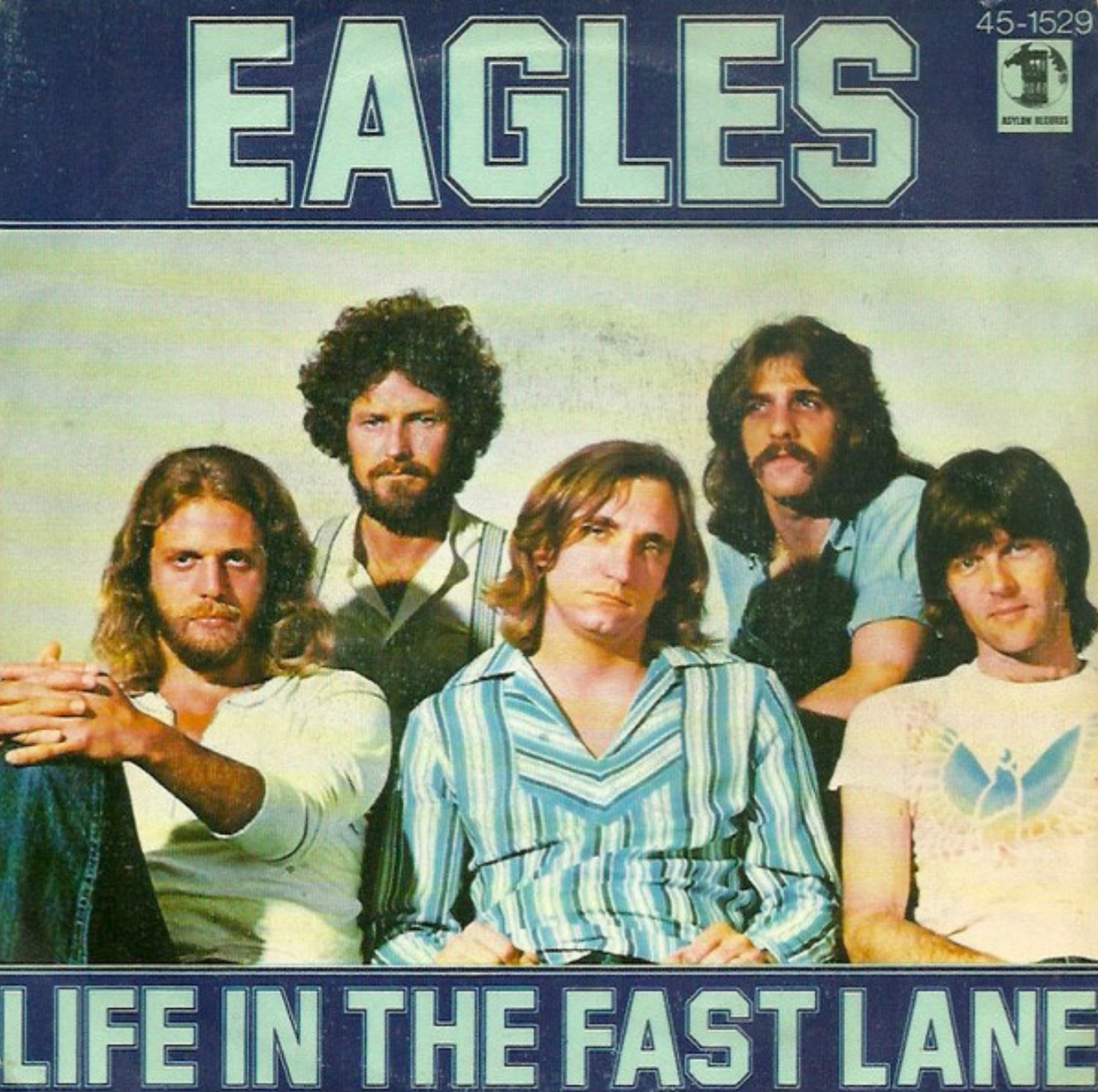


EAGLES - LIFE IN THE FAST LANE


Estrena: 3 de maig de 1977

Llistes: EUA: #11


"Life in the Fast Lane" és un himne de rock dur que es va publicar com el tercer senzill de l'icònic àlbum dels Eagles "Hotel California". Escrit per Joe Walsh, Glenn Frey i Don Henley, parla de l'emoció i la intensitat de viure al límit. Amb el seu ritme enèrgic, el treball poderós de guitarra i la potent veu de Henley, la cançó captura l'emoció alimentada per l'adrenalina d'un estil de vida de ritme ràpid.


"Life in the Fast Lane" pinta un retrat vívid d'un estil de vida temerari caracteritzat per l'excés i l'indulgència. La lletra de la cançó descriu dues persones que viuen al límit, participant en un munt de festes, drogues i experiències alimentades per l'adrenalina. La tornada destaca el cost d'aquest estil de vida en el benestar mental i emocional, insinuant que pot portar a una pèrdua de la salut mental o el control. Tot i que la cançó no parla explícitament de cap individu en particular, han circulat rumors que suggereixen que pot haver estat inspirada per la relació tumultuosa entre Stevie Nicks i Lindsey Buckingham de Fleetwood Mac, així com la relació posterior de Nicks amb Don Henley.


En entrevistes, els membres dels Eagles van parlar de "Life in the Fast Lane" explicant que tractava sobre l'estil de vida frenètic i hedonista prevalent a Los Angeles durant la dècada de 1970. Glenn Frey va explicar que la cançó no es referia específicament als membres de la banda sinó més aviat era una reflexió sobre la naturalesa excessiva i superficial de l'escena de Los Angeles, on el materialisme i la indulgència eren prioritzats per sobre de significats més profunds. Joe Walsh va afegir que tot i que la banda podria haver participat en alguns dels comportaments descrits a la cançó, finalment van reconèixer la buidor d'aquest estil de vida i van buscar una existència més significativa.


"Life in the Fast Lane" es va convertir en una frase àmpliament reconeguda, sovint utilitzada per descriure un estil de vida de ritme ràpid i indulgent. La cançó mateixa serveix com una història preventiva més que com una glorificació d'aquest estil de vida. La lletra descriu les conseqüències del comportament temerari, incloent l'ús de drogues i l'excés, i el cost que suposa per a les persones atrapades en aquest estil de vida. Els Eagles, originaris de Los Angeles, van treure inspiració del seu entorn per posar de manifest els aspectes més foscos de l’imatge glamurosa associada amb la ciutat, un tema que ressona al llarg de tot l'àlbum "Hotel California".


És fascinant com una cosa tan simple com un exercici de calentament abans d’una gravació  pot evolucionar cap a un riff de guitarra icònic per a una cançó com "Life in the Fast Lane". La improvisació de Joe Walsh durant els assajos va despertar l'interès dels seus companys de banda, portant al desenvolupament d'un dels elements més reconeixibles de la pista. Aquesta anècdota posa de relleu l’espontaneïtat creativa que sovint impulsa el procés de composició de la cançó i subratlla la importància de ser obert a l’inspiració cap a fonts inesperades.


EAGLES - LIFE IN THE FAST LANE


Released: May 3, 1977

Charted:  US: #11 


"Life in the Fast Lane" is a hard-rocking anthem released as the third single from the Eagles' iconic album "Hotel California." Written by Joe Walsh, Glenn Frey, and Don Henley, it encapsulates the thrill and intensity of living life on the edge. With its driving beat, intricate guitar work, and powerful vocals by Henley, the song captures the adrenaline-fueled excitement of a fast-paced lifestyle. 


"Life in the Fast Lane" paints a vivid picture of a reckless lifestyle characterized by excess and indulgence. The song's lyrics depict two individuals living on the edge, engaging in a whirlwind of parties, drugs, and adrenaline-fueled experiences. The chorus emphasizes the toll this lifestyle takes on one's mental and emotional well-being, suggesting that it can lead to a loss of sanity or control. While the song is not explicitly about any particular individuals, rumors have circulated suggesting that it may have been inspired by the tumultuous relationship between Stevie Nicks and Lindsey Buckingham of Fleetwood Mac, as well as Nicks' subsequent relationship with Don Henley. 


In their interviews, members of the Eagles discussed how "Life in the Fast Lane" was a commentary on the fast-paced, hedonistic lifestyle prevalent in Los Angeles during the 1970s. Glenn Frey explained that the song was not specifically about the band members themselves but rather a reflection on the excessive and superficial nature of the LA scene, where materialism and indulgence were prioritized over deeper meaning. Joe Walsh added that while the band may have engaged in some of the behaviors described in the song, they ultimately recognized the emptiness of such a lifestyle and sought a more meaningful existence. 


"Life in the Fast Lane" became a widely recognized phrase, often used to describe a high-paced and indulgent lifestyle. The song itself serves as a cautionary tale rather than a glorification of such a lifestyle. The lyrics depict the consequences of reckless behavior, including drug use and excess, and the toll it takes on individuals caught up in this lifestyle. The Eagles, originating from Los Angeles, drew inspiration from their surroundings to shed light on the darker aspects of the glamorous image associated with the city, a theme that resonates throughout their album "Hotel California."


It's fascinating how something as simple as a warm-up exercise can evolve into an iconic guitar riff for a song like "Life in the Fast Lane." Joe Walsh's improvisation during rehearsal sparked the interest of his bandmates, leading to the development of one of the most recognizable elements of the track. This anecdote highlights the creative spontaneity that often drives the songwriting process and underscores the importance of being open to inspiration from unexpected sources.


SIMON & GARFUNKEL - BRIDGE OVER TROUBLED WATER


Publicació: 20 de gener de 1970

Llistes: EUA: #1 (6 setmanes) Regne Unit: #1 (3 setmanes)


"Bridge over Troubled Water" és una cançó escrita per Paul Simon i produïda per Simon & Garfunkel i Roy Halee, llançada al gener de 1970 com el segon senzill del seu cinquè àlbum d'estudi del mateix nom. "Bridge over Troubled Water" és una de les cançons més icòniques de Simon & Garfunkel, i es va convertir en un èxit massiu després del seu llançament, encapçalant les llistes de tot el món.


La transformació de "Bridge over Troubled Water" d'una simple cançó semblant a un himne a una obra mestra orquestral va ser un esforç col·laboratiu que va implicar Art Garfunkel, el productor Roy Halee i la influència persuasiva de Clive Davis a Columbia Records. Malgrat les reserves inicials de Paul Simon sobre la seva longitud i estil, es va reconèixer el potencial comercial de la cançó, la qual cosa va portar a la seva comercialització i ús com a títol de l'àlbum. El relat de Paul Simon sobre la creació de “Bridge over Troubled Water" posa de manifest la naturalesa espontània i profunda de la cançó. La seva evolució d'un simple himne evangèlic a una obra mestra dramàtica i emocionalment ressonant reflecteix el procés artístic de Simon i la profunditat del seu talent com a compositor.


Paul Simon inicialment tenia la intenció que Art Garfunkel cantés "Bridge over Troubled Water" tot sol, imaginant-lo amb un estil de "noi de coral blanc". No obstant això, Garfunkel va sentir que no era adequat per a ell i va preferir l’estil del falset de Simon de la demo. Finalment, es va prendre la decisió que fos Art Garfunkel qui cantés sol, però Paul Simon ha expressat posteriorment un cert lament per no haver-hi posat la veu ell mateix.


A suggeriment de Garfunkel i el productor Roy Halee, Simon va escriure una estrofa addicional i un final més grandiós, tot i que va sentir que era menys cohesiu amb la resta de la cançó. L'última estrofa, "Sail on, silvergirl” (Navega, nena de plata), va ser inspirada pel fet que la dona de Simon, Peggy Harper, va veure com li apareixien els primers cabells grisos, contràriament a alguns malentesos sobre el seu significat. Tot i que la estrofa va ser idea de Garfunkel, sembla que a Simon no li va agradar al principi.


La primera interpretació de “Bridge over Troubled Water" el 30 de novembre de 1969, dos mesos abans que l'àlbum fos publicat, es va produir durant un documental de Simon & Garfunkel dirigit per Charles Grodin. Aquest documental, destacat pel seu fort comentari polític, mostrava imatges de figures importants com John F. Kennedy, Robert Kennedy i Martin Luther King Jr., juntament amb les escenes dels seus funerals, amb la cançó de fons.


La interpretació d'Elvis Presley de "Bridge over Troubled Water" en el seu àlbum de 1970 "That's The Way It Is" va marcar un moment significatiu en la seva carrera, especialment entre els crítics que dubtaven de les seves habilitats vocals. Tot i que Paul Simon va reconèixer la sòlida interpretació de Presley, va expressar el desig que Presley hagués fet una interpretació gospel de la cançó, atès el seu talent en aquest gènere. Simon va assenyalar que la interpretació de Presley mancava del toc gospel i de la interpretació única que artistes com Aretha Franklin portaven a la cançó. Malgrat tot, Simon va agrair l'oportunitat que Presley enregistrés una de les seves cançons abans de la seva mort.


"Bridge over Troubled Water" va tenir un èxit destacable als Premis Grammy de 1971, guanyant cinc premis prestigiosos: Cançó de l'Any, Enregistrament de l'Any, Millor Cançó Contemporània, Millor Enregistrament Tècnic i Millor Arranjament Vocal. A més, l'àlbum "Bridge over Troubled Water" va guanyar l'Àlbum de l'Any.


Uns mesos després, el duo es va separar. Simon va informar al president de Columbia Records, Clive Davis, de la seva decisió de trencar amb Garfunkel. Tot i que els seus intents de gravar material nou en els anys seguents no van tenir èxit, s'han reunit per a espectacles i gires ocasionalment. Les tensions entre ells, ressaltades per la caracterització de Garfunkel de Simon com un "monstre" en una entrevista del 2015, suggereixen que tot ha acabat.


SIMON & GARFUNKEL - BRIDGE OVER TROUBLED WATER


Released: January 20, 1970

Charted:  US: #1 (6 weeks)  UK: #1 (3 weeks)


"Bridge over Troubled Water" is a song written by Paul Simon and produced by Simon & Garfunkel and Roy Halee, released in January 1970 as the second single from their fifth studio album of the same name. "Bridge over Troubled Water" is one of Simon & Garfunkel's most iconic songs, and it became a massive hit upon its release, topping charts around the world.


The transformation of "Bridge over Troubled Water" from a simple hymn-like song to a grand, orchestral masterpiece was a collaborative effort involving Art Garfunkel, producer Roy Halee, and the persuasive influence of Clive Davis at Columbia Records. Despite Paul Simon's initial reservations about its length and style, the song's commercial potential was recognized, leading to its widespread marketing and use as the album title. Paul Simon's account of the making of "Bridge over Troubled Water" underscores the song's spontaneous and profound nature. Its evolution from a simple gospel hymn to a dramatic and emotionally resonant masterpiece reflects Simon's artistic process and the depth of his songwriting talent.


Paul Simon initially intended for Art Garfunkel to sing "Bridge Over Troubled Water" alone, envisioning it with a "white choirboy" style. However, Garfunkel felt it wasn't right for him and preferred Simon's falsetto on the demo. Finally the decision for Art Garfunkel to sing alone was ultimately made, but Paul Simon has later expressed some regret over not taking the lead himself. 


At Garfunkel and producer Roy Halee's suggestion, Simon wrote an additional verse and a more grandiose ending, although he felt it was less cohesive with the rest of the song. The final verse, "Sail on, silvergirl," was inspired by Simon's wife Peggy Harper noticing her first gray hairs, contrary to some misconceptions about its meaning. While the verse was Garfunkel's idea, Simon reportedly didn't like it at first.


The initial broadcast of "Bridge Over Troubled Water" on November 30, 1969, two months before the album was issued, occurred during a Simon & Garfunkel documentary directed by Charles Grodin. This documentary, noted for its strong political commentary, featured footage of significant figures like John F. Kennedy, Robert Kennedy, and Martin Luther King Jr., along with their funeral scenes, set to the song.


Elvis Presley's rendition of "Bridge over Troubled Water" on his 1970 album "That's The Way It Is" marked a significant moment in his career, especially among critics who doubted his vocal abilities. While Paul Simon acknowledged Presley's solid performance, he expressed a desire for Presley to explore a gospel interpretation of the song, given his prowess in that genre. Simon noted that Presley's rendition lacked the gospel flair and unique interpretation that artists like Aretha Franklin brought to the song. Nonetheless, Simon appreciated the opportunity for Presley to record one of his songs before his passing.


"Bridge over Troubled Water" had a remarkable sweep at the 1971 Grammy Awards, winning five prestigious awards: Song of the Year, Record of the Year, Best Contemporary Song, Best Engineered Record, and Best Arrangement Accompanying Vocalists. Additionally, the album "Bridge over Troubled Water" won Album of the Year.


Some months later the pair split up. Simon informed Columbia Records chairman Clive Davis of his decision to part ways with Garfunkel. Although his attempts to record new material in the following years were unsuccessful, they have reunited for occasional shows and tours. Tensions between them, highlighted by Garfunkel's characterization of Simon as a "monster" in a 2015 interview, suggest that it’s all over.