Total de visualitzacions de pàgina:

2.6.24


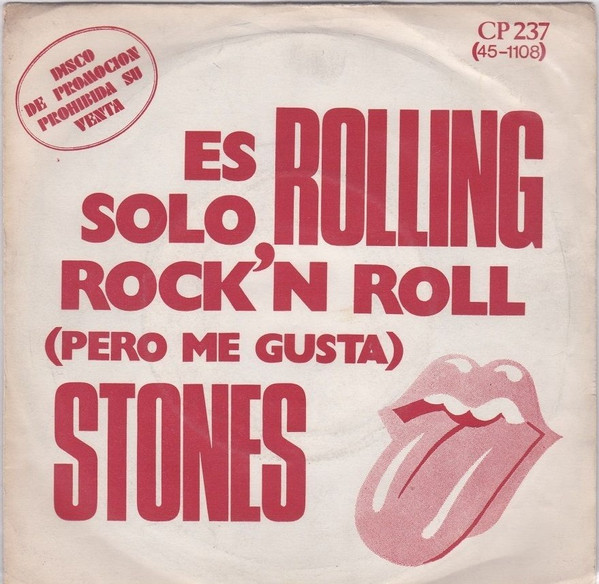
ROLLING STONES - IT’S ONLY ROCK ‘N ROLL (BUT I LIKE IT) / TIME WAITS FOR NO ONE


IT’S ONLY ROCK ‘N ROLL (BUT I LIKE IT)

Publicació: 26 de juliol de 1974

Llistes: EUA: #16   Regne Unit: #10


"It's Only Rock 'n Roll (But I Like It)" és el single principal de l'àlbum dels Rolling Stones del 1974 del mateix nom. L'autoria de la cançó s’acredita a Mick Jagger i Keith Richards. Després de la sortida del productor Jimmy Miller, la pista va arribar als deu primers llocs de les llistes del Regne Unit i als vint primers llocs dels Estats Units. Jagger i Richards es van fer càrrec de les tasques de producció de l'àlbum després de la sortida de Miller.


"It's Only Rock 'n Roll (But I Like It)" és una celebració directa del rock 'n' roll. Ron Wood, que encara no era membre dels Rolling Stones en aquell moment, va tenir un paper important en la creació de la cançó. Wood, juntament amb Mick Jagger a la veu, va organitzar una sessió a The Wick, una finca de Londres, amb David Bowie que proporcionava veus de fons, Willie Weeks al baix, i Kenney Jones, company de banda de Wood als Faces, a la bateria. Quan Keith Richards va escoltar la gravació, va afegir les seves pròpies parts de guitarra però va conservar algunes de les guitarres de 12 cordes de Wood. Les contribucions de Jones, Weeks i Bowie es van mantenir a la versió final de la cançó.


Inspirant-se en "Rock 'n' Roll Suicide" de David Bowie, la lletra de Mick Jagger a "It's Only Rock 'n Roll (But I Like It)" probablement fa referència a la teatralitat dels intèrprets del glam rock com Marc Bolan i Alice Cooper, que incorporaven actes dramàtics als seus espectacles, incloent suïcidis simulats. La menció de Jagger d'enfonsar un ganivet al seu cor i de suïcidar-se a l'escenari reflecteix aquesta influència de l'era del glam rock per cridar l'atenció i la teatralitat.


L'explicació de Mick Jagger destaca el procés evolutiu de la influència musical i la creació. Descriu com l'estil de la banda, incloent-hi la seva cançó "It's Only Rock 'n Roll (But I Like It)", va ser modelat per diverses influències musicals, com ara Chuck Berry. Jagger destaca la importància de començar amb la imitació i després evolucionar per desenvolupar un estil únic, traçant paral·lelismes amb altres formes d'art com la pintura i l'actuació. Subratlla la idea que, tot i que les influències poden estar presents, el resultat final és una nova amalgama que esdevé pròpia de l'artista.


El videoclip va ser dirigit per Michael Lindsay-Hogg i va mostrar la banda vestida amb uniformes de mariner, actuant dins d'una tenda plena de bombolles. Mick Taylor va fer una de les seves últimes aparicions amb la banda en aquest vídeo abans de marxar al desembre de 1974, tot i que no va tocar a la cançó en sí. Ronnie Wood, que va tocar la guitarra acústica a la gravació, no va aparèixer al vídeo. Les bombolles es van crear amb detergent, i la idea dels uniformes de mariner va sorgir a l'últim moment per protegir la roba de la banda de possibles danys. Les filmacions van ser desagradables i van representar un desafiament pel risc d'electrocució que impedia que les càmeres i les llums estiguessin dins de la tenda. La banda va haver de ser assegurada per una suma considerable a causa d'aquest risc, i el bateria Charlie Watts va estar a punt de tenir un accident durant les filmacions perquè la banda va oblidar que estava assegut.


TIME WAITS FOR NO ONE 

Publicació: 18 d'octubre de 1974

Àlbum: It's Only Rock 'n Roll


"Time Waits for No One" representa una desviació del so típic dels Rolling Stones, presentant un ritme lent amb una qualitat hipnòtica. Malgrat les seves diferències, continua sent una pista destacada a l'àlbum "It's Only Rock 'n Roll".


"Time Waits for No One" és una fusió de diverses influències, incloent-hi ritmes llatins, pulsacions de jazz i ràfegues de piano de Nicky Hopkins. El ritme distintiu, el riff repetitiu de Keith Richards i la percussió de Ray Cooper donen a la cançó el seu caràcter únic. Aquesta pista marca un ús primerenc de sintetitzador per part de Bill Wyman en una cançó dels Stones.


La sortida de Mick Taylor va marcar la fi d'una era per als Rolling Stones, i "Time Waits for No One" es presenta com una de les seves darreres contribucions a la banda. La gènesi de la cançó durant les sessions de “Sticky Fingers” i el seu posterior desenvolupament per a "It's Only Rock 'n' Roll" destaquen el compromís de la banda en el perfeccionament del seu material amb el temps. L'experiència de Taylor en un viatge al Brasil, sens dubte, va influir en el sabor llatí de la cançó.


El 2012, Mick Taylor va reflexionar sobre "Time Waits for No One", lloant-la com la seva cançó favorita dels Stones per la seva feina a la guitarra. Va elogiar el solo com la seva millor contribució a la banda, destacant-ne la qualitat lírica i la seva desviació del seu so habitual. Taylor va ressaltar la complexitat estructural de la cançó, que va impulsar la seva interpretació en una nova direcció, evocant comparacions amb l'estil de Carlos Santana. Va subratllar el seu paper en la formació de les balades de la banda, manifestant la seva influència significativa en la diversa producció musical.


ROLLING STONES - IT’S ONLY ROCK ‘N ROLL (BUT I LIKE IT) / TIME WAITS FOR NO ONE


IT’S ONLY ROCK ‘N ROLL (BUT I LIKE IT) 

Released: July 26, 1974

Charted:  US: #16  UK: #10 


"It's Only Rock 'n Roll (But I Like It)" is the lead single from the Rolling Stones' 1974 album of the same name. The songwriting is credited to Mick Jagger and Keith Richards. After the departure of producer Jimmy Miller, the track reached the top ten in the UK charts and the top 20 in the United States. Jagger and Richards took over the production duties for the album following Miller's exit.


"It's Only Rock 'n Roll (But I Like It)" is a straightforward celebration of rock 'n' roll. Ron Wood, who was not yet a member of The Rolling Stones at the time, played a significant role in the song's creation. Wood, along with Mick Jagger on vocals, organized a session at The Wick, a London estate, with David Bowie providing background vocals, Willie Weeks on bass, and Kenney Jones, Wood's Faces bandmate, on drums. When Keith Richards heard the recording, he added his own guitar parts but retained some of Wood's 12-string guitar work. Jones, Weeks, and Bowie's contributions were retained in the final version of the song.


Drawing inspiration from David Bowie's "Rock 'n' Roll Suicide," Mick Jagger's lyrics in "It's Only Rock 'n Roll (But I Like It)" likely reference the theatricality of glam rock performers such as Marc Bolan and Alice Cooper, who incorporated dramatic stage acts into their performances, including simulated suicide acts. Jagger's mention of sticking a knife in his heart and committing suicide on stage reflects this influence from the glam rock era's penchant for shock value and theatrics.


Mick Jagger's explanation highlights the evolutionary process of musical influence and creation. He describes how the band's style, including their song "It's Only Rock 'n Roll (But I Like It)," was shaped by various musical influences, such as Chuck Berry. Jagger emphasizes the importance of starting with imitation and then evolving to develop one's own unique style, drawing parallels to other art forms like painting and acting. He underscores the idea that while influences may be present, the end result is a new amalgamation that becomes the artist's own.


The music video was directed by Michael Lindsay-Hogg and featured the band dressed in sailor suits, performing inside a tent filled with bubbles. Mick Taylor made one of his last appearances with the band in this video before leaving in December 1974, although he did not play on the song itself. Ronnie Wood, who played acoustic guitar on the recording, did not appear in the video. The bubbles were created using detergent, and the idea for the sailor suits came about at the last minute to protect the band's wardrobe from damage. Filming proved challenging and unpleasant, with the risk of electrocution preventing cameras and lights from being inside the tent. The band had to be insured for a considerable sum due to this risk, and drummer Charlie Watts nearly had an accident during filming because the band forgot he was sitting down.


TIME WAITS FOR NO ONE

Released: October 18, 1974

Album: It's Only Rock 'n Roll


"Time Waits for No One" is a departure from the typical Rolling Stones sound, featuring a slow-tempo and hypnotic quality. Despite its differences, it remains a standout track on the "It's Only Rock 'n Roll" album.


"Time Waits for No One" is a fusion of various influences, including Latin rhythms, jazz beats, and swirling piano runs by Nicky Hopkins. The distinctive groove, repetitive riff by Keith Richards, and Ray Cooper's driving percussion give the song its unique character. This track marks an early use of synthesizer by Bill Wyman on a Stones song. 


Mick Taylor's departure marked the end of an era for The Rolling Stones, and "Time Waits for No One" stands as one of his final contributions to the band. The song's genesis during the Sticky Fingers sessions and its subsequent development for It's Only Rock 'n' Roll highlight the band's commitment to refining their material over time. Taylor's experience in Brazil undoubtedly influenced the Latin flavor of the song.


In 2012, Mick Taylor reflected on "Time Waits for No One," hailing it as his favorite Stones song for his guitar work. He praised the solo as his best contribution to the band, noting its lyrical quality and departure from their typical sound. Taylor highlighted the song's structural complexity, which pushed his playing in a new direction, evoking comparisons to Carlos Santana's style. He emphasized his role in shaping the band's ballads, underscoring his significant influence on their diverse musical output.




LED ZEPPELIN - IMMIGRANT SONG

Publicació: 5 de novembre de 1970

Llistes: EUA: #16


"Immigrant Song" mostra un poderós riff repetitiu i incorpora temes lírics inspirats en la mitologia nòrdica. La veu dinàmica de Robert Plant evoca imatges de guerra i de Valhalla, contribuint a l'atmosfera enèrgica de la cançó. Originalment inclosa a l'àlbum de Led Zeppelin del 1970, "Led Zeppelin III", també es va publicar com a senzill.


"Immigrant Song" va ser inspirada pel viatge de Led Zeppelin a Islàndia al juny de 1970. Robert Plant es va fascinar pels mites i llegendes nòrdiques durant aquesta visita. La lletra de la cançó fa referència a aquesta experiència, incloent-hi la frase  "land of ice and snow" (terra de gel i neu), que al·ludeix específicament a Islàndia. La banda la va interpretar al Bath Festival al juny de 1970, on l'aparició de Plant, amb una barba semblant a la d'un víking, va afegir-se a la imatgeria temàtica de la cançó.


La menció “Valhalla I am coming" (Valhalla, arribo) prové de la mitologia nòrdica, fent referència específica al Valhalla, una sala a Asgard on els guerrers caiguts hi són portats per les Valquíries, els esperits de la guerra. Els herois portats al Valhalla esperen la batalla final, coneguda com a Ragnarok.


"Immigrant Song" es va gravar als Olympic Studios de Londres durant l'estiu de 1970. Jimmy Page i John Bonham van enregistrar les pistes de fons en una habitació petita i baixa. La cançó va començar com una peça sense títol, caracteritzada per un tema implacable i potent. Page tocava la guitarra mentre Bonham es concentrava en la seva bateria, assegurant-se que el ritme adequat complementés el riff de Page.


La frase "The hammer of the gods will drive our ships to new lands" (El martell dels déus portarà els nostres vaixells a noves terres) es va convertir en un icona en la llegenda de Led Zeppelin, amb els fans referint-se al so de la banda com el martell dels déus. L'autor Stephen Davis fins i tot va utilitzar la frase com a títol d'un llibre sobre la banda. La fascinació de Robert Plant per la història va influir en la lletra, ja que reflexionava sobre les pressions que enfrontaven els exploradors com Marco Polo per descobrir nous territoris, similar a la pressió que sentia la banda per superar els seus anteriors èxits.


LED ZEPPELIN - IMMIGRANT SONG


Released: November 5, 1970

Charted:  US: #16 


"Immigrant Song" showcases a powerful repeating riff and incorporates lyrical themes inspired by Norse mythology. Robert Plant's dynamic vocals evoke images of war and Valhalla, contributing to the song's energetic atmosphere. Originally featured on Led Zeppelin's 1970 album, "Led Zeppelin III," it was also released as a single.


"Immigrant Song" was inspired by Led Zeppelin's trip to Iceland in June 1970. Robert Plant became fascinated by Nordic myths and legends during this visit. The song's lyrics reference this experience, including mentions of the "land of ice and snow," which specifically alludes to Iceland. The band performed the song at the Bath Festival in June 1970, where Plant's appearance, with a Viking-like beard, added to the thematic imagery of the song.


The mention of "Valhalla I am coming" in "Immigrant Song" draws from Norse mythology, specifically referencing Valhalla, a hall in Asgard where fallen warriors are brought by Valkyries, spirits of war. Heroes taken to Valhalla await the final battle, known as Ragnarok.


This track was recorded at Olympic Studios in London during the summer of 1970. Jimmy Page and John Bonham laid down the backing tracks in a small, low-ceilinged room. The song started as an untitled piece, characterized by a relentless, pounding theme. Page was focused on his guitar while Bonham concentrated on his drums, ensuring the right kind of beat to complement Page's riff. 


"The hammer of the gods will drive our ships to new lands" from "Immigrant Song" became iconic in Led Zeppelin lore, with fans referring to the band's sound as the "hammer of the gods." Author Stephen Davis even used the phrase as the title of a book about the band. Robert Plant's fascination with history influenced the lyric, as he pondered the pressures faced by explorers like Marco Polo to discover new lands, similar to the pressure the band felt to top their previous achievements.


LED ZEPPELIN - GOOD TIMES BAD TIMES


Publicació: 10 de març de 1969

Llistes: EUA: #80


"Good Times Bad Times" va significar el debut de Led Zeppelin com llençament en single als Estats Units i va servir com a primera pista del seu àlbum debut homònim del 1969. Acreditada a John Bonham, John Paul Jones i Jimmy Page, la cançó va mostrar el talent col·lectiu de composició de la banda. Page en va recordar l'origen en una entrevista amb Rolling Stone el 2012, atribuint el riff a John Paul Jones, la tornada a ell mateix i el patró de bateria a John Bonham. La veu de Robert Plant narra una història de creixement, recordant un romanç que va tenir als 16 anys i la posterior pèrdua davant d'un misteriós "brown-eyed man" (home d'ulls marrons), evocant "Brown Eyed Handsome Man" de Chuck Berry.


"Good Times Bad Times" mostra la tècnica innovadora de John Bonham a la bateria, utilitzant un "tríplet" al seu bombo per emular l'efecte d'un pedal de bateria doble. Fent rebotar ràpidament el pedal de bateria amb la punta del seu peu, Bonham va aconseguir un so innovador. Jimmy Page va atribuir l'impacte de la pista al riff de baix de John Paul Jones i al sorprenent patró de bombo de Bonham, que inicialment va fer que molts creguessin que utilitzava dos bombos en lloc d'un. Per capturar l'energia crua de la seva actuació, Page va col·locar estratègicament micròfons arreu de l'estudi, assegurant un so dinàmic i viu durant les sessions d'enregistrament.


La bateria de John Bonham a "Good Times Bad Times" va consolidar el seu estat llegendari al rebre elogis del bateria de sessió Kenny Aronoff, qui va considerar aquesta actuació entre les cinc millors de tots els temps. Aronoff destaca l'ús innovador del peu amb un sol bombo de Bonham, especialment la seva tècnica de tríplet.


"Good Times Bad Times" mai va ser tocada sencera per Led Zeppelin. Es rumoreja que es van tocar sencera un cop o dos al 1968 durant la transició de The New Yardbirds a Led Zeppelin. No hi ha enregistraments o versions completes disponibles d'aquest període. El més proper és una interpretació dins d'un medley amb "Communication Breakdown" el 4 de setembre de 1970, amb un solo de baix de John Paul Jones. Parts de la cançó es van incorporar de tant en tant a medleys, sobretot a "Communication Breakdown" o "Whole Lotta Love". La primera instància enregistrada de la cançó completa tocada per tota la banda va ser durant la reunió del 2007.


LED ZEPPELIN - GOOD TIMES BAD TIMES


Released: March 10, 1969

Charted: US: #80 


"Good Times Bad Times" marked Led Zeppelin's debut single in the US and served as the opening track on their eponymous 1969 debut album. Credited to John Bonham, John Paul Jones, and Jimmy Page, the song showcased the band's collective songwriting prowess. Page recounted the genesis of the track in a 2012 Rolling Stone interview, attributing the riff to John Paul Jones, the chorus to himself, and the bass-drum pattern to John Bonham. Robert Plant's vocals chronicle a coming-of-age tale, recounting his romance at 16 and the subsequent loss to a mysterious "brown-eyed man," evoking Chuck Berry's "Brown Eyed Handsome Man." 


"Good Times Bad Times" showcases John Bonham's innovative drumming technique, utilizing a "triplet" on his bass drum to emulate a double bass pedal effect. By flicking the bass pedal back quickly with the tip of his toe, Bonham achieved a distinctive sound that mesmerized listeners. Jimmy Page credited the track's impact to John Paul Jones' bass riff and Bonham's surprising bass drum pattern, which initially led many to believe he used two bass drums instead of one. To capture the raw energy of their performance, Page strategically placed microphones throughout the studio, ensuring a dynamic and live sound during recording sessions.


John Bonham's drumming on "Good Times Bad Times" solidifies his legendary status, earning praise from esteemed session drummer Kenny Aronoff, who considers Bonham's performance among the top five of all time. Aronoff highlights Bonham's innovative use of footwork with a single bass drum, particularly his distinctive triplet technique showcased throughout the song. 


"Good Times Bad Times" and "Your Time Is Gonna Come" are rumored to have been played in full once or twice in 1968 during Led Zeppelin's transition from The New Yardbirds. There are no recordings or complete versions available from this period. The closest is a rendition within a "Communication Breakdown" medley on September 4, 1970, featuring a bass solo by John Paul Jones. Parts of the song were occasionally incorporated into medleys, notably "Communication Breakdown" or "Whole Lotta Love." The first recorded instance of the full song played by the entire band occurred during the 2007 reunion.


STEVIE NICKS & TOM PETTY & THE HEARTBREAKERS- STOP DRAGGIN’ MY HEART AROUND


Estrenada: 8 de juliol de 1981

Llistes: Regne Unit: #50 EUA: #3


"Stop Draggin' My Heart Around" és una col·laboració entre Stevie Nicks i Tom Petty and the Heartbreakers, utilitzada com a primer senzill del primer àlbum en solitari de Nicks, "Bella Donna". A diferència de la resta de l'àlbum, no va ser escrita per Nicks; sinó per Tom Petty i Mike Campbell per als Heartbreakers. Jimmy lovine, que treballava amb Nicks en aquell moment, va facilitar la seva implicació en la cançó. Petty es va unir a Nicks a la tornada i al pont, amb la seva banda proporcionant suport instrumental, a excepció de Ron Blair, que va ser substituït pel baixista Donald "Duck" Dunn per a la gravació.


Tom Petty i Stevie Nicks es van creuar per primer cop durant la gravació de l'àlbum de Petty "Damn The Torpedoes". Nicks va demanar en broma a Petty que li escrivís una cançó per al seu debut en solitari, però no va ser fins a un any més tard, mentre Petty treballava en "Hard Promises", que Nicks va reiterar la seva sol·licitud. Petty va escriure una balada titulada "Insider", va enregistrar una demo amb els Heartbreakers i la va enviar a Nicks. Impressionada, Nicks va enregistrar la cançó amb Tom Petty & the Heartbreakers, però més tard va insistir que Petty la conservés per a ell mateix, cosa que va fer, incloent-la a "Hard Promises". Després de completar "Insider", Petty i la banda van tornar a una cançó que ell i el guitarrista Mike Campbell havien escrit un any abans: "Stop Draggin' My Heart Around". Van enviar la demo al productor de Nicks, Jimmy Iovine, que en va quedar enamorat. Nicks va estar encantada amb la pista i va decidir enregistrar-la com a duet amb Petty, satisfent la seva sol·licitud inicial d'una cançó seva.


"Stop Draggin' My Heart Around" descriu una relació tumultuosa en la qual una part de la parella vol alliberar-se de l'altra, però aquesta última afirma estar actuant en el millor interès del seu company/a. Malgrat el desig d'acabar amb la relació, hi ha un lligam emocional persistent que fa difícil tallar els llaços completament. Mentre moltes de les cançons de Stevie Nicks aprofundeixen en les complexitats de l'amor i la desil·lusió amorosa, aquesta en particular li va permetre explorar temes similars sense recórrer a les seves experiències personals.


"Stop Draggin' My Heart Around" és el senzill més exitós tant per a Stevie Nicks com a artista en solitari com per a Tom Petty & the Heartbreakers. En el moment del seu llançament els Heartbreakers tenien un altre single, "Woman In Love", competint en les llistes, que no va aconseguir tenir cap impacte. Cinc anys més tard, els dos artistes van col·laborar de nou, aconseguint un èxit moderat amb una interpretació en directe del clàssic dels Springfields/Searchers "Needles and Pins", que va arribar al número 37 de les llistes.


STEVIE NICKS & TOM PETTY & THE HEARTBREAKERS- STOP DRAGGIN’ MY HEART AROUND


Released: July 8, 1981

Charted:  UK: #50   US: #3 


"Stop Draggin' My Heart Around" is a collaboration between Stevie Nicks and Tom Petty and the Heartbreakers, serving as the lead single from Nicks' debut solo album "Bella Donna". Unlike the rest of the album, it was not written by Nicks; instead, it was written by Tom Petty and Mike Campbell for the Heartbreakers. Jimmy Iovine, working with Nicks at the time, facilitated her involvement in the song. Petty joined Nicks in the chorus and bridge, with his band providing instrumental support, excluding Ron Blair, who was replaced by bassist Donald "Duck" Dunn for the recording.


Tom Petty and Stevie Nicks first crossed paths during the recording of Petty's album "Damn The Torpedoes." Nicks jokingly requested Petty to write her a song for her solo debut, but it wasn't until a year later, while Petty was working on "Hard Promises," that Nicks reiterated her request. Petty penned a ballad titled "Insider," recorded a demo with the Heartbreakers, and sent it to Nicks. Impressed, Nicks recorded the song with Tom Petty & the Heartbreakers but later insisted that Petty keep it for himself, which he did, including it on "Hard Promises." Following the completion of "Insider," Petty and the band revisited a song he and guitarist Mike Campbell had written a year earlier - "Stop Draggin' My Heart Around." They sent the demo to Nicks' producer, Jimmy Iovine, who loved it. Nicks was thrilled with the track and decided to record it as a duet with Petty, fulfilling her initial request for a song from him.


"Stop Draggin' My Heart Around" depicts a tumultuous relationship where one partner wants to break free from the other, but the latter claims to be acting in the former's best interest. Despite the desire to end the relationship, there's a lingering emotional attachment that makes it difficult to sever ties completely. While many of Stevie Nicks' songs delve into the complexities of love and heartbreak, this particular track allowed her to explore similar themes without drawing from her personal experiences.


"Stop Draggin' My Heart Around" stands as the most successful single for both Stevie Nicks as a solo artist and Tom Petty & the Heartbreakers. At the time of its release, Tom Petty & the Heartbreakers had another single, "Woman In Love," competing on the charts, which failed to make an impact. Five years later, the two artists collaborated again, achieving moderate success with a live rendition of the Springfields/Searchers classic "Needles and Pins," which peaked at number 37 on the charts.