"Don't You Worry Child" is the sixth single by Swedish house music supergroup Swedish House Mafia. Featured on their second compilation album, "Until Now," the song showcases vocals by Swedish singer John Martin. In the United States, it became the group's second number-one single on Billboard's Dance/Mix Show Airplay chart, following "Save the World." Considered their biggest hit single, it was the final release before their disbandment in early 2013. The song received widespread acclaim and earned a Grammy nomination for Best Dance Recording at the 2013 Grammy Awards.
The inspiration behind "Don't You Worry Child" stemmed from Swedish House Mafia's admiration for Sydney, Australia. Axwell recalled the experience of being at a stunning house by the water in Sydney, taking in the breathtaking views. Sitting in the garden with an ocean view, they aimed to capture the essence of the scenery in their music.
John Martin reflected on a pivotal moment in his career when he arrived in the USA in February 2012. Upon receiving a text from his manager informing him that "Don't You Worry Child" was in the Top 10 on the Billboard Chart, he turned on the radio in his hire car and heard the song playing. This sudden success marked a significant shift in his life, as the song became omnipresent during his travels, playing constantly on repeat. Despite never having performed the track live at that stage, he soon found himself playing in front of 100,000 people in Stockholm over a three-day period.
The music video was released alongside the single, and it was filmed on location at Swedish House Mafia's final British performance on July 14, 2012, at the National Bowl in Milton Keynes.
LORDI - HARD ROCK HALLELUJAH
Released: May 19, 2006
Charted: UK: #25
"Hard Rock Hallelujah" by Lordi gained immense popularity after representing Finland in the Eurovision Song Contest 2006, ultimately securing the country's first and only victory in the competition. The song topped the charts in Finland and achieved top 10 positions in eight other European countries. Despite its success, it reached only number 25 in the United Kingdom.
Lordi's "Hard Rock Hallelujah" caused a stir when it won the 2006 Eurovision Song Contest, surprising many with its unconventional style. Lordi's triumph with a record 292 points defied expectations. As a Finnish monster rock band, Lordi's entry was met with controversy and some skepticism, viewed by some as more of a novelty act. Their victory marked Finland's first win in Eurovision history, despite the country's previous lackluster performances.
In spite of being labeled a heavy metal band by the British media, Lordi's "Hard Rock Hallelujah" showcased a more melodic rock sound that fit well within the Eurovision Song Contest. While the song retained elements of their signature style, it was not strictly heavy metal. To adhere to Eurovision standards, the song was slightly edited down from its original duration of over four minutes, ensuring it remained engaging for the contest format.
The music video for "Hard Rock Hallelujah" depicts a shy female hard rock fan navigating through her school corridors while listening to the song on her headset. Upon reaching the gym, she observes cheerleaders practicing before a sudden power outage and gust of wind occur. Mr. Lordi, the lead singer of Lordi, bursts into the gym, causing chaos and ultimately transforming the cheerleaders into zombies. Despite initial fear, the fan embraces her newfound confidence and leads the zombies through the school halls. Directed by Pete Riski, the video stars Leina Ogihara as the fan.
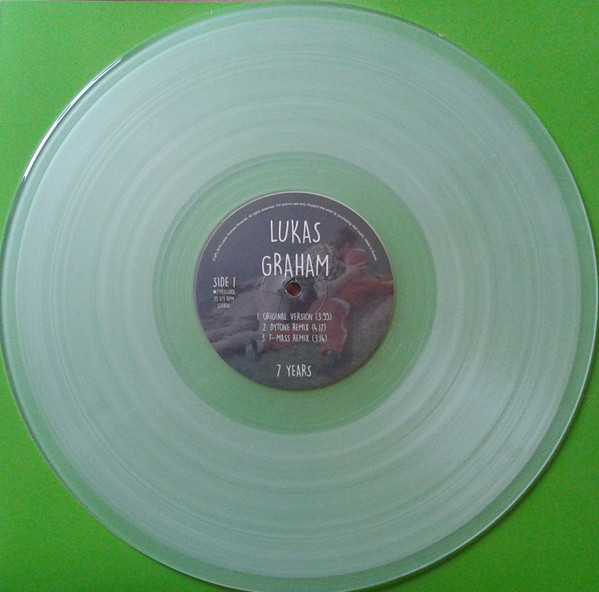
LUKAS GRAHAM - 7 YEARS
Released: September 18, 2015
Charted: US: #2 UK: #1 (5 weeks)
"7 Years" is a song by Lukas Graham, a Danish soul-pop band, from their second studio album, Lukas Graham. It was released digitally on Lukas Forchhammer's 27th birthday, September 18, 2015, by Copenhagen Records. The song was written by Lukas Forchhammer, Stefan Forrest, Morten Ristorp, and Morten "Pilo" Pilegaard, and produced by Forrest, Ristorp, and Pilegaard under their stage name Future Animals.
The song chronicles Lukas Forchhammer's life journey from childhood to adulthood, reflecting on his dreams, aspirations, and relationships. The lyrics are autobiographical, detailing his early dreams inspired by his father, his passion for writing songs and stories, and his perspective on fame and success. Forchhammer emphasizes the importance of genuine connections with loved ones over superficial fame and popularity.
"7 Years" is characterized by its soul-pop sound with hip hop undertones, featuring a mid-tempo piano melody, a rhythmic percussion beat, and a synthesized string section. The incorporation of a film projector sound throughout the song, including the intro, adds a nostalgic ambiance reminiscent of watching home movies. The music video, shot in Copenhagen and Los Angeles, was written, directed, and edited by Danish filmmaker René Sascha Johannsen.
"For the issue dated 6 February 2016, "7 Years" debuted at number 96 on the US Billboard Hot 100 chart, becoming Lukas Graham's first single on the Hot 100. It peaked at number two on the chart dated 9 April 2016, and stayed there for four non-consecutive weeks, behind Rihanna and Drake's "Work" and Desiigner's "Panda". In the UK, it peaked at number one on the Singles Chart on 12 February 2016, becoming the first number-one single by a Danish act since Aqua's "Turn Back Time" (1998). It spent five consecutive weeks at number one, becoming the longest-running number-one single by a Danish act."
LED ZEPPELIN - BLACK DOG
Llançament: 2 de desembre de 1971
Llistes: EUA: núm. 15
"Black Dog" és una cançó emblemàtica de Led Zeppelin, publicada com a primera pista del seu quart àlbum llançat el 1971. Les lletres indaguen en temes típics del blues com la luxúria, l'erotisme i la traïció. Àmpliament reconeguda pel seu so distintiu, la cançó es va convertir en un èxit a les llistes quan es va llançar com a single.
"Black Dog" ha generat especulacions sobre el seu títol, amb teories que van des de simbolitzar la depressió post-festiva de John Bonham, fins a un gos Labrador negre sense nom que rondava pels terrenys de Headley Grange, on Led Zeppelin treballava en la cançó. Tot i que el títol no apareix a la lletra, la banda el va triar com un nom adequat per a la pista durant les sessions d'enregistrament a la mansió rural de Hampshire.
John Paul Jones es va inspirar per a "Black Dog" després d'escoltar l'àlbum de Muddy Waters "Electric Mud”, on li va venir la idea d'injectar blues elèctric amb una part de baix potent, creant el riff que marca la línia contundent de la cançó. Inicialment, Jones va fer una versió complexa de la cançó en 3/16, però finalment es va simplificar durant el procés d'enregistrament utilitzant l'estudi mòbil dels Rolling Stones.
John Paul Jones va explicar el procés d'enregistrament destacant l'efecte de guitarra triplicat utilitzat. Cada part de guitarra es va gravar en viu, amb una a l'esquerra, una a la dreta i una altra al mig. Aquesta tècnica va ser inspirada pel treball de Bill Halverson amb Neil Young, però Jones havia tingut problemes per replicar-la fins que va experimentar amb Led Zeppelin. El resultat va ser un so de guitarra fiable i poderós que va contribuir a l'impacte de la cançó.
Robert Plant canta sobre una dona que el captiva malgrat ser una mala influéncia per a ell, expressant la seva preferència per tenir una parella més estable. En una ocasió, va descriure la cançó com a directa, centrada en desitjos físics. Els versos a cappella del començament amb les aturades van ser influenciats per "Oh Well" de Fleetwood Mac del 1969. La remarcable actuació vocal de Robert Plant va ser gravada en només dues presses.
"Black Dog" es va convertir en una peça habitual dels concerts en directe de Led Zeppelin, debutant a Belfast el març de 1971 al mateix temps que "Stairway to Heaven". Va romandre als seus repertoris fins al 1973 i es va interpretar ocasionalment durant la gira de 1975 com a part d'un bis amb "Whole Lotta Love". Es va tocar menys durant la gira dels EUA de 1977. Va tornar al set list per al Festival de Knebworth el 1979 i la gira d'Europa de 1980, amb Jimmy Page presentant-la a l'escenari durant les darreres interpretacions del 1980. La seva última interpretació va ser al Concert d'Homenatge a Ahmet Ertegun el 2007, com a part de l'actuació principal de Led Zeppelin.
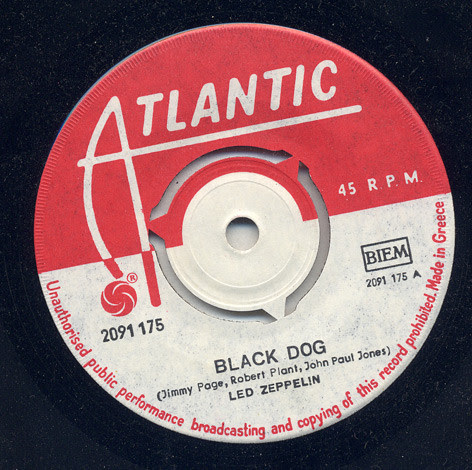
LED ZEPPELIN - BLACK DOG
Released: December 2, 1971
Charted: US: #15
"Black Dog" is a signature song by Led Zeppelin, serving as the opening track on their fourth album released in 1971. The lyrics delve into typical blues themes of lust, eroticism, and betrayal. Widely recognized for its distinctive sound, the song became a chart success when released as a single.
"Black Dog" has sparked speculation about its title, with theories ranging from it symbolizing John Bonham's post-partying depression, to a nameless black Labrador retriever that roamed the grounds of Headley Grange, where Led Zeppelin worked on the song. Regardless of the title not appearing in the lyrics, the band chose it as a fitting moniker for the track during its recording sessions at the rural Hampshire mansion.
John Paul Jones drew inspiration for "Black Dog" after listening to Muddy Waters' album "Electric Mud." He aimed to infuse electric blues with a rolling bass part, crafting a riff that took listeners on a linear journey. Initially, Jones introduced a complex version of the song in 3/16 time, but it was eventually simplified during the recording process using The Rolling Stones' mobile studio.
John Paul Jones explained the recording process highlighting the tripled guitar effect used. Each guitar part was recorded live, with one on the left, one on the right, and one in the middle. This technique was inspired by Bill Halverson's work with Neil Young, but Jones had struggled to replicate it until experimenting with Led Zeppelin. The result was a reliable and powerful guitar sound that contributed to the song's impact.
Robert Plant sings about a woman who captivates him despite being bad for him, expressing his preference for a more stable partner. He once described the song as straightforward, focusing on physical desires. The start-and-stop a cappella verses were influenced by Fleetwood Mac's "Oh Well" from 1969. Robert Plant's remarkable vocal performance was captured in just two takes.
"Black Dog" became a regular feature of Led Zeppelin's live concerts, debuting in Belfast in March 1971 alongside "Stairway to Heaven." It remained in their setlists until 1973 and was occasionally performed during the 1975 tour as part of an encore with "Whole Lotta Love." It saw less play during the 1977 US tour. The song made a return for the Knebworth Festival in 1979 and the 1980 Tour of Europe, with Jimmy Page introducing it on stage during the final performances in 1980. Its last performance was at the Ahmet Ertegun Tribute Concert in 2007, as part of Led Zeppelin's headline set.
10.6.24
ICONA POP - I LOVE IT
Released: May 9, 2012
Charted: US: #7 UK: #1 (1 week)
"I Love It" is a song by Swedish duo Icona Pop, featuring vocals from British singer Charli XCX. Released in May 2012 as a digital download in Sweden, the song peaked at number two on the singles chart. It was included in Icona Pop's debut studio album, EP, and international album. Charli XCX, Patrik Berger, and Style of Eye co-wrote the song, with production by the latter two.
"I Love It" reflects a period of financial struggle and heartbreak for the Icona Pop duo, who were living in London at the time without much to their name. This frustration, anger, and heartache is evident in the song's energetic beats and lyrics, making it a very honest expression of their emotions during that time.
Charli XCX shared how her collaboration with Icona Pop on "I Love It" came about during a writing session with Patrick Berger in Sweden. She quickly wrote the song in just half an hour but felt it wasn't the right fit for her as an artist. When Icona Pop heard the song a few weeks later, they loved it and put their own twist on it, ultimately turning it into the hit we know today.
The music video was directed by Fredrik Etoall and shot in a day in Paris by friends of the band. It features Jawo and Hjelt performing for a lively crowd, interspersed with backstage and after-party scenes. Outdoor shots show the duo wearing homemade fringed jackets. Charli XCX does not appear in the video.
"I Love It" served as a cathartic release for the Icona Pop duo, doubling as a kiss-off to their then-boyfriends. Fueled by frustration and heartache, the song became a platform for expressing their anger and disappointment. Today, they humorously acknowledge the inspiration their exes provided, greeting them with a knowing smile when they cross paths.