“Dog & Butterfly” is Heart's fourth studio album, released in September 1978 by Portrait Records after a legal dispute with their previous label, Mushroom Records. This album followed the release of “Magazine” earlier that year. “Dog & Butterfly” reached No. 17 on the U.S. Billboard 200 chart.
"Mistral Wind," an album track from “Dog & Butterfly”, is a fan favorite and a frequent part of their live performances. The song, lasting 6:42, takes listeners on a vivid, mythic journey across the sea, with lyrics that evoke a transformative, life-altering adventure. Nancy Wilson described it as a Ulysses-type song about waiting for a powerful wind to guide you, only to be swept up on a thrilling, even perilous, journey that changes one's perspective forever. The "mistral wind" itself refers to a strong, cold wind characteristic of southern France and the Mediterranean region.
"Mistral Wind" is a classic Heart track that showcases the band’s unique musical depth and dynamic power. Beginning with Nancy Wilson’s acoustic guitar, the song opens with a delicate, intimate feel as Ann Wilson delivers the lyrics in a restrained yet emotive style. At the 2:10 mark, the full band joins in, amplifying the energy as Ann’s vocals build to a powerful release, mirroring the song's stormy imagery. Often compared to "Stairway to Heaven" for its dynamics and lyrical resonance, “Mistral Wind” embodies a similar epic quality, with Heart bringing their own intensity to a track only they could pull off.
"Mistral Wind" is notable for its collaborative songwriting, credited to Ann and Nancy Wilson, guitarist Roger Fisher, and Sue Ennis, a longtime friend and frequent co-writer with the Wilsons. This track holds a special place in Heart's catalog as one of the last songs to feature Fisher, who left the band after “Dog & Butterfly”. His departure marked a lineup change that saw Heart continue as a five-piece on their next album, “Bébé le Strange”.
Nancy Wilson considers "Mistral Wind" to be Heart's best song, describing it as a showcase of the band's strengths in storytelling, musicality, and philosophical depth. She highlighted the track’s poetic, sweeping symbolism, emphasizing its powerful structure: a dissonant guitar intro builds into a storm that immerses listeners, leaving them transformed by the song’s end. Wilson acknowledges the grand imagery but believes it accurately reflects the impact and artistry "Mistral Wind" achieve.
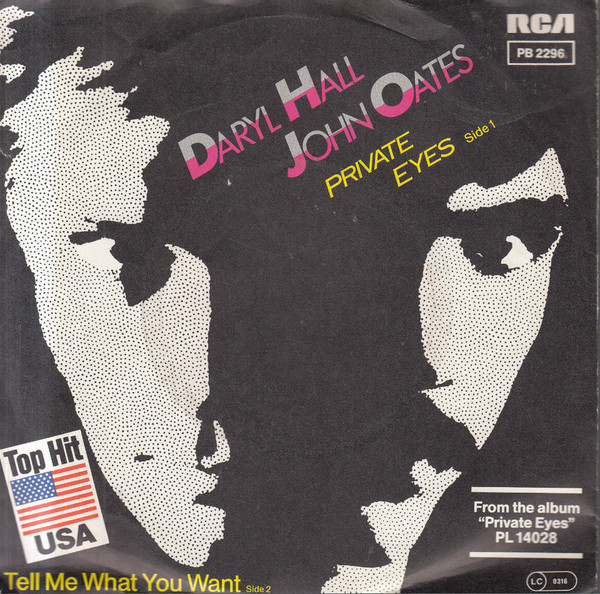
DARYL HALL & JOHN OATES - PRIVATE EYES
Estrena: agost de 1981
Llistes: EUA: #1 (2 setmanes) Regne Unit: #32
"Private Eyes" és un senzill i la cançó que dona títol a l'àlbum de 1981 del mateix nom. La cançó es va convertir en el seu tercer número u, liderant la llista Billboard Hot 100 durant dues setmanes el novembre de 1981. Va ser el segon número u del duet als anys vuitanta, després de "Kiss on My List". Després que "Private Eyes" mantingués el primer lloc, va ser reemplaçada per "Physical" d'Olivia Newton-John, que posteriorment va ser superada per una altra cançó de Hall & Oates, "I Can't Go for That (No Can Do)". La cançó té un ritme similar a "Kiss on My List" i compta amb una tornada amb sons de mans picant, fet que la converteix en una de les preferides per a la participació del públic durant els concerts en directe. Va ser una de les primeres cançons del duet que va rebre rotació constant a MTV.
"Private Eyes" va ser coescrita per Warren Pash, Janna Allen i Daryl Hall. Hall va explicar que la cançó va ser desenvolupada en gran part per Janna Allen i Pash, amb la seva aportació en l'arranjament i en alguns canvis en els acords. La lletra va ser escrita per Hall i Sara Allen (germana de Janna). Hall es referia a la cançó com una "cançó familiar", donada la col·laboració entre ell i les germanes Allen.
"Private Eyes" va tenir el seu origen en la pel·lícula de 1980 amb el mateix nom, protagonitzada per Don Knotts i Tim Conway. Warren Pash va començar a treballar en una cançó titulada "I Need You To Need Me", però no li va agradar. Després de veure un cartell de la pel·lícula, va canviar el títol a "Private Eyes" i va col·laborar amb Janna Allen, que en aquell moment buscava material per a la seva carrera en solitari. Junts van desenvolupar la cançó en un petit espai d'assaig, però Janna va decidir que no era adequada per a ella i va pensar que seria perfecta per a Hall & Oates. Així doncs, la va passar a Daryl Hall, qui, amb la seva nòvia Sara Allen, la va transformar en un èxit per al duet.
La presència escènica de Daryl Hall sovint eclipsava John Oates, fet que va inspirar un esquetx memorable a "Saturday Night Live", on un actor que interpretava Oates reclamava còmicament el mèrit pels aplaudiments de la cançó. Tot i això, Oates, que va coescriure molts dels seus èxits, es mostrava satisfet amb el seu paper, reconeixent que la personalitat extravagant de Hall contribuïa significativament a la dinàmica del duet. En una entrevista de 2011, Oates va destacar que la seva capacitat de respectar les fortaleses de l'altre ha estat clau per a la seva duradora associació.
La cançó compara els desafiaments de l'amor amb la feina dels detectius, i el videoclip musical mostra Daryl Hall i John Oates vestits com a investigadors privats del cinema negre, amb gavardines i barrets “trilby”. En aquest vídeo es va mostrar per primera vegada la seva banda de suport, que incloïa el guitarrista G. E. Smith i el saxofonista/teclista Charles DeChant. Malgrat les seves reserves sobre el fet que els videoclips poguessin restar importància al seu so, Hall & Oates van reconèixer la seva importància per al màrqueting, especialment amb l'auge de MTV.
Per crear un vídeo ràpid i econòmic, van contractar el director Jay Dubin, que compartia la seva manca d'interès per les produccions elaborades. Dubin va recordar com van rodar el vídeo de manera espontània a l'estudi Electric Ladyland, sense cap pla formal, utilitzant els recursos disponibles. Tot el procés va durar només unes poques hores, resultant en una peça promocional senzilla però efectiva.
DARYL HALL & JOHN OATES - PRIVATE EYES
Released: August 1981
Charts: US: #1 (2 weeks) UK: #32
"Private Eyes" is a single and the title track of the 1981 album of the same name. The song became their third number-one hit, topping the Billboard Hot 100 for two weeks in November 1981. It was the duo's second number-one hit of the 1980s, following "Kiss on My List." After "Private Eyes" held the top spot, it was replaced by Olivia Newton-John's "Physical," which was then succeeded by Hall & Oates' own "I Can't Go for That (No Can Do)."The single features a similar rhythm to Hall & Oates' earlier hit "Kiss on My List," with a distinctive handclap chorus that has made it a favorite for audience participation at live shows. It was one of the duo's first tracks to receive heavy rotation on MTV.
"Private Eyes" was co-written by Warren Pash, Janna Allen, and Daryl Hall. Hall explained that the song was largely developed by Janna Allen and Pash, with Hall contributing to the arrangement and altering the chords. The lyrics were written by Hall and Sara Allen (Janna's sister). Hall referred to the track as a "family song," given the collaboration between himself and the Allen sisters.
"Private Eyes" originated from the 1980 movie of the same name, starring Don Knots and Tim Conway. Warren Pash initially worked on a song titled "I Need You To Need Me" but disliked it. After seeing a billboard for the movie, he changed the title to "Private Eyes" and collaborated with Janna Allen, who was looking for material for her solo career. They developed the song in a modest rehearsal space, but Janna later decided it wasn't suitable for her and instead thought it would be perfect for Hall & Oates. She passed it to Daryl Hall, who, along with his girlfriend Sara Allen, transformed it into a hit for the duo.
Daryl Hall's more prominent stage presence often overshadowed John Oates, leading to a memorable "Saturday Night Live" sketch where an actor portraying Oates humorously claimed credit for the song's hand claps. Despite this, Oates, who co-wrote many of their hits, expressed contentment with his role, recognizing that Hall's flamboyant personality contributes significantly to their dynamic. In a 2011 interview, Oates noted that their ability to respect each other's strengths has been key to their enduring partnership.
The song likens the challenges of romance to the work of detectives, with its music video featuring Daryl Hall and John Oates dressed as classic film-noir private investigators in trench coats and trilby hats. This video marked the first appearance of their backup band, including guitarist G. E. Smith and saxophonist/keyboardist Charles DeChant. Despite their reservations about music videos detracting from their sound, Hall & Oates recognized their importance for marketing, especially with the rise of MTV.
To create a quick and budget-friendly video, they enlisted director Jay Dubin, who shared their disinterest in elaborate video productions. Dubin recalled how they shot the video spontaneously at Electric Ladyland studio, with no formal plan, utilizing whatever resources were available. The entire process took just a couple of hours, resulting in a straightforward yet effective promotional piece.
LEAGUE UNLIMITED ORCHESTRA - LOVE AND DANCING
Llançament: 2 de juliol de 1982
Llistes: Regne Unit: #3 EUA: #135
"Love and Dancing" és un àlbum de remescles de The Human League, publicat el 1982 sota el nom "The League Unlimited Orchestra" com una referència divertida a la Love Unlimited Orchestra de Barry White. L’àlbum és, sobretot, obra del productor Martin Rushent, qui el va dissenyar amb arranjaments experimentals i influències dub, pensats especialment per a la pista de ball.
Aquest treball ofereix versions majoritàriament instrumentals de les cançons de “Dare”, l'àlbum multi-platí de Human League. Entre aquestes remescles també s'inclou una versió de “Hard Times”, que inicialment es va publicar com a cara B del single “Love Action (I Believe in Love)”. Rushent va deconstruir i reconstruir les pistes utilitzant efectes innovadors, creant una reinterpretació orientada al dance que manté l’essència experimental de la banda.
Martin Rushent va incorporar efectes retallats i sons desmuntats inspirats en l'artista de hip-hop Grandmaster Flash. Originalment, la idea de les remescles va sorgir com una solució per evitar haver de produir cares B, però amb el temps es va convertir en un àlbum complet. Tot i que inicialment el cantant Phil Oakey no estava segur del projecte, va permetre que Rushent completés l’àlbum de manera independent, resultant en una incorporació única i innovadora a la discografia de Human League.
Rushent va desenvolupar una tècnica de remescla innovadora per a “Love and Dancing”, desmuntant les cançons i tornant-les a muntar amb efectes nous i complexos. En lloc d'utilitzar samplers digitals (inexistents en aquell moment), va aconseguir efectes de veu complexos retallant i empalmant físicament fragments de cinta. Va crear una regla personalitzada per mesurar la cinta en mil·lisegons, cosa que li permetia ajustar cada segment amb precisió al ritme de la cançó. Aquest procés laboriós va donar lloc a l'efecte de “t-t-t-t” en la veu de Phil Oakey, capturant l'enfocament experimental de Rushent en la remescla i contribuint al so innovador de l'àlbum.
LEAGUE UNLIMITED ORCHESTRA - LOVE AND DANCING
Released: July 2, 1982
Charts: UK: #3 US: #135
“Love and Dancing” is a remix album by The Human League, released in 1982 under the name "The League Unlimited Orchestra" as a playful nod to Barry White's Love Unlimited Orchestra. The album was largely the brainchild of producer Martin Rushent, who crafted it with experimental, dub-influenced arrangements designed for the dance floor.
“Love and Dancing” is a dub-influenced remix album featuring mostly instrumental versions of tracks from The Human League's multi-platinum album “Dare”. Alongside these remixes, it includes a version of “Hard Times,” initially released as the B-side to the single “Love Action (I Believe in Love).” Martin Rushent deconstructed and reassembled the tracks with inventive effects, creating a dance-focused reinterpretation that reflects the band’s experimental roots.
Rushent incorporated chopped-up effects and deconstructed sounds inspired by hip-hop artist Grandmaster Flash. Originally created as a solution to avoid producing B-sides, the remixes evolved into a full album. Although initially unsure about the idea, lead singer Phil Oakey allowed Rushent to complete the album independently, resulting in a unique and innovative addition to The Human League's discography.
Producer Martin Rushent pioneered a unique remixing technique for “Love and Dancing” by taking songs apart and reassembling them with intricate effects. Instead of using digital samplers (which didn’t exist at the time), Rushent achieved complex vocal stutters by physically cutting and splicing tape pieces. He crafted a custom ruler to measure tape length in milliseconds, allowing him to precisely align each segment to the song’s beat. This painstaking process created the signature “t-t-t-t” effect in Phil Oakey's vocals, embodying Rushent's experimental approach to remixing and contributing to the album's groundbreaking sound.
HUMAN LEAGUE – MIRROR MAN
Publicació: 12 de novembre de 1982
Llistes: Regne Unit: #2 Estats Units: #30
“Mirror Man” és un single del 1982 escrita pels membres del grup Phil Oakey, Jo Callis i Ian Burden, i es va llançar com a senzill de seguiment de l’èxit “Don’t You Want Me”. Tot i que “Mirror Man” no es va incloure en cap àlbum d'estudi de Human League, sí que apareix a l'EP exclusiu per a Amèrica del Nord, “Fascination!”. La cançó va ser un èxit mitjà als Estats Units, arribant al lloc #30, però va obtenir una millor posició al Regne Unit (#2), Austràlia (#4) i Canadà (#7).
La lletra tracta sobre canviar la teva personalitat per adaptar-te a una nova situació o relació. La cançó comença amb el protagonista llançant una pedra sobre un llac, una metàfora per deixar enrere la seva antiga personalitat i començar de nou. La tornada reafirma aquesta idea de manera més literal, dient “You know I’ll change, if change is what you desire” (Saps que canviaré, si és el que desitges), prometent que aquesta nova versió d'ell mateix complirà tots els somnis, esperances, desitjos. La segona estrofa reflexiona sobre el personatge des de la perspectiva d'un vell amic o amant, dient-li que potser ja no és qui solia ser, i que podria ser millor deixar-lo anar perquè la distància cura el dolor més intens.
Tot i que la identitat del “Mirror Man” no es va revelar en aquell moment, el 1988 Oakey va explicar que la cançó estava inspirada en el cantant pop Adam Ant. Ant era probablement l’estrella més gran del Regne Unit entre 1981 i 1982, amb èxits com “Stand and Deliver”, “Prince Charming” i “Goody Two Shoes”. Amb els seus personatges en constant canvi, com “Prince Charming” o “The Dandy Highwayman”, Adam Ant es transformava contínuament, de manera similar a David Bowie una dècada abans. Oakey va confessar que els amics d'Ant, entre els quals s'hi comptava, temien que Ant perdés el contacte amb la realitat i es cregués la seva pròpia fama. En retrospectiva, Oakey considera que va encertar, ja que Adam Ant ha lluitat amb problemes de salut mental durant la seva vida.
El single inclou com a cara B la cançó “You Remind Me of Gold”, una peça brillant que recorda els primers temps de la banda amb el seu estil electrònic més pur, però combinat amb el pop més refinat i les veus femenines característiques de l’era de “Dare”. Aquesta cançó s'ha convertit en una de les preferides dels fans.
HUMAN LEAGUE – MIRROR MAN
Released: November 12, 1982
Charts: UK: #2 US: #30
“Mirror Man” is a 1982 single by Synth-pop band The Human League. It was written by band members Phil Oakey, Jo Callis and Ian Burden, and was released as the follow-up single to the million selling “Don’t You Want Me”. Although “Mirror Man” wasn’t featured on any of The Human League's studio albums, it did feature on the North America-only EP, “Fascination!”. The single was a medium sized hit in the United States, where it peaked at #30, but was a much bigger hit in the UK (#2), Australia (#4) and Canada (#7).
The song is about changing your personality to fit a new situation or relationship. The song begins with the singer skimming a pebble over a lake, a metaphor for leaving behind his old persona and starting again. The chorus confirms this in a more literal sense, stating “You know I’ll change, if change is what you desire”, and a promise that this new them will fulfil their “every dream, hope, desire”. The second verse looks at the character through the eyes of an old friend or lover, telling them that they might not seem to be who they once were, and it might be better to let them go as “distance heals the strongest pain”.
Although the identity of the Mirror Man wasn’t revealed at the time, in 1988, Oakey revealed it was about pop star Adam Ant. Ant was probably the biggest star in the UK between 1981 and 1982, hitting the top of the charts with songs like “Stand and Deliver”, “Prince Charming” and “Goody Two Shoes”. His ever changing alter-egos, such as the aforementioned “Prince Charming” or “The Dandy Highwayman” saw him keep changing in a chameleon-like way, similar to David Bowie a decade earlier. Oakey revealed that Ant's friends, of which he was one, feared that he was losing touch with reality and believing his own publicity, although Oakey had chosen not to reveal it at the time, so not to cause offense. In hindsight, he was correct, as Adam Ant has suffered with mental health issues continuously over his life.
The single is backed by the brilliant “You Remind Me of Gold”. It harkens back to the early days of the band, at their most electronic style, but mixed with the pop knowhow and female vocals of the “Dare” era sound. It has since become a fan favourite.